Hip Dysplasia in Dogs: Symptoms, Causes, Treatment, and Surgery Options
Hip dysplasia in dogs is a malformed, loose hip joint that wears down into arthritis, and it is most common in large and giant breeds. Here are the signs, how vets diagnose it, treatment with and without surgery, costs, and home care.

BVMS MRCVS
Medically reviewed by Dr. Pippa Elliott, BVMS MRCVS · Last reviewed

This article contains affiliate links. Webvet may earn a commission when you buy through them, at no extra cost to you.
Hip dysplasia in dogs is an abnormal development of the hip joint that leaves it loose, and that looseness then wears the joint down into osteoarthritis. It is inherited, it is most common in large-breed dogs, and growth, weight, and exercise all affect how severe it becomes.
Hip dysplasia in dogs is common among screened dogs: an analysis of the Orthopedic Foundation for Animals (OFA) hip registry found it in 15.56 percent of the dogs submitted. Many affected dogs live comfortably with the right weight, exercise, and pain plan, and some need surgery.
- 1Hip dysplasia in dogs is a loose, malformed hip joint that wears into arthritis over time.
- 2The signs include bunny hopping, stiffness after rest, trouble rising, reluctance to jump, a narrow hind stance, and thigh muscle loss.
- 3Genes are the biggest single risk factor, and rapid growth and excess weight in puppyhood can make it worse.
- 4Vets diagnose it with a hands-on hip exam and hip X-rays taken under sedation or anesthesia.
- 5Most dogs with hip dysplasia do not need surgery; weight control, controlled exercise, and vet-prescribed pain relief come first.
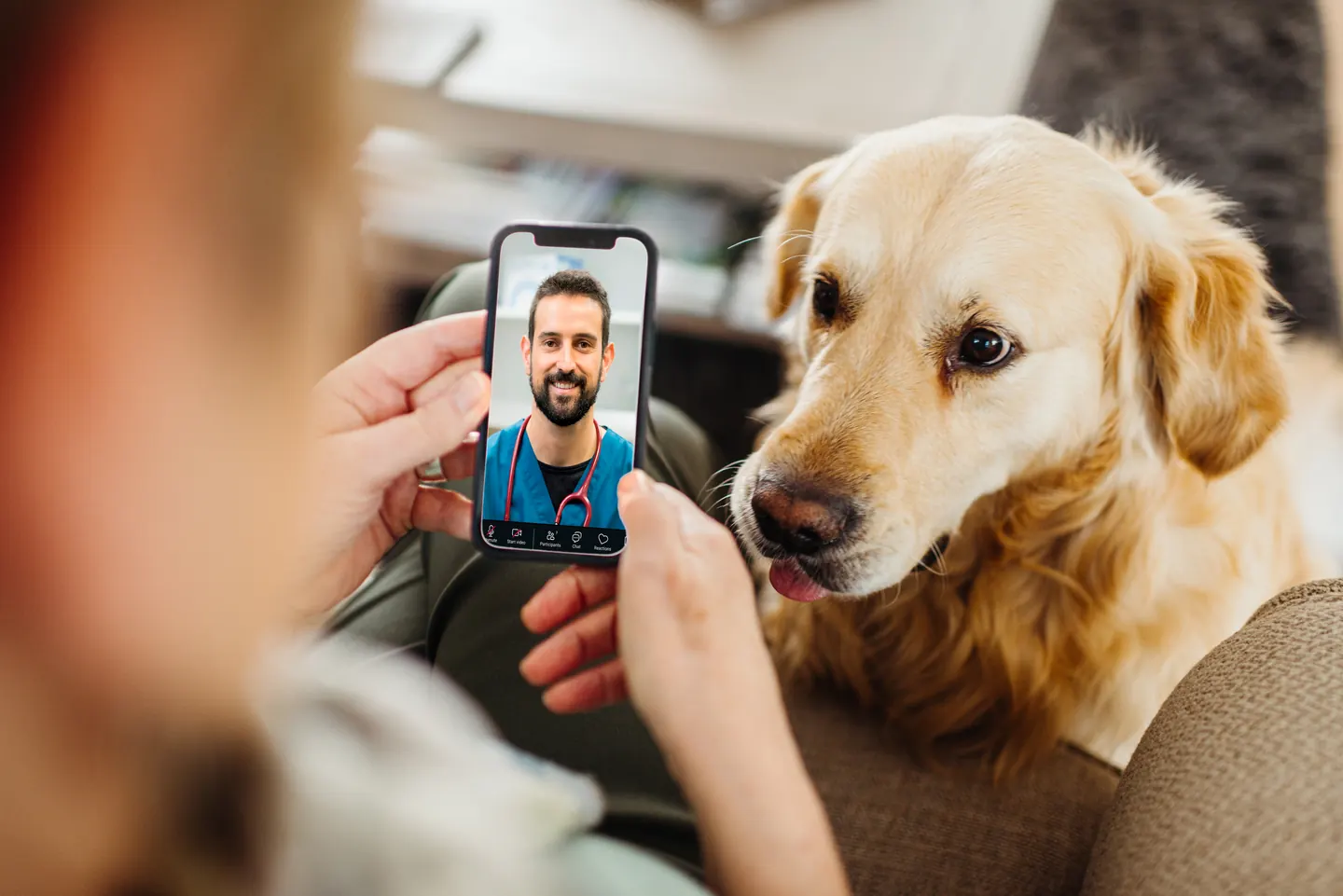
 Sponsored
Wondering why your dog seems stiff or sore?
Talk to a licensed vet at Dutch over video, often the same day. They can recommend treatment and prescribe it when it's appropriate.
Use code Pets60
Plans start at $12/month · covers up to 5 pets
- Licensed vets in most states
- Rx for 150+ conditions
- 4.7 on Trustpilot
What Is Hip Dysplasia in Dogs?
Hip dysplasia is a loose, malformed hip joint that wears into arthritis. VCA Animal Hospitals explains that the ball and socket of a puppy's hip normally grow at equal rates; in hip dysplasia they do not, so the joint is loose, and osteoarthritis follows as the body tries to stabilize it.
The damage builds over time. The American College of Veterinary Surgeons (ACVS) says the ball's abnormal movement deforms the socket, and the long-term result is cartilage loss, scar tissue, and bone spurs around the joint. That is why hip dysplasia and arthritis go together; our guide to osteoarthritis in dogs and its signs explains the arthritis side.
The main signs are limping, a bunny-hopping gait, stiffness after rest, and trouble rising or jumping. Treatment ranges from weight control and pain relief to surgery, depending on the dog's age, size, and how much arthritis has formed.
- Types: A juvenile form typically affects dogs 5 to 12 months old, according to a board-certified surgeon writing in dvm360, while many other dogs first show signs once arthritis sets in. OFA grades dysplastic hips as mild, moderate, or severe.
- Hip dysplasia vs hip dislocation: Dysplasia is a loose joint that forms during growth, while a dislocation is the ball coming out of the socket. A dysplastic hip can dislocate after relatively minor trauma, such as a foot caught in a closing door, notes board-certified surgeon Donald Hulse, DVM.
- Front legs: Hip dysplasia affects the hips, which sit at the top of the back legs. Affected dogs shift their weight forward onto the front legs to spare the sore hips, ACVS says.
Hip dysplasia does not go away on its own, and arthritis cannot be reversed once it forms. ACVS describes the cartilage loss as progressive, so the goal is to control pain and keep the dog moving. In young puppies, a University of Tennessee review says early surgery can improve how the socket covers the ball.
Merck, VCA, and ACVS do not address cold weather in their hip dysplasia guidance. What Merck does describe is lameness that gets worse after exercise and, once osteoarthritis has set in, shortly after rest. If your dog seems stiffer or worse in cold weather, tell your vet, since VCA says pain medication is chosen dog by dog.
If your dog has just been diagnosed, the first steps are simple: keep your dog lean, swap high-impact play for controlled leash walks, and give sore joints a padded, supportive place to rest. These are everyday ways to deal with hip dysplasia at home, alongside the plan your vet sets.
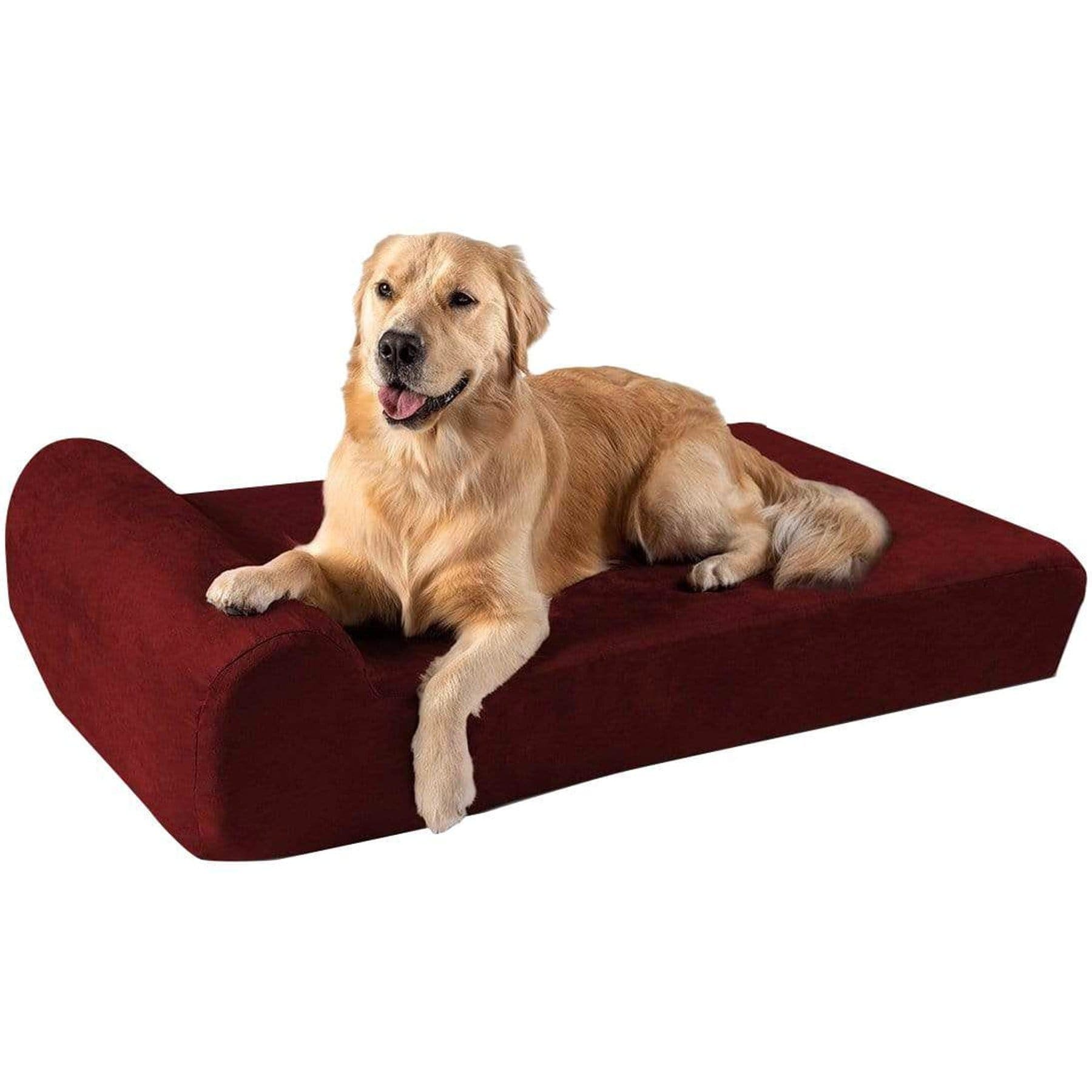
Big Barker Headrest Edition is an orthopedic dog bed with 7 inches of foam in three layers.
Webvet may earn a commission when you click through to Chewy, at no extra cost to you.
Signs and Symptoms of Hip Dysplasia in Dogs
The signs of hip dysplasia in dogs are bunny hopping, stiffness after rest, trouble rising, reluctance to jump, a narrow hind stance, and thigh muscle loss. Merck says lameness can be mild, moderate, or severe and is worse after exercise, and its professional edition adds that once arthritis develops, lameness also shows shortly after rest.
How to tell if a dog has hip dysplasia at home:
- A bunny-hopping gait, which Merck lists as a typical sign
- Limping that gets worse after exercise or after lying down
- Reluctance to rise or jump (ACVS)
- Reluctance to climb stairs or jump into the car, difficulty lying down or getting up, and low exercise tolerance, which one veterinarian lists in an article for Canine Arthritis Resources and Education
- Weight shifted onto the front legs, with loss of muscle on the back legs (thigh muscle loss), which Jennifer Wardlaw, DVM, DACVS says is common because dogs offload their hips
- A narrow hind stance, which the same Canine Arthritis Resources and Education article lists among the signs, sometimes with an audible click when walking
- Hip pain (ACVS)

Puppies can show the same signs, such as bunny hopping, tiring quickly on walks, or reluctance to climb stairs. ACVS advises that puppies be examined for loose hips between 10 and 18 weeks of age, at the same visits as their shots, by the primary care vet or a board-certified surgeon.
Severe hip dysplasia in dogs does not always look severe. OFA notes that some dysplastic dogs with severe arthritis run, jump, and play as if nothing is wrong, while some with barely any arthritis on X-ray are severely lame. Merck agrees that signs do not always match the X-ray.
When a dog does struggle badly, support at home matters. If your dog can no longer get up and move around on its own, VCA says a sling or harness for support may be all that is required. See our guide to the best dog lift harness for options.
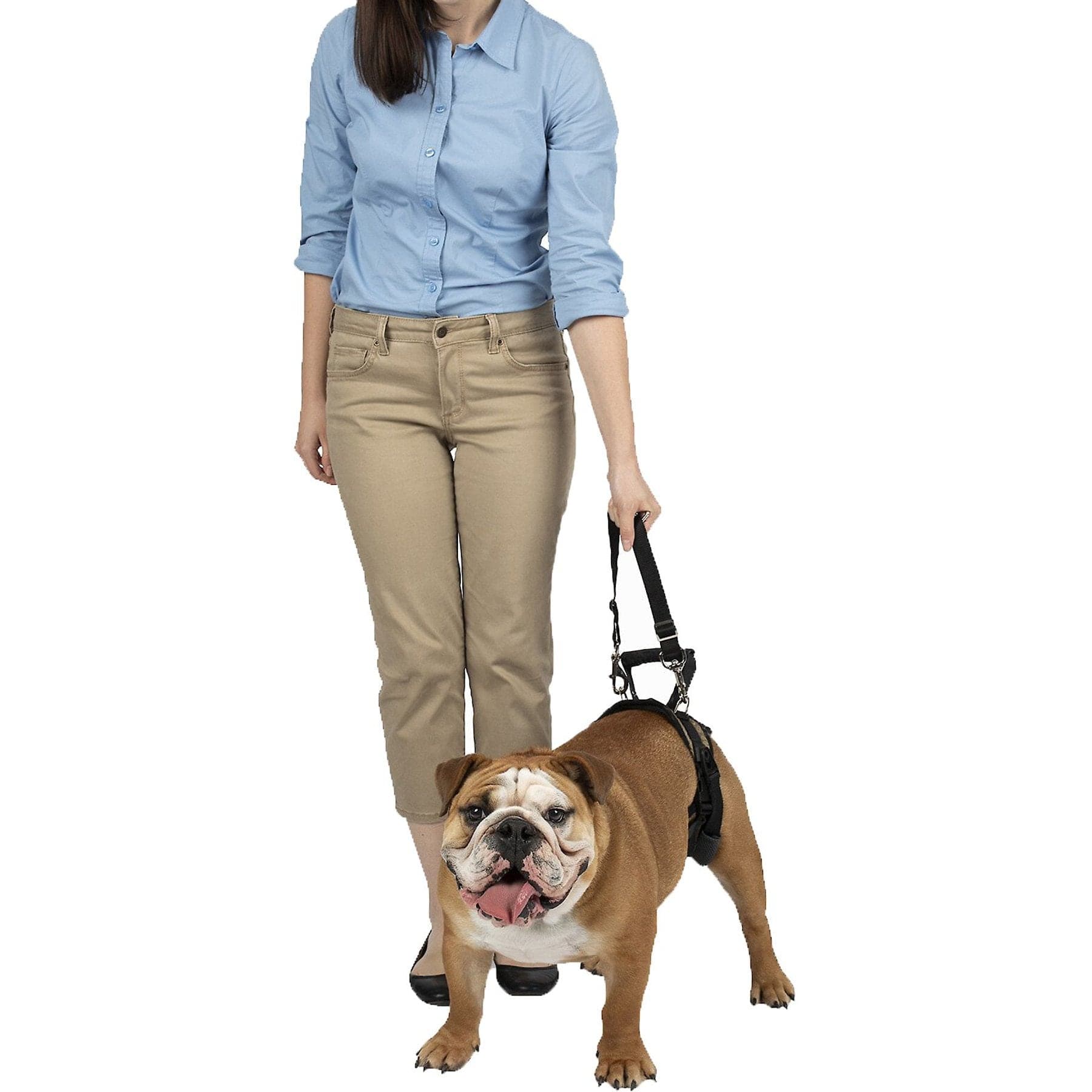
PetSafe CareLift Rear Support Harness is a rear lifting harness with support handles, Medium size for 35 to 70 lb dogs.
Webvet may earn a commission when you click through to Chewy, at no extra cost to you.
How a dog sits can also help. Wardlaw says dogs with hip dysplasia alone sit normally, with both back legs folded evenly, while a dog that sits with one leg extended out to the side is more typical of a torn ACL. Both problems cause hind-leg lameness, so a vet exam sorts out which one your dog has.
What are the symptoms of a bad hip?
A bad hip in a dog shows as limping, a bunny-hopping gait, stiffness after rest, trouble getting up, and reluctance to jump or use stairs. ACVS adds that dogs shift weight onto the front legs and lose back-leg muscle. Other problems cause a limp too; see why your dog is limping and the common causes.
Are dogs in pain with hip dysplasia?
Yes. OFA says the cartilage breakdown in a dysplastic hip eventually results in pain with any joint movement. Dogs show that pain as limping, stiffness, reluctance to rise or jump, and slowing down on walks. Relieving that pain, with medicine, weight control, rehabilitation, or surgery, is the central goal of treatment.
What Causes Hip Dysplasia in Dogs?
Hip dysplasia is caused mainly by inherited genes, and rapid growth, excess weight, and early overexercise or strain on a young puppy's hips can make it worse. ACVS calls the cause multifactorial, with heredity as the biggest single risk factor, and says rapid weight gain and growth from overfeeding can complicate how the hips develop.
So yes, hip dysplasia is genetic and hereditary in dogs. VCA calls it a genetic disease, and Merck says dogs can pass it to their puppies. Genes are not the whole story, though; VCA lists these factors as affecting how it develops:
- Diet
- Environment
- Exercise
- Growth rate
- Muscle mass
- Hormones
Food intake shows the effect clearly. In a controlled feeding study of 48 Labrador puppies (Kealy and colleagues, 1992), 7 of 24 dogs fed 25 percent less until age 2 were diagnosed with hip dysplasia by OFA scoring, compared with 16 of 24 dogs that ate freely.
The kind of early exercise matters too. A Norwegian study of 501 puppies from four large breeds found that walking on stairs from birth to 3 months was linked to a higher risk of hip dysplasia, while off-leash exercise in that window was linked to a lower risk. It was an observational study, so it shows a link, not proof.
An injury does not create hip dysplasia, which Merck describes as abnormal development of the hip joint, though a dysplastic hip can dislocate after a minor knock. Incontinence is not among the hip dysplasia signs that ACVS and Merck list, so a dog that leaks urine needs its own vet check.
Which Dogs Get Hip Dysplasia, and at What Age?
Large-breed dogs are the most prone to hip dysplasia, and signs most often appear between one and two years of age. The breeds and ages most affected follow that pattern: VCA sees the disease mainly in larger dogs, including large mixed-breed dogs, and ACVS says it occurs most commonly in large breeds.
Not all dogs of a high-risk breed develop it, and the percentage affected differs from breed to breed. VCA names Labrador retrievers among the predominantly affected breeds, and in the OFA registry analysis, 9.2 percent of submitted Labradors were dysplastic. Small dogs are not exempt either, because VCA says any dog can be affected.
Hip dysplasia can also seem to develop later in life. The disease begins in puppyhood, but VCA says most dogs do not show signs until they are older, after years of gradual bone degeneration, so a senior dog's first limp can still trace back to hips that formed abnormally.
Which dog breeds are most affected by hip dysplasia?
Large-breed dogs are the most affected. VCA names German shepherds, Saint Bernards, Labrador retrievers, golden retrievers, Old English sheepdogs, and bulldogs as predominantly affected breeds, and says large mixed-breed dogs are at risk too.
Rates vary widely by breed. In the OFA registry analysis, the bulldog had the highest rate, at roughly 69 to 78 percent of submitted dogs, the Saint Bernard 36.8 percent, and the German shepherd 16.3 percent. These figures describe dogs whose X-rays were sent to the registry, not every dog of a breed.
At what age do most dogs get hip dysplasia?
Most dogs show signs of hip dysplasia at one to two years of age, though VCA says puppies can show signs as early as a few months old. Wardlaw notes that the juvenile form typically affects dogs between 5 and 12 months of age, and other dogs show no signs until arthritis builds up years later.
 Sponsored
Vet care that's always there
Unlimited video calls and messaging with licensed vets for less than a typical vet visit. One membership covers up to five pets.
Use code Pets60
Plans start at $12/month · covers up to 5 pets
- Licensed vets in most states
- Rx for 150+ conditions
- 4.7 on Trustpilot
How Is Hip Dysplasia Diagnosed?
Vets diagnose hip dysplasia with an orthopedic exam, sedated X-rays, and, for screening, PennHIP testing or OFA scoring. ACVS says diagnosis combines specially positioned hip X-rays with hands-on tests for abnormal joint looseness, and both require light sedation. VCA calls hip radiographs (X-rays) taken under general anesthesia the preferred way to diagnose it.

What each test shows:
- Orthopedic exam: The vet checks your dog's gait and feels the hips for looseness. Palpable laxity, called a positive Ortolani sign, supports the diagnosis (VCA).
- Sedated X-rays: These show how the ball fits the socket. Compared with a normal hip, a dysplastic hip on X-ray can show a loose fit and, later, the deformed socket and bone spurs ACVS describes.
- PennHIP: This method measures hip looseness as a distraction index (DI), and the PennHIP program says it can be done reliably on dogs as young as 16 weeks.
- OFA scoring: OFA grades hip X-rays, and for dogs 24 months of age or older, three board-certified veterinary radiologists read each set independently, per its screening procedures.
- Genetic testing: There is no direct genetic test for hip dysplasia, as an analysis of the OFA database notes, so screening X-rays fill that role.
PennHIP scores are numbers, and a lower DI means a tighter hip. The PennHIP brochure says hip dysplasia is very unlikely below a DI of 0.30, while a peer-reviewed University of Tennessee review links a DI of 0.7 or higher to a greater risk of arthritis by age 2. Ask your vet how to read your dog's score.
OFA classifies hips into seven grades: Excellent, Good, and Fair (normal), Borderline, and Mild, Moderate, and Severe (dysplastic). A normal score is not a guarantee: in a lifetime study of 48 Labradors by Penn researchers, including the PennHIP developer, 55 percent of dogs scored normal by OFA criteria at age 2 became dysplastic on X-ray by the end of life.
Testing has a cost. Pet insurer Lemonade reports from its own claims data that the average cost to diagnose hip dysplasia was $1,500 as of January 2025. PennHIP fees are set by the vet providing the test and will likely be higher than an OFA evaluation, the PennHIP program says.
Hip Dysplasia Treatment Without Surgery
Most dogs with hip dysplasia are treated without surgery. Treatment without surgery combines weight control, exercise changes, NSAIDs, joint supplements, and physical rehabilitation, and the Merck Veterinary Manual says most dogs do not need surgery; it is for severely affected dogs and those that do not respond to conservative care.
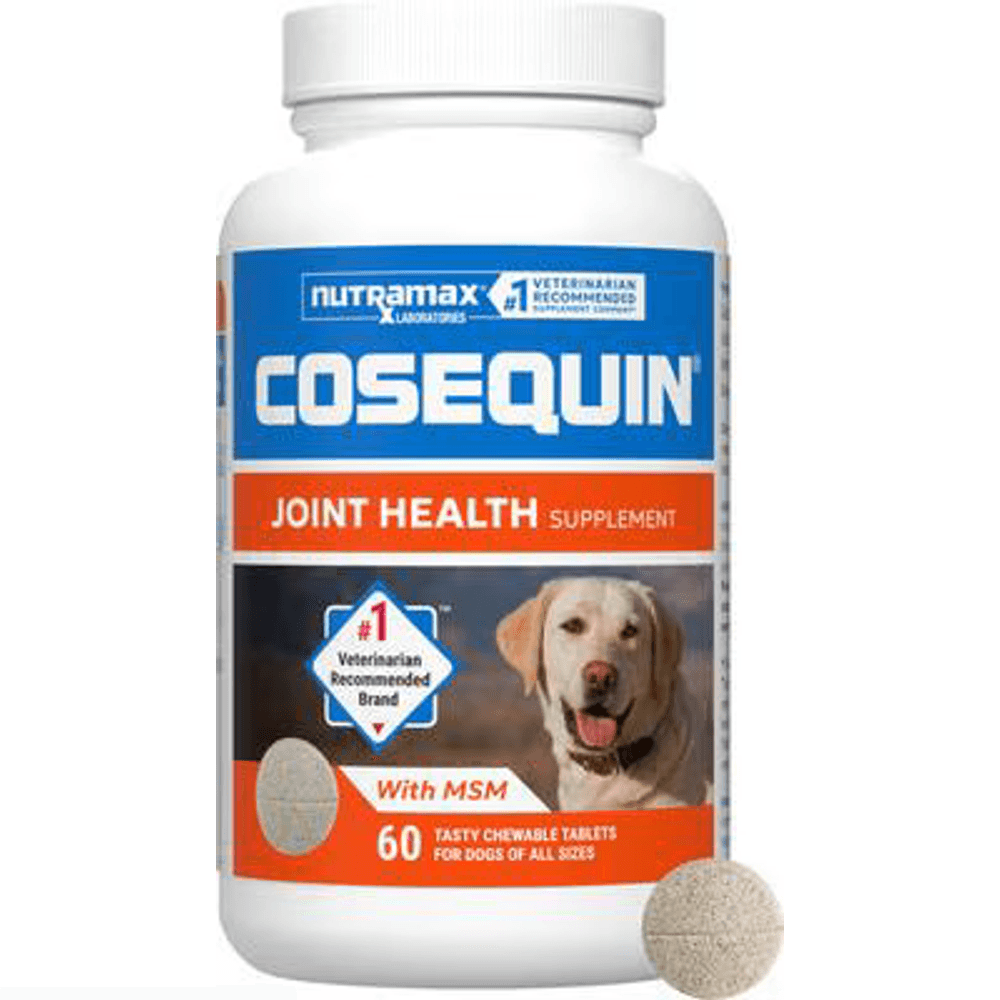
Nutramax Cosequin is a chewable joint supplement for dogs with glucosamine, chondroitin, and MSM, 60 count.
Webvet may earn a commission when you click through to Chewy, at no extra cost to you.
Weight control is the foundation. ACVS says every dog with hip dysplasia should be kept very slim from puppyhood to old age, and calls it the most effective and least expensive long-term way to keep them comfortable.
Merck lists what helps mild cases and dogs that cannot have surgery:
- Weight loss for dogs carrying extra pounds
- Activity changes, including no exercise on hard surfaces
- Controlled physical therapy, such as hydrotherapy or laser therapy, to strengthen muscle and keep the joint's range of motion
- NSAIDs for pain and inflammation
NSAIDs are the main pain medication for hip dysplasia. VCA says several effective NSAIDs exist and your vet may try more than one to find the best fit, sometimes adding gabapentin, tramadol, or amantadine. Our guide to carprofen for dogs and cats covers one prescription NSAID in detail.
Daily NSAIDs need monitoring. ACVS warns that they can have significant side effects, and dogs taking them every day need blood tests to avoid kidney and liver damage.

Physical rehabilitation pays off. VCA says physical therapy is highly effective at improving quality of life for dogs with hip dysplasia and should be part of any treatment plan.
Joint supplements have the weakest evidence. ACVS says cartilage-protective supplements are often recommended, but peer-reviewed research has not shown that they repair or protect cartilage. A 2022 systematic review and meta-analysis found a very marked lack of effect from glucosamine and chondroitin on osteoarthritis pain and advised that they no longer be recommended for pain.
Omega-3s have better support. The same meta-analysis found clear pain-relief benefits from omega-3-enriched diets and omega-3 supplements, such as fish oil, and smaller benefits from cannabidiol (CBD). Fish-oil products such as Nordic Naturals Omega 3 Pet Softgels are made from anchovy and sardine oil. For more choices, compare our best joint supplements for senior dogs and Cosequin vs Dasuquin.

Nordic Naturals Omega-3 Pet Softgels are a fish oil supplement made from anchovy and sardine oil.
Webvet may earn a commission when you click through to Chewy, at no extra cost to you.
Hip Dysplasia Surgery Options and Cost
Hip dysplasia surgery is chosen by the dog's age, size, and amount of arthritis. VCA says the two most common operations are total hip replacement and femoral head ostectomy (FHO), while juvenile pubic symphysiodesis (JPS) and pelvic osteotomy (TPO or DPO) are less common and suit young dogs.
Results are strong for some procedures. VCA says about 90 to 95 percent of dogs that have a total hip replacement do very well and end up with excellent function. Still, an Iowa State review of the surgical research found that few studies give strong evidence for judging how well each surgery works.
This hip dysplasia surgery comparison table matches each surgery (JPS, TPO or DPO, FHO, and total hip replacement) to the dogs it fits, what it does, and recovery time.
| Surgery | Which dogs it fits | What it does | Recovery |
|---|---|---|---|
| Juvenile pubic symphysiodesis (JPS) | Puppies about 12 to 18 weeks old with loose hips, up to 22 weeks in large breeds | Stops growth in part of the pelvis so the hip sockets rotate to cover the ball better | Short, controlled leash walks for the first week; aftercare is brief |
| Double or triple pelvic osteotomy (DPO or TPO) | Young dogs, ideally under 8 to 10 months, with no arthritis on X-ray | Repositions the hip socket so it covers more of the ball | Leash walks and small-area confinement for about 6 weeks |
| Femoral head ostectomy (FHO) | Dogs of any age; OFA reports better long-term results in dogs under about 44 lb | Removes the femoral head and neck so a false joint held by muscle forms; the goal is pain relief | Active rehabilitation is essential, and some dogs need 6 weeks or longer to improve |
| Total hip replacement (THR) | Dogs with a mature skeleton, usually from 9 to 12 months; the gold standard for large dogs with severe dysplasia | Replaces the ball and socket with artificial parts | Leash walks and confinement for about 8 weeks, then full activity in about 3 to 4 months |
Key details for each surgery:
- JPS: Recommended timing varies. ACVS says JPS must be done in puppies younger than 18 weeks, VCA says it works best at 12 to 18 weeks (up to 22 weeks for large breeds), and the University of Tennessee review says dogs under 20 weeks with mild to moderate looseness may benefit. ACVS adds that complications are very low and mostly minor.
- TPO or DPO: ACVS says pelvic osteotomy is for immature dogs with no visible arthritis, and the Tennessee review says it is not meant for dogs with severe looseness or degenerative changes. Healing takes about 6 weeks of leash-only exercise, and OFA reports a good success rate for a return to normal hip function.
- FHO: Femoral head ostectomy is a pain-relief operation, not a joint rebuild. ACVS says it can be done at any age and can make a dog under 60 to 70 pounds comfortable enough to skip daily anti-inflammatory medication, while OFA reports better long-term results in dogs under about 44 pounds. An evidence summary cites one study in which all 12 owners who responded reported no hip pain afterward.
- Total hip replacement: ACVS restricts activity for about 8 weeks until healing is confirmed, VCA says most dogs are ready for full activity within 3 months, and the University of Missouri Veterinary Health Center says about 4 months. Missouri puts the risk of a serious complication at 5 to 10 percent.
How much does it cost to fix hip dysplasia in a dog?
Typical costs for the surgery options run from about $1,000 for a puppy procedure to $15,000 or more per hip for a total hip replacement, according to pet insurer figures. Lemonade, a pet insurer, reports an average treatment cost of $5,200 from its claims data as of January 2025. Clinic quotes vary by region and by what they include.
- Total hip replacement, university hospital price: The University of Missouri Veterinary Health Center lists $2,000 to $2,500 for the consultation and diagnostics, $8,500 to $10,000 for the surgery, and $600 to $700 for each of two follow-up exams.
- Total hip replacement, pet insurer figures: Lemonade cites $3,500 to $15,000 or more per hip, and Pets Best quotes a veterinarian at $4,000 to $10,000 per hip.
- FHO, pet insurer figure: Lemonade cites $1,200 to $3,000 or more per hip, including bloodwork, anesthesia, surgery, and aftercare.
- TPO or DPO, pet insurer figures: MetLife Pet Insurance cites $1,200 to $2,000 per hip, while Pets Best quotes a veterinarian at about $3,000 to $6,000 per hip.
- JPS, pet insurer figure: Lemonade cites about $1,000 to $5,000, including X-rays, surgery, and anesthesia.
Of these figures, only the University of Missouri's is a hospital price; the rest come from pet insurers. Pets Best notes that surgery quotes often, but not always, include bloodwork, X-rays, antibiotics, and several follow-up visits, so ask what your quote covers.
Home Care and Exercise for a Dog With Hip Dysplasia
Home care for a dog with hip dysplasia rests on traction, ramps, supportive bedding, and low-impact exercise, plus keeping your dog lean. These changes reduce the daily strain on a painful hip, and they work alongside the treatment your vet prescribes rather than replacing it.
Exercise should be steady, not extreme. OFA advises starting with short leash walks and building up gradually, then scaling back to a level that does not bring signs back. VCA recommends moderate daily exercise and avoiding high-impact activities such as jumping.
Whether a dog with hip dysplasia can run depends on its signs: if running brings the limp back, OFA's rule is to scale back.

During a flare, rest means controlled rest. Hulse advises slow, leash-only walks and no free activity for 2 weeks when a dysplastic hip is sprained and painful.
Make slick floors safer with the traction fixes VCA suggests:
- Yoga mats or area rugs with non-skid backing
- Interlocking foam floor tiles to cover larger areas
- Baby gates to keep your dog out of rooms with slick floors
- Lightweight traction boots, if your dog tolerates them
Ramps and beds take strain off the joints. VCA says a vehicle ramp reduces stress on the back and leg joints, and most dogs learn to use one quickly; see the best dog ramps. VCA also recommends an orthopedic or memory foam bed to reduce pressure on sore joints; see the best orthopedic dog bed.
Some therapies belong with a professional. Merck lists hydrotherapy and laser therapy as controlled physical therapy, so ask your vet or a rehabilitation clinic about them, and have that team show you any massage before you try it at home. Natural, herbal, and homeopathic remedies, including turmeric, are not part of the plans Merck, VCA, and ACVS describe.
Hip braces are widely sold, but the evidence behind them is thin: a published test of one hip-support garment was an uncontrolled trial in just 5 dogs, run by its maker. Ask your vet or a rehabilitation therapist before buying one.
What not to do with hip dysplasia?
Avoid anything that loads or jars a sore hip: extra weight, high-impact jumping, slick floors, and free running during a flare. Specific things to avoid:
- Letting your dog gain weight, since ACVS calls a slim body the most effective long-term comfort measure
- Allowing high-impact play such as jumping, which VCA advises avoiding
- Leaving your dog on slippery floors without rugs, mats, or other traction
- Allowing free activity during a flare instead of 2 weeks of leash-only walks (Hulse)
- Giving a human pain reliever or another dog's NSAID; the FDA says to stop and call your vet first
How Long Can a Dog Live With Hip Dysplasia?
Veterinary references give no single life expectancy figure for dogs with hip dysplasia; quality-of-life signs guide decisions instead. Merck says the prognosis is highly variable and depends on the dog's overall health and environment. Comfort and mobility, not the diagnosis itself, drive quality-of-life decisions.
How fast hip dysplasia progresses varies, and weight changes the pace. In a lifelong feeding study of 48 Labradors, arthritis first appeared on hip X-rays at a median age of 6 years in free-fed dogs, versus 12 years in dogs fed 25 percent less.
Weight affects lifespan too. Another lifelong feeding report found that dogs fed 25 percent less than their free-fed littermates lived a median 1.8 years longer, with later onset of osteoarthritis. To judge quality of life, VCA points to these signs:
- Too many bad days in a row
- Seeming turned off to life
- No longer being able to move around without help, which VCA says may mean it is time to consider a mobility device; see our guide to mobility aids for dogs, from harnesses to ramps
- A low score on VCA's quality-of-life scale, which rates seven categories from 1 to 10; a score above 5 in each category, or above 35 overall, suggests acceptable quality of life
In the final stages, OFA says cartilage breakdown causes pain with any joint movement. End-stage treatment still exists: the University of Missouri hospital calls total hip replacement the gold standard for large dogs with severe hip dysplasia.
If you are asking whether to put your dog down, score quality of life with your vet; the decision rests on comfort, not the diagnosis.
How long can a dog live with hip dysplasia without surgery?
There is no set number of years, and many dogs live comfortably without surgery. OFA says studies show up to 76 percent of severely dysplastic dogs with arthritis can function and live comfortable, quality lives with conservative management. Merck adds that dogs without surgery may need long-term pain management and lifestyle changes to stay comfortable.
Can You Prevent Hip Dysplasia in Dogs?
You cannot fully prevent an inherited disease, but you can lower the odds. Prevention through screened breeding, slow puppy growth, and lean weight is the approach Merck and VCA describe: Merck says at-risk breeds should be evaluated before breeding, and VCA says large-breed puppies should stay lean during growth rather than be overfed.
Screening works over generations. The OFA database analysis concluded that, in the absence of direct genetic tests, selecting breeding dogs by their hip screening results has proven effective. When you choose a puppy, ask for both parents' OFA or PennHIP results.

Steps that help prevent hip dysplasia in a large-breed puppy:
- Choose a puppy whose parents were hip-screened before breeding (Merck).
- Keep the puppy at a normal, lean weight, and do not overfeed it or push it to grow big (VCA).
- Keep puppies 3 months old and younger off stairs, and give them outdoor exercise on soft ground in moderately rough terrain, as the Norwegian puppy study recommends.
Supplements are not a prevention plan. ACVS says there is no peer-reviewed evidence that cartilage-protective supplements protect cartilage from wear, so no supplement replaces screened parents, slow growth, and a lean body.
When to See a Vet
See your vet as soon as possible if you suspect hip dysplasia; VCA says any pet suspected of having it should be X-rayed as soon as possible. Report these early signs of joint disease, which VCA lists:
- Stiffness, limping, or difficulty getting up and down
- Reluctance to go up or down steps or to jump on or off furniture
- Slowing down on walks or reluctance to play
Also call your vet promptly about a new or worse limp after a slip or knock, because a dysplastic hip can dislocate after relatively minor trauma.
Hip Dysplasia in Dogs FAQs
Frequently Asked Questions
Do braces help dogs with hip dysplasia?
Evidence that a brace helps hip dysplasia is thin. A veterinary rehabilitation conference abstract on a hip-support garment described an uncontrolled test in just 5 dogs by the garment's maker, and the authors said a larger, longer study is needed. Ask your vet or a rehabilitation therapist before buying one, and put weight control and controlled exercise first.
What can be mistaken for hip dysplasia in dogs?
Knee and spine problems can look like hip dysplasia. In a Washington State University review of 369 dogs referred for lameness blamed on hip dysplasia, 32 percent actually had a ruptured cranial cruciate ligament causing the hind-leg lameness.
VCA also describes lumbosacral disease, a painful problem in the lower spine that can make dogs slow to rise from lying down. See also our guide to luxating patella in dogs.
Can hip dysplasia in dogs come on suddenly?
The signs can come on suddenly, but the disease does not. Hulse explains that a dog with hip dysplasia usually comes to the clinic because it has sprained the hip joint, so a dog can seem fine one day and limp the next. VCA says the arthritis behind that flare has usually been building for years.
Is swimming good for dogs with hip dysplasia?
Yes, swimming is a good low-impact option. OFA says that because swimming is non-weight-bearing, it can maintain muscle tone and range of motion without placing concussive forces on the joint. Hulse adds that an underwater treadmill is an excellent option, because warm water relaxes sore muscles, buoyancy lowers joint load, and water resistance makes the muscles work harder.
What is the difference between hip dysplasia and arthritis in dogs?
Hip dysplasia is the malformed, loose hip joint; arthritis is the joint damage that follows. VCA defines osteoarthritis as a progressive disease in which cartilage wears down, causing inflammation, stiffness, pain, and reduced mobility. Merck lists malformation during development, as in hip dysplasia, as one cause of joint degeneration, alongside trauma, infection, and the immune system.
What if I cannot afford a hip replacement for my dog?
You still have options: medical management and femoral head ostectomy (FHO). The University of Tennessee review says dogs whose owners have financial limitations are managed conservatively first, and OFA describes FHO as a salvage surgery when a total hip replacement is cost-prohibitive. A veterinary evidence summary says it is hard to tell whether replacement beats FHO for long-term hip pain.

Editor
The Webvet Editorial Team is the in-house group of pet-care editors and writers behind Webvet, operated by Smart Pet Collective. The team researches, writes, and maintains Webvet's pet health, behavior, and medication content. Every article follows a defined editorial process: research from reputable veterinary and scientific sources, careful drafting, mandatory review of medical content by a credentialed veterinarian, and dated publication. Health and medication articles are medically reviewed by a licensed veterinary professional before they go live and are kept current over time.
Veterinarian · BVMS MRCVS
Dr. Pippa Elliott, BVMS, MRCVS, is a veterinarian with nearly 30 years of experience in companion animal practice. Dr. Elliott earned her Bachelor of Veterinary Medicine and Surgery from the University of Glasgow. She was also designated a Member of the Royal College of Veterinary Surgeons. Married with 2 grown-up kids, Dr. Elliott has a naughty Puggle named Poggle, 3 cats and a bearded dragon.
Related reading

Luxating Patella in Dogs: Grades, Symptoms, Treatment, and Surgery

Elbow Dysplasia in Dogs: Symptoms, Causes, Treatment, and Surgery

Degenerative Myelopathy in Dogs: Symptoms, Stages, Breeds, and Treatment
