Best Heated Dog Beds: Vet-Reviewed Picks and the Safety Rules That Matter
A heated dog bed can be a real comfort for an arthritic senior or a thin-coated dog in a drafty house, but not every dog should have one. Here are our picks by use case, how each type works, and the safety rules that matter.

BVMS MRCVS
Medically reviewed by Dr. Pippa Elliott, BVMS MRCVS · Last reviewed

This article contains affiliate links. Webvet may earn a commission when you buy through them, at no extra cost to you.
A heated dog bed can make winter easier for an arthritic senior, a thin-coated small dog, or a dog that sleeps in a cold garage. The right choice depends on the dog, not on a ranking, because each type solves a different problem and carries a different safety tradeoff.
Below, we match each heated dog bed type to the dog it suits, name the one safety feature that matters most for that use, and explain when a heated bed is the wrong call. Every product fact comes from the maker's own published specifications, and prices change often, so check the listing before you buy.
| Product | Best fit | Format | Key spec | Main tradeoff |
|---|---|---|---|---|
| K&H Pet Products Thermo-Snuggly Sleeper Heated Dog Bed, Sage/Tan, Medium | Indoor seniors and stiff dogs up to 30 lb (Medium) | Electric bolster bed, indoor only | 6 W, MET listed, preset thermostats up to about 102 F | Highest price of the four; no extension cord allowed |
| K&H Pet Products Lectro-Soft Outdoor Heated Pad, Gray, Medium | Garage, porch, and dog house use | Electric pad, indoor/outdoor | 40 W (Medium), MET Labs certified, 102 F thermostat | Not recommended for destructive pets; always on when plugged in |
| PawsPik Indoor Electric Heated Cat & Small Dog Bed, Sherpa Lined, Charcoal & Ivory, Small | Small dogs indoors | Electric bed with six settings, indoor only | 97 F to 131 F range, 2 to 24 hour timer, chew-resistant cord | CE certified, not MET or UL listed; top settings run hotter than body temperature |
| K&H Pet Products Self-Warming Hut Dog & Cat Bed, Gray, Small | Chewers and spots with no outlet | Self-warming hut, no electricity | 18 x 19 in, returns the dog's own body heat | Moderate warmth only; small dogs only |

 Sponsored
Wondering why your dog seems stiff or sore?
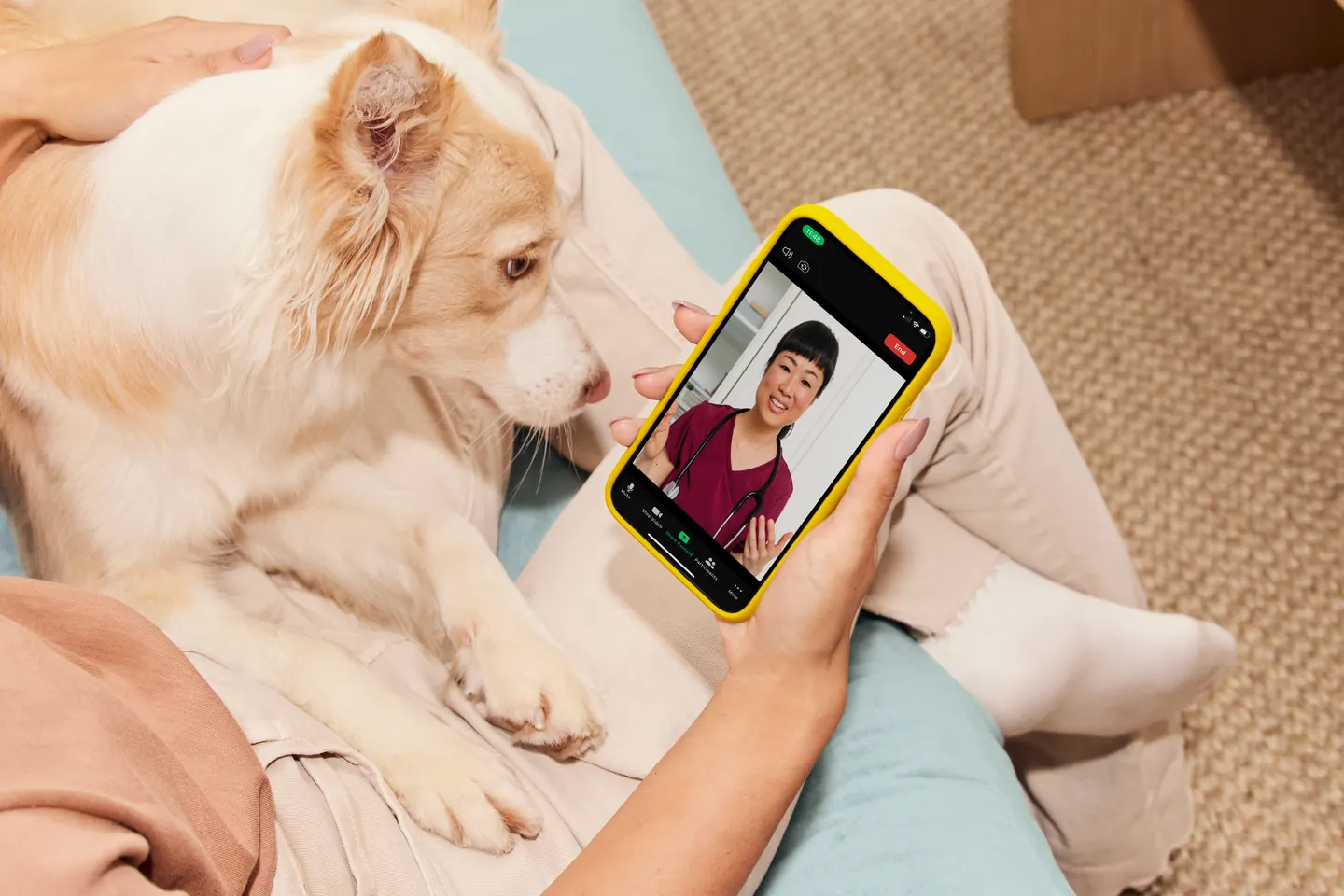
Talk to a licensed vet at Dutch over video, often the same day. They can recommend treatment and prescribe it when it's appropriate.
Use code Pets30
Plans start at $11/month · covers up to 5 pets
- Licensed vets in most states
- Rx for 150+ conditions
- 4.7 on Trustpilot
How heated dog beds work: electric, self-warming, and outdoor
A heated dog bed helps dogs that struggle to stay warm, such as seniors, dogs with arthritis, and short-coated breeds. There are two main types: electric beds with a built-in heater, and self-warming beds that use no power. The one safety rule for any electric bed is to choose a thermostat-controlled, pet-specific product, never a human heating pad.
- 1Choose by the dog first: electric versus self-warming versus outdoor, then compare picks by use case.
- 2Electric pet beds with a preset thermostat warm to about dog body temperature when the dog lies down.
- 3Self-warming beds need no outlet but only give moderate warmth.
- 4Outdoor use calls for an outdoor-rated pad, a safe outlet, and real shelter.
Electric beds. According to K&H Pet Products, its thermostatically controlled beds sit only 10 to 15 F above room air when empty and warm to a maximum of 102 F when a pet lies on them, which is a dog's normal body temperature. K&H also says its beds are not pressure sensitive: warming depends on the insulation of the pet's body, not its weight.
Self-warming beds. A non electric heated dog bed has no heating element at all. K&H explains that an insulating layer holds the pet's body heat and a metalized, self-warming reflective layer radiates that heat back. K&H is candid that these beds provide moderate warmth, and only while the pet is in them.
Outdoor-rated pads. The Humane Society Veterinary Medical Association's Humane Pro fact sheet notes that heated beds rated for outdoor use work if you have an accessible, safe electrical outlet, while self-warming pads need no electricity but must stay dry.
Are there electric blankets for dogs?
Yes, in the form of pet-specific heated pads and beds, but a human electric blanket is not one of them. Veterinary Practice News reports that using a human electric blanket on veterinary patients is never recommended. If you want a heated blanket for dogs, or a heated blanket for a dog bed, look for a thermostat-limited pet product or a self-warming pad.
Why the low heat limit matters: the same Veterinary Practice News article notes that skin temperatures above 113 F can cause irreversible damage, and temperatures above 158 F can cause a full thickness burn.
What is the best warm dog bed for winter?
For most indoor dogs, the best warm dog bed for winter is a thermostat-controlled electric bed such as the Thermo-Snuggly Sleeper, which caps surface heat near body temperature. For a garage or dog house, use an outdoor-rated pad like the Lectro-Soft. For chewers or homes without a handy outlet, a self-warming bed is the safer choice, with less warmth.
Wherever you shop, online or at a pet store near you, the same checks apply:
- An indoor or outdoor rating that matches where the bed will go
- A safety listing such as MET
- A preset thermostat
- A protected cord
- The right size for your dog
A DIY heated dog bed made from a human heating pad fails those checks. Prices here are Chewy prices at the time of writing; the makers' own sites listed different prices, so check before you buy.
Our picks: the best heated dog beds
These four picks cover the most common situations: an indoor senior, a garage or porch dog, a small dog, and a dog that chews or sleeps far from an outlet. All but the Self-Warming Hut are plug-in beds. None is battery powered, rechargeable, USB, 12-volt, or solar, and we found no primary safety specifications for those cordless and wireless styles to compare them fairly.
K&H Thermo-Snuggly Sleeper Heated Dog Bed: best overall
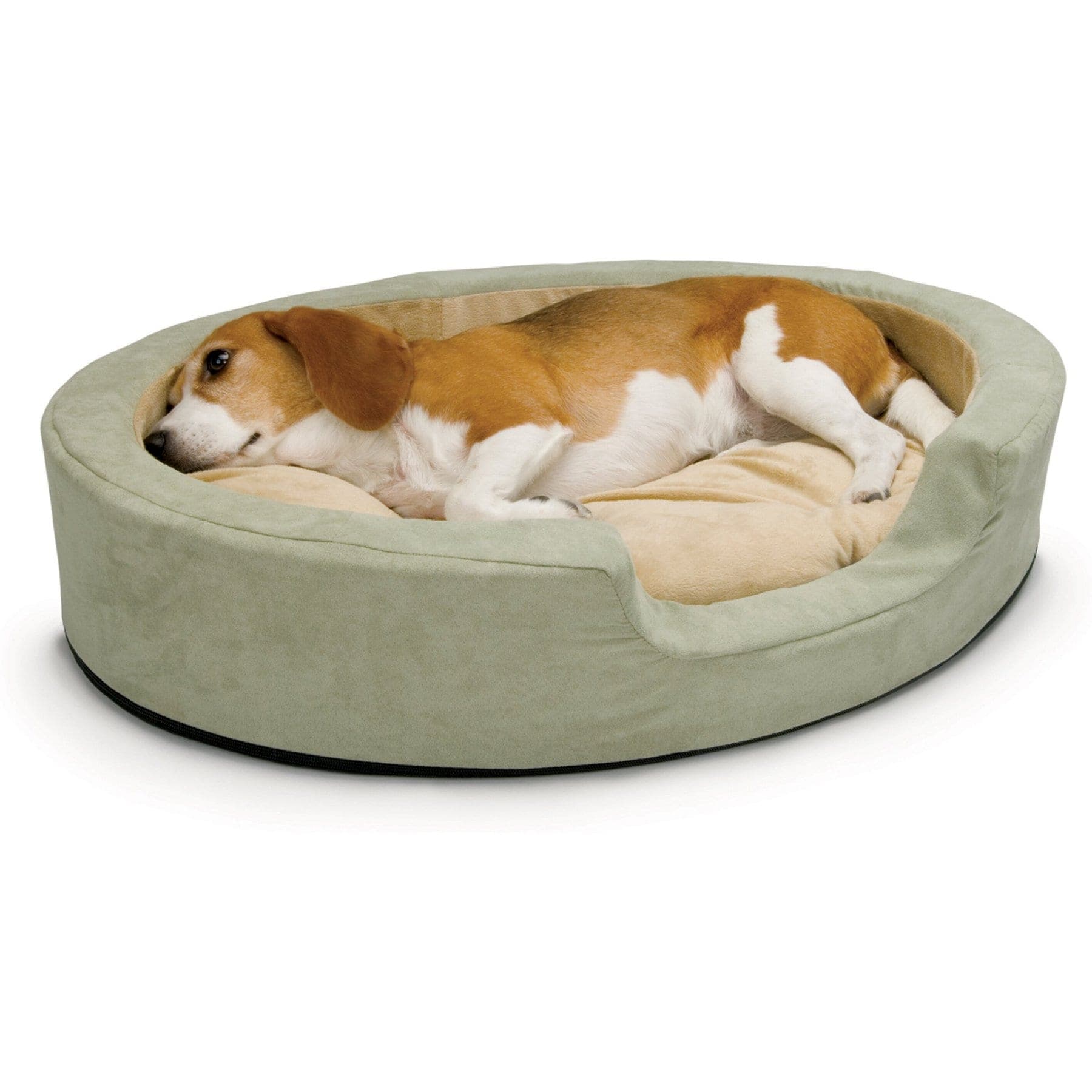
A 6 W, MET listed indoor bed with preset thermostats that warm to about body temperature when your dog lies down.
Webvet may earn a commission when you click through to Chewy, at no extra cost to you.
The K&H Pet Products Thermo-Snuggly Sleeper is an electric heated dog bed for indoor use, and it is the pick we would start with for a stiff, older dog. K&H's product page lists only 6 watts of power use, internal preset dual thermostats, and a MET listing for safety.
- Sizes: Medium is recommended for pets up to 30 lb (26 x 20 x 5.5 in) and Large for pets up to 50 lb (30 x 22 x 6 in).
- Heat: the surface sits about 15 F above room air until the dog lies down, then warms to about 102 F.
- Care: the heater is removable and the entire cover is washable.
- Cord: 5.5 feet, and K&H says not to use an extension cord.
Who it suits: small to medium indoor dogs that like a bolstered bed. Tradeoff: it is the priciest pick at $133.32 on Chewy, and it is not a large heated dog bed for giant breeds. K&H also says not to place the pad where a pet cannot get off it.
K&H Lectro-Soft Outdoor Heated Pad: best for garages and porches
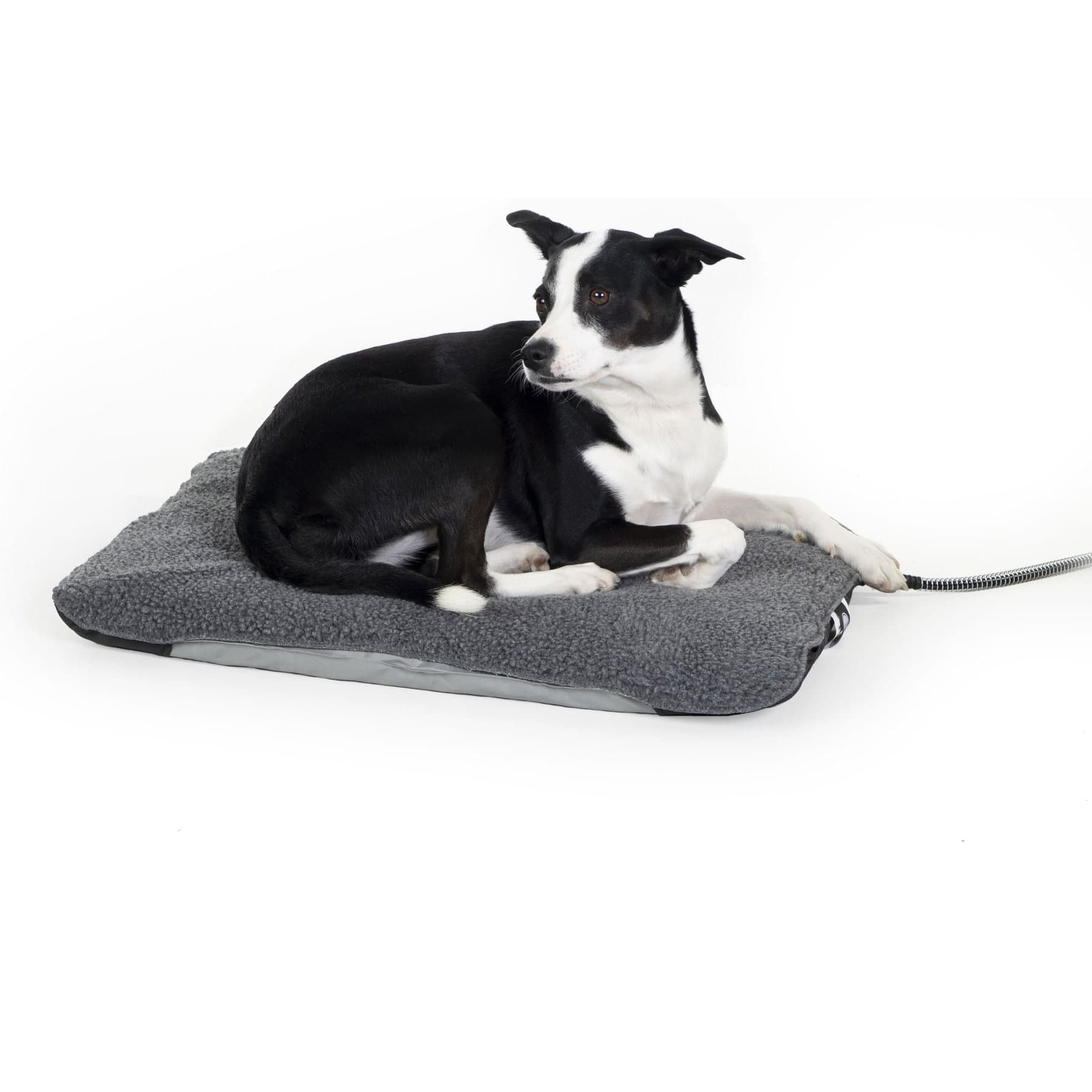
An indoor/outdoor heated pad, MET Labs certified, thermostat-set to 102 F, for garages, porches, and dog houses.
Webvet may earn a commission when you click through to Chewy, at no extra cost to you.
The K&H Lectro-Soft is the only one of our four picks its maker lists for indoor and outdoor use. K&H says it is thermostatically controlled to a pet's normal body temperature of 102 F and is tested and certified by MET Labs.
- Wattage by size: 20 W (Small, 14 x 18 in), 40 W (Medium, 19 x 24 in), 60 W (Large, 25 x 36 in).
- Power: 110/120 V only, with no on/off switch, so it is on whenever it is plugged in.
- Cord: 5.5 feet and steel wrapped.
- Cover: ships with a fleece cover, and K&H says to use only that cover.
Who it suits: dogs that sleep in a garage, kennel, or covered porch. Tradeoff: K&H says it is not recommended for destructive pets, so it is a poor fit for a dog that chews bedding. The Medium is $89.99 on Chewy.
PawsPik Indoor Electric Heated Bed: best for small dogs
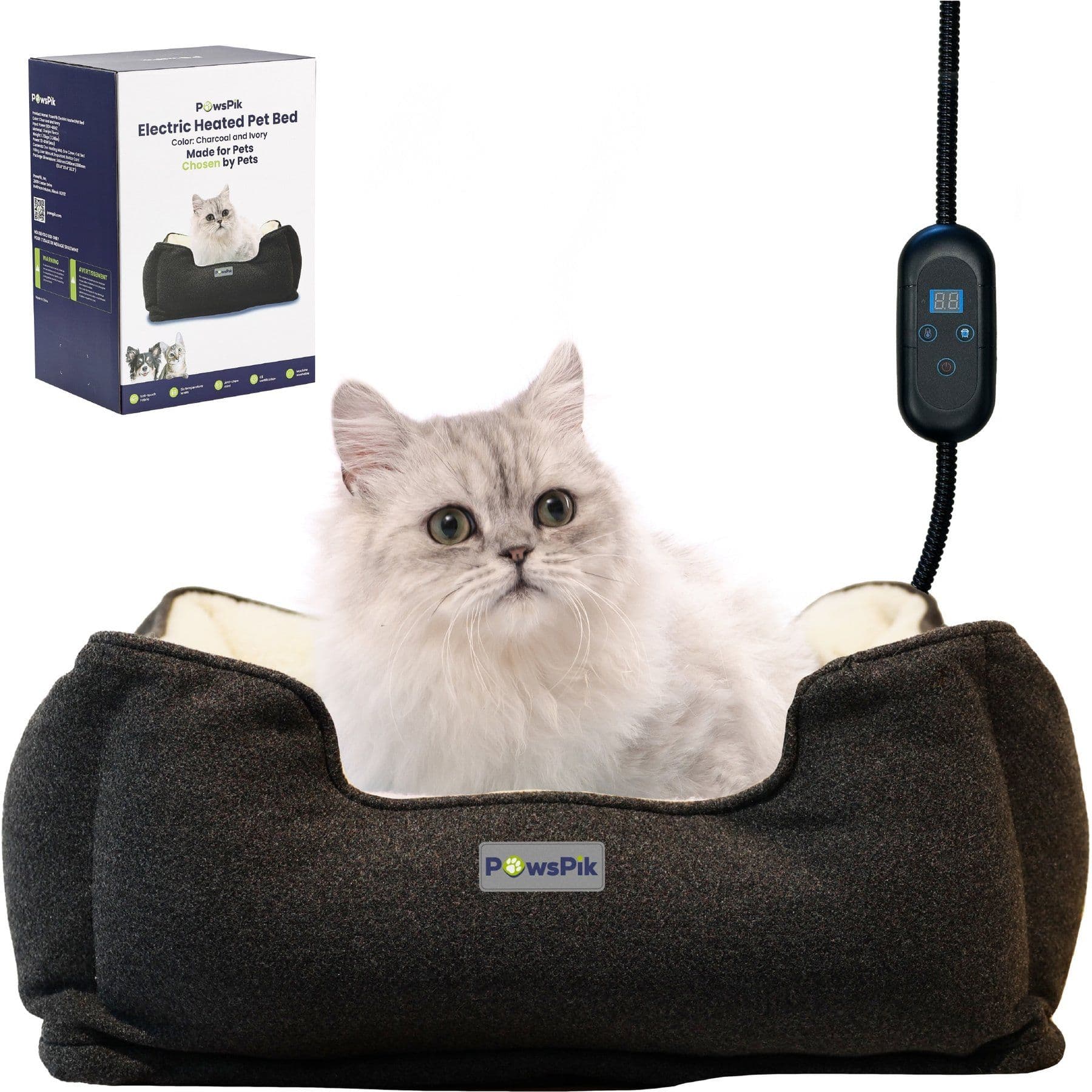
A sherpa-lined indoor bed for small dogs with a timer and chew-resistant cord; start on the lowest heat setting.
Webvet may earn a commission when you click through to Chewy, at no extra cost to you.
The PawsPik Indoor Electric Heated Bed is a heated dog bed for small dogs and cats, with a bolstered shape that suits dogs who curl up. PawsPik's product page lists a 110 V input, six heat settings, a 2 to 24 hour timer with automatic shutoff, built-in overheating protection, and a chew-resistant cord.
This bed works differently from the K&H beds, so read the specs carefully:
- Listing: PawsPik lists it as CE certified. It is not MET or UL listed.
- Temperature: the published range is 97 F to 131 F, so the higher settings run well above a dog's 102 F body temperature. It is not a body-temperature-only thermostat bed.
- Wattage: not listed on the product page.
- Size: 22 x 16 x 8 in, indoor use only, so it is not a pick for large dogs.
Who it suits: a small, thin-coated dog in a cool house, with an owner around to supervise. Use the lowest setting and check on your dog while the bed is on. Tradeoff: less built-in heat limiting than the K&H beds. The Small is $59.99 on Chewy.
K&H Self-Warming Hut: best no-electric option
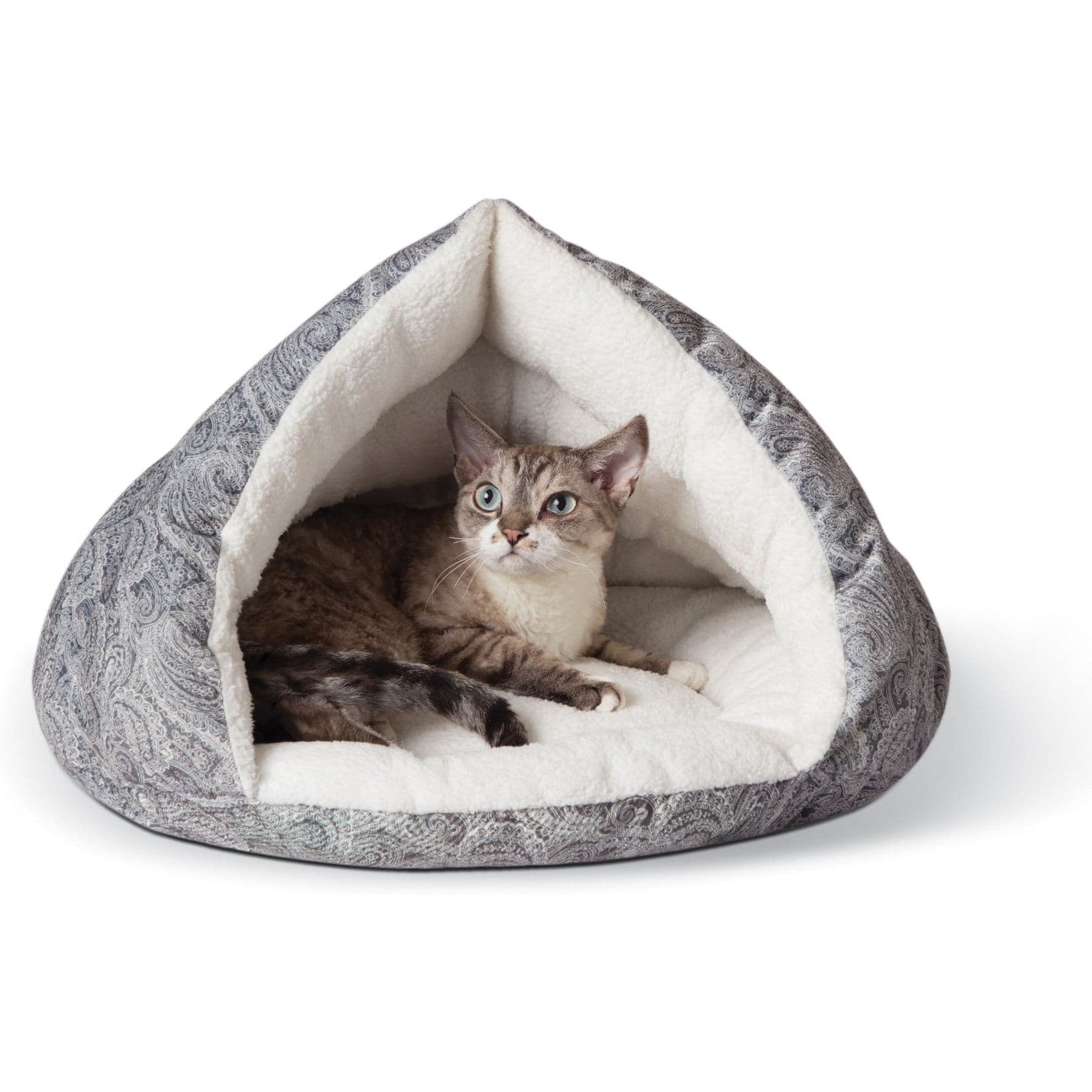
No cord and no outlet needed: a small covered hut that holds and returns your dog's own body heat.
Webvet may earn a commission when you click through to Chewy, at no extra cost to you.
The K&H Self-Warming Hut needs no electricity. K&H's hut page says its self-warming material captures the pet's body heat and radiates the warmth back, and it measures 18 x 19 in for cats or small dogs. K&H's general self-warming explanation describes a reflective layer as the part that sends that heat back.
Who it suits: dogs that chew cords, homes where an outlet is not practical, and owners who prefer no electric heat. Tradeoff: K&H describes self-warming beds as moderate warmth only, and this hut is small-dog sized. It is the lowest-cost pick at $38.98 on Chewy.
 Sponsored
Vet care that's always there
Unlimited video calls and messaging with licensed vets for less than a typical vet visit. One membership covers up to five pets.
Use code Pets30
Plans start at $11/month · covers up to 5 pets
- Licensed vets in most states
- Rx for 150+ conditions
- 4.7 on Trustpilot
Are heated dog beds safe?
A pet-specific, thermostat-limited bed used as directed is a reasonable choice, but heat and electricity carry real risks, so cord and overheating safety come first. VCA Animal Hospitals warns that heating pads can heat up over time and cause burns, especially in elderly, arthritic, or sick pets who sleep deeply or have a hard time rising.
VCA also names cord chewing as an added risk. In 2012, the U.S. Consumer Product Safety Commission recalled a brand of 50 W indoor pet heating mats for poor wiring and construction that posed fire and shock hazards, including one fire in which a dog died. That is why a safety listing and an intact cord matter.

There is no truly chew proof heated dog bed. No primary veterinary source we found says a MET or UL listing makes a bed safe around chewers, and neither maker publishes an independent chew test. If your dog chews, a cordless heated dog bed in the self-warming style is the safer route.
What is the safest heating pad for pets?
The safest heating pad for pets is one made for pets, with a preset thermostat and a protected cord, not a human heating pad. Veterinary Practice News reports that a veterinary liability insurer strongly discourages human-use electric heating pads in clinics. A self-warming pad removes the electrical risk entirely.
Are heated dog beds good for dogs?
They can be, for the right dog. Warmth may ease stiffness in a dog with arthritis, and seniors and thin-coated dogs lose heat easily. But the best heated dog bed for arthritis must be thermostat-limited, because VCA says arthritic and elderly pets are also the most likely to be burned by a pad they cannot easily leave.
Sources also differ on covers. VCA's advice for a general heating pad is to use the lowest setting, cover it with several blankets, and always supervise. K&H says a blanket can trap heat and cause its pad to malfunction, and to use only its own cover. For a pet-specific bed, follow the manual. No primary source gives a figure for how often pet heated beds cause burns.
Which dogs benefit most from a heated bed
Some dogs gain a lot from extra warmth, and a few should skip electric heat entirely.

Dogs that tend to benefit:
- Dogs with osteoarthritis. VCA's osteoarthritis guidance says cold, damp conditions may worsen stiffness, and calls OA one of the most common chronic conditions in dogs. The Merck Veterinary Manual lists warm compresses to affected joints as part of OA treatment, though it does not mention heated beds. Learn the signs of osteoarthritis in dogs.
- Seniors. Cornell University College of Veterinary Medicine says older, underweight, or ill dogs may have trouble staying warm. Our senior dog health guide covers other age-related needs.
- Short-coated and very young dogs. VCA says short-haired, very young, and senior dogs are at greatest risk from cold exposure, and Cornell says thin coats tolerate cold less well than thick double coats.
Dogs that should not have an electric bed, or need extra care:
- Chewers and destructive dogs. K&H says the Lectro-Soft is not recommended for destructive pets. Choose self-warming instead.
- Dogs that cannot move off the bed easily. VCA flags elderly, arthritic, or sick dogs as the highest burn risk, so they need a thermostat-limited bed, room to move off it, and supervision.
- Dogs confined to a crate. VCA says never lock a pet in a crate or carrier with a heating pad.
For joint support beyond warmth, see our guide to senior dog joint pain.
Do dogs prefer to sleep warm or cold?
No study we found directly tests whether dogs prefer to sleep warm or cold. A peer-reviewed study in PubMed Central of farm dogs gives a thermoneutral zone of 20 to 30 C and suggests coats improved sleep through better thermal comfort. Preference varies, so give your dog room to move on or off the heat.
Heated beds for outdoor, garage, and kennel dogs
A heated dog bed for outdoor use must be rated for it. Of our picks, only the K&H Pet Products Lectro-Soft Outdoor Heated Pad, Gray, Medium is listed by its maker for indoor and outdoor use. K&H says to place it on a hard, flat surface sheltered from direct rain or snow, away from spots where rain could leave standing water.
K&H also says not to immerse, bend, or fold the pad, and not to place it on top of another bed or blanket. The product page calls it both waterproof and water-resistant, so treat it as water-resistant. Heated outdoor pet mats like this still need a safe, accessible outlet.
A heated pad is not a substitute for shelter. For a heated dog kennel or heated dog house outdoor setup, the sources agree on the basics:
- Insulated, waterproof shelter. The ASPCA says an outdoor large dog needs an insulated, waterproof dog house and fresh water.
- The right size, raised up. VCA says the house should let the dog stand, lie down, and turn around, and be elevated a few inches to prevent moisture.
- Dry bedding. Cornell recommends dry bedding elevated off the ground and says outdoor dogs must be acclimated to the cold.
- Supervision in cold snaps. VCA says it is best not to leave any dog outdoors unsupervised when the temperature drops, and the ASPCA says never to leave a dog outside during a snowstorm or severe weather.
VCA also says outdoor living is generally not recommended for dogs with osteoarthritis. No primary source sets a specific temperature at which a heated pad stops being enough. For temperature guidance by dog size and coat, see how cold is too cold for dogs, and learn the warning signs of hypothermia and frostbite in dogs.
What to look for in a heated dog bed
Match the bed to the dog, then check the safety features that matter for that use.
| Dog type | Bed type | Must-have safety feature | Our pick |
|---|---|---|---|
| Senior or arthritic dog indoors | Electric bolster bed | Thermostat-controlled to about body temperature, MET listed | K&H Thermo-Snuggly Sleeper |
| Small, thin-coated dog indoors | Small electric bed | Chew-resistant cord, timer, lowest setting with supervision | PawsPik Indoor Electric Heated Bed |
| Garage, porch, or kennel dog | Outdoor-rated electric pad | Thermostat-controlled, steel wrapped cord, outdoor rating | K&H Lectro-Soft Outdoor Heated Pad |
| Chewer or no outlet nearby | Self-warming bed | No cord at all | K&H Self-Warming Hut |
Then check these features, most important first:
- Thermostat. A preset thermostat that limits heat is the most important feature. K&H's beds use internal preset thermostats. Multi-setting beds like the PawsPik let you choose the temperature, which puts the limit in your hands.
- Safety listing. K&H's Thermo-Snuggly is MET listed and the Lectro-Soft is MET Labs certified. K&H's FAQ notes that MET requires the statement "Do not use with extension cord" on every MET listed item under UL 499.
- Wattage. Shoppers often ask for a low-voltage heating element, but what makers actually publish is wattage. The K&H Pet Products Thermo-Snuggly Sleeper Heated Dog Bed, Sage/Tan, Medium draws 6 W, and the Lectro-Soft draws 20 to 60 W by size. PawsPik's safety article suggests looking for beds that use minimal electricity, often under 20 watts.
- Cord protection. Look for a chew-resistant cord or a steel wrapped cord. Neither maker publishes an independent chew test, so a protected cord lowers risk but does not make a bed chew proof.
- Washable cover: the Thermo-Snuggly's heater comes out so the whole cover can be washed.
- Correct cover: on an outdoor pad, use only the cover the maker supplies.
- Fit: the Thermo-Snuggly Large is for dogs up to 50 lb, and a large or extra large dog will not fit the Hut or the PawsPik Small. For a big dog that mainly needs cushioning, see our best orthopedic dog bed guide.
How to use a heated dog bed safely
Good habits matter as much as the bed you choose, and placement and supervision matter most. These steps come from the makers' instructions and VCA's guidance.

- Test the heat first. K&H suggests placing a large pillow on the bed for about 20 minutes, then feeling underneath. It should feel warm, not hot.
- Plug straight into the wall. K&H says an extension cord is not recommended as a permanent fixture.
- Leave an escape route. Put the bed where your dog can step off it. Never place it in a confined area or lock a dog in a crate with it.
- Check the cord often. Route it out of reach and replace the bed if the cord is damaged.
- Start low and supervise. On adjustable beds, use the lowest setting, especially with seniors, arthritic dogs, or dogs that sleep deeply.
- Unplug for long trips. K&H says its beds are designed for 24/7 use, but notes that MET Safety Laboratories suggests unplugging during an extended vacation.
What can keep a dog warm at night?
A thermostat-controlled heated dog bed is one option, but not the only one. VCA notes that a cozy nest of bedding and blankets in a sunny spot is a safe, no-electricity way to keep a pet snug. VCA also suggests an orthopedic or memory foam bed for dogs with osteoarthritis, and a self-warming pad adds gentle warmth.
Heated dog bed questions
Frequently Asked Questions
What is the warmest thing to put in a dog house?
Straw bedding is the standard answer. Cornell says straw works well as an insulator in dog houses, and Humane Pro warns that blankets, towels, and cloth beds hold moisture and may freeze. VCA adds that the dog house should be raised off the ground a few inches to keep moisture out.
Can I leave a heated dog bed on all night?
K&H says its thermostat-controlled beds are designed for 24/7 operation, which is a manufacturer claim. They are not low-voltage beds: the Lectro-Soft, for example, runs on standard 110/120 V household current at 20 to 60 W. Supervise older or less mobile dogs, and make sure your dog can always step off the bed.
How warm does a heated dog bed get?
It depends on the bed. K&H's beds stay 10 to 15 F above room air when empty and warm to a maximum of 102 F body temperature only when the dog lies on it. Adjustable beds can run hotter: PawsPik's published range is 97 F to 131 F, so start on the lowest setting.

Editor
The Webvet Editorial Team is the in-house group of pet-care editors and writers behind Webvet, operated by Smart Pet Collective. The team researches, writes, and maintains Webvet's pet health, behavior, and medication content. Every article follows a defined editorial process: research from reputable veterinary and scientific sources, careful drafting, mandatory review of medical content by a credentialed veterinarian, and dated publication. Health and medication articles are medically reviewed by a licensed veterinary professional before they go live and are kept current over time.
Veterinarian · BVMS MRCVS
Dr. Pippa Elliott, BVMS, MRCVS, is a veterinarian with nearly 30 years of experience in companion animal practice. Dr. Elliott earned her Bachelor of Veterinary Medicine and Surgery from the University of Glasgow. She was also designated a Member of the Royal College of Veterinary Surgeons. Married with 2 grown-up kids, Dr. Elliott has a naughty Puggle named Poggle, 3 cats and a bearded dragon.


