Best Dog Lift Harnesses for Rear-Leg and Full-Body Support
Compare front-and-rear harnesses, rear-only support, and light assistance by the task your dog needs, with practical fit checks, caregiver planning, and exact product limits.

BVMS MRCVS
Medically reviewed by Dr. Pippa Elliott, BVMS MRCVS · Last reviewed

This article contains affiliate links. Webvet may earn a commission when you buy through them, at no extra cost to you.
The best dog lift harnesses match the part of your dog that needs help and the movement your veterinarian wants you to support. A rear-support device, a front-and-back harness, and a light walking harness with a handle are not interchangeable. Our four choices cover those different tasks, including a brief rear-steadying leash that must never be used to lift the whole dog off the ground.
 Sponsored
Wondering why your dog seems stiff or sore?
Talk to a licensed vet at Dutch over video, often the same day. They can recommend treatment and prescribe it when it's appropriate.
Use code Pets30
Plans start at $11/month · covers up to 5 pets
- Licensed vets in most states
- Rx for 150+ conditions
- 4.7 on Trustpilot
How to choose the best dog lift harness
Start with the task, not the handle. Helping a dog stand for a bathroom break is different from supporting both ends during a transfer. A dog who walks independently but occasionally needs a small boost has a different need from one who cannot bear weight. Tell your veterinarian what the dog can currently do and where you need help, then choose the support region and device together.
The CareLift Full Front & Back is the front-and-rear option in this comparison. The CareLift Rear Portion is for rear support when that is the appropriate assistance. Ruffwear's Flagline is a light lift-and-assist walking harness for an ambulatory dog. The Walkin' Pets Up-n-Go is for brief hind-end stabilization while standing or walking, with an explicit manufacturer prohibition on completely lifting the dog off the ground.
Separate frequent assistance from an occasional transfer when describing your needs. A device that is quick to position for one short bathroom trip may be inconvenient for a different routine, while a more involved harness may require preparation that one caregiver cannot manage alone. Also consider how the dog tolerates putting the equipment on. The best purchase solves the actual repeated task without introducing a difficult fitting process or a support pattern the dog does not need.
- 1Choose rear support or full-body support according to the dog's assessed needs.
- 2Match the dog's measurements and your handle reach before attempting a supported movement.
- 3A handle does not turn a walking harness or rear-support leash into a full-body hoist.
We compared the exact products' published support designs, fit information, handling limits, and care instructions. We did not test lifting strength, pressure distribution, recovery outcomes, or caregiver comfort. The best dog harnesses according to reviews will differ by task, and this guide does not establish an independent star-rating winner. A useful review identifies the dog's measurements, support need, and owner's handling experience; a general “easy to lift” comment cannot establish suitability for your dog's condition.
Before ordering, describe a typical difficult moment in concrete terms. Perhaps the dog can walk once upright but struggles to rise, or the front legs work well while the rear slips during a short trip outside. Include the floor surface, steps, doorway, and whether one or two people are available. That information is more useful than simply asking for the strongest harness or choosing a size from body weight alone.
Keep a short list of purchase questions ready for the manufacturer or clinic: which measurement chooses this size, which parts support weight, whether the handle arrangement suits your reach, and what must be removed between uses. Ask about the complete product rather than a photograph of a handle. If the answers do not establish the intended support task, continue comparing before ordering. A return window is helpful for fit uncertainty, but it is not a reason to trial an unsuitable lift.
| Device | Intended role here | Useful distinction | Main limit |
|---|---|---|---|
| Solvit CareLift Full Front & Back, Medium | Front-and-rear support | Support panels and handles at both ends | Requires correct fit and an individual handling plan |
| CareLift Rear Portion, Medium | Rear support | Rear panel with handles and lifting leash | Does not support weak forelimbs |
| Ruffwear Flagline, Medium | Light ambulatory assistance | Handle with chest and belly panel | Not a full-body rehabilitation hoist |
| Walkin' Pets Up-n-Go | Brief rear steadying | Adjustable rear loops and handle | Never completely lift the dog off the ground |

New weakness, pain, or inability to stand needs assessment rather than an equipment purchase alone. Our guide to a dog's back legs trembling explains why similar-looking movement problems can have different causes. A support harness can assist an agreed movement, but it does not diagnose the cause or establish how much activity is appropriate. If the dog suddenly cannot stand, appears severely painful, or deteriorates quickly, contact a veterinarian promptly.
Cost comes after suitability. Compare the exact support components included, the size chart, the cleaning method, and any return restrictions. A less expensive rear aid is not a substitute for front-and-rear support when both ends need help. Equally, a more elaborate harness is not automatically better for a dog who only needs a brief, carefully supervised balance aid. Buy for the defined task and reassess when that task changes.
Four dog lift harnesses for different needs
Solvit CareLift Full Front & Back Mobility Harness, Medium, Brown
The Solvit CareLift Full Front & Back Medium is the full-body-support candidate in this group because it provides front and rear support panels and handles. PetSafe's current CareLift information also describes a shoulder strap for Medium and Large sizes. That gives a caregiver a different support arrangement from a rear-only panel or a single handle on an ordinary walking harness.
The manufacturer lists Medium measurements of 19 to 31 inches at the waist and 24 to 33 inches at the girth, with a 35-to-70-pound weight range. All three checks matter. A dog within the weight range can still fall outside a body measurement or have a shape that requires a different fit. Use the current measuring diagram and ask for help when the measurements do not clearly point to one size.
- Choose it for: a dog whose clinician recommends support at both front and rear.
- Check first: waist, girth, panel position, handle reach, and the planned movement.
- Main tradeoff: more support components also mean more fitting and positioning checks.
PetSafe's CareLift Support Harness information identifies machine-washable mesh and a removable protection shield for male dogs. Follow the instructions for the shield and check actual toileting clearance after fitting. A feature intended to improve comfort still needs to sit correctly on the individual dog. Wet fabric, folded padding, or pressure in the wrong area is a reason to stop and refit.
Do not assume that having handles at both ends tells you how to use them for every condition. Ask the veterinary team to demonstrate the amount and direction of assistance, the dog's permitted weight bearing, and how you should coordinate with another caregiver. The harness can distribute support through its intended panels, but the owner must still avoid twisting the dog or letting one end drop unexpectedly.
The shoulder strap may change the caregiver's hand position, but it does not make a heavy transfer automatically safe for the owner's back. Practice fitting and reaching before taking meaningful weight. If you cannot maintain stable footing or control the movement comfortably, obtain assistance or ask for a different transfer plan. A published size range is not a personal lifting-capacity recommendation.
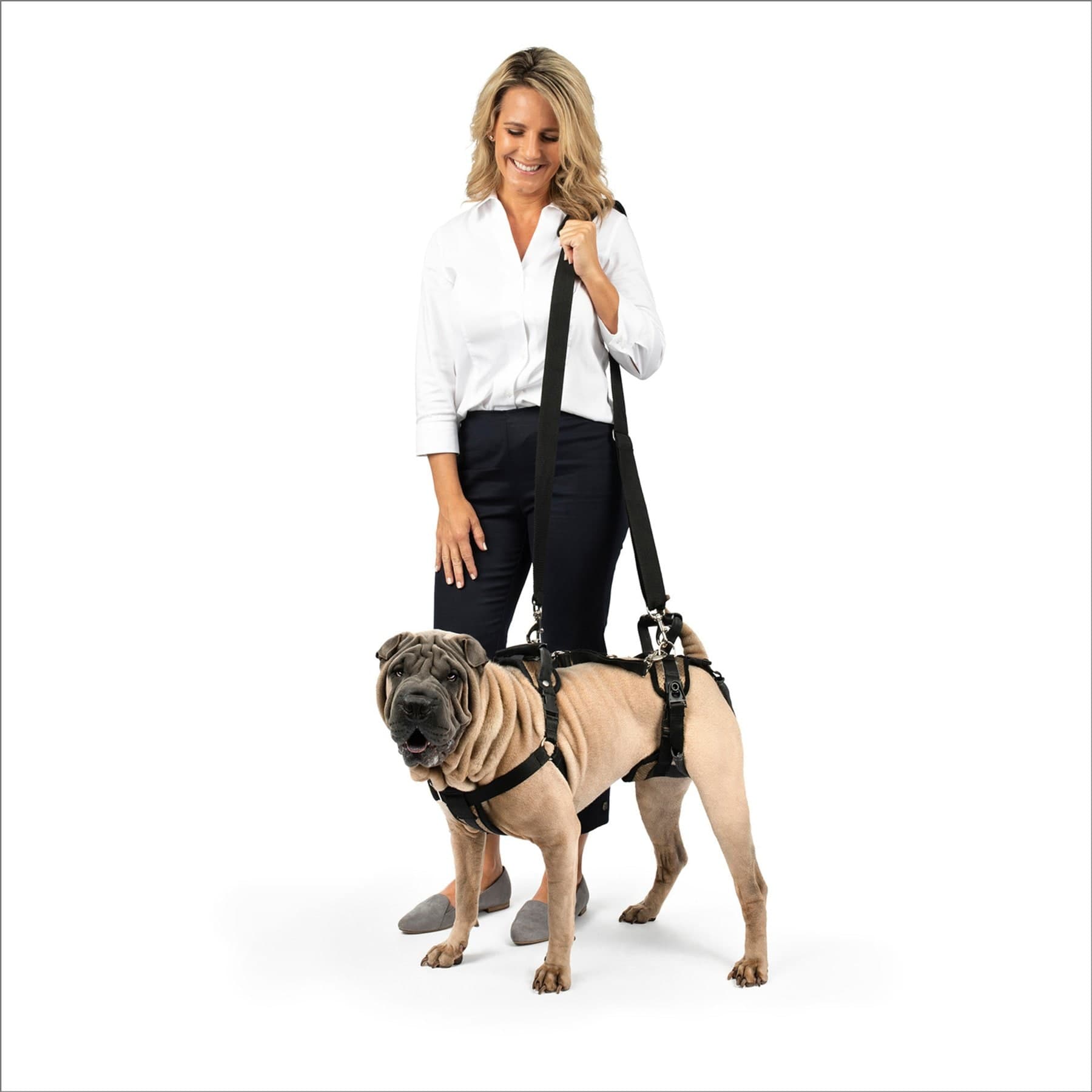
Front and rear panels and handles for a clinician-directed full-body support plan.
Webvet may earn a commission when you click through to Chewy, at no extra cost to you.
CareLift Rear Portion Lifting Aid Mobility Harness, Medium, Brown
The CareLift Rear Portion Medium is the rear-only choice. Its padded rear support sits around the hips and abdomen, with support handles and an included lifting leash. Consider it when the dog's forelimbs can perform the required part of the task and the veterinary team recommends assistance at the rear. It cannot compensate for inadequate support at the front simply because the rear panel feels substantial.
PetSafe lists the Medium rear harness for a 19-to-31-inch waist and a 35-to-70-pound weight range. The waist measurement is a fit requirement, not an optional check after choosing by weight. Follow the exact rear-harness diagram. Do not assume the same size from another brand or from the dog's everyday chest harness will describe the area this product supports.
- Choose it for: a defined rear-support need with an appropriate plan for the rest of the body.
- Check first: waist fit, padding position, male protection-shield instructions, and toileting clearance.
- Main tradeoff: rear assistance leaves the front of the dog unsupported by this device.
The CareLift Rear Support manufacturer page describes machine-washable mesh and the lifting leash extender. The extender can help adjust caregiver reach, but you still need to stand close enough to support the intended movement without pulling the dog's rear sideways. Set up the handle length while the dog is safely supported, then check it during a brief supervised trial.
For a bathroom trip, plan the route before applying assistance. Clear a direct path, provide suitable footing, and know where you can pause safely. The harness should help with the prescribed movement while allowing the dog to adopt the necessary posture as comfortably as possible. If the rear panel becomes wet or moves out of position, end the task safely and address the fit or cleaning problem.
If the dog begins stumbling at the front, leaning heavily, or struggling beyond the original problem, do not simply pull harder from behind. The support need may have changed. Contact the veterinary team and explain what you observed, including whether it occurred during standing, turning, or walking. Those details help determine whether the rear-only approach remains appropriate.
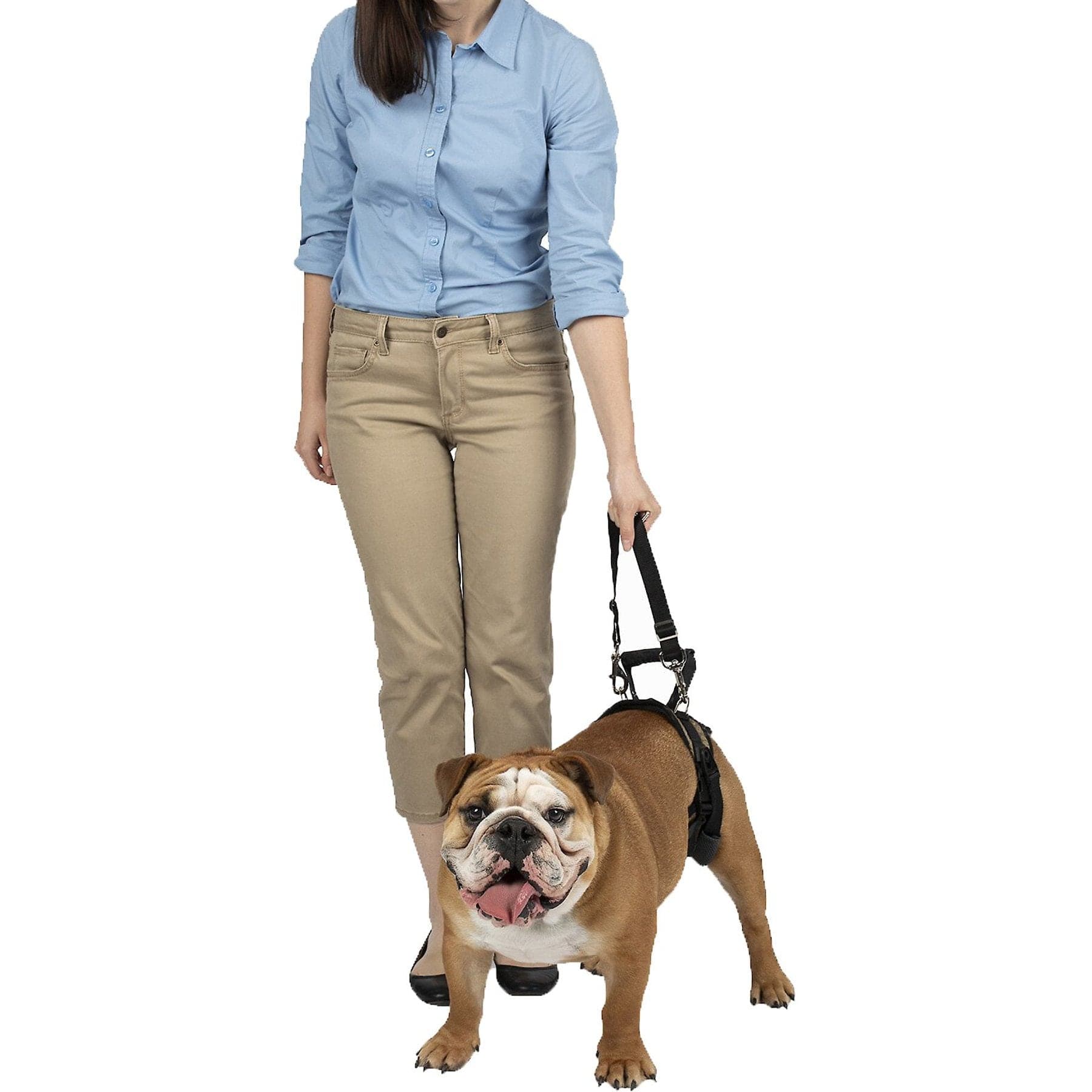
Padded rear support with handles and lifting leash when rear assistance is the appropriate task.
Webvet may earn a commission when you click through to Chewy, at no extra cost to you.
Ruffwear Flagline Front-Clip Dog Harness, Sage Green, Medium: 27 to 32-in chest
The Ruffwear Flagline Medium is the light-assistance choice for a dog who remains ambulatory. Its handle works with a load-dispersing chest and belly panel, and the design has six adjustment points. The selected Medium is identified for a 27-to-32-inch chest. This is a walking and lift-and-assist format, not a full-body rehabilitation hoist for a dog who cannot support themselves.
That distinction is central to the purchase. A healthy or appropriately assessed dog needing an occasional small assist over an everyday obstacle has a different requirement from a dog needing a controlled medical transfer. The Flagline's presence in this list does not make it equivalent to the front-and-rear CareLift system. Confirm the intended activity and the dog's ability before taking weight through the handle.
- Choose it for: light assistance during an otherwise appropriate ambulatory activity.
- Check first: chest measurement, each adjustment point, panel position, and freedom of movement.
- Main tradeoff: a convenient handle is not permission for full-body suspension or medical lifting.
Ruffwear's Flagline product information describes the handle and chest/belly support design. Use the exact fitting instructions and examine the harness while the dog moves, not just while standing still. The panel and straps should remain in their intended positions as the dog turns or takes a few steps. A harness that rotates or changes the dog's comfortable gait needs reassessment.
Do not select this model solely because a trainer or an owner praises it for walking. Leash manners, escape resistance, and rehabilitation support are different questions. The number of adjustment points can help with fit, but it does not guarantee a dog cannot back out or that the harness cannot rub. Supervision and a fitting trial remain necessary, especially when the dog has unusual proportions or reduced mobility.
For a dog with an existing injury or recovery plan, show the exact product to the veterinary team before using the handle for assistance. Ask whether the pressure-bearing area and proposed movement suit the dog's needs. If the answer calls for support at both ends, follow that recommendation rather than trying to adapt a light walking harness to a heavier job.
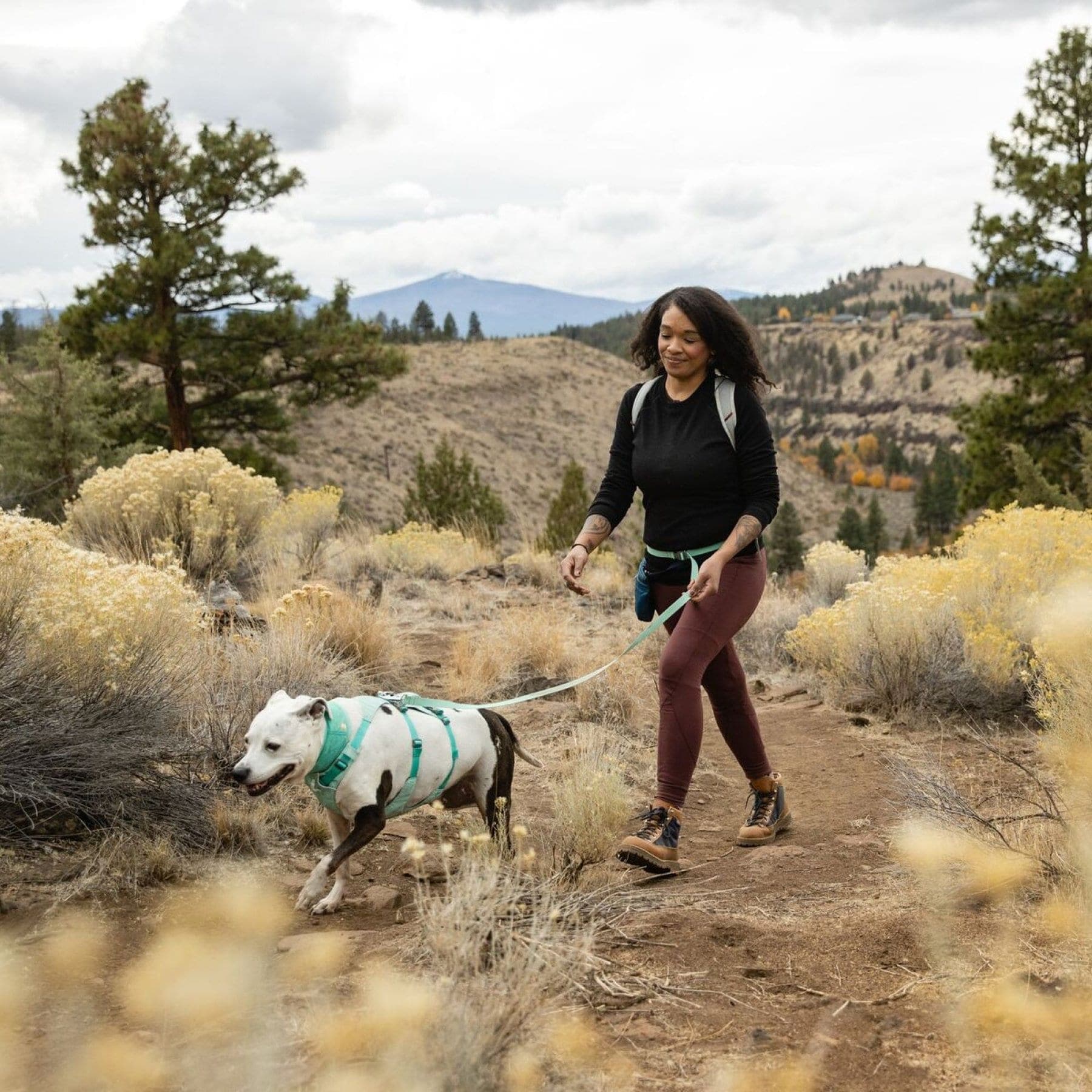
A chest-and-belly panel and handle for light assistance in an ambulatory dog, not a rehabilitation hoist.
Webvet may earn a commission when you click through to Chewy, at no extra cost to you.
Walkin' Pets Up-n-Go Dog Leash
The Walkin' Pets Up-n-Go is a brief rear-steadying aid. Its adjustable loops fit around the rear legs, with padded areas and an adjustable handle to help the caregiver stabilize the hind end. Walkin' Pets explicitly states that the device is not intended to completely lift the dog off the ground. Choose it only for the supported standing or walking task it is designed to assist.
This is the simplest format here, but simple does not mean interchangeable with a full harness. The manufacturer notes that the loops can slide down the dog's legs when pressure is not being applied. That makes the handling sequence and supervision especially important. It is not equipment to leave hanging loosely on the dog while they move around independently or rest unattended.
- Choose it for: brief, gentle hind-end stabilization while a dog stands or walks.
- Check first: the exact size, loop position, pad placement, and handle reach.
- Main tradeoff: it must not carry the dog's whole body weight off the ground.
The Walkin' Pets rear-support leash instructions describe two sizes and instruct the caregiver to hold the handle above the hips rather than over the tail. Match the exact purchased version with those instructions. This selected listing should not be assumed to include both sizes, and the Mini and standard versions should not be treated as the same fit range. The manufacturer describes adjustable leg loops of 6 to 12 inches for the standard Up-n-Go and 4 to 8 inches for the Mini. Compare the package identity with the appropriate chart before fitting. A loop that can be adjusted around a leg does not, by itself, establish that the padded support sits correctly or that the planned movement is appropriate. Ask for help if the size or placement remains uncertain.
The manufacturer allows spot cleaning as needed. Inspect the padded loops and keep them clean and dry against the dog. Before the first use, ask for a demonstration if you are unsure where the loops should sit or how much assistance to provide. A brief trial on a level, suitable surface is a better place to discover a fitting problem than a step, vehicle threshold, or urgent bathroom trip.
If your dog needs to be picked up completely, choose a different clinically appropriate support plan. Do not respond by shortening the Up-n-Go handle, pulling higher, or combining it with an improvised front strap. The manufacturer's limit remains the same even if the dog is light enough for the owner to lift. The question is how the device supports the body, not just whether the owner can raise it.
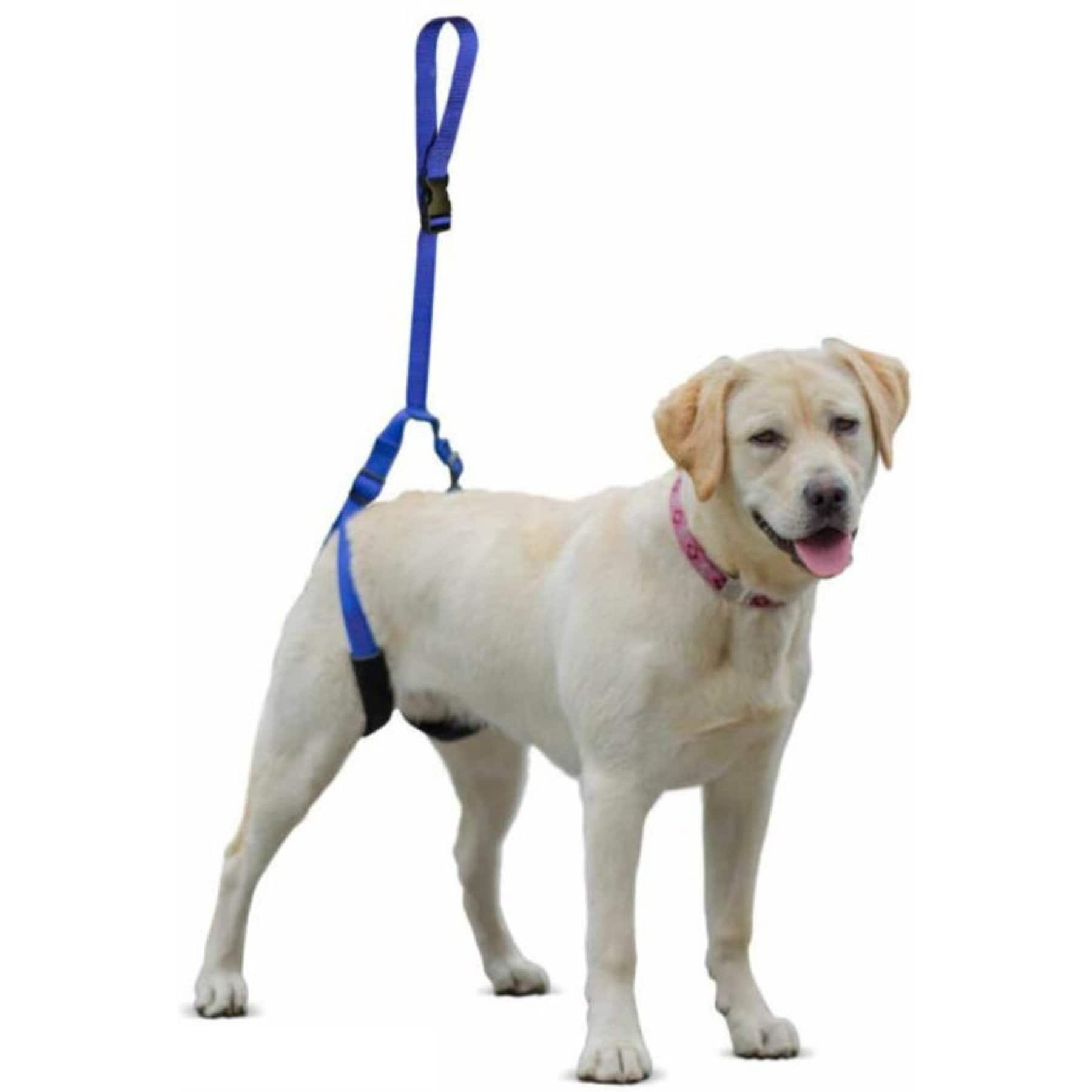
Adjustable rear loops for brief standing and walking support; never completely lift the dog off the ground.
Webvet may earn a commission when you click through to Chewy, at no extra cost to you.
Rear support, full-body support, and light assistance
The best full-body support harness in this shortlist to discuss with the veterinary team is the CareLift Full Front & Back because it is the selected device designed to support both regions. That is a task-based recommendation, not evidence that every dog needing help should use it. Expert recommendations depend on the diagnosis, fit, permitted movement, and caregiver. A product description cannot replace those individual decisions.

| Support decision | Candidate in this comparison | Check before use | What not to assume |
|---|---|---|---|
| Front and rear need support | CareLift Full Front & Back | Waist, girth, panel position, coordinated handling | Full-body support does not establish a safe transfer for every condition |
| Rear support is sufficient | CareLift Rear Portion | Waist, rear placement, front-leg function, toileting clearance | A rear-only device does not support weak forelimbs |
| Light assistance for an ambulatory dog | Ruffwear Flagline | Chest, adjustment, panel position, intended activity | A walking-harness handle is not a medical hoist |
| Brief hind-end steadying | Walkin' Pets Up-n-Go | Correct loops, pad position, handle above hips | Not complete lifting: never raise the whole dog off the ground |
Choose rear, front-and-rear, or light assistance
The Solvit CareLift full-body dog lifting harness supports front and rear, while the CareLift Rear Portion supports only the rear. Flagline is for light ambulatory assistance, and Up-n-Go is for brief rear steadying. These devices serve different jobs and are not interchangeable hoists.
Describe where support is needed during the actual task. A dog may rise with help at the rear but need a different arrangement for a transfer into a vehicle. Another dog may walk on level flooring yet struggle with a turn or threshold. Do not assume one observed success establishes permission for every other movement. Keep the support plan tied to the task the veterinary team assessed. Stairs require a separate handling plan: ask whether the dog should use them at all and have the veterinary team demonstrate the permitted support and number of caregivers. A rear-only aid must not be used to suspend the whole dog between steps. If a dog refuses to walk, first establish whether pain, weakness, fear, or another problem is involved; a lift harness is appropriate only for an identified support need, not for pulling an unwilling dog forward.
Rear support is appropriate only when the remaining body can do what the movement requires. Watch whether the dog can comfortably position and use the front legs, maintain balance, and move at the prescribed pace. A rear harness does not prevent the front from slipping on unsuitable flooring. Improving the route and obtaining help may be necessary alongside selecting the support device.
Coordinate front-and-rear assistance
For support at both ends, coordinated handling matters. If two caregivers are involved, agree who directs the movement and when to start, pause, or set the dog down. Ask the veterinary team to demonstrate the sequence with the actual harness and dog's needs in mind. Avoid one person lifting before the other is ready or pulling in opposing directions to correct an awkward position.
- Identify the movement: rising, a short walk, a threshold, or a planned transfer.
- Identify which regions require support during that movement.
- Confirm the device's permitted use and fit with the veterinary team.
- Check the route and the help available before beginning.
- Stop when the dog's comfort or your control differs from the agreed plan.
No harness can be guaranteed not to hurt a dog's shoulders. Fit, pressure location, underlying pain, and movement all matter. Check that straps and panels sit where the manufacturer intends and do not force a shortened stride or obvious discomfort. If shoulder pain or restricted movement is already present, ask the veterinarian which support pattern is suitable instead of choosing from a promise of unrestricted movement alone.
Likewise, no harness is universally impossible to pull out of. Correct adjustment and the dog's shape affect retention, especially when the dog backs up or changes direction. The Flagline's multiple adjustment points are a feature to evaluate, not an escape-proof guarantee. A rear-support aid has a different purpose from a secure walking restraint, so ask how to manage ordinary leash control separately during assisted outings.
Measure the dog and match handle reach
Use a flexible tape and the current measuring diagram for the exact product. Chest or girth measurements typically describe a different part of the body from the waist, and each manufacturer defines its landmarks. Do not move the tape to a more convenient location to obtain a size you prefer. Record the measurement, the model, and where the tape was positioned so another caregiver can repeat it accurately.
Measure while the dog is comfortable and safely positioned. If standing is painful or unsafe, ask the veterinary team how to obtain the needed measurements without forcing the posture. A helper may be useful for recording numbers or supporting an already approved position. Do not turn measuring into an unsupported transfer or keep repeating it when the dog is distressed.
Compare the entire chart, including any weight range, rather than stopping at the first number that matches. The selected CareLift Medium full harness requires both waist and girth checks; the rear version focuses on its waist fit. Flagline Medium is tied to its chest range. The Up-n-Go has its own loop and size information. These charts describe different interfaces with the dog's body.
- Record the exact chest or girth and waist measurements the model requires.
- Check the intended panel position and all available adjustments.
- Confirm clearance around the limbs, abdomen, and toileting areas.
- Check caregiver reach with the dog's actual height and posture.
- Reassess fit after movement and whenever body shape or support needs change.
Handle reach is part of fit. A low dog and a tall owner can create an awkward bend; an overlong handle may make precise support harder. Adjust only within the manufacturer's system and ask for a demonstration of the intended hand position. The caregiver should be able to stay close and balanced, rather than reaching across the dog or lifting with arms extended because the handle happens to be there.
For a male dog, follow the protection-shield instructions where the selected CareLift model supplies that feature. Check that the panel does not interfere with urination and that material does not become trapped or folded beneath the dog. For any dog, observe a supervised bathroom trip after fitting and inspect afterward. Toileting clearance is something to verify in use, not assume from a label stating that the product suits male and female dogs.
Compare the support choices in everyday situations
Consider a dog who needs help getting upright but then walks a short level route using the front legs normally. A rear-support aid may be the relevant category to discuss, with the choice between a padded harness and brief support loops depending on fit and the demonstrated task. The important observation is what happens after standing. If the dog cannot maintain the expected movement, do not assume that a larger rear handle or stronger pull will solve the problem.
Now consider a dog whose front and rear both need assistance during the intended transfer. The rear-only CareLift and Up-n-Go cannot provide the missing front support by themselves. The front-and-back CareLift is the relevant selected design to evaluate, together with caregiver coordination and an appropriate destination surface. This is a reason to ask for a specific demonstration before the first transfer, particularly when the owner has never handled a support harness before.
For an ambulatory dog who needs only a small assist during an otherwise suitable activity, the Flagline presents a different option. Its adjustment and chest/belly panel matter for that limited role. The fact that it is lighter and resembles an everyday walking harness may make it convenient, but does not expand its role into complete lifting. If the dog's needs progress beyond light assistance, reassess the category rather than continuing the same task with more force.
- Mostly independent walking: clarify whether occasional light assistance is enough.
- A defined rear-support need: confirm what the front of the dog must still do.
- Support needed at both ends: evaluate a coordinated front-and-rear system.
- An uncertain or changing pattern: obtain a fresh assessment before increasing assistance.
These examples are decision prompts, not diagnoses based on a few steps at home. A dog can appear similar to one example while having different restrictions because of an injury, surgery, pain, or another condition. Use the examples to explain the problem clearly to the veterinary team. Their value is in making the buying conversation specific, not in selecting treatment from a category name.
Distinguish an assistance handle from a lifting plan
An assistance handle gives you a place to apply a permitted amount of support. It does not tell you whether the dog should bear weight, which joints may move, or how to negotiate a vehicle opening. Those decisions can change after surgery or with a worsening condition. Keep the veterinary instructions with the equipment so a family member does not infer a different use from the appearance of the harness.
Think about the whole movement from starting position to a safe finish. The handle is only one part. You also need suitable footing, an unobstructed route, room for the dog's body, and a place to set them down without rushing. If any of those are missing, pause and change the setup. Do not begin a transfer on the assumption that you can solve the landing position while holding the dog.
Our guide to mobility aids for dogs explains why ramps, harnesses, and other aids serve different tasks. A ramp may reduce a lifting demand for an appropriately assessed dog, but it introduces its own fit, traction, and training requirements. It is not an automatic substitute when the dog cannot perform the necessary movement. Choose the complete route, not just one piece of equipment.
 Sponsored
Vet care that's always there
Unlimited video calls and messaging with licensed vets for less than a typical vet visit. One membership covers up to five pets.
Use code Pets30
Plans start at $11/month · covers up to 5 pets
- Licensed vets in most states
- Rx for 150+ conditions
- 4.7 on Trustpilot
Fit, safe handling, and veterinarian-directed use
Ask for a practical demonstration using the actual device whenever possible. Show how you would put it on, reach the handles, and perform the intended assistance. This lets the veterinary team correct an awkward position before it becomes a habit. Bring the product instructions and exact size information, especially when different caregivers will share the task.

Keep the first fitting session quiet and brief. Let the dog investigate the equipment, handle the straps calmly, and reward cooperation in a way that suits the dog's care plan. Fit and adjust before asking for movement. If touching a region or placing a panel causes pain, stop and ask for guidance rather than rushing through it because the dog needs help walking.
Prepare the route before the dog moves
Clear loose items, secure suitable floor coverings, and open doors before applying assistance. Check the place where the dog will start and finish. A clear middle stretch does not help if the first step is slippery or the destination requires an awkward turn. Keep other pets out of the immediate route so that a sudden greeting does not interrupt a carefully supported movement.
For a bathroom trip, plan how to manage the door, leash, and any supplies while keeping the necessary support. If a task requires more hands than you have, arrange help or change the setup. Avoid propping a door in a way that creates an escape route for the dog or another pet. The goal is a calm, repeatable sequence that does not require an improvised hand change midway.
For a vehicle transfer, consider the opening height, available floor area, and position of the destination surface. Ask the veterinary team whether a transfer, ramp, or another transport arrangement is suitable. A rear aid advertised for assistance near a car is not necessarily designed to suspend the dog into a high cargo area. In particular, the Up-n-Go must never be used for complete off-ground lifting.
- Park and stabilize equipment before bringing the dog into the loading area.
- Remove obstacles and create enough room for each caregiver's feet.
- Decide how you will pause or safely abandon the movement if needed.
- Keep the dog's head, body, and supported regions aligned as instructed.
- Finish in a stable position before releasing the support or changing grips.
Watch the dog during assistance
Before starting, define a successful short trial:
- The harness stays in its intended position.
- The dog completes the prescribed movement comfortably.
- The caregiver remains in control without strain.
Keep the endpoint close and familiar. A trial should answer a fitting and handling question, not test how far the dog can be persuaded to go. Stop if the conditions needed for the planned movement are no longer present.
Provide only the assistance the team demonstrated. Move smoothly and allow the dog to take the permitted steps rather than dragging them forward by the harness. Watch the whole body, including the feet and front end, instead of focusing only on the handle. If the dog stumbles, resists, or changes posture unexpectedly, stop in a safe position and reassess.
Look for discomfort that emerges after movement begins. A strap that seemed well placed while stationary may shift during a turn, and a folded pad may become more noticeable under load. Check for twisting, rubbing, or pressure around the limbs and abdomen. Do not assume quiet behavior proves comfort, especially in a dog already dealing with pain or weakness.
Recognize a change in support needs
If the plan is no longer enough to support the dog safely, contact the veterinary team. Report the specific change: trouble rising, slipping during a turn, inability to place a foot, or discomfort when a panel is positioned. Those observations are more useful than saying that the harness “doesn't work.” They help distinguish a fitting problem from a change that needs medical reassessment.
Prepare for a pause or interrupted trip
A supported bathroom trip can be interrupted by a closed door, another animal, an unexpected noise, or a caregiver needing to change grip. Plan a nearby stable place to pause before leaving. Keep the route short enough that you can return without exceeding the dog's prescribed activity. If the task requires continuous assistance, arrange the necessary help rather than assuming you can release one hand whenever something else needs attention.
When another person takes over, exchange the practical information first: the fitted size, which support points are in use, the agreed movement, and the dog's current limits. Demonstrate adjustments without asking the new caregiver to learn under load. A family member who uses a different stance or handle length should still follow the same device instructions and veterinary plan. Familiarity with walking a healthy dog does not automatically prepare someone for assisted transfers.
If the dog suddenly needs much more help during the outing, stop and seek veterinary advice rather than extending the trial. A different support requirement may reflect a change in the dog's condition. Do not use an emergency improvisation as the new daily method without review. Keep the clinic's contact details available and describe the change in movement so the team can help you decide the next step.
Protect the caregiver as well as the dog
Your lifting ability is a separate limit from the manufacturer's dog-size range. Consider the dog's weight, the shape of the movement, your balance, and any physical limitations. A harness can offer useful handles without making a transfer manageable for one person. If you need to strain, hold the dog at arm's length, or twist while taking weight, stop and ask for another method or help.
Two-person assistance works best when both people know the plan. Agree on a simple start and stop cue, who controls each support point, and where the dog will finish. Practice the sequence without taking unnecessary weight first. If one caregiver cannot see the dog's feet or the landing surface, make sure the other can communicate what is happening rather than assuming it is clear.
Do not add makeshift handle extenders, straps, or clips to create a lifting system the manufacturer has not described. An attachment point that holds a leash is not automatically intended to bear lifting loads. Ask the manufacturer about compatible parts and the veterinary team about handling. If the available device cannot accommodate your reach, that is a reason to reconsider the equipment, not improvise under a moving dog.
Check skin, cleanliness, and time in the harness

Inspect the skin and coat where panels and straps touch. Look for redness, rubbing, dampness, trapped debris, or areas where padding has folded. Follow the care plan for when the support should be removed and how often to check during use. A product that can be worn during an activity is not automatically suitable to leave on unattended or throughout the night.
After a bathroom trip, check toileting clearance and whether any fabric became wet or soiled. Clean the affected parts according to the exact manufacturer's instructions and let them dry as directed. The CareLift products describe machine-washable mesh, while the Up-n-Go instructions describe spot cleaning. Do not transfer one product's washing method to the Flagline or another device because the fabric looks similar.
Keep skin checks separate from simply checking the straps. A closure can remain fastened while the contact area becomes uncomfortable. Gently examine the relevant areas without forcing a painful posture, and ask for guidance if you cannot see them safely. Persistent redness, broken skin, or a new painful response needs attention before you keep repeating the same use.
- Remove trapped hair and debris from contact areas as instructed.
- Check padding, stitching, handles, and closures before the next use. Store dry equipment where the dog cannot chew it.
- Keep cleaned equipment fully dry before putting it against the dog.
- Replace or repair damaged parts only through the manufacturer's approved approach.
- Recheck the fit after washing and before returning to the usual task.
Keep a useful record of what changed
A short note can help you and the veterinary team assess the setup. Record the task, device size, amount of help required, and any difficulty with fit or comfort. Include whether the problem appeared before movement, during a turn, or afterward. You do not need a complicated score or a claim that the harness caused improvement; clear observations are enough to guide the next discussion.
For example, “needed help rising, then walked the short route with rear support” describes a different situation from “could not support the front end during the same route.” Likewise, “pad shifted after toileting” points to a fitting or handling issue that deserves attention. Avoid interpreting one successful trip as proof that the dog can manage a longer walk or more demanding transfer tomorrow.
Reassess whenever body size, mobility, or the care plan changes. Weight loss, muscle changes, swelling, or a different posture can affect where a harness sits. A familiar buckle setting may no longer provide the same fit. Keep the exact model and measuring instructions available, and ask the veterinary team when a new assessment is needed rather than tightening straps to compensate for every change.
Decide whether to keep, refit, or replace the device
Keep using a device when it remains appropriate for the prescribed task, fits correctly, and is in good condition. Refit it according to the instructions when an adjustment has shifted or a washing cycle requires the settings to be checked. Seek a different size or design when the necessary adjustment cannot be achieved within the product's intended range. Those are separate decisions; a damaged panel is not fixed by tightening a strap.
For an online purchase, check the return policy before removing labels or conducting an outdoor trial. Keep the original size information and packaging until the veterinary team and caregiver are satisfied with the fit. Follow hygiene and return conditions honestly. If the dog cannot tolerate the equipment or the support region proves unsuitable, explain that problem to the seller rather than ordering the same product in another size without a reason.
Finally, evaluate convenience in the context of the whole routine. A harness that is easy to put on but hard to clean after every toilet trip may create a different burden from one with more adjustments. A handle extender that suits one caregiver may need resetting for another. Record those practical needs while keeping the essential requirements fixed: the correct support region, a comfortable fit, permitted use, and a movement both dog and caregiver can manage.
Dog lift harness questions

Frequently Asked Questions
Which dog harness do vets recommend?
Veterinarians recommend the support type and fit that suit the individual dog's condition and permitted activity. Ask whether your dog needs rear support, full-body support, or light ambulatory assistance, then show the exact device and measurements. The CareLift Full Front & Back and Rear Portion serve different support regions; the Flagline and Up-n-Go have narrower assistance roles. No universal veterinary brand endorsement is established by this comparison.
What is the best dog harness for lifting my dog into the car?
For a transfer that requires front-and-rear assistance, the CareLift Full Front & Back is the candidate here to discuss with your veterinarian. Confirm the fit, vehicle opening, caregiver capacity, and demonstrated technique before using it. Rear support may be enough for a different assisted movement, but it is not interchangeable with full-body support. Never completely lift a dog with the Up-n-Go, and do not treat the Flagline as a medical hoist.
Which type of dog harness should I avoid?
Avoid a device that does not support the required region, cannot fit correctly, rubs or compresses the dog, or is being used beyond its instructions. A rear-support leash is unsuitable for a task requiring complete lifting, and a walking handle does not establish full-body support. Also avoid damaged equipment and improvised load-bearing attachments. If the dog shows discomfort or you cannot control the planned movement safely, stop and ask for a different setup.

Editor
The Webvet Editorial Team is the in-house group of pet-care editors and writers behind Webvet, operated by Smart Pet Collective. The team researches, writes, and maintains Webvet's pet health, behavior, and medication content. Every article follows a defined editorial process: research from reputable veterinary and scientific sources, careful drafting, mandatory review of medical content by a credentialed veterinarian, and dated publication. Health and medication articles are medically reviewed by a licensed veterinary professional before they go live and are kept current over time.
Veterinarian · BVMS MRCVS
Dr. Pippa Elliott, BVMS, MRCVS, is a veterinarian with nearly 30 years of experience in companion animal practice. Dr. Elliott earned her Bachelor of Veterinary Medicine and Surgery from the University of Glasgow. She was also designated a Member of the Royal College of Veterinary Surgeons. Married with 2 grown-up kids, Dr. Elliott has a naughty Puggle named Poggle, 3 cats and a bearded dragon.


