Red Light Therapy for Dogs: Does It Work and Are At-Home Devices Safe?
Red light therapy uses red and near-infrared light that owners can now apply at home with pads, wraps, and handheld devices. What the evidence shows, how to choose and use a device safely, eye protection, and when a vet visit beats a gadget.

BVMS MRCVS
Medically reviewed by Dr. Pippa Elliott, BVMS MRCVS · Last reviewed

This article contains affiliate links. Webvet may earn a commission when you buy through them, at no extra cost to you.
Red light therapy for dogs: what it is, what the evidence supports, and whether to ask your vet first
Red light therapy for dogs shines red and near-infrared light onto the skin over sore joints, tight muscles, or healing tissue. The goal is to ease pain, calm inflammation, and support healing. Vets call it photobiomodulation, and a 2023 review in Veterinary Clinics of North America describes it in those terms.
Does red light therapy for dogs work? The canine evidence is limited and mixed: small trials show real promise for osteoarthritis pain, results after spinal disc surgery conflict, and most other uses are barely studied. Most of that research used veterinary lasers at measured doses, so results do not transfer automatically to a consumer LED pad.
Two rules come before buying any device. Keep the light away from your dog's eyes, and have a vet confirm what is causing the pain. Stiffness or a limp can come from arthritis, a torn ligament, a disc problem, or a tumor, and light treatment over a tumor is something vets avoid.
- 1What red light therapy does: it delivers red and near-infrared light to tissue to ease pain and inflammation and support healing, a process called photobiomodulation.
- 2Conditions owners use it for: arthritis and hip pain, recovery from intervertebral disc disease surgery, soft tissue injuries, and wounds.
- 3Dog studies are most encouraging for osteoarthritis pain and mixed for disc surgery recovery and wound healing.
- 4Shield the eyes, check the skin for heat, and get a diagnosis from your vet before starting.

What does red light therapy do for dogs? Most devices use red light at 630 to 680 nanometers or near-infrared light at 700 to 1,100 nanometers, according to the Merck Veterinary Manual. Wavelength matters: near-infrared light in the 800 to 1,000 nm range penetrates deeper into tissue, Today's Veterinary Practice explains.
Photobiomodulation covers both lasers and light-emitting diodes (LEDs), Merck notes, and debate continues about whether the two differ in value. That open question matters for anyone weighing an infrared unit for home use against a course of sessions at a clinic.
Red light treatment for dogs at home usually means an LED device in one of a few shapes: a handheld wand held over one spot, a belt or wrap fastened around a joint or the back, or a flat LED therapy pad the dog lies on. Each suits a different body area and temperament.
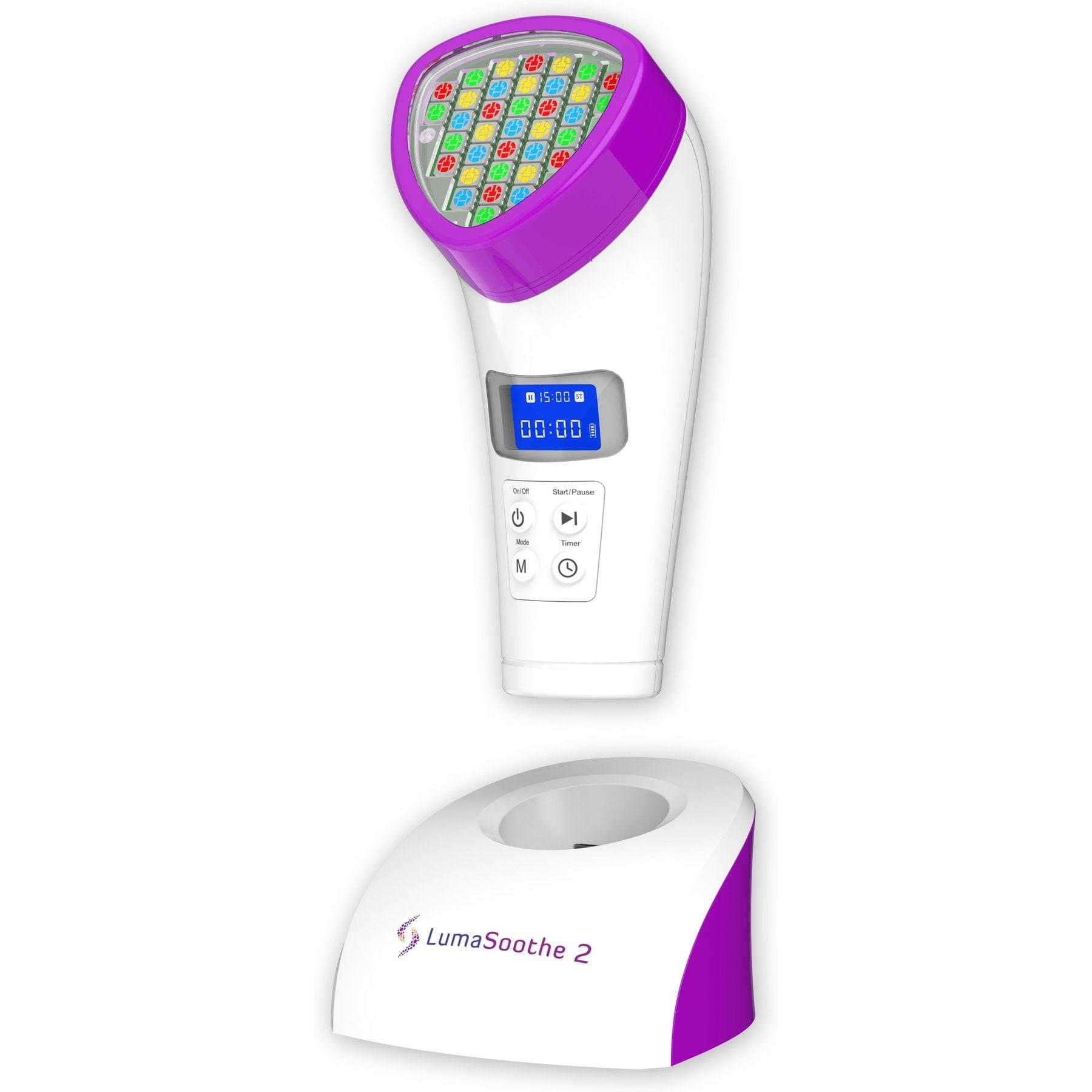
A handheld home light unit with deep and surface modes for short spot sessions on a sore joint, with the eyes shielded.
Webvet may earn a commission when you click through to Chewy, at no extra cost to you.
What owners use red light therapy for: arthritis, hips, IVDD, and healing
Most owners try red light therapy for dog pain that lingers: stiff joints, sore back legs, or a slow recovery after surgery. The most common targets are:
- Arthritis and joint stiffness: especially red light therapy for senior dogs with osteoarthritis, the use with the most supportive dog trials
- Hips: hip dysplasia and arthritic hips, where one trial compared laser treatment with an anti-inflammatory drug
- Intervertebral disc disease (IVDD): usually during recovery from surgery, where the trials disagree
- A torn ACL (cranial cruciate ligament): recovery from knee surgery, where the research is thin
- Healing: wounds, surgical incisions, and soft tissue strains, a common claim with little dog data behind it
Red light therapy for dogs with arthritis is the best-studied use, and the trials point toward less pain and better movement in sore joints. If your dog is slowing down on walks, these signs of osteoarthritis in dogs help you know what to tell your vet.
For an older dog, light is a possible add-on rather than a replacement for proven care. Our guide to senior dog joint pain and how to help them feel more comfortable covers the basics vets usually start with, from bedding to exercise changes.
Red light therapy for dogs with hip dysplasia is usually aimed at the arthritis in those hips. The closest evidence is a randomized trial in dogs with hip osteoarthritis, which found less pain and better joint motion with laser treatment. Our overview of hip dysplasia in dogs explains how vets confirm and manage the condition.
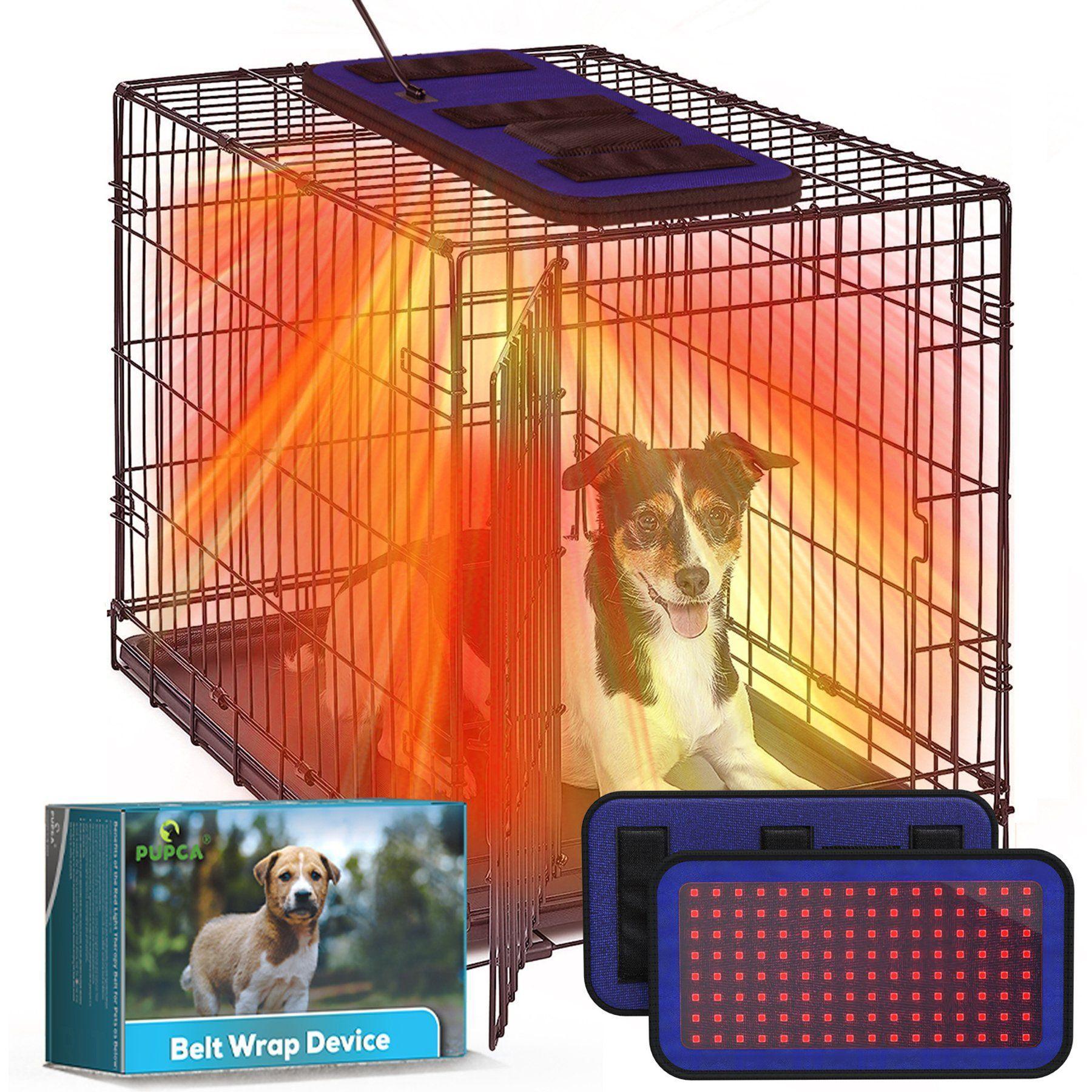
A hands-free light belt that sits over the hips or lower back for home sessions once your vet has confirmed the cause of pain.
Webvet may earn a commission when you click through to Chewy, at no extra cost to you.
Weak or sore back legs and a stiff lower back are the reason belt and wrap designs exist. They hold the light over the hips, spine, or legs so the dog does not have to stay perfectly still for a handheld unit, which suits restless or large dogs.
For a torn ACL, the research is thin. In a small randomized trial in Veterinary and Comparative Orthopaedics and Traumatology, one laser session before knee surgery was linked to better weight bearing on the leg (peak vertical force) at eight weeks but no difference in any other measure. A systematic review in Veterinary Surgery found one positive and one negative light study after cruciate surgery.
Wound healing is a popular claim with weak support in dogs. Merck lists wounds among the uses of light therapy, but a controlled study in healthy Beagles published in Veterinary Surgery found no benefit on open wounds with a low-power 635 nm laser used three times a week.

Small dogs follow the same rules as large dogs, with one extra concern. A wrap or pad sized for a big dog can cover too much of a small body and drift toward the face, so a smaller wrap or a handheld unit is easier to aim away from the eyes.
Red light therapy for dogs with IVDD is a bigger question. Two trials after disc surgery reached opposite conclusions, so light is at most a supporting tool in recovery. Disc disease can damage the spinal cord, and timing of surgery and rest decisions belongs with your vet or a neurologist.
A dog that suddenly cannot walk, drags its back legs, or cries when touched along the back needs a veterinarian promptly, not a light pad. Home light therapy has no role before that exam.

 Sponsored
Wondering why your dog seems stiff or sore?
Talk to a licensed vet at Dutch over video, often the same day. They can recommend treatment and prescribe it when it's appropriate.
Use code Pets60
Plans start at $12/month · covers up to 5 pets
- Licensed vets in most states
- Rx for 150+ conditions
- 4.7 on Trustpilot
What the evidence shows about red light therapy for dogs
| Claim | What the dog studies show | Evidence level | Risk |
|---|---|---|---|
| Eases osteoarthritis pain and stiffness | Two small randomized trials (elbows and hips) found less pain and better movement | Low to moderate: small clinic laser trials; one review rated it weak | Low when the eyes are shielded and skin heat is checked |
| Lets a dog take less pain medicine | One trial: NSAID dose lowered in 9 of 11 treated dogs vs 0 of 9 sham dogs | Low: a single trial of 20 dogs | Moderate if medicine is cut without the vet |
| Speeds walking after IVDD surgery | One trial found faster walking, a later trial found no difference | Mixed | Low for the light itself; high if used instead of urgent care |
| Helps recovery after ACL surgery | One positive and one negative study | Mixed | Low with correct use |
| Heals wounds faster | A controlled study in healthy dogs found no benefit | Not supported in dogs | Do not treat over active bleeding |
| Treats cancer or shrinks tumors | No support; vets avoid treating over tumors | None | High: possible tumor stimulation is unresolved |
| Replaces a vet exam or pain medicine | No support | None | High: a serious cause can be missed |
This claim-by-claim evidence table rates each red light use by how strong the evidence is in dog studies, with its safety risk alongside. Can dogs benefit from red light therapy? Some can, and the benefits are clearest for arthritis. The evidence level drops quickly for other uses, and the risk column matters as much as the claim: the biggest danger is rarely the light itself, but using it in place of a diagnosis.
The strongest single result comes from a randomized, sham-controlled trial in the Canadian Veterinary Journal. Researchers treated both elbows of 20 dogs with elbow osteoarthritis for 6 weeks, 11 with real light and 9 with sham light. Lameness and pain scores improved more with real treatment.
In that trial, 9 of 11 treated dogs could lower their NSAID dose, compared with 0 of 9 sham dogs. That is encouraging for arthritis, but it involved a small group, a clinic device, and dogs that stayed under veterinary care.
Does red light therapy work for my dog?
It may help if your dog has osteoarthritis and is already under a vet's care, since small dog trials found less pain and lameness. It is less reliable for disc surgery recovery and unproven for wounds. Whether it is worth trying for your dog depends on the diagnosis, the device, and steady use.

A second randomized trial in the American Journal of Veterinary Research compared a Class IV laser over 3 weeks with a 21-day course of meloxicam in 20 dogs with hip osteoarthritis. The authors concluded that light therapy reduced pain and improved clinical findings.
Not everyone reads these trials the same way. Independent reviewers are more cautious:
- Weak strength of evidence: A knowledge summary in Veterinary Evidence rated the evidence for adding laser to NSAIDs in canine osteoarthritis as weak, because it rests on a single small trial.
- Conflicting results: A 2023 systematic review in Animals of 45 studies, 24 of them in dogs, found conflicting results and moderate or high risk of bias, partly because they used very different wavelengths, doses, and schedules.
Spinal disc disease shows how mixed the picture is. The two main trials after disc surgery point in opposite directions:
- Faster walking: In a Journal of Small Animal Practice study of 36 dogs, laser-treated dogs walked sooner (median 3.5 days versus 14 days). Dogs were assigned by alternating order of arrival rather than true randomization.
- No difference: A trial of 32 dogs in the American Journal of Veterinary Research compared light therapy, rehabilitation with sham light, and sham light alone. Recovery did not differ between the groups.
So does red light therapy work for dogs with IVDD? The honest answer is maybe, and not reliably. Larger, well-controlled studies are still needed before anyone can promise faster recovery.
How is red light therapy supposed to work in dogs? The theory is that cells absorb the light and respond with less inflammation and faster repair. Device marketing often leans on human and lab-dish research, but only canine trials show how a dog's sore hip responds.
What are two drawbacks of laser therapy?
First, the right dose is uncertain: the Merck Veterinary Manual states that the dose needed to heal tissue and treat pain remains unclear, so results vary. Second, misuse can hurt. Merck names retinal damage and thermal burns as the main risks when light therapy is applied improperly.
 Sponsored
Vet care that's always there
Unlimited video calls and messaging with licensed vets for less than a typical vet visit. One membership covers up to five pets.
Use code Pets60
Plans start at $12/month · covers up to 5 pets
- Licensed vets in most states
- Rx for 150+ conditions
- 4.7 on Trustpilot
At-home red light devices for dogs: pads, wraps, wands, and how to choose one
The best red light therapy for dogs at home is the device that fits where the pain is and how still your dog will stay. A senior dog that naps on a pad needs a different design than an active dog with one sore elbow.
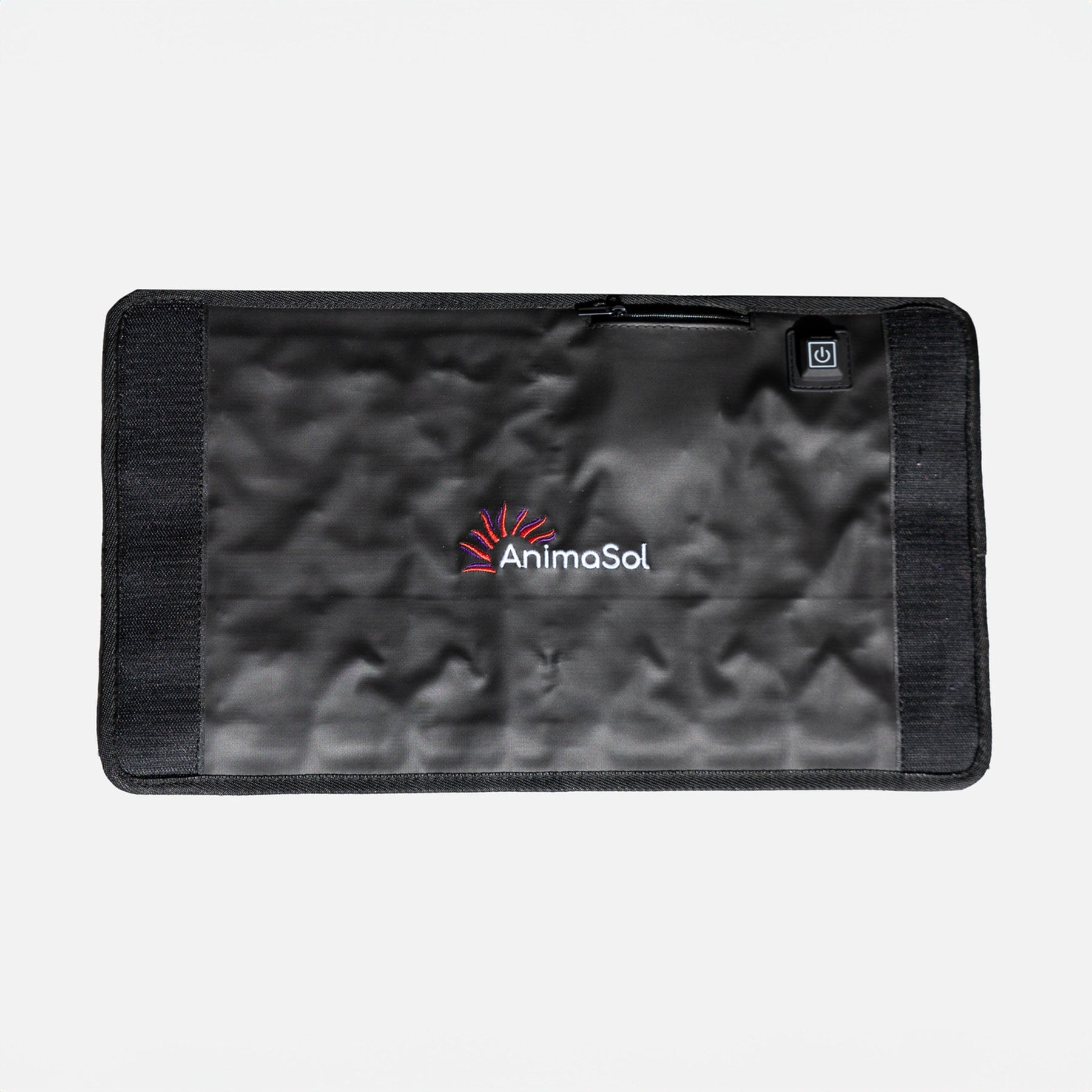
A sleeve-style red and near-infrared light wrap for targeted, supervised sessions on a sore area.
Webvet may earn a commission when you click through to Chewy, at no extra cost to you.
Home red light therapy devices for dogs fall into a few groups:
- Handheld wands: The LumaSoothe 2 Light Therapy Dog & Cat Pain Reliever offers five wavelengths with deep and surface modes, listed at $189.95 on Chewy when checked in November 2026. Handheld units suit small dogs and single spots.
- Belts and vests: The PUPCA Red Infrared Light Therapy Belt for Dogs & Cats is an adjustable, hands-free belt for the hips, back, and joints, listed at $159.99 on Chewy when checked in November 2026.
- Sleeve wraps: Despite its listing name, the AnimaSol Red & Near-Infrared Light Therapy Pad is a sleeve-style wrap. It uses about two near-infrared LEDs for every red LED, with red light at 630 and 660 nm, listed at $335 on Chewy when checked in November 2026.
- Joint wraps: The Ortho Pawz Red Light Therapy Dog Wrap, Large uses LEDs between 630 and 1,000 nm and must be measured for fit, listed at $400 on Chewy when checked in November 2026.
- Light beds: The Buddie Therapy Red Light & PEMF Orthopedic Dog Bed pairs 650 nm and 850 nm light with a pulsed electromagnetic field, listed at $799 on Chewy when checked in November 2026. It is best viewed as a comfortable bed with an extra feature rather than a treatment.
If comfort is the main goal, a well-made orthopedic dog bed without electronics may be enough. For a dog recovering from IVDD, ask your vet or rehabilitation therapist which area to treat, since the spine is a sensitive site after surgery.
Brand names matter less than the specifications on the box. Owner reviews tell you about fit and ease of use, but not whether the light reaches a dose that helps. Use this checklist when comparing a red light therapy pad, mat, wrap, belt, or blanket for your dog:
- Wavelength: Look for red (630 to 680 nm), near-infrared (700 to 1,100 nm), or both, the ranges Merck describes for therapeutic devices.
- Power and session time: According to Today's Veterinary Practice, Class III lasers top out at 500 mW and Class IV lasers run above that. Lower-power devices need longer treatment times to reach effective doses.
- Fit and coverage: The light should sit over the problem joint without slipping toward the face.
- Heat: You should be able to check the skin under the device easily during a session.
- Eye safety: Pick a design whose light faces the body and can be aimed away from the eyes.
Labels deserve a skeptical read. The U.S. Food and Drug Administration does not require premarket approval for devices intended for animal use. Manufacturers are responsible for making sure these devices are safe, effective, and properly labeled, so treatment claims on a box have not been reviewed by the agency.

A fitted red light wrap for one sore joint such as an elbow or knee, for use after a vet has examined the limp.
Webvet may earn a commission when you click through to Chewy, at no extra cost to you.
What is the best red light therapy device for dogs?
No single device is best for every dog. Choose by body area and temperament: a handheld unit for small dogs or one spot, a belt or wrap for hips, back, or a single joint, and a pad for a dog that rests calmly. Check wavelength, power, fit, and how easily you can shield the eyes.

Red light safety: eyes, heat, and dogs that should not use it
Is red light therapy safe for dogs? Used correctly on a diagnosed problem, it is considered low risk. The Merck Veterinary Manual names the main risks of light therapy as retinal damage and thermal burns when it is applied improperly, so most side effects come down to the eyes and heat.
Light can damage the retina whether it shines straight in or reflects off a shiny surface, Merck warns. Today's Veterinary Practice calls exposure of the retina through the pupil the one absolute contraindication. It advises protecting a pet's eyes with safety glasses, goggles made for animals, or a dark cloth.
Do dogs need eye protection for red light therapy at home? Treat it as yes. Red light therapy goggles for dogs help, but Merck notes goggles protect against indirect exposure, not a direct beam. So goggles do not make it safe to point a device at the face.

Heat is the second risk. Merck notes that Class IV devices routinely heat tissue, and home devices can warm the skin too. Today's Veterinary Practice says treating dark skin is safe with monitoring of skin temperature, which is a habit worth keeping at home on every coat color.
Red light therapy for dogs with cancer needs a vet's or oncologist's input. Merck says light therapy must avoid tumors and that it is unresolved whether light can stimulate tumor growth. Today's Veterinary Practice also rules out treating over a malignancy, except for hospice pain care with informed owner consent.
Why can't you use lasers with dogs?
You can. Vets use therapy lasers on dogs routinely for arthritis, surgery recovery, and wounds. The caution is about how: a beam reaching the eye can injure the retina, high-power units can burn skin, and some areas, such as tumors, are off-limits. That is why clinic sessions use eye protection and trained staff.
Who should not do laser treatment?
According to Merck and Today's Veterinary Practice, light therapy should be avoided or used only under veterinary guidance in dogs that have:
- A tumor, or a lymphoma diagnosis, in or near the area to be treated
- Immunosuppressant medications
- Active bleeding at the site
- A recent injection of medication or a vaccine in that spot
- Open growth plates (puppies under about 1 year, especially with higher-power devices)
- Treatment planned over the testicles or thyroid gland
- A pregnancy, where Merck says to avoid treating over a pregnant uterus
Today's Veterinary Practice disagrees on pregnancy, calling that historical contraindication of no practical use in clinical patients. Sources also differ on photosensitizing medicines. Merck advises lowering the intensity for pets on these drugs or herbal products, while Today's Veterinary Practice calls that old contraindication invalid. Your vet can decide which view applies to your dog's medication list.
Red light therapy for dogs with kidney disease or kidney failure is not on the Merck or Today's Veterinary Practice contraindication lists. These dogs often take several medicines, though, so check with your vet before adding any new therapy, especially one used at home, where side effects can go unnoticed without close supervision.
Stop a session and call your vet if you notice any of these during or after home use:
- Red, hot, or tender skin under the device
- Licking, chewing, or guarding the treated area
- Squinting, pawing at the eyes, or new eye redness
- More limping or stiffness than before the session
- Restlessness or distress that does not settle once the device is off
How to use red light therapy on a dog at home and how often
Learning how to use red light therapy for dogs safely is mostly about routine and attention. Follow the device manual, then use these steps:
- Get a diagnosis first, and ask your vet which area to treat.
- Pick a calm, quiet spot where your dog already likes to rest, and let your dog sniff the device while it is switched off.
- Cover or shield the eyes, and aim the light away from the face.
- Place the device over the treatment area, never over a lump, a fresh injection site, or a bleeding wound.
- Start with the shortest session the manual lists, and check the skin under the device for warmth during the session.
- Stay with your dog for the whole session, and never leave a wrap or belt on unattended.
- Keep a simple log of comfort, stiffness, and activity so your vet can judge whether it helps.
How often should you use it? There is no tested home schedule for dogs. Research protocols varied widely: daily for five days after disc surgery, three times a week for a month in the wound study, and a 3-week course in the hip trial.
Clinic programs offer a useful model. Today's Veterinary Practice describes treating chronic conditions in three phases (induction, transition, and maintenance), with treatment planned around an accurate diagnosis. Ask your vet to set a home schedule on the same pattern, so frequency matches your dog's condition and response.
How often should a dog get laser therapy?
It depends on the condition. Chronic problems like arthritis start with frequent sessions that are spaced into maintenance once the dog responds. After surgery, Today's Veterinary Practice says most patients need one session, while those with more tissue damage get 2 to 6 more, daily or every other day.
Give any routine a fair trial before deciding whether it helps. If your dog seems no better after several weeks, or seems worse, stop and talk with your vet rather than adding longer or stronger sessions. More light is not automatically better, since the right dose is still unsettled.
When to see your vet instead: clinic laser therapy and other pain care
Some situations call for a vet visit rather than a home device:
- Sudden lameness, weakness in the back legs, or trouble walking
- Pain that is getting worse, or new pain in a dog already on medication
- A lump, swelling, or bleeding in the area you planned to treat
- No improvement after a few weeks of home sessions
- A dog on immunosuppressants or with a cancer diagnosis
Clinic laser therapy is the main alternative. Local options are usually rehabilitation centers and practices with therapy lasers and trained staff. Our cold laser therapy for dogs guide explains what a session involves and how much red light therapy for dogs costs at a clinic.

Be wary of vet approved red light therapy for dogs claims on home products. Since the FDA does not require premarket approval for animal devices, that label tells you little, though the agency invites owners to report device problems on Form FDA 1932a. The approval that counts is your own vet's sign-off for your dog's specific problem.
Light therapy works best as one part of pain care. Vets often combine weight control, exercise changes, and medications such as NSAIDs for dogs, the medication class that trial dogs were able to reduce. Never lower a prescribed dose on your own because your dog seems better.
Home support adds up too. Ramps, harnesses, and traction aids from this guide to mobility aids for dogs, harnesses, ramps, and more can make daily life easier for a stiff dog. Some owners also ask about supplements; our review of CBD for dog pain and arthritis covers what that research shows.
Red light therapy for dogs questions
Frequently Asked Questions
Does my dog need eye protection during red light therapy?
Yes. Shield your dog's eyes every session with dog goggles or a dark cloth over the eyes, and keep the device pointed at the body. Goggles block stray light but not a direct beam, so they are a backup rather than permission to treat near the face.
How often should I use red light therapy on my dog?
Follow a schedule your veterinarian sets for your dog's condition. Dog studies used very different routines, from daily sessions for a few days to several sessions a week for a month, and no home protocol has been tested. Log your dog's comfort, stiffness, and activity so you and your vet can adjust the plan.
Can red light therapy help a dog with IVDD?
Possibly, as part of recovery after IVDD surgery, but the evidence conflicts: one study found treated dogs walked sooner and another found no difference. Light therapy does not replace surgery, rest, or medication when a vet recommends them, and sudden weakness needs an exam first.
Is red light therapy good for senior dogs?
It can be a gentle add-on for a senior dog with arthritis, since small trials found less pain and lameness in arthritic joints. Older dogs often have other health problems and take several medicines, so ask your vet before starting, keep sessions supervised, and pair light with the joint care your vet already recommends.
Can you use red light therapy on a dog with cancer?
Only with your vet or oncologist involved. Vets avoid shining therapy light over a tumor because it is unresolved whether the light could stimulate tumor growth. In hospice care, some vets may use it for comfort with the owner's informed consent.
Veterinarian · BVMS MRCVS
Dr. Pippa Elliott, BVMS, MRCVS, is a veterinarian with nearly 30 years of experience in companion animal practice. Dr. Elliott earned her Bachelor of Veterinary Medicine and Surgery from the University of Glasgow. She was also designated a Member of the Royal College of Veterinary Surgeons. Married with 2 grown-up kids, Dr. Elliott has a naughty Puggle named Poggle, 3 cats and a bearded dragon.
Related reading

Cold Laser Therapy for Dogs: Conditions, Sessions, and Cost

CBD for Dog Pain and Arthritis: What the Studies Show and What They Don't

Stages of Arthritis in Dogs: How Care Changes Over Time
