Best Orthopedic Dog Beds for Senior Dogs and Joint Problems
Compare four orthopedic beds by resting space, access, foam construction, bolsters, and care, with clear limits on what bedding can do for arthritis.

BVMS MRCVS
Medically reviewed by Dr. Pippa Elliott, BVMS MRCVS · Last reviewed

This article contains affiliate links. Webvet may earn a commission when you buy through them, at no extra cost to you.
The best orthopedic dog beds give your dog enough usable sleeping area, an accessible edge, and cushioning that remains comfortable when they settle. Our four picks compare a large headrest bed, a flat mattress, and two bolster formats. Choose by the way your dog lies down and gets up, rather than assuming that the word “orthopedic” identifies one standard construction or a treatment for arthritis.

 Sponsored
Wondering why your dog seems stiff or sore?
Talk to a licensed vet at Dutch over video, often the same day. They can recommend treatment and prescribe it when it's appropriate.
Use code Pets30
Plans start at $11/month · covers up to 5 pets
- Licensed vets in most states
- Rx for 150+ conditions
- 4.7 on Trustpilot
How to choose the best orthopedic dog bed
Start by watching your dog rest. A dog who stretches onto their side needs a different usable shape from one who curls against a raised edge. A dog who struggles to step over a bolster may benefit from a flatter entrance, while another may seek a headrest. Measure the dog’s normal resting space, then compare the clear sleeping surface rather than only the bed’s outside dimensions.
For a dog who stretches out, the flat FurHaven NAP orthopedic mattress is our starting point. For a larger headrest format, compare the Big Barker. The FurHaven Velvet Waves sofa and K&H Orthopedic Bolster are options for dogs who seek raised support around part of the bed. The most comfortable choice is the one whose shape, entry, and cushioning suit the individual dog; the brand name alone cannot establish that fit.
- 1Measure usable sleeping area with the dog in a normal resting posture.
- 2Compare entry height and bolster placement before choosing a shape.
- 3Check the exact orthopedic foam option, removable cover, and liner separately.
This is a specifications-based comparison. We did not test foam density, pressure distribution, durability, or changes in dogs’ mobility. Published construction details support the distinctions below. They do not justify calling one product a cure, assuming every orthopedic fill is memory foam, or transferring a clinical claim from one studied bed to all beds in a brand’s range.
Customer reviews can add practical observations about cover removal, zippers, size, and long-term wear. They do not establish a single highest-rated bed across all sellers, variants, and dates. We have not ranked these four by a current review-score dataset. When checking reviews, match the exact size and fill, then look for specific experiences relevant to your dog’s weight, posture, and cleaning needs instead of treating an average star score as proof of medical benefit.
| Bed | Best fit | Useful distinction | Main tradeoff |
|---|---|---|---|
| Big Barker Headrest Pillow-Top, Large | Large dogs who use a headrest | Foam platform with one raised headrest | Check the Large footprint and comfortable entry height |
| FurHaven NAP Ultra Plush, Jumbo Orthopedic | Dogs who stretch out on a flat surface | Flat mattress with a removable cover | Orthopedic, memory-foam, and cooling options are different variants |
| FurHaven Velvet Waves, Large Orthopedic | Dogs who rest against bolsters | Velvet sofa format with raised sides | Bolsters reduce the clear sleeping area |
| K&H Orthopedic Bolster, Medium | A bolster bed with specified foam thickness | 3-inch orthopedic foam and removable washable cover | Confirm the Medium interior fit; this is not a heated model |

For senior dogs with arthritis, a suitable bed is one part of a broader comfort plan. Veterinary assessment, appropriate pain management, body-weight management, and an accessible home environment may all matter. A dog who cannot settle comfortably despite a new bed needs that wider assessment. Do not keep changing mattresses while overlooking difficulty rising, slipping on the approach, or signs of pain during ordinary movement.
 Sponsored
Vet care that's always there
Unlimited video calls and messaging with licensed vets for less than a typical vet visit. One membership covers up to five pets.
Use code Pets30
Plans start at $11/month · covers up to 5 pets
- Licensed vets in most states
- Rx for 150+ conditions
- 4.7 on Trustpilot
Four orthopedic dog beds for different needs
Big Barker Headrest Pillow-Top Orthopedic Dog Bed, Burgundy, Large
The Big Barker Headrest Pillow-Top Large offers a foam platform with a raised headrest at one end. It is worth considering for a large dog who likes to stretch out but also seeks a place to rest their head. That is a different shape from a sofa bed whose bolsters surround several sides of the sleeping area.
Check the exact Large Headrest dimensions against your dog’s resting footprint and the room where it will sit. A substantial foam platform still has an entry edge to negotiate. Watch whether your dog steps onto a bed confidently or catches a paw at its edge. The largest-looking mattress is not automatically the easiest one for a dog with reduced strength to use.
- Choose it for: a broad foam-bed format with a headrest rather than enclosing bolsters.
- Check first: the exact Large footprint, the clear resting surface, and entry height.
- Main tradeoff: a large foam bed occupies significant room and still needs a practical cover-cleaning routine.
Big Barker describes its foam-bed family and research on its Orthomedic product page. Product research should be read for the population, bed, methods, and outcomes actually studied. It is not a basis for promising that every dog will improve or that a bed replaces treatment. Our recommendation here rests on the selected bed’s shape and fit, without assigning an unverified clinical result to your dog.
Keep the product identity together when ordering: Large, Burgundy, and Headrest are meaningful variant details. A flat version or a different size can offer a different sleeping area and entry experience. If your dog already sleeps comfortably on a flat mattress, the headrest is an optional shape preference, not a feature you must add simply because the dog is older.
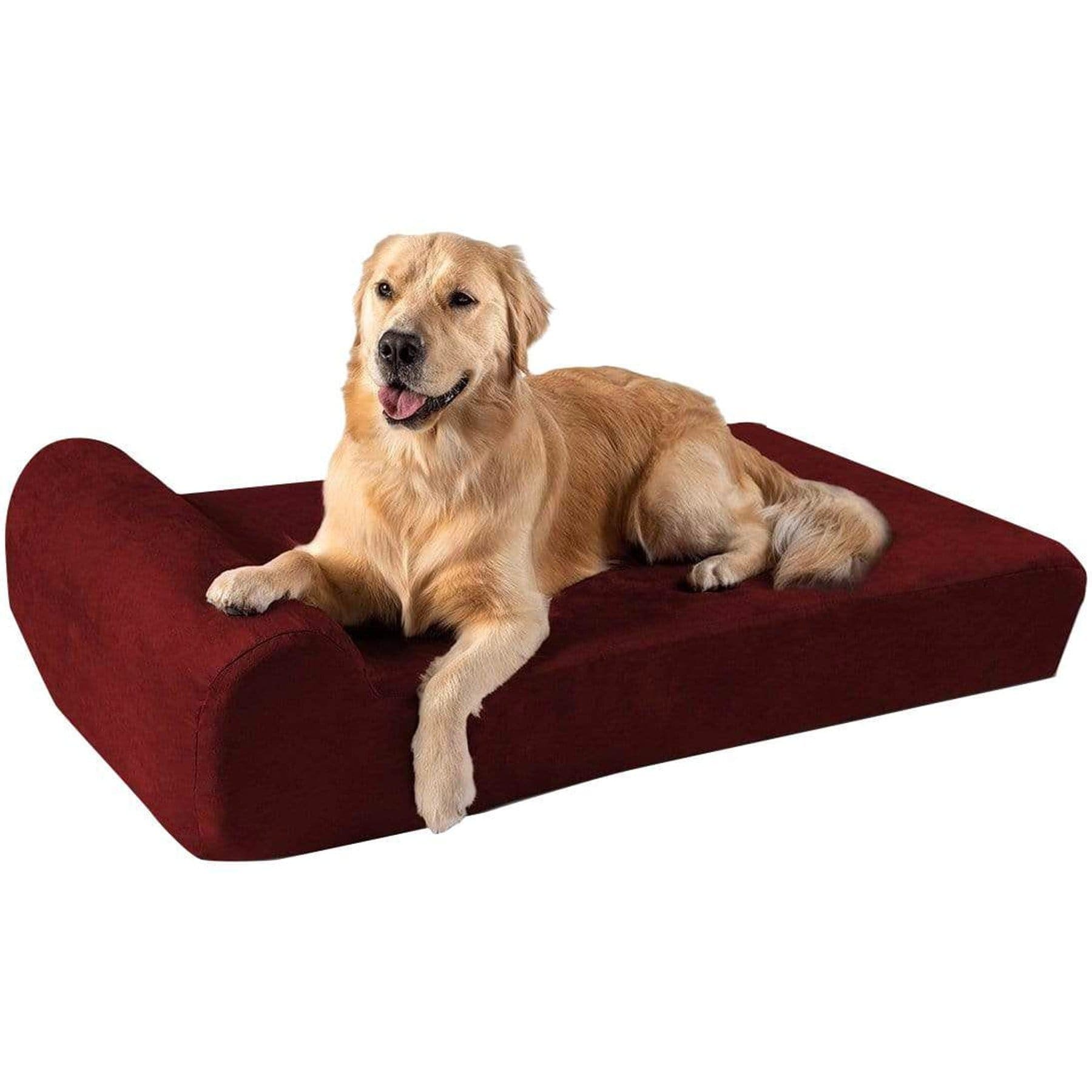
A large foam platform with a raised headrest for dogs who like support at one end.
Webvet may earn a commission when you click through to Chewy, at no extra cost to you.
FurHaven NAP Ultra Plush Orthopedic Deluxe Cat & Dog Bed with Removable Cover, Gray, Jumbo
The FurHaven NAP Ultra Plush Jumbo Orthopedic is the flat-mattress choice. Its open shape is useful for dogs who stretch, change sleeping direction, or prefer approaching from different sides. A removable cover also gives you a separate component to clean instead of treating the whole bed as one washable object.
FurHaven offers several fill options in this mattress family. Keep the selected orthopedic version distinct from memory-foam and cooling variants when checking specifications and reviews. A photograph of a Gray Jumbo bed may not tell you which fill sits inside. Confirm the full option selection before purchase rather than relying on the shared product-family name.
- Choose it for: a flat resting surface without bolsters taking up the perimeter.
- Check first: Jumbo dimensions, mattress height, the orthopedic fill selection, and cover-care instructions.
- Main tradeoff: an open mattress does not provide the raised edge some dogs like to lean against.
The FurHaven mattress page is useful for comparing the family’s options. Do not describe the selected orthopedic fill as memory foam unless the exact variant says so. Likewise, a removable cover does not establish that the foam itself can go into a washing machine or that liquid cannot reach it.
When trying the bed, observe a full settling sequence: approach, step on, turn, lie down, and get up again. A flat shape can simplify access while still being too small, too high, or otherwise unsuitable for an individual dog. Check that the mattress remains stable on the floor as the dog changes position and that the dog does not have to squeeze it between furniture to find a comfortable resting angle.
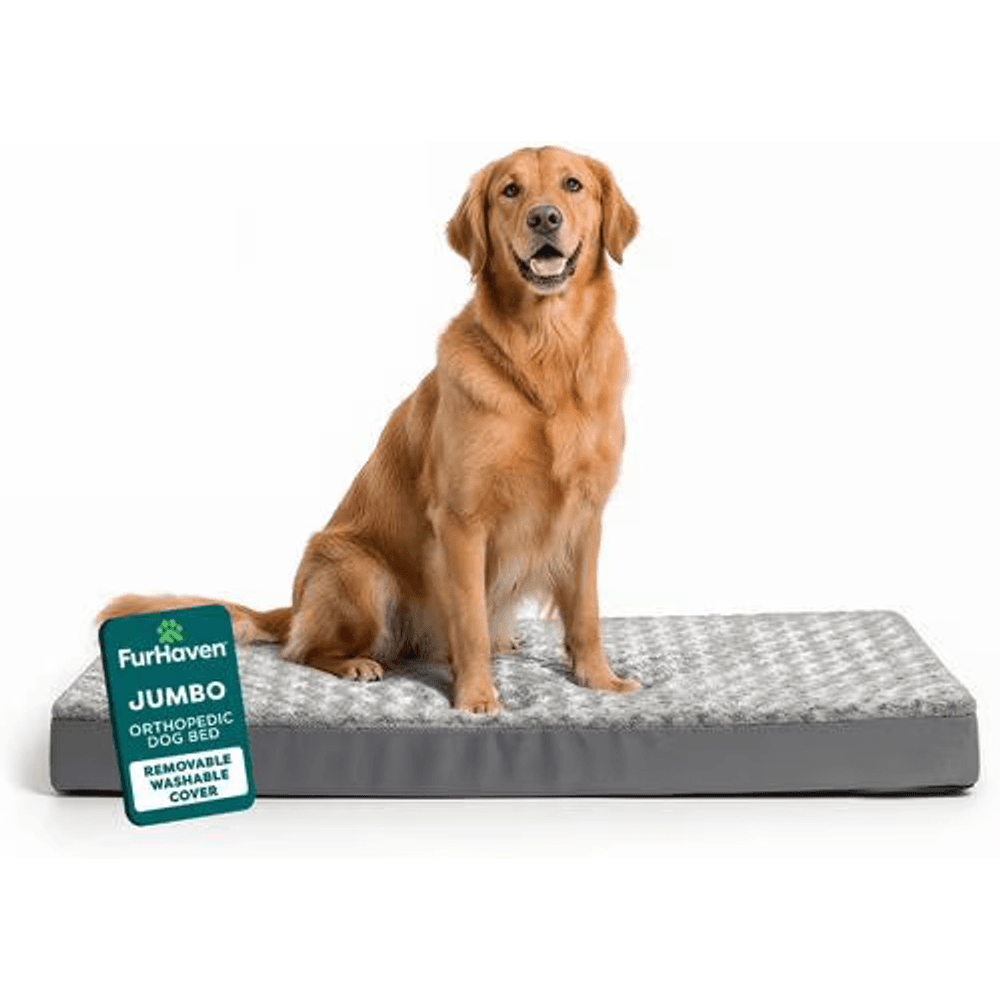
A flat orthopedic mattress with a removable cover and room to stretch without bolsters.
Webvet may earn a commission when you click through to Chewy, at no extra cost to you.
Check how the removable cover comes off before the first wash. Follow separate instructions for the cover and foam, and dry them as directed.

FurHaven Velvet Waves Perfect Comfort Orthopedic Sofa Cat & Dog Bed with Removable Cover, Brownstone, Large
The FurHaven Velvet Waves Large Orthopedic is the sofa-style option for a dog who likes raised sides. The velvet surface and bolstered format create a different resting arrangement from the open NAP mattress. Consider it for a dog who already chooses to lean against cushions or tuck their body into a defined resting space.
Bolsters also occupy room. Compare the usable sleeping area inside them with your dog’s body, especially when the dog lies on their side. Outside dimensions can make a sofa bed appear roomier than its clear base. Check the height and width of the entrance as well; a dog should not have to climb over a high side to reach the intended opening.
- Choose it for: a bolstered sofa shape and velvet resting surface.
- Check first: clear interior dimensions, entrance height, and the exact Large Brownstone orthopedic variant.
- Main tradeoff: raised sides reduce open space and may not suit dogs who stretch in several directions.
The Velvet Waves family page describes several foam options. Compare the selected orthopedic model with its own listing rather than transferring dimensions or fill claims from a neighboring option. The removable cover is useful, but its care instructions and any liner are separate details to confirm.
If your dog likes a headrest but dislikes being enclosed, compare this sofa shape with the Big Barker’s single-end headrest. That is a functional difference you can observe at home without assuming that one design is medically superior. The most useful bolster is the one the dog chooses to use while retaining enough clear space to change position comfortably.
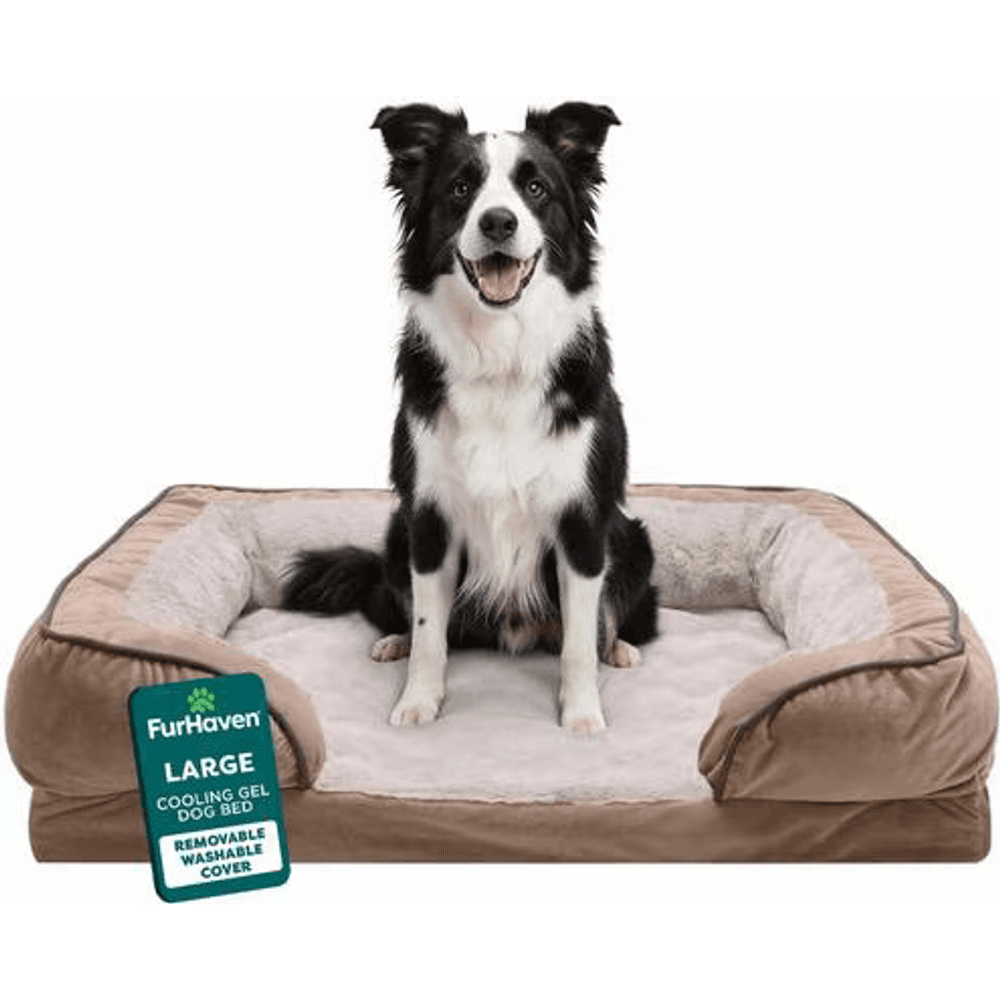
A velvet sofa-style orthopedic bed for dogs who prefer raised sides.
Webvet may earn a commission when you click through to Chewy, at no extra cost to you.
K&H Pet Products Orthopedic Bolster Cat & Dog Bed, Gray, Medium
The K&H Orthopedic Bolster Medium provides a bolster format with a stated 3-inch orthopedic foam base. The exact product description also identifies upholstery-grade velvet, microfleece, and a removable machine-washable cover. Those are practical construction and care features to compare with a bed whose fill thickness or cover removal is unspecified.
The bolster gives the dog a place to rest their head or lean, while the foam forms the base. Check the Medium sleeping area and entry before choosing it for your dog. Foam thickness is one dimension of the bed, not a guarantee that every weight, body shape, or mobility problem will be equally well supported.
- Choose it for: a bolster bed with a specified foam thickness and removable washable cover.
- Check first: Medium interior fit, the entry edge, and the care label for each component.
- Main tradeoff: the bolster uses some of the footprint, and a washable cover does not automatically make the foam washable.
This selected Orthopedic Bolster is distinct from K&H’s heated products. Do not buy it expecting a heater or apply instructions from a Thermo model with a similar appearance. If temperature support is part of your dog’s needs, discuss that separately with your veterinary team rather than treating a thick or soft bed as a substitute for a specified temperature-control product.
For routine use, check that the cover remains correctly fitted after washing and does not pull the base into an uneven shape. Inspect the bed when it is empty and when your dog lies down. If the dog persistently avoids it, evaluate access, location, warmth, and shape before assuming that more foam thickness is the missing feature.
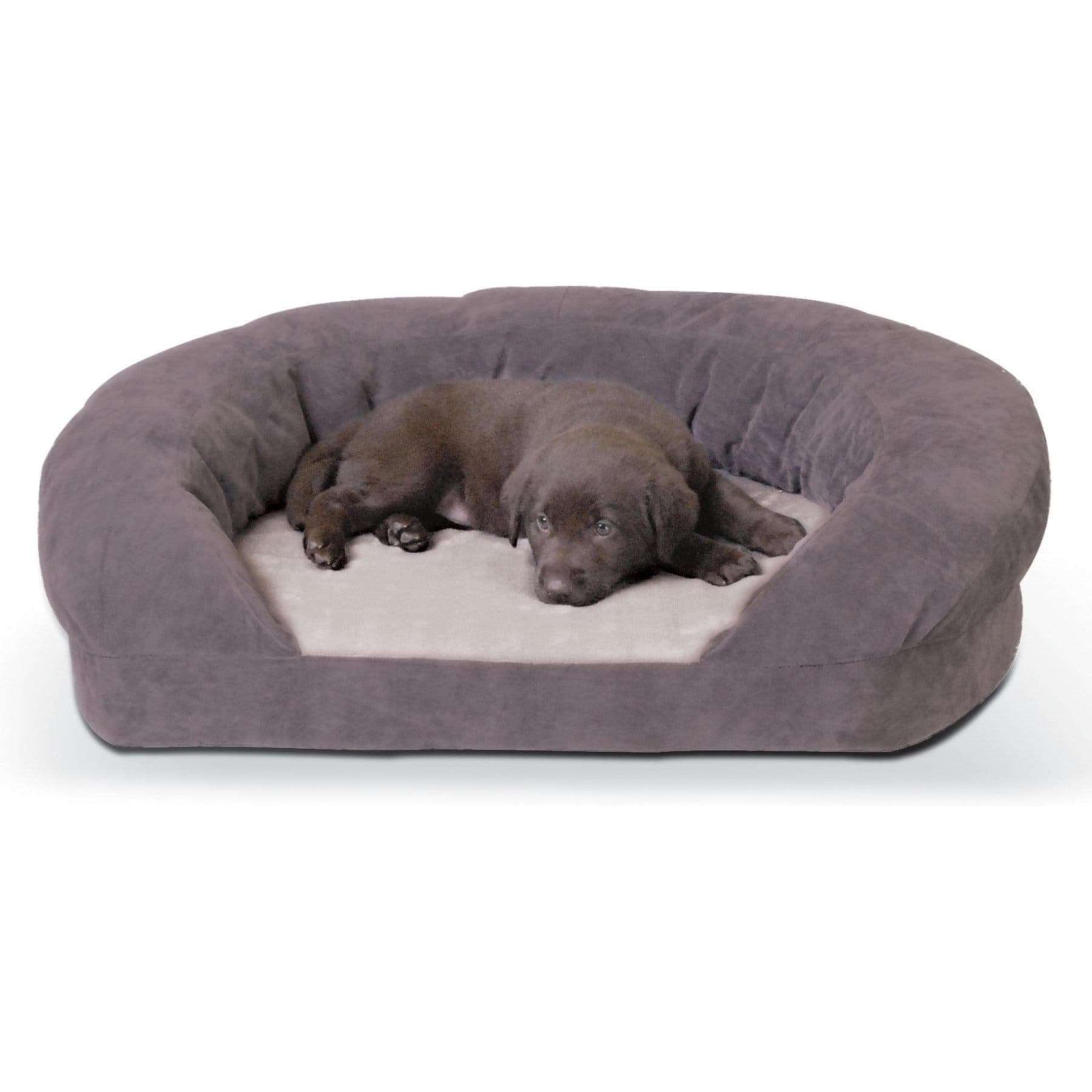
A bolster bed with 3-inch orthopedic foam and a removable machine-washable cover.
Webvet may earn a commission when you click through to Chewy, at no extra cost to you.
Foam, usable space, entry height, and cleaning
Compare the bed as a complete setup: a clear sleeping surface, an accessible entry, appropriate cushioning, and a stable place on the floor. A single attractive specification cannot compensate for the wrong size or an awkward approach. Write down your dog’s resting footprint and compare it with the actual area inside any bolsters.
| Decision | What to check | Why it matters |
|---|---|---|
| Usable sleeping area | Clear surface inside bolsters or beside a headrest | Outside dimensions can overstate resting room |
| Entry height | Height and shape of the edge the dog crosses | A supportive bed still needs an accessible entrance |
| Orthopedic foam | Exact fill and variant, without assumed density | Similar product names can contain different materials |
| Cleaning | Cover, liner, and foam instructions separately | A washable cover does not establish a washable core |
| Floor stability | Movement as the dog steps on and rises | Slipping at the bed can make access difficult |
| Liquid protection | Explicit liner or backing specification | Softness and absorbency do not equal waterproofing |
Measure usable sleeping area and entry height
Measure your dog during a typical relaxed posture, including the space taken by extended legs when they sleep on their side. Observe more than one position if they alternate between curling and stretching. Compare that footprint with the bed’s clear resting surface. Size labels such as Large and Jumbo are not standardized, and body weight alone does not tell you how much length the dog needs.
Mark the proposed bed footprint on the floor before ordering. Check door clearance, the route to water, and whether the dog can approach without turning tightly between furniture. An oversized bed can obstruct the room, while a small one may leave the dog’s hips or shoulders resting near an edge. For a crate, use the crate’s usable interior dimensions and make sure bedding does not interfere with normal standing and movement.
Entry height deserves its own check. A high mattress can be comfortable once the dog is on it but difficult to step onto. A low opening in a bolster bed can help only if it faces the dog’s natural approach. Position the bed so that access is clear, and watch rising as well as lying down. The effort to get off a bed can reveal a problem that is not obvious while the dog rests.
Trial the bed without removing a familiar option
When introducing a new bed, leave an existing comfortable resting option available if practical. Let the dog investigate and choose where to settle rather than repeatedly placing them on the new mattress. Compare ordinary use across several rest periods: whether they approach voluntarily, reposition easily, remain on the surface, and rise without a struggle. A single nap or refusal is less informative than a consistent pattern.
Record the specific difficulty if the trial does not go well. “Steps over the edge but cannot turn between bolsters” points to a different problem from “slides while trying to stand” or “lies partly off the mattress.” These observations help you adjust placement, choose a different shape, or explain the concern to your veterinarian. They are more useful than concluding that the dog dislikes all orthopedic beds because one model did not suit them.
Check return and hygiene conditions before the trial, and keep the exact model and fill information. If you later replace the bed, those details let you preserve the features that worked while changing the feature that did not.
Memory foam, orthopedic foam, bolsters, and flat beds
A quilted sofa-style mattress describes a cover or shape, not a standardized foam specification. Compare the actual fill and usable floor space. An orthopedic bed marketed as calming or anti-anxiety does not establish treatment for anxiety; choose the resting format your dog can use comfortably and assess persistent distress separately.
“Orthopedic” does not identify one universal foam recipe. Products may use different shapes, layers, and fill materials, and a manufacturer may offer several options under one design name. Memory foam is a particular material category, not a synonym for every orthopedic bed. Compare the exact selected construction and avoid assuming an unspecified density or a measured pressure-relief benefit.
Softness also differs from support. A plush surface can feel inviting while the underlying base determines much of the bed’s structure. Conversely, a substantial base may have a surface the dog dislikes. Without comparable testing, it is more useful to assess how the dog settles and rises than to claim that the thickest, firmest, or most expensive model must be best.
- Choose a flat format when unobstructed access and stretching space are priorities.
- Consider a headrest when the dog seeks support at one end without enclosing sides.
- Consider bolsters when the dog already prefers leaning or curling against an edge.
- Evaluate elevated or cooling beds as different constructions, with their own access and care requirements.
Keep cleaning claims specific. Remove and wash a cover only as directed, protect any component that is not washable, and let everything dry completely before reassembly. Check whether a waterproof liner is actually included or sold separately. If accidents are likely, a clear liquid-protection plan can be more useful than simply choosing a darker cover.
Comfort for senior dogs and dogs with arthritis
For an arthritic dog, begin with enough space to change position, a manageable entry edge, and a stable location. The flat FurHaven NAP is worth comparing when stepping over sides is difficult; a bolster or headrest may suit a dog who comfortably uses that shape. The individual movement and resting preference matter more than naming one bed the best arthritis product for every patient.

A bed supports rest; it does not diagnose or treat the underlying disease. Read about osteoarthritis signs in dogs and discuss changes in comfort or mobility with your veterinarian. Our senior-dog health guide covers the wider context. Do not stop prescribed treatment because the dog seems to enjoy a new mattress.
Place the bed where the dog can rest without repeatedly being disturbed or having to cross a slippery route. Keep water and normal household access manageable, while leaving enough room to rise without being crowded. If your dog alternates between the bed and a cooler floor, observe the context rather than forcing them to stay on the mattress. Comfort can change with temperature, posture, and activity.
Check the bed over time for a permanently compressed area, damaged cover, exposed fill, or a shifting base. A dog who chews bedding needs supervision and an appropriate management plan; “orthopedic” does not mean chew-proof. Remove access to loose filling and ask for advice when destructive chewing creates an ingestion risk. Replace worn equipment based on its actual condition rather than assuming a particular lifespan from the label.
Orthopedic dog bed questions
Frequently Asked Questions
Are orthopedic beds better for dogs?
A well-chosen orthopedic bed can provide a comfortable resting surface, but the label alone does not make it better for every dog. Compare usable sleeping area, entry height, and the exact orthopedic foam construction. A bed that is too small, difficult to access, or disliked by the dog is not improved by a marketing term. Judge the complete setup and seek veterinary advice for ongoing discomfort.
What dog bed do vets recommend?
A veterinarian can recommend bed features for the individual dog’s size, condition, and movement, including usable sleeping area and entry height. There is no universal brand endorsement for every patient. Bring the exact model and measurements to your veterinary team when you need help choosing.
Do vets recommend Big Barker dog beds?
A clinician may judge a Big Barker bed suitable for an individual patient, but the product research the manufacturer cites does not establish a universal veterinary endorsement. Evaluate usable sleeping area, entry height, orthopedic foam construction, and your dog’s resting posture. Ask your own veterinary team whether the selected model fits the dog’s mobility and comfort needs; research about a product does not replace that individual assessment.
What type of bed is best for a dog with arthritis?
Look for a stable, comfortable surface with enough usable sleeping area to change position and an entry height the dog can manage. A flat bed may simplify access; bolsters may suit a dog who likes leaning and can enter comfortably. Orthopedic foam is one construction option, not arthritis treatment. Combine the bedding choice with your veterinarian’s plan for pain, mobility, and the home environment.

Editor
The Webvet Editorial Team is the in-house group of pet-care editors and writers behind Webvet, operated by Smart Pet Collective. The team researches, writes, and maintains Webvet's pet health, behavior, and medication content. Every article follows a defined editorial process: research from reputable veterinary and scientific sources, careful drafting, mandatory review of medical content by a credentialed veterinarian, and dated publication. Health and medication articles are medically reviewed by a licensed veterinary professional before they go live and are kept current over time.
Veterinarian · BVMS MRCVS
Dr. Pippa Elliott, BVMS, MRCVS, is a veterinarian with nearly 30 years of experience in companion animal practice. Dr. Elliott earned her Bachelor of Veterinary Medicine and Surgery from the University of Glasgow. She was also designated a Member of the Royal College of Veterinary Surgeons. Married with 2 grown-up kids, Dr. Elliott has a naughty Puggle named Poggle, 3 cats and a bearded dragon.


