Degenerative Myelopathy in Dogs: Symptoms, Stages, Breeds, and Treatment
Degenerative myelopathy in dogs is a progressive, painless spinal cord disease that starts as hind-leg weakness and knuckling, usually in older dogs with the SOD1 mutation. Here are the early signs, breeds, stages, diagnosis, and management.

BVMS MRCVS
Medically reviewed by Dr. Pippa Elliott, BVMS MRCVS · Last reviewed

This article contains affiliate links. Webvet may earn a commission when you buy through them, at no extra cost to you.
Degenerative myelopathy in dogs is a slowly progressive, painless disease of the spinal cord that weakens the back legs and eventually leads to paralysis. There is no cure, so recognizing the early signs matters, because physical therapy started early is the main tool that keeps a dog walking longer.
Degenerative myelopathy in dogs (often shortened to DM) usually begins in dogs around eight years or older and is linked to a mutation in the SOD1 gene. This guide covers the first signs, the breeds at risk, the typical stages and timeline, how vets reach a diagnosis, and the mobility aids and end-of-life decisions owners face.
- 1Vets give the definition as a progressive, painless spinal cord disease that has no cure.
- 2Owners usually notice knuckling, scuffed nails, and hind-end weakness as the first signs, often in one back leg first.
- 3A mutation in the SOD1 gene is the known genetic risk factor, but an at-risk DNA result does not mean a dog will get sick.
- 4Most dogs lose the ability to walk within about 6 to 12 months of the first signs, according to Cornell.
- 5Intensive physical rehabilitation was linked to longer survival and longer walking ability in a 2006 study.

 Sponsored
Wondering why your dog seems stiff or sore?
Talk to a licensed vet at Dutch over video, often the same day. They can recommend treatment and prescribe it when it's appropriate.
Use code Pets60
Plans start at $12/month · covers up to 5 pets
- Licensed vets in most states
- Rx for 150+ conditions
- 4.7 on Trustpilot
What Is Degenerative Myelopathy in Dogs?
Degenerative myelopathy in dogs is a progressive, painless spinal cord disease that causes hind-limb weakness, is linked to the SOD1 mutation, and has no cure. The Merck Veterinary Manual describes it as a slow, noninflammatory breakdown of nerve fibers and their myelin coating in the spinal cord's white matter. Most dogs progress over six months to three years.
Myelopathy means disease of the spinal cord. In DM, the damage comes from the cord itself breaking down, not from something pressing on it, which is why Merck says imaging is needed to rule out compression before DM is considered.
Cornell University College of Veterinary Medicine compares canine DM to Lou Gehrig's disease (ALS) in people. Researchers consider affected dogs the first recognized naturally occurring animal model of ALS, which is why university labs study it closely. Merck also lists an older name for the same disease: chronic degenerative radiculomyelopathy.
Who gets it, and at what age?
DM is a disease of middle-aged and older dogs. Onset ranges:
- VCA Animal Hospitals: signs appear between 4 and 14 years of age.
- Cornell and Merck: typically around 8 years or older.
- Veterinary Sciences (2021): median onset about 10 years 8 months, with a range of 7 years 7 months to 14 years.
Degenerative myelopathy in puppies and young dogs is not part of the typical picture. Merck calls the onset insidious, so DM does not usually come on suddenly. A sudden change in a younger dog points toward a different problem, such as a disk or spinal injury.
There is no published overall figure for how common degenerative myelopathy is in dogs. Cornell notes that even a genetically predisposed dog's chance of becoming clinically affected may still be low.
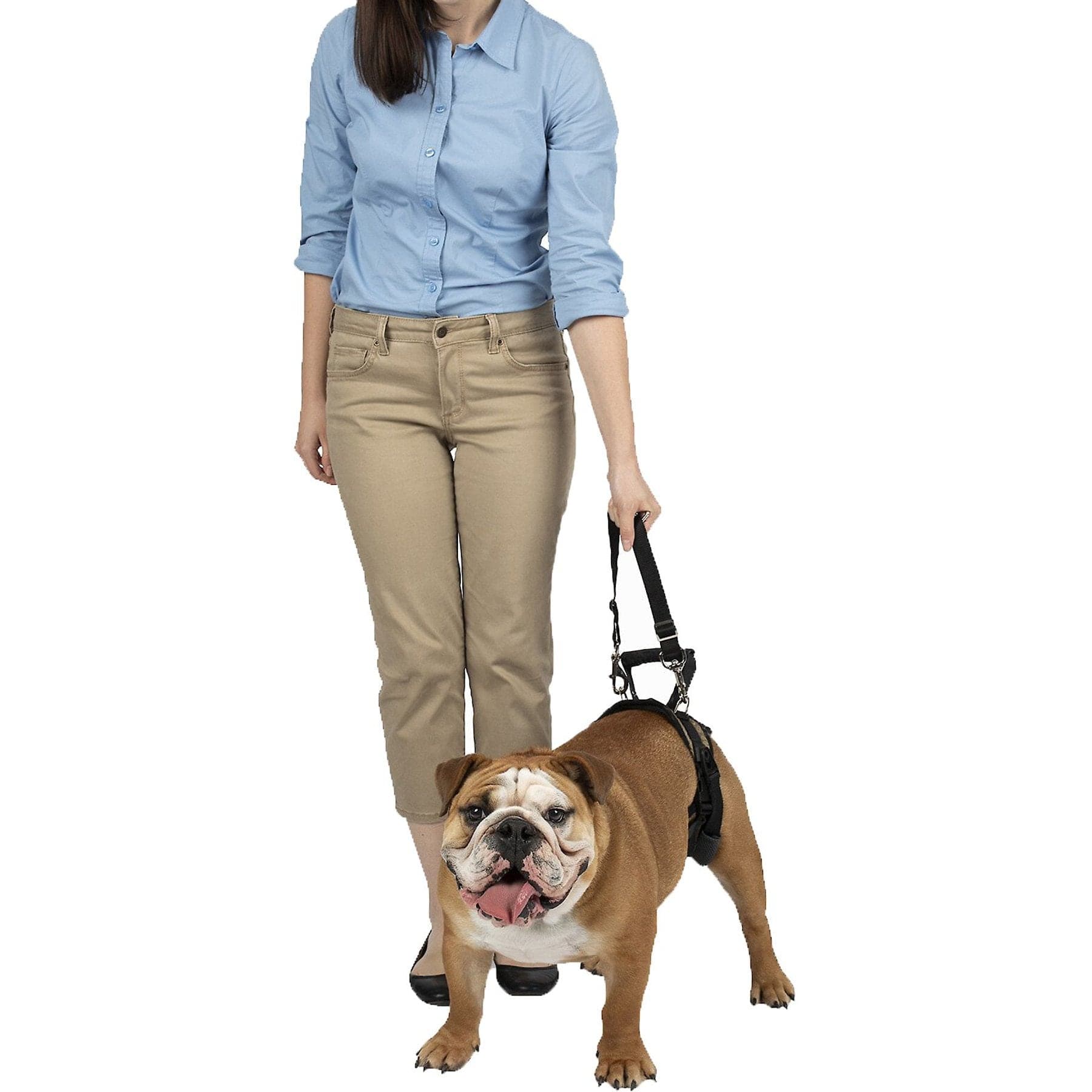
A rear lifting harness with padded handles helps you steady a weak back end on steps, walks, and car rides.
Webvet may earn a commission when you click through to Chewy, at no extra cost to you.
Owners often ask about pain relief, gabapentin for dogs with degenerative myelopathy, CBD oil, or natural remedies. Merck states there is no evidence that any drug or supplement changes the course of DM, and VCA notes most affected dogs do not seem to be in pain at all. Pain suggests a second condition, such as arthritis.
Late in the disease, a dog with degenerative myelopathy not eating may have trouble swallowing, which the 2021 Veterinary Sciences study recorded in a few dogs near the end. Veterinary references do not describe excessive thirst as a DM sign; if your dog is drinking more, ask the vet to look for another cause.
Watching your dog walk, or filming the gait to show your vet, helps you spot the wobbly, knuckling pattern, but only a veterinary workup can point to DM. The only way to help prevent DM is through breeding: Merck notes carriers pass the mutation to about half their puppies, so DNA testing lets breeders avoid producing at-risk litters.
Symptoms of Degenerative Myelopathy in Dogs
The first symptoms of degenerative myelopathy in dogs are knuckling or dragging of the hind paws, scuffed toenails, and a wobbly, weak back end, usually without pain. Cornell notes signs often begin in one hind leg before spreading to both.

Early signs of degenerative myelopathy in dogs listed by VCA, Cornell, and Merck include:
- Knuckling: the hind paws knuckle over or turn under, especially when the dog turns.
- Scuffed nails and paws: the hind feet scrape the ground, wearing down toenails, and the tops of the feet can become hairless and irritated.
- Swaying and incoordination: the back end wobbles or crosses over when walking.
- Difficulty rising: trouble getting up from lying down is an early sign, per VCA.
- Muscle loss: the hind limb muscles shrink as the disease advances.
The first signs of degenerative myelopathy in dogs come from proprioceptive deficits, meaning the dog loses its sense of where its feet are. Merck notes these deficits appear early in DM and are not seen in orthopedic disease such as hip or joint problems, which is a useful clue for your vet.
Because scraping wears the skin on top of the hind paws, Cornell recommends booties to protect scuffed feet while the dog is still walking on them.
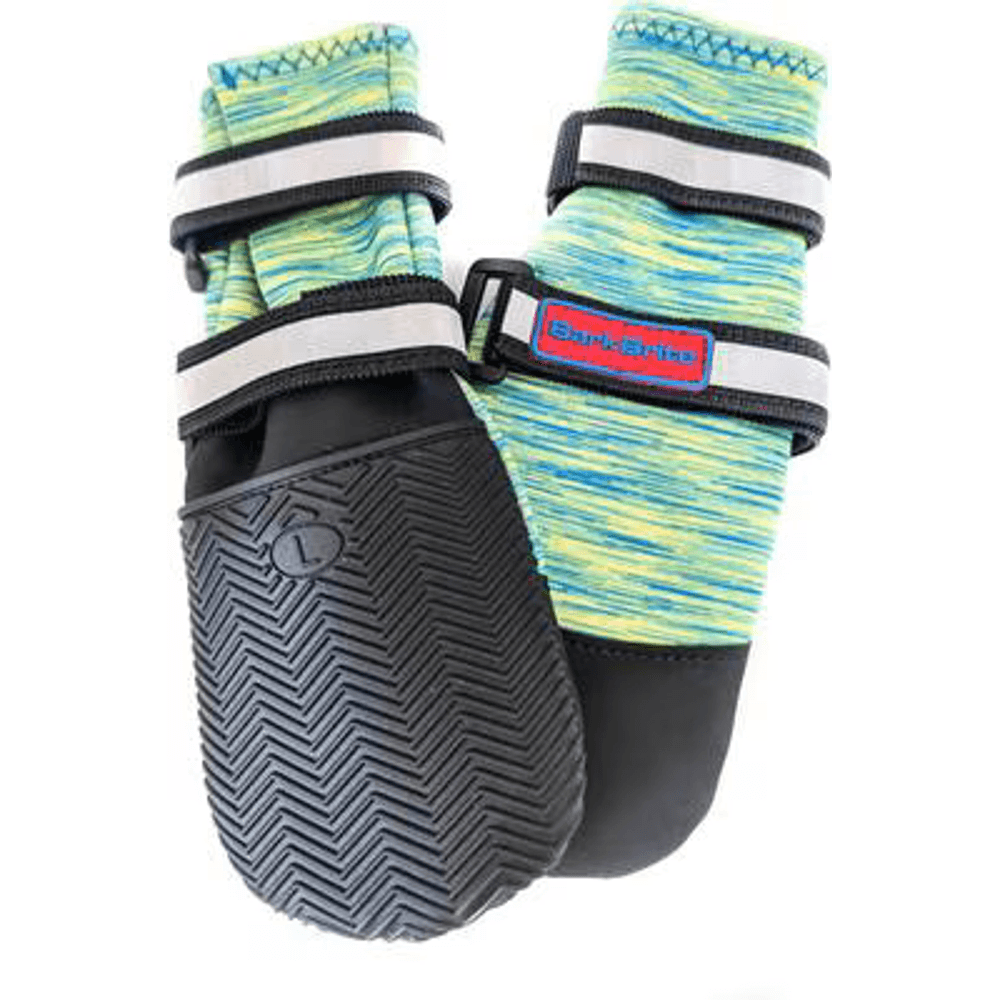
Protective dog boots cover the tops of the hind paws when knuckling and dragging scuff the skin and nails.
Webvet may earn a commission when you click through to Chewy, at no extra cost to you.
Is degenerative myelopathy painful for dogs?
Degenerative myelopathy is not painful in most dogs. Merck describes the early weakness and wobbling as nonpainful, and VCA says affected dogs are very weak but do not seem to be in pain. A dog that yelps, guards its back, or resists touch likely has a separate problem that needs its own diagnosis.
What does degenerative myelopathy look like in dogs day to day? The dog stumbles on turns, drags its toes on pavement, or slides on hard floors. Shaking legs can have other causes; see our guide to dog back legs trembling.
Bladder and bowel control are generally normal early on. VCA notes degenerative myelopathy incontinence in dogs develops as the disease progresses toward paralysis, so new accidents in a dog that is still walking well may have a different cause worth checking.
What Causes Degenerative Myelopathy? The SOD1 Gene
Degenerative myelopathy is caused by an inherited mutation in the SOD1 gene, so yes, DM in dogs is hereditary. A 2009 study in the Proceedings of the National Academy of Sciences (Awano and colleagues) identified the mutation and found dogs with two copies of the risk allele were associated with DM in five breeds.
Merck explains the inheritance as autosomal recessive with incomplete penetrance. In plain terms, a dog usually needs two copies of the mutation to be at risk, and even then not every at-risk dog develops the disease. The pattern is similar to familial ALS in people.
A DNA test for degenerative myelopathy in dogs sorts dogs into three groups:
- Clear (no copies): not at genetic risk from this mutation.
- Carrier (one copy): low risk, but a degenerative myelopathy carrier in dogs passes the mutation to about 50% of offspring, per Merck. Cornell adds a carrier may still have some risk, though progression is generally significantly slower.
- At risk (two copies): higher risk, but Cornell stresses this is not a guarantee of disease.
The SOD1 mutation explains what an at-risk test result does and does not mean: it raises risk, but VCA notes that not every dog with two copies develops DM, so an at-risk result is never a diagnosis on its own. A dog with signs still needs a full neurological workup.
Two breed details matter. Cornell reports a genetic modifier causes earlier onset in Pembroke Welsh corgis, and Bernese Mountain Dogs carry a second variant, called SOD1B, so they need testing for both variants.
Owners sometimes ask whether DM causes seizures in dogs. DM damages the spinal cord, not the brain, and seizures are not a recognized DM sign. A dog with seizures needs a separate evaluation.
Which Dog Breeds Get Degenerative Myelopathy?
German Shepherd Dogs, Pembroke Welsh corgis, Boxers, Rhodesian Ridgebacks, and Chesapeake Bay Retrievers are the breeds most commonly affected, according to Merck. VCA reports DM has been identified in more than 24 breeds.
Canine degenerative myelopathy breeds named across Merck, VCA, Cornell, and a Swiss study include:
- German Shepherd Dogs and German Shepherd crosses
- Pembroke Welsh corgis and Cardigan Welsh corgis
- Boxers
- Bernese Mountain Dogs
- Rhodesian Ridgebacks and Chesapeake Bay Retrievers
- Siberian Huskies and Collies
- Golden Retrievers, Pugs, and Poodles
- Kuvasz and Hovawart
German Shepherd Dogs are the breed most associated with DM. A 2006 Swiss study in the Journal of Veterinary Internal Medicine (Kathmann and colleagues, 50 dogs) found a significant breed predisposition in German Shepherds, Kuvasz, Hovawarts, and Bernese Mountain Dogs, with a mean age at diagnosis of 9.1 years and both sexes equally affected.
Treatment is the same in every breed: physical therapy, weight control, and mobility support. Bernese owners should request testing for both SOD1 variants. Boxers, Rhodesian Ridgebacks, and Chesapeake Bay Retrievers follow the same course, and early physiotherapy matters in each of them.
For a corgi with degenerative myelopathy, exercise stays important. A 2007 study of Pembroke Welsh corgis found the disease progressed similarly to other breeds but lasted longer, and short-legged dogs that lose hind-leg strength can keep moving with a wheelchair sized to their rear leg height.
 Sponsored
Vet care that's always there
Unlimited video calls and messaging with licensed vets for less than a typical vet visit. One membership covers up to five pets.
Use code Pets60
Plans start at $12/month · covers up to 5 pets
- Licensed vets in most states
- Rx for 150+ conditions
- 4.7 on Trustpilot
Stages of Degenerative Myelopathy in Dogs
Degenerative myelopathy in dogs moves through early, middle, late, and end stages, from knuckling to loss of walking to weakness in all four legs. Vets do not use an official numbered stage system, so the timing below is typical, not fixed.
The progression of degenerative myelopathy in dogs starts in the back legs and climbs forward. Awano 2009 describes early disease as spastic, wobbly weakness in the pelvic limbs; Cornell says dogs typically lose the ability to walk after six to twelve months; and front leg weakness appears in late stages.

The degenerative myelopathy stages table below shows the typical timing, the signs to expect, and the mobility aid that fits each stage, from booties for early knuckling to rear-support gear later. Timing is typical, not fixed, and comes from Cornell, Merck, and two long-term studies of dogs with DM.
| Stage | Typical timing | Signs to expect | Mobility aids that fit |
|---|---|---|---|
| Early | Onset usually at 8 years or older; the first months of signs | Knuckling or turning under of hind paws, scuffed toenails, swaying, often one leg first | Booties for scuffed paws, traction on slick floors, ramps, daily walks and physical therapy |
| Middle | Typically within 6 to 12 months of the first signs (Cornell) | Both hind legs weak, muscle loss, trouble rising, falls; bladder control usually normal | Rear-support harness or sling for standing and walking, then a wheelchair for hind limb support |
| Late | Often 1 to 3 years after diagnosis (Merck); median 19 months of signs in corgis (Coates 2007) | Cannot walk on the hind legs, urinary and fecal incontinence, early front leg weakness | Rear-support wheelchair, absorbent bedding pads, help with toileting and skin care |
| End | Natural course median 36 months from onset to death, range 18 to 52 months (Veterinary Sciences 2021) | Weakness in all four legs, breathing difficulty, trouble swallowing | Full body support and a quality-of-life discussion with your vet |
The middle stage is when daily life changes most. Cornell describes hind limb muscle wasting and incoordination that worsen until the dog cannot walk. Kathmann 2006 found dogs given physiotherapy stayed able to walk longer than dogs without it, so this is the window when rehabilitation and a rear-support harness matter most.
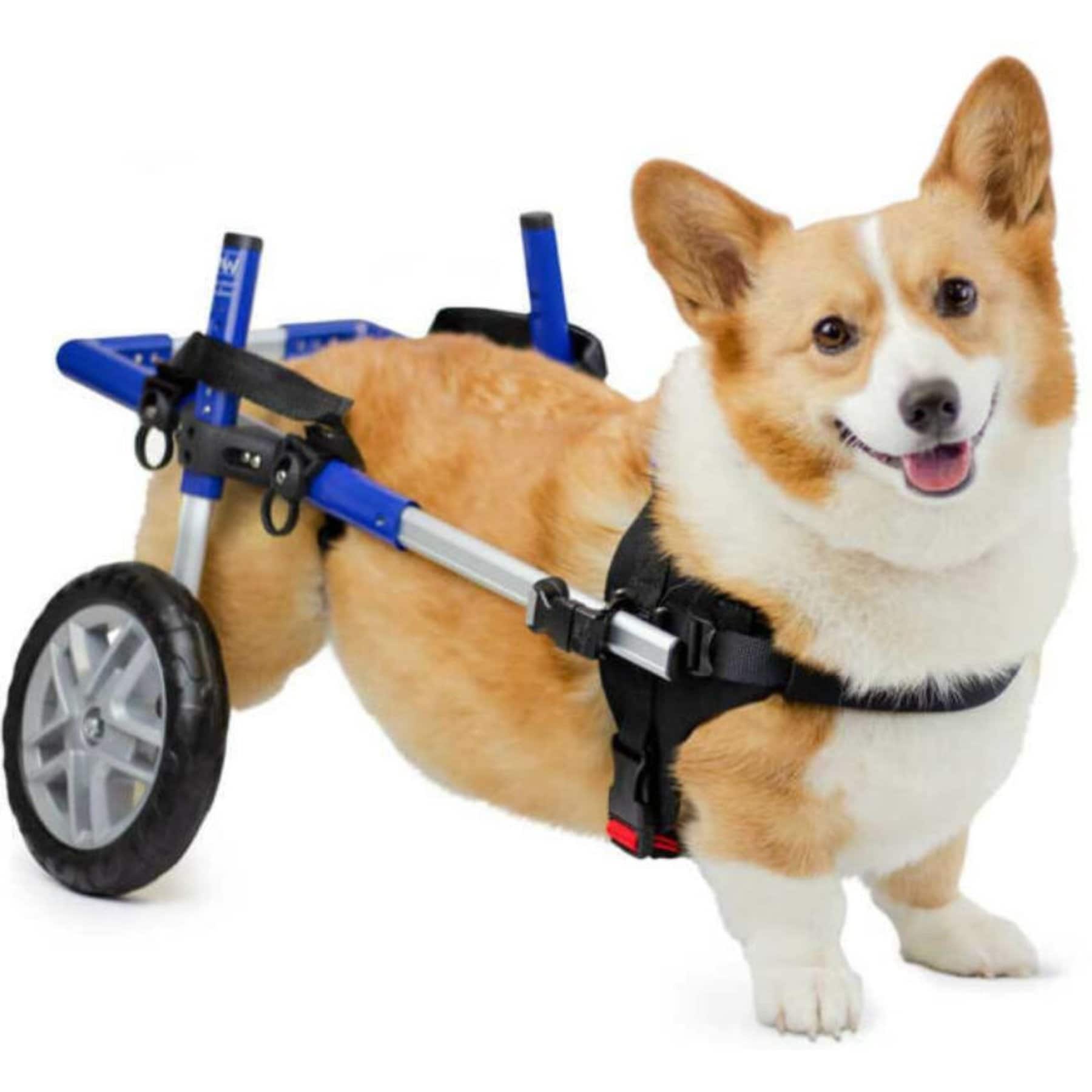
A rear-support wheelchair sized for 8 to 11 inch rear legs keeps a short-legged dog walking once the back legs give out.
Webvet may earn a commission when you click through to Chewy, at no extra cost to you.
Late stage degenerative myelopathy in dogs brings the most care work. In the 2007 corgi study by Coates and colleagues, all 21 dogs were unable to walk unassisted or were paralyzed in the hind legs at euthanasia, and 15 had front leg weakness. VCA notes incontinence develops as the disease progresses to paralysis.
The final stages of degenerative myelopathy in dogs follow when euthanasia is delayed. Awano 2009 reports signs ascend to floppy weakness in all four legs, and the 2021 Veterinary Sciences study recorded breathing difficulty in 85% of dogs followed to the natural end. Signs that a dog is moving from one stage to the next:
- Knuckling spreads from one hind leg to both, per Cornell.
- Muscle loss over the hips and thighs becomes visible.
- The dog needs help to stand or falls when turning.
- Accidents start as bladder control fades, per VCA.
- The front legs begin to weaken, as Cornell and Coates 2007 describe.
How fast does degenerative myelopathy progress in dogs? The answer depends on whether the dog is euthanized or followed to the end, and the life expectancy section below compares the figures. Speed also varies by breed: corgis in the Coates study progressed more slowly than other breeds. Dogs followed without euthanasia in the 2021 Veterinary Sciences study lived a median of 36 months from the first signs.
Once a dog cannot stand to urinate, keeping bedding dry and skin clean becomes a daily job. The Veterinary Sciences authors note incontinence causes skin inflammation, so washable, absorbent pads under the dog help protect both skin and floors. The same authors note daily help emptying the bladder becomes necessary, so ask your vet to show you how to do it safely.
VCA notes bladder and bowel control usually stay normal until the disease nears paralysis, so absorbent bedding tends to become necessary in the late stage. Setting it up early, before the first accident, makes the change easier for both the dog and the household.

An absorbent, waterproof-backed mat sits under bedding to catch accidents and washes clean in the machine.
Webvet may earn a commission when you click through to Chewy, at no extra cost to you.
How Is Degenerative Myelopathy Diagnosed?
Degenerative myelopathy is diagnosed by exclusion: no single test confirms DM in a living dog, so vets rule out other spinal diseases and combine the results with a SOD1 DNA test. Cornell states this directly, and VCA notes a definitive diagnosis requires examining the spinal cord after death.

Vets reach the diagnosis by ruling other causes out, then adding the genetic test and MRI, per Merck. A typical workup for how vets diagnose degenerative myelopathy in dogs includes:
- Neurological exam: checks for proprioceptive deficits, such as slow paw placement, that point to the spinal cord rather than the joints.
- X-rays: VCA says these help rule out hip dysplasia and chronic arthritis, most often in the early stages.
- MRI or myelography plus spinal fluid analysis: Merck calls these essential to exclude spinal compression and inflammatory disease.
- SOD1 DNA test: Merck notes a test is available through the Orthopedic Foundation for Animals (OFA).
Is there a test for degenerative myelopathy in dogs?
Yes, degenerative myelopathy testing in dogs uses a DNA test for the SOD1 mutation, but it measures genetic risk, not disease. Cornell explains the test shows whether a dog carries one or two copies of the variant. VCA recommends SOD1 testing for any at-risk breed showing consistent signs.
There is no blood test for degenerative myelopathy in dogs that confirms the disease itself. Testing for degenerative myelopathy in dogs works best as one piece of the picture: an at-risk DNA result, typical signs, and normal imaging together make DM the most likely diagnosis.
The research behind the test came largely from university work, including the Awano 2009 and Coates 2007 studies. If you suspect DM, ask your vet about the SOD1 test and a neurology referral if imaging is needed.
Degenerative Myelopathy vs Hip Dysplasia, IVDD, and Arthritis
DM differs from hip dysplasia, IVDD, and arthritis mainly because DM is painless and causes early loss of foot-position sense, while the other conditions usually cause pain. Merck notes these proprioceptive deficits appear early in DM and are absent in orthopedic disease.
How DM differs from hip dysplasia, IVDD, and arthritis comes down to a few clues:
- Hip dysplasia: a developmental hip deformity, per VCA. Osteoarthritis often develops secondary to it in large breeds, and early DM can look similar.
- Arthritis: painful joints and stiffness; read more in our guide to osteoarthritis in dogs and its signs.
- IVDD (intervertebral disk disease): Merck says thoracolumbar disk herniation can cause back pain and reluctance to move, unlike painless DM.
- Degenerative myelopathy: painless, slowly progressive, with knuckling and scuffed nails early.
Merck also notes large-breed dogs can get slow, age-related disk degeneration with gradual wobbling and weakness, typically after 5 years old, which overlaps with DM. In chondrodystrophoid (short-legged) breeds, disk extrusion can occur as early as 1 to 2 years of age with sudden, severe signs.
What neurological disorders can affect dogs' back legs?
Several neurological disorders can weaken a dog's back legs besides DM. VCA lists spinal injuries, spinal tumors, lumbosacral stenosis, fibrocartilaginous embolism (a spinal stroke), myasthenia gravis, and discospondylitis (a disk space infection). Intervertebral disk disease is another common cause, which is why imaging matters before anyone settles on DM.
What can be mistaken for degenerative myelopathy?
Arthritis, hip dysplasia, disk disease, and spinal tumors are the conditions most often mistaken for degenerative myelopathy. VCA notes early DM resembles osteoarthritis, which often occurs secondary to hip dysplasia in large breeds. A painful dog or a sudden onset points away from DM. Muscle twitching is a separate sign; see our guide to dog muscle spasms.
Treatment and Management for Degenerative Myelopathy
There is no cure for degenerative myelopathy in dogs, but physical therapy, weight control, and mobility aids can keep a dog walking longer. Cornell says routine physical therapy may delay clinical progression.

Is there a treatment for degenerative myelopathy?
There is no treatment that stops or reverses degenerative myelopathy, but physical rehabilitation can slow its effects. Merck states no drug or supplement has been shown to change the course. VCA says physical therapy slows progression, prolongs quality of life, and preserves muscle mass, and Cornell says routine physical therapy may delay clinical progression.
The strongest evidence comes from the 2006 Kathmann study. Among dogs with suspected DM, those given intensive physiotherapy had a mean survival of 255 days, versus 130 days with moderate physiotherapy and 55 days with none. The groups were small and not randomized, but dogs with physiotherapy also stayed able to walk longer.
What the evidence says about drugs, supplements, and remedies:
- Medication for degenerative myelopathy in dogs: VCA reports no effective drug treatment has been found, so there is no way to cure DM with medicine.
- Supplements for degenerative myelopathy in dogs: products like those in our guide to joint supplements for senior dogs may suit aging joints, but Merck finds no proven effect on DM itself.
- Holistic treatment for degenerative myelopathy in dogs: VCA says laser therapy (photobiomodulation) shows promise but needs more research.
- Experimental options: stem cells and the drug riluzole are under investigation, per VCA.
- Gabapentin: a pain and anti-seizure drug, not a DM treatment; for how strong a painkiller it is, see our gabapentin for dogs and cats guide.
Is walking good for dogs with degenerative myelopathy?
Yes, walking is good for dogs with degenerative myelopathy. VCA calls walking and swimming vital parts of treatment, with the goal of keeping the dog on its feet as long as possible. Keep walks short and on good footing, and avoid letting the dog become overweight, since extra weight makes weak legs work harder.
Treatment options for degenerative myelopathy in dogs that Cornell and VCA recommend at home include:
- Physical rehabilitation: regular, guided exercise, including walking and swimming.
- Healthy weight: diet for degenerative myelopathy in dogs means avoiding obesity; no specific diet is shown to change the disease.
- Traction and access: rugs or runners on slick floors, plus ramps or steps.
- Support for walking and standing: a sling or rear-support harness.
- Dog booties for degenerative myelopathy: to protect scuffed paws.
- A wheelchair: for hind limb support once walking fails.
For lifting help, a padded rear harness such as the CareLift Rear Portion Lifting Aid Mobility Harness spreads weight across the hips and abdomen; the Medium fits a 19 to 31 inch waist and dogs of 35 to 70 pounds, per PetSafe. Compare options in our best dog lift harness guide and our overview of mobility aids for dogs, harnesses, ramps, and more.
When the back legs can no longer bear weight, a rear-support cart such as the Walkin' Pets Walkin' Wheels Corgi Dog Wheelchair is sized by rear leg height (the listed model fits an 8 to 11 inch rear leg height) and lists at $340 from the manufacturer. VCA notes a wheelchair helps quality of life only if it suits the dog's temperament. Some owners also use a dog stroller for longer outings.
A supportive bed matters as the dog spends more time lying down; see our picks for the best orthopedic dog bed. When incontinence starts, our guide to diapers for old dogs covers practical options.
How Fast Does Degenerative Myelopathy Progress? Life Expectancy
Most dogs with degenerative myelopathy live about six months to three years after signs begin, with most euthanized within 1 to 3 years of diagnosis, according to Merck. That six-month to three-year spread exists because most families choose euthanasia once the dog can no longer walk, per Cornell.
How fast does degenerative myelopathy progress?
Degenerative myelopathy usually progresses from first signs to loss of walking in about six to twelve months, per Cornell. Without euthanasia it can continue for more than three years. Corgis in the Coates 2007 study had a median of 19 months of signs before euthanasia, longer than many other breeds.
Degenerative myelopathy in dogs life expectancy figures differ by how they were measured:
- Cornell: dogs are often euthanized 6 to 12 months after signs begin; without euthanasia, DM can progress for over three years.
- Merck: most dogs are euthanized because of disability within 1 to 3 years after diagnosis.
- Coates 2007 (corgis): median 19 months of signs before euthanasia.
- Veterinary Sciences 2021: in dogs not euthanized, median survival from symptom onset to death was 36 months, with a range of 18 to 52 months.
How long can a dog live with degenerative myelopathy, then? The natural-course data are limited: the Veterinary Sciences study authors note most DM dogs are euthanized, so few dogs are followed to the end. Physical therapy may extend good-quality time, based on the Kathmann survival differences.
Final Stages and When to Consider Euthanasia
The final stages of degenerative myelopathy bring paralysis of the back legs, incontinence, front leg weakness, and eventually breathing and swallowing problems. Deciding when to euthanize a dog with degenerative myelopathy is a quality-of-life decision made with your vet, because the disease is progressive and incurable, per VCA.
What are the final stages of degenerative myelopathy in dogs?
The final stages of degenerative myelopathy include loss of hind leg use, incontinence, and weakness spreading to the front legs. In the 2021 Veterinary Sciences study, 31 dogs developed urinary incontinence and 17 of those also had fecal incontinence. Breathing difficulty affected 34 of 40 dogs, with a median survival of 1.5 months after it began.
As these signs appear, quality-of-life decisions become pressing. Signs that late disease is advancing include:
- Breathing difficulty: 11 of the 34 affected dogs in the Veterinary Sciences study died within a month of onset.
- Trouble swallowing: four dogs developed it, and three died within two months.
- Weakness in all four legs: Cornell notes untreated DM can progress to the inability to walk or breathe normally.
- Behavior changes: VCA notes dogs may become anxious or irritable as mobility declines.
- Skin problems: incontinence causes skin inflammation, and the study authors note daily help emptying the bladder becomes necessary.
There is no single right day to put down a dog with degenerative myelopathy. Many families decide when the dog can no longer move comfortably, keep clean, or breathe easily. Our guide to dog euthanasia cost explains what to expect practically.
Degenerative Myelopathy in Dogs FAQs
Frequently Asked Questions
Does degenerative myelopathy cause pain in dogs?
No. Degenerative myelopathy is not painful in most dogs; Merck calls the early weakness nonpainful, and VCA says affected dogs do not seem to be in pain. If a dog with DM shows pain, look for a secondary or separate problem, such as arthritis.
Does gabapentin help degenerative myelopathy in dogs?
Gabapentin does not treat degenerative myelopathy, and Merck says no drug changes its course. Gabapentin is a pain and anti-seizure medication, so a vet may consider it for pain relief only when a dog also has a painful condition such as arthritis.
Can degenerative myelopathy be tested for?
Yes. A DNA test for the SOD1 mutation is available through OFA, and it shows whether a dog carries one or two copies of the variant. Ask your vet whether the lab needs a cheek swab or a blood sample.
How long can a dog live with degenerative myelopathy?
Most dogs lose the ability to walk about 6 to 12 months after signs begin, and most are euthanized within 1 to 3 years of diagnosis. Dogs followed to the natural end lived a median of 36 months from onset, ranging from 18 months to over four years.
Do dog wheelchairs help with degenerative myelopathy?
Yes, for many dogs. Cornell lists a wheelchair to support the hind limbs, and a rear-support cart lets a dog keep walking and exercising after the back legs fail. VCA notes whether it improves quality of life depends on the individual dog's temperament.

Editor
The Webvet Editorial Team is the in-house group of pet-care editors and writers behind Webvet, operated by Smart Pet Collective. The team researches, writes, and maintains Webvet's pet health, behavior, and medication content. Every article follows a defined editorial process: research from reputable veterinary and scientific sources, careful drafting, mandatory review of medical content by a credentialed veterinarian, and dated publication. Health and medication articles are medically reviewed by a licensed veterinary professional before they go live and are kept current over time.
Veterinarian · BVMS MRCVS
Dr. Pippa Elliott, BVMS, MRCVS, is a veterinarian with nearly 30 years of experience in companion animal practice. Dr. Elliott earned her Bachelor of Veterinary Medicine and Surgery from the University of Glasgow. She was also designated a Member of the Royal College of Veterinary Surgeons. Married with 2 grown-up kids, Dr. Elliott has a naughty Puggle named Poggle, 3 cats and a bearded dragon.


