Dog Muscle Spasms and Twitching: Causes, Symptoms, and When to Worry
Dog muscle spasms are sudden involuntary contractions, and most twitching in an alert dog is harmless. Here are the causes vets see, how to tell a spasm from a seizure or tremor, why dogs twitch in their sleep, and the signs that need a vet.

BVMS MRCVS
Medically reviewed by Dr. Pippa Elliott, BVMS MRCVS · Last reviewed

This article contains affiliate links. Webvet may earn a commission when you buy through them, at no extra cost to you.
Dog muscle spasms are sudden, involuntary contractions of a muscle or muscle group that the dog cannot control. Most twitching in a dog that stays alert and responsive is harmless, but an episode where the dog is not conscious is a seizure and needs a vet.
The causes of dog muscle spasms range from sleep and hard exercise to low calcium, toxins, disc disease, and nerve disorders. The one question that sorts most episodes is simple: is your dog conscious and responding to you while it happens?
- 1A muscle spasm is a sudden, involuntary contraction, a jerk or cramp the dog cannot stop.
- 2Twitching looks different by body region: face and ear flicks, leg jerks, a rippling back, or a stiff, painful neck.
- 3A dog that stays conscious and responsive during twitching is usually having a spasm or tremor, while a dog that falls, stiffens, and paddles while unaware is having a seizure.
- 4Twitching during sleep is normal dream activity, and puppies and senior dogs twitch more than middle-aged dogs.
- 5Spasms with a known toxin exposure, collapse, or paralysis, or in a nursing mother dog, need an emergency vet immediately, while spasms with vomiting need a vet the same day.

 Sponsored
Have a health question about your dog?
Talk to a licensed vet at Dutch over video or message, including nights and weekends.
Use code Pets60
Plans start at $12/month · covers up to 5 pets
- Licensed vets in most states
- Rx for 150+ conditions
- 4.7 on Trustpilot
What Are Muscle Spasms in Dogs?
A muscle spasm in a dog is a sudden, involuntary contraction that the dog cannot control. A veterinary classification review in the Journal of Veterinary Internal Medicine defines myoclonus, the medical term for this kind of event, as a sudden, brief, involuntary muscle jerk.
Whether a dog with muscle spasms needs help depends on context. Most twitching in a conscious, alert dog is benign, while unresponsive episodes are seizures. The Merck Veterinary Manual lists tremors, seizures, pain, and weakness among the primary signs of nervous system disorders, so repeated or worsening episodes deserve an exam.
Common scenarios owners describe when their dog is having muscle spasms include:
- Dog twitching while lying down awake: often a brief, harmless flicker, but repeated twitching in a resting, alert dog is worth filming for your vet.
- Dog twitching and flinching: flinching when touched points toward pain, such as a sore back or neck.
- Dog vomiting and muscle spasms together: this pairing appears with poisonings, including moldy food and organophosphate insecticides, and needs a vet promptly.
- Dog muscle spasms after surgery or after a vaccine: the veterinary references used for this article do not describe either pattern, so call the clinic that performed the procedure.
A spasm differs from a tremor. A 198-dog case series on PubMed Central defines tremor as an involuntary, rhythmic, oscillatory movement of a body part, a repeating shake rather than one jerk. If your dog is jerking every few seconds, that pattern of repeated single jerks fits myoclonus better than tremor.
What can you give a dog for muscle spasms at home? Nothing from your own medicine cabinet. The veterinary references used for this article do not describe Flexeril (cyclobenzaprine) for dogs, so do not give it. The muscle relaxant VCA Animal Hospitals describes for dogs is methocarbamol, which a vet prescribes and doses.
What you can do for a dog with muscle spasms is support the basics while you arrange care: rest, quiet, comfortable footing, and steady access to fresh, clean water so fluid intake does not fall while you wait for an appointment.
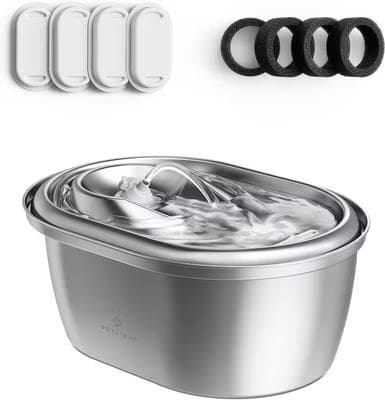
A 3 L stainless steel fountain keeps fresh, moving water available, which can encourage dogs to drink through the day.
Webvet may earn a commission when you click through to Chewy, at no extra cost to you.
For an active dog that cramps after long, hot exercise, the useful home steps are cooling, rest, and replacing fluids. Merck ties muscle twitching to electrolyte balance, especially low magnesium and low calcium, which is why fluid and electrolyte intake matters for working dogs.
Symptoms: What Dog Muscle Spasms and Twitching Look Like
Dog muscle spasms while awake usually look like a twitch, flicker, or jerk in one area while the dog stays alert and aware of you. Where the twitching shows up offers clues to the cause.

The Merck Veterinary Manual describes low calcium showing as focal twitching of the ear and face and a stiff gait, progressing to tetany and seizures in severe cases. Signs by body region include:
- Face and ears: small flickers or twitches, which Merck links to low calcium.
- Legs: dog leg twitching while awake, a stiff gait, or a jerking limb while standing.
- Neck: a disc herniation in the neck causes neck pain, stiffness, and muscle spasms, according to Merck.
- Back: rippling or flinching skin over the back, often with sensitivity to touch.
- Whole body: generalized shaking, which is more often a tremor than a spasm.
Why is my dog twitching all of a sudden? A sudden start points to something new: a toxin, an electrolyte problem, pain from a disc, or a nervous system event. VCA notes that focal seizures can show as twitching on one side of the body and may or may not involve loss of consciousness, so one-sided twitching that repeats needs a vet.
Context helps too. VCA reports that the tremors of shaker syndrome get worse with excitement and exercise and may ease or stop at rest or in sleep. If your dog's muscle twitching while awake follows a pattern like that, note it for your vet, along with how long each episode lasts and whether it follows hard exercise in the heat.

Petralyte adds electrolytes to water or food for hard-working dogs, one sachet at a time.
Webvet may earn a commission when you click through to Chewy, at no extra cost to you.
What Causes Muscle Spasms in Dogs?
Dog muscle spasms have many causes, and the most important are electrolyte imbalance, toxins, pain and disc disease, and nerve or muscle disorders. Ordinary sleep twitching is the most common harmless one.

Overexertion and exertional myopathy. Merck describes exertional myopathy, also called rhabdomyolysis, as exercise-triggered muscle injury that hits mainly racing Greyhounds and endurance sled dogs. It is a real muscle injury, not an ordinary cramp, and vets confirm it with a markedly elevated serum creatine kinase (CK).
Dehydration and electrolyte loss. The veterinary references used for this article do not describe dehydration alone causing muscle spasms in dogs. The link runs through electrolytes:
- Merck says digestion is critical for keeping fluid and electrolytes (salts) in balance.
- VCA notes dehydration can develop quickly when vomiting and diarrhea persist beyond 24 hours.
- Merck reports that severe low magnesium causes muscle weakness, fasciculations (fine twitches), arrhythmias, seizures, ataxia, and coma.
See our guide to dehydration in dogs for the warning signs. Keeping clean water available and appealing is a simple daily step for any dog.
Low calcium (hypocalcemia). Merck lists mild tremors, twitching, muscle spasms, and stiff gait as signs of low calcium. The classic case is eclampsia, which usually appears 2 to 3 weeks after whelping, mostly in small breeds with large litters. Hypocalcemia from critical illness or injury can mimic it. Vets confirm it with a serum calcium test, and Merck cites a pretreatment total calcium below 7 mg/dL in affected dogs.
Toxins. Several poisons cause twitching and tremors:
- Tremorgenic mycotoxins from moldy food and compost cause vomiting, tremors, ataxia, and seizures, per Merck. The ASPCA Animal Poison Control Center reports them as common causes of tremoring dogs.
- Organophosphate insecticides can cause muscle tremors and twitching with drooling, vomiting, and seizures.
- How common toxins are: in the 198-dog generalized tremor series, intoxication was the top cause at 46%, followed by idiopathic generalized tremor syndrome at 24.7% and hypocalcemia at 6.6%.
Pain and disc disease. Intervertebral disc disease (IVDD) is a common cause of spinal disorders, especially in small breeds such as Dachshunds and Beagles, where herniation can occur at 1 to 2 years. Merck notes large breeds tend to develop disc degeneration after age 5.
Nerve and muscle disorders. Several are documented in dogs:
- Acquired myasthenia gravis: Merck describes exercise-related stiffness, tremors, and weakness that improve with rest.
- Cerebellar disorders: these cause tremor, an abnormal stance, and poor coordination.
- Steroid-responsive tremor syndrome: also called shaker syndrome, it causes generalized head and body tremors. VCA says it is most common in dogs under 30 lb, though any size or color can be affected. Our guide to dog head tremors and shaking covers it in depth.
Muscle spasms in an old or senior dog deserve particular attention. When a senior dog's leg twitches while lying down asleep, that is often normal sleep activity, since VCA reports senior dogs twitch more in sleep, but new twitching while awake in an older dog can reflect pain, disc changes, or nerve disease. Our guide to old dog trembling walks through the age-related causes.
Why do dogs twitch and whimper in their sleep? That is usually dreaming. Texas A&M describes REM sleep in dogs with leg movements, facial twitching, vocalizations, and tail movements, so a sleeping dog that twitches and whimpers is typically healthy.
Joint stiffness is common in older dogs, and many owners choose a joint supplement as part of a senior care routine discussed with their vet. Nutramax lists 600 mg glucosamine, 300 mg chondroitin, and 250 mg MSM per tablet in its Cosequin chewable formula with MSM.
 Sponsored
Vet care that's always there
Unlimited video calls and messaging with licensed vets for less than a typical vet visit. One membership covers up to five pets.
Use code Pets60
Plans start at $12/month · covers up to 5 pets
- Licensed vets in most states
- Rx for 150+ conditions
- 4.7 on Trustpilot
Muscle Spasm vs Seizure vs Tremor: How to Tell the Difference
The clearest way to tell a spasm, seizure, or tremor apart is whether your dog stays conscious and responsive during the episode. When you are unsure whether your dog is having seizures or muscle spasms, start there.
The table below puts the one question that sorts twitching episodes (is the dog conscious and responsive) at the center of a spasm vs seizure vs tremor comparison with consciousness, duration, and what to do.
Use the spasm vs seizure vs tremor table to sort what you saw.
| Episode | What you see | Consciousness | Duration | What to do |
|---|---|---|---|---|
| Muscle spasm (myoclonus) | A sudden jerk or twitch in one muscle group, often a twitch while standing or lying | Dog stays conscious, alert, and responsive | Brief, a single jerk or a short run of jerks | Film it, note triggers, see your vet if it repeats or the dog seems painful |
| Tremor | Rhythmic, repeating shaking of the head, legs, or whole body | Dog stays conscious and usually otherwise normal | Ongoing while it lasts; shaker tremors often ease at rest | See your vet; new tremors need bloodwork and a toxin check |
| Generalized seizure | Dog falls on its side, legs stiffen, then rhythmic paddling, possibly drooling | Dog is not conscious and does not respond | Typically about 1 to 2 minutes, then confusion up to 24 hours | Keep hands away from the mouth, time it, call a vet; prolonged seizures need emergency care |
The descriptions in this table come from VCA's pages on seizures and syncope and shaker syndrome. A seizure brings loss of consciousness and paddling legs, while a spasm or tremor leaves the dog conscious. The 198-dog series cautions that some generalized jerking in conscious dogs is myoclonus, and telling it from tremor can be clinically challenging.
The same rule settles whether twitching in sleep was a seizure: a sleeping dog that wakes to its name was dreaming. For broader shaking, see why is my dog shaking, and for fear-related shivering, see dog shaking from fear and anxiety.
What is tremor syndrome in dogs?
Tremor syndrome, also called steroid-responsive tremor syndrome, shaker syndrome, or idiopathic generalized tremor syndrome, causes generalized head and body tremors in an otherwise normal, conscious dog. VCA says it is most common in dogs under 30 lb, is a diagnosis of exclusion, and is treated with prednisone, with tremors usually resolving in one to two weeks. One study found relapses in 30.8% of dogs with outcome data.
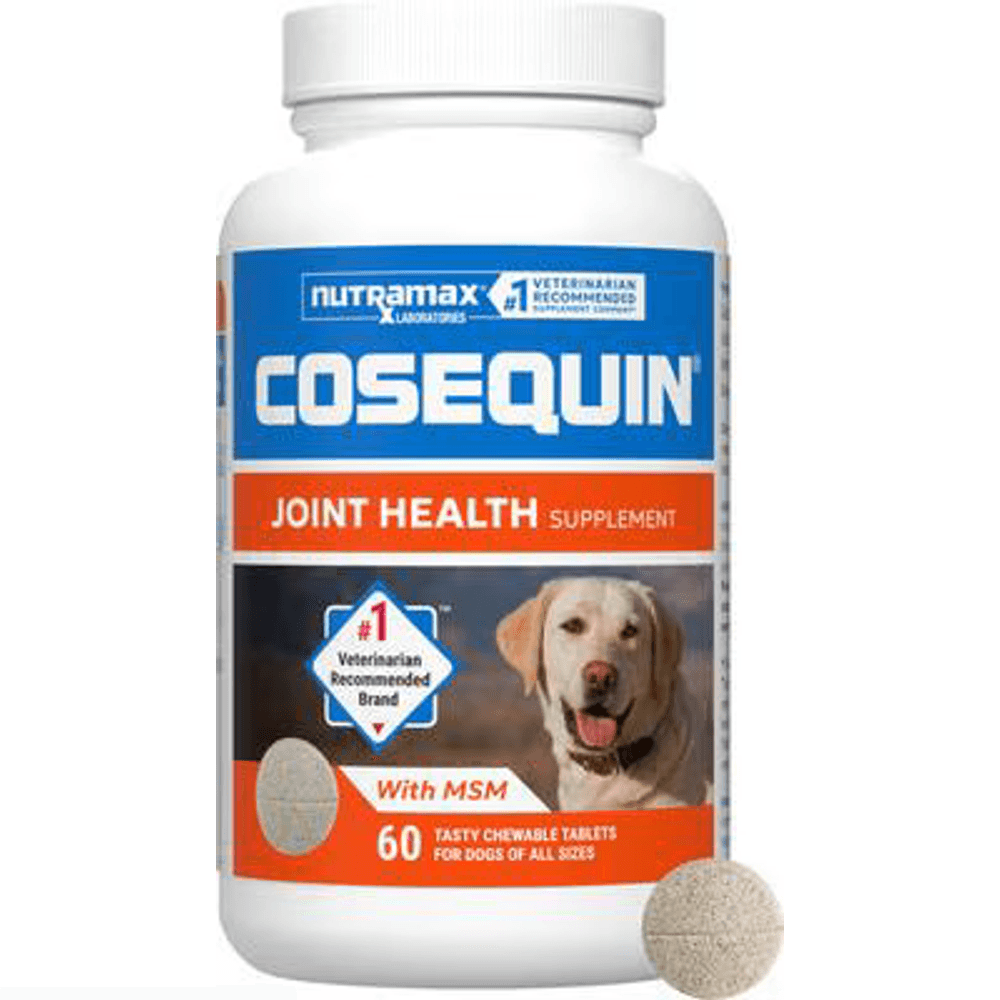
Cosequin chewable tablets with MSM are a widely used joint supplement many owners add to a senior dog's routine.
Webvet may earn a commission when you click through to Chewy, at no extra cost to you.
What is the difference between a dog seizure and a tremor?
A seizure involves loss of consciousness, while a dog with a tremor stays conscious. VCA describes a generalized seizure as a dog falling on its side, legs stiffening, then rhythmic paddling, usually for one to two minutes, followed by a post-ictal period of confusion lasting up to 24 hours. A tremor is rhythmic shaking with no blackout and no recovery confusion afterward.
Did my dog have a seizure or muscle spasm?
If your dog stayed aware, looked at you, and responded during the twitching, it was most likely a muscle spasm or tremor. If your dog collapsed, did not respond, paddled its legs, and seemed confused afterward, it was most likely a seizure. Fainting (syncope) is a third possibility: VCA describes it as a brief loss of consciousness and posture from reduced blood flow to the brain. Our guide to seizures in dogs covers next steps.
Dog Twitching While Sleeping
Dog twitching while sleeping is normal and reflects dreaming during REM sleep. Dog muscle spasms while sleeping are rarely a medical problem on their own.

VCA reports that twitching begins about 20 minutes after an average-sized dog falls asleep, when the first dream episode often starts, and that puppies and senior dogs twitch more than middle-aged dogs. VCA also notes dogs enter REM sleep much faster than people. A university polysomnography study by Kis and colleagues found that dog sleep brain activity resembles human sleep. For a senior dog that twitches through the night, a firm, supportive bed gives it a comfortable place to settle.

A thick, supportive orthopedic bed with a headrest gives a stiff or sore large dog a comfortable place to rest.
Webvet may earn a commission when you click through to Chewy, at no extra cost to you.
When a dog has muscle spasms while sleeping, or twitches and breathes heavily in its sleep, it is usually showing ordinary REM sleep twitching. Texas A&M lists leg movements, facial twitching, vocalizations, and tail movements as normal REM activity. Our guides to what dogs dream about and dog barking in sleep cover these behaviors.
The veterinary references used for this article set no minute cutoff for a muscle spasm, but any seizure-like episode where the dog is unresponsive is treated as an emergency, and the timing rules vets use are covered in our seizures in dogs guide. To tell muscle twitching while your dog is sleeping from a seizure, use responsiveness:
- Sleep twitching: the dog wakes when you say its name and is alert right away.
- Seizure: the dog does not wake, may stiffen and paddle, and is confused afterward.
- Abnormal sleep movement: the University of Florida documented a dog with REM behavior disorder whose violent sleep movements were confirmed by polysomnography after brain disease was ruled out.
Dog Back and Leg Muscle Spasms
Dog back muscle spasms and leg spasms most often signal pain, and the leading spinal cause is intervertebral disc disease (IVDD). Spasms in the back, neck, or hind legs deserve a vet exam rather than a wait-and-see approach.

Cornell University College of Veterinary Medicine calls IVDD a common source of back pain in dogs, ranging from mild discomfort to paralysis. Cornell reports about 65% of IVDD cases involve the thoracolumbar (mid to lower back) spine and about 18% involve the neck alone.
Knowing what back and leg spasms mean depends on age and breed, which is the IVDD connection: Merck notes small breeds such as Dachshunds and Beagles can herniate a disc at 1 to 2 years, while large breeds tend to develop disc degeneration after age 5.
What each location tends to mean:
- Back: Merck links mid-back disc herniation to back pain and reluctance to move. Back muscle spasms when your dog is touched, or back twitching when scratched, often signal tenderness along the spine.
- Neck: a neck disc herniation causes neck pain, stiffness, and muscle spasms, per Merck.
- Hind legs: Cornell notes a dog with a disc problem may walk wobbly and look weak in the rear. Muscle spasms in the back legs alongside weakness need prompt attention.
- Leg twitching while lying down: during sleep this is usually dreaming; leg twitching while your dog is lying down awake, especially with stiffness, points more toward pain or nerve issues.
A sudden spinal event called fibrocartilaginous embolism (FCE), or spinal stroke, can also affect the legs. The University of Illinois says FCE is diagnosed by history, exam, and MRI, with no direct test. For trembling hind legs in particular, see dog back legs trembling, and for slowly progressive rear weakness, see degenerative myelopathy in dogs.
How Are Dog Muscle Spasms Diagnosed?
Vets diagnose dog muscle spasms with a physical and neurologic exam first, then bloodwork, urinalysis, and imaging as needed. The goal is finding the cause, because the twitch itself is a symptom.
The Merck Veterinary Manual describes a neurologic exam covering the head and cranial nerves, gait, neck and front legs, and the torso, hind legs, anus, and tail. Tests it lists for neurologic disease include:
- Blood tests and urinalysis
- Cerebrospinal fluid (CSF) analysis
- X-rays, CT, and MRI
- Electrical testing of the brain, nerves, and muscles
VCA says that for new tremors the vet starts with blood tests and urinalysis to rule out liver or kidney disease. Cornell notes that IVDD diagnosis starts with a physical exam, often enough for mild cases, along with X-rays. A video of the episode on your phone helps your vet see what you saw.
What are some common neurological symptoms in dogs?
Merck lists behavior changes, seizures, tremors, pain, numbness, lack of coordination, and weakness or paralysis of one or more legs as the primary signs of nervous system disorders in dogs. Injuries to the cerebrum can cause blindness, seizures, coma, and circling. Any of these alongside muscle spasms means a neurologic exam is due.
Treatment for Muscle Spasms in Dogs
How to stop dog muscle spasms depends on the cause: treat the underlying problem, and use a muscle relaxant when the vet judges it necessary. There is no single at-home fix.
The most common dog muscle spasms medication is methocarbamol. VCA describes it as a muscle relaxant for spasms caused by inflammation, injury, IVDD, and certain toxicities, taking effect in about 1 to 2 hours. Side effects VCA lists include:
- Sleepiness, the most common
- Drooling, vomiting, weakness, or incoordination
- Dark or blue-green urine, which VCA says is not harmful
Merck gives typical veterinary dosing for methocarbamol and diazepam in its exertional myopathy guidance, but those doses are for vets to set. Never dose a muscle relaxant on your own.
Muscle relaxants such as methocarbamol ease the tight muscle, but treating the cause is what stops spasms from coming back. Cornell, Merck, and VCA each pair the relaxant with a cause-specific plan, whether that means rest for a disc, calcium for eclampsia, or prednisone for shaker syndrome.
Cause-specific treatment matters more than the relaxant:
- IVDD: Cornell describes restricted activity, pain medication, and possibly muscle relaxants for mild cases.
- Eclampsia (low calcium): Merck reports IV calcium gluconate brings improvement within about 15 minutes, with the muscles relaxing.
- Shaker syndrome: VCA describes prednisone, sometimes with diazepam early on.
- Mycotoxin tremors: Merck notes oral methocarbamol may be needed for days after discharge.
- Rhabdomyolysis: fluids, cooling, rest, pain relief, and muscle relaxants, with NSAIDs used cautiously because of kidney risk.
For pain control options your vet may discuss, see our guides to pain meds for dogs and gabapentin for dogs and cats.
Home Care and Prevention
Home remedies for dog muscle spasms come down to rest, gentle warmth for comfort, cooling after heat, and steady hydration. These support recovery but do not replace a diagnosis.

The natural remedies for muscle spasms in dogs that veterinary references support are practical steps, not supplements claimed to cure spasms:
- Rest: Cornell describes crate rest followed by strictly controlled exercise after IVDD surgery, and rest is part of mild IVDD care.
- Warmth: a warm, padded bed keeps a stiff dog comfortable. The veterinary references used for this article do not describe a safe warm-compress time or temperature for dogs, so ask your vet before using a heating pad.
- Cooling after heat: VCA advises cool, not cold, water over the head, stomach, armpits, and feet. Merck recommends cooler conditions and cool baths right after hard exertion.
- Hydration: keep fresh water available; a Petlibro Stainless Steel Dog & Cat Fountain, 3 L keeps moving water in front of dogs that drink little from a bowl.
- Toxin prevention: Merck says preventing mycotoxin poisoning means blocking access to moldy food and compost.
For dogs that work hard in heat, some owners add an electrolyte supplement. Petralyte Chicken Flavored Electrolyte & Joint Supplement for Dogs mixes one sachet into food or 8 oz of water, and its maker makes no claim that it treats spasms. For older dogs with stiffness, see senior dog joint pain and how to help them feel more comfortable.
When to See a Vet
See a vet the same day for twitching that repeats, worsens, or comes with pain, weakness, vomiting, or behavior change. Some signs need emergency care right away.
Other red flags that need a vet promptly:
- Sudden paralysis: the University of Illinois says it requires a veterinarian right away.
- Overheating: VCA calls heat stroke an immediate medical emergency, and severe spasms or seizures can raise body temperature through muscle activity.
- Prolonged seizures: VCA says these require treatment. The sources we reviewed give no single minute cutoff, so treat any seizure that does not end on its own as an emergency.
- Spinal signs: wobbly walking or neck pain with spasms. Cornell notes FCE recovery varies, with some dogs recovering fully and many keeping deficits, so early care matters.
Dog Muscle Spasms FAQs
Frequently Asked Questions
Can dogs get rhabdomyolysis?
Yes. Dogs can get exertional rhabdomyolysis, also called exertional myopathy, an exercise-triggered muscle injury that Merck says mainly affects racing Greyhounds and endurance sled dogs. In severe cases, muscle pigment spilling into the urine (myoglobinuria) can lead to kidney failure, so dark urine after hard exercise needs urgent vet care.
What does a mini stroke look like in a dog?
True strokes from clogged arteries or high blood pressure are rare in dogs, according to Merck. What owners often call a mini stroke is usually vestibular disease, which VCA says causes sudden loss of balance, a head tilt, circling, and flicking eye movements (nystagmus), or a spinal stroke (FCE) causing sudden neurological deficits.
Why is my dog twitching while awake?
Twitching while awake usually comes from pain, an electrolyte problem such as low calcium or magnesium, a toxin, or a nerve disorder. Muscle fatigue is often suggested as a cause, but the veterinary references used for this article do not describe muscle fatigue alone causing awake twitching in dogs; Merck describes only exercise-induced muscle injury. Repeated awake twitching needs a vet exam.
Are muscle spasms in dogs painful?
They can be. A spasm from a neck disc problem comes with real pain and stiffness, according to Merck, much like a cramp. Brief sleep twitches are part of normal dreaming. Vets may prescribe a muscle relaxant such as methocarbamol to help tight muscles relax while the cause is treated.
Can dehydration cause muscle spasms in dogs?
Indirectly. The veterinary references used for this article do not describe dehydration alone causing spasms, but fluid loss from vomiting or diarrhea can upset electrolytes, and Merck links low magnesium and low calcium to twitching and spasms. Keep fresh water available and see a vet if your dog cannot keep water down.

Editor
The Webvet Editorial Team is the in-house group of pet-care editors and writers behind Webvet, operated by Smart Pet Collective. The team researches, writes, and maintains Webvet's pet health, behavior, and medication content. Every article follows a defined editorial process: research from reputable veterinary and scientific sources, careful drafting, mandatory review of medical content by a credentialed veterinarian, and dated publication. Health and medication articles are medically reviewed by a licensed veterinary professional before they go live and are kept current over time.
Veterinarian · BVMS MRCVS
Dr. Pippa Elliott, BVMS, MRCVS, is a veterinarian with nearly 30 years of experience in companion animal practice. Dr. Elliott earned her Bachelor of Veterinary Medicine and Surgery from the University of Glasgow. She was also designated a Member of the Royal College of Veterinary Surgeons. Married with 2 grown-up kids, Dr. Elliott has a naughty Puggle named Poggle, 3 cats and a bearded dragon.
Related reading

Anemia in Dogs: Symptoms, Causes, Diagnosis, and Treatment

Seizures in Dogs: Types, Causes, What to Do, and Treatment

Lethargy in Dogs: Causes, Symptoms, and When It Is an Emergency
