What Do Dogs Dream About? The Science of Dog Sleep
A science-first guide to canine REM sleep, likely dream content, nightmares, normal sleep movements, and warning signs that deserve veterinary attention.

This article contains affiliate links. Webvet may earn a commission when you buy through them, at no extra cost to you.
Dogs experience measurable REM and non-REM sleep, so the evidence that dogs dream is strong. What do dogs dream about? No study can watch the story inside a dog's mind, but sleep and memory research make familiar activities, places, people, and emotions more plausible than elaborate human-style narratives. Twitching and brief sounds can be normal, although some movements deserve veterinary attention.
 Sponsored
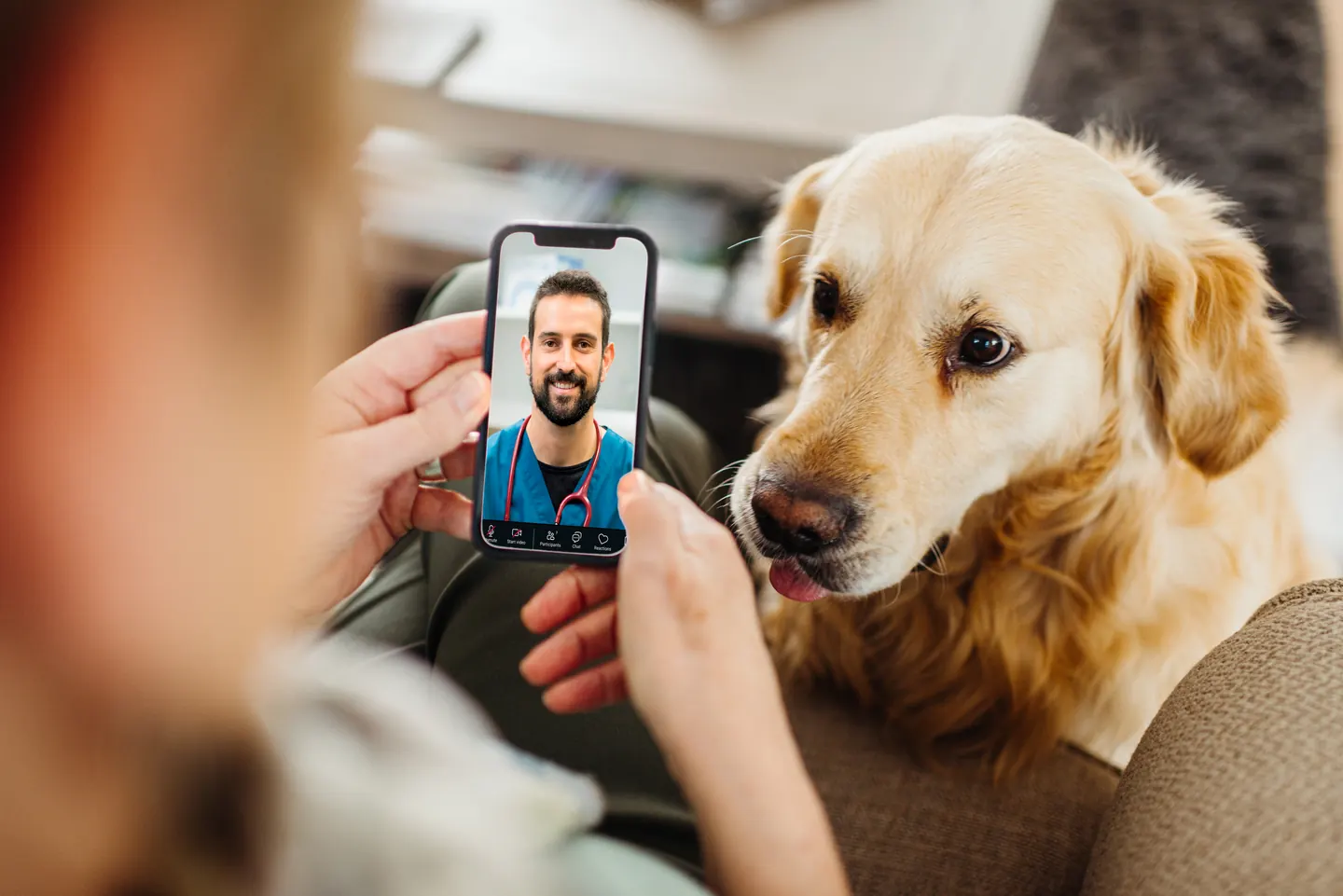
Want a vet's help with your dog's anxiety or behavior?
Talk to a licensed vet at Dutch over video, often the same day. They can recommend treatment and prescribe it when it's appropriate.
Use code Pets60
Plans start at $12/month · covers up to 5 pets
- Licensed vets in most states
- Rx for 150+ conditions
- 4.7 on Trustpilot
Do dogs dream, and what might they dream about?
A measured sleep stage can show when a dog is in REM or non-REM sleep, which strongly supports dreaming. Familiar memory replay is plausible, but exact content is unknown because no study can observe the dream narrative. Brief loose twitching deserves a different response from rigid, prolonged, or repeatedly abnormal movement.
Researchers can identify wakefulness, drowsiness, non-REM sleep, and rapid eye movement sleep in dogs through noninvasive polysomnography. That means sensors can record brain activity, eye movement, muscle tone, and other body signals while a family dog sleeps. A study of canine REM density and a study comparing REM and non-REM sleep in family dogs show that canine sleep architecture is measurable rather than guessed from a cute sleeping pose.
Do dogs have dreams? Measurable REM and non-REM sleep make the answer very likely yes. Familiar activities, people, places, food, play, and running are plausible content because sleep participates in memory processing, but no study can watch the story itself or show what a dog retains after waking. No visible twitch can supply the missing narrative.
Can dogs dream like humans? Dogs and humans share organized REM and non-REM sleep, but a dog cannot report a dream after waking. A dog having a dream may make soft sounds, run its paws, wag its tail, or briefly sleep with the eyes partly open. Whether dogs dream about their owners, food, running, or feeling safe remains a plausible inference, not an observed story.

An orthopedic sofa bed with three bolstered sides for dogs who like to rest their head and joints against a cushion. The supportive foam base cradles hips and elbows, a comforting spot for an older or shaky dog to settle.
Webvet may earn a commission when you click through to Chewy, at no extra cost to you.
What visible sleep behavior cannot tell you
Not all dogs show visible dream behavior, so movement cannot reveal how much a dog dreams. A quiet sleeper may pass through the same measurable stages. Should I wake my dog up from a dream? Usually, let the dog sleep unless safety or a concerning medical event requires intervention. Do dogs remember their dreams, and how often do dogs dream? No available test answers either question precisely. Shared sleep architecture supports dreaming, but exact content and recall remain unknown.
Do all dogs dream? Shared sleep architecture makes dreaming likely across dogs, but whether one dog has good dreams, dreams a lot, or dreams mostly about an owner cannot be measured from visible movement. Questions about what kinds of dreams dogs have, whether dogs dream about food or running, and what a blind dog dreams about must stay in the plausible, not proven, category.
What science measures, infers, and cannot know
The evidence fits three levels:
This three-level evidence ladder separates measured sleep stages from plausible familiar experiences and exact content that remains unknown. Measured signals can establish REM or non-REM sleep. Memory research can support a cautious inference about waking experiences. No electrode, camera, twitch, or sound can decode an individual dream story, so confidence should decrease as a claim moves from physiology to narrative detail.
- Measured: Dogs cycle through wakefulness, drowsiness, non-REM sleep, and REM sleep. A REM recording does not reveal the dream narrative.
- Plausible: Sleep participates in memory processing, so familiar experiences may contribute to dreams. We still cannot identify which person, place, scent, or event appeared.
- Unknown: A sleeping dog may have an inner experience during a twitch or vocalization. No available method can verify exact dream colors, symbols, intentions, or meanings.
A canine sleep and learning study found sleep-related EEG changes after learning and improved performance in a command task after sleep. That supports a role for memory consolidation. It does not prove that the dogs dreamed about the training session.
If your dog spends the day sniffing on walks, greeting family members, eating, playing, and resting in familiar rooms, those experiences are sensible candidates for memory-related dream material. Your face, voice, odor, and routines could be part of that material. "Could" matters. No one can confirm that a dog dreams about an owner on a particular night.
The same boundary applies to questions about whether dogs dream in color. Dogs have color vision during waking life, but we cannot ask a sleeping dog to report dream visuals. It is better to say the colors are unknown than to turn a waking-vision fact into a claim about dreams. For a broader look at normal sleep time by age and routine, see how much dogs sleep.

A plush, long-fur donut bolster bed with a raised rim that gives a recovering pet a secure, cushioned place to curl up during the crucial 10 to 14 days after surgery.
Webvet may earn a commission when you click through to Chewy, at no extra cost to you.
How can you tell when a dog is dreaming?

A dog may be dreaming when the body is otherwise relaxed and you notice brief, irregular movements during sleep. Common observations include small paw twitches, short paddling motions, eye movement behind the lids, a whisker or ear twitch, brief whimpers or muffled barks, and a momentary breathing change followed by normal rest.
These signs do not reveal what the dog is dreaming about. A paw twitch might occur during a dream involving movement, but that is not directly observable, and a whimper does not automatically mean a nightmare. The pattern fits normal sleep more readily when the body remains loose, breathing stays safe, the event is brief, and the dog wakes and recovers normally.
Watch before intervening. Note whether the muscles look loose, the motion remains brief, breathing stays safe, and the dog settles normally. Recording a concerning event can give a veterinarian more useful information than trying to describe it from memory.
Do dogs have nightmares?
Dogs likely can have negatively toned dreams, but "nightmare" is still an interpretation of an experience the dog cannot report. A sleeping dog may whimper, jerk, paddle, or wake suddenly. Those behaviors are compatible with a bad dream, but they can also occur during ordinary sleep transitions.
Can dogs have nightmares, and what do dogs have nightmares about? A negative dream is plausible, but no movement or sound can identify a specific subject. Even if a dog wakes scared, the event could also reflect pain, noise, a sleep transition, or another disturbance.
How can you tell if your dog is having a nightmare? Look for a brief sleep event followed by normal orientation, then compare it with the dog's usual pattern. If you are asking, "Is my dog dreaming or having a nightmare?", remember that behavior cannot reveal emotional content with certainty. Recurrent episodes, pain, breathing changes, disorientation, or escalating movement deserve veterinary discussion rather than a confident nightmare label.
- Stress and environment: An unusually stressful day, unfamiliar surroundings, or disruptive noise may disturb sleep.
- Physical or medical factors: Pain, itching, medication effects, age-related changes, or an underlying medical problem can also interrupt rest.
- Evidence limit: No one can watch a dog sleep and determine that the dream was about an owner, another dog, a past trauma, or a specific scary event.
What should you do if your dog seems to have a nightmare?
Let a sleeping dog wake naturally when possible. Startling touch can provoke a reflexive snap, especially if the dog is painful, frightened, hearing-impaired, or confused. If you need to interrupt the event because you are concerned, speak softly from a safe distance rather than placing your face or hands near the dog's mouth.

A plush orthopedic foam mattress that cushions aging joints and pressure points, giving a stiff or trembling senior dog warm, supportive rest.
Webvet may earn a commission when you click through to Chewy, at no extra cost to you.
Practical guidance for owners combines letting a dog rest, recording video safely, and contacting a veterinarian about concerning events. Do not wake a dog for every suspected nightmare when movement is brief and recovery is normal. If episodes happen often, keep returning every night, affect a puppy, or look unusual, film from a safe distance and share the event log with the veterinarian.
After the dog wakes, observe orientation, walking, breathing, and behavior. A dog that immediately recognizes the room, moves normally, and returns to rest is different from a dog that remains disoriented, collapses, cannot stand, or has repeated episodes.
What to record for your veterinarian
Keep a simple log if nightmares or abnormal movements recur. Record the time, duration, sleep stage as best you can, body parts involved, responsiveness, recovery, recent medications, and anything unusual that day. Share the log and video with the veterinarian. Recurrent disturbed sleep may need a medical evaluation even when each episode is brief.
 Sponsored
Vet care that's always there
Unlimited video calls and messaging with licensed vets for less than a typical vet visit. One membership covers up to five pets.
Use code Pets60
Plans start at $12/month · covers up to 5 pets
- Licensed vets in most states
- Rx for 150+ conditions
- 4.7 on Trustpilot
Dog twitching in sleep: dream or seizure?
Most brief twitches in a relaxed sleeping dog are not emergencies. Seizures can also occur during rest, however, and no single visual cue can diagnose the difference. The safest approach is to compare the whole event: onset, duration, muscle tone, responsiveness, breathing, elimination, and recovery.
If you are asking, "Is my dog dreaming or having a seizure?", treat dog seizure vs dreaming as an observation problem, not a home diagnosis. Compare the whole event rather than declaring a dream or seizure from one cue:
- Onset and duration
- Responsiveness and body tone
- Breathing and elimination
- Recovery and behavior afterward
The observation table compares duration, responsiveness, body tone, and recovery without treating any one cue as a diagnosis. It also records onset, breathing, elimination, and the safest owner response because dog twitching in sleep and seizure activity can overlap visually. Use the complete pattern to communicate with a veterinarian, and record video only when you can do so without approaching the dog's mouth or creating another hazard.
Why do dogs twitch in their sleep more than humans? Owners may notice canine paw, whisker, ear, or body movement more easily because a dog often sleeps nearby and in full view. The premise is not established as a species-wide fact, however. Twitching varies by sleep stage and individual, and repeated forceful movement still deserves the seizure and veterinary safety check described here.

A plush, waterproof sherpa blanket that gives a cold or shivering dog a warm, cozy layer to curl into. The hidden waterproof lining protects the bed, couch, or car seat, and the whole thing is machine washable.
Webvet may earn a commission when you click through to Chewy, at no extra cost to you.
What do dogs dream about when they twitch, cry, bark, whimper, or growl? The movement or sound may accompany a dream, but it cannot identify the scene or emotional tone. Twitching while asleep may resemble running, and a muffled bark may suggest social activity, yet those are interpretations. Judge medical concern from the whole event and recovery rather than translating each sound into a story.
| What to observe | More consistent with normal dream movement | More concerning for a possible seizure |
|---|---|---|
| Duration | Brief bursts that stop or change | Prolonged activity, especially near five minutes, or repeated events close together |
| Body tone | Loose body with small irregular twitches | Rigid extension, sustained rhythmic jerking, or whole-body stiffening |
| Responsiveness | May rouse to voice and wakes normally | Cannot be roused during the event, though touching is not recommended |
| Mouth and fluids | Small lip movement or quiet vocalization | Repetitive jaw motion, heavy drooling, or foaming can occur |
| Elimination | Usually absent | Urination or defecation may occur, though absence does not rule out seizure |
| Recovery | Quickly oriented and able to move normally | Post-event confusion, pacing, temporary vision change, weakness, or unusual hunger |
| Owner action | Observe, allow rest, note recurrence | Time it, clear hazards, record video if safe, and contact a veterinarian |
The Cornell University College of Veterinary Medicine seizure guide explains that seizures may be generalized or focal and can be followed by a postictal phase of confusion or other behavior change. Focal seizures do not always look like dramatic whole-body convulsions, and a suspected event cannot be labeled canine epilepsy from appearance alone.
Pain, sleep disorders, tremors, medication effects, and other conditions can also resemble dreaming or seizure activity. A video plus the history is valuable, but diagnosis belongs to a veterinarian.
What do dogs dream about when they twitch?
A twitch shows that motor activity occurred during sleep. It cannot identify the subject of a dream. If the movement corresponds to a familiar action, such as running, suckling, chewing, or sniffing, people naturally imagine a matching story. That can be a warm interpretation as long as it is not presented as proof.
Most dream-content theories center on recent or emotionally meaningful waking experiences because sleep supports memory processing. A dog may therefore dream about people, other animals, play, food, walks, places, or learned tasks. The evidence is strongest for the sleep and memory processes, not for the itemized list.
What do dogs dream about when they bark or cry?
Brief barking, growling, whimpering, or crying can occur during sleep. The sound may accompany a dream, but it cannot reveal whether the dream is happy, frightening, frustrating, or socially meaningful.
Instead of translating a sound into a story, look at:
- Duration.
- Body tension.
- Waking behavior.
- How often it recurs.
If crying continues while awake, the dog seems painful, breathing is abnormal, or the behavior is new and frequent, contact a veterinarian. A medical problem should not be dismissed as "just dreaming" because it occurs near sleep.
Do puppies, breeds, and older dogs dream differently?
Puppies sleep a great deal while their brains and bodies are developing. They often twitch, paddle, suckle, or vocalize in sleep. It is plausible that puppy dreams draw on feeding, warmth, littermates, play, people, and new experiences, but exact content remains unknown.
What do puppies dream about? The same evidence boundary applies as it does for adults: familiar experiences are plausible, but the exact narrative is unavailable.
Claims that small dogs dream more often while large dogs have longer dreams are widely repeated online, yet owners should be cautious with precise rules that are not tied to a specific canine sleep study. Breed, size, age, health, activity, and the sleep environment can all influence what an owner notices.
Sleep changes in older dogs
Age does affect sleep architecture. A polysomnography study in senior dogs found that dogs with worse cognitive scores spent less time in non-REM and REM sleep in a small sample. That does not mean every older dog with restless sleep has cognitive dysfunction. Pain, urinary needs, sensory changes, medications, anxiety, and other illnesses can disrupt sleep too.
Talk with a veterinarian when an older dog begins pacing at night, reverses the day-night schedule, becomes confused, vocalizes repeatedly, or cannot settle. Those changes deserve a health assessment rather than a dream interpretation.
Should you wake a dog from a dream?
Usually, no. Letting the sleep cycle continue avoids startling the dog and preserves needed rest. If the dog is in a dangerous position, breathing abnormally, overheating, or showing seizure warning signs, safety takes priority.
If waking is necessary, call the dog's name softly from several feet away. Give the dog time to orient before approaching. Do not shake, grab, or lean over the face. Children should get an adult instead of waking a dreaming dog themselves.
How to support healthy sleep without chasing dream meanings
A dream does not need to be decoded to make sleep worth protecting. Start with a predictable evening routine, a quiet resting area, comfortable room temperature, and enough opportunity for exercise, sniffing, social contact, and bathroom breaks during the day. A supportive orthopedic bed can be one comfort option when it suits the dog's size and mobility. The goal is not to produce happier dreams. It is to meet ordinary physical and behavioral needs that support rest.
Choose a sleeping location where the dog can settle without being repeatedly stepped over, touched, or startled. If the dog sleeps in a busy room, make sure there is also a lower-traffic option. Dogs with arthritis, weakness, or mobility limits may need stable footing around the resting area and veterinary help for pain. A dog that changes position often may be dreaming, but may also be uncomfortable.
Avoid giving supplements, sedatives, antihistamines, or human sleep products simply because a dog seems restless or has a nightmare. Some products are unsafe for dogs, and even veterinary medications can change sleep, movement, or alertness. Ask the veterinarian before adding or changing anything.
When a sleep change deserves a veterinary visit

Arrange an assessment when sleep behavior is new, frequent, worsening, or paired with daytime changes. Useful reasons to call include:
- Repeated nighttime pacing, panting, crying, or inability to settle
- New weakness, collapse, stiffness, pain, or trouble rising
- Confusion after waking or a reversed day-night routine
- Loud new snoring, choking sounds, or pauses in breathing
- Recurrent violent movement, suspected seizures, or injury during sleep
- A change that began after a medication, toxin exposure, or illness
Bring the veterinary team:
- Videos and a written timeline.
- Medication and supplement names.
- Notes about appetite, thirst, urination, mobility, and daytime behavior.
These details help the veterinarian look beyond a dream interpretation and consider pain, neurologic disease, breathing problems, cognitive change, anxiety, or another medical cause.
What about cats and dreams?
Cats have measurable sleep stages, but feline dream queries belong to WebVet's dedicated live guide to what cats dream about. That article covers cat-specific sleep behavior, movement, and possible content. This page stays focused on dogs so the resources do not duplicate each other. Readers asking about a kitten or adult cat should use the feline owner rather than applying dog-specific seizure comparisons or sleep guidance to a cat.
Frequently Asked Questions
What do dogs dream about when they twitch while sleeping?
What do dogs dream about when they twitch while sleeping? Twitching while asleep may accompany a dream involving movement, but the motion does not reveal the story. Canine REM sleep evidence supports dreaming, while a specific chase, person, or place remains a bounded dream-content inference. Brief loose movement followed by normal waking is generally less concerning than rigid, prolonged, repeated activity or post-event confusion, which deserves veterinary attention.
What do most dogs dream of?
No study can identify the most common exact subject of dog dreams. Canine REM sleep evidence makes dreaming likely, and familiar waking experiences such as people, other animals, places, play, smells, and learned tasks are plausible because sleep supports memory processing. That list is a bounded dream-content inference, not a decoded recording of what most dogs experience.
Dogs dream because canine sleep is active biology, not because every twitch has a story humans can read. Observe gently, preserve the line between evidence and imagination, and bring recurrent or concerning events to a veterinarian.
Do dogs dream about their owners?
Dogs may dream about their owners because familiar waking experiences are plausible material for memory processing during sleep. People, other animals, walks, play, smells, places, and learned tasks may all be represented. However, exact dream content cannot be verified because dogs cannot report the story and current sleep measurements do not decode it. Treat the idea as a reasonable possibility, not proof of what one dog experienced.
Can dogs have nightmares?
Nightmare-like behavior can occur during sleep, including brief whimpering, barking, paddling, or tense movement, but those signs cannot reveal the dream's exact emotional content. Let a safely positioned dog sleep unless breathing, overheating, injury risk, or seizure signs make intervention necessary. New or repeated distress deserves veterinary attention, especially when it is paired with pain, daytime behavior change, confusion, or disrupted breathing.
Should you wake a dog from a dream?
Usually let the dog continue sleeping. Waking can startle a dog and interrupt needed rest. If the dog is in danger, breathing abnormally, overheating, or showing concerning seizure signs, safety comes first. If waking is necessary, call the dog's name softly from several feet away and allow time to orient. Do not shake, grab, or lean over the dog's face, and keep children from waking the dog directly.
Is my dog dreaming or having a seizure?
Dream movements are often brief, loose, variable, and followed by normal waking. A seizure may involve sustained rhythmic or rigid movement, loss of awareness, drooling, urination or defecation, and post-event confusion, although no single sign proves the cause. Time the event and record a video when it is safe. Contact a veterinarian for a first suspected seizure, recurrent events, injury, breathing trouble, or abnormal behavior after waking.

Editor
The Webvet Editorial Team is the in-house group of pet-care editors and writers behind Webvet, operated by Smart Pet Collective. The team researches, writes, and maintains Webvet's pet health, behavior, and medication content. Every article follows a defined editorial process: research from reputable veterinary and scientific sources, careful drafting, mandatory review of medical content by a credentialed veterinarian, and dated publication. Health and medication articles are medically reviewed by a licensed veterinary professional before they go live and are kept current over time.


