Best Cat Deshedding Tools, Chosen by Coat Type
A cat deshedding tool lifts dead undercoat out of the coat, and the wrong one damages the topcoat instead. Here is how to match the tool to your cat's coat type, how often to use it, which tools are worth buying, and when heavy shedding needs a vet.

This article contains affiliate links. Webvet may earn a commission when you buy through them, at no extra cost to you.
A cat deshedding tool only earns its place if it matches the coat it is used on. The category covers steel blades, rakes, slicker brushes, combs, and rubber gloves, and they do genuinely different jobs. One lifts dead undercoat out. Another skims loose hair off the surface.
So this guide settles a different question than most. Not which cat deshedding tool has the most reviews, but which one suits a short single coat, a dense double coat, or a long silky one, how hard to press, how often to run it, and when heavy shedding stops being a grooming problem.
Shedding itself is normal and permanent. Cats replace their coat continuously, with heavier peaks in spring and autumn, and no brush shortens that cycle. What a good tool does is collect the dead hair on your terms rather than on the sofa, and before your cat swallows it during a wash.
- 1Choose tools for the individual coat, skin, and handling tolerance.
- 2Undercoat tools, combs, slickers, flexible brushes, and gloves perform different jobs.
- 3Do not use an edged undercoat tool on bare skin or a coat excluded by its directions.
- 4Follow the exact tool frequency guidance. Ordinary coat checks do not require daily undercoat-tool use.
- 5New bald patches, irritated skin, sudden matting, or shedding with other signs of illness need veterinary assessment.
One thing to set straight before the picks. Every tool below is judged on what it does to the coat, not on how impressive a pile of fur it produces. A tool that builds a big heap by shearing the topcoat has taken something you cannot brush back.
 Sponsored
Want a vet's help with your cat's anxiety or behavior?
Talk to a licensed vet at Dutch over video, often the same day. They can recommend treatment and prescribe it when it's appropriate.
Use code Pets30
Plans start at $11/month · covers up to 5 pets
- Licensed vets in most states
- Rx for 150+ conditions
- 4.7 on Trustpilot
What a cat deshedding tool actually does
Tools sold for deshedding remove loose hair, but their jobs differ. Some target suitable undercoats; combs, flexible brushes, and gloves may collect loose hair elsewhere in the coat. They do not stop the normal hair cycle.

To see why that distinction matters, it helps to know how a cat's coat is built. Most cats carry more than one type of hair, and the tools in this category are aimed at only one of them.
- Guard hairs form the topcoat. They are the longest and coarsest hairs, they carry the color and pattern you see, and they shed water. These are the hairs a deshedding tool must leave alone.
- Awn hairs sit in the middle. They are shorter and finer than guard hairs and give the coat its body and texture.
- Down hairs make up the undercoat. They are soft, crimped, and packed close to the skin, and they exist to trap warm air. This is the layer that comes away in handfuls when a cat blows coat.
A deshedding tool works by slipping past the guard hairs and catching the dead down caught among them. That hair has already released from the follicle. The tool is not pulling hair out of the skin, it is unpicking hair from the coat.
This is also why the tools feel so unlike each other in the hand. Some use a fine steel edge to grip loose down. Some use bent wire pins. Some use nothing more than rubber nubs and friction.
- Edged undercoat tools use a metal grooming edge. Bar-style tools have a different contact surface. HandsOn is a pair of textured grooming gloves, not a bar or blade tool.
- Pinned tools, meaning slicker brushes and undercoat rakes, comb the loose hair out with wire pins or rounded teeth rather than with an edge.
- Friction tools, meaning rubber brushes and silicone grooming gloves, lift hair that has already worked its way to the surface.
- Steel combs remove less on their own, but they tell you what the coat is doing and they find mats before another tool hits one.
What none of them do is reduce the amount of hair your cat produces. That number is set by the coat, the season, the daylight your cat lives under, and its health. All you control is where the hair ends up.
Owner-facing veterinary references such as the Cornell Feline Health Center treat regular brushing as ordinary coat maintenance rather than a shedding cure. That is the right expectation to bring to any tool in this category.
Which cats actually need a deshedding tool
Not every cat does. A deshedding tool is worth buying when your cat has a real undercoat to remove and sheds more than ordinary brushing keeps up with. Plenty of cats fail one or both of those conditions, and for them the tool is a waste at best.

These are the cats that benefit most:
- Dense short double coats. British Shorthairs, American Shorthairs, Russian Blues, and most domestic shorthairs carry far more undercoat than their hair length suggests.
- Long double coats. Maine Coons, Siberians, Norwegian Forest Cats, Persians, and Himalayans shed a volume that a soft brush cannot keep pace with.
- Semi-long coats. Ragdolls and domestic mediumhairs tangle as much as they shed, so the comb matters as much as the deshedding pass.
- Any cat mid coat blow, when handfuls come away with an ordinary stroke of your hand.
And these are the cats that should not be near one:
- Single-coated cats such as Siamese, Oriental Shorthairs, Bengals, and Turkish Angoras have little down to lift, so an undercoat tool works on guard hair instead.
- Curly and sparse coats, including Cornish Rex and Devon Rex, are mostly fine down over skin that sits very close to the surface. Selkirk Rex coats are full and curly, and an undercoat edge breaks and straightens the curl, so a wide-tooth comb suits them better.
- Sphynx cats have no coat to deshed at all, and skin care replaces brushing entirely.
- Elderly, arthritic, very thin, or recovering cats feel pressure through the skin far more than a healthy adult does.
If you are unsure which group your cat belongs to, part the coat over the shoulder with your fingers and look. A double coat shows a visible band of pale, fluffy hair underneath the colored topcoat. A single coat looks much the same all the way down to the skin.
Mixed-breed cats do not read the breed lists, so trust the coat in front of you rather than the label from the shelter. A domestic shorthair with a plush, springy coat that resists your fingers is a double-coated cat whatever its paperwork says.
| Pick | Selection value and limit |
|---|---|
| FURminator Long Hair Cat Deshedding Tool, Purple, Medium | Medium long-hair variant for suitable, dry, tangle-free undercoats. |
| HandsOn All-In-One Pet Bathing & Grooming Gloves, Black, Medium | A pair of textured gloves for supervised, gentle surface grooming. Choose the size for your hands. |
| Safari Shedding Cat Blade | The cat-specific shedding blade is for loose hair, never tight mats or sore skin. |
| JW Pet Gripsoft Cat Comb | A handled comb for loose hair and checking suitable coats for remaining snags. |
| Frisco Self-Cleaning Slicker Cat Brush | Retracting pins make it easier to clear collected hair after light slicker grooming. |
| Safari Self-Cleaning Slicker Brush for Cats | Coated pins and push-button cleanup for cats that tolerate gentle slicker grooming. |
| KONG Cat ZoomGroom Multi-Use Brush | Flexible projections offer an alternative to wire pins for gentle surface grooming. |
| Delomo Dog, Cat Horse & Small Pet Grooming Glove, Blue | A grooming glove for cats that accept hand contact; it does not remove tight mats. |
Matching the tool to your cat's coat type
The best brush for cat shedding is the one that reaches your cat's undercoat without touching skin or shearing topcoat, and the right answer changes with coat length and density. Here is the mapping, coat by coat.
| Coat type | What to assess | Potential tools | Avoid | Reason |
|---|---|---|---|---|
| Short coat with little undercoat | Loose surface hair and tolerance | Flexible brush, glove, or suitable comb | Unnecessary undercoat-tool use | There may be little undercoat to remove |
| Dense short coat | Actual undercoat and skin condition | Suitable comb, slicker, or short-hair undercoat tool | Wrong variant or extra pressure | Density does not establish safe technique |
| Semi-long coat | Tangles and actual undercoat | Suitable comb or slicker; undercoat tool only if appropriate | Forcing a catching tool | Length alone does not establish suitability |
| Dense long coat | Tangles and mat-prone areas | Suitable comb and coat-appropriate grooming tool | Working through tight mats | Separate mat care from loose-hair removal |
| Curly or sparse coat | Density and fragility vary | Individual coat-care plan | Assuming all rex coats need the same tool | Some need combing; others need very light care |
| Hairless or nearly hairless | Skin and any fine hair | Appropriate skin care | Undercoat tools on bare skin | There is no undercoat job on bare skin |
Short single coats need nothing sharp. A rubber brush or a silicone glove picks up hair that has already surfaced, and a fine steel comb clears the rest. An undercoat blade on this coat has no down to find, so it works on the guard hairs instead.
Short double coats are where deshedding tools earn their reputation. The undercoat is dense and sits close to the skin under a short topcoat, so a short-hair blade or a bar tool reaches it in a single pass. Use the short-hair version, not the long-hair one.
Semi-long coats shed and tangle at the same time. Work a steel comb through first to find knots, then use a slicker brush or a long-hair deshedding tool with a light hand. A shedding blade is the wrong shape for this coat and catches in it.
Long dense double coats are a volume problem, and the order of operations matters more than the tool:
- Comb first with a steel comb, section by section, so you find every tangle before anything with more grip goes near it.
- Deshed second, in short passes that follow the direction the hair lies.
- Comb again to lift what the deshedding pass loosened but did not carry away.
- Finish with a soft brush or a damp hand to settle the topcoat and pick up strays.
Sparse, curly, and hairless coats need individual assessment. Bare skin does not need an undercoat tool, while curly coats vary in density and may need different care. Do not assume every rex coat can be maintained with a cloth alone.
Senior and arthritic cats need the gentlest option that works, used more often rather than harder. Pressure a three-year-old shrugs off can hurt a fifteen-year-old with thin skin and sore joints. A comb or a glove for two minutes beats a blade for ten, every time.
Breed gives you a starting point, not a guarantee. Individual cats vary, and mixed-breed cats vary most of all. These are typical shedding patterns by breed and the tool family that usually fits:
- British Shorthair and Exotic Shorthair: a dense, plush double coat, so shedding is often moderate to heavy, especially in spring. A steel comb plus a short-hair undercoat tool, used lightly, usually fits.
- British Longhair: the same dense coat at longer length. Comb first for tangles, then use a long-hair deshedding tool or slicker with a light hand.
- American Shorthair and American Bobtail: usually a dense short coat with moderate, seasonal shedding (Bobtails also come in a longer coat). A rubber brush or glove most weeks, a short-hair undercoat tool in heavier spells.
- Domestic shorthair and domestic longhair cats: mixed ancestry, so coat density ranges from fine to very dense. Part the fur to check for undercoat before choosing a tool. A shorthair cat shedding a lot usually has more undercoat than it looks.
- Siamese, Oriental Shorthair, and Havana Brown: a fine, short, close-lying coat with little undercoat, so the shedding level is generally low. A glove or rubber brush is enough. They can still shed a bit more in spring shedding season, but a Siamese cat shedding a lot is out of character and worth checking against the vet signs below.
- Bengal: a short, pelt-like coat with a generally low shedding level. A glove or soft rubber brush suits it. If your Bengal cat is shedding a lot, consider a kitten-to-adult coat change, recent stress, or a skin problem rather than reaching for a blade.
- Burmese: a short, satiny coat that sheds lightly. A glove or soft brush is usually all it needs.
- Turkish Angora and Birman: semi-long, silky coats with little undercoat, so they tangle less than you might expect and shed most in spring. A steel comb and a slicker work better than an edged tool.
- Orange tabby cats: orange is a color pattern, not a breed, so an orange tabby's shedding depends on its coat length and density, not its color.
FURminator vs the alternatives
Compare the job and contact surface rather than assuming an edge removes more hair safely. A short coat with little undercoat may only need gentle surface grooming, while a dense coat may benefit from a suitable comb or undercoat tool. If the coat type or technique is unclear, ask a professional groomer to demonstrate an appropriate choice.
A dual-sided shedding blade is not automatically a cat tool. Safari's Dual-Sided Dog Shedding Blade and its Shedding Blade for Cats are separate products. Check the exact species label and instructions rather than substituting the dog model because the names look similar.
SleekEZ is another shedding-tool design to compare with FURminator. Its manufacturer recommends the small size for most cats and notes that some long-haired-cat owners prefer medium. Those specifications help identify the model, but do not establish that it removes more hair or is safer than the selected tools.

| Tool family | Main job | Contact surface | Potential fit | Main limit |
|---|---|---|---|---|
| Undercoat tool | Loose hair from suitable undercoat | Metal grooming edge | Coats included in the exact directions | Pressure, overuse, or unsuitable coat use can cause damage |
| Bar-style tool | Loose-hair grooming according to the model | Grooved or toothed bar | Check the exact coat instructions | Different models have different limits |
| Cat shedding blade | Loose-hair removal | Toothed metal loop | Coats included in the cat model directions | Do not substitute a dog model or force tangles |
| Undercoat rake | Working through suitable dense coat | Teeth that vary by design | Check the model intended coat | Stop if it catches |
| Slicker brush | Loose hair and minor tangles | Fine pins | Coats that tolerate the pins | Pressure and repetition can irritate skin |
| Steel comb | Loose hair and snag checks | Metal teeth | Coats suited to its spacing | Can pull or scratch if forced |
| Flexible brush | Loose surface hair | Flexible projections | Cats accepting that contact | Can drag and does not clear tight mats |
| Grooming glove, including HandsOn | Surface grooming | Textured palm and fingers | Cats accepting gloved contact | Not a blade, bar tool, or mat remover |
The FURminator deShedding Tool is what most people mean when they say deshedding tool. It uses a fine stainless steel edge set behind teeth that part the topcoat, so the edge reaches loose down without you pressing. FURminator states that the edge does not cut the coat.
Used incorrectly, it behaves differently. Pressure is what turns a lifting tool into a cutting one. Press the edge into the coat, go over the same stretch repeatedly, or use it on a cat with no undercoat, and the edge starts working on guard hair and on the skin beneath it.
So the honest answer to whether the FURminator is bad for cats is that it is bad for some cats and fine for others. It is a good tool on a dense double coat in a light hand. It is the wrong tool nearly everywhere else, and these cats should never meet one:
- Cornish Rex and Devon Rex coats, which are mostly fine down with almost no protective topcoat.
- Sphynx and other near-hairless cats, which have no coat for the edge to work through.
- Single-coated breeds such as Siamese, Oriental Shorthairs, Bengals, and Turkish Angoras, where the edge meets guard hair rather than undercoat.
- Kittens, seniors, very thin cats, and any cat with scabs, sores, or thinning fur, where skin rather than coat is the limiting factor.
- Any cat already given brush burn by one, because irritated skin needs to recover before anything touches it again.
Compare contact surfaces rather than assuming all alternatives work alike. A bar-style tool, slicker, comb, and textured glove are different designs. HandsOn belongs to the glove category and is intended here for gentle hand-based surface grooming.
Pins, comb teeth, and flexible projections can still pull hair or irritate skin. We have not measured a universal speed or safety advantage for one family. Choose the design that suits the coat and use it gently.
Stop using the tool on thinning, patchy, irritated, or painful areas and arrange veterinary assessment. Hair regrowth alone cannot establish the cause, and switching tools is not a diagnostic test.
The best cat deshedding tools we recommend
Use the comparison table to match each pick to your cat's coat type and the job it needs. These eight choices cover undercoat removal, a cat-sized shedding blade, combing, slicker grooming, and gentle surface grooming. We have not measured which removes the most hair.

These are researched selections based on product descriptions, directions, and published coat-care guidance. We have not tested comparative speed, comfort, or hair removal in a trial.
| Pick | Tool type | Selection value | Limit |
|---|---|---|---|
| FURminator for Cats | Undercoat tool | Choose exact coat-length and body-size variant | Suitable undercoat only |
| HandsOn Grooming Gloves | Pair of textured gloves | Hand-based surface grooming | Not for mats |
| Safari Shedding Cat Blade | Cat-specific looped blade | Loose-hair removal | Stop at resistance |
| JW GripSoft Cat Comb | Metal comb | Loose hair and snag checks | Spacing must suit coat |
| Frisco Self-Cleaning Cat Slicker | Slicker | Retracting pins for cleanup | Light pressure only |
| Safari Self-Cleaning Cat Slicker | Slicker | Coated pins; 7 by 3.25 inches | Not comfortable for every cat |
| KONG Cat ZoomGroom | Flexible brush | Alternative to wire pins | Not for detangling |
| DELOMO Grooming Glove | Textured glove | Surface grooming with hand contact | Not for mats |
Read the pick that matches your cat and skip the rest. There is no prize for owning all eight, and a household with one steel comb and one correctly chosen deshedding tool is better equipped than one with a drawer full of half-right brushes.
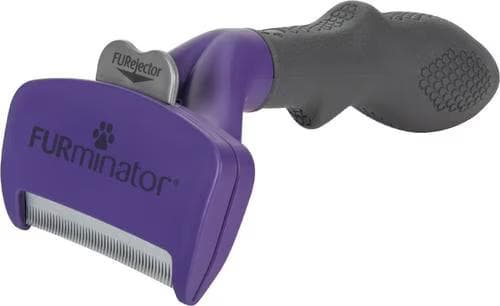
FURminator Undercoat deShedding Tool for Cats
Webvet may earn a commission when you click through to Chewy, at no extra cost to you.
Best for: dense short or long double coats on a healthy adult cat.
The FURminator is the reference point for this whole category. A fine stainless steel edge sits behind teeth that part the topcoat, so the edge reaches loose down without you pressing it into the coat. FURminator states that the edge does not cut hair.
It comes in short-hair and long-hair versions, and the difference is real rather than marketing. The long-hair edge is deeper so it can pass through a longer topcoat. A button on the handle ejects collected fur in one push, which is what keeps sessions short.
- Suits: British Shorthairs, Russian Blues, Maine Coons, Siberians, and plush domestic shorthairs and mediumhairs.
- Skip it if: your cat is single-coated, rex-coated, hairless, elderly, very thin, or has any scab, sore, or thin patch.
- Watch for: pressure. Light contact, short strokes with the lie of the hair, and never twice over the same stretch.
Choose the version specified for your cat's hair length and body size. The linked offer is the medium long-hair version, so check the variant before buying.
HandsOn All-In-One Grooming Gloves
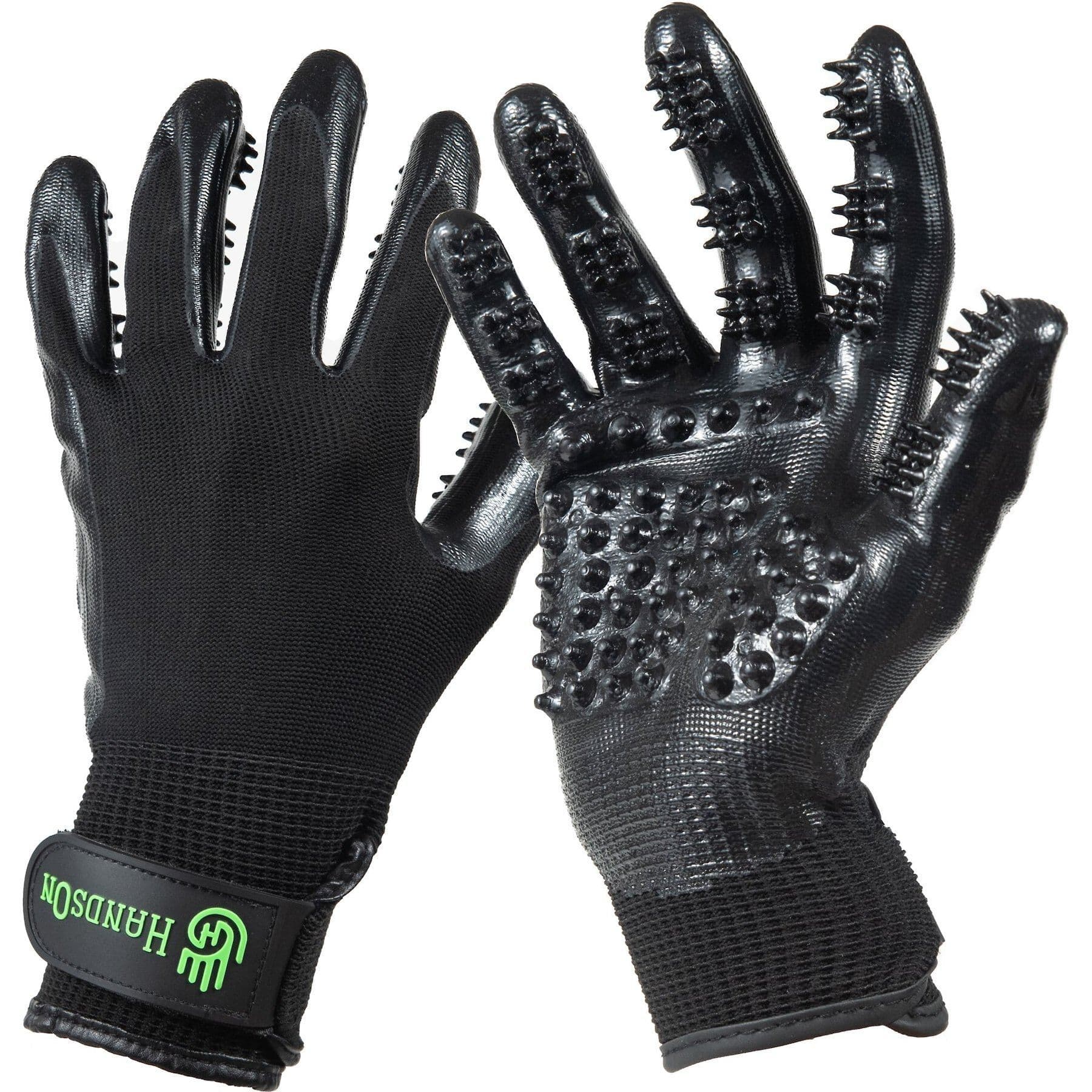
A pair of textured gloves for supervised, gentle surface grooming. Choose the size for your hands.
Webvet may earn a commission when you click through to Chewy, at no extra cost to you.
Best for: owners who want a pair of gloves for gentle hand-based surface grooming.
HandsOn All-In-One grooming gloves have textured palms and fingers. They are sold in hand sizes, so fit matters for control. The linked offer is the black medium pair.
The pair lets you use either hand for coat contact. Textured gloves are not a replacement for checking beneath dense hair with a suitable comb.
- Suits: a cat that accepts hand contact and has loose surface hair to remove.
- Skip them if: the nubs drag, the skin is sore, or your cat dislikes gloved handling. They are not tools for pulling through mats.
- Watch for: pressure and resistance. Keep contact light and stop when your cat needs a break.
Remove collected hair and follow the cleaning instructions. Allow the gloves to dry before storing them.
Safari Shedding Blade for Cats
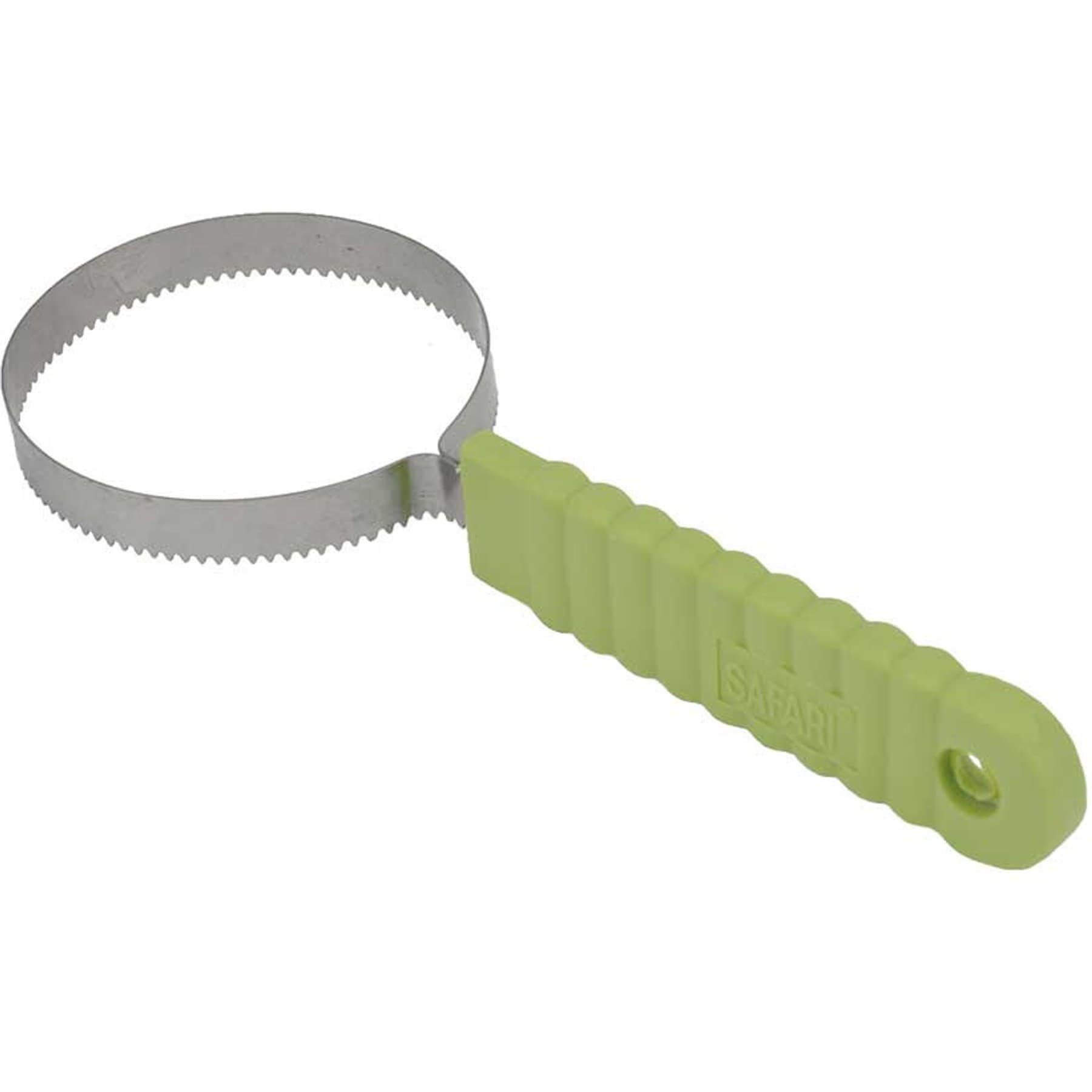
The cat-specific shedding blade is for loose hair, never tight mats or sore skin.
Webvet may earn a commission when you click through to Chewy, at no extra cost to you.
Best for: an owner specifically seeking a cat-sized shedding blade for loose-hair removal.
Safari's cat shedding blade uses a stainless-steel loop with a toothed edge. Check that the listing names the cat model rather than the dog blade.
Coastal markets this model for short- and long-haired cats. Do not drag it through tangles or over sore skin.
- Suits: short dense double coats on a larger, confident, patient cat.
- Skip it if: your cat is single-coated, rex-coated, or hairless, resists, or the edge catches, or the skin is sore, fragile, or thinning.
- Watch for: bony ground. Keep the edge well away from the spine, hips, shoulder blades, and the whole belly.
Check that the package says Shedding Blade for Cats. If the blade snags, your cat resists, or the skin looks irritated, stop. More pressure is not a way to make this tool work better.
JW Pet GripSoft Cat Comb
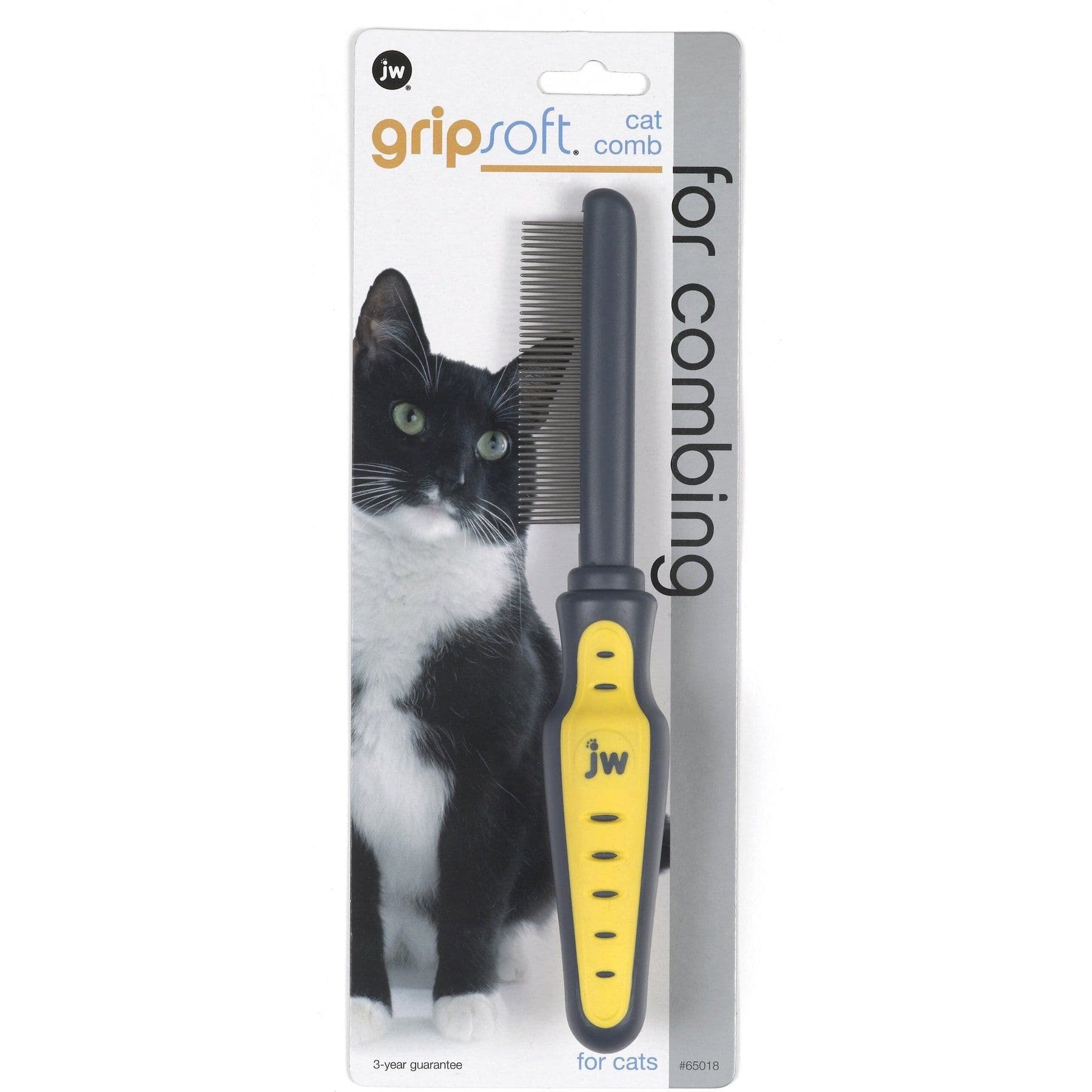
A handled comb for loose hair and checking suitable coats for remaining snags.
Webvet may earn a commission when you click through to Chewy, at no extra cost to you.
Best for: every cat, as the tool that goes first and last in every session.
A steel comb is not a deshedding tool and it is still the most important thing in the drawer. The JW Pet GripSoft cat comb pairs rounded metal teeth with a rubberized non-slip handle, which matters when one hand is busy steadying a cat that has other plans.
The comb does three things no deshedding tool does. It finds mats and tangles before something with more grip reaches one. It tells you how much loose hair is genuinely in the coat. And it lifts what a deshedding pass loosened but left behind.
- Suits: cats with enough coat for the teeth to pass comfortably. Choose spacing for the coat and avoid bare, sore, or fragile skin.
- Skip it if: your cat has no hair to comb, the teeth drag, or skin is sore. Sparse or delicate coats may need another tool.
- Watch for: the teeth stopping. If the comb halts, you have found a tangle, so stop pulling and work it loose with your fingers.
If you buy one tool from this list, buy this one. If you buy two, buy this and whichever deshedding tool matches your cat's coat, then use the comb either side of every single deshedding pass.
Frisco Self-Cleaning Slicker Cat Brush
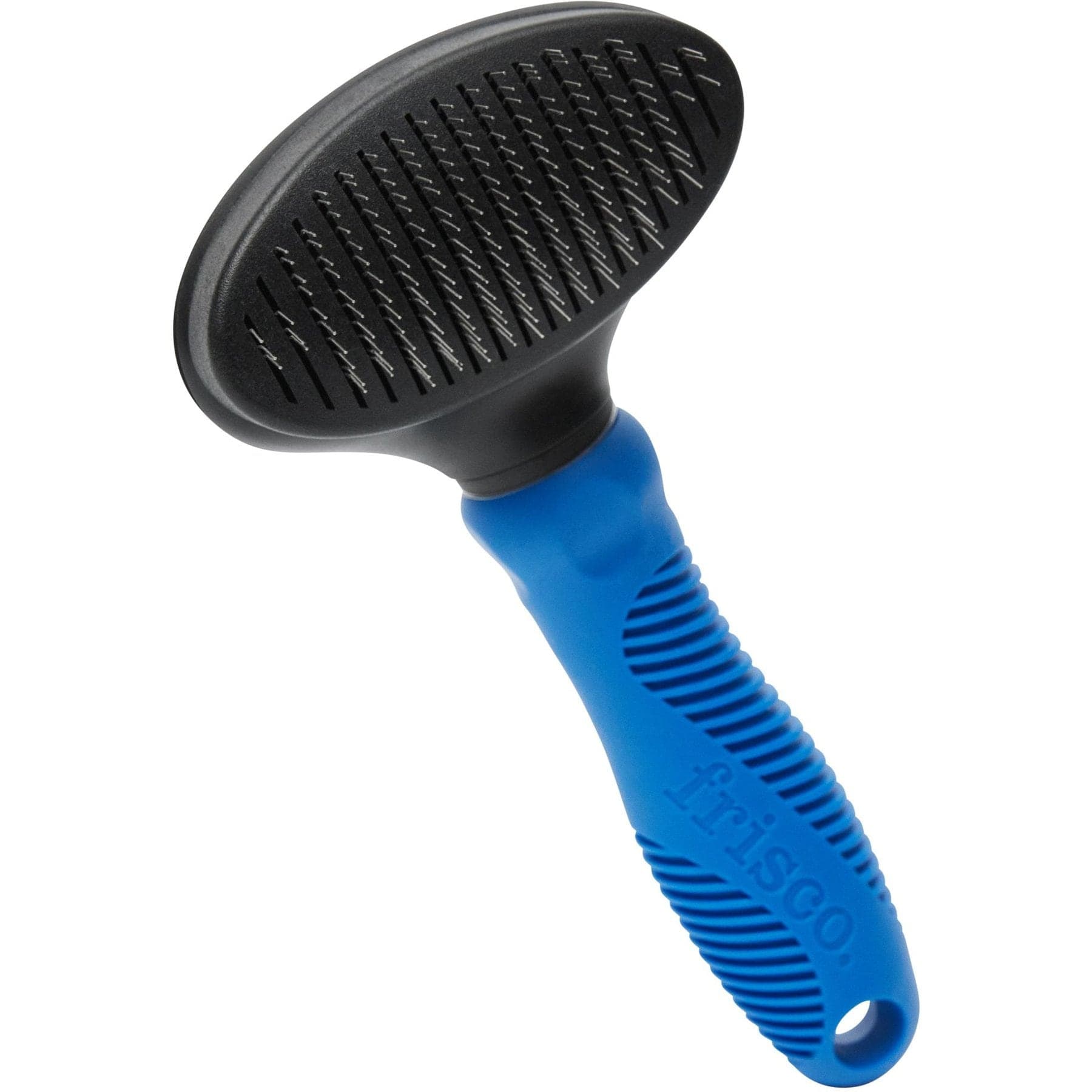
Retracting pins make it easier to clear collected hair after light slicker grooming.
Webvet may earn a commission when you click through to Chewy, at no extra cost to you.
Best for: semi-long and long coats that tangle as fast as they shed.
Frisco's cat-specific slicker has stainless-steel pins that retract with a button so collected hair is easier to remove.
A slicker uses pins rather than an undercoat edge, but that does not make it the safe default for an uncertain coat. Pins can pull hair or scrape skin. Confirm suitability and stop at resistance or discomfort.
- Suits: Ragdolls, Birmans, Norwegian Forest Cats, Maine Coons, and domestic mediumhairs and longhairs.
- Skip it if: your cat is short-coated and single-coated, where the pins find very little to remove.
- Watch for: whether the head is easy to control around your cat. This is the Frisco cat-specific model; its identity should not be confused with a dog-and-cat slicker.
Use light strokes with the hair growth and lift away between strokes. Check remaining tangles with a suitable comb rather than working a patch harder.
Safari Self-Cleaning Slicker Brush for Cats
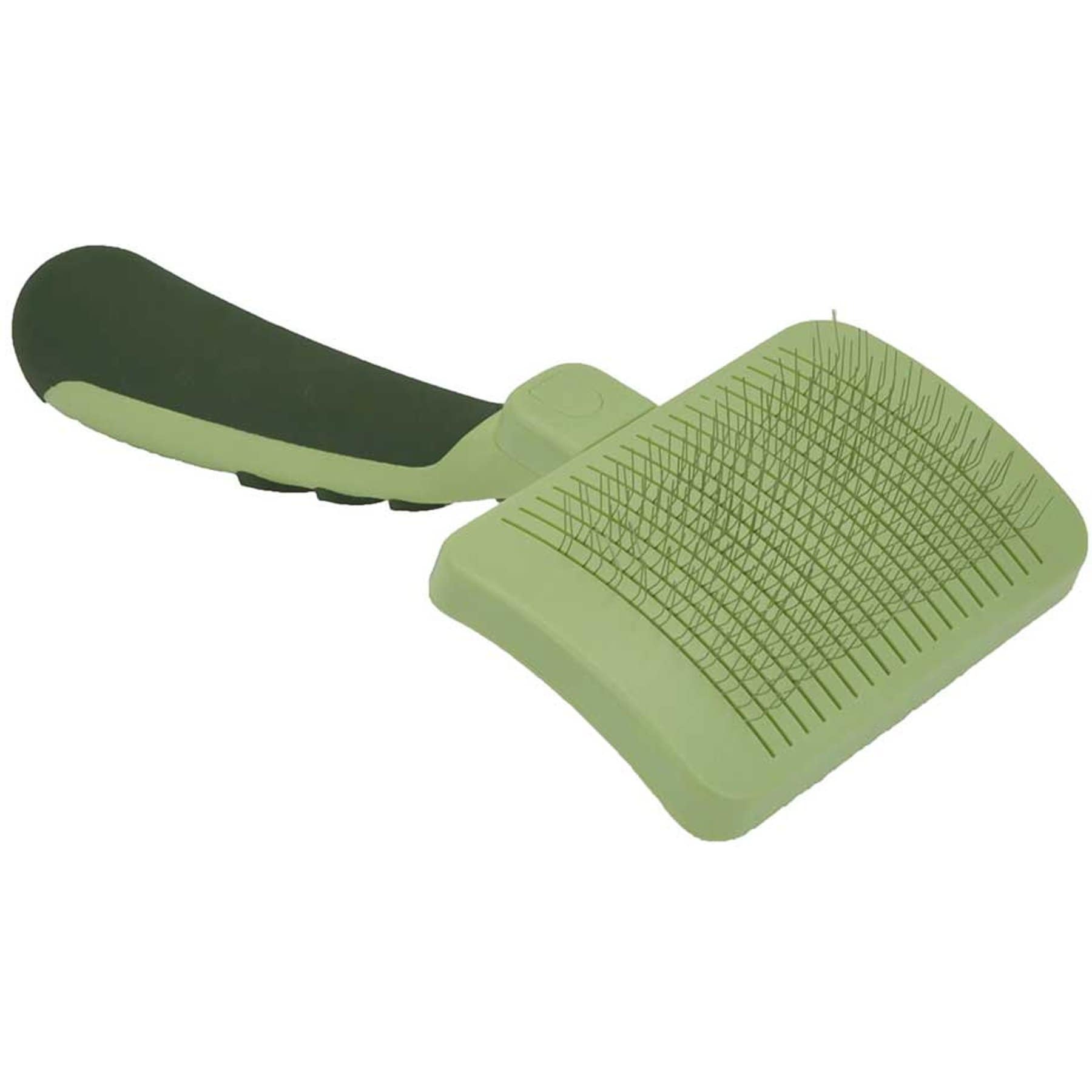
Coated pins and push-button cleanup for cats that tolerate gentle slicker grooming.
Webvet may earn a commission when you click through to Chewy, at no extra cost to you.
Best for: cat-sized shoulders and cats that flinch at a large brush head.
Safari's cat model has coated stainless-steel pins and push-button cleanup. Coastal lists one size, 7 inches long by 3.25 inches wide.
A narrow head lets you work in short sections and follow the shape of a cat, over the shoulder, down the flank, along the back of the thigh, without the pad bridging across the spine or the hips. It also makes it easier to stop early.
- Suits: semi-long coats, small cats, and any cat that objects to a large brush arriving all at once.
- Skip it if: you have a very dense long coat, where a wider pad covers ground considerably faster.
- Watch for: the same brush burn risk as any slicker. Light passes, and no repeats over one patch.
Both Frisco and Safari offer button-operated cleanup. Safari specifies coated pins and overall dimensions; we have not tested which is more comfortable or faster.
KONG Cat ZoomGroom Brush
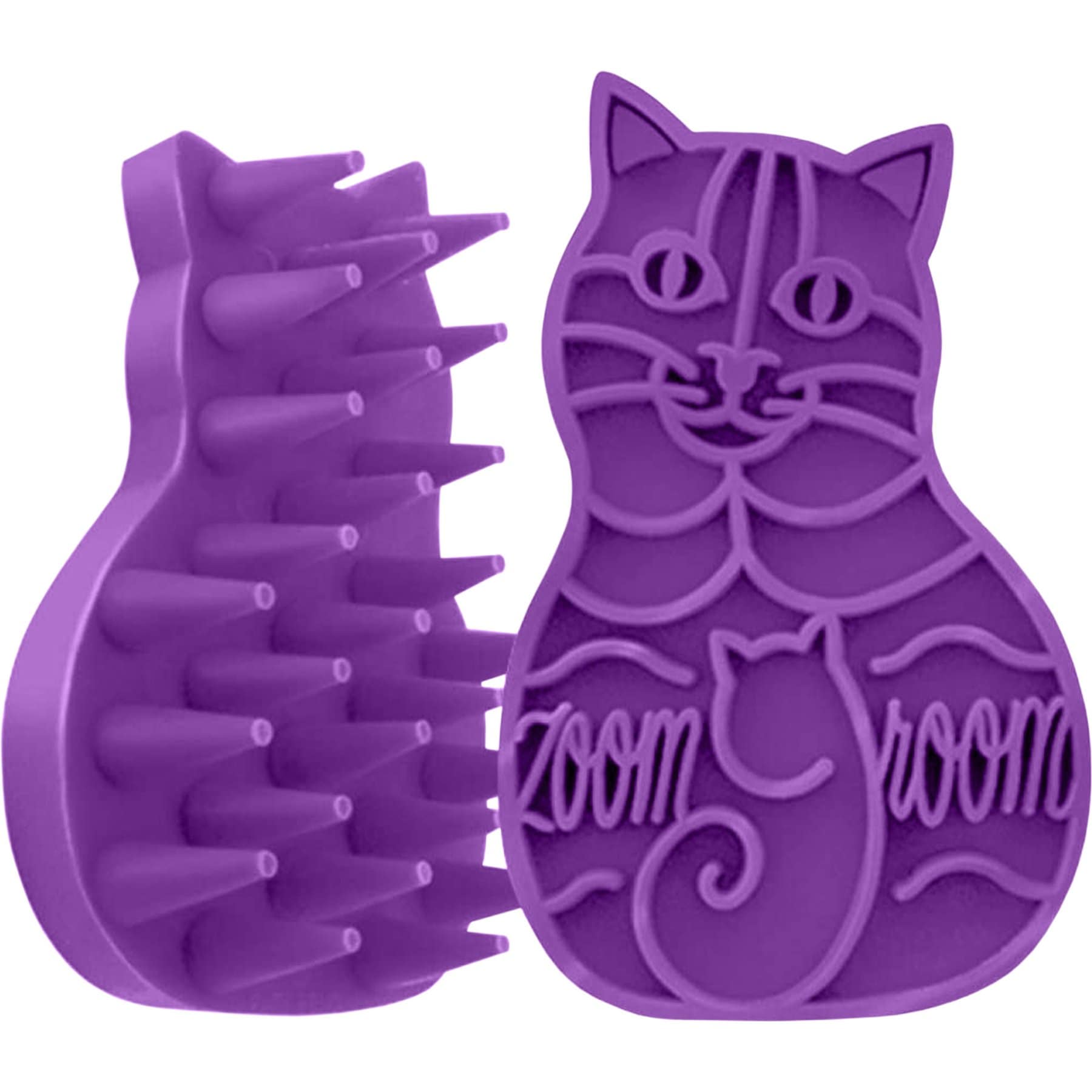
Flexible projections offer an alternative to wire pins for gentle surface grooming.
Webvet may earn a commission when you click through to Chewy, at no extra cost to you.
Best for: cats that hate being brushed, and for teaching a cat that grooming is survivable.
The ZoomGroom is a soft rubber brush with thick nubs instead of pins or teeth. It picks up loose surface hair by friction and feels to a cat like being petted with a slightly odd hand, which is the entire point of it.
It will not reach a dense undercoat and it does not pretend to. What it does is get a hostile cat used to being handled with an object, which is often the actual barrier between an owner and a grooming routine that survives past week two.
- Suits: short single coats, kittens, nervous cats, and the first two weeks of teaching any cat to accept grooming.
- Skip it if: you need volume off a thick double coat, where it barely troubles the surface.
- Watch for dragging, excessive pressure, damaged projections, or signs your cat wants to stop. Flexible tools still need gentle handling.
It also works wet, so it doubles as the tool for working shampoo through a coat if your cat tolerates baths. As a bridge tool it is hard to beat, and as a deshedding tool it is a starting point rather than a solution.
DELOMO Pet Grooming Glove
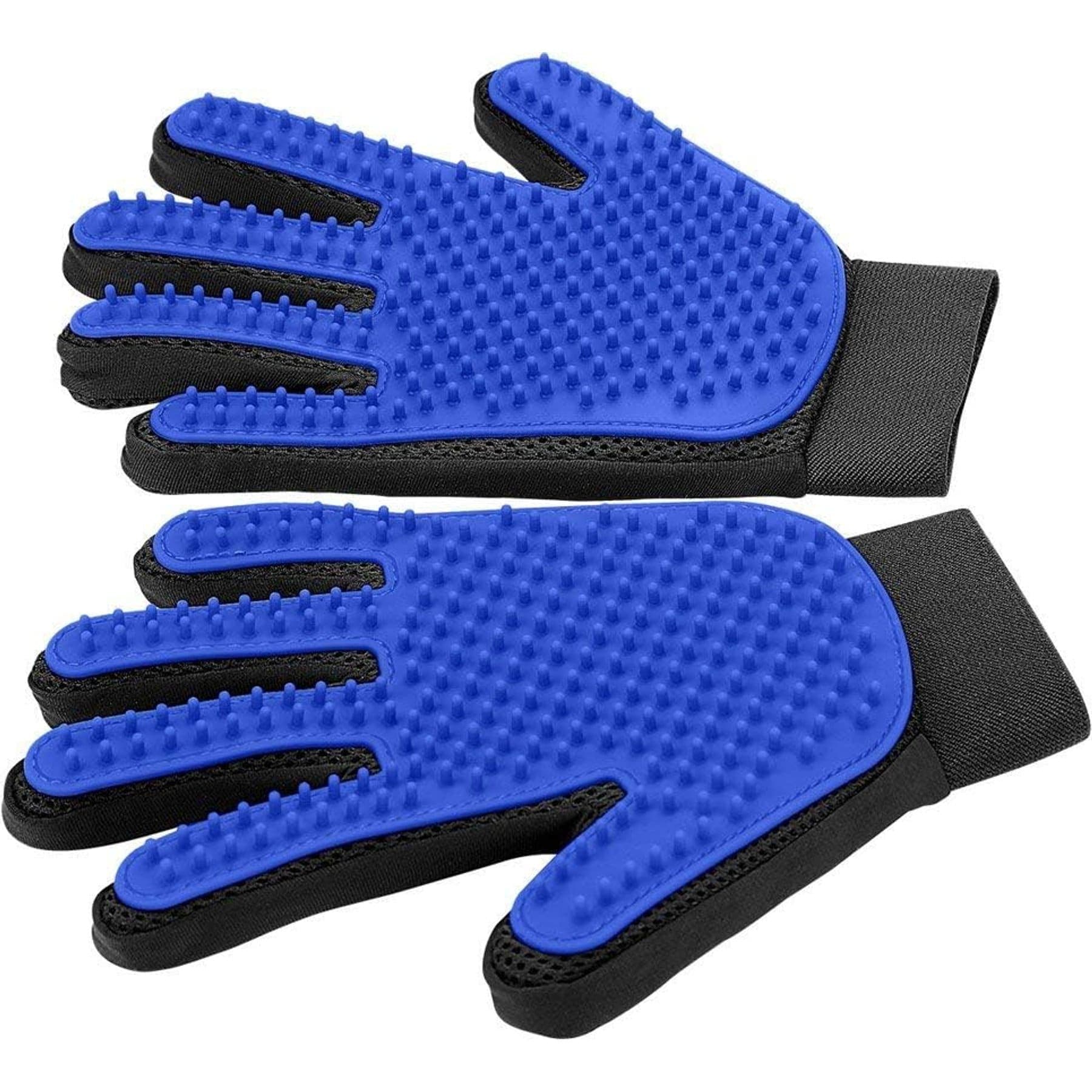
A grooming glove for cats that accept hand contact; it does not remove tight mats.
Webvet may earn a commission when you click through to Chewy, at no extra cost to you.
Best for: surface hair, hostile cats, and hands your cat already trusts.
A grooming glove is a rubber or silicone-tipped glove with soft nubs across the palm and fingers. You stroke the cat and loose hair collects on the glove in a sheet you peel off afterwards. Most cats read it as being petted rather than groomed.
That is its strength and its ceiling. A glove collects hair that has already worked loose to the surface, so it will never produce the pile a blade does. On a short-coated cat that will not sit still for anything else, it is the tool that actually gets used.
- Suits: short coats, single coats, kittens, seniors, and cats with a low tolerance for handling.
- Skip it if: you are trying to get ahead of a spring coat blow on a dense double coat.
- Watch for: the illusion of progress. A glove that fills quickly is telling you surface hair is coming away, not undercoat.
Use it only while your cat remains comfortable. Do not switch to a glove to prolong a session the cat has already ended.
SponsoredVet care that's always there
Unlimited video calls and messaging with licensed vets for less than a typical vet visit. One membership covers up to five pets.
Use code Pets30
Plans start at $11/month · covers up to 5 pets
- Licensed vets in most states
- Rx for 150+ conditions
- 4.7 on Trustpilot
What professional groomers reach for
Groomers use coat-appropriate combs, slickers, flexible brushes, and sometimes undercoat tools to deshed cats. They assess the skin, tangles, and handling tolerance first. There is no single professional tool or fixed sequence suitable for every cat; tight mats or painful skin change the plan.
Some appointments include bathing and controlled drying; others need a different approach. Ask what is proposed for your cat.
A dryer is not a necessary home purchase for ordinary shedding. Noise, temperature, and handling tolerance all need careful management.
- A suitable comb can help identify tangles and check progress; the sequence depends on the coat.
- Undercoat rakes come out for dense long coats where a slicker only reaches the top layer.
- Clippers are for mats, and a shaved patch is a rescue rather than a routine.
- Sessions are short and split, and a cat that is struggling gets put down rather than held tighter.
Assess the coat first, choose a tool that passes comfortably, and let your cat's response determine when to stop.
How to use a deshedding tool without hurting your cat
The best way to deshed a cat is short sessions, light pressure, strokes that follow the lie of the hair, and a hard stop the moment your cat has had enough. Technique matters far more than which tool you bought.

Begin on a body area your cat accepts and that the exact tool is intended to groom. An edged undercoat tool is not a face brush. Avoid eyes, ears, whiskers, sensitive areas, and any sore skin.
- Comb first. Run a steel comb over the whole cat to find mats, tangles, scabs, or sore spots before anything with more grip goes near them.
- Follow the exact tool's instructions for its angle and direction. Use light pressure and never dig teeth or an edge into the skin. Ask a cat-experienced groomer to demonstrate if the technique is unclear.
- Stroke with the grain. Follow the direction the hair lies, from the neck toward the tail, in strokes about the length of your hand.
- Lift away between strokes as directed and avoid repeatedly working one patch. There is no universal one-pass rule for every grooming tool.
- Clear the tool often. Hair packed into a blade or a pad stops the tool working and starts it pulling instead.
- Check the skin. Every minute or so, part the coat where you have been working and look for pink skin, flakes, or broken hair.
- Stop early. Finish while your cat is still relaxed, not when it finally objects.
The stop rule is the part owners skip. A cat that flattens its ears, thrashes its tail, turns its head toward the tool, goes stiff, or starts a low grumble is telling you the session is over. Pushing past that does not get you a groomed cat.
It gets you a cat that leaves the room when the drawer opens. Grooming tolerance is built in small deposits, and one session that ended in a fight can cost you weeks of progress. Two good minutes today is worth more than ten forced ones.
Introduce the tool during brief supervised sessions. Let your cat inspect it, reward calm interest, then put it away. Progress to one gentle stroke only when comfortable.
How long does cat shedding last, and how often should you brush?
How often should you brush your cat to reduce shedding around the house? As a rough guide, many short coats do well with a weekly brush, while long or dense coats usually need combing several times a week. Brushing does not reduce how much your cat sheds, but it does reduce how much ends up on your furniture.
How long does cat shedding last? A heavier spring shedding spell often runs for several weeks, and the length varies with the coat and how much daylight your cat sees. Indoor cats tend to shed at a steadier level all year rather than in one defined burst.
Can a deshedding tool cut or hurt your cat?
Yes, it can, and the two ways it happens are different problems with different fixes. One is damage to the coat. The other is damage to the skin underneath it.
Coat damage comes from edged tools working on hair they were never meant to touch. The edge is designed to slip past guard hairs and grip loose down. Press it in, or use it on a coat with no down to grip, and it starts shearing and breaking guard hairs instead.
Stop if the coat becomes noticeably thinner or rougher, or if skin looks irritated. Do not wait a fixed number of months for regrowth to decide whether an assessment is needed. Watch for:
- Pink or red skin under the coat where you have been working.
- Flakes, scurf, or dandruff appearing after a session rather than before it.
- Short broken hairs mixed in with the loose hair on the tool.
- Your cat turning to bite or lick the spot the moment you stop.
- Any flinch, twitch, or ripple of the skin as the tool passes over it.
Stop grooming an irritated area. Redness, tenderness, raw skin, or persistent licking warrants veterinary advice, especially with broken skin or pain.
Deshedding brushes can be painful for cats if they pull hair, catch a tangle, scrape skin, or are used on an unsuitable coat. Pain can also signal a skin or health problem. Stop at discomfort and seek advice rather than assuming the cat needs to get used to the tool.
How often should cats be deshed?
There is no single deshedding schedule for every cat or tool. FURminator generally recommends one or two sessions weekly, while ordinary brushing or combing may be needed more often. Follow the exact tool's directions, adjust to the coat, and stop earlier when your cat needs a break.
| Coat or situation | Routine grooming | Undercoat-tool decision |
|---|---|---|
| Short coat with little undercoat | Gentle brushing as needed | Often unnecessary |
| Dense short coat | Check trapped loose hair | Follow suitable tool directions |
| Long coat | Frequent checks and gentle combing | Keep tool frequency separate from ordinary grooming |
| Dense long coat | Check mat-prone spots | Correct length variant; no repeated pressure |
| Sparse or hairless | Coat-specific or skin-care plan | No edge on bare or unsuitable skin |
| Painful or irritated skin | Get veterinary advice | Avoid affected areas |
Split grooming into shorter sessions when that improves comfort, while keeping undercoat-tool use within its directions. More frequent sessions are not automatically safer or more effective.
Overuse, pressure, and repeated strokes can irritate skin or damage hair. Daily coat checks or gentle combing are different from daily use of an edged undercoat tool.
The amount of hair on a tool does not determine the right schedule. Little hair may mean little is loose, while a full tool does not by itself prove a seasonal coat blow. Follow the coat, skin, behavior, and tool directions.
How much a deshedding tool actually reduces shedding
A deshedding tool does not reduce shedding. It relocates it. The hair that comes off on the tool was going to come off anyway, and your cat sheds exactly as much either way. What changes is where that hair ends up.
That is still a real benefit, and it is worth being honest about its shape. Brushing catches loose hair before it is distributed around your home by ordinary cat business, and before your cat swallows it during a wash. It does not slow the follicle down.
What a good routine does change:
- Less hair on furniture, clothes, and bedding, because you collected it first.
- Less swallowed fur, which matters a great deal for cats prone to hairballs.
- Fewer mats, because loose hair trapped in the coat is exactly what mats are made from.
- Earlier warning of skin problems, because you handle the whole cat on a regular schedule.
- A calmer cat over time, provided the sessions stay short and end well.
So does brushing your cat help with shedding? Yes, in the sense that matters to you. No, in the sense of changing your cat's biology. Anyone selling a brush that stops a cat shedding is selling something that does not exist.
Breed names do not give you a reliable daily shedding allowance. A dense-coated Russian Blue and a lightly coated rex can leave very different amounts of visible hair, but both still need an individual assessment of coat condition and comfort. Compare your cat with its own usual pattern instead of judging health by another breed's hair pile.
Your cat may keep shedding after brushing because more hairs continue to loosen as part of the normal coat cycle. That does not mean the tool failed or that you should keep brushing until no hair comes out. Stop when the coat has been comfortably groomed or your cat needs a break.
What to do when your cat is shedding like crazy
If your cat is shedding like crazy, or the shedding seems really bad, start by asking whether it is normal for your cat. A seasonal spell in a dense coat can look alarming and still be healthy. Shedding a lot with bald patches, flakes, scratching, or other changes belongs in the vet section below.
- The best cat shedding solution is a routine rather than a product: a coat-appropriate tool used briefly and often, parasite prevention, and a vacuum or lint roller for what gets past you. Cat shedding control products such as sprays and wipes collect surface hair but do not change the coat cycle.
- There is no natural remedy that stops normal cat shedding. Good nutrition supports a healthy coat, but ask your vet before adding fish oil or other supplements, especially for a cat with a medical condition.
Is deshedding good for your cat?
Done well, yes. Regular grooming removes dead coat that would otherwise pack down and mat, spreads skin oils through the coat, improves airflow to the skin in warm weather, and gives you a weekly look at every inch of your cat.
It is also one of the few reliable ways to notice a lump, a scab, a flea, or a sore joint early, because you are running your hands over the whole animal rather than only the parts a cat presents for stroking.
Done badly it is not good for your cat at all. Overuse, pressure, the wrong tool for the coat, or forcing a frightened cat through a long session produces irritated skin, damaged coat, and an animal that treats grooming as a threat. The tool is neutral. The routine helps or harms.
Shedding season: when your cat blows coat
Some cats have heavier shedding periods in spring and fall, while indoor cats may shed more evenly throughout the year. The timing and amount vary with the individual coat and living conditions, so a calendar month alone cannot distinguish normal shedding from a problem.

The trigger is daylight rather than temperature. Changing photoperiod, meaning the length of the day, drives the coat cycle. That is why a warm spell in January does not start a molt, and why the shed arrives on roughly the same schedule each year.
This is where indoor cats break the pattern. A cat living under artificial light and central heating receives a blurred version of the seasonal signal, so instead of two sharp molts it tends to shed moderately and continuously all year with much softer peaks.
- Spring, roughly March to June: the heaviest molt, as the winter undercoat comes away.
- Fall: some cats shed more as the coat changes for the cooler season. Keep grooming gentle and watch the skin rather than assuming every increase is harmless.
- Indoor cats: lower peaks and a higher baseline, so hair all year rather than hair in bursts.
- Indoor-outdoor and outdoor cats: sharper, shorter, more dramatic molts on a clearer schedule.
- Long-haired and double-coated cats: the same cycle, far more visible volume.
Summer shedding can be normal when it follows your cat's usual pattern and the skin and coat remain healthy. There is no fixed number of weeks or required amount of collected fur that marks the end of shedding season. Keep grooming gentle. A new bald patch, irritated skin, persistent excessive shedding, or changes in appetite, weight, or comfort need a veterinary assessment whatever the season.
Check the coat regularly as shedding changes and adjust ordinary grooming to its needs. Do not add undercoat-tool sessions simply because a particular month has arrived.
Kittens are the exception worth knowing about. A kitten's soft coat is gradually replaced by an adult one over the first year, and that changeover can look like a molt without following the seasonal pattern at all.
- A cat shedding a lot in August is often at the tail end of summer coat turnover or starting the fall change.
- A cat shedding a lot in February may be responding to lengthening days ahead of the spring molt, and dry indoor heating can make loose coat more noticeable.
- Either month is common if the skin looks healthy and the shedding matches your cat's usual pattern.
When shedding is too much and a vet should look
Abnormal shedding is a change that comes with new bald patches, unexplained thinning, irritated skin, or other signs that your cat is unwell. Merely seeing skin when you part the fur is not enough to diagnose hair loss.

If shedding suddenly increases, compare it with your cat's usual pattern and look for flakes, redness, scratching, pain, appetite changes, or weight loss. Persistent excessive shedding or shedding with these changes needs a veterinary assessment rather than more forceful grooming.
The common causes are worth naming so you know what your vet is looking for. Fleas top the list, because flea allergy dermatitis makes a cat overgroom until the hair is gone, classically along the back and around the base of the tail. Our guide to flea shampoo for cats covers that side of it.
Ringworm is a fungal infection rather than a worm, and it produces circular patches of scaly hair loss. It spreads to people as well as to other pets, so a suspicious patch means stopping grooming and getting a diagnosis. Our guide to ringworm treatment in cats explains what that involves.
In older cats, heavy shedding with a scruffy, unkempt coat, weight loss, and a large appetite is a classic picture of hyperthyroidism, which is common in senior cats and treatable once it is found. That is a blood test rather than a brushing problem. A vet is likely to check:
- A flea comb pass and a look for flea dirt, even on a strictly indoor cat.
- Skin scrapes or a fungal culture if ringworm or mites are on the list.
- A blood panel including thyroid testing in any cat over about eight years old.
- A look at parasite prevention, diet, and anything that has changed at home recently.
Stress and illness produce a delayed shed of their own. A cat that has moved house, had surgery, or been unwell can shed heavily some weeks afterwards, because a batch of hairs entered the resting phase together and then released together.
Overgrooming is the other pattern to recognize. The hair is not falling out; the cat is removing it, usually from the belly, the inner thighs, or one specific spot, and the short stubble left behind is the giveaway. That has causes ranging from fleas to pain to anxiety.
Owner-facing veterinary references such as the Merck Veterinary Manual cat owner section, VCA's pet health library, and International Cat Care set these causes out in more detail. If your cat's shedding is in that territory, a tool is not the answer.
- Long-haired cat shedding so much: often it is simply volume, because long coats hold loose hair until a seasonal spell releases it at once. Check for mats and skin changes before assuming it is normal.
- Shedding a lot with dandruff: flakes can come from dry skin, parasites such as Cheyletiella mites, allergies, or a cat that can no longer groom its back because of weight or arthritis. Persistent dandruff with heavy shedding is worth a vet visit.
- Shedding all of a sudden: if your cat started shedding a lot with no seasonal reason, think back several weeks for stress, illness, surgery, or a diet change, and look for the warning signs above.
- Pregnant or nursing cats: hormonal changes around pregnancy and nursing can change the coat, but a pregnant cat shedding a lot with skin changes still needs your vet, who should also guide grooming and any products used on her.
- Shedding a lot and throwing up: swallowed fur can cause hairballs, but repeated vomiting is not normal and should not be blamed on shedding without a vet check, especially with appetite or weight changes.
Deshedding tools versus everyday cat brushes
A deshedding tool and a general cat brush are not competing purchases. A deshedding tool is a specialist that removes dead undercoat. An everyday brush maintains the coat you can see: it lifts surface hair, spreads skin oils, and stops small tangles becoming mats.
Most households want one of each. If your cat's coat is fine, single, or short, an everyday brush and a comb may be all you ever need, and a deshedding tool would be solving a problem your cat does not have.
- Everyday brushes: bristle, pin, and rubber brushes, used often and lightly on almost any coat.
- Slicker brushes: fine wire pins for tangles and volume, mostly on semi-long and long coats.
- Combs: fine and wide-tooth steel combs, the diagnostic tool for every coat and the flea check for any coat.
- Deshedding tools: edged blades, bar tools, and undercoat rakes, aimed at undercoat and only worth owning if there is one.
The short version if you are buying one general brush: pick by coat length. Short coats do best with a rubber or bristle brush, semi-long coats with a slicker, and long coats with a steel comb first, then a slicker. For the full method and its limits, see choosing a cat brush.
Long-haired cats need a routine, not just a tool
For a long-haired cat the tool matters less than the schedule. Maine Coons, Persians, Ragdolls, Siberians, Norwegian Forest Cats, and Himalayans mat faster than they visibly shed, and a mat that took three days to form can take a professional to remove.

The routine that keeps a long coat right is daily contact and weekly depth. A quick comb through the mat-prone zones every day, then a full session with a slicker or a long-hair deshedding tool once or twice a week outside shedding season.
The zones where a long coat fails first:
- Behind and underneath the ears.
- The ruff and the front of the chest.
- The armpits and the inside of the back legs.
- The britches, meaning the trousers of fur on the back thighs.
- The base of the tail, especially on older or overweight cats that cannot reach it.
Those are also the places a cat cannot easily reach once it is stiff, heavy, or elderly. A cat that suddenly develops mats it never used to get is usually telling you something has changed, and that is worth a veterinary conversation rather than more brushing.
A complete long-coat routine covers bathing, drying, sanitary trims, and mat prevention as well as brushing, which is more than a shedding-tool guide should carry. Treat this page as the tool decision and the full routine as its own project. For the full method and its limits, see the long-haired cat grooming routine.
Brushing, swallowed fur, and hairballs
The best reason to run a deshedding tool has nothing to do with your sofa. Cats swallow the loose hair they groom off themselves. Most of it passes through, and some of it collects in the stomach and comes back up as a hairball.
Removing loose hair before your cat does is the single most useful thing brushing achieves for a cat's insides. It is not a cure, and a cat with a genuine hairball problem needs a plan rather than a better brush, but it is the part of the equation you control.
- Our guide to hairball prevention in cats covers the full plan, of which grooming is one part.
- If you are not certain what you are looking at, hairballs versus ordinary vomiting explains the difference.
- What a hairball actually is covers why long-haired cats produce more of them.
- Helping a cat pass a hairball is the practical next step when one is stuck.
- A hairball that will not come up can become an obstruction, and hairball blockage in cats covers the emergency signs.
Repeated retching that produces nothing, refusing food, a swollen or painful belly, or constipation alongside the retching are emergency signs rather than grooming signs. Those need a vet the same day, not another brushing session.
Deshedding shampoo and bath-time shedding
Most healthy cats do not need a bath solely because they are shedding. Start with coat-appropriate grooming.
The catch is that most cats do not agree to this. A bath that ends in a fight costs more in handling tolerance than it gains in fur, and a wet double coat that is not dried properly is a mat waiting to happen.
- Only bathe a cat that already tolerates water, and never as a first attempt in the middle of shedding season.
- Comb the coat out before the bath, because water tightens existing tangles into mats.
- Dry a long or dense coat thoroughly. A damp undercoat mats and can stay damp for hours.
- Use a cat-specific shampoo. Products formulated for dogs or for people are not made for feline skin.
Deshedding and anti-shedding shampoos are a real product category and worth a look if your cat baths willingly, though shampoo choice depends on skin sensitivity as much as on shedding volume, and that is a separate decision from the tool.
One exception is worth naming. If fleas are the reason your cat is losing hair, the wash is a treatment question rather than a grooming one, and our guide to flea shampoo for cats covers that decision properly. For the full method and its limits, see choosing a cat shampoo.
So does bathing a cat help with shedding? A bath can loosen dead hair so more of it comes out at once, usually in the towel and the comb-out afterward. It will not make your cat shed less over time. For most cats, regular brushing does the same job with far less stress.
Claw sheaths are not fur shedding
If you have found what look like whole claws on the carpet or around the scratching post, that is not hair loss and it is not a problem. Cats shed the outer sheath of each claw as a new layer grows underneath, and the discarded shell is hollow.
It looks alarming the first time. A shed sheath is a translucent, curved husk, often with a sharp point, and shedding it is one of the reasons cats scratch furniture and posts. Scratching is how the old layer gets stripped away.
- Normal: hollow, translucent sheaths near a scratching post or a favorite scratching spot.
- Normal: a cat scratching more than usual while a sheath is loose.
- Not normal: bleeding, limping, swelling around a nail bed, or a claw that looks torn rather than shed.
- Not normal: an older cat whose claws thicken and never shed, which usually means it has stopped scratching enough.
Older and arthritic cats often stop scratching, and their claws then overgrow and can curl into the pad, which is painful and easy to miss. Regular nail checks are the answer, and our guide to cat nail clippers covers the tools and the technique.
Where deshedding fits in a full grooming routine
Deshedding is one job in a routine with four or five. A complete at-home grooming habit covers coat, claws, teeth, ears, and eyes, and the coat is simply the part that leaves the most evidence around the house.
- Coat: comb and deshed on the schedule your cat's coat type calls for.
- Claws: check every couple of weeks and trim when the tips start catching on fabric.
- Teeth: the highest-value and most-skipped job, because dental disease is common and painful in cats.
- Ears: a quick look for dark wax, odor, or head shaking, without poking anything into the canal.
- Eyes and face: wipe tear staining on flat-faced breeds, which is a daily job on a Persian.
Dental care belongs in the routine too. Brushing suitable, comfortable teeth helps control plaque; existing dental disease needs veterinary assessment.
Our guides to cat teeth cleaning and dental treats for cats cover that side of the routine. The handling habits you build during grooming sessions are exactly what makes a toothbrush possible later on.
Introduce each grooming task separately and reward comfortable participation. Accepting a comb does not guarantee acceptance of nail trimming or tooth brushing. For the full method and its limits, see the complete cat grooming routine.
Cat deshedding questions
Frequently Asked Questions
Will a deshedding tool cut or thin my cat's coat?
It can. An edged tool shears guard hair when it is pressed in, run over the same patch, or used on a coat with no undercoat; used lightly on a suitable coat, it should lift only loose hair. Stop using an undercoat tool if you notice thinning, soreness, broken hair, or reduced tolerance. Arrange a veterinary assessment rather than waiting for regrowth to diagnose the cause.
Which cats should never use an undercoat deshedding tool?
Any cat without a real undercoat. That includes single-coated breeds such as Siamese, Oriental Shorthairs, Bengals, and Turkish Angoras, where an undercoat tool meets guard hair rather than down. It also includes rex coats: Cornish Rex and Devon Rex, whose coats are largely fine down with very little protective topcoat; the Selkirk Rex, whose full, curly coat an edge breaks and straightens; and Sphynx cats, who have no coat to work through at all. Kittens, elderly cats, very thin cats, and any cat with scabs, sores, thinning fur, or skin disease should stay away from edged tools too, because the limiting factor there is skin rather than coat. All of these cats do perfectly well with a fine steel comb, a rubber brush, a grooming glove, or a soft cloth.
How much cat shedding is normal?
Normal shedding varies with the individual coat and living conditions. Compare your cat with its usual pattern rather than another cat's fur pile. Seeing skin when you part the coat is not enough to diagnose hair loss. New bald patches, unexplained thinning, irritated skin, sudden matting, or shedding with weight loss, appetite changes, or low energy need veterinary assessment.
Do deshedding tools help with cat hairballs?
They help, and they are not a hairball plan on their own. Hairballs form from fur a cat swallows while grooming itself, so every bit of loose hair you collect on a tool is hair that never reaches the stomach. That makes regular brushing the most useful preventive habit for long-haired cats and heavy shedders. It does not address the other half of the problem, which is how well swallowed fur moves through the digestive tract, so a cat that brings up hairballs frequently needs a proper prevention plan and a veterinary opinion rather than a better brush. Repeated retching that brings nothing up, appetite loss, or a swollen belly is an emergency rather than a grooming issue.
Can you overuse a deshedding tool on a cat?
Yes. Excessive pressure, repeated work over one area, or using a tool more often than directed can irritate skin and damage hair. Stop for redness, soreness, broken hairs, thinning, or reduced tolerance. Follow the exact tool's schedule and keep ordinary coat checks or combing separate from undercoat-tool use. Neither a nearly empty tool nor a large hair pile establishes the correct frequency.

Editor
The Webvet Editorial Team is the in-house group of pet-care editors and writers behind Webvet, operated by Smart Pet Collective. The team researches, writes, and maintains Webvet's pet health, behavior, and medication content. Every article follows a defined editorial process: research from reputable veterinary and scientific sources, careful drafting, mandatory review of medical content by a credentialed veterinarian, and dated publication. Health and medication articles are medically reviewed by a licensed veterinary professional before they go live and are kept current over time.


