Matted Cat Fur: How to Remove Mats Safely
Matted cat fur is painful and can hide broken skin. This vet-reviewed guide grades a mat as a tangle, a firm mat or a pelt, gives the safe way to work one out without cutting, rules on the home remedies, and names when to call a groomer or vet.

BVMS MRCVS
Medically reviewed by Dr. Pippa Elliott, BVMS MRCVS · Last reviewed

This article contains affiliate links. Webvet may earn a commission when you buy through them, at no extra cost to you.
Matted cat fur is not only a cosmetic problem. A mat is a knot of shed undercoat and living hair that has locked together into a solid lump, and it pulls on the skin underneath every time your cat moves.
Start by judging severity. A loose tangle that separates gently may be manageable at home. A firm mat needs professional help if it does not release readily. A pelted coat, painful skin, or a mat attached tightly against the body needs veterinary assessment before removal.
This guide grades the mat first, then gives the removal method, the tools that actually shift a mat, a straight verdict on the home remedies circulating online, and the point where you stop and pick up the phone.
What matted cat fur is, and why it forms
Mats are tightly tangled knots of fur. Loose hair catches among the remaining hairs and becomes compressed by movement, friction, and skin oils until it forms a dense mass. A mat is a tangle problem, not simply dirt, so washing does not untangle it.
Changing cat food will not remove an existing mat. Keep a nutritionally complete diet appropriate for your cat, and have an unexplained change in coat condition or grooming assessed rather than buying a food or supplement as a mat treatment.
- 1Work only on loose, comfortable tangles that separate easily.
- 2A dense core, skin pulling, or pain means stop.
- 3Never cut mats with scissors.
- 4Firm mats and clipping need professional help; painful or abnormal skin needs a vet.
Coat structure and shedding vary. Many cats have a soft undercoat beneath coarser guard hairs. Some shed more heavily in spring and autumn, while indoor cats may lose hair throughout the year.
In a coat that is being groomed, the dead undercoat is lifted clear by the cat's tongue or by a comb. In a coat that is not, it stays where it is, coated in sebum, the natural oil that makes hair slightly tacky. Movement then twists that dead hair into ropes.
Several things speed the process up:
- Moisture, including rain, a bath that was never dried right down to the skin, a weeping wound, or drool from a sore mouth.
- Friction, especially under a collar or harness, in the armpits, between the back legs, and wherever the cat lies down.
- A coat too long or too dense for the cat to manage alone, which is why Persian, Himalayan, Maine Coon, Ragdoll, Norwegian Forest Cat and Siberian owners see this most.
- Anything that stops a cat grooming: stiffness, pain, obesity, dental disease, or feeling unwell.
- A heavy seasonal moult that dumps more undercoat than the cat can clear.
- Greasy substances left on the coat, including the oils owners apply hoping to loosen a mat.
Short-haired cats mat too, which surprises most owners. Their mats are smaller and sit tight against the skin, often on an older or overweight cat who has stopped turning to reach its own back. They are easy to miss and awkward to remove precisely because there is so little hair to hold.
Once a mat exists it does not stay the same size. It traps every hair the cat sheds from that day on, so it thickens, hardens, and creeps closer to the skin as the surrounding coat grows. Catching a mat in its first week is a different job from catching it in its second month.
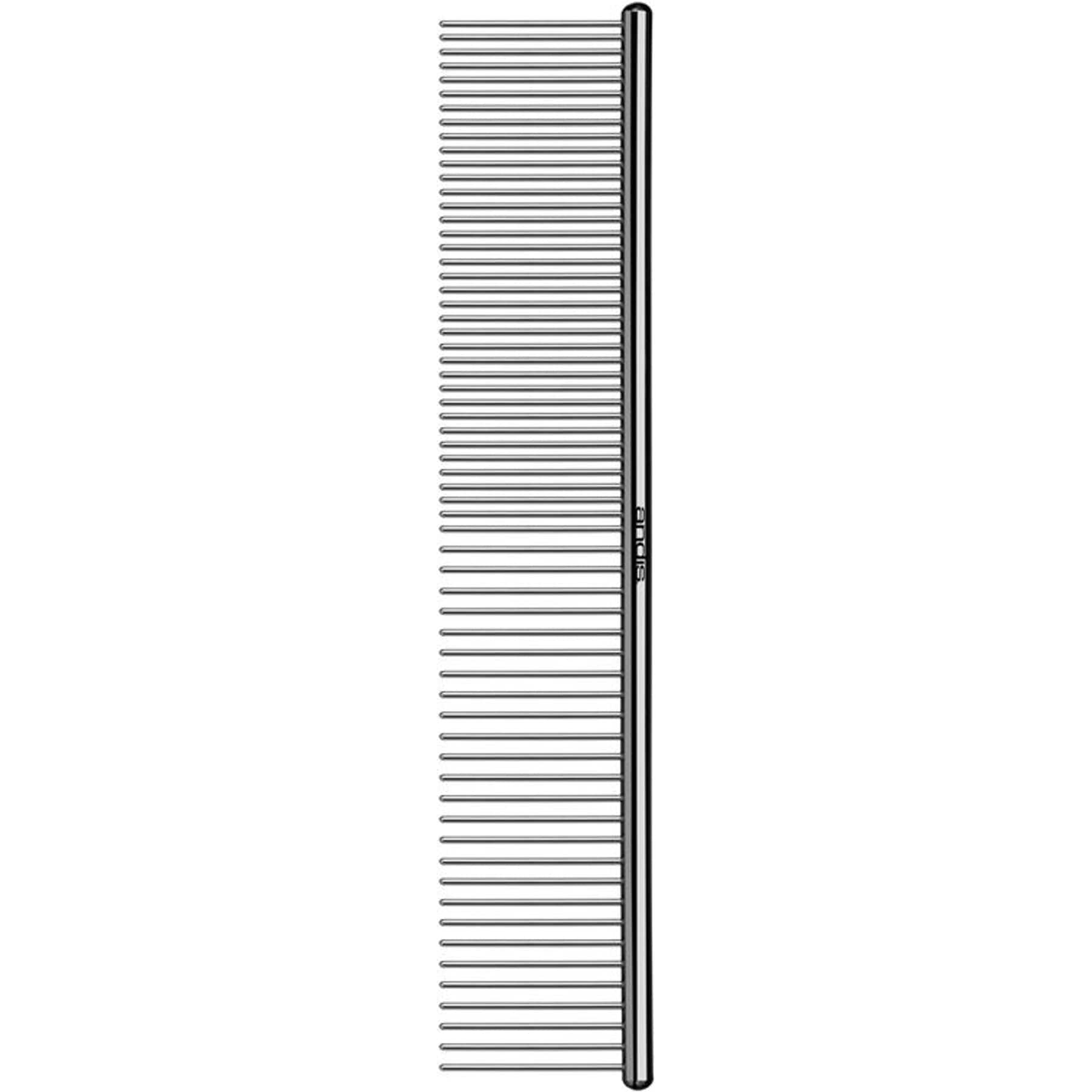
Two tooth spacings help check loose coat and minor tangles without pulling through snags.
Webvet may earn a commission when you click through to Chewy, at no extra cost to you.
Where mats form first, and what an early mat looks like
Mats start in two kinds of place: where the coat rubs against something, and where the cat's tongue cannot easily reach. Learning that map turns matting from something you discover into something you catch.

In rough order of how often they turn up, check:
- Behind and below the ears, and under the chin.
- Under a collar or harness, which is the most commonly missed spot of all.
- The armpits, where the front legs meet the chest, and the soft fur just behind them.
- The britches, meaning the long fur on the back of the hind legs, and the fur between the back legs.
- The base of the tail and the rump, which most cats groom least and many cannot reach at all.
- The belly and the groin, which owners rarely check because the cat rarely offers them.
- Around the anus and under the tail, where faeces catch in long fur and mat very hard.
- Along the spine and between the shoulder blades on a cat who can no longer twist to reach.
An early mat is easier to feel than to see. Run your fingers against the lie of the coat, from tail toward head, with a light spread hand. A tangle catches and then releases. A mat catches and stays: a distinct lump with a firm centre that does not comb through.
The visual sign owners usually notice first is a coat that looks separated. Instead of lying as one smooth sheet, it parts into tufts and clumps that stand slightly apart, and a matted patch often looks dull or crimped next to the coat around it.
Two further signs are worth not dismissing:
- White flakes gathering in and around a matted patch. Skin sealed under a mat is not being groomed or aired, and flaking there is a prompt to part the coat and look at the skin itself.
- Small hard lumps from pea to thumb size on a short-haired cat. They feel like scabs through the coat, and only part the fur to reveal a tight knot of felted hair sitting right on the skin.
If you are wondering why your cat's fur has gone lumpy, the usual answer is early mats forming close to the skin. Lumps that are not knotted hair, or that come with scabs, redness, or a cat that flinches when touched, may be a skin problem instead, and that needs a vet to look.
What should a matted cat look like before and after a professional de-mat or clip? Afterward you should see an even coat, short or combed out, no tufts left at the skin, and no nicks, cuts, or clipper burn. Mild redness where a mat sat can settle; anything worse is worth showing your vet.
Grading a mat before you touch it
Check the mat's density, its attachment to the skin, the surrounding skin, and your cat's comfort. A gap under a mat does not establish that removal is safe.
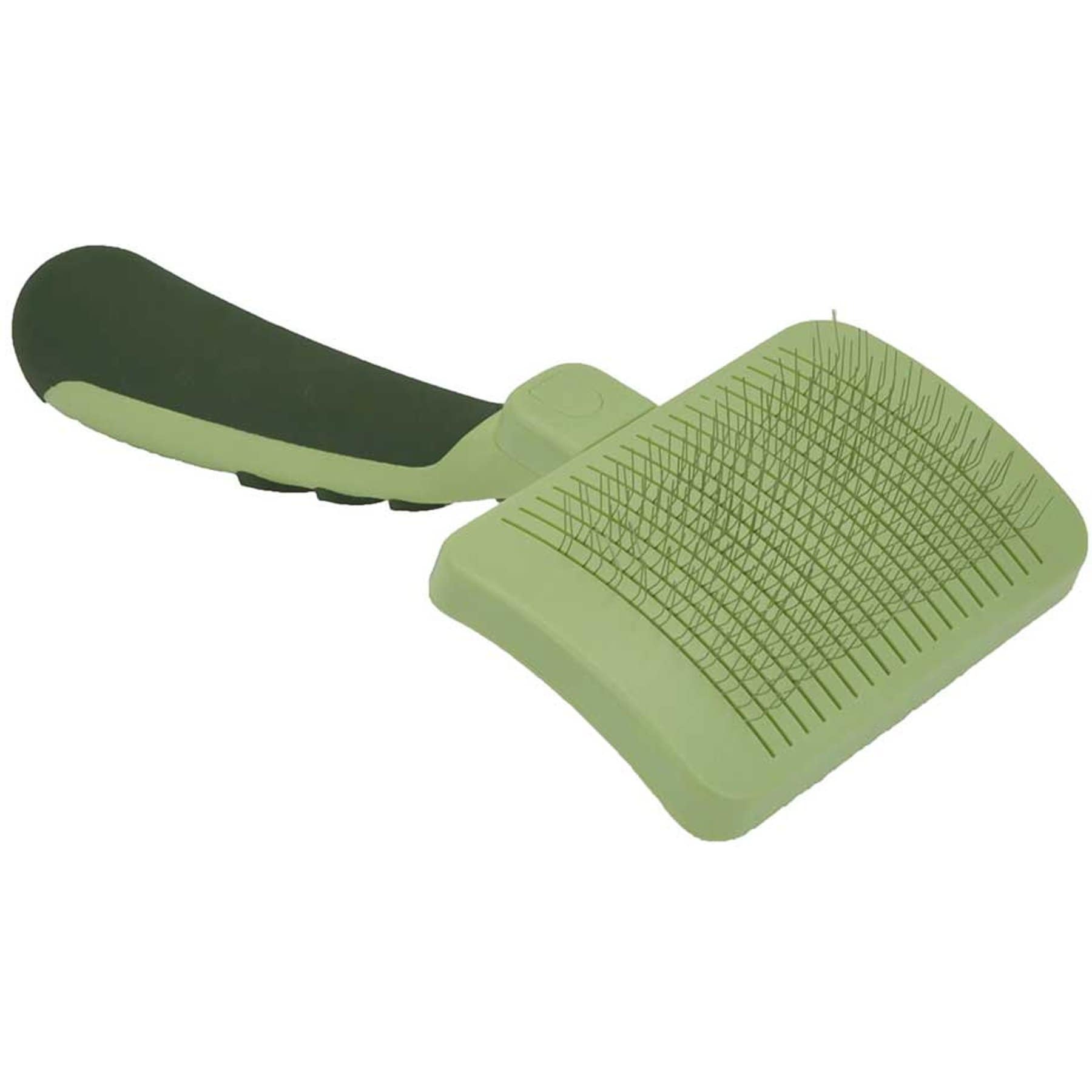
Coated pins and push-button cleanup for cats that tolerate gentle slicker grooming.
Webvet may earn a commission when you click through to Chewy, at no extra cost to you.
A small, loose tangle may be manageable at home if it separates easily with fingers and a wide-tooth comb, the skin looks normal, and your cat stays comfortable. A dense core, pulling skin, pain, or resistance is a reason to stop.
Grade every mat into one of three levels before choosing a tool.
- Loose tangle. The hair separates easily with fingers or a suitable comb, without tugging the skin. Stop at resistance or discomfort; a dense knot needs professional assessment.
- Firm mat. A dense felted core that does not separate readily needs professional help, even if there is a gap beneath it. Do not force a comb or blade through it.
- Pelt. Mats have joined into a sheet with no gap at the skin. Move the mat and the skin moves with it, often across the back, flanks or belly. This is never a home job.
| Grade | What you can observe without pulling | Safe to work at home? | Who should do it |
|---|---|---|---|
| Loose tangle | Separate strands are visible and the comb moves without tugging skin | Only while gentle combing is comfortable | Owner; stop at resistance or discomfort |
| Firm mat | Dense felted core | Do not force combs or blades through it | Cat-experienced professional; vet for pain or abnormal skin |
| Pelted coat | Mats have joined into a dense sheet close to the skin | No | Veterinary assessment and professional removal; the vet decides whether sedation is needed |
Three things override the grade entirely. If the cat reacts painfully when you touch the area, if the skin you can see is broken or red, or if the cat will not tolerate handling there at all, stop and book a professional whatever the mat feels like.
Some locations are also off limits at home regardless of grade. A mat sitting over a lump you cannot identify, one close to the eyes, ears or genitals, one trapping faeces against the skin, and one restricting how a leg moves all go straight to a groomer or your vet.
Severely matted cat treatment means professional clipping by a veterinary team or a cat-experienced groomer working alongside your vet. The matted coat comes off with clippers rather than scissors, the skin underneath is examined and treated for sores or parasites, and the vet decides on pain relief or sedation.
How to get mats out of cat fur without cutting
Removing matted cat fur starts with deciding whether it is a loose tangle or a firm mat. At home, gently separate only small loose tangles that release without pulling skin or upsetting your cat. Stop at resistance. Firm, painful, or widespread mats need a cat-experienced professional, with veterinary assessment for abnormal skin or distress.

- Choose a moment when your cat is relaxed on a stable, non-slip surface. Nail trimming is a separate task, only if due and comfortably tolerated; shorter claws do not make it safe to continue through a struggle.
- Work on a dry coat. Do not wet the fur and do not bathe first. Water and shampoo tighten a mat as the coat dries.
- Find the edges. Part the coat around the mat with your fingers until you can see where it starts and stops, and look at the skin underneath before any tool goes near it.
- Support loose fur gently without pinching skin. If the skin moves with the tangle, or you need a firm grip to absorb pulling, stop.
- Start at the loose hair tips furthest from the skin with your fingers, then a wide-tooth comb. Use short, gentle strokes only where hair releases easily. Do not use a bladed dematting comb as a home substitute.
- Use your fingers only to separate strands that release easily. Do not divide a dense mat by pulling it apart.
- Check each released section with a gentle comb pass beneath the surface. Stop if the comb catches; do not force it to the skin or try to finish every section in one sitting.
- Stop as soon as the fur resists gentle work or your cat becomes tense, flicks its tail, flattens its ears, or tries to leave. Do not keep working toward a time target.
- If the tangle does not loosen readily, arrange professional help rather than repeating a painful attempt over several days.
- Finish on a good note with food or a favourite game, so the next grooming session starts from a better place than the last one ended.
Support a loose tangle without pulling the skin
Support a small loose tangle with your fingers while keeping the skin relaxed. This can reduce tugging, but no hand position prevents injury if the comb is forced. A dense core or skin movement means stop.
Supporting loose fur may reduce tugging, but it does not make force safe. Keep every stroke gentle and stop if the skin moves with the tangle or your cat reacts.
- Comb away from the body, never toward it, and never let the tool lie flat against the skin.
- Do not judge comfort by how much pulling your fingers absorb. If you need to pull, the tangle is not releasing gently enough for this home method.
- Use both hands, which makes this a job for a settled cat on a stable surface rather than a cat balanced on your lap.
- If the tangle does not begin to separate readily with gentle handling, stop and arrange professional help. Do not continue for a set number of minutes to test it.
Dematting combs, rakes, and clippers that work
The tool you choose decides how much skin risk you are taking, so match it to the grade you assigned rather than to how big the mat looks. Most of the tools sold for this job are sharp, and the sharpest ones are the ones marketed hardest.

In rising order of risk:
- Wide-tooth steel comb. The workhorse, and the one tool nobody should skip. It finds mats, opens tangles, and tells you when a section is genuinely clear right down to the skin.
- Slicker brush. A pad of fine bent wires for routine coat work and loose surface hair rather than for mats. Pressed hard and flat, it scrapes the skin.
- Undercoat rake. Longer rounded teeth designed to pull dead undercoat out of a thick double coat, which makes it a prevention tool. Forced into a coat that has already felted, it simply pulls at the roots.
- Bladed dematting combs can cut hair inside a mat, but also pose a skin-injury risk. Leave their use on cats to someone trained in feline grooming.
- Mat splitter. A single blade for slicing one mat into narrow strips, which concentrates the same risk into one edge.
- Professional pet clippers may be needed for coat that cannot be combed out comfortably. Blade and attachment choice depend on the coat and skin; a guard does not make home mat removal safe.
- Scissors and thinning shears. No safe use on a mat at all, in any hands.
One practical note on clippers: quiet, low-vibration models matter far more to a cat than raw motor power, and a cat that bolts at the noise is a cat with a blade near its skin at the worst possible moment.
| Tool | What it does | Grade it suits | Skin risk |
|---|---|---|---|
| Wide-tooth steel comb | Checks coat and separates easy loose tangles | Only while hair releases comfortably | Can pull skin; stop at resistance |
| Slicker brush | Lifts loose hair and surface tangles in routine coat work | Tangle, and prevention between mats | Low to moderate; scrapes the skin if pressed flat and hard |
| Undercoat rake | Pulls dead undercoat out of a thick or double coat | Tangle, and a dense coat before it felts | Moderate; forced into a firm mat it pulls at the hair roots |
| Dematting comb with curved blades | Cuts hair within a mat | Professional assessment and handling | Can cut skin even in a small mat |
| Mat splitter | Slices one mat into narrow strips that can then be combed | Firm mat, in trained hands only | Bladed tools require trained professional handling; not a home rescue method. |
| Professional pet clippers | Remove coat that cannot be combed comfortably | Professional assessment | Blade and attachment choice require training |
| Scissors or thinning shears | Nothing that is safe on a cat | None | Severe; the skin tents up into the blade |
Detangler sprays, olive oil, and cornstarch: what is safe
Very little that you put on a mat will remove it. A detangling product formulated for cats is the only category worth reaching for, and even that works on tangles rather than on firm mats or pelts.
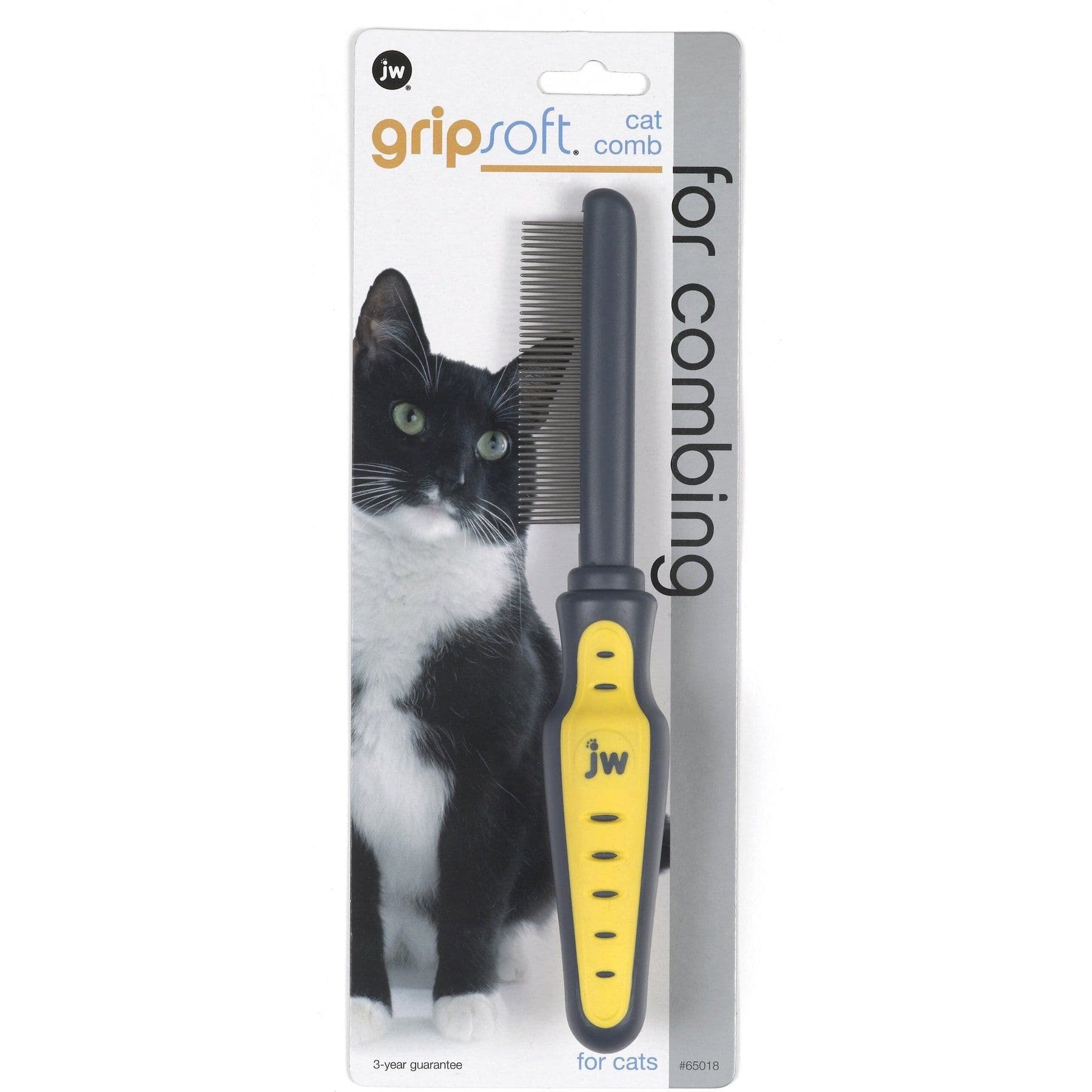
A handled comb for loose hair and checking suitable coats for remaining snags.
Webvet may earn a commission when you click through to Chewy, at no extra cost to you.
A suitable detangling product may reduce friction in loose hair; it does not dissolve a firm mat. Use only a cat-labeled product according to its application, rinsing, age, and skin-condition instructions.
Read the label and put back anything containing essential oils. Tea tree oil is toxic to cats, and cats process many plant-oil compounds poorly, a point International Cat Care and the Cornell Feline Health Center both make about household products.
- Follow the product's directions for where and how much to apply. Keep it away from the face and any sore or broken skin unless your veterinarian directs otherwise.
- Follow the label's application and contact-time instructions rather than assuming every detangler should sit for one minute.
- Leave human hair products, hair-removal creams and anything containing alcohol in the bathroom.
Olive oil, coconut oil, and cornstarch: what the evidence says
There is no kitchen-cupboard remedy that dissolves a mat, and the most widely shared one, olive oil, usually makes the situation worse rather than better.
- Oil does not break the bonds inside a mat. It coats the hair so the fibres briefly slide, then collects dust and dander, and the greasy patch it leaves behind mats faster than the coat it replaced.
- The cat will groom the oil off. A lick of olive oil is not a poison, but oil in quantity causes loose stools and stomach upset, and an owner treating a large matted area is not applying a small amount.
- Coconut oil does not remove a dense mat and leaves residue the cat may lick. Avoid adding it to a matted coat.
- Cornstarch is not a proven treatment for a firm mat. Powder can be inhaled or remain in the coat. Ask a cat-experienced groomer about a suitable product for a loose tangle rather than treating kitchen powder as risk-free.
- Talc-based baby powder is not the same thing. Fine talc is inhaled by a cat with its face buried in its own coat, and scented versions add irritants nobody needs on damaged skin.
| Substance | What it claims to do | Verdict | Why |
|---|---|---|---|
| Cat detangling spray | May reduce friction in loose hair | Use only as labeled on a suitable coat | Does not remove firm mats; follow application and rinse instructions |
| Leave-in cat conditioner | May assist routine coat maintenance | Only if labeled for cats and intended use | Follow directions; not for abnormal skin or dissolving mats |
| Cornstarch or grooming powder | Claimed friction reduction | Not a proven home mat treatment | Can be inhaled or remain in coat |
| Olive oil | Loosens the mat so it slides free | Not recommended | Does not break a mat, leaves a greasy patch that mats faster, and is swallowed during grooming |
| Coconut oil | Claimed to soften mats | Not recommended as a mat treatment | Does not remove a dense mat and leaves residue the cat may lick |
| Talc-based baby powder | Dries and separates the coat | Avoid | Fine talc is inhaled by a cat grooming its own coat, and scented versions add irritants |
| Human detangler, conditioner or hair-removal cream | Marketed for human hair | Avoid | Formulated for different skin and never intended to be eaten |
| Water, or a bath before dematting | Softens the coat so mats slide out | Avoid until the mats are gone | Water and shampoo tighten a mat as the coat dries |
Is it okay to shave a cat with matted fur?
Clipping is the right answer for a pelt, and often the kindest one available. It is not a home job.

Shaving a matted cat means running a blade along skin you cannot see, on an animal who has not agreed to it, and that is work for a groomer experienced with cats or for your veterinary practice.
- 1A pelted coat may need professional clipping and skin examination.
- 2A veterinarian decides whether monitored sedation or pain relief is needed.
- 3The amount of coat removed depends on the individual welfare need.
- 4Do not choose a clipping blade or guard from an online tutorial.
Sedation gets used for good reasons rather than for convenience. A pelted cat is usually already sore, the skin under a pelt is fragile and sometimes broken, and the job takes time.
When sedation is necessary, the veterinary team selects and monitors it while the coat is removed and the skin examined. A groomer does not independently prescribe sedation.
The professional assesses how much coat needs removal, protects the skin during clipping, and checks for hidden wounds or inflammation afterward.
- The cat is examined afterwards for the sores, pressure marks and parasites the coat was hiding.
A lion cut is a different conversation. The body is clipped short while the head, legs and tail tip are left, and it is popular as a summer style for long-haired cats.
Most cats do not need shaving simply because it is summer. Provide shade, fresh water, and a comfortable indoor environment. Open-mouth or labored breathing needs immediate veterinary attention.
Whichever route the coat comes off by, plan for the weeks afterwards:
- Regrowth takes weeks to months, and long-haired breeds often come back with a different texture at first.
- Some cats regrow patchily, particularly where the skin was inflamed underneath a pelt.
- Keep a freshly clipped cat indoors, off sunny windowsills and warm, because the coat that was doing that job has gone.
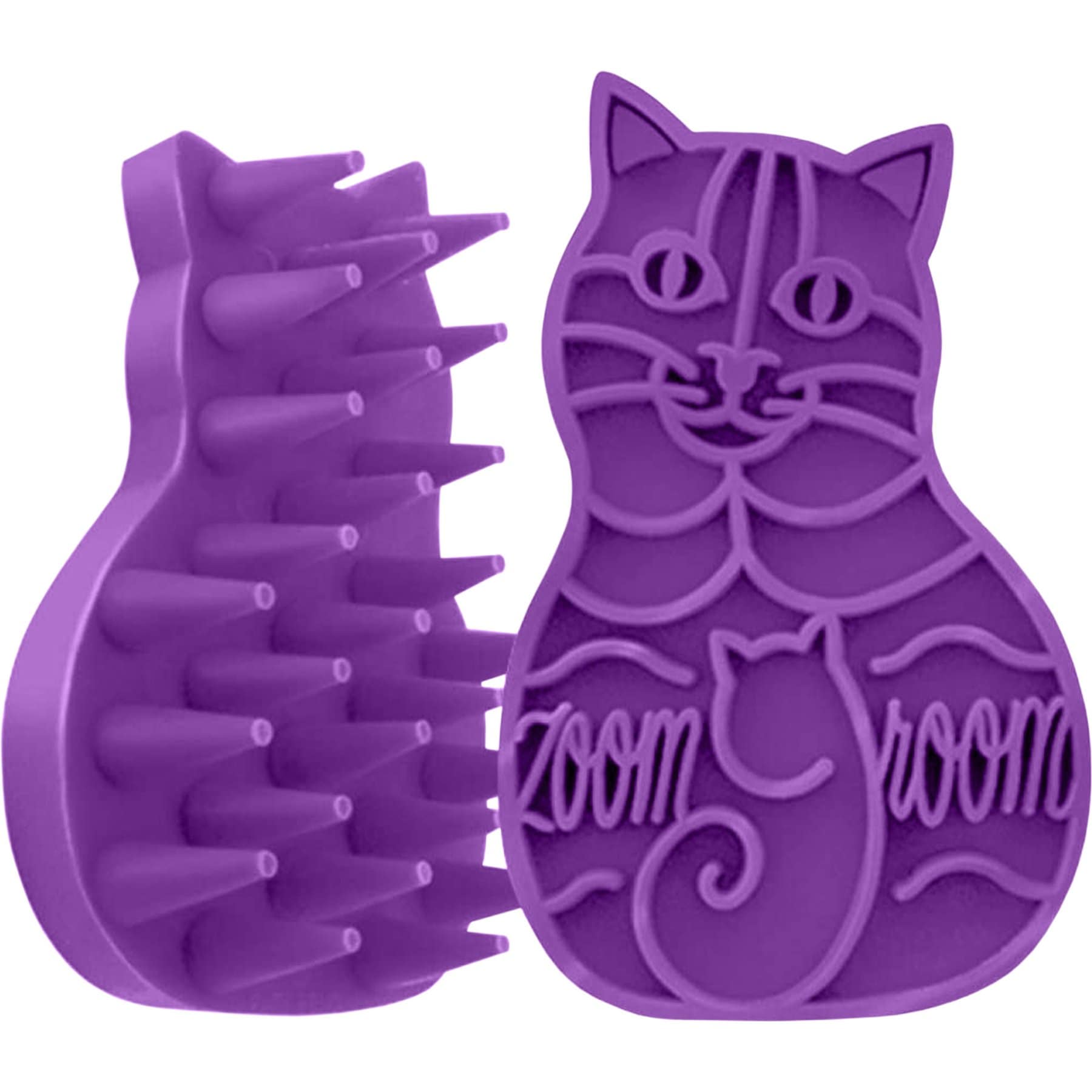
Flexible projections offer an alternative to wire pins for gentle surface grooming.
Webvet may earn a commission when you click through to Chewy, at no extra cost to you.
If a mat needs clipping, ask a cat-experienced groomer or veterinarian to remove it. A blade guard or a general online demonstration does not make home mat removal safe.
Choosing the best cat clippers or pet clippers for matted fur is really a professional-tool question. Cat skin is thin and tents up into a mat, so close clipping over mats at home risks cuts and burns from a hot blade. Leave clipping matted cat fur to a groomer or vet, and keep home tools for combing.
When matted fur becomes a veterinary problem
Mats can hurt because tangled hair pulls on the skin beneath it. Tight or extensive mats may also hide irritation and wounds.
Cats conceal that discomfort well, which is why a matted cat can seem entirely fine right up until the coat comes off and the skin is finally visible.
What a groomer or a vet finds under a severe mat is the part most owners are never warned about:
- Reddened, inflamed skin with the pattern of the mat pressed into it.
- Moist, sore patches where no air has reached the skin for weeks.
- Open sores, ulcers, pressure marks or bruising where the mat has been pulling constantly.
- A bacterial or yeast skin infection thriving in that warm, damp, airless layer.
- Trapped faeces, urine scald, or fleas and flea dirt completely hidden from view.
- In unwell or neglected outdoor cats in warm weather, fly eggs and maggots in the coat, a condition called myiasis, which is a genuine emergency.
- Occasionally a wound, an abscess, or a lump that the coat has been hiding for months.
A veterinary visit for this is usually undramatic. The practice examines the cat, clips the coat away under sedation if that is what it takes, and treats whatever is underneath with pain relief and sometimes antibiotics.
It will also look for the reason the matting happened at all. Published owner guidance from the Merck Veterinary Manual and VCA Animal Hospitals treats skin under a neglected coat as a skin problem, not a grooming inconvenience.
There is also a boundary worth drawing. If the skin stays red, crusted, itchy or bald once the mats are gone, that is a skin condition in its own right rather than mat damage:
- The diagnostic workup vets use for cat skin problems is the next step rather than another comb, and persistent cases are where a veterinary dermatologist gets involved.
- Telling an allergy apart from a skin infection changes the treatment completely, so that distinction is worth making early.
- A crusted patch with broken hairs around it can be ringworm rather than mat damage, and it is contagious to people.
- If the mats came with flea dirt, the fleas are the real problem. Treat them with a flea shampoo formulated for cats or a vet-recommended preventive rather than a general wash.
When a cat stops grooming itself
A cat that suddenly stops grooming is showing you a medical sign, not being lazy. Grooming needs flexibility, a comfortable mouth and enough energy to bother, and matting that appears in a cat who was never matted before usually means one of those three has changed.
Consider these possible contributors with your veterinarian. The location of mats can show which areas your cat is missing, but it cannot identify the cause on its own.
- Joint pain and osteoarthritis. A stiff cat can no longer twist to reach the back, hips and base of the tail, which is exactly where the first mats turn up. The signs of arthritis in cats are quiet and easily mistaken for ordinary ageing.
- Dental and mouth pain. Grooming is done with the mouth, so periodontal disease, a fractured tooth or an inflamed gum makes the whole activity hurt. Cat teeth cleaning covers what that examination involves.
- Obesity. An overweight cat physically cannot reach its lower back, rump and the area under the tail, no matter how willing it is.
- Hyperthyroidism and other systemic illness. An unkempt, greasy or staring coat is one of the classic changes a vet looks for in an older cat, alongside weight loss and appetite change.
- Chronic illness and feeling generally unwell. Grooming is one of the first behaviours a cat drops when it feels rough, including with kidney disease and chronic pain.
- Pain somewhere specific. A sore paw, an old injury or a wound will stop a cat contorting itself, even if the cat seems normal otherwise.
- Vision loss and cognitive decline in senior cats, both of which change grooming behaviour before they change anything more obvious.
- Stress or a change at home, which is worth considering only after the medical causes have been ruled out, never instead of them.
For an older cat, the useful comparison is against a normal senior rather than against a young one. What is normal and what is not in senior cat mobility separates ordinary slowing down from a cat that can genuinely no longer reach its own coat.
The American Association of Feline Practitioners publishes owner guidance on senior care along the same lines, and it is worth reading before assuming a scruffy older cat is simply getting on in years.
So is a matted cat neglect? Usually not, and the honest version matters here:
- Matting can develop when loose hair accumulates, the coat gets wet, or self-grooming declines. The speed varies, so use regular coat checks rather than a fixed timetable.
- Elderly cats mat because they are stiff and sore, not because they are unloved.
- What matters is what happens next. A badly matted cat needs help now, from you or from a professional.
- Repeated severe matting is a signal that either the routine or the cat's health has to change.
- A cat that is matted, thin and hiding needs a vet appointment rather than a grooming session, because the coat is the least of what is going on.
Keeping mats from coming back
A mat does not grow out. Coat that has already felted stays felted, because the mat traps each newly shed hair instead of releasing it, so it thickens and sits closer to the skin as the surrounding coat grows.

Mats leave a cat one of two ways: combed out or clipped off. After that, only prevention keeps them away.
Brushing frequency is part of preventing mats from returning. Check the coat daily, use regular grooming appropriate to its length and density, and adjust the routine if loose tangles reappear between sessions. Recurrent matting despite care also warrants a health check.
- Long, silky, or curly coats commonly need daily brushing. Work in comfortable sections and stop at resistance.
- Medium coats: check regularly and groom often enough to prevent accumulating loose hair and tangles, adapting to coat density and comfort.
- Short coats: regular checks and less frequent brushing may be sufficient, with additional attention when loose hair builds up.
- Senior, arthritic, or overweight cats may need help with missed areas. Check those areas daily without forcing painful positioning, and discuss reduced self-grooming with your veterinarian.
Give attention to hidden friction areas: behind the ears, under the chin, armpits, britches, belly, and tail base. Several comfortable checks are preferable to a long session that your cat resists.
- Comb as well as brush when your cat tolerates it. A suitable comb can reveal snags beneath the surface. Do not force its teeth through resistance.
- Check under the collar every few days and take it off during grooming.
- Keep the rear end clean. If long fur repeatedly catches feces, a professional sanitary trim may help, with maintenance based on regrowth and soiling. Persistent diarrhea or difficulty cleaning needs veterinary assessment.
- Dry the coat right down to the skin after any bath, rather than leaving a damp layer under a thick topcoat.
- Run your hands over the cat daily while you stroke it. A mat is easier to feel than to see, and a week of warning is worth an hour of work.
- Keep sessions short, calm and rewarded. A cat that tolerates being groomed is the entire prevention plan, and building that tolerance is worth more than any tool.
There is a useful side effect too. Combing dead undercoat out of the coat is coat the cat does not swallow, which is why a grooming routine is part of preventing hairballs as well as preventing mats.
If the coat keeps matting despite all of this, the coat is not the problem. Go back to the list of reasons a cat stops grooming itself, and book the check-up.
Which brush to reach for between mats
Between mats, the brush matters less than the comb. A slicker brush lifts loose hair off the surface of most coats and is the right tool for a quick daily pass, while an undercoat rake earns its place only on a genuinely thick double coat, where dead undercoat is the fuel for every future mat.
Neither replaces a wide-tooth steel comb, which is the only one of the three that reliably reaches the skin and confirms a section is actually clear. Coat-by-coat brush selection is a longer decision than this rescue job needs, but if you own one tool, own the comb. For the full method and its limits, see choosing a cat brush.
Long-haired coats need their own routine
Long coats vary in density and undercoat. Loose hair can collect beneath a smooth-looking surface, so part the coat and check comfortable sections with an appropriate comb.
That makes matting the default state rather than the exception, and it makes a scheduled daily routine, plus a standing appointment for the areas you cannot keep on top of, the realistic plan. A rescue procedure like the one above is what you do when the routine has slipped, not a substitute for having one. For the full method and its limits, see the long-haired cat grooming routine.
A long haired cat that is matted again soon after a clip is usually telling you the gap between combing sessions is too long, or that it has stopped grooming itself. If mats return quickly despite regular combing, ask your vet to check for pain, weight change, or dental or skin problems.
Bathing and shampoo for a mat-prone coat
Bathing does not remove mats, and doing it first makes the whole job harder. The tangled hair swells with water and then shrinks as it dries, shampoo adds friction on the way through, and a coat that goes into the sink with firm mats comes out with tighter ones that are now also wet.
Demat first and bathe afterwards, then dry the coat all the way to the skin rather than leaving it damp under a thick topcoat. Shampoo choice is its own decision, and a flea problem discovered under the mats is treated with a product labelled for fleas rather than a general wash. For the full method and its limits, see choosing a cat shampoo.
Matted cat fur questions
Frequently Asked Questions
How often should I brush my cat to stop mats coming back?
Check the coat daily. Long, silky, or curly coats commonly need daily brushing, while shorter coats may need less frequent work. Pay attention to hidden friction areas and use a suitable comb gently. Stop at resistance, and seek professional help for firm mats or recurrent matting despite regular care.
Can I shave a mat off with clippers at home?
Have a cat-experienced groomer or veterinarian remove a mat that needs clipping. A small-looking mat can contain folded skin, and a cat can move suddenly. Do not choose a blade or attachment from an online tutorial.
Why has my cat suddenly become matted when it never was before?
New matting can follow a change in coat care, moisture, or reduced self-grooming. Pain, mobility problems, dental disease, weight changes, and other illness can contribute. Arrange a veterinary check, especially with weight loss, hiding, or other behavior changes; mat location alone cannot identify the cause.
Is it safe to bathe a cat to loosen the mats?
No. Water tightens a mat rather than loosening it, because the tangled hair swells and then shrinks as it dries, and shampoo adds friction on the way through. A matted coat also holds water against the skin for hours, which is the exact condition that turns a sore patch into an infected one. Demat first, bathe after, and dry the coat all the way down to the skin.
Further reading: VCA coat-care guidance

Editor
The Webvet Editorial Team is the in-house group of pet-care editors and writers behind Webvet, operated by Smart Pet Collective. The team researches, writes, and maintains Webvet's pet health, behavior, and medication content. Every article follows a defined editorial process: research from reputable veterinary and scientific sources, careful drafting, mandatory review of medical content by a credentialed veterinarian, and dated publication. Health and medication articles are medically reviewed by a licensed veterinary professional before they go live and are kept current over time.
Veterinarian · BVMS MRCVS
Dr. Pippa Elliott, BVMS, MRCVS, is a veterinarian with nearly 30 years of experience in companion animal practice. Dr. Elliott earned her Bachelor of Veterinary Medicine and Surgery from the University of Glasgow. She was also designated a Member of the Royal College of Veterinary Surgeons. Married with 2 grown-up kids, Dr. Elliott has a naughty Puggle named Poggle, 3 cats and a bearded dragon.
Related reading

Pet Safe Roach Killer: What Works Without Poisoning Your Pet

Pet Safe Pest Control: What Is Safe to Use Around Dogs and Cats

Dog Sprayed by Skunk: The De-Skunk Recipe That Works and When to Call the Vet
