How Cold Is Too Cold for Cats? Indoor, Outdoor, and Feral Cat Winter Guide
Cats tolerate cold better than people assume, right up to the point they do not. Here is the temperature at which cats need help, how to tell your cat is cold, what a garage or porch cat needs to survive winter, and how to build a shelter that works.

BVMS MRCVS
Medically reviewed by Dr. Pippa Elliott, BVMS MRCVS · Last reviewed

This article contains affiliate links. Webvet may earn a commission when you buy through them, at no extra cost to you.
How cold is too cold for cats? The clearest published line comes from the UK charity Cats Protection: below about 7 C (45 F), staying outside can start to be unsafe, especially for long periods. Below freezing, wind and wet fur raise the risk of hypothermia and frostbite.
That answer shifts with the cat. Knowing how cold is too cold for cats means weighing age, coat, health, and whether the cat lives indoors, on a porch, or in a feral cat colony. This guide covers the thresholds, the warning signs, garages, shelters, and the winter hazards that hurt cats most.
Do cats get cold?
Yes. A cat's normal body temperature is 100 to 102.5 F, a little warmer than ours, according to PetMD. Fur helps, but it does not make a cat cold-proof.
The Cornell Feline Health Center says the combination of low temperatures, wind, and snow or ice can predispose cats to hypothermia and frostbite. PetMD adds that freezing, wet, and windy conditions are a classic cause of hypothermia, and that a shivering cat is a body actively working to fight it off.
- 1Temperature thresholds for cats: Cats Protection says below about 7 C (45 F) outdoors can start to be unsafe.
- 2Below freezing, wind, snow, and wet fur sharply raise the risk of hypothermia and frostbite.
- 3Signs of a cold cat include shivering, curling into a tight ball, lethargy, and cold ears, paws, or tail.
- 4A cat that is cold to the touch and very tired or unresponsive is an emergency.
- 5Kittens, seniors, unwell cats, and hairless cats need protection sooner.
How cold is too cold for cats?
There is no single number every veterinary source agrees on. Cornell's cold-weather guidance gives no degree figure at all; it says winter hits cats that spend appreciable time outside the hardest, and that outdoor cats need shelter from cold, wind, and precipitation.
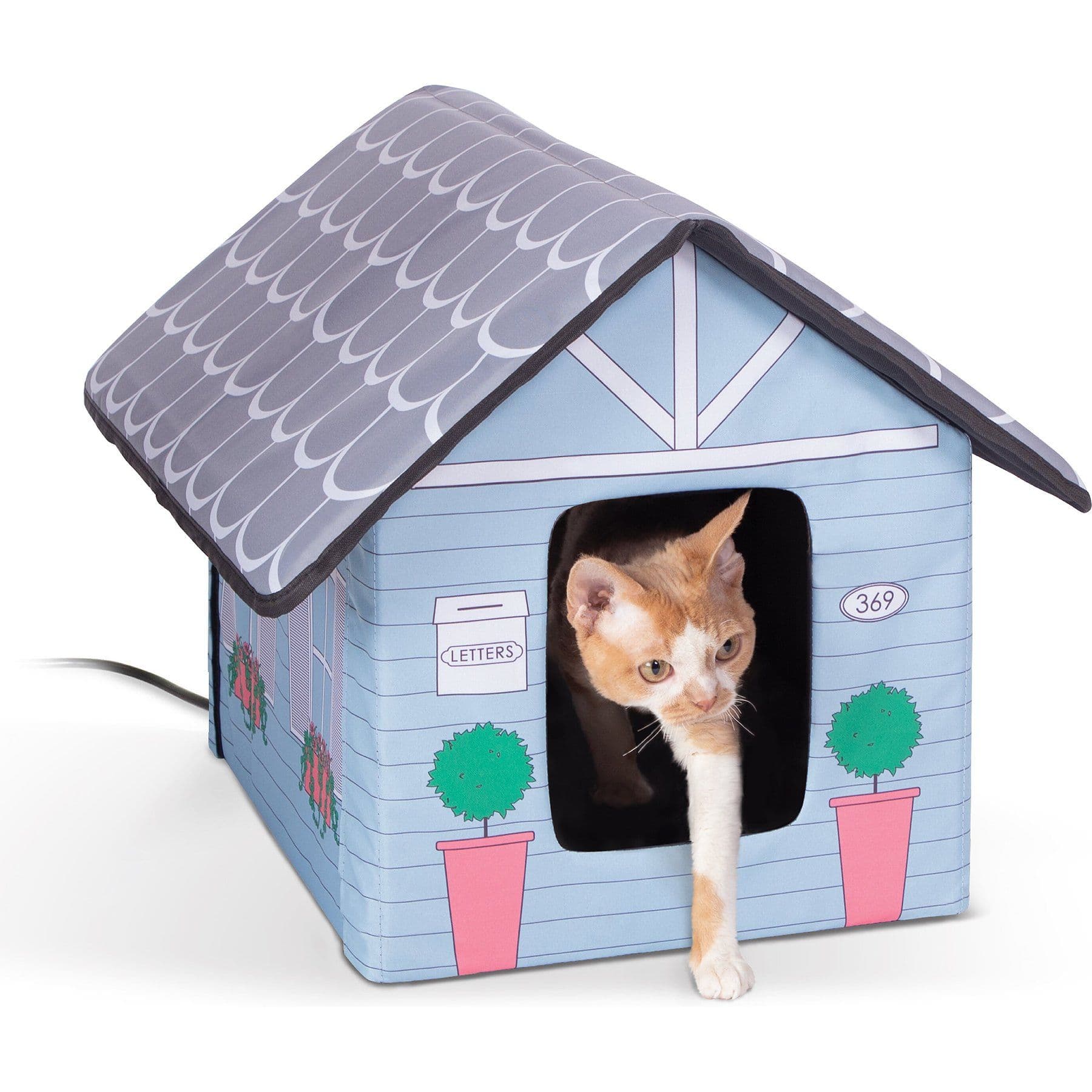
K&H's heated house has insulated walls, a 20-watt heated floor, and two 6 by 8 inch exits for a porch or barn cat.
Webvet may earn a commission when you click through to Chewy, at no extra cost to you.
No veterinary school or association we found publishes an outdoor number. The clearest published threshold comes from Cats Protection, which says anything below about 45 degrees F (7 C) can start to be unsafe for cats outside, especially for long periods. Treat 45 F as the caution point and below freezing (32 F) as the danger zone, where risk climbs fast with wind and wet fur.
So can cats survive in the cold? Many outdoor cats do, but survival depends on shelter, dry bedding, and food, not toughness. The risk factors that move the line are wind, wetness, age, coat, and health.
Indoor cats get cold too. Do cats get cold inside the house at night? They can in a drafty room, on a cold floor, or by a single-pane window. Do hairless cats get cold more easily? Yes: Cats Protection names hairless breeds such as the sphynx among higher-risk cats. A house cat that seeks out radiators, laps, and sunny spots is telling you the room is cool.
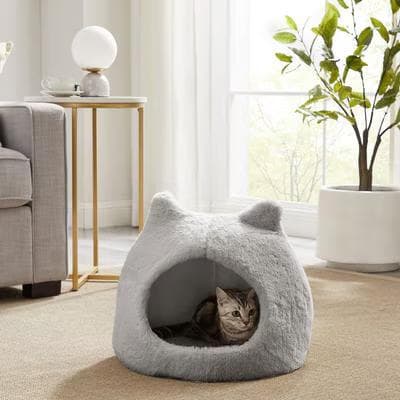
A covered cat bed with a water-resistant bottom, a snug hideaway for a senior or short-haired cat in a cool room.
Webvet may earn a commission when you click through to Chewy, at no extra cost to you.
At what temperature will a cat feel cold?
No source gives the exact air temperature at which a cat starts to feel cold, and individual cats differ. The best published guide is Cats Protection's roughly 45 F (7 C) for outdoor cats. Body temperature is clearer: normal is 100 to 102.5 F, and a cat whose body temperature drops below that range is becoming hypothermic.
Sources disagree on the exact hypothermia cutoff, so here are both:
- PetMD defines hypothermia in cats as a body temperature under 100 F.
- A Journal of Feline Medicine and Surgery study of cats under anesthesia defined it as below 37 C (98.6 F).
Either way, a cat reading below 100 F needs warming and a call to your vet. For trapped community cats, Alley Cat Allies offers a simple rule of thumb: if it is too cold for you outside, it is probably too cold for a cat waiting in a trap.
Do cats get cold after a bath? A wet coat loses insulation, and VCA says wet or damp cats are more vulnerable to frostbite, so dry a bathed cat fully before it sits near a draft or goes outside. No source addresses cats that have just been shaved, but a shaved coat leaves less fur between the skin and cold air, so keep that cat indoors and warm too.
Signs your cat is cold
Cats Protection lists these signs of a cold cat:
- Shivering
- Curling up tightly into a ball
- Lethargy or unusual sleepiness
- Cold ears, paws, or tail

Cats Protection also warns that hypothermia symptoms get worse as body temperature keeps falling. PetMD is blunt: a cat that is cold to the touch and acting excessively tired, or one that is not responsive, is an emergency. Wrap the cat in a dry towel and get to a vet.
Frostbite is the other cold injury. VCA Animal Hospitals notes:
- The paws, ears, and tail are the most common sites.
- Frostbitten skin is often pale, gray, or bluish.
- Signs can take several days to appear.
- Wet or damp cats are more vulnerable.
For suspected frostbite, VCA says do not rub or massage the area and do not use direct dry heat such as a heating pad or hair dryer. See your vet. For ordinary chills and sniffles, our guide to a cat cold covers the respiratory side, which is a separate problem from cold exposure.
Which cats are most at risk in cold weather
Some cats cross the danger line well before 45 F. PetMD says hypothermia is more common in kittens, senior cats, and cats who go outdoors. Cats Protection adds unwell and hairless cats, and the Cornell University College of Veterinary Medicine says very young, older, and short-haired animals are the most vulnerable.
Higher-risk cats include:
- Kittens
- Senior cats
- Unwell cats
- Hairless breeds such as the sphynx
- Short-haired cats
- Cats that live or roam outdoors
Wet fur makes every one of these cats colder, faster. A cat that comes in damp from rain or snow should be towel-dried and kept somewhere warm until its coat is dry.
Can cats stay in a cold garage, porch, or shed?
Do outdoor cats get cold in winter? Yes, and stray and feral cats feel the same cold at night that pet cats do. A garage, porch, or shed blocks wind and precipitation, which Cornell names as two of the three big risk factors. It does not make the space warm.
Can cats stay in a cold garage?
No published figure exists for a safe garage temperature for cats. Reasoning from the sourced thresholds: if the garage stays above about 45 F, a healthy adult cat with dry bedding is likely fine. If it drops toward or below freezing, it is too cold for a cat to live in without an insulated, heated shelter, and kittens, seniors, or unwell cats should come inside.
Cats Protection also advises checking sheds, outhouses, and garages regularly so a cat is never locked inside. Two more garage cautions:
- Antifreeze and other car fluids are often stored or spilled there. Keep them sealed and clean up drips.
- K&H states that its indoor Thermo-Kitty Mat is for indoor use only, so a garage needs a product rated for outdoor use.
A porch cat is in a similar position, and porch conditions vary just as much as a garage. A screened or enclosed catio gives an indoor cat safe outdoor time in milder weather, but it is not a winter home. If you want one for spring, our DIY catio guide covers the build.
Water is the easy thing to overlook for a garage, porch, or barn cat. Unheated bowls freeze, so check them at least daily in freezing weather and break or replace any ice.
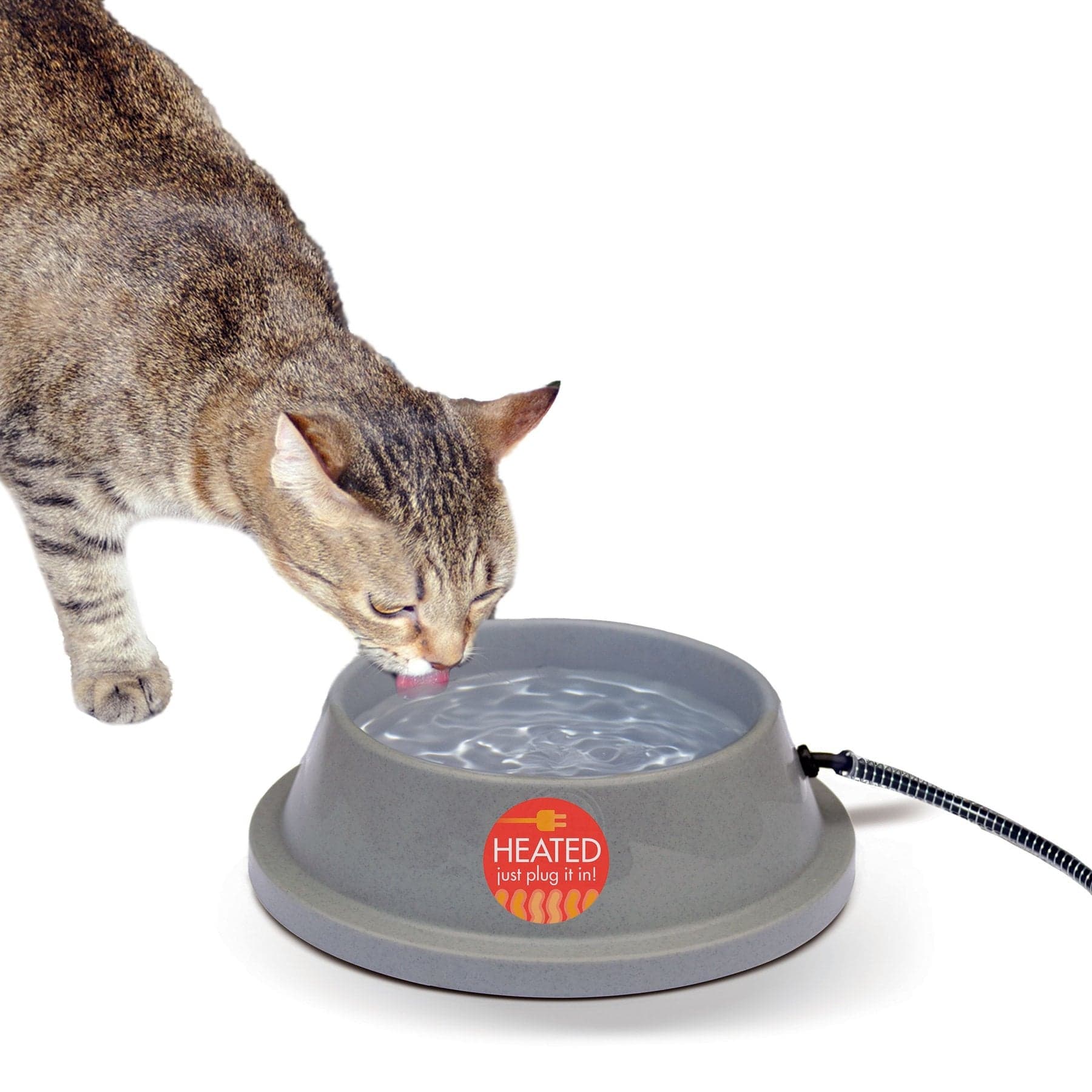
A heated outdoor water bowl meant to keep a community cat's water from freezing on cold days.
Webvet may earn a commission when you click through to Chewy, at no extra cost to you.
How outdoor and feral cats survive winter
Alley Cat Allies points out that cats have long lived outdoors and thrived in all kinds of weather and climates. Community cats are well adapted and know where to find food and shelter. What they need from caretakers is help with the basics.
How do stray cats survive winter?
Stray cats survive winter by finding shelter from wind and wet, eating more, and burrowing into dry bedding. Alley Cat Allies says cats eat more in winter because they are trying to conserve energy and stay warm, so caretakers should provide food and water daily. Canned or wet food takes the least energy to digest, leaving more energy for staying warm.
Where do feral cats go when it's really cold outside?
Feral cats look for anything that blocks wind and keeps them dry: crawl spaces, sheds, barns, porches, and parked cars. Cornell warns that cats seeking warmth in wheel wells and engine compartments can be injured. A dry, insulated shelter near the feral cat colony's feeding station gives them a safer option.
How to keep an indoor cat warm
Indoor warmth is mostly about drafts and floors:
- Move the bed off cold tile and away from doors and single-pane windows.
- Offer a covered bed or a box with a soft liner.
- Let a senior cat reach sunny windows, beds, and sofas without a hard jump.
- Dry a damp cat with a towel before it settles.
Heated pads help, but follow the right rule for each. When you are warming a chilled cat, PetMD says warming devices should always be separated from the cat by towels or blankets to prevent burns. A heated pet bed or mat in everyday use follows its maker's directions instead, since some makers, K&H among them, warn that blankets can trap heat. The same goes for heated dog beds in multi-pet homes: follow the manual. Humane World for Animals notes that a warm, dry bed can help when bringing an outdoor cat inside in winter.
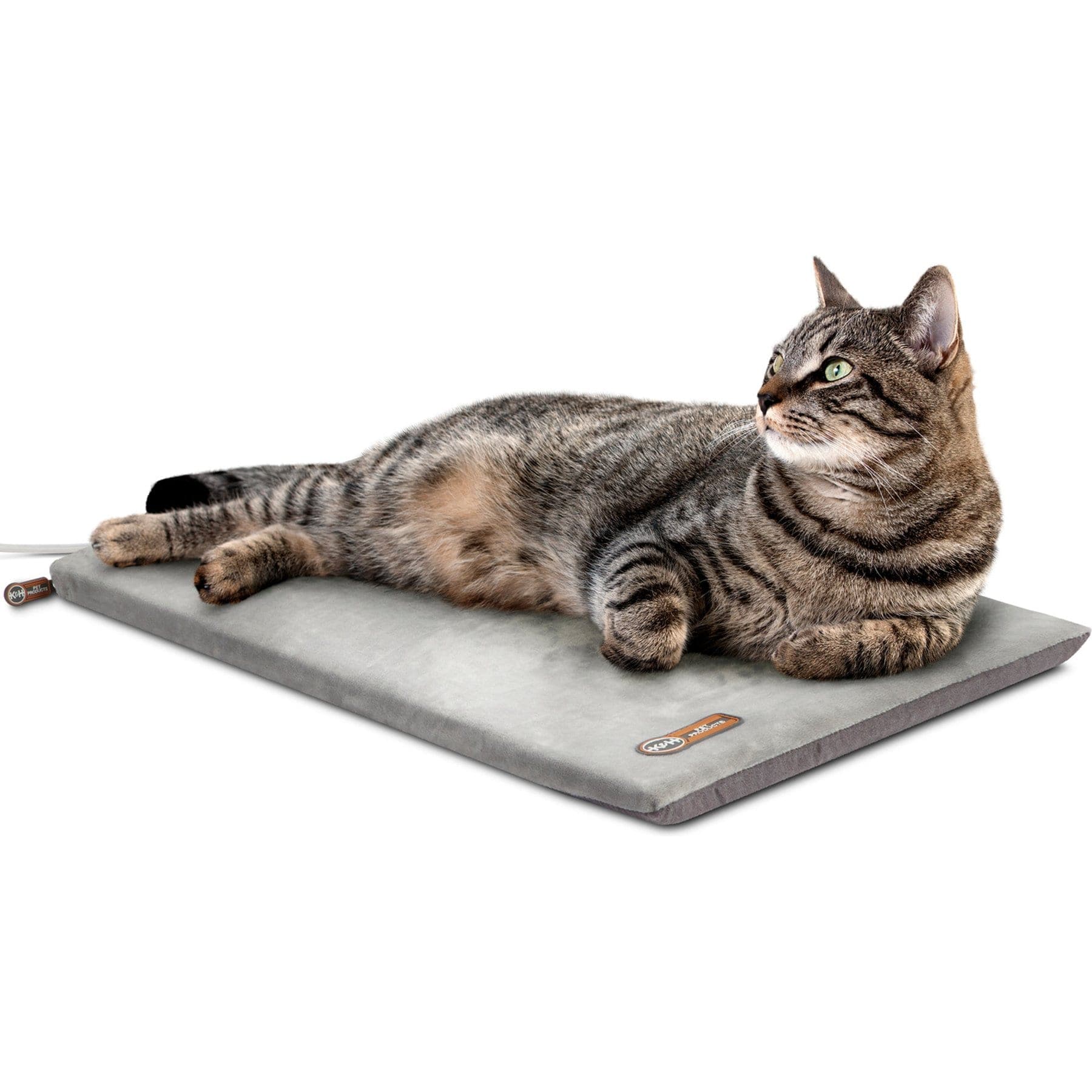
A low-wattage heated mat for indoor use only; follow K&H's directions for covering and placing it.
Webvet may earn a commission when you click through to Chewy, at no extra cost to you.
Kittens need extra warmth in winter, since PetMD lists them among the cats most prone to hypothermia.
Building or buying an outdoor cat shelter
For a stray, feral, or outdoor cat, the answer is a shelter. A DIY cat shelter can be as simple as a plastic storage tote or a styrofoam cooler lined with straw, while a ready-made heated cat house adds a low-wattage pad. Whether you make a cat shelter or buy a weatherproof one, the build rules below apply.
Good shelter design for winter comes down to size, bedding, door, and placement. The two most detailed community-cat guides, from Alley Cat Allies and Neighborhood Cats, agree on most points.

| Element | Spec | Why it matters |
|---|---|---|
| Size | About 2 by 3 feet and at least 18 inches high (Alley Cat Allies) | Small enough for body heat to warm the space |
| Capacity | An 18 gallon bin houses one cat; a 55 gallon bin holds several (Neighborhood Cats) | No source gives an exact two-cat size, so size up for a pair |
| Entrance size | A six-inch entrance, 6 by 6 inches, in a short side (Neighborhood Cats) | Lets cats in, keeps larger animals out, holds heat |
| Entrance direction | Away from the wind, ideally facing a wall (Alley Cat Allies) | Blocks drafts and limits who can get in |
| Elevation | Raised on pallets or bricks; entry several inches above ground | Prevents flooding and keeps out rain and snow |
| Bedding | Straw not blankets, and never hay | Straw repels moisture; hay, blankets, and towels get damp |
| Door flap | Groups disagree: Alley Cat Allies recommends one; Neighborhood Cats says shelters work without it | Your call based on wind and predators |
| Upkeep | Replace damp bedding immediately; clear snow from entrances | A wet bed is dangerous in winter |
Bedding is where most shelters fail. Alley Cat Allies says straw, the dry stalks left from harvested crops, repels moisture, making it the best bedding, and that hay costs two to three times more. Straw or hay for a cat shelter is not a close call: Cornell also says use straw and avoid newspaper, cloth, and hay.
Why straw, not blankets? Neighborhood Cats explains that blankets and towels trap some body heat, but Kitsap Humane Society warns that cotton towels and sheets get wet and freeze. Neighborhood Cats also says hay is moist and can grow harmful bacteria and mold.
The door flap is a genuine disagreement:
- Alley Cat Allies says a flap over the entry keeps out cold air and potential predators.
- Neighborhood Cats says that in its experience, well-made winter shelters do the job without a flap door.
Kitsap Humane Society puts the entrance at 6 to 8 inches and notes that bigger is not better, because heat escapes faster. Where predators are a concern, Best Friends Animal Society recommends two entrance holes so a cat is not trapped. Neighborhood Cats suggests a spot out of the wind yet exposed to the sun. If a stray cat won't go in a new shelter, check those basics first: a small entrance facing away from the wind, dry straw inside, and a sheltered but sunny spot.
Buying instead of building? The K&H Pet Products Outdoor Heated Kitty House Cat Shelter, Cottage lists insulated walls and roof, a 19 by 22 by 17 inch exterior, a 20-watt heated floor, and two 6 by 8 inch exits at $94.98. K&H says to put nothing on the heated bed except the provided cover, because blankets can trap heat, and not to use an extension cord.
Winter hazards for cats: antifreeze, cars, and heaters
Cold weather brings hazards that hurt cats more than the cold itself.
Antifreeze is the deadliest. Cornell says it is extremely toxic to cats and has a taste cats find attractive. The Pet Poison Helpline says kidney damage sets in 12 to 24 hours after ingestion, and VCA warns that a delay of even a few hours usually results in death in cats. Our guide to antifreeze poisoning in dogs covers the same chemical in dogs.
Cars are next. Cornell recommends knocking on the hood to scare away cats, and Alley Cat Allies says always check under the hood. Heaters and heated pads round out the list: follow the maker's cord and bedding instructions, and when warming a chilled cat, keep a towel between the cat and the heat source. For a room-by-room check of other toxins, see how to poison proof your cat home. Dog owners can compare thresholds in how cold is too cold for dogs.
Cold weather questions for cat owners
Frequently Asked Questions
Is 50 degrees too cold for a cat?
No published source gives a 50 F figure. Cats Protection says outdoor risk starts below about 45 F (7 C), so 50 F is generally manageable for a healthy adult cat with dry shelter. Kittens and seniors, plus unwell or hairless cats, are higher risk and are better off indoors on cool, damp, or windy days.
Can cats freeze to death outside?
Yes. Cornell says low temperatures, wind, and snow or ice can predispose cats to hypothermia and frostbite. Wet fur speeds heat loss, and VCA notes damp cats are more vulnerable to frostbite. Without dry shelter and food, a cat in freezing weather can die of hypothermia.
How do I keep an outdoor cat warm without electricity?
Build an insulated shelter and fill it with straw, not blankets. Alley Cat Allies says straw repels moisture and lets cats burrow in to stay dry and warm. Keep the entrance small, the shelter raised, and the food wet.
Do indoor cats need a heated bed in winter?
Most healthy indoor cats do fine with a covered bed in a warm spot by a draft-free wall. A senior or thin cat, a short-haired cat, or a hairless cat may benefit from a heated pad used as its maker directs. When warming a chilled cat, PetMD says to keep towels or blankets between any warming device and the cat to prevent burns.
Should I bring my outdoor cat inside for the winter?
If you can, yes, especially when temperatures fall below freezing. Cornell says the best way to avoid winter problems is to keep cats indoors. Humane World for Animals recommends a gradual transition indoors, with a warm, dry bed to help an outdoor cat settle.

Editor
The Webvet Editorial Team is the in-house group of pet-care editors and writers behind Webvet, operated by Smart Pet Collective. The team researches, writes, and maintains Webvet's pet health, behavior, and medication content. Every article follows a defined editorial process: research from reputable veterinary and scientific sources, careful drafting, mandatory review of medical content by a credentialed veterinarian, and dated publication. Health and medication articles are medically reviewed by a licensed veterinary professional before they go live and are kept current over time.
Veterinarian · BVMS MRCVS
Dr. Pippa Elliott, BVMS, MRCVS, is a veterinarian with nearly 30 years of experience in companion animal practice. Dr. Elliott earned her Bachelor of Veterinary Medicine and Surgery from the University of Glasgow. She was also designated a Member of the Royal College of Veterinary Surgeons. Married with 2 grown-up kids, Dr. Elliott has a naughty Puggle named Poggle, 3 cats and a bearded dragon.
Related reading

Matted Cat Fur: How to Remove Mats Safely

Pet Safe Roach Killer: What Works Without Poisoning Your Pet

Pet Safe Pest Control: What Is Safe to Use Around Dogs and Cats
