Best Cat Cave Bed and Window Perch Picks: Covered and Perch-Style Beds Cats Actually Use
Vet-reviewed guide to cat cave beds and window perches: why hiders and watchers want different beds, how felt, wool, and plush differ, how to size a cave for a big cat, and which perch mounts hold.

BVMS MRCVS
Medically reviewed by Dr. Pippa Elliott, BVMS MRCVS · Last reviewed

This article contains affiliate links. Webvet may earn a commission when you buy through them, at no extra cost to you.
A cat cave bed and a window perch solve two different problems. The cave gives a cat somewhere to disappear when it wants privacy. The perch gives it a raised seat for watching birds and traffic. Veterinary behavior guidance treats both as real needs, so the right buy depends on which one your cat goes looking for.
Which one to buy depends on the cat in front of you: a hider, a watcher, a large cat, a senior, or a cat that shares its space with another. Material, size, how a perch mounts, and its weight limit narrow the choice from there.
Our picks rest on each maker's published listing and on veterinary and university guidance rather than hands-on testing.
| Product | Best fit | Material or format | Listed detail | Main tradeoff |
|---|---|---|---|---|
| Meowfia Premium Felt Cat Cave Bed, Emerald, Large | Hider that likes natural wool | Handcrafted Merino wool felt cave | Wet-felted with no seams or stitches | No interior dimensions in the Chewy description |
| Travel Cat Donut Cat Hideaway Cave & Scratcher Cat Bed, Grey | Hider that also scratches | Claw-resistant felt donut cave | 24 x 24 x 11.5 inches at PetSmart | Highest listed price of the six |
| Best Friends by Sheri Meow Hut Covered with Water-Resistant Bottom Cat Bed, Standard | Hider on a budget | Padded foam hut with vegan fur | Water-resistant bottom, machine-washable cover | No dimensions in the Chewy description |
| Armarkat Cuddle Cave Dog & Cat Bed, Blue Checkered | Cat that hides from noise and guests | Enclosed cave with a velvet surface | Waterproof, anti-skid base | Sizes vary across Armarkat models |
| Frisco Plush Cat Window Perch with Removeable Bolster, Grey | Watcher at a window with a sill | Faux-fur sill perch with removable bolster | Straps to the sill with no tools | Needs a sill; the 30-pound capacity comes from a Woman's Day roundup, not the listing |
| PAWBEE Cat Window Perch | Watcher that wants a hammock seat | Hammock on suction cups and steel wires | Installs on a window ledge, for indoor use | No weight limit in the listing text |
 Sponsored
Have a health question about your cat?
Talk to a licensed vet at Dutch over video or message, including nights and weekends.
Use code Pets60
Plans start at $12/month · covers up to 5 pets
- Licensed vets in most states
- Rx for 150+ conditions
- 4.7 on Trustpilot
Hiders and watchers: why some cats want a cave and others want a window
Cave beds suit cats that hide to feel safe, and a window perch suits cats that would rather watch. If you buy a perch, its weight limit matters as much as its cushion. Whichever you choose, size it so one cat fits comfortably, and give every cat in the home a spot of its own.

- 1Hiders versus window watchers: a cat that retreats to feel safe wants a covered cave, and a cat that keeps an eye on the yard wants a window perch.
- 2Size a cave to hold one cat, and give each cat in the home its own safe place.
- 3Buy a perch only with a published weight limit above your cat's weight, and keep a snug screen on any window that opens.
- 4Felt versus plush caves comes down to feel and care: felt is sold as claw-resistant, plush pairs a soft filling with fur or velvet, and no veterinary source ranks one above the other.
The AAFP/ISFM Feline Environmental Needs Guidelines describe a safe place as a private, secure area, often raised, that gives a cat a sense of enclosure or seclusion. The Merck Veterinary Manual adds that a safe place to hide can provide a sense of security and control.
Cats look for that security in two ways. A hider wants walls around it. PetMD notes that most cats prefer hiding spots that are dark, warm, and closed off at the back, which is what a cozy round cave or covered hut provides.
A watcher wants height and a view. AAFP/ISFM says an elevated area lets a cat monitor its environment. Herron and Buffington, writing for the Ohio State Indoor Pet Initiative, note that cats climb for observation and safety because they are both predator and prey, and they list window perches for wildlife observation as useful enrichment.
| Cat type | Better fit | Size or weight limit to check | Why |
|---|---|---|---|
| Shy hider | Covered cave with a closed back | Interior sized for one cat; no veterinary source sets an opening size in inches, so compare listed dimensions with your cat curled up | Dark, warm spots closed off at the back are what most cats choose for hiding |
| Window watcher | Window perch | A published weight limit above your cat's weight | An elevated seat lets a cat monitor its surroundings |
| Large cat, such as a mature male Maine Coon at 20 pounds or more | Large cave or a perch rated well above the cat's weight | Cave: listed dimensions, such as 24 x 24 x 11.5 inches for the Travel Cat donut at PetSmart. Perch: weight limit, such as 30 pounds for the Frisco perch per Woman's Day | AAFP/ISFM says each safe place should be sized to hold a single cat, so check the interior against the cat |
| Senior or limited-mobility cat | Floor-level cave or a low perch | Low entry height or ramp access | AAFP/ISFM advises low or ramp-reachable perches and boxes for cats with limited mobility |
| Multi-cat home | One cave per cat, or a safe place with more than one entry | A perch weight limit that covers more than one cat if they share it | Another cat cannot easily block a spot with more than one entry |
VCA Animal Hospitals puts it plainly: cats have individual preferences, and there is no one-size-fits-all approach to enrichment. It notes that some cats prefer perching near a window with a view. Where your cat goes when the doorbell rings, and where it naps in the afternoon, tells you which bed to buy first.
One caution before buying: a cave is a comfort item, not a fix for a change in behavior. PetMD advises raising any change in a cat's hiding habits with your veterinarian, so a cat that suddenly hides far more than usual needs a checkup, not just a new hiding spot.
What is the best cat bed cave for my cat?
The right cave matches how your cat rests. A shy hider does best in a covered cave with a closed back, sized for one cat. A large hider needs a bigger interior, a cat that scratches may like a felt donut, and a watcher wants a perch instead.
A cat that sprawls in the open may prefer an open bed from our best cat beds guide.
Our picks: the best cat cave beds and window perches
Meowfia Premium Felt Cat Cave Bed: best Merino wool felt cave
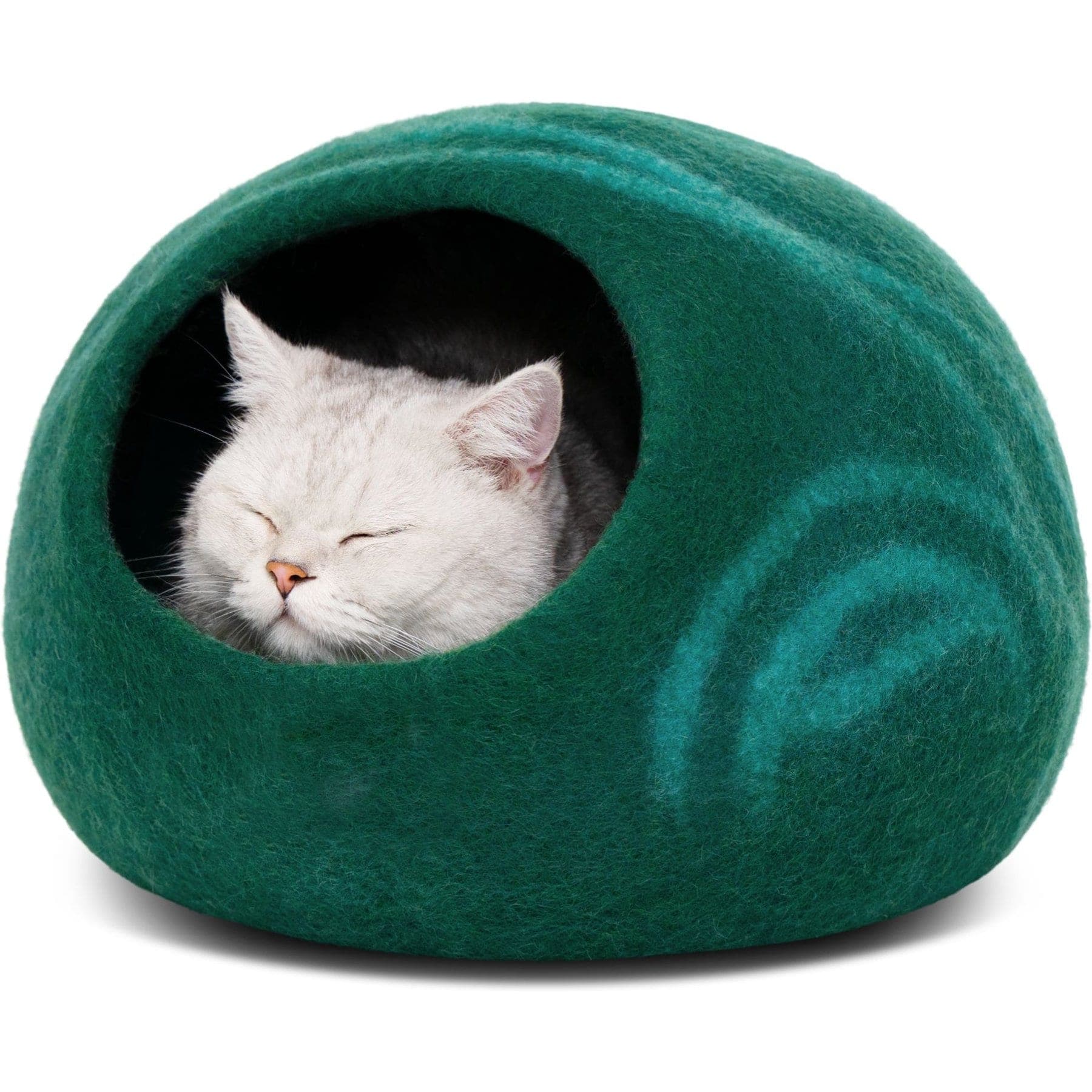
A handcrafted Merino wool felt cave, sold in a Large size, for big cats that like to hide.
Webvet may earn a commission when you click through to Chewy, at no extra cost to you.
The Meowfia Premium Felt Cat Cave Bed is a covered felt cave that Chewy's listing describes as handcrafted by skilled Nepalese artisans from 100% New Zealand Merino wool, which it calls soft and breathable. The Emerald, Large version was listed at $49.99 on Chewy when we checked in October 2026.
The listing says the wool is wet-felted using only soap, water, and pressure, so the cave has no seams or stitches. It suits the classic hider: a cat that wants walls on every side and a single doorway.
The tradeoff is size information. Chewy's description gives no interior or opening measurements for the Large, so measure your cat curled up and compare it with the size Chewy shows before ordering for a big cat.
Travel Cat Donut Cat Hideaway Cave & Scratcher Cat Bed: best cave with a built-in scratch surface
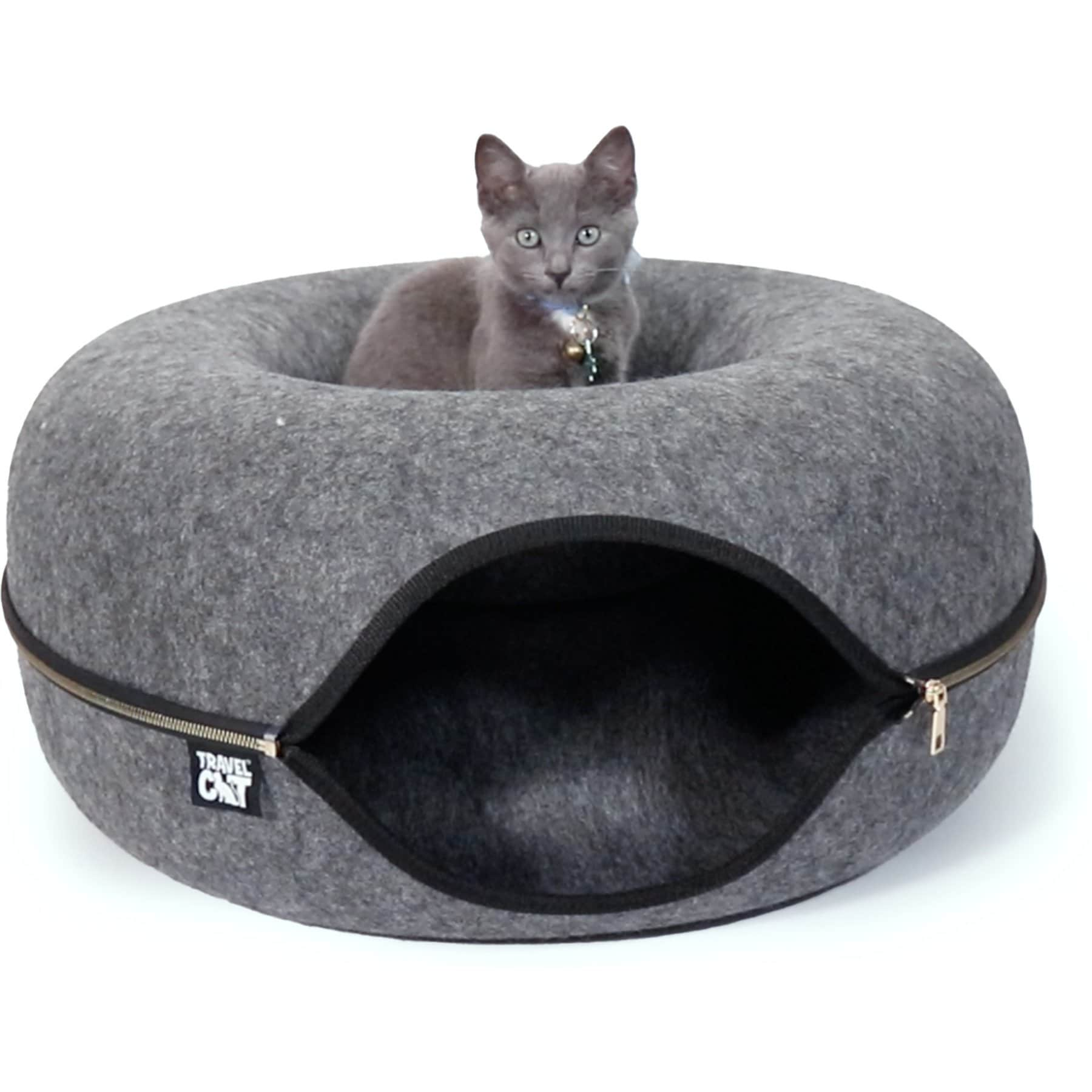
A claw-resistant felt donut cave that doubles as a scratcher for cats that hide and play.
Webvet may earn a commission when you click through to Chewy, at no extra cost to you.
The Travel Cat Donut Cat Hideaway Cave & Scratcher Cat Bed is a donut-shaped felt cave that its listing calls a bed and cave combo for privacy or playtime. Its durable, claw-resistant felt lets a cat scratch without damaging the cave. Chewy listed the Grey version at $64.19 in October 2026.
Travel Cat's PetSmart listing gives the size as 24 x 24 x 11.5 inches and the weight as 2.4 pounds. A third-party review measured it at about 21 inches across, so treat the size as retailer-listed. No maximum cat weight is published.
It suits a hider that also scratches, since one item covers both habits, and the listing says it unzips to pack away for a trip or a quick clean. The tradeoff is cost: it carries the highest listed price of the six picks.
Best Friends by Sheri Meow Hut Covered with Water-Resistant Bottom Cat Bed: best covered hut with a water-resistant base
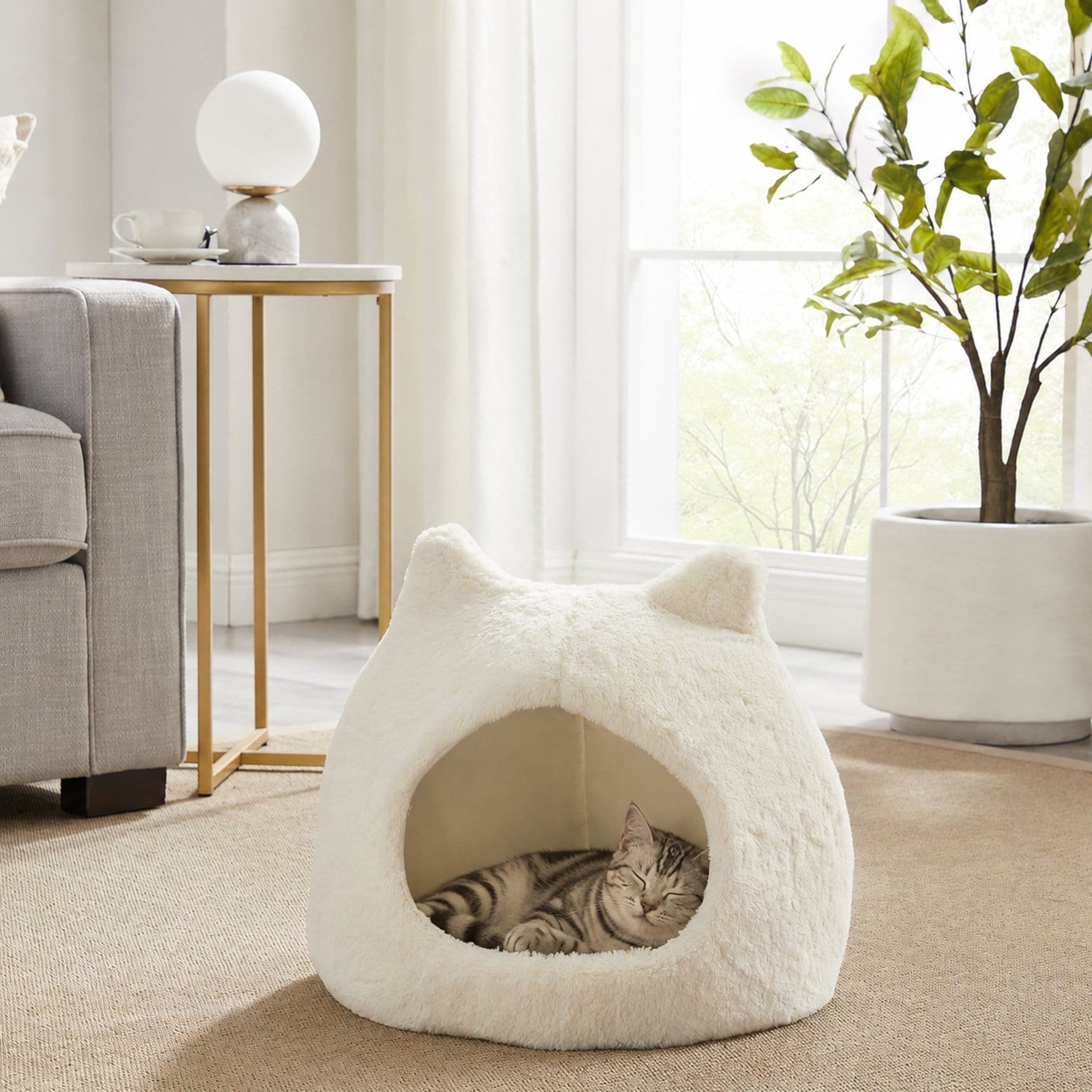
A covered foam hut with soft vegan fur and a water-resistant bottom at a modest price.
Webvet may earn a commission when you click through to Chewy, at no extra cost to you.
The Best Friends by Sheri Meow Hut is a covered cat cave bed with soft padded foam the listing says supports joints, an ultra-soft vegan fur, and a water-resistant bottom. The Standard size was listed at $29.99 on Chewy when we checked in October 2026, the lowest price among the caves here.
It suits a hider that likes a cushioned, fur-soft interior rather than felt or wool. The listing says its 360-degree coverage helps pets feel secure and that the cover is machine washable.
The tradeoff: Chewy's description gives no interior or opening dimensions for the Standard size, so check the measurements on Chewy before buying for a large cat. The joint-support wording is the maker's description, not a veterinary finding.
Armarkat Cuddle Cave Dog & Cat Bed: best enclosed cuddle cave for noise-shy cats
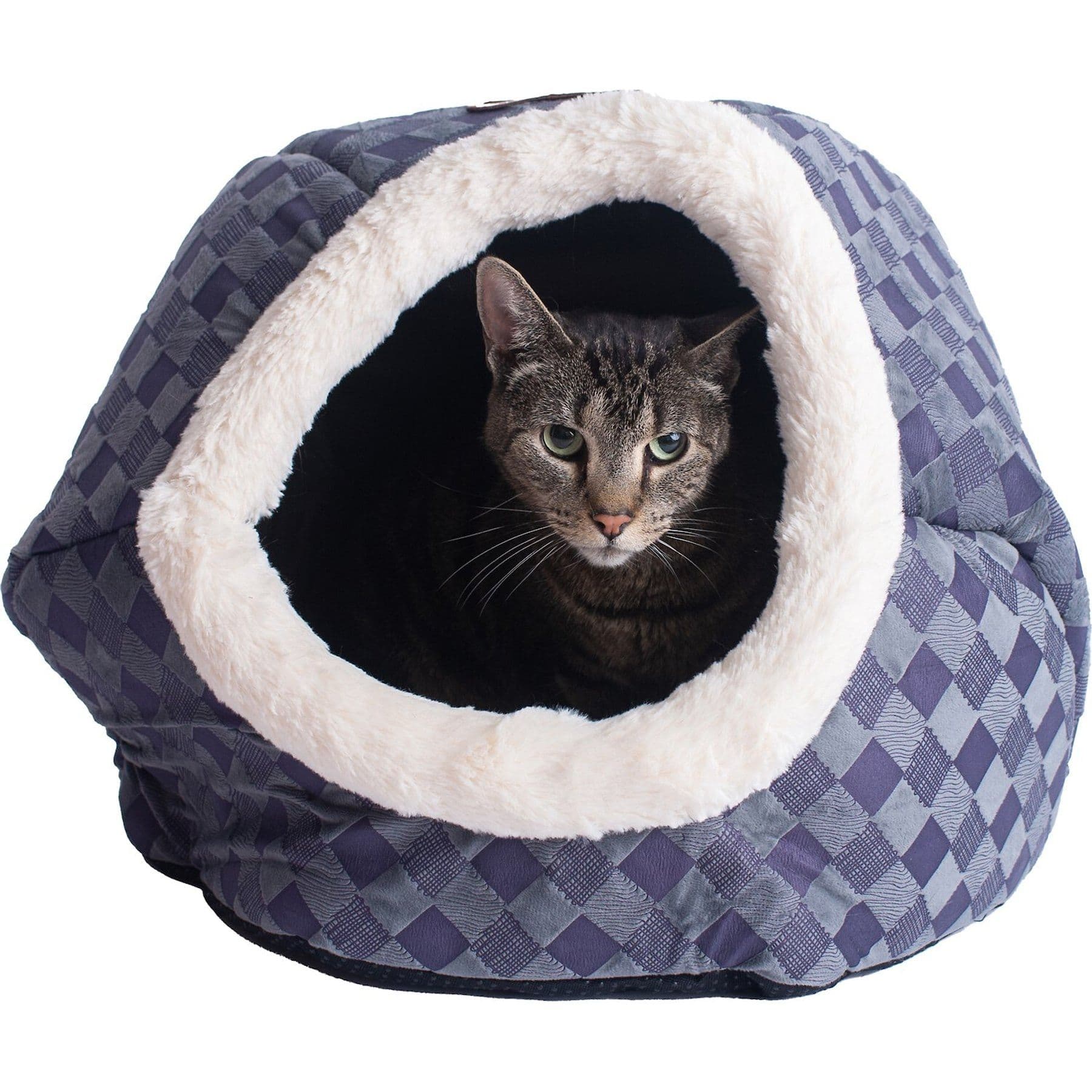
An enclosed cuddle cave that gives a cat a quiet, do-not-disturb spot away from guests.
Webvet may earn a commission when you click through to Chewy, at no extra cost to you.
The Armarkat Cuddle Cave Dog & Cat Bed is an enclosed pet bed that its listing describes as a do-not-disturb zone, giving shelter from noise, house guests, and other unwanted distractions. It is sold for cats and small dogs. The Blue Checkered version was listed at $31.99 on Chewy when we checked in October 2026.
The listing describes supportive poly-fill edges, a soft velvet surface, a machine-washable cover, and a waterproof, anti-skid base that keeps the bed from sliding across the floor.
It suits a cat that disappears when visitors arrive and wants a cuddly, fully enclosed nest. The tradeoff is sizing. Armarkat cave beds vary by model, and PetSmart lists a different design, the gray and silver stripe cave, at 18 x 18 x 16 inches. Confirm the size on this exact listing before ordering.
Frisco Plush Cat Window Perch with Removeable Bolster: best plush window perch
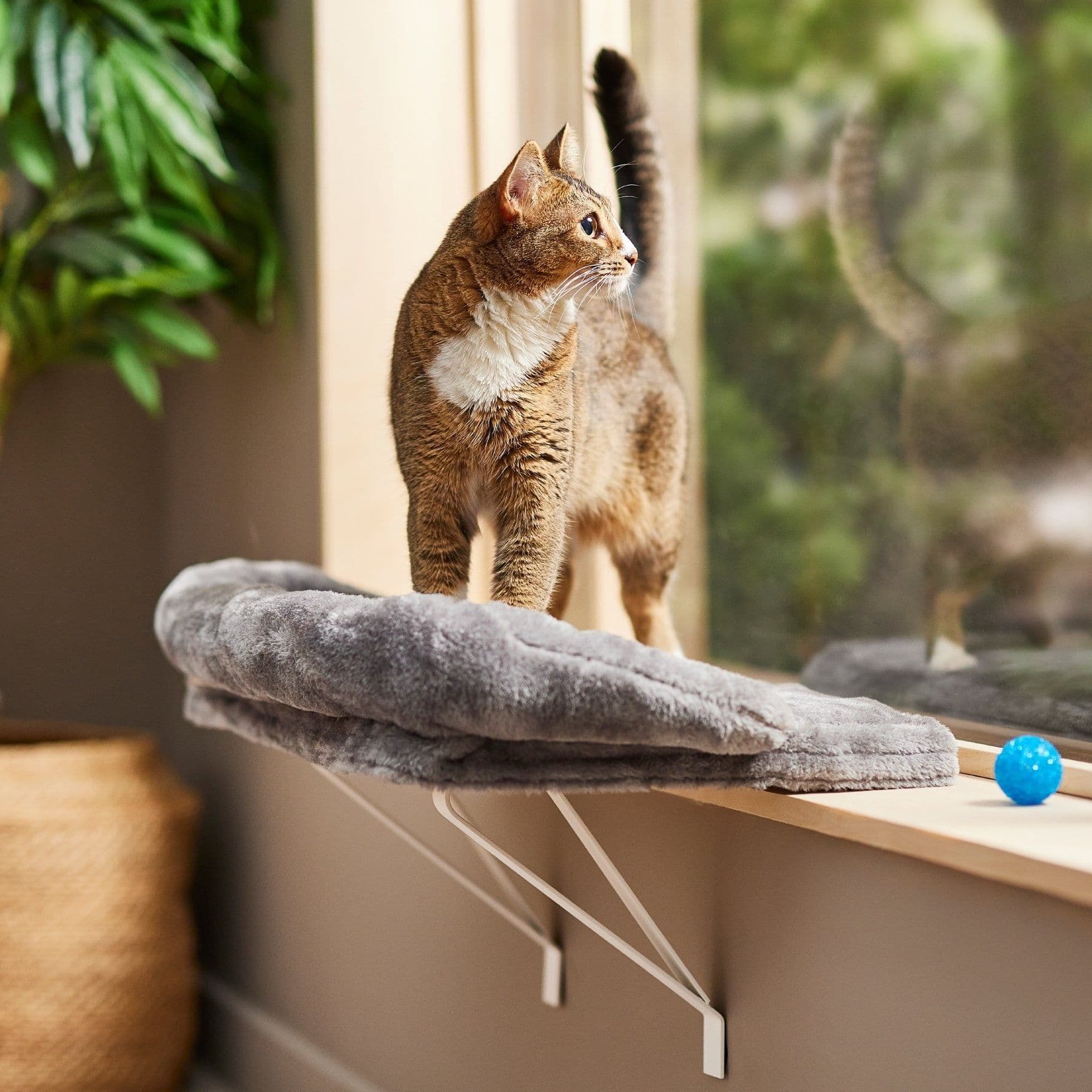
A faux-fur sill perch with a removable bolster for cats that like to watch the street.
Webvet may earn a commission when you click through to Chewy, at no extra cost to you.
The Frisco Plush Cat Window Perch with Removeable Bolster is a sill-style perch with a soft faux-fur cover. Per the listing, its removable bolster adds a bumper of security on whichever side the cat prefers without blocking the view. Chewy listed the Grey version at $34.99 in October 2026.
Chewy's listing says it installs with no tools, secured to the sill with hook-and-loop straps, and both covers are machine washable. A Woman's Day roundup adds that it is about 22 inches wide with a 30-pound weight capacity, anchored to the wall with two metal bars, and advises letting the adhesive cure for a day.
It suits a watcher in a home with a usable window sill. The tradeoff: the capacity figure comes from a secondary roundup rather than the listing, so confirm the weight limit on Chewy, and a window with no sill cannot hold it.
PAWBEE Cat Window Perch: best suction-mounted window perch
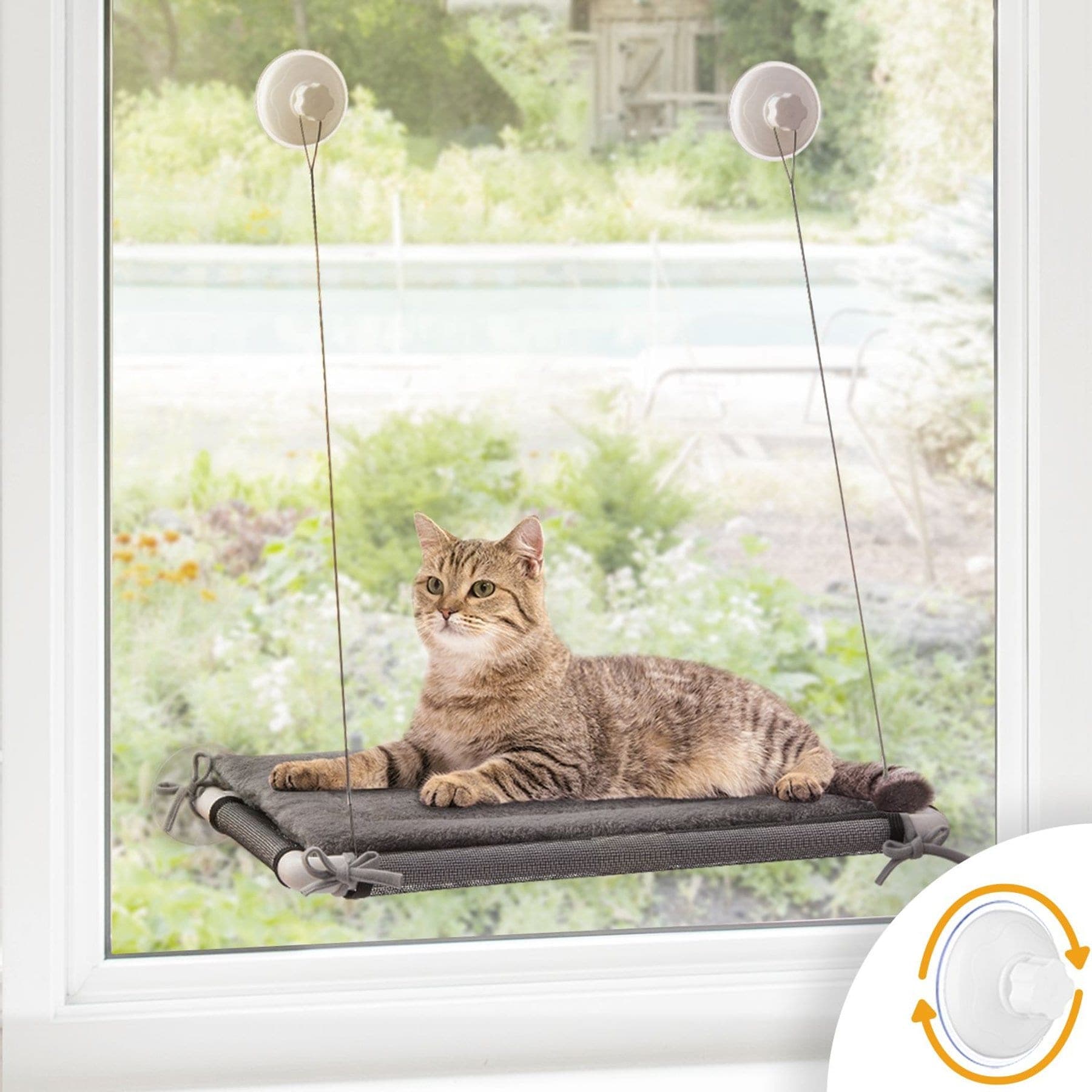
A suction-cup window hammock with steel wires that gives a cat a raised seat on the glass.
Webvet may earn a commission when you click through to Chewy, at no extra cost to you.
The PAWBEE Cat Window Perch is a window hammock that its listing says uses strong suction cups and steel wires for a secure hold, giving a cat a comfortable, elevated spot to relax and look out. It was listed at $24.99 on Chewy when we checked in October 2026.
It suits a watcher that wants a raised hammock seat with a view outside. The listing says it is designed for indoor use and installs on any window ledge.
The tradeoff is that the listing does not publish a weight limit, which matters most for a large cat. Check the current listing for a rating before you mount it.
SponsoredVet care that's always there
Unlimited video calls and messaging with licensed vets for less than a typical vet visit. One membership covers up to five pets.
Use code Pets60
Plans start at $12/month · covers up to 5 pets
- Licensed vets in most states
- Rx for 150+ conditions
- 4.7 on Trustpilot
Felt, wool, or plush: what a cat cave is made of
Our cave picks fall into two camps: felt or wool caves, and plush caves with a soft filling under a fur or velvet cover. No veterinary or university source compares these materials for cats, though Herron and Buffington write that cats seem to prefer comfortable resting options such as pillows or fleece beds.
Felt and wool caves. The Meowfia Premium Felt Cat Cave Bed, Emerald, Large is listed as handcrafted from 100% New Zealand Merino wool, wet-felted with no seams or stitches. The Travel Cat Donut Cat Hideaway Cave & Scratcher Cat Bed, Grey uses felt described as durable and claw-resistant, so the cave doubles as a scratching surface.
Care is the main cost of wool. Cat Cave Co, a maker of handmade felted Merino wool caves, tells owners to:
- hand wash the cave in lukewarm water
- press out the excess water
- reshape the cave while it is still wet
The same maker calls wool anti-microbial and pest-repellent, and Meowfia's listing calls Merino wool naturally antibacterial. No veterinary source supports those claims, so treat them as marketing rather than a reason to pay more for wool.
Plush caves. The Best Friends by Sheri Meow Hut Covered with Water-Resistant Bottom Cat Bed, Standard pairs padded foam with vegan fur, and the Armarkat Cuddle Cave Dog & Cat Bed, Blue Checkered has a velvet surface; both listings call the cover machine washable. A cat that seeks out pillows and fleece may prefer plush.
Warmth is the other reason cats take to an enclosed bed, since PetMD notes they favor hiding spots that are warm. A covered felt or plush cave gives a cat an enclosed, warm-feeling spot to curl up in, but it is no substitute for knowing how cold is too cold for cats in your home.
Sizing a cave for large cats and two-cat homes
No primary veterinary source gives a recommended cave opening or interior size in inches, even for large cats. The AAFP/ISFM guidelines set the rule that matters instead: each safe place should be sized to hold a single cat, and a home should have at least as many safe places as it has cats.
That rule works for every size of cat. For a small cat, a standard cave meets the one-cat rule. For a big cat, look for a large or extra-large covered bed, and compare the listed dimensions with your cat curled up rather than relying on the size name alone.
Large cats are where sizing matters most. The Cat Fanciers' Association notes that mature male Maine Coons commonly reach or exceed 20 pounds.

The Travel Cat Donut Cat Hideaway Cave & Scratcher Cat Bed, Grey is the only cave here whose exact model has published dimensions, at 24 x 24 x 11.5 inches on PetSmart. The Meowfia Premium Felt Cat Cave Bed, Emerald, Large comes in a Large size, but its listing gives no measurements.
Two-cat homes need more than a bigger cave:
- AAFP/ISFM says that in multi-cat households a safe place should have more than one entry, so access cannot be easily blocked by another cat.
- VCA gives the same advice, recommending safe spaces with multiple entryways so one cat cannot trap another.
- A single-door cave is a one-cat bed, so buy one per cat and set them in separate areas.
For kittens and older cats with limited mobility, AAFP/ISFM recommends boxes, perches, and shelves at a relatively low height or reachable by ramps. A floor-level cave suits an older cat better than a raised perch. Our guide to cat mobility in senior cats explains what is normal and what is not as cats age.
Window perches: suction cup, sill-mounted, or screw-in
VCA describes window seats as hanging against the glass of a window. How a cat window perch attaches decides which windows it fits and how much weight it can carry. The three common mounting types work like this:
- Suction cup: the perch hangs from cups pressed onto the glass. The PAWBEE Cat Window Perch pairs strong suction cups with steel wires for its hammock.
- Sill mount: the perch rests on the window sill. The Frisco Plush Cat Window Perch with Removeable Bolster, Grey secures to the sill with hook-and-loop straps and needs no tools, per its Chewy listing.
- Screw-in: the perch attaches with hardware rather than adhesive or suction. None of our picks uses this mount.

Suction ratings vary widely by model. K&H's EZ Mount perch for large cats, listed at PetSmart, rates its four suction cups at 100 pounds, while Chewy listings for similar K&H sill perches reportedly state 50 pounds. No veterinary source compares the three mounts, so trust the listed weight limit on the exact model.
If your window has a usable sill and your cat likes a cushion, the Frisco perch adds a bolster on the sill. If your cat prefers a hammock, the PAWBEE seat relies on suction cups and steel wires instead.
Width matters too: AAFP/ISFM says a perch should be wide and long enough for a cat to fully stretch out.
Perch safety: weight limits, glass, and screens
VCA says to make sure a window seat is approved for the size of your cat to prevent fall accidents, and to check the maximum weight restrictions before mounting it. If you have more than one cat, VCA adds that a shelf should be able to support more than one cat's weight.
The glass is only half the picture. Watchers face a different risk when a window is open. The ASPCA says most cats that suffer high-rise syndrome fall by accident from windows, terraces, and fire escapes, often after losing balance while focused on something such as a bird.
The ASPCA's prevention advice is short:
- Install snug and sturdy screens in all your windows.
- Wedge adjustable screens tightly into the window frame.
- Do not rely on childproof window guards, which the ASPCA says are not safe for cats.
If a fall does happen, get the cat to a veterinarian at once. The ASPCA reports a 90 percent survival rate for high-rise victims who receive immediate and proper medical attention.
A watcher that spends its day at the glass may also test screens and doors. If yours does, read what to do when your cat is trying to escape.
Getting a cat to use a new cave or perch
A new bed is an unfamiliar object, and cats do not always welcome those. Herron and Buffington warn that imposing unfamiliar, undesirable resources on a cat may create an additional stressor, so the aim is to make the bed attractive and let the cat choose it.
AAFP/ISFM guidance offers practical ways to make a new bed feel familiar:
- Rub the cave or perch with a cloth that has touched your cat's scent glands during a positive moment with you.
- Put the cat's own bedding, or an item of clothing that smells of a familiar person, inside the cave.
- In a multi-cat home, set each safe place in a separate area rather than side by side.

A few habits on your side help too. Set the cave where your cat already naps or hides, and mount a perch at a window it already watches. Do not push the cat inside or block the doorway; a cat that is placed in a cave has not chosen it.
The same scent approach works for any new item, whether that is a cat carrier, a harness, or a water fountain.
Cat cave bed questions
Frequently Asked Questions
Are cave beds good for cats?
Yes, as a hiding place. AAFP/ISFM guidance notes that even a cardboard box on its side, with easy access and a roof, gives a cat a safe place from a perceived threat, and a cave bed does the same job with padding.
The Merck Veterinary Manual says a variety of safe hiding locations at different heights can help cats feel secure and reduce their stress. That sense of security is the benefit. A sudden change in hiding behavior, though, is a reason to call your veterinarian.
What size cat cave does a large cat need?
No veterinary source sets an opening or interior size in inches. The AAFP/ISFM rule is that a safe place should hold a single cat.
For a large cat, compare listed dimensions with your cat curled up. The Travel Cat donut is listed at 24 x 24 x 11.5 inches at PetSmart, though a third-party measurement put it nearer 21 inches across. Check that the opening lets your cat walk in without squeezing.
Do suction cup window perches hold a cat?
They can, if the rating fits the cat. K&H rates the four suction cups on its EZ Mount large-cat perch at 100 pounds, while similar K&H sill perches on Chewy reportedly list 50 pounds.
Because ratings differ by model, read the weight limit on the exact perch, as VCA advises, and pick one above your cat's weight. PAWBEE's listing text, for example, does not state a figure.
Are felt cat caves worth it?
They suit a cat that likes a fully enclosed cave. The Meowfia cave is listed as 100% Merino wool, wet-felted with no seams or stitches, and Travel Cat describes its felt as claw-resistant, so a cat can scratch it.
Among our picks, the felt caves cost more than the plush ones: Chewy listed the Meowfia at $49.99 and the Sheri Meow Hut at $29.99 in October 2026. No veterinary source shows felt is better for cats than plush.
How do I get my cat to use a cave bed?
Start with placement. Put the cave where your cat already naps or hides, low enough to reach easily if it is older, and away from other cats' safe places. Then add a familiar scent, such as its own bedding.
Catnip can help some cats. VCA says catnip is harmless for most cats, but a study in PubMed Central found that one in three cats did not respond to it, so it is not a sure bet.

Editor
The Webvet Editorial Team is the in-house group of pet-care editors and writers behind Webvet, operated by Smart Pet Collective. The team researches, writes, and maintains Webvet's pet health, behavior, and medication content. Every article follows a defined editorial process: research from reputable veterinary and scientific sources, careful drafting, mandatory review of medical content by a credentialed veterinarian, and dated publication. Health and medication articles are medically reviewed by a licensed veterinary professional before they go live and are kept current over time.
Veterinarian · BVMS MRCVS
Dr. Pippa Elliott, BVMS, MRCVS, is a veterinarian with nearly 30 years of experience in companion animal practice. Dr. Elliott earned her Bachelor of Veterinary Medicine and Surgery from the University of Glasgow. She was also designated a Member of the Royal College of Veterinary Surgeons. Married with 2 grown-up kids, Dr. Elliott has a naughty Puggle named Poggle, 3 cats and a bearded dragon.
Related reading

Best Cat Beds: Vet-Reviewed Picks for Every Sleeping Style

Best Chew Proof Dog Bed Picks: Vet-Reviewed Beds That Survive Heavy Chewers

Best Couch Cover for Dogs: Waterproof, Washable Picks That Stay Put
