Rabies in Dogs: Signs, Exposure Steps, and Prevention
Learn possible rabies signs in dogs and what to do after exposure. Understand the separate rules for a healthy biting dog and a pet exposed to rabies.

BVMS MRCVS
Medically reviewed by Dr. Pippa Elliott, BVMS MRCVS · Last reviewed

This article contains affiliate links. Webvet may earn a commission when you buy through them, at no extra cost to you.
Rabies in dogs is a preventable viral disease that becomes almost always fatal after clinical signs begin. Warning signs can include a sudden behavior change, trouble swallowing, drooling, unsteady movement, seizures, or progressive paralysis. A dog does not have to become aggressive or foam at the mouth to raise concern.
Call your veterinarian promptly after a possible rabies exposure, including contact with a bat or other potentially infected mammal. Call before arriving if your dog has neurological signs or unusual aggression. If a person was bitten, scratched, or exposed to saliva through broken skin, eyes, or mouth, seek medical advice promptly too.
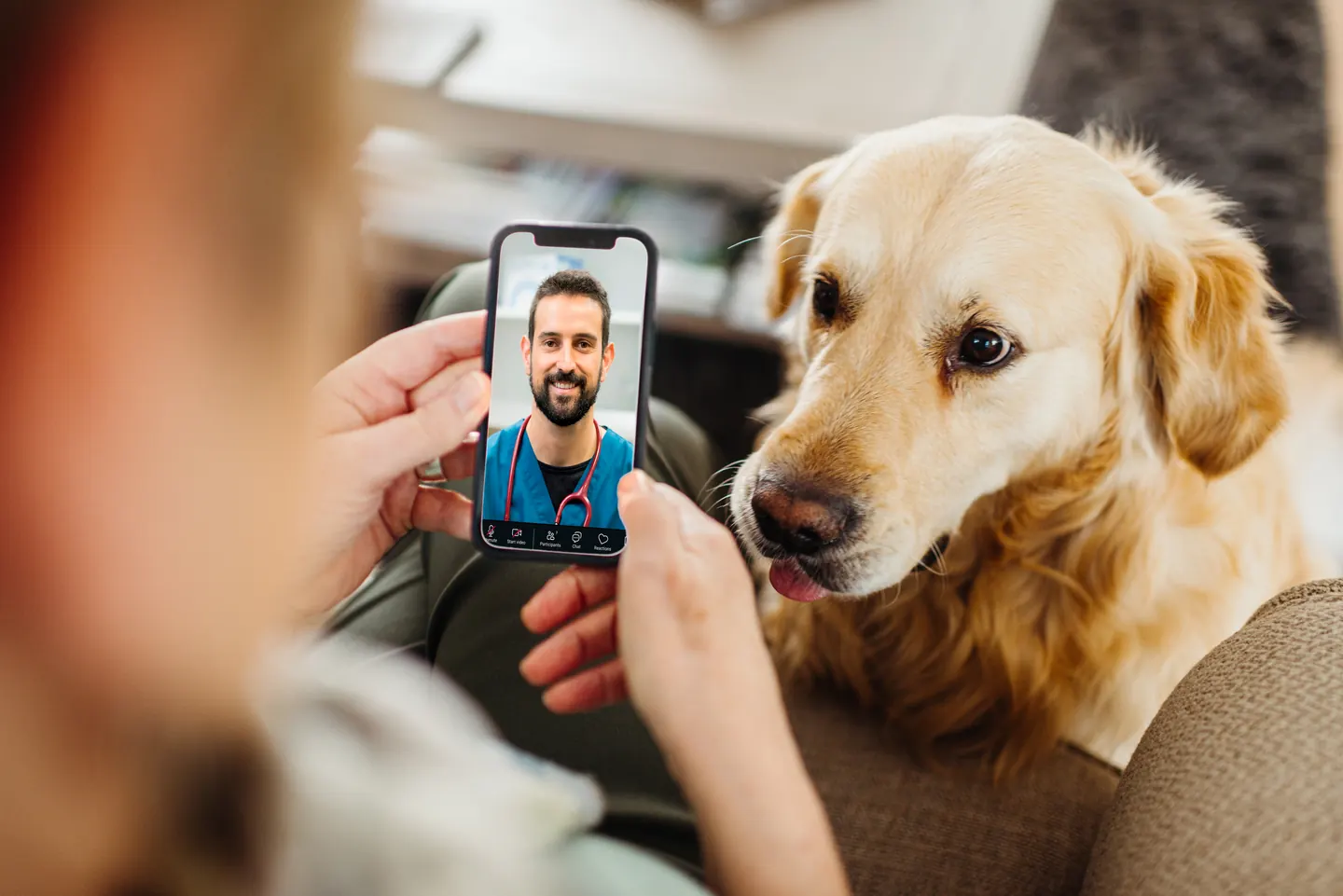
 Sponsored
Have a health question about your dog?
Talk to a licensed vet at Dutch over video or message, including nights and weekends.
Use code Pets60
Plans start at $12/month · covers up to 5 pets
- Licensed vets in most states
- Rx for 150+ conditions
- 4.7 on Trustpilot
What to do after possible rabies exposure
After possible rabies exposure in dogs, call your veterinarian and local animal-control or public-health officials promptly. Describe the contact, the other animal involved, and your dog’s vaccination history. Ask how to keep people and pets safe while help is arranged. Do not wait for symptoms just because your dog looks well.
- 1Call after possible exposure even when your dog is vaccinated and looks well.
- 2Avoid the mouth and saliva; do not force water, food, or medication into a dog with swallowing problems.
- 3People need their own medical assessment after a bite or relevant saliva contact. The dog’s observation plan does not replace that care.
Make the first call before attempting transport
Tell the clinic that rabies is a concern so staff can give specific arrival instructions. Do not walk a suspect dog into a crowded waiting room or ask another person to hold its mouth open. If your dog is already safely separated, keep children, visitors, and other pets away while you obtain advice.
Gather a concise history:
- When and where the contact happened.
- Whether the other animal was a bat, raccoon, skunk, fox, dog, or another species.
- Whether a bite, scratch, or saliva contact was seen or merely possible.
- The most recent rabies vaccination date and the clinic that gave it.
- Any people or animals that had contact with your dog afterward.

Do not capture wildlife, retrieve a carcass, or collect a saliva sample yourself. Call animal control for those decisions. If the dog cannot be handled safely, say so rather than risking a bite to put on a leash or muzzle.
The AVMA’s rabies brochure recommends immediate veterinary contact and reporting after a pet is bitten.
How do dogs get rabies?
The cause of rabies is a virus, and its development in dogs follows infection of the nervous system. This disease process, or pathogenesis, is different from a parasite’s life cycle. A dog can have a relevant saliva exposure without a witnessed bite.
Discuss the actual contact instead of assuming every risk leaves a visible wound.
Saliva and susceptible tissue
Dogs usually get rabies through a bite from an infected mammal. Virus in the animal’s saliva enters tissue and travels through the nervous system. Direct saliva contact with broken skin or mucous membranes can also transmit infection. Simply being near an animal or touching an uncontaminated object is not the same exposure.
Rabies affects mammals, and wildlife remains the main source of reported animal rabies in the United States. The CDC identifies bats, raccoons, skunks, and foxes as important US sources. Dogs can be infected even though dog-associated rabies has been controlled in this country. The risk is different in many other parts of the world.
House dogs, outdoor dogs, and puppies
A house dog can encounter a bat indoors, escape through a door, or meet wildlife during a brief trip outside. Indoor living does not guarantee zero risk. A dog on a leash can still investigate an injured animal before the owner realizes what it is. Supervision and current vaccination both matter.
Puppies and small dogs are not exempt. Do not assume a pup is too young to become infected or that a gentle dog cannot have a significant exposure. For a newly adopted dog, obtain the actual vaccination certificate and history.
An uncertain record should be discussed with the veterinarian before, and urgently after, a concerning encounter.
Risk is about the contact, not a breed or percentage
US surveillance describes a population, not the odds for one dog. The CDC’s public-health overview reports that more than 90% of animal cases occur in wildlife. It does not follow that a dog bitten by a rabid animal is safe because canine cases are comparatively uncommon.

A plain 6-foot leash for keeping a dog within reach on walks, so it cannot investigate an injured or unfamiliar animal before you notice.
Webvet may earn a commission when you click through to Chewy, at no extra cost to you.
Tell the clinic about international travel, importation, and where the dog lived previously. Local rabies patterns and the animal’s history can change the assessment. Rabies control in the United States does not mean the virus is eradicated worldwide or that all domestic dogs have the same exposure risk.
Signs and stages of rabies in dogs
The initial prodromal stage can look like a general change in health or behavior. The paralytic form is also called dumb rabies; “dumb” refers to its quieter presentation, not an animal’s intelligence. These are descriptions of possible disease patterns. They are not a checklist that proves a dog has rabies.
People often search for “rabies symptoms,” while veterinarians describe the observable changes as clinical signs. The earliest warning may be behavioral rather than a striking physical change. A small dog with symptoms after being bitten needs assessment, but the same signs can occur with other illnesses. A beginning symptom does not confirm the virus.
Early signs of rabies in dogs can be subtle and nonspecific. A normally social dog may withdraw, a quiet dog may become restless, or appetite and behavior may change. As disease progresses, trouble swallowing, excess saliva, staggering, weakness, seizures, and paralysis can occur. Not every infected dog follows one visible sequence.
| Possible rabies stage or pattern | Examples of signs | Appropriate response |
|---|---|---|
| Prodromal, early illness | Uncharacteristic withdrawal, restlessness, reduced appetite, behavior change | Call the clinic, including any exposure history |
| Furious form | Agitation, unusual aggression, biting, excessive reactivity | Keep people and animals away; get professional help |
| Paralytic or “dumb” form | Weakness, swallowing difficulty, drooling, jaw or limb paralysis | Do not reach into the mouth; call urgently |
| Advancing neurological disease | Unsteady movement, seizures, progressive paralysis | Urgent veterinary and public-health assessment |
| Any concerning signs after a wildlife encounter or bite | One sign or a combination, without a predictable order | Call before handling or transporting the dog |
The prodromal, furious, and paralytic descriptions explain possible patterns, not three stages an owner must wait to see. A dog can have the paralytic form without obvious aggression. Do not wait for a list of ten signs or a particular “late stage” before calling about an exposed or neurologically abnormal dog.
Drooling and swallowing problems
Excessive saliva or a dropped jaw may make an owner think something is stuck in the throat. Do not open the mouth or reach inside to check when rabies could be involved. Trouble swallowing and mouth handling create exposure concerns.
Explain the signs by phone so the veterinary team can direct the next step safely.
Pictures and videos cannot tell whether drooling comes from rabies, oral pain, nausea, a toxin, or another cause. A dog does not have to fear water or visibly foam at the mouth. Drinking, eating, or responding to a familiar person on one occasion does not clear a dog with a relevant exposure history.
Conditions that can resemble parts of the picture
Seizure disorders, toxins, trauma, distemper, and other neurological illnesses can cause overlapping signs. A cough alone or ordinary defensive behavior does not identify rabies. Differential diagnosis requires professional assessment with the exposure history included. Do not decide that a more familiar illness rules out the need to report wildlife contact.
For example, an outdoor dog can have a separate wildlife injury such as a snake bite. That guide explains a different emergency. Tell the veterinarian what animal you actually saw, if any, and which signs followed. An unidentified encounter should not be relabeled as either rabies or a snake bite without evidence.
 Sponsored
Vet care that's always there
Unlimited video calls and messaging with licensed vets for less than a typical vet visit. One membership covers up to five pets.
Use code Pets60
Plans start at $12/month · covers up to 5 pets
- Licensed vets in most states
- Rx for 150+ conditions
- 4.7 on Trustpilot
Rabies incubation and progression
Rabies symptoms in dogs do not follow an exact owner-visible timeline. The onset of illness can be delayed, and how soon symptoms appear or develop varies. Record when signs first show and when exposure may have happened. Do not wait until a particular day to report a bite or wildlife encounter to the clinic.
The rabies incubation period is the delay between infection and clinical signs. It is usually measured in weeks to months, not hours after a bite. VCA’s canine rabies reference describes three to 24 weeks or longer. The amount and location of exposure can affect how quickly illness develops.
| Part of the timeline | General timing | What the timing means |
|---|---|---|
| Incubation before animal signs | Three to 24 weeks or longer; individual timing varies | Do not wait for symptoms after exposure |
| Clinical illness after signs begin | Usually progresses over days | Urgent professional assessment; no effective cure |
| Possible human exposure | Seek medical advice promptly, before symptoms | An animal timeline cannot decide whether a person needs prevention |
| See a vet after a concerning animal contact | Call promptly even if the pet looks normal | Authorities choose the appropriate observation or quarantine plan |
Clinical illness progresses rapidly
After clinical signs start, deterioration is generally rapid and death usually follows within days. A dog living normally during incubation is different from a dog surviving established clinical rabies. That distinction matters when someone asks how long a dog can live with rabies without symptoms or without treatment.
Neither situation justifies delaying an exposure report.
Do not build a home countdown
An apparently asymptomatic dog may be incubating infection. The date an owner sees an early warning sign does not necessarily reveal when infection occurred. Likewise, a normal first week after a bite does not establish that the exposure was harmless. Follow the monitoring or quarantine instructions selected for the actual situation.
Keep a written record of:
- Known or suspected exposure dates.
- Rabies vaccinations and available certificates.
- New behavior, appetite, swallowing, or movement changes.
- Any bites, scratches, or saliva contact involving people or other animals.
If an observed dog becomes ill, call immediately rather than waiting for the next scheduled check. Do not test coordination, touch the mouth, or deliberately provoke a response for a video. A safe description of spontaneous behavior is enough to begin the conversation. The professionals determine what examination or testing is needed.
Can people get rabies from dogs?
Rabies transmission from dogs to humans depends on a relevant exposure, not simply living with a pet. Dogs can transmit the virus while infected. Biting is an important route, but signs in the animal cannot alone determine a person’s risk.
Tell the medical team whether skin broke and whether infectious saliva could have entered it.
Different kinds of saliva contact
People can get rabies through a bite from an infected dog or other relevant contact with infectious saliva. Dog nails do not create rabies, but a scratch can break skin and may involve saliva. Saliva entering a wound, the eyes, or the mouth matters; saliva on intact skin is not the same exposure.
Scratches also need assessment when the skin breaks and saliva contamination is possible.
The CDC recommends prompt assessment after possible exposure. A clinician considers the wound, the animal, local risk, and whether observation or testing is possible. Human post-exposure prophylaxis, or PEP, can prevent rabies before symptoms start when indicated and given correctly. A pet’s vaccine is not a substitute for human treatment.

What to report after a bite
Give the healthcare professional the time and location of the bite, whether skin broke, the dog’s owner or location if known, and vaccination records if available. Do not delay your own care while trying to find paperwork. A familiar dog, a small wound, or a reassuring photograph cannot replace an exposure assessment.
If a human develops clinical rabies, the illness is almost always fatal. The goal is therefore prevention after exposure and before disease, not watching for a human symptom timeline. Ask the medical team whether PEP is needed and follow the schedule they prescribe. It is not something to administer or dose yourself.
Observation and quarantine: different situations
The rabies quarantine period for dogs depends on the exposure situation and vaccination history. Public-health officials decide which plan applies.
This exposure comparison separates the healthy biting animal from the pet exposed to rabies. The 10-day rule answers a question about infectiousness at a past bite; longer monitoring or quarantine addresses the exposed pet’s future risk. Identify which situation occurred before applying a timeframe, and let the responsible authority direct the plan.
The healthy biting animal and the exposed pet are two different situations. A 10-day observation can help determine whether a healthy dog was infectious when it bit a person. It is not the incubation period after the dog was bitten by a rabid animal. Confusing these questions can create a dangerous delay.
| Situation | General US guidance | Important limit |
|---|---|---|
| Healthy dog bites or otherwise exposes a person | Official confinement and observation for 10 days may be ordered | The person still seeks prompt medical advice |
| Currently vaccinated dog exposed to rabies | Immediate booster and monitoring for 45 days | Report illness and follow the authority’s supervision instructions |
| Previously vaccinated but overdue dog is exposed | Case-specific review; often a booster and monitoring | Records and exposure details influence the decision |
| Never-vaccinated dog exposed to rabies | Euthanasia may be recommended; if declined, strict quarantine generally 4 months with immediate vaccination | Authorities approve the conditions; ordinary home supervision is different |
| Dog develops signs consistent with rabies | Urgent assessment and testing decisions | Do not handle, transport, or release without instructions |
The CDC’s veterinary guidance supplies these categories. Public-health and animal-health officials apply them to the case and local requirements. Do not assume a yard, crate, or spare room qualifies as strict quarantine. Ask where the dog may stay, who may handle it, and exactly what changes must be reported.
Why booster instructions can sound different
A vaccinated dog exposed to rabies generally receives an immediate booster. In contrast, CDC advises against vaccinating a healthy biting dog during its 10-day observation because a vaccine reaction could confuse the assessment. These instructions address different events. Tell the veterinarian both histories if the dog was exposed and later bit someone.
Do not release, rehome, board, or transport an animal under an official restriction without guidance. A dog that looks better or remains healthy still needs to complete the ordered process. Keep contact details for the supervising service so you can report an illness promptly rather than search for help after the office closes.
Testing and treatment for rabies in dogs
The prognosis for clinical rabies is extremely poor, with a mortality rate approaching 100%. Dogs do not ordinarily survive established disease. They cannot be treated or cured with a household remedy. Ask the veterinarian to explain how the symptoms and exposure history affect the investigation, and what testing or protective measures are needed next.
Testing for rabies in dogs is not a routine blood test or a safe home check. CDC laboratory guidance states that there are no approved methods for testing live animals to rule out rabies. Diagnosis requires brain tissue after death, with collection and testing managed by trained professionals.
A rabies titer or antibody test assesses an immune response for specific purposes, such as some travel requirements. It does not provide the same answer as testing an animal for rabies infection. Clinical examination and exposure history guide the official response, but neither a normal-looking dog nor an antibody result is a universal clearance.
Is there a cure?
There is no effective cure for a dog once clinical rabies develops. Antibiotics, household remedies, and supportive care do not reverse the disease. Post-exposure management of a pet is a prevention and public-health decision; it is not the same as human PEP and should not be described as a guaranteed rescue treatment.
When rabies is strongly suspected, authorities and the veterinarian may recommend euthanasia and testing. This protects people and animals and avoids prolonged suffering. Ask for an explanation of the exposure concern and the follow-up plan for anyone who had contact. Do not handle a dog that dies unexpectedly while rabies is under consideration.
Rabies vaccination and prevention
Rabies vaccines prevent rabies in dogs by preparing an immune response before infection. Ask the clinic about the age for the first injection, the shot schedule, booster frequency, and how long each vaccine is good for.
These preventive questions belong with your dog’s records and local rules, not a guessed schedule based on another pet.
Follow the vaccine schedule
Our rabies vaccine guide for dogs covers schedules, first-shot timing, one-year and three-year boosters, legal requirements, and safety. Keep a copy of the certificate and ask the clinic when the next dose is due. A tag alone may not supply all the documentation needed after an exposure.
The vaccine guide also addresses side effects and reactions. Discuss a previous allergic reaction, delayed symptoms, seizures, an older dog’s health, or concerns about long-term negative effects with the veterinarian before the next appointment. Do not independently change the dose, route, or interval.
Vaccination prevents disease; it does not cause the rabies infection it protects against.

Cornell’s rabies prevention guidance emphasizes vaccination and limiting exposure. Put those principles into daily routines:
- Supervise dogs outside and use a leash where needed.
- Keep dogs away from sick, injured, unusually tame, or dead wildlife.
- Secure food and garbage that attract wild animals.
- Address bat entry into the home through appropriate professional help.
- Check destination-specific veterinary requirements before international travel.
Report exposure even when the vaccine is current. Rare vaccine failures occur, and a vaccinated exposed dog may still need a booster and monitoring. Resolve missing certificates before an emergency whenever possible. A clear vaccination history makes a difficult public-health decision easier to assess, but it does not remove the need to call.
Frequently asked questions
Can a house dog get rabies?
Yes, a house dog can get rabies after an exposure. An indoor dog can encounter a bat, escape, or have wildlife contact during time outside. Living indoors reduces some opportunities for exposure but does not eliminate them. Keep vaccination current and call after a concerning encounter.
Do not assume the absence of a visible bite wound or immediate symptoms proves the dog was not exposed.
Is 7 days too late for rabies vaccine after a bite exposure?
Do not assume seven days is too late for rabies vaccine after a bite exposure, and do not delay further. Seek medical advice now about a human bite exposure, even if you feel well. A healthcare professional and public-health authority decide whether PEP is indicated. The dog needs its own veterinary assessment.
Neither the person nor the pet should wait for symptoms before asking for help.
How would you know if a dog has rabies?
You cannot know that a dog has rabies from behavior or a photograph alone. Testing, exposure history, and professional assessment have different roles in the investigation. Sudden neurological signs or a relevant bite history warrant a call before handling.
There is no approved home test or simple live-animal test that safely clears a suspect dog of infection.
Can a vaccinated dog get rabies?
Vaccine failures are rare, but a vaccinated dog can still require rabies assessment. Report exposure promptly and provide the certificate, including previous doses if available. A currently vaccinated dog exposed to rabies generally needs an immediate booster and monitoring under official guidance.
Do not decide to skip reporting because the dog looks well or received a recent shot.

Editor
The Webvet Editorial Team is the in-house group of pet-care editors and writers behind Webvet, operated by Smart Pet Collective. The team researches, writes, and maintains Webvet's pet health, behavior, and medication content. Every article follows a defined editorial process: research from reputable veterinary and scientific sources, careful drafting, mandatory review of medical content by a credentialed veterinarian, and dated publication. Health and medication articles are medically reviewed by a licensed veterinary professional before they go live and are kept current over time.
Veterinarian · BVMS MRCVS
Dr. Pippa Elliott, BVMS, MRCVS, is a veterinarian with nearly 30 years of experience in companion animal practice. Dr. Elliott earned her Bachelor of Veterinary Medicine and Surgery from the University of Glasgow. She was also designated a Member of the Royal College of Veterinary Surgeons. Married with 2 grown-up kids, Dr. Elliott has a naughty Puggle named Poggle, 3 cats and a bearded dragon.


