Dog Sprayed by Skunk: The De-Skunk Recipe That Works and When to Call the Vet
Skunk spray is an oily sulfur compound that water and tomato juice only spread around. The fix is a fresh peroxide and baking soda mix, with the eyes flushed first. Here is the exact recipe, what not to do, and when to call a vet.

BVMS MRCVS
Medically reviewed by Dr. Pippa Elliott, BVMS MRCVS · Last reviewed

This article contains affiliate links. Webvet may earn a commission when you buy through them, at no extra cost to you.
Dog sprayed by skunk? Keep the dog outside, check the eyes for redness and tearing, then mix fresh 3% hydrogen peroxide, baking soda, and a little dish soap. That combination neutralizes the smell. Water alone, tomato juice, and vinegar do not.
A dog sprayed by a skunk is usually dealing with a terrible odor plus some skin and eye irritation, and most cases end with a good wash. A small number of dogs react more seriously, so this guide covers the exact recipe, how to protect the face, and the signs that mean a vet visit rather than another bath.
What to do immediately after a dog gets sprayed by a skunk
- 1The immediate first steps: keep the dog outside, check the eyes, and put on rubber gloves.
- 2The exact recipe: 1 quart of fresh 3% hydrogen peroxide, 1/4 cup baking soda, and 1 to 2 teaspoons of dish soap.
- 3Do not wet the coat with plain water first, and never store the mixture in a closed bottle.
- 4Watch your dog for 1 to 3 days for weakness, pale gums, or dark urine.
When your dog got sprayed by a skunk, speed matters more than perfection. Skunk spray is an oily mix of sulfur compounds called thiols. dvm360 names two thiols as responsible for the repellent odor, which is why skunk smell on a dog reads as burnt rubber, sulfur, and garlic all at once.
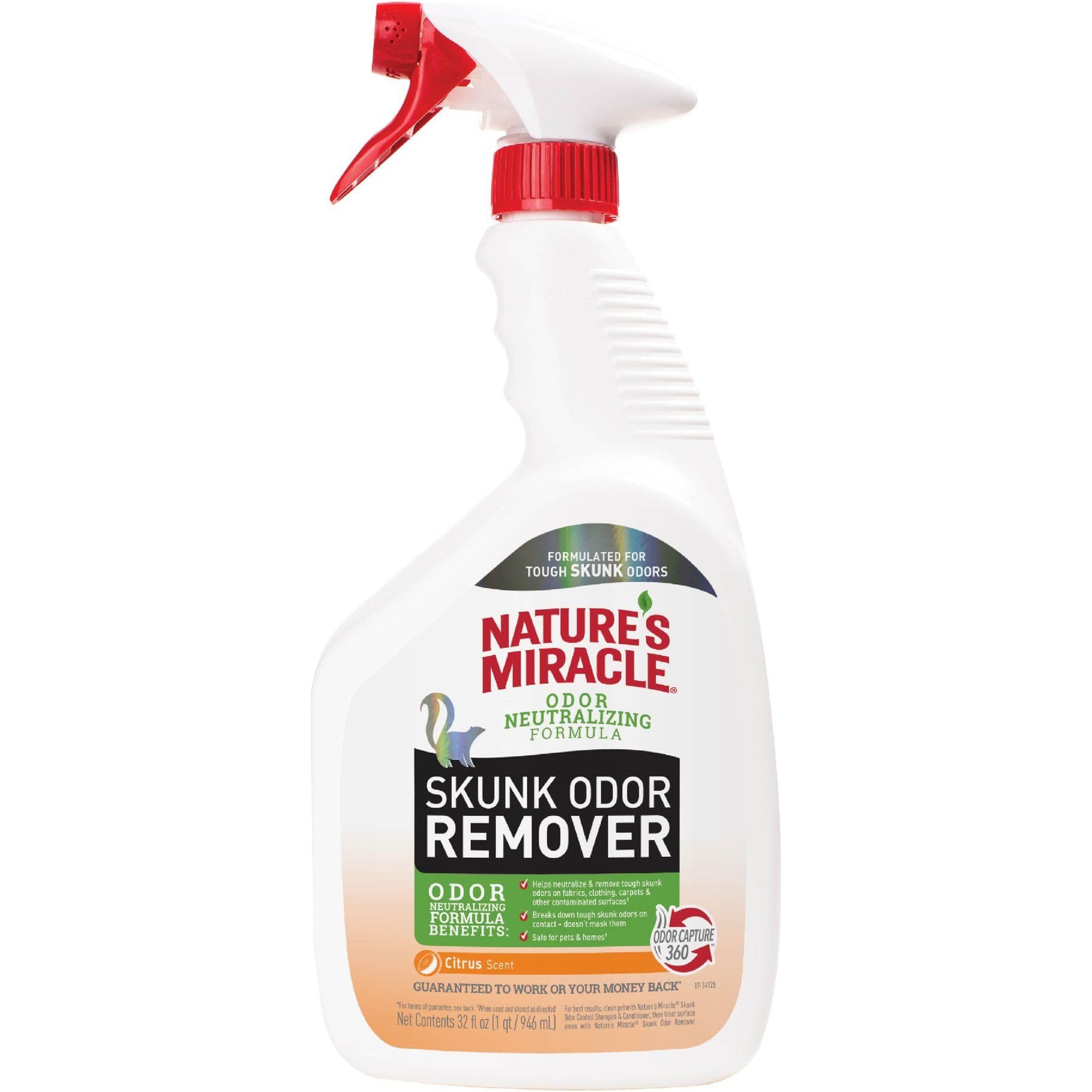
A skunk odor remover to keep by the door for the cleanup after a spraying; follow the label for the surfaces it suits.
Webvet may earn a commission when you click through to Chewy, at no extra cost to you.
What to do immediately after a dog gets sprayed by a skunk?
The best way to clean a dog sprayed by a skunk starts outside. Keep the dog outdoors so the oil does not spread to furniture, put on rubber gloves, and check the face for redness, swelling, and heavy tearing. Then mix the peroxide recipe and use it right away. The American Kennel Club warns against a plain water rinse first, because the compounds can reactivate with water.
Here is what to do if your dog gets sprayed by a skunk, in order:
- Contain the dog. Leash or hold the dog outside. A dog that gets skunked will rub its face on carpet and bedding if it can.
- Check the eyes and mouth. dvm360 reports that eye swelling, conjunctivitis, drooling, and squinting are commonly noted in sprayed animals. If spray hit the eyes, flush them with plenty of cool water first, and never put the peroxide mix near them.
- Gear up. Humane World for Animals advises rubber gloves and mixing the solution right away.
- Skip the hose. Treat the dog with the solution before any plain water bath.
Most cases stay mild. The Pet Poison Helpline says most exposures leave a pet covered in a strong smell with skin and eye irritation. If your dog keeps getting sprayed by a skunk, the prevention section below matters as much as the bath.
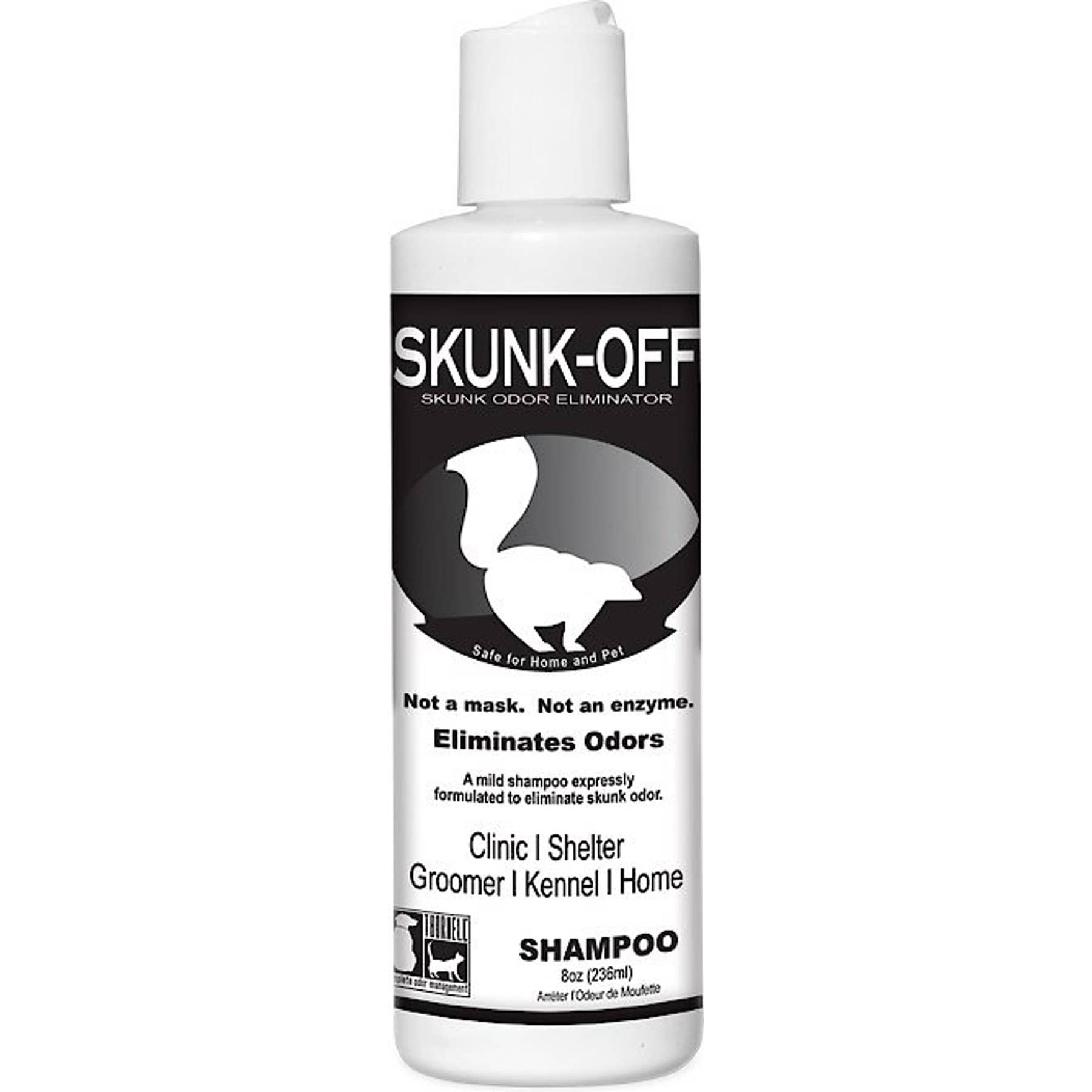
A ready-made skunk shampoo for owners who would rather not mix the peroxide recipe themselves, or who want a follow-up wash.
Webvet may earn a commission when you click through to Chewy, at no extra cost to you.
The de-skunk recipe that actually works
The best remedy is a homemade skunk shampoo for dogs that oxidizes the thiols instead of covering them up. The formula traces to chemist Paul Krebaum, who adapted an industrial odor-removal process after a colleague's dog was sprayed. The McGill Office for Science and Society notes testing showed 3% peroxide was safe for animals, and baking soda replaced a harsher chemical.
| Step | What to use | Why it matters | Caution |
|---|---|---|---|
| Base | 1 quart (4 cups) fresh 3% hydrogen peroxide | Oxidizes the thiols so they no longer smell | Use 3% only; peroxide can bleach fur |
| Booster | 1/4 cup baking soda | Raises the pH so the reaction works | Mix in an open bowl, never a bottle |
| Degreaser | 1 teaspoon dish soap (Humane World, McGill) or 1 to 2 teaspoons (ASPCA, AKC) | Dissolves the oily spray so the mix reaches it | Keep soap and solution out of the eyes |
| Application | Work into the dry coat, wait about 5 minutes, rinse with plenty of water | Contact time lets the reaction finish | Repeat if needed; do not leave on too long |
| Next 1 to 3 days | Watch energy, gum color, and urine | Heinz body anemia is a rare reaction to skunk spray | Pale gums, weakness, or brown urine mean call the vet |
The amounts are consistent across sources except for the soap. Humane World for Animals calls for about a quart of peroxide, a quarter cup of baking soda, and a teaspoon of dish soap. The ASPCA and the AKC give 1 to 2 teaspoons of soap. Either amount works.
What neutralizes skunk spray on a dog?
An oxidizer neutralizes it. Science World explains that soap dissolves the oily spray, baking soda raises the pH, and hydrogen peroxide converts the thiol into an odorless acid that the baking soda then neutralizes. Because sulfur binds readily to oxygen, the oxidized compounds stop smelling rather than being masked.
Vinegar or perfume only covers the smell. Texas A&M College of Veterinary Medicine attributes the formula to the Humane Society of the United States and builds it on 3% hydrogen peroxide.
One rule is not negotiable: mix it fresh and use it all. Humane World warns that the mixture could explode if left in a bottle, so pour leftovers away once the bath is done.
Step by step: how to de-skunk a dog
The order matters as much as the ingredients. Follow these step-by-step washing instructions to de-skunk a dog outdoors or in a tub you can rinse well afterward.
- Mix the peroxide, baking soda, and dish soap in an open bowl. Texas A&M says to apply the solution when it starts to bubble.
- Work the mix into the dry coat with gloved hands, starting at the neck and moving back, so the oil does not run toward the face.
- Keep the solution away from the eyes. Wipe the face last and carefully.
- Leave it on for about five minutes, as the ASPCA advises. Do not go much longer, because Humane World notes peroxide can bleach fur.
- Rinse with plenty of water, which the ASPCA describes as copious amounts.
- Repeat the whole process if the smell remains, using a fresh batch each time.
- Finish with a regular dog shampoo and dry the dog thoroughly.

The AKC repeats the storage warning: use the solution immediately, because a closed container risks explosion. The ASPCA says the same and adds a fresh batch for every round.
Large or thick-coated dogs may need two batches in one session. Mix the second one after the first is used up rather than doubling the recipe in advance.
What not to use: tomato juice, vinegar, and other myths
Tomato juice is the most famous skunk fix and one of the least effective, and these myths fail for the same reason: they cover the odor instead of changing it. Bathing a dog in tomato juice does not get rid of skunk smell. Science World explains that it does not remove the smell; it distracts your nose with another smell. The McGill Office for Science and Society is blunt: tomato juice won't do it.
Is tomato juice good for skunk spray?
No. The AKC says tomato juice masks odor temporarily but does not neutralize the sulfur compounds that cause it. Tomato sauce works no better. Once your nose adjusts to the tomato, the skunk smell returns, and you now have a red, sticky dog to clean as well.
Other kitchen fixes fail for the same reason:
- Vinegar and apple cider vinegar. VCA calls vinegar ineffective, so it is no remedy for a skunked dog; it does not oxidize thiols.
- Lemon juice. No source we used supports it as a neutralizer.
- Commercial douche. A popular online tip with no veterinary source behind it.
- A plain water bath first. Water can reactivate the compounds and spread the oil.
Skunk shampoos and store-bought removers
Should you wash your dog after skunk spray with a commercial product instead of the recipe? It is a reasonable choice when you have no peroxide on hand or want a follow-up wash. VCA recommends a commercial neutralizer your veterinarian suggests for lasting odor removal, since homemade mixes can be temporary.
A skunk shampoo works differently from a regular one. Read the label directions before you bathe a sprayed dog, because some products go on a dry coat and some have limits on where they can be used. For Nature's Miracle Skunk Odor Remover, check its label for where it can be used.
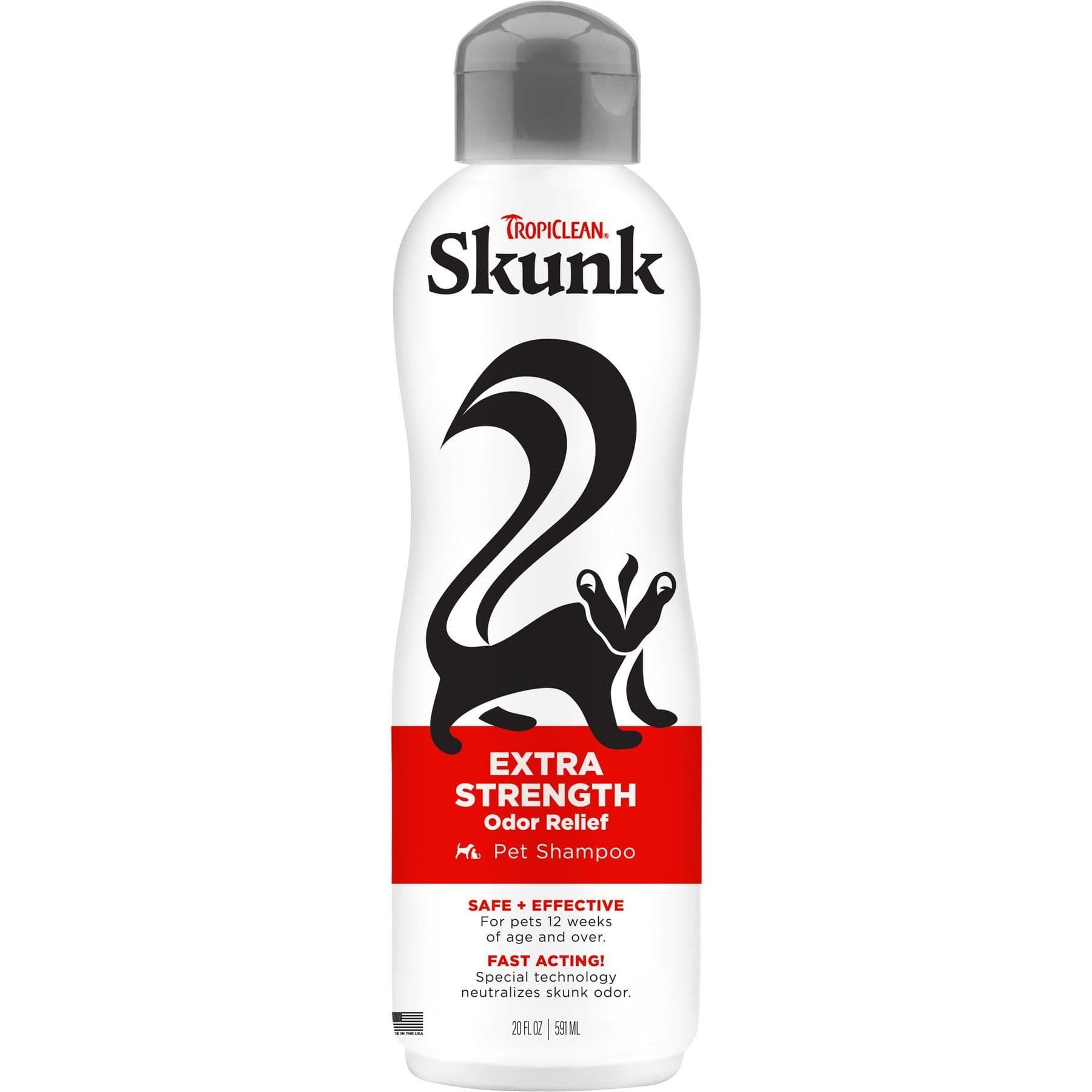
A skunk odor shampoo for the follow-up bath, applied to a dry coat and rinsed after five minutes.
Webvet may earn a commission when you click through to Chewy, at no extra cost to you.
Odorcide Skunk-Off Shampoo comes from Odorcide. The manufacturer lists water, a proprietary essential oil blend, and preservatives, calls it a non-enzymatic formula safe for pets and people, and notes that effectiveness decreases when it is used with chlorine solutions. Keep any product out of your dog's eyes regardless of label wording.
TropiClean Skunk Odor Control Dog & Cat Shampoo uses coconut cleansers and odor neutralizers, per TropiClean. Its directions are specific to skunk washing:
- Apply a generous amount directly to the dry coat.
- Avoid the face and eyes.
- Let it soak for 5 minutes.
- Rinse thoroughly.
Wherever you buy Skunk-Off or another dog skunk shampoo, compare labels and directions rather than reviews alone. If your dog also has itchy or irritated skin after the encounter, our guide to medicated dog shampoo explains when a vet-recommended formula fits better than an odor shampoo.
How long the smell lasts and why it comes back when wet
Does skunk smell go away? Eventually. Humane World for Animals says skunk smell will fade on its own, but it can take several weeks or even months. The peroxide recipe shortens that dramatically.
How long will my dog stink after getting sprayed by a skunk?
With a prompt peroxide wash, rinse well and repeat with a fresh batch until the smell is gone. Untreated, the smell can last weeks or months. Either way, expect a faint skunk smell when the coat gets wet for a while, because leftover compounds in the fur keep reacting with moisture.
The chemistry explains why a dog sprayed by a skunk still smells after a bath. The McGill Office for Science and Society says skunk spray contains thioacetates that react with moisture to form thiols, so rain, a swim, or a bath can release a fresh wave of odor.
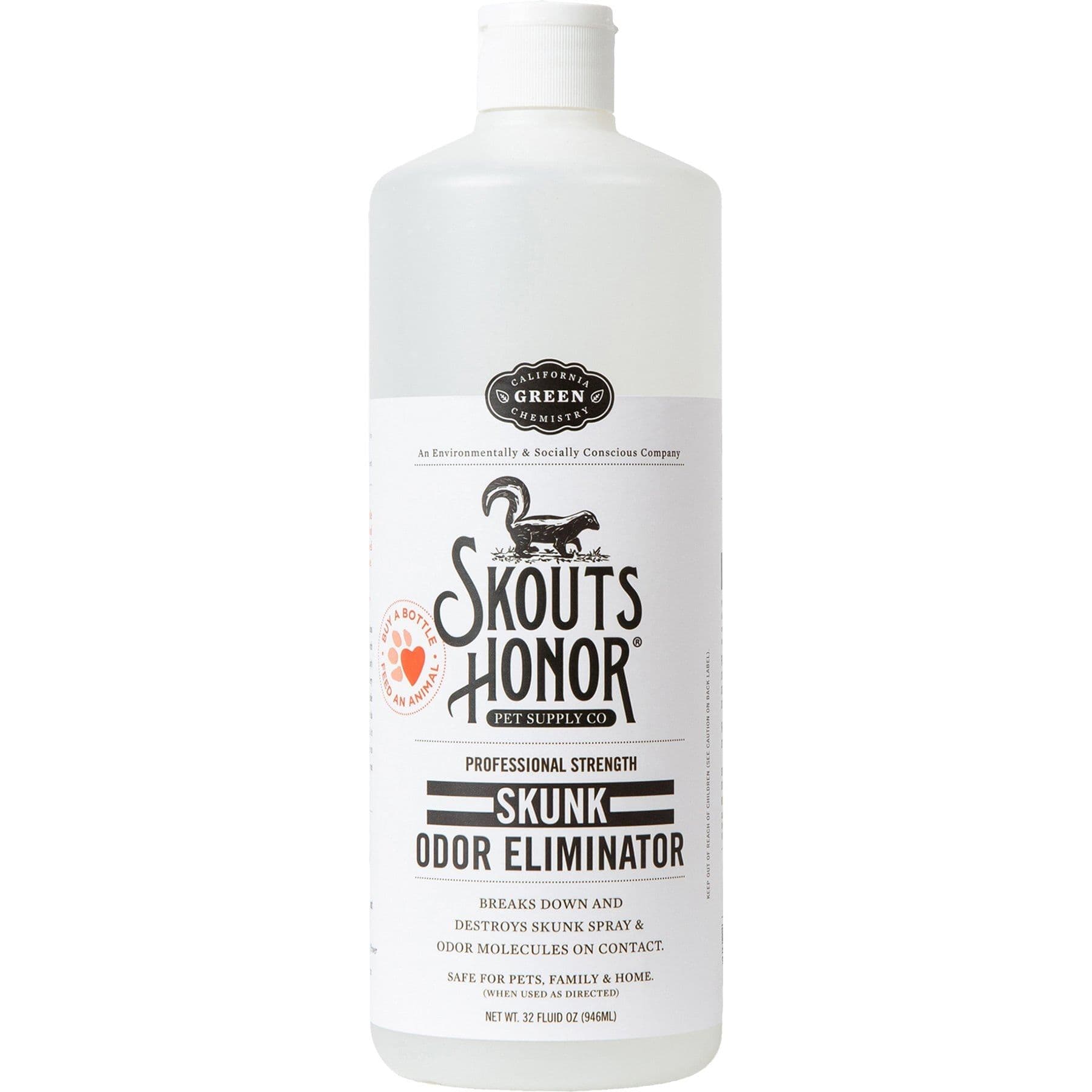
A professional-strength skunk odor eliminator for the smell that lingers on collars, bedding, and fabrics after the bath; check its label for where it can be used.
Webvet may earn a commission when you click through to Chewy, at no extra cost to you.
My dog still smells like skunk after 2 months of being skunked. Is this normal?
A faint smell when the coat is wet can be normal. Texas A&M says a dog may smell slightly of skunk when wet for a few months afterward. A strong smell when dry, or a fishy or rotten odor, points to another cause such as ears, teeth, or anal glands. See why does my dog smell like fish.
Skunk spray in the eyes, mouth, or face
A dog sprayed by a skunk in the face is the case that needs the most care. VCA Animal Hospitals says spray in a dog's eyes acts like tear gas, causing excessive tearing, burning, and redness. So yes, skunk spray can hurt a dog's eyes, and squinting or pawing at the face is a common sign.
Sources differ on how long to rinse. The ASPCA says rinsing the eyes with copious tepid water for 20 minutes may relieve discomfort, while Humane World and Texas A&M say cool water without naming a time. For gentle cleaning technique afterward, see how to clean dog eyes.

The treatment itself can hurt the eyes too. Texas A&M says the peroxide solution can be irritating enough to cause shallow corneal ulcers, and VCA says peroxide solutions should never be used near the eyes.
How serious is skunk spray in the eyes?
How serious is the eye injury? The Tufts Cummings School of Veterinary Medicine is reassuring: tearing and possibly superficial ulcerations, but no permanent damage. VCA and Texas A&M still advise immediate veterinary care for direct eye or mouth exposure, and that is the safer rule to follow.
A dog sprayed by a skunk in the mouth may drool or foam; dvm360 lists drooling among the signs commonly seen in sprayed animals. Swallowed spray matters more than the taste: VCA says if a dog swallows it, it may cause severe anemia, which is covered in the next section.
Can skunk spray make a dog sick?
Usually not beyond the smell and irritation, but sometimes skunk spray becomes a medical problem. Skunk spray can harm a dog in two ways: local irritation of the eyes, skin, and mouth, and, in rare cases, damage to red blood cells. A dog that becomes anemic needs veterinary treatment.
Is skunk spray harmful to dogs?
Mostly it is irritating rather than dangerous. Pet Poison Helpline says most exposures cause a strong smell plus skin and eye irritation. dvm360 adds that in rare instances Heinz body anemia, methemoglobinemia, and hemoglobinuria may occur. No primary source gives a figure for how often that happens; it is described only as uncommon.
Heinz body anemia happens when sulfur compounds damage red blood cells so they break down faster than the body can replace them. The Pet Poison Helpline says this leads to anemia and methemoglobinemia, a change that reduces how well blood carries oxygen.
When skunk spray anemia shows up
Timing is what owners miss. The Cornell University College of Veterinary Medicine says the rare severe anemia can develop a few hours to 24 hours after exposure and advises close monitoring for 1 to 3 days. In one case dvm360 describes, Heinz bodies appeared three to four hours after exposure and kept worsening for the next 12 hours.
Call your vet if your sprayed dog shows any of these symptoms in the days after the bath. The ASPCA notes they can take a few hours or even days to appear:
- Lethargy or unusual tiredness
- Weakness or reluctance to walk
- Pale gums or brown-tinged gums
- Red, brown, or dark urine
- Vomiting or drooling that does not settle after the mouth is rinsed
Dvm360 describes treatment as primarily symptomatic and supportive, which may mean hospital care for an anemic dog. If you are weighing an after-hours visit, our guide to emergency vet cost sets expectations. If your dog killed a skunk or was bitten during the encounter, see your vet about rabies risk as well.
Keeping your dog from getting sprayed again
A dog that has been sprayed once can easily be sprayed again. These habits lower the odds:
- Supervise at dusk and dawn. The AKC says skunks are most active then.
- Stay on trails. Cornell advises against going off-trail in densely wooded areas.
- Block den sites. The ASPCA recommends blocking access to woodpiles and the spaces under decks and houses.
- Keep rabies vaccination current. The CDC lists skunks among the animals most frequently found with rabies in the U.S.

A leash and a flashlight on the last walk of the night lower the odds of an encounter. Leave any skunk you spot alone, even a slow or friendly-seeming one, and never let your dog approach an animal that looks sick.
The oil a sprayed dog carries also ends up on everything it touches on the way in. Clean these the same day so they do not keep the smell going after the dog is clean:
- Collar and bedding: wash them promptly.
- Car: air it out with the windows down.
- Rugs and upholstery: use a skunk odor remover such as Nature's Miracle Skunk Odor Remover, following its label for which surfaces it suits.
- Everything else: Skout's Honor Professional Strength Skunk Odor Eliminator kept by the back door means you are ready before the next encounter.
Bathing in cold weather needs care too. A dog rinsed outdoors in winter should be dried fully and brought inside quickly; see how cold is too cold for dogs before you hose a dog down outdoors in cold weather.
Skunk spray questions
Frequently Asked Questions
Will Dawn remove skunk smell from dogs?
Not on its own. Dish soap like Dawn is a degreaser: in the recipe its job is to dissolve the oily spray so the peroxide can reach the thiols. No veterinary source we used recommends dish soap alone for skunk odor, so it works only with the peroxide mix and baking soda.
Will skunk smell go away on its own?
Yes, but slowly. Humane World says the odor fades on its own over several weeks to months. Even after a good wash, a faint smell often rebounds when wet, because leftover thioacetates in the fur turn back into thiols with moisture.
Can I use the skunk recipe on my dog's face?
Use extreme care and keep it out of the eyes. Humane World says never get the solution in the eyes, and VCA says peroxide should never be used near them. Wipe the cheeks and muzzle sparingly rather than pouring the mix on, and flush the eyes with water instead. A damp cloth with plain water is the safer tool for the area around the eyes.
Can I store the peroxide and baking soda mix?
No. The mix is reactive, and pressure builds if it is sealed in a container. Humane World, the ASPCA, and the AKC all warn the mixture can explode if bottled. Mix fresh every time, use it within the bath, and discard anything left in the bowl.
Veterinarian · BVMS MRCVS
Dr. Pippa Elliott, BVMS, MRCVS, is a veterinarian with nearly 30 years of experience in companion animal practice. Dr. Elliott earned her Bachelor of Veterinary Medicine and Surgery from the University of Glasgow. She was also designated a Member of the Royal College of Veterinary Surgeons. Married with 2 grown-up kids, Dr. Elliott has a naughty Puggle named Poggle, 3 cats and a bearded dragon.
Related reading

Matted Cat Fur: How to Remove Mats Safely

Pet Safe Roach Killer: What Works Without Poisoning Your Pet

Pet Safe Pest Control: What Is Safe to Use Around Dogs and Cats
