Pet Safe Pest Control: What Is Safe to Use Around Dogs and Cats
Most pest control can be done safely around pets if you know which ingredients to avoid, how long to keep animals off treated areas, and where baits can go. Here is the ingredient guide and the prep checklist for an exterminator visit.

BVMS MRCVS
Medically reviewed by Dr. Pippa Elliott, BVMS MRCVS · Last reviewed

This article contains affiliate links. Webvet may earn a commission when you buy through them, at no extra cost to you.
Pet safe pest control is mostly about how you use a product, not a magic formula on the bottle. Ants, household bugs, mice, and rats can usually be handled without poisoning a dog or cat, but a label that says natural or pet friendly does not settle the question by itself.
This guide to pet safe pest control shows which pesticide ingredients carry more risk for cats than for dogs, how to deal with ants, bugs, rodents, spiders, and wasps, how to prepare pets for an exterminator, and which signs of pesticide exposure mean it is time to call your vet or a pet poison hotline.
What pet safe pest control means
Pet safe pest control means choosing a method and a product that will not harm the animals in your home, then using it so they never meet a harmful dose. Three rules do most of the work:
- Ingredient class. Read the active ingredient, then check it again for cats. Pyrethrins, pyrethroids such as permethrin, and essential oils are much riskier for cats than for dogs.
- Dry time. Let every treated surface dry before pets return. The National Pesticide Information Center (NPIC) says to keep pets away until the pesticide is completely dry and the area has been well ventilated.
- Bait placement. NPIC notes that pesticide baits are often made with food ingredients that attract pets, so every bait belongs in an enclosed station or a spot your dog or cat cannot reach.
- 1Know what pet safe means on a pest product: it is a label claim to check, not a veterinary guarantee.
- 2Judge ingredient risk by class, and check cats separately, because pyrethroids and essential oils are dangerous to cats.
- 3Keep pets off treated surfaces until they are completely dry and the room is ventilated, following the label.
- 4Put every bait and trap where pets cannot reach it, and choose traps over rat poison.
- 5If a pet is exposed, call your vet, ASPCA Animal Poison Control at (888) 426-4435, or Pet Poison Helpline at (855) 764-7661.
Treat the words pet safe, pet friendly, and natural on a bottle as claims to check. The regulatory category behind some natural sprays says less than shoppers tend to assume.
EPA describes minimum risk pesticides as products that pose little to no risk to human health or the environment, and exempts them from registration under the Federal Insecticide, Fungicide, and Rodenticide Act. So these products skip EPA's registration review, and nothing on that page says exempt means harmless to pets.
Cedarcide, for example, says its products are considered minimum risk pesticides under EPA guidelines. That is a regulatory status, not a veterinary safety finding, and essential oils remain a known hazard for cats.
Integrated pest management in a home with pets
The approach regulators recommend is integrated pest management, or IPM. EPA frames it as managing pests with the least possible hazard to people, property, and the environment: less risky controls are chosen first, and broadcast spraying of non-specific pesticides is a last resort.
In a home with pets, that order means removing what pests eat, closing the gaps they use to get in, and only then reaching for the least hazardous product, used in the smallest area that works. Sealing up stored pet food is one of the easiest first steps.
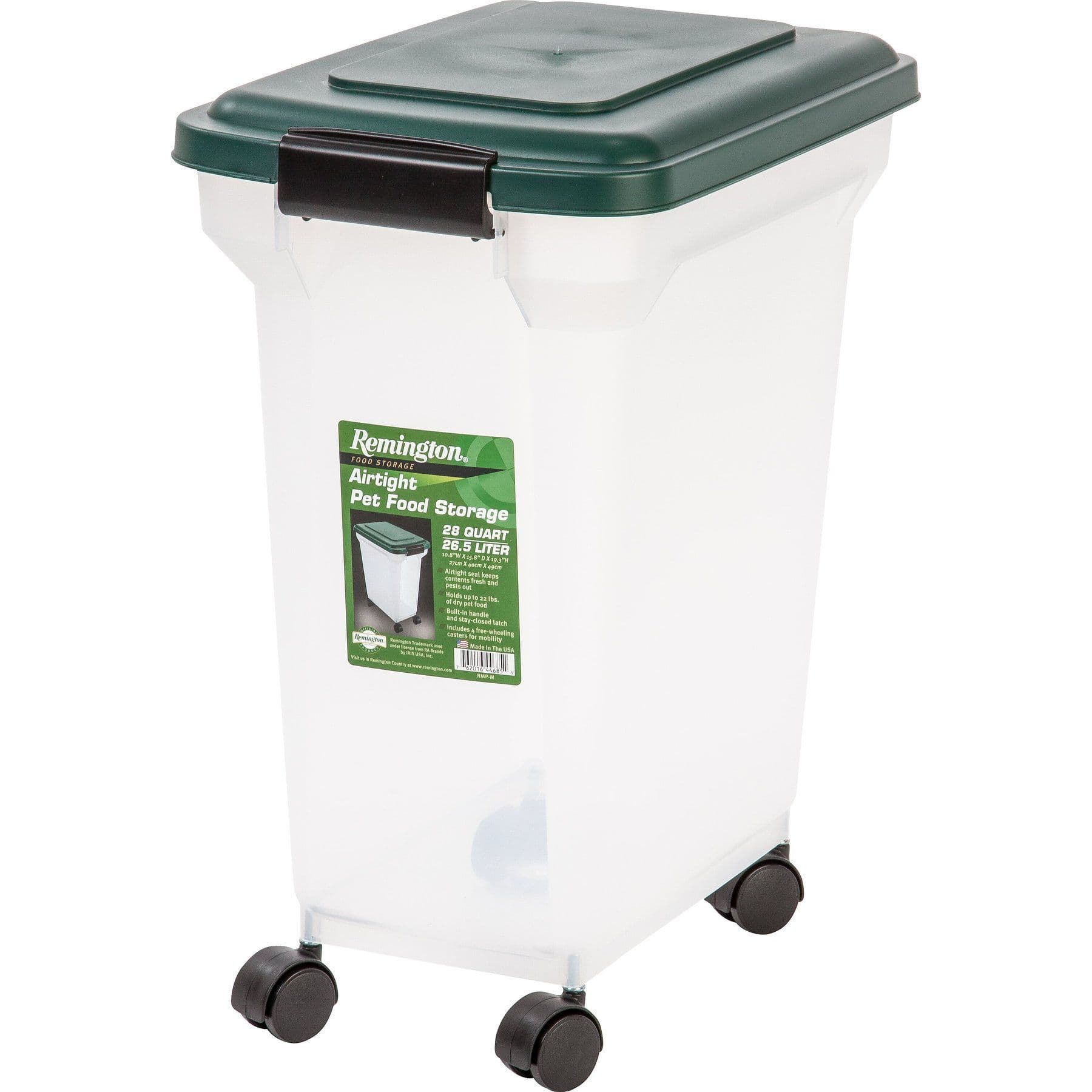
An airtight 28-quart pet food storage container that keeps stored kibble sealed between meals.
Webvet may earn a commission when you click through to Chewy, at no extra cost to you.
Whether you treat the problem yourself or hire help, the same rules apply. dvm360 advises choosing a pest control company with experience treating homes with pets, and asking your veterinarian which products are safest for your pet.
When you look for pet safe pest control services near you, whether a national company such as Orkin or a local exterminator, ask these questions before you book:
- Which active ingredients will you use indoors and outdoors, and can I see the labels?
- How long should my pets stay out, and how will I know treated areas are completely dry?
- Where will baits go, and will rodent baits sit in tamper-resistant stations?
- Do any of your products carry special risks for cats, birds, or fish?
Pest control ingredients: which are safe around pets and which are not
Shoppers often ask whether Terro ant killer, Raid or Ortho bug spray, Hot Shot bed bug spray, OFF! Backyard Bug Control, or a borax ant killer is pet safe. The brand name cannot answer that. The active ingredient can, along with the species in your home and where the product goes.

Dogs and cats do not handle pesticides the same way. VCA Animal Hospitals explains that cats cannot break down pyrethrins and pyrethroids quickly, so a product a dog tolerates can be dangerous to cats.
Pyrethroids are the ingredients to look for on household insect spray labels. Pet Poison Helpline lists these among them:
- Bifenthrin
- Cypermethrin
- Cyfluthrin
- Cyhalothrin
- Deltamethrin
- Permethrin
- Resmethrin
In dogs, VCA says pyrethrin and pyrethroid products used as instructed are generally safe. Poisoning comes from improper use or from eating the product, and signs can start within the first hour after ingestion.
Cats are a different story. Their most common pyrethrin poisoning comes from an owner putting a dog flea and tick product on a cat. There is no antidote, and VCA warns the poisoning can be fatal to cats without immediate treatment. Keep cats off any treated area, indoors or out, until it has completely dried.
At the other end of the risk scale sits diatomaceous earth, which works without poison. NPIC says it is not poisonous and kills insects without having to be eaten. Around pets, choose a product labeled food grade: NPIC says food grade products are purified and may be used as anticaking materials in animal feed.
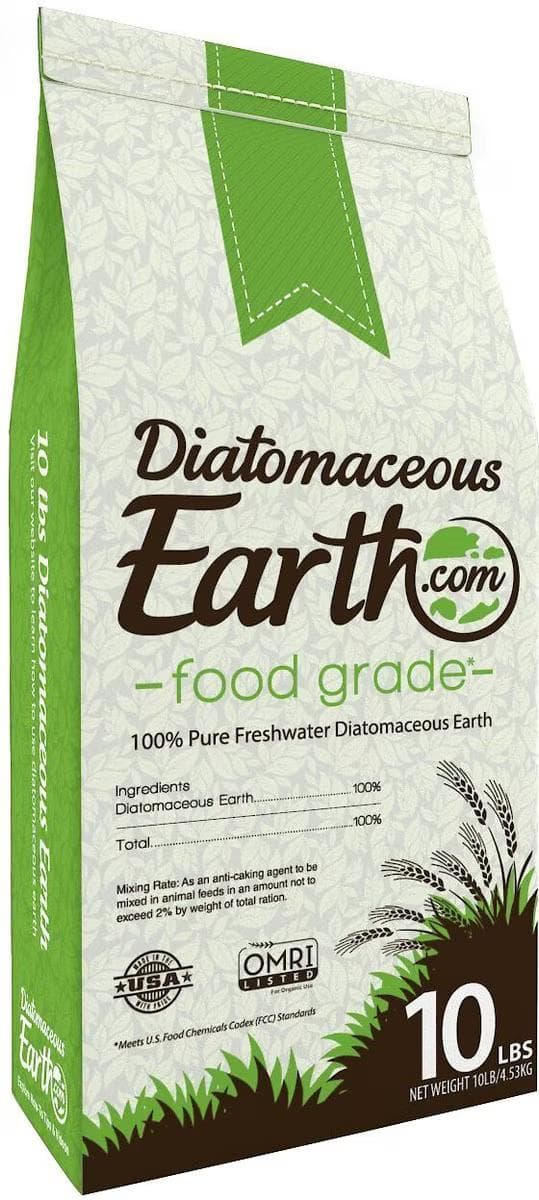
Food grade diatomaceous earth flea and tick powder in a 10-lb bag; food grade is the purified form of DE.
Webvet may earn a commission when you click through to Chewy, at no extra cost to you.
Compare dog risk versus cat risk for each pesticide ingredient class before you buy or apply anything:
| Ingredient class | Dog risk | Cat risk | Safe-use rule |
|---|---|---|---|
| Pyrethrins and pyrethroids (permethrin, bifenthrin, cypermethrin) | Generally safe used as directed; poisoning follows misuse or eating the product (VCA) | Severe and dangerous to cats, which break these chemicals down slowly; no antidote (VCA) | Never use dog flea products on cats; let treated areas dry before pets return |
| Organophosphates and carbamates | Drooling, vomiting, diarrhea, and breathing trouble; organophosphate signs can be delayed more than 2 days (Merck) | Same signs; treatment uses atropine, plus pralidoxime for organophosphates (Merck) | Use only as the label directs, keep pets out during application, and wait until it is completely dry |
| Boric acid and borate baits | Signs can start within 2 hours if eaten (NPIC) | Small amounts may not be a concern, but large amounts can harm; kittens are most vulnerable (Pet Poison Helpline) | Enclosed stations only, placed where pets cannot reach; never loose powder in the open |
| Diatomaceous earth (food grade) | Not poisonous; the dust can irritate the nose and eyes (NPIC) | Not poisonous; the dust can irritate the nose and eyes (NPIC) | Use food grade and apply a light layer where pets will not breathe the dust |
| Essential oils (tea tree, peppermint, and similar) | Concentrated tea tree oil can cause weakness and tremors (dvm360) | Greatest risk; skin contact or ingestion can be toxic, so treat them as dangerous to cats (VCA, Pet Poison Helpline) | Never apply to cats; let sprayed surfaces dry before pets return |
| Anticoagulant rodenticides | Most frequent cause of pet poisoning; bleeding signs 3 to 7 days later (Merck, VCA) | Same direct risk; secondary poisoning from eating rodents is rare in cats (VCA) | No safe spot within reach of pets; the antidote is vitamin K1, so see a vet fast |
| Bromethalin | Brain swelling and no antidote (Pet Poison Helpline) | More sensitive than dogs (Pet Poison Helpline) | Avoid it where pets live, since there is no antidote |
| Cholecalciferol (vitamin D3) | Highly concentrated, so a small amount can cause toxicity (ASPCA) | Same risk and no antidote (ASPCA, dvm360) | Treat any suspected ingestion as an emergency |
Boric acid and borate baits
Boric acid kills insects that eat it. If a pet eats it, NPIC says signs of poisoning can start within 2 hours. Pet Poison Helpline says a small amount of boric acid roach poison may not be a concern for a cat, but large amounts can cause harm, and kittens are especially vulnerable.
The bigger issue is placement. Boric acid left out in the open is a high risk for curious cats, which may lick it from traps or from their own fur, so use it only inside enclosed bait stations.
Essential oils and natural sprays
Plant oils are not automatically gentle. Pet Poison Helpline says essential oil toxicosis can affect all species, but cats and birds are at the greatest risk, with drooling, vomiting, lethargy, and loss of appetite usually appearing within about 6 to 8 hours.
VCA adds that cats are particularly sensitive to essential oils, that both ingestion and skin exposure can be toxic, and that tea tree oil is among the oils poisonous to cats.
Citrus is a mixed case. The Merck Veterinary Manual lists d-limonene, extracted from citrus rind, as a flea control ingredient used on cats, while VCA lists citrus among oils poisonous to cats. Use a citrus product on or near a cat only if its label covers cats, and ask your vet first.
Organophosphates and carbamates
Merck says organophosphate signs usually begin within hours but can be delayed for more than 2 days, and treatment is atropine plus the antidote pralidoxime. Carbamate signs include excessive drooling, abdominal cramping, vomiting, diarrhea, sweating, and difficulty breathing, and treatment mirrors organophosphate care with atropine.
If a professional plans to use one of these classes, ask for the product name in advance. Treatment depends on the class: organophosphates have an antidote, while pyrethrin and pyrethroid poisoning has none, according to Merck and VCA.
Is home defense pesticide safe for pets?
The Home Defense name does not answer that; the active ingredient does. If the label lists a pyrethroid such as bifenthrin, cypermethrin, or permethrin, VCA's guidance applies: generally safe for dogs used as directed, dangerous to cats. Either way, keep pets off treated areas until they are completely dry and ventilated.
Is there any pesticide that doesn't harm pets?
No pesticide is risk-free for every pet at every dose, and EPA's minimum risk products are exempt from registration review, not proven harmless to pets. The safest plan is integrated pest management: sanitation, sealing, and traps first, then the least hazardous product, used as the label says and placed where pets cannot reach it.
Even a minimum risk plant-oil spray carries the essential-oil caution for cats. For other household hazards to cats, see how to poison proof your cat home.
Pet-safe ant control
For ants, baits beat sprays. UC IPM, the University of California's integrated pest management program, says perimeter and barrier sprays do not give lasting control and can even trap ants indoors. Start with the two non-chemical steps it recommends:
- Clean up crumbs, spills, and food left out, and keep kibble in a sealed bin such as the IRIS Remington Airtight Pet Food Storage Container, 28-qt.
- Find where the ants are coming in and seal the gap with caulk.
Indoors, put ant killer in enclosed bait stations rather than open dishes. UC IPM says prepackaged bait stations usually contain 5.4 percent borate, while liquid borate baits at 0.5 to 1.0 percent in sugar water have more impact on the colony than the stronger stations.
Placement matters as much as the product. UC IPM says to set bait where ants will find it but away from areas that pets and small children can reach. In practice:
- Set stations along the ant trail, behind appliances, or inside a cabinet your pet cannot open.
- Choose enclosed stations over open dishes of liquid bait or loose powder.
- Remember that cats climb, and Pet Poison Helpline notes they will inspect traps you set out.
- Pick up every station once the ants are gone.
Boric acid ant products come as liquids, granules, baits, and dusts, NPIC notes, and an enclosed station is the easiest to keep away from pets. Dusts need the most care: a dusted crack is hard to keep a cat away from, and NPIC says diatomaceous earth dust can irritate the nose and eyes.
A homemade pet safe ant killer is still a pesticide. A boric acid and sugar-water mix in a jar lid is the same active ingredient as a store bait without the station, and Pet Poison Helpline warns that cats may lick boric acid from traps or their fur.
Natural ant killer sprays made with essential oils carry the same cat risks as any essential-oil product, so they are not an automatic upgrade. Cleaning, sealing, and a bait station out of reach remain the most pet safe ant killer plan indoors.

Outdoor, lawn, and fire ant control
Outdoors, the same logic holds for a fire ant mound in the lawn, carpenter ants along the deck, or sugar ants on the patio. Pick a bait or a granular ant killer labeled for outdoor use, apply it while pets are inside, and follow the label on when they can go back out.
NPIC's general rule covers lawns and yards too: keep pets off treated areas until the product is completely dry. There is no single drying time that fits every outdoor product, so the label is the guide. Spread granules evenly at the label rate, with no piles left where a dog could lick them up.
EcoSMART Insect Killer Granules are one outdoor option for the perimeter. The product is made for lawns, foundations, and landscape beds, not indoor floors, so it fits the band along the base of the house where ants come in.
EcoSMART insect killer granules in a 10-lb bag, made for outdoor use on lawns, foundations, and landscape beds.
Webvet may earn a commission when you click through to Chewy, at no extra cost to you.
Pet-safe bug sprays and insecticides for the house
A pet safe bug spray for the house is one whose active ingredient suits the animals you live with, sprayed only where the bugs are, and kept off-limits until it dries. Whether you are after bed bugs, stink bugs, box elder bugs, or spiders along the baseboards, start with the label.
The dry-time rule for any indoor spray comes from NPIC: keep pets away from treated areas until the pesticide is completely dry and the area has been well ventilated. No veterinary or extension source gives a fixed number of hours that fits every product, so follow the label's re-entry directions.
Spot treatment is easier on pets than spraying a whole room. EPA's integrated pest management principles treat broadcast spraying of non-specific pesticides as a last resort, and a smaller treated area leaves fewer surfaces for a dog or cat to touch before it dries.
What insect repellent is safe to use around pets?
One labeled for the species and used as directed. VCA's rule is never to use an insecticide on a pet unless it is labeled for animals, and never to put a dog flea and tick product on a cat. If a repellent's label does not cover dogs or cats, keep it off your pet.
Around the house, a plant-oil repellent is not automatically the gentler choice for cats, because essential oils are a recognized cat hazard. For flea and tick protection on the animal itself, ask your veterinarian which product suits your dog or cat; dvm360 notes vets can suggest the safest products for your pet's health.
How do I get rid of bugs in my house without harming pets?
Follow the integrated pest management order, from the least hazardous step to the most:
- Monitor and identify the pest first, so you treat the right target in the right place.
- Remove food and water sources, including pet food left out between meals.
- Seal cracks and entry points with caulk.
- Use baits in enclosed stations placed where pets cannot reach them.
- Spot-treat with the least hazardous product that works, never a broadcast spray as the first move.
- Keep pets in another room until treated surfaces are completely dry and the area is ventilated.
- Call a pest control company experienced with pets if the problem persists.
Store every pest product in its original container, label intact, somewhere pets cannot reach. If a pet does get into something, that label tells your vet or a poison hotline which active ingredient they are dealing with.
Natural and essential-oil bug sprays
Cedarcide's All-Purpose Bug Spray shows how plant-oil sprays are sold. Its page lists 4.6 percent cedarwood, lemongrass, or peppermint oil, depending on scent, and calls the spray non-toxic, family-safe, and pet-friendly when used as directed.
The same page warns that most cats are sensitive to peppermint oil, and both Pet Poison Helpline and VCA list essential oils as a cat hazard. Do not treat any essential-oil spray as cat-safe, whatever the front label says, and keep cats away from sprayed surfaces until they are dry.
Homemade bug spray recipes have the same problem. Mixing tea tree or other essential oils at home makes an unlabeled spray rather than a pet safe one, and dvm360 notes that concentrated tea tree oil can cause lethargy, weakness, and tremors in dogs and cats.
Bug spray for the yard and the outside of the house
Outside, aim at the places bugs live and enter, such as the foundation, door thresholds, and window frames, rather than blanketing the lawn. Outdoor and perimeter sprays follow the same rule as indoor ones: pets stay off treated grass, soil, and siding until the product is completely dry.
Plant-oil yard sprays are no exception. A Cheshire Horse listing for a Wondercide ready-to-use yard spray says the product has not been registered by the EPA and claims no wait time for drying. NPIC's advice still applies, and since cats face the greatest risk from essential oils, keep them in until the yard is dry.
If fleas or ticks are the reason you are treating the yard, look for a yard and garden spray labeled for those pests, and compare options in our guide to the best flea and tick yard treatment.
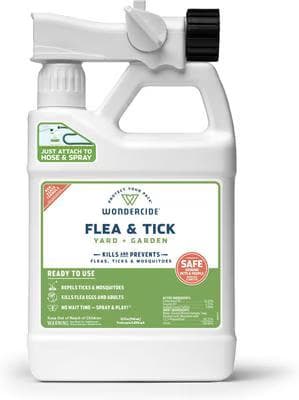
A 32-fl oz Wondercide yard and garden spray labeled for fleas, ticks, and mosquitoes.
Webvet may earn a commission when you click through to Chewy, at no extra cost to you.
Fleas and roaches each need their own plan. For fleas, start with how to get rid of fleas in your house and yard, compare picks in our best flea spray for home guide, and read does bleach kill fleas before using household chemicals. For roaches, see our pet safe roach killer guide.
Mice and rats: why rodenticides are the biggest danger
Rodent bait is where pest control most often turns into a poisoning. The Merck Veterinary Manual says anticoagulant rodenticides, which interfere with blood clotting, are the most frequent cause of poisoning in pets.
Anticoagulant bait works slowly, which is exactly what makes it so dangerous:
- ASPCA Animal Poison Control says it causes internal bleeding within 3 to 5 days, and that a pet should reach a vet within 60 to 72 hours of eating it.
- VCA puts the delay before signs at three to seven days, so a pet can look normal at first.
- The antidote is vitamin K1, a prescription medication, which is why early treatment matters.
- VCA warns never to induce vomiting at home; leave that decision to your veterinarian.
Bromethalin is a different kind of poison. Pet Poison Helpline says it causes swelling of the brain, has no antidote, and that cats are more sensitive to it than dogs. Signs include lethargy, weakness, incoordination, tremors, seizures, and paralysis.

Cholecalciferol, or vitamin D3, baits are so concentrated that it does not take much to cause toxicity, ASPCA warns, and a pet needs treatment immediately. As dvm360 points out, anticoagulants have an antidote, but bromethalin and cholecalciferol do not.
Federal rules limit what you can buy, but they do not make bait safe. The EPA restrictions on rodenticide products work like this:
- Second-generation anticoagulants are no longer registered for products sold to consumers.
- Consumer rodenticides are limited to ready-to-use bait stations containing bromethalin, chlorophacinone, or diphacinone.
- Professionals must use tamper-resistant bait stations wherever children under six, pets, or nontarget wildlife have access.
Pets can also be poisoned indirectly. Merck says pets can be poisoned by eating poisoned rodents as well as baits, though VCA notes secondary poisoning in cats is rare because a cat would need to eat many poisoned rodents.
Safer rodent control around pets
UC IPM calls snap traps the safest, most effective, and most economical way to trap rats. For safer rodent control in a home with pets:
- Seal every hole larger than 1/4 inch, the size UC IPM says to close to keep out both rats and mice.
- Use enclosed snap traps, which dvm360 recommends so a curious pet cannot snap a nose or paw in them.
- Set traps where pets cannot reach, such as behind appliances or inside closed cabinets; Pet Poison Helpline notes cats will inspect traps you put out.
- Skip glue traps. The UK's British Veterinary Association calls them inhumane and says they should be replaced with other methods of rodent control.
- If a professional uses bait, ask for tamper-resistant stations and the product name.
- Keep the packaging or receipt for any rodenticide in the house, so the type can be identified if a pet gets into it.
Spiders, wasps, and outdoor pests
Pet safe pest control for the yard follows the same order as indoors: remove what pests need, treat only where they live, and use the least hazardous product. Follow the label on any lawn or garden treatment, and keep pets off treated grass and beds until they are completely dry, as NPIC advises.
Spiders are mostly a nuisance. Pet Poison Helpline says most spiders are minimally venomous, with the black widow and brown recluse the most dangerous, and recommends keeping pets away from spiders rather than trying to identify them.
A black widow bite can cause severe muscle pain, cramping, walking drunk, tremors, and paralysis in dogs and cats, and it can lead to death, according to Pet Poison Helpline. A pet with those signs after time outdoors needs a vet right away.
Wasp and bee stings
A single wasp or bee sting usually causes swelling, pain, redness, and itching, says FirstVet, but dogs and cats can also have an allergic or anaphylactic reaction.
Do not squeeze the sting site, which may release more venom into the tissue. FirstVet advises contacting a vet for stings to the head, neck, mouth, or throat.
Lawn and garden treatments
For lawn pest control, the indoor principles carry over. Treat the spots where pests are rather than the whole yard, since EPA treats broadcast spraying as a last resort. Apply granules or sprays while pets are indoors, then let the label and NPIC's dry rule decide when they go back out.
Run the same ingredient check on any outdoor pest control spray. A pyrethroid lawn product used as directed is generally safe for dogs but dangerous to cats, and VCA's advice to keep cats off treated areas until they dry covers yards as well as rooms. Plant-oil yard sprays carry the essential-oil caution for cats too.
Pesticides are not the only yard hazard for a dog that chews on things. Check your garden beds against our list of plants toxic to dogs.
Preparing pets for a professional pest control visit
A professional treatment and a home full of pets can coexist if you plan the day. dvm360 advises keeping pets out of the area during application and asking your veterinarian which products are safest for your pet's health before the company arrives.

Use this exterminator prep checklist before, during, and after the visit:
- Ask for the product names and active ingredients, and check them for cat risk if you have cats.
- Ask how long pets must stay out, and get the label's re-entry directions in writing.
- Pick up pet toys and food and water dishes before treatment, as the US Army Public Health Center advises.
- Move pets to a closed room away from the treatment, a friend's home, or a boarding kennel for the day.
- Ask where baits and stations will go, and confirm they are out of your pets' reach.
- Keep pets out until treated surfaces are completely dry and the area has been ventilated.
- Keep the product names handy; NPIC answers pesticide label questions at 800-858-7378.
If you have cats, say so when you book. Pyrethroids are the ingredients to watch for on household insect spray labels, and they are dangerous to cats, so ask whether the technician can use a different class indoors or keep treatment to areas your cat cannot reach.
Veterinary and university extension guidance does not spell out steps for birds or aquariums, so ask the company and your veterinarian what those pets need before the visit.
When the job is done, walk the treated rooms before letting pets back in. Check that every surface is completely dry, that the space has aired out, and that no bait sits where a dog or cat can reach it.
Signs of pesticide exposure in dogs and cats
Exposure signs depend on the product, and they do not always appear right away. If you think your pet licked, ate, or walked through a pesticide, call your veterinarian, the ASPCA Animal Poison Control hotline at (888) 426-4435, or Pet Poison Helpline at (855) 764-7661.
What veterinary sources list for each product type:
- Pyrethrins and pyrethroids: nausea, drooling, vomiting, and lethargy, progressing to tremors, seizures, and collapse in severe cases, per Pet Poison Helpline. Merck says signs may begin within a few hours and that severe cases can end in death from respiratory failure.
- Pyrethroids on a dog's skin: itchiness, restlessness, or a pins-and-needles feeling within 15 minutes to several hours of application, per VCA.
- Organophosphates and carbamates: excessive drooling, abdominal cramping, vomiting, diarrhea, difficulty breathing, muscle spasms, and convulsions, per Merck. Organophosphate signs can be delayed more than 2 days.
- Essential oils: drooling, vomiting, lethargy, and loss of appetite, usually within about 6 to 8 hours, per Pet Poison Helpline.
- Boric acid: signs can begin within 2 hours of eating it, per NPIC, and cats that lick it can get an upset stomach.
- Anticoagulant rodenticides: depression and loss of appetite before any bleeding, per Merck, with bleeding signs three to seven days after ingestion, per VCA.
- Bromethalin: lethargy, weakness, incoordination, tremors, seizures, and paralysis, per Pet Poison Helpline.
- Zinc phosphide: vomiting first, then loss of coordination, tremors, and seizures, per ASPCA.
Do not wait for signs after a pet eats rodent bait, since anticoagulant damage shows up days later. Do not make your pet vomit unless a veterinarian tells you to; VCA warns against inducing vomiting at home after rodenticide ingestion.
What to have ready when you call
Start with the product. ASPCA advises keeping the original packaging or receipt so the type of rodenticide can be identified, and the same habit helps with any pesticide. Have this ready:
- The package or label, or a clear photo of it, showing the active ingredient.
- When the exposure happened, since some signs start within hours and others take days.
- Whether your pet ate, licked, or walked through the product, and roughly how much.
- Your pet's species and size, since cats react differently to several classes and small animals such as kittens are more vulnerable.
Pesticides are not the only chemical emergency in a home or garage. For another, see our guide to antifreeze poisoning in dogs.
Pet safe pest control questions
Frequently Asked Questions
What pest control spray is safe for pets?
No spray is safe for pets while it is wet, and no single brand is safe for every species. Read the label for the active ingredient first: VCA says pyrethroid products used as directed are generally safe for dogs but dangerous to cats, and essential-oil sprays are a known cat hazard.
Pick the lowest-risk class for your household, spray only where the pests are, and let your pets meet only dried residue, never a damp surface. If a professional is spraying, ask for the product name so you can check the class yourself.
Do coffee grounds keep bugs away?
There is no reliable evidence that coffee grounds keep bugs away. Spreading them around adds a hazard instead: Pet Poison Helpline says unused coffee grounds or beans, tea bags, or supplements can cause serious caffeine toxicity in dogs or cats, and that both species are more sensitive to caffeine than people.
So unused grounds are toxic to dogs if eaten, and to cats as well. Stick with sanitation, sealed food storage, and bait stations placed out of reach.
Does Irish Spring soap actually keep bugs away?
Probably not. An entomologist with Texas A&M AgriLife Extension, quoted in a KHOU Verify report, said there is no scientific explanation for it working.
A bar of soap is not an insect repellent you can rely on, in the house or on a pet. For fleas and ticks on the animal, ask your veterinarian for a product labeled for that species.
How long should pets stay out after pest control?
Until the product is completely dry and the area ventilated. That is NPIC's guidance, and VCA gives the same advice for cats: keep them away from any treated area, indoors or outdoors, until it has completely dried.
No veterinary or extension source gives a fixed number of hours for every product, because drying time follows the label. Ask a professional for the label's re-entry directions, and check that surfaces are dry before your pets come back. The same rule applies outdoors to lawns and garden beds.
Is diatomaceous earth safe for dogs and cats?
It is not poisonous, according to NPIC, which says diatomaceous earth kills insects without being eaten and that food grade products are the purified form. The dust is the catch: if breathed in, it can irritate the nose and nasal passages, and it may irritate the eyes.
Apply a light layer where pets will not stir it up or sniff it, and store the bag closed and out of reach, since NPIC notes exposures happen when products are accessible to pets.
Pool or filter grade diatomaceous earth is a different product. NPIC's fact sheet does not cover it, so around pets, stick with food grade.

Editor
The Webvet Editorial Team is the in-house group of pet-care editors and writers behind Webvet, operated by Smart Pet Collective. The team researches, writes, and maintains Webvet's pet health, behavior, and medication content. Every article follows a defined editorial process: research from reputable veterinary and scientific sources, careful drafting, mandatory review of medical content by a credentialed veterinarian, and dated publication. Health and medication articles are medically reviewed by a licensed veterinary professional before they go live and are kept current over time.
Veterinarian · BVMS MRCVS
Dr. Pippa Elliott, BVMS, MRCVS, is a veterinarian with nearly 30 years of experience in companion animal practice. Dr. Elliott earned her Bachelor of Veterinary Medicine and Surgery from the University of Glasgow. She was also designated a Member of the Royal College of Veterinary Surgeons. Married with 2 grown-up kids, Dr. Elliott has a naughty Puggle named Poggle, 3 cats and a bearded dragon.
Related reading

Matted Cat Fur: How to Remove Mats Safely

Pet Safe Roach Killer: What Works Without Poisoning Your Pet

Dog Sprayed by Skunk: The De-Skunk Recipe That Works and When to Call the Vet
