Best Flea and Tick Yard Treatment: Pet-Safe Options Compared
Compare four hose-end yard treatments and learn where to apply them, what pet-safe use means, and when prevention or professional help matters more for dogs and cats.

BVMS MRCVS
Medically reviewed by Dr. Pippa Elliott, BVMS MRCVS · Last reviewed

This article contains affiliate links. Webvet may earn a commission when you buy through them, at no extra cost to you.
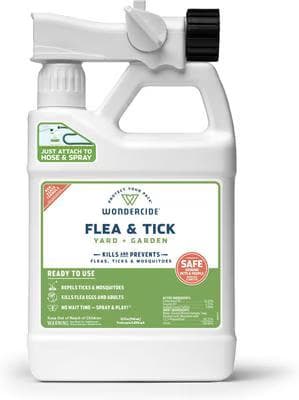
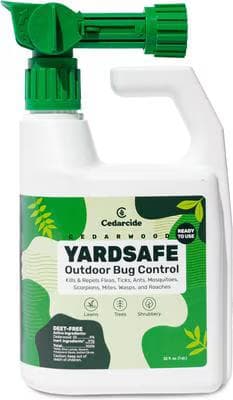
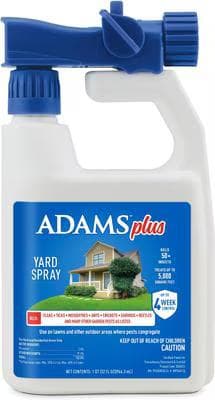
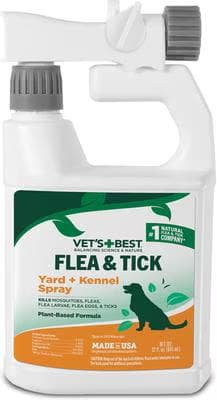
The right flea and tick yard treatment targets the shaded, humid places where pets rest and pests wait. It does not mean soaking every blade of grass. The best option is a lawfully sold product whose current label fits your household, treatment zone, hose setup, plants, water sources, and required pet re-entry plan. Compare the product labels for Wondercide Yard & Garden, Cedarcide YardSafe, Adams Yard Spray and Vet’s Best Yard & Kennel Spray.
WebVet compared four exact hose-end products by intended use, formulation approach, application burden, and household fit. These are expert-analysis picks based on current product identity and label-directed decision factors, not hands-on efficacy tests. “Pet-safe” means used exactly as labeled. It does not mean harmless when mixed incorrectly, inhaled, swallowed, sprayed on an animal, allowed to run into water, or used around a species the label does not address.
What pet-safe yard treatment really means
- 1Pet safe means label-directed use. Read the current label before buying, mixing, or attaching a hose because it controls sites, pests, amount, weather, protective gear, cleanup, and re-entry.
- 2Remove pets, people, bowls, toys, bedding, and other listed items before treatment. Return only when the label's drying and re-entry conditions are complete.
- 3Protect ponds, birdbaths, storm drains, wells, edible plants, pollinator areas, and aquatic life exactly as directed.
- 4Yard treatment supports, but never replaces, veterinarian-selected flea and tick prevention on each pet.
| Product | Formulation | Coverage and maintenance distinction |
|---|---|---|
| Wondercide | Cedarwood, sesame oil and sodium lauryl sulfate | Current hose-end directions distinguish 5,000 sq ft for fleas from 2,500 for ticks |
| Cedarcide YardSafe | Cedarwood formula; distinct lemongrass variant exists | About 5,000 sq ft per quart; follow initial and maintenance instructions |
| Adams Plus Yard | Permethrin | Up to 5,000 sq ft; advertised residual control up to 4 weeks |
| Vet’s Best Yard & Kennel | Peppermint, eugenol and sodium lauryl sulfate | Match the permitted yard or kennel site and application instructions |
“Natural,” “plant-derived,” and “essential oil” are ingredient descriptions, not safety guarantees. Cedarwood oil, peppermint oil, eugenol, and other botanical ingredients can irritate skin, eyes, or airways and may be unsafe for certain animals or aquatic environments when misused. Synthetic pesticides also vary widely. Product selection should start with the product label and the most vulnerable member of the household. A natural tick repellent for a yard still needs a clear label and a realistic plan to keep pets away during treatment.
Natural product lists often equate plant-derived with risk-free and omit the need to follow the pesticide label. That shortcut is unsafe. Botanical active ingredients still require the approved site, amount, weather, exclusion, drying, re-entry, storage, and disposal directions on the current package.
To get rid of fleas and ticks in your yard without harming pets, start with the label’s application and re-entry rules. Remove animals before application and follow every exposure, drying and re-entry instruction on the product label. Consider cats, ponds, edible plants, pollinators and the weather as well as the dog. If you cannot keep animals out for the required period, choose a different control approach.
Make a household vulnerability list before choosing any spray:
- Dogs, cats, puppies, kittens, senior pets, and animals with neurologic, respiratory, or skin disease
- Birds, fish, amphibians, reptiles, rabbits, and other species that may respond differently to pesticide exposure
Webvet may earn a commission when you click through to Chewy, at no extra cost to you.
- Children who play on the lawn or touch treated surfaces
- People with asthma, allergies, pregnancy, or occupational pesticide sensitivity
- Vegetable beds, fruit trees, herbs, pet forage, and edible landscaping
- Ponds, fountains, streams, drainage channels, wells, and storm drains
- Beehives, flowering pollinator zones, and beneficial insects
The EPA's flea and tick product guidance explains that pesticides should be used only according to their labels. If the label does not answer a household-specific question, contact the manufacturer, veterinarian, local cooperative extension service, or a licensed pest-control professional before spraying.
Some products that meet all EPA minimum-risk pesticide criteria are exempt from federal registration. They do not necessarily carry an EPA registration number, and exemption is not EPA approval of product effectiveness. Keep the full label and manufacturer details either way.

Where to treat a yard for fleas and ticks
To get rid of ticks in a yard, focus on their habitat and the routes animals use. Fleas and ticks do not spread evenly across a property. Flea development favors protected areas where a host spends time and organic debris accumulates. Ticks wait in leaf litter, brush, tall vegetation, fence lines, and transition zones where pets or wildlife pass. A hot, dry, open center lawn may be a lower priority than a shaded dog-resting patch under a deck. Spraying a yard for ticks is worth considering when evidence points to those outdoor exposure areas; a sunny lawn without that exposure may not need blanket treatment.
Shaded, moist resting spots can support flea development, while ticks often use brush and leaf-litter edges. These zones deserve more attention than blanket treatment of a sunny lawn. Reduce habitat and map animal traffic before applying a product only where its label permits.
| Shade-and-traffic yard map: target shaded habitat zone | Why it matters | First action | Treatment decision |
|---|---|---|---|
| Shaded pet-resting area | Flea eggs and larvae can develop near a regular host | Remove bedding, debris, and clutter | Treat only if the product label allows the site |
| Fence line and brush edge | Ticks quest where animals move between vegetation and open space | Trim overgrowth and remove leaf litter | Target the transition strip rather than the whole lawn |
| Under a deck or porch | Shade, moisture, wildlife, and difficult access can support pests | Block wildlife access and clear debris safely | Consider professional access if the area cannot be reached correctly |
| Kennel perimeter | Repeated dog traffic raises host contact | Clean structures and move bowls, toys, and bedding | Use only products labeled for the exact kennel or yard site |
| Woodpile and stone-wall edge | Rodents and wildlife may carry ticks through sheltered corridors | Move wood to a dry organized location away from play zones | Treat the perimeter only when permitted |
| Sunny open lawn | Heat and low humidity may reduce flea development in many climates | Mow and monitor | Skip low-risk sunny lawn unless monitoring and the label support treatment |
| Pond, stream, drain, or edible garden | Runoff and residue can harm non-target life or contaminate food areas | Establish a no-treatment buffer based on the label | Do not spray when the site is prohibited |
Walk the yard at the time your pet normally uses it. Mark shade at morning and afternoon, damp soil, dog resting spots, wildlife droppings, paths under fences, leaf litter, crawl spaces, and tall vegetation. This shade-and-traffic yard map directs treatment to animal resting areas, leaf litter, fence lines, kennel edges, and wildlife corridors instead of the whole lawn. It is more useful than estimating only square footage because it tells you where exposure is most plausible and helps create a targeted perimeter barrier only where the label permits one.
Habitat modification is the first layer of tick control:
- Mow grass and trim vegetation along paths and play zones.
- Rake leaf litter and remove brush piles from pet areas.
Webvet may earn a commission when you click through to Chewy, at no extra cost to you.
- Move woodpiles away from the house and active yard.
- Discourage rodents and wildlife from feeding near patios or kennels.
- Create a clean, dry transition between wooded edges and frequently used lawn where appropriate.
- Keep dogs from roaming through dense brush and check them after outdoor time.
The CDC's pet tick prevention guidance recommends daily checks and prompt removal because dogs can become ill and can carry ticks indoors. Yard work lowers encounter pressure but cannot create a tick-proof property.

 $65 · no membership
Need flea, tick, or heartworm prevention for your dog?
A licensed vet can recommend and prescribe the right preventive for your dog online when it's appropriate.
 Talk to a vet
- Licensed vets
- All 50 states
- same-day Rx

Webvet may earn a commission if you book.
How to choose a yard treatment for your property
Start with the property and household, not the front-label promise. A product that fits a fenced suburban dog run may be a poor choice for an acreage with a pond, free-ranging chickens, flowering gardens, or a cat that walks through every treated strip. Use this decision sequence before comparing price.
- Confirm which pest you are trying to control. Fleas, ticks, mosquitoes, biting flies, mites, and ants do not share the same habitat or product directions. Fleas on indoor pets can point to a mostly indoor lifecycle, while ticks found after wooded walks may have little connection to the home lawn. Save a specimen or clear photo when identification is uncertain.
- Measure only the eligible target zone. Record the length and width of shaded resting patches, kennel margins, brush edges, and fence transitions that the label allows. Do not count ponds, edible beds, play equipment, drains, flowering areas, or neighboring property simply to justify a larger-coverage bottle. A smaller targeted area can change both cost and application time.
- List every exposed species. Include animals that do not normally use the lawn. Outdoor cats, visiting dogs, backyard chickens, rabbits, birds, reptiles, fish, amphibians, and wildlife can encounter drift, runoff, treated vegetation, or residue carried indoors. A product named for dogs is not automatically appropriate for every animal sharing the property.
- Check the water and weather problem. Identify slopes, downspouts, drainage channels, wells, ponds, irrigation, and the direction water leaves the yard. Then compare the label's rain, wind, irrigation, and buffer restrictions with a realistic application day. If runoff cannot be controlled, postpone the application or use a professional.
- Plan exclusion and re-entry before opening the bottle. Decide where pets and children will stay, who will guard gates, how long the site must remain unused, and how bowls, toys, bedding, and movable enclosures will be protected. If the household cannot maintain the complete label-directed restriction, the product does not fit that day.
- Compare application burden, not only bottle price. Hose-end products can cover broad approved zones efficiently, but they require water pressure, leak-free connections, controlled movement, and enough hose to reach without dragging across treated vegetation. Hand treatment or professional spot treatment may be more controlled for a small or difficult zone.
- Know what success will look like. Record the date, exact product, target zones, weather, and pest observations before treatment. Check pets and the property on a consistent schedule afterward. The goal is lower encounter pressure alongside on-pet prevention and habitat work, not an expectation that every arthropod disappears after one application.
Coverage claims should be treated as planning estimates, not permission to stretch a bottle. Irregular boundaries, dense vegetation, hose pressure, walking speed, and label-directed application rates affect the usable area. Never add water, concentrate, combine products, or overlap passes to make the arithmetic come out. When two products both fit the household, compare the amount required for the measured eligible zone and the number of label-permitted applications, not just the shelf price.

A household exposure map should identify every species, water source, food area, play zone, target habitat, and re-entry boundary before a yard pesticide is selected.
The best flea and tick yard treatments
These four hose-end products differ in their active ingredients, target pests and maintenance demands. Compare the exact bottle with the manufacturer’s current instructions. No hands-on performance test or lowest-cost calculation is claimed.
1. Wondercide Yard & Garden: Cedarwood and sesame-oil formula
Wondercide’s current hose-end outdoor formula lists cedarwood oil 12.63%, sesame oil 2.73% and sodium lauryl sulfate 1.09%. Its stated coverage differs by pest: up to 5,000 square feet for fleas but 2,500 square feet for tick killing and repellency. Do not use the larger flea figure to calculate a tick application.
Webvet may earn a commission when you click through to Chewy, at no extra cost to you.
Plant-derived does not mean risk-free. Read the active ingredients and current directions, keep animals and people away during application, avoid drift and runoff, and follow all return conditions. A dog that rolls in wet grass or a cat that grooms residue from its paws can receive a different exposure than a person walking past a dry treated area.
Compare the linked bottle with Wondercide’s current hose-end instructions. Concentrate refills and other pack sizes have different coverage calculations. Match the formula, sprayer and target pest before using any number from a product chart.
2. Cedarcide YardSafe: Cedar-based formulation
Cedarcide currently lists 9% cedarwood oil for its cedarwood YardSafe formula and approximately 5,000 square feet per quart. Its lemongrass version has a different ingredient combination. A familiar product name does not establish that two bottles have the same formulation.
Cedar scent and oil exposure may still bother sensitive animals or people. Do not spray a pet, food, dish, toy, enclosure, or prohibited plant. Prevent a dog from following the applicator through wet vegetation, and do not allow product to enter ponds, drains, or water bodies. The label, not a retailer summary, determines approved sites and re-entry.
Use the Cedarcide YardSafe directions for the version supplied. Follow its initial-treatment and maintenance schedule and reassess after rain or renewed pest activity as directed. A botanical formula should not be assigned the four-week residual claim of the Adams product.
3. Adams Plus Yard Spray: Permethrin-based residual option
Adams Yard & Garden Spray uses permethrin and advertises contact and residual control for up to four weeks. Its hose-end bottle treats up to 5,000 square feet of labeled outdoor areas. This gives a different maintenance expectation from an essential-oil application, but weather, site and label directions still determine use.
An efficient applicator can also make overapplication easier. Calculate the area, set up the hose as directed, maintain even movement, and stop at boundaries rather than emptying the bottle simply because product remains. Watch wind and forecast conditions, protect drainage, and do not improvise a stronger concentration.
The Adams yard directions are the authority for application and return to the yard. Compare cost only after measuring the eligible area and accounting for required applications. Bottle price alone does not establish that this is the best-value treatment.
4. Vet's Best Yard & Kennel Spray: Best for Dog-Kennel Perimeters
Vet's Best Flea & Tick Yard & Kennel Spray for Dogs is the most direct fit for a dog household treating approved yard and kennel perimeter sites. The 32-fluid-ounce hose-end format uses a plant-derived formulation and names yard and kennel in its current product identity.
“Kennel spray” does not mean spraying the dog, bedding, food bowl, water bucket, crate interior, or an occupied run. Move the dog and all removable items, clean the structure, and use the product only on listed sites. Return bedding and bowls only after the area meets the label's drying and re-entry directions.
Choose Vet's Best when the dog-kennel context matches the current label and the household does not include a vulnerable species or water feature that changes the risk. If cats share the yard, confirm the label and ask a veterinarian rather than relying on the word “dogs” in the name as a complete exposure assessment.
How these yard treatments compare
Outdoor yard and kennel treatment for tick habitat, not for use on pets. Peppermint oil and eugenol, so it treats the leaf litter and tall grass where ticks wait.
Webvet may earn a commission when you click through to Chewy, at no extra cost to you.
The product decision begins with formula and household fit, then moves to coverage and price. A reader who cannot safely remove every pet from a yard has no acceptable spray choice that day. A reader with a pond needs to solve aquatic-life and runoff restrictions before comparing bottle cost.
Do not compare product names as if they are permanent formulations. Confirm the active ingredients and registration on the current container. Retailer copy may be shortened, old photos can remain indexed, and two products with similar names can carry different directions.
The comparison separates different formulations and uses. Wondercide and Cedarcide offer different cedar-based formulas; Adams uses permethrin; Vet’s Best uses peppermint oil, eugenol and sodium lauryl sulfate. Choose by the actual label, target pest and household exposure map. A large coverage claim or a botanical ingredient alone does not make a product the best fit.
How to apply yard treatment safely and effectively
Choose a calm, dry application window that matches the label. Wind can carry droplets beyond the target, while rain or irrigation can move product into drains and water or reduce the intended result. Do not spray near ignition sources or while children and pets move through the setup area.
Apply a tick spray only where you can treat the measured yard zone without drift, pooling or runoff. Use an outdoor flea spray in shaded animal-resting areas only when its label permits. Never increase the concentration, mix pesticides, or spray a pond edge, storm drain, edible crop or neighboring property.
Use this sequence:
| Stage | What to do | Stop or reassess when |
|---|---|---|
| Identify and read | Confirm the pest and pressure zone, then check approved pests, sites, dilution, coverage, weather, equipment, personal protection, storage, and re-entry | The label does not name the target pest or treatment site |
| Prepare the property | Remove animals, people, bowls, toys, bedding, movable enclosures, and food; secure gates | A pet, child, or neighbor can enter the application zone |
| Protect exclusions | Mark ponds, drains, wells, flowering pollinator zones, edible crops, and prohibited surfaces | Wind, slope, or drainage makes drift or runoff likely |
| Apply deliberately | Test for leaks, then move evenly through approved shaded zones, fence lines, brush edges, and pet-resting areas; prevent runoff | Wind changes, liquid pools, or spray approaches a prohibited boundary |
| Clean, re-enter, and recheck | Follow label cleanup and storage, keep the gate closed through every drying and time condition, then continue pet checks and habitat maintenance | The label's cleanup or re-entry conditions cannot be met |

Do not repeat early because insects remain visible the next day. Flea pupae and ticks arriving on wildlife can create new activity even when application was correct. Repeat only as the label directs, reassess the target zones, and ask a professional when the pattern does not improve. Record the exact product and interval so a second household member does not overlap an application by mistake.
After the yard reopens, inspect the route a pet actually takes rather than judging success from one walk through the grass. Record ticks found during daily checks, adult fleas seen on combing, wildlife activity, rainfall, irrigation, and changes to leaf litter or brush. Compare observations over the interval named by the prevention and product plans. This creates a useful trend without promising that one quiet day proves eradication.
If pressure persists, revisit identification and habitat before adding pesticide. Indoor flea stages can keep appearing even when the yard is not the main reservoir, while ticks acquired on a trail may say little about the home property. A licensed professional or cooperative extension specialist can help identify the pest and priority zone. More yard coverage is not evidence of better control when the original target was wrong.
Yard treatment does not replace prevention on pets
Dogs and cats still need veterinarian-selected protection. Oral preventives, topicals, and collars differ by species, age, weight, local parasites, swimming, health history, drug interactions, and seizure risk. Yard spray cannot protect a dog that travels, hikes, visits a park, or encounters ticks beyond the treated property.
Yard treatment supports on-pet prevention; it does not replace it. This distinction matters when a product appears to reduce outdoor pressure, because a pet can still meet fleas or ticks during travel, on a sidewalk, at boarding, in another yard, or from wildlife crossing the property. Why yard control supplements rather than replaces on-pet prevention is simple: environmental work is site-limited, while the dog's exposure is not.
The FDA notes that isoxazoline flea and tick drugs are considered safe and effective for most dogs and cats but have been associated with neurologic adverse reactions in some animals. Discuss the pet's history with a veterinarian rather than choosing a drug because it is sold beside a yard spray. The FDA isoxazoline fact sheet explains the current class warning.
- Yard habitat work reduces the places pests can wait or develop.
- A labeled yard product may lower flea and tick pressure in approved zones.
- Daily tick checks find attached or crawling ticks after outdoor exposure.
- Veterinarian-selected prevention protects the animal across locations.
- Prompt tick removal limits feeding time and preserves a specimen or photo for identification.
- Indoor laundry and vacuuming address flea stages that the dog carries inside.
Use WebVet's guide to what kills ticks on dogs for the on-animal decision. The full house and yard flea-control guide coordinates pets, indoor rooms, and outdoor pressure. Indoor surface products are compared separately in the best flea spray for home guide.
When to call a pest-control professional
A professional is appropriate when the property is large, heavily wooded, connected to multi-unit housing, bordered by unmanaged habitat, or difficult to treat without drift or runoff. Professional help also makes sense when wildlife or rodent pressure is high, a kennel cannot be emptied safely, a vulnerable resident complicates product choice, or previous pesticides may overlap.
Ask the professional to provide:
- The pest identification and why treatment is needed
- Active ingredients and EPA registration details
- Exact target zones and areas that will not be treated
- Pet, child, plant, pollinator, and water precautions
- Preparation, drying, ventilation, and re-entry requirements
- Expected timing and the follow-up threshold
- Habitat changes that reduce the need for repeated pesticide use
Avoid any service that cannot explain its label, wants to spray pets with a yard product, dismisses ponds or drains, or promises to eliminate every flea and tick permanently. New pests can arrive on pets, wildlife, rodents, visitors, and neighboring animals.
What to do if a pet is exposed
Move the animal away from the treated area and prevent further licking or grooming. Do not induce vomiting, give food or milk, bathe the pet, or apply a home neutralizer unless a veterinarian or poison-control professional directs the step for that specific product.
Contact a veterinarian promptly for drooling, vomiting, diarrhea, coughing, breathing difficulty, skin redness, weakness, wobbliness, tremors, seizures, collapse, or unusual behavior. Have the container, registration number, ingredient list, application time, estimated exposure, and pet's species and weight available.
If a person is exposed, follow the first-aid section of the label and contact the appropriate medical or poison-control service. A pesticide emergency is not the time to rely on a retailer FAQ or social media post.
Yard treatment questions
Frequently Asked Questions
How do I kill fleas in a yard safely around pets?
To kill fleas in a yard safely around pets, map the shaded resting areas and confirm that fleas are actually using those zones. Remove animals, people, bowls, toys, and bedding, then use only a lawfully labeled product whose current label permits the pest, site, species context, and weather. Prevent drift and runoff, keep the gate closed, and return pets only after every drying and re-entry condition is met. Continue veterinarian-selected flea prevention on each pet because yard control cannot stop exposure elsewhere.
Use a lawfully labeled product for the intended area, remove pets and items, then follow label drying and re-entry directions. Prevent drift, runoff, and wet contact.
Where should I spray for ticks in a yard?
Where to spray for ticks in a yard depends on habitat, not a uniform lawn grid. Focus first on approved shaded transition zones such as leaf litter, brush edges, fence lines, kennel margins, woodpile edges, and wildlife travel corridors. Mow, trim, rake, relocate wood, and reduce wildlife access before deciding how much pesticide is needed. Skip low-risk sunny lawn and never spray prohibited water, pollinator, food, or edible-crop areas. A targeted perimeter barrier is useful only when the current label permits that exact location.
Do I need yard treatment if my dog uses flea prevention?
Not every yard needs pesticide treatment just because a dog uses flea prevention. Effective veterinarian-selected prevention on the dog is the primary layer, and habitat changes may be enough when outdoor pressure is low. A yard product can supplement the plan when fleas or ticks are established in identifiable zones, but it cannot replace pet protection, travel exposure control, or daily tick checks. Treat only when the pest, target habitat, household fit, and label-directed application justify the added exposure.
How long after spraying can pets go outside?
How long after spraying pets can go outside is answered only by the exact re-entry direction on the current product label. Products differ by formulation, amount, weather, surface, and whether complete drying or a stated time is required. Do not substitute a generic one-hour or same-day rule from another bottle. Keep the gate closed until every stated condition is complete, even if the grass looks dry sooner, and repeat only as the label directs rather than assuming re-entry timing controls the next application.
Is natural flea and tick yard spray harmless?
No, natural flea and tick yard spray is not harmless. Plant-derived ingredients are biologically active and can irritate or harm pets, people, aquatic life, plants, and pollinators when concentrated or misused. Cedarwood oil, peppermint oil, and eugenol still require label-directed use. Natural describes origin, not universal safety. Read the current label, prevent inhalation, licking, wet contact, drift, and runoff, protect water and edible areas, and ask a veterinarian about cats, birds, fish, reptiles, or medically sensitive animals.
Plant-derived ingredients can still irritate or harm animals, people, aquatic life, and pollinators when misused. Natural does not mean universally safe.
What kills ticks in the yard instantly?
No yard treatment can guarantee that every tick dies instantly across the property. A labeled contact product can affect exposed ticks, but sheltered ticks may escape contact and new ticks can arrive on wildlife. Follow the product’s application and re-entry directions rather than increasing the concentration to seek faster results. Focus on tick habitat, keep pets on appropriate prevention and ask a licensed professional about persistent infestations.
What do ticks absolutely hate?
There is no household smell that ticks “absolutely hate” enough to guarantee a protected yard. A scent claim does not establish how long a product works, which ticks it controls or whether it is safe around pets. Use the exact label of a lawful yard product, reduce leaf litter and overgrown edges, and avoid spreading undiluted essential oils. Botanical ingredients still need careful handling and species-specific precautions.
How to permanently get rid of fleas in yard?
You cannot guarantee that a yard will remain permanently free of fleas. Wildlife, visiting pets and untreated animals can introduce new fleas after treatment. Reduce shaded debris where pets rest, keep every household pet on an appropriate prevention plan and treat outdoor areas only where the label permits. Reassess after the recommended interval rather than spraying repeatedly. Persistent flea activity may need a licensed professional to identify the source.
Sources
$65 · no membershipNeed flea, tick, or heartworm prevention for your dog?
A licensed vet can recommend and prescribe the right preventive for your dog online when it's appropriate.
Talk to a vet- Licensed vets
- All 50 states
- same-day Rx
Webvet may earn a commission if you book.

Editor
The Webvet Editorial Team is the in-house group of pet-care editors and writers behind Webvet, operated by Smart Pet Collective. The team researches, writes, and maintains Webvet's pet health, behavior, and medication content. Every article follows a defined editorial process: research from reputable veterinary and scientific sources, careful drafting, mandatory review of medical content by a credentialed veterinarian, and dated publication. Health and medication articles are medically reviewed by a licensed veterinary professional before they go live and are kept current over time.
Veterinarian · BVMS MRCVS
Dr. Pippa Elliott, BVMS, MRCVS, is a veterinarian with nearly 30 years of experience in companion animal practice. Dr. Elliott earned her Bachelor of Veterinary Medicine and Surgery from the University of Glasgow. She was also designated a Member of the Royal College of Veterinary Surgeons. Married with 2 grown-up kids, Dr. Elliott has a naughty Puggle named Poggle, 3 cats and a bearded dragon.


