What Kills Ticks on Dogs Instantly? A Vet-Reviewed Answer
No home remedy kills an attached tick instantly. Here is what vinegar, dish soap, salt, alcohol, and heat really do, the correct removal-first sequence, and the realistic time to kill for products that work.

BVMS MRCVS
Medically reviewed by Dr. Pippa Elliott, BVMS MRCVS · Last reviewed

This article contains affiliate links. Webvet may earn a commission when you buy through them, at no extra cost to you.
If you have just parted your dog's fur and found a tick, you want one thing: what kills ticks on dogs instantly, right now, with something already in the house. The honest answer is not the one most search results give you. Nothing you can pour, dab, or spray on a tick that is already feeding will kill it on the spot without making the situation worse for your dog.
That is not a dead end, though. There is a fast, correct sequence that takes about two minutes, and there are products that genuinely kill ticks quickly once they are on your dog. This guide separates the myths from the mechanisms, gives you realistic kill windows instead of the word "instantly," and tells you exactly when a tick bite needs a veterinarian.

 Sponsored
Need flea, tick, or parasite care for your dog?
A licensed vet at Dutch can recommend the right preventive and prescribe it when it's appropriate. Annual members get 20% off their first flea and tick order.
Use code Pets60
Plans start at $12/month · covers up to 5 pets
- Licensed vets in most states
- Rx for 150+ conditions
- 4.7 on Trustpilot
What actually kills ticks on dogs instantly?
- 1No home product kills an attached tick instantly and safely. Vinegar, dish soap, salt, alcohol, petroleum jelly, and heat all fail the "instant" test.
- 2If the tick is attached, remove it before you try to kill it. Physical removal is faster and safer than any chemical you own.
- 3Once the tick is off the dog, killing it is easy: drop it in a sealed container of rubbing alcohol.
- 4Prescription tick medications do kill attached ticks, but in hours, not seconds, usually 8 to 48 hours depending on the drug and the tick species.
- 5Contact sprays can kill crawling ticks on the coat within minutes; that is a different job from killing one that is already latched on.
The reason "instant" fails is mechanical. A feeding tick has cut into the skin and cemented its mouthparts in place, so its body is on the outside but its business end is inside your dog. Anything strong enough to kill it through that barrier in seconds would also have to soak the skin around it, and the products that could manage that are not things you want on a dog.
So the first decision is not which remedy to use. It is which of these two situations you are actually looking at:
- The tick is attached. It sits tight against the skin, does not move when you nudge it, and its body may look swollen or gray-blue. The correct action is removal with a tick hook or fine-tipped tweezers, not a chemical.
- The tick is crawling. It moves freely across the coat and has not bitten yet. Pick it off with tweezers, or use a labeled contact spray, then drop it in alcohol.

Telling the two apart is easier than it sounds once you know what to look for. An attached tick sits flush at the skin line with no gap underneath, and the head appears to be missing because the mouthparts embedded in the skin are hidden from view. A crawling tick, by contrast, stands off the skin on visible legs and moves when the coat shifts. If you can see the whole tick including its head, it has not bitten yet.
Timing is the reason this matters so much. Most tick-borne organisms are not injected the instant a tick bites. Borrelia burgdorferi, the bacterium behind Lyme disease, generally needs the tick to stay attached for roughly 24 to 48 hours before transmission becomes likely, while some other agents can transfer considerably faster. That window is why prompt, correct removal beats any home remedy: every hour you spend testing kitchen ideas is an hour the tick keeps feeding.
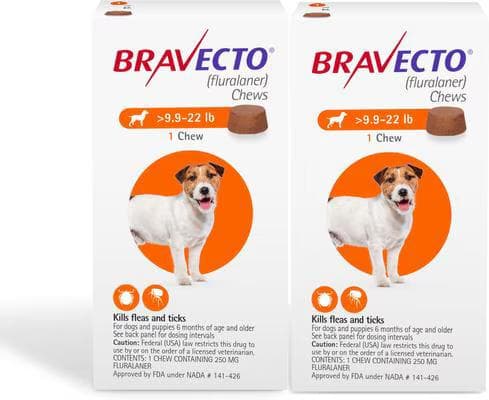
A prescription fluralaner chew that protects against fleas and most ticks for up to 12 weeks per dose, so one chew covers a full season quarter. A low-frequency option for owners who forget monthly doses.
Webvet may earn a commission when you click through to Chewy, at no extra cost to you.
Found an attached tick? Remove it first
The full step-by-step technique, including what to do if the mouthparts break off and how to clean the bite site afterward, lives in our dedicated guide to how to remove a tick from a dog. The short version is this: part the fur, set a tick hook or fine-tipped tweezers, such as the tools in a TickCheck tick removal kit, flat against the skin so you have hold of the tick right at its base, and pull with steady even pressure straight out, without twisting or jerking. Then disinfect the site, wash your hands, and drop the tick into rubbing alcohol.

A few details make the difference between a clean removal and a mess:
- Work in good light with the fur parted and held back, not through the coat.
- Grip the tick's body as low as you can, right where it meets the skin.
- Pull slowly and straight; twisting is what snaps mouthparts off.
- Do not squeeze the swollen body if you can avoid it.
- Save the tick in a sealed bag or vial in case your vet wants to identify it later.
Which tick is it? Identifying the four species that bite dogs
Identifying the tick in the vial changes what happens next, because the diseases a tick can carry depend almost entirely on its species and on where you live. You do not need a microscope for this. Size, the pattern on the shield behind the head, and your region narrow it to one of four ticks in the great majority of North American cases.

Compare what you removed against these four:
- Blacklegged tick, also called the deer tick. The smallest of the group. An unfed adult is roughly the size of a sesame seed and a nymph is closer to a poppy seed, with a plain dark shield and no pattern on it. It waits in leaf litter and wooded understory across the eastern United States, as far west as Texas and South Dakota and north into southern Canada, with a western relative along the Pacific coast. This is the only North American tick group shown to transmit Lyme disease to dogs, and it also carries anaplasmosis and Powassan virus.
- American dog tick. Noticeably larger than a blacklegged tick, brown, with an ornate mottled whitish-gray pattern on the shield behind the head. It prefers tall grassy meadows, open fields, and trail edges rather than deep woods, and it is common east of the Rocky Mountains. It transmits Rocky Mountain spotted fever and tularemia, and ticks in this genus are the usual cause of tick paralysis in North America.
- Lone star tick. Reddish-brown, and the adult female wears a single bright white dot in the middle of her back, which makes her the easiest of the four to name on sight. She is an aggressive biter found across the southeastern and south-central states and up the mid-Atlantic seaboard as far as New England. Lone star ticks transmit ehrlichiosis, spotted fever rickettsiosis, and tularemia.
- Brown dog tick. Uniform reddish-brown, narrow-bodied, with no markings at all. It turns up nationwide, and it is the one species that will breed indoors, living in cracks and crevices in houses, garages, and kennels instead of out in the grass. It transmits canine ehrlichiosis, anaplasmosis, babesiosis, and Rocky Mountain spotted fever.
Engorged ticks are harder to call, because the body swells until the markings stretch and fade, so judge by the shield and the legs rather than the bloated abdomen. If you cannot tell, the sealed vial is your answer: your veterinarian or a county extension office can identify the species, and that identification tells them which infections are worth testing for and which are not plausible in your area.
Myth vs. evidence: what home remedies really do to a tick
Here is the direct answer to what kills ticks on dogs with home remedies: nothing in a normal kitchen kills an attached tick fast enough or safely enough to be worth using. Vinegar, dish soap, table salt, rubbing alcohol, petroleum jelly, and heat all either act far too slowly, act only on a tick that is already off the dog, or work by irritating a tick that is still feeding, which is the outcome you are specifically trying to avoid. The useful move is to remove the tick physically, then use alcohol to kill it in a container.

The table below pairs each remedy with what it actually does to an attached tick, so you can check the one you were about to reach for before you use it.
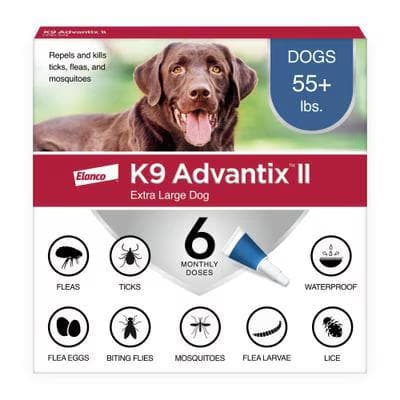
A monthly topical for dogs over 55 lbs that repels and kills ticks, fleas, and mosquitoes. Repelling ticks before they bite is a useful layer during heavy tick season.
Webvet may earn a commission when you click through to Chewy, at no extra cost to you.
| Home remedy | Common claim | What it actually does | Verdict |
|---|---|---|---|
| White vinegar | Makes the tick let go or kills it on contact | Mildly acidic and irritating; a tick that is cemented in place does not release on cue, and dilute acetic acid does not penetrate the bite | Does not kill an attached tick |
| Dish soap on a cotton ball | Suffocates the tick so it backs out | Coats the body surface but not the embedded mouthparts; at best it slowly stresses the tick while it keeps feeding | Does not kill an attached tick |
| Salt or salt water | Dehydrates and kills the tick | Ticks are built to resist drying out and can survive prolonged wetting; salt water does not reach an embedded tick at all | Does not kill an attached tick |
| Rubbing alcohol applied to the bite | Kills the tick instantly in place | Kills a tick reliably only by full immersion off the dog; dabbed on a feeding tick it irritates without killing quickly | Use only after removal |
| Petroleum jelly | Smothers the tick so it detaches | Ticks breathe very slowly and can survive being coated for hours; mainly it makes the tick slippery and hard to grip | Does not kill an attached tick |
| Lit match or hot needle | Forces the tick to reverse out | Burns the dog's skin and stresses a feeding tick; the tick usually stays put | Never use |
| Lemon or citrus juice | Dissolves the tick or makes it release | Acidic and aromatic but has no effect on a cemented tick; commonly cited as a repellent, not a killer | Does not kill an attached tick |
Two of these deserve extra attention because they show up most often. Using vinegar on an attached tick is the single most repeated tip online, and it fails for a simple reason: household vinegar is roughly five percent acetic acid, which is not strong enough to kill an arthropod through its cuticle in seconds, and it cannot reach the mouthparts under the skin. The salt water claim survives for a similar reason: ticks do eventually die in salted water, but only a loose tick left sitting in it for a long stretch, which is nothing like sprinkling salt on a tick that is buried in your dog's skin.
Rubbing alcohol earns a partial pass, but only in the right order. Once the tick is off your dog, dropping it into a small sealed jar of isopropyl alcohol kills it reliably and lets you keep it for identification. Flushing a tick gets it out of the house but does not reliably kill it, since ticks survive a long time in water, and crushing one with bare fingers exposes you to its fluids. Alcohol in a sealed container does both jobs at once.
Tick sprays for dogs: contact kill, repellency, and DIY recipes
A tick spray for dogs is the closest thing to an instant answer, but only for ticks that have not bitten yet. Sprays work on the coat surface, so a tick walking through treated fur picks up the active ingredient across its whole body and dies within minutes to a few hours. The same spray applied over a tick that is already cemented into the skin has very little to work with.
The category splits into three genuinely different products, and mixing them up is where owners go wrong:
- Contact-kill insecticide sprays. Usually pyrethrins or a synthetic pyrethroid such as permethrin or etofenprox. These are the products that actually kill crawling ticks and fleas on the coat, and they are regulated by the Environmental Protection Agency. Permethrin is highly toxic to cats, so a product labeled for dogs must never be used on a cat. In a home with both, keep the treated dog away from your cats for a full 24 hours, which is the label separation, not just until the coat feels dry.
- Repellent sprays. These discourage ticks from climbing on or biting but are not designed to kill. A natural tick spray for dogs almost always falls in this group.
- Environmental and gear sprays. A tick spray for dogs and humans usually means a permethrin product intended for clothing, boots, and gear rather than skin, plus a separate skin repellent for people. Read the label, because the human and canine versions of the same brand are not interchangeable.
If you are shopping for the best tick spray for dogs, the label tells you almost everything. Look for an EPA registration number, an explicit statement that the product kills ticks rather than only repelling them, the species and minimum age it is approved for, and how often it can be reapplied. Anything that avoids naming an active ingredient is a repellent at best.
DIY tick spray for dogs is where the biggest gap sits between what circulates on social media and what a veterinarian will endorse. A homemade flea and tick spray for dogs, usually vinegar, water, and a few essential oils, is not an insecticide, and several popular oils are genuinely unsafe for dogs at the concentrations people mix by eye:
- Tea tree oil and pennyroyal are toxic to dogs even in small amounts and should never go on the coat.
- Cats are more sensitive still, so an oil blend used on a dog can affect a cat that grooms or sleeps against that dog.
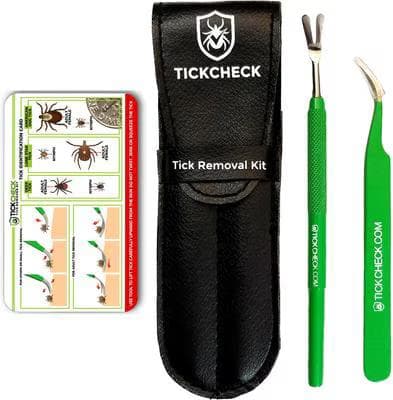
A vet-style tick removal kit with fine-tip tools that grip the tick right at the skin for a clean, straight pull, plus a tick ID card. Easy to keep in your dog-walking bag.
Webvet may earn a commission when you click through to Chewy, at no extra cost to you.
- Undiluted citrus and clove oils can cause skin irritation and stomach upset if licked off.
- Homemade blends have no residual activity, so any effect fades within hours.
If you want a low-chemical layer, the safest version is a light cedarwood or rose geranium spray applied to a collar or bandana rather than the whole coat, used alongside a real preventive rather than instead of one. Ask your veterinarian first if your dog is a puppy, pregnant, or on other medication.
 Sponsored
Vet care that's always there
Unlimited video calls and messaging with licensed vets for less than a typical vet visit. One membership covers up to five pets.
Use code Pets60
Plans start at $12/month · covers up to 5 pets
- Licensed vets in most states
- Rx for 150+ conditions
- 4.7 on Trustpilot
The fastest vet-recommended tick killers, and how fast they really work
When people ask for the best medicine for dog ticks, they usually mean the fastest. The useful way to compare products is by time to kill, meaning how long a tick survives after it climbs on a treated dog. Every honest number here is measured in hours, not seconds, and no licensed product claims otherwise.
Two mechanisms are in play. Oral isoxazolines such as fluralaner (Bravecto), afoxolaner (NexGard), sarolaner (Simparica), and lotilaner (Credelio) circulate in the dog's bloodstream, so a tick has to attach and start feeding before it takes a lethal dose. Topical spot-ons such as Frontline Plus and K9 Advantix II and collar products sit in the skin oils and hair coat, so they can kill or repel a tick on the surface before it bites at all. Neither route is instant, and both are far more reliable than anything in your cabinet.
| Product class | Example active ingredients | Typical time to kill an attached tick | Notes |
|---|---|---|---|
| Oral isoxazoline chew | Fluralaner, afoxolaner, sarolaner, lotilaner | About 8 to 48 hours | Tick must bite to be exposed; coverage lasts one to three months depending on the product |
| Topical spot-on | Fipronil, permethrin, imidacloprid combinations | About 24 to 48 hours | Works on contact without a bite; some contain permethrin, which means keeping cats away from the treated dog for 24 hours |
| Medicated collar | Flumethrin with imidacloprid | Hours after contact, with repellency before biting | Long duration, often up to eight months; must sit snug against the skin to work |
| Contact spray or shampoo | Pyrethrins, permethrin, etofenprox | Minutes to a few hours on crawling ticks | Knockdown only, with little to no lasting protection |
| Home remedies | Vinegar, salt, dish soap, petroleum jelly | No reliable kill | Not a treatment; delays correct removal |
Reading that table alongside the marketing is the whole point. A product advertised as the best flea and tick spray for dogs is a knockdown tool, useful after a hike, while an isoxazoline chew or a flumethrin collar such as the Seresto collar is what keeps the next tick from ever getting a full meal. The Companion Animal Parasite Council recommends year-round tick control for dogs across most of the country, so the sensible plan is a year-round preventive with sprays as an extra layer during peak season.
Speed also depends on which tick you are dealing with. In head-to-head studies, blacklegged ticks (the deer ticks that carry Lyme disease) die fastest on a treated dog, while lone star ticks and American dog ticks are generally slower to die, sometimes surviving well past the first day. That is the practical reason to keep running your hands over your dog after every walk in tick country instead of assuming the product has already handled it.
A few practical rules keep these products working the way the label promises:
- Dose by current weight, not the weight your dog was last year.
- Give oral chews with food unless the label says otherwise, and watch that the whole dose is swallowed.
- Do not bathe a dog for the window the topical label specifies, usually 24 to 48 hours after application.
- Fit a collar snug enough to slide two fingers under, and trim the excess.
- Keep every dog and cat in the household on an appropriate product, since one untreated pet reseeds the others.
Prescription and over-the-counter tick products are not interchangeable across species or sizes, and the FDA Center for Veterinary Medicine has flagged neurologic effects, including tremors and seizures, in a small number of dogs given isoxazolines, so a dog with a seizure history needs a conversation with your veterinarian before starting one.
Clearing ticks from your house and yard
If you keep finding ticks on the same dog, the source is usually a few square feet of your own property. Ticks do not fly or jump; they climb to the tip of tall grass or sit in leaf litter and wait for a passing host, which means habitat changes remove more ticks than any spray does.
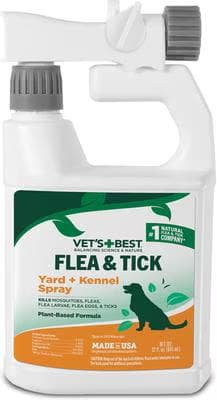
Outdoor yard and kennel treatment for tick habitat, not for use on pets. Peppermint oil and eugenol, so it treats the leaf litter and tall grass where ticks wait.
Webvet may earn a commission when you click through to Chewy, at no extra cost to you.

If you want to get rid of ticks in the house naturally, start outside, because that is where the population lives:
- Rake and remove leaf litter, especially along fences, sheds, and the woodline.
- Mow regularly and keep grass short in the areas your dog actually uses.
- Lay a three-foot barrier of wood chips or gravel between lawn and woods to slow tick migration.
- Move play equipment, kennels, and dog beds away from that boundary and into full sun.
- Discourage deer and rodents by clearing brush piles, securing bins, and skipping ground-level bird feeders.
- Tumble dry outdoor clothing and dog bedding on high heat for ten minutes, which kills the ticks riding along on fabric, and give it longer if the load went in damp.
That last point is the one thing in an ordinary house that kills ticks quickly and reliably, because dry heat works where the liquids in your cupboard do not.
Managing ticks on a large property follows the same logic at a bigger scale, focused on edges rather than acreage: treat and clear the perimeter your dog patrols instead of trying to cover open field. When you do need chemistry, the chemicals that kill ticks in the house and yard are EPA-registered acaricides, typically permethrin or bifenthrin formulations applied to the yard perimeter in spring and again in late summer. Indoors, ticks rarely establish a population because most species need outdoor humidity, with one important exception: the brown dog tick can complete its entire life cycle inside a home, and a genuine indoor infestation of that species needs professional pest control rather than a spray bottle. Compare label-first outdoor options in our flea and tick yard treatment guide.
Tick paralysis in dogs: when an attached tick is an emergency
Most tick bites cause nothing worse than a small itchy bump. A small number cause tick paralysis, and it is the one tick problem that can take a healthy dog from mildly wobbly to unable to breathe inside a couple of days.
The cause is not an infection. Certain feeding female ticks secrete a neurotoxin in their saliva that disrupts the nerve signals reaching the muscles, so the dog weakens while the tick is still attached and still feeding. In North America the usual culprits are Dermacentor ticks, meaning the American dog tick and the Rocky Mountain wood tick. The Merck Veterinary Manual puts the onset of signs at roughly five to nine days after the tick attaches for these species.
What owners notice follows a recognizable pattern:
- Hind limb weakness first, often mistaken for a sore back, a limp, or plain tiredness.
- A wobbly, drunken gait that gets worse over hours rather than better.
- Weakness climbing into the front limbs, until the dog cannot stand at all.
- A changed or absent bark, gagging, or trouble swallowing.
- Rapid, shallow, or labored breathing, which is the dangerous stage.
That last sign is why this is an emergency rather than a wait-and-see problem. The paralysis eventually reaches the muscles the dog breathes with, and in severe cases death from respiratory failure can follow within a day or two of the signs starting.
The treatment itself is simple, and it is the reason a full-body search matters so much: find the tick and get it off. Once the tick is removed, most dogs begin improving within about 24 hours and recover completely within roughly 72 hours. Because one hidden tick can keep the toxin coming, go over the entire dog, including inside the ears, between the toes, under the collar, in the armpits and groin, and around the base of the tail.
What to watch for after the tick comes off
Removal is not quite the end of it, though the follow-up is short and specific. The bite site itself settles in days: a small red bump or a firm raised spot where the mouthparts sat is normal and usually fades within a few days, as are mild redness and a tiny scab. A fragment of mouthpart left behind typically works its way out like a splinter, so leave it alone rather than digging for it. What is not normal is a site that gets worse instead of better, and spreading redness, heat, swelling, or discharge two or three days later is a reason to call.
Your dog needs the longer watch, because tick-borne illness surfaces days to weeks after the bite rather than hours. Keep this timeline in mind:
- Days 0 to 3. Expect the bite site to shrink rather than grow, and expect your dog to behave completely normally.
- Days 3 to 30. This is the window in which most canine tick-borne infections first announce themselves, typically as fever, lethargy, appetite loss, or lameness that shifts from one leg to another.
- Weeks 2 to 5. The Merck Veterinary Manual places the onset of canine Lyme disease in this range after the organism is transmitted, most often as shifting-leg lameness with swollen, painful joints and enlarged lymph nodes.
- Beyond a month. Some infections stay quiet far longer, so mention the tick at your next routine appointment even if nothing came of it.
Save the tick and label the container with the date. Sealed in rubbing alcohol it keeps well enough to identify weeks later, and the species plus the date plus where your dog had been tells your veterinarian which infections are plausible and which are not worth testing for.
Monitoring is the backup, not the plan. The Companion Animal Parasite Council's position is that year-round tick control on every dog in the household is what stops these diseases from starting in the first place. If anything on that timeline appears, call your veterinarian and lead with the tick: when it was attached, roughly how long it fed, and where your dog had been, because that history shapes which tests are run.
When a tick bite needs a veterinarian
Most tick bites end with a clean removal and nothing more. Some do not, and the follow-up window matters because tick-borne illness usually shows up days to weeks after the bite, long after owners have stopped watching. Our guide to tick bite symptoms and treatment in dogs covers what to monitor over the following month.
Call your veterinarian if you see any of the following:
- Mouthparts left behind that you cannot remove, or a bite site that stays swollen, red, or oozing after a few days
- Fever, lethargy, or a dog that suddenly does not want to get up
- Limping that moves from leg to leg, or obvious joint pain and stiffness
- Loss of appetite, swollen lymph nodes, or pale gums
- Any tick found on a dog that is not on a preventive, especially in a Lyme-endemic region
- A tick that has clearly been attached for more than a day
Treatment for a confirmed tick-borne infection is not something to improvise, and it is not what any spray or shampoo delivers. Diagnosis relies on veterinary testing, and when Lyme disease is confirmed with clinical signs, the standard response is a prescription course such as the one described in our guide to antibiotics for Lyme disease in dogs. If your dog seems unwell after a bite, the priority is a veterinary appointment rather than another product.
Tick-killing questions dog owners ask
Frequently Asked Questions
Can Dawn soap kill ticks on dogs?
Not in any way that helps. Dish soap does not kill an attached tick, because the soap sits on the tick's outer body while its mouthparts stay cemented under your dog's skin, and a tick can keep feeding through a long bath. A sudsy bath can dislodge loose ticks in the bath water, and it will kill some of them slowly, but that only applies to ticks that have not bitten yet. Dish soap is also a degreaser, so repeated use strips coat oils and dries the skin. If a tick is already attached, remove it with a tick hook or fine-tipped tweezers first, then bathe the dog later if you want to.
What smells do ticks hate?
Ticks tend to avoid strong plant-derived scents including cedarwood, rose geranium, lemongrass, peppermint, and eucalyptus, and a few of these have measurable repellent activity in laboratory testing. The key caveat is that repel is not the same as kill: a repelled tick simply moves on and may still climb aboard when the scent fades, usually within hours. Essential oil safety for dogs also limits what you can actually use, since tea tree and pennyroyal are toxic to dogs, cats are more sensitive again, and concentrated oils can irritate skin or upset the stomach if licked. Treat scent as an optional extra layer on a collar or bandana, never as a substitute for a veterinary tick preventive.
Can lemon remove ticks from dogs?
No. Lemon juice will not make a tick let go, and no citrus preparation makes an attached tick detach on its own. A feeding tick anchors itself with cut mouthparts and a cement-like secretion, so it is physically held in place rather than lightly stuck, and an acidic liquid dabbed on top cannot reach that anchor. Worse, dousing a feeding tick irritates it while it is still in the bite, which is exactly what veterinarians advise against. Citrus oils are sometimes used as mild repellents on surfaces, but as a removal method lemon simply costs you time. Use a tick hook or fine-tipped tweezers and pull straight out instead.
Can you use Vaseline to remove a tick from a dog?
No. Smothering an attached tick with petroleum jelly does not make it let go, and it is not a removal method. Ticks breathe very slowly through small openings on the body, so a coating can take hours to bother them while the tick keeps feeding. Vaseline also makes the tick slippery and harder to grip when you finally reach for tweezers. Use a tick hook or fine-tipped tweezers, pull straight out, then drop the tick in rubbing alcohol.
Will a tick fall off my dog on its own?
Eventually, yes, but waiting is the wrong plan. A feeding tick stays attached for several days and drops off by itself only once it is full, and every extra hour it feeds raises the chance it passes on an infection such as Lyme disease. No household product safely speeds that up. Remove the tick as soon as you find it, then watch the bite site and your dog over the following few weeks and call your veterinarian if anything changes.
Does flea and tick shampoo kill ticks on dogs?
Flea and tick shampoo can kill ticks sitting on the coat, but it works slowly and leaves almost no lasting protection. The insecticide acts only while the product is on your dog, so a tick that climbs on the next day is unaffected, and a shampoo will not reliably kill one that is already cemented into the skin. Treat it as a clean-up after a walk in tick country if the label allows, and keep your dog on a year-round preventive.
Can I use a tick spray made for humans on my dog?
Only if the product is labeled for dogs. Never put a human skin repellent containing DEET on your dog, because dogs lick their coat and DEET can cause drooling, vomiting, and neurologic signs. Permethrin sprays sold for clothing and gear are meant for fabric rather than a pet's skin, and permethrin is highly toxic to cats living in the same home. Choose a spray that names dogs on the label and carries an EPA registration number.
Can I use a tick spray at the same time as my dog's monthly preventive?
Often yes, but read both labels and ask your veterinarian first. A contact spray and a monthly oral or topical preventive do different jobs, so many veterinarians are comfortable with both during peak tick season. Trouble comes from stacking two products that share the same active ingredient, or using an adult product on a puppy. Check the age and weight minimums on each label, and ask your vet before layering anything on a dog that is pregnant, nursing, or has a seizure history.
Sources
- Merck Veterinary Manual: Dog Owners resource library
- Companion Animal Parasite Council
- U.S. Food and Drug Administration, Center for Veterinary Medicine
- U.S. Environmental Protection Agency: Pets and pesticide products
- Centers for Disease Control and Prevention: Ticks
- Cornell University College of Veterinary Medicine, Riney Canine Health Center
- American Veterinary Medical Association: Pet owner resources

Editor
The Webvet Editorial Team is the in-house group of pet-care editors and writers behind Webvet, operated by Smart Pet Collective. The team researches, writes, and maintains Webvet's pet health, behavior, and medication content. Every article follows a defined editorial process: research from reputable veterinary and scientific sources, careful drafting, mandatory review of medical content by a credentialed veterinarian, and dated publication. Health and medication articles are medically reviewed by a licensed veterinary professional before they go live and are kept current over time.
Veterinarian · BVMS MRCVS
Dr. Pippa Elliott, BVMS, MRCVS, is a veterinarian with nearly 30 years of experience in companion animal practice. Dr. Elliott earned her Bachelor of Veterinary Medicine and Surgery from the University of Glasgow. She was also designated a Member of the Royal College of Veterinary Surgeons. Married with 2 grown-up kids, Dr. Elliott has a naughty Puggle named Poggle, 3 cats and a bearded dragon.


