Ticks on Dogs: Symptoms and Treatment
Found ticks on your dog? Learn the symptoms of a tick bite, what actually kills ticks safely, how to care for the bite site after removal, and the red flags that mean it is time to call your veterinarian.

BVMS MRCVS
Medically reviewed by Dr. Pippa Elliott, BVMS MRCVS · Last reviewed

This article contains affiliate links. Webvet may earn a commission when you buy through them, at no extra cost to you.
Ticks on dogs cause itching, scratching, and small skin bumps, and they can transmit serious diseases like Lyme disease and ehrlichiosis within hours to days of attaching.
The fix is straightforward: remove any attached ticks promptly, kill the rest with a vet-approved product such as an isoxazoline oral chew or a fipronil or permethrin topical, then monitor your dog for illness over the next few weeks.
This guide walks you through the whole sequence an owner actually faces: spotting the symptoms, treating and killing the ticks safely, caring for the bite site, understanding the disease risk, and preventing the next infestation.
- 1The most common signs of ticks on dogs are excessive scratching, head shaking, licking one spot, and a small bump you can feel in the coat.
- 2Isoxazoline oral chews and fipronil or permethrin topicals are the treatments that reliably kill ticks. Petroleum jelly, heat, and gasoline never work and can hurt your dog.
- 3Ticks hide in warm, low-fur spots: ears, groin, armpits, between the toes, and under the collar.
- 4After removing an embedded tick, clean the site and watch your dog for 1 to 3 weeks. Fever, limping, or lethargy means call your vet.
- 5Year-round prevention is cheaper and safer than treating a tick-borne disease.

 Sponsored
Need flea, tick, or parasite care for your dog?
A licensed vet at Dutch can recommend the right preventive and prescribe it when it's appropriate. Annual members get 20% off their first flea and tick order.
Use code Pets30
Plans start at $11/month · covers up to 5 pets
- Licensed vets in most states
- Rx for 150+ conditions
- 4.7 on Trustpilot
Found a Tick on Your Dog? Your Decision Path
If you just found a tick on your dog, do not panic: most tick bites never transmit disease, and quick action shrinks the risk further. Use this simple decision path to know exactly what to do next.
- Tick is crawling, not attached: pick it off with tweezers or a paper towel and drop it in rubbing alcohol. No bite happened, so no aftercare is needed.
- Tick is attached and small or flat: it likely attached recently. Remove it promptly with fine-tipped tweezers, clean the site, and start your dog on a tick preventive if they are not already protected.
- Tick is attached and engorged (swollen, gray, grape-like): it has been feeding for a day or more. Remove it, save it in a sealed bag for identification, and watch your dog closely for the next several weeks.
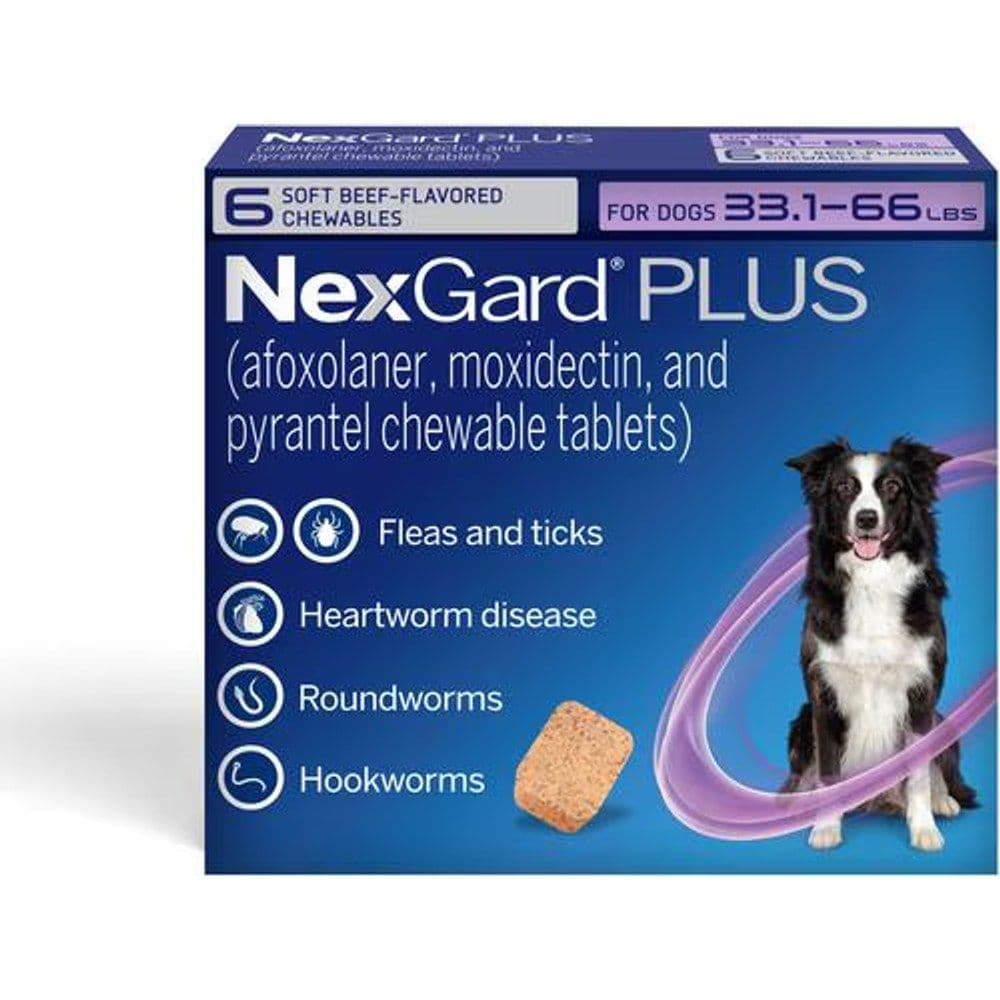
Beef-flavored monthly chew that protects dogs from fleas, ticks, heartworm disease, roundworms, and hookworms.
Webvet may earn a commission when you click through to Chewy, at no extra cost to you.
- You find several ticks, or your dog already seems sick: call your veterinarian. Multiple bites raise disease risk, and symptoms like fever, limping, or lethargy after tick exposure deserve an exam, not a wait-and-see approach.
The sections below cover each branch of that path in detail, starting with how to tell your dog has a tick in the first place.
Symptoms of Ticks on Dogs: What to Look For
The first signs of a tick on a dog are usually behavioral: excessive scratching or licking aimed at one spot, head shaking when the tick is in or near an ear, and a small bump you feel while petting that was not there before.
Many dogs show no signs at all, which is why hands-on checks matter.
Watch for these common symptoms of ticks on dogs:
- Excessive scratching, chewing, or licking focused on one area
- A small bump or firm nodule you can feel under the fur
- Head shaking or ear scratching when a tick sits in or around the ear canal
- Red, irritated skin or a scab at a bite site
- A visible tick: a small brown, black, or gray oval that grows larger and grayer as it feeds
- Later, whole-body signs like fever, lethargy, limping, or loss of appetite, which point to possible tick-borne disease

Where Ticks Hide on Dogs
Ticks hide in warm, protected spots with thin fur, which is exactly where casual petting misses them. According to the Companion Animal Parasite Council (CAPC), ticks routinely attach around the head, ears, and neck, but a thorough check has to go further.
Run your fingers slowly against the coat and check each of these spots after every walk in tick season:
- In and around the ears, including the base of the ear flap
- Under the collar, where a tick can feed unnoticed for days
- Around the eyelids and muzzle
- In the armpits and the groin
- Between the toes and in the webbing of the paws
- Under the tail and around the anus
Is It a Tick or a Skin Tag?
An engorged tick and a skin tag, wart, or nipple feel surprisingly similar under the fur, and pulling on the wrong one hurts your dog. There are two quick ways to tell them apart before you reach for the tweezers.
- Look for legs: part the fur and check the base of the bump with good light or a phone flashlight. A tick has eight small legs where its body meets the skin; a skin tag does not.
- Check the attachment: a tick connects to the skin by its tiny mouthparts, so the body sits on top of the skin like a bead. A skin tag or wart grows out of the skin itself and shares its color.
If you are still not sure, do not pull. Snap a photo, mark the spot by trimming a little surrounding fur, and ask your veterinary team; many clinics will identify a bump from a clear photo the same day.
What a Tick Bite Looks Like
A fresh tick bite on a dog usually looks like a small red bump, sometimes with the tick still attached at the center. After the tick detaches or is removed, a raised, scabbed spot can linger for one to two weeks.
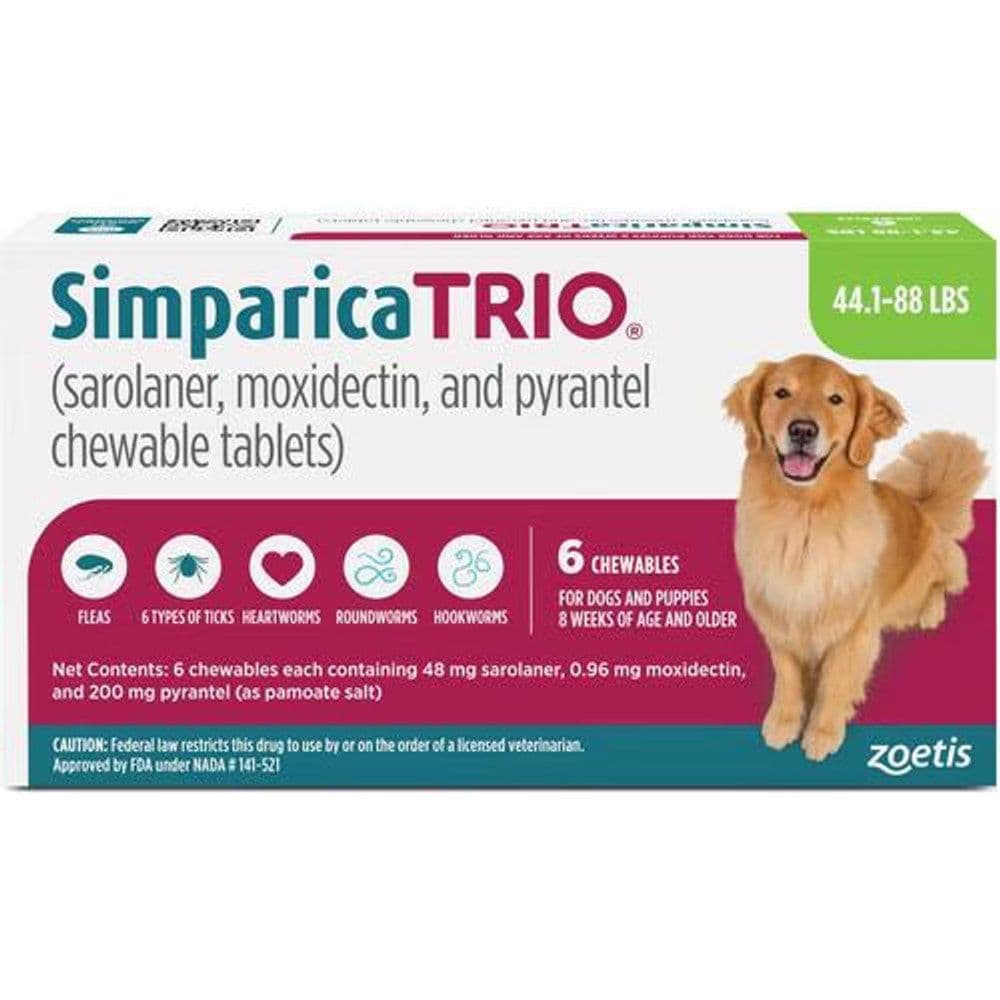
Monthly chew that protects dogs from fleas, six species of ticks, heartworm disease, roundworms, and hookworms.
Webvet may earn a commission when you click through to Chewy, at no extra cost to you.
For photos of bites at every stage, plus how to tell a tick bite from other skin bumps and how big different tick species get, see our full visual guide to what tick bites look like on dogs.

 Sponsored
Vet care that's always there
Unlimited video calls and messaging with licensed vets for less than a typical vet visit. One membership covers up to five pets.
Use code Pets30
Plans start at $11/month · covers up to 5 pets
- Licensed vets in most states
- Rx for 150+ conditions
- 4.7 on Trustpilot
How to Treat Ticks on Dogs: What Kills Them
What kills ticks on dogs? Prescription isoxazoline oral chews (afoxolaner, sarolaner, lotilaner, fluralaner) and topical or collar products built on fipronil, permethrin, or flumethrin are the treatments veterinary parasitology sources such as the Companion Animal Parasite Council and the Merck Veterinary Manual recognize as reliably tick-killing.
Home remedies like petroleum jelly, a hot match, gasoline, or alcohol poured on an attached tick do not kill it, and they can injure your dog or make the tick regurgitate into the bite.
So if your dog has ticks, the plan has three parts: remove any ticks that are already attached, start a vet-approved product to kill the ticks you cannot see, and keep that product going so new ticks die before they can transmit disease.

Vet-Approved Treatment Options
Your veterinarian will match the product to your dog's age, weight, health history, and household. These are the main categories:
- Isoxazoline oral chews (prescription): products such as NexGard PLUS, Simparica TRIO, Credelio, and Bravecto kill ticks after they bite, typically within 12 to 48 hours, and protect for one to three months per dose depending on the product. These are prescription medications, so they require a veterinarian's authorization.
- Topical spot-ons (many over the counter): fipronil-based products like Frontline Plus and permethrin-based options like K9 Advantix II spread through the skin oils and kill or repel ticks for about a month per application.
- Medicated collars: a flumethrin and imidacloprid collar such as Seresto releases tick-killing compounds continuously for up to eight months.
- Medicated shampoos and sprays: a pyrethrin-based product like Adams Plus flea and tick shampoo kills ticks on the dog at bath time. Shampoos have little lasting effect, so they are a supplement to, not a replacement for, a monthly preventive.
One honest caveat on speed: nothing safe kills an attached tick truly instantly. Oral and topical products need hours to work after the tick bites. When you can see an attached tick, manual removal with fine-tipped tweezers is always the fastest option, and the medication then cleans up the ticks you missed.
What Never Works (and Can Hurt Your Dog)
Never use petroleum jelly, nail polish, a hot match, gasoline, kerosene, or undiluted essential oils on a tick. These folk methods do not make the tick back out. Instead, they stress the tick, which can push infected saliva or gut contents into your dog and raise the odds of disease transmission.
Burns and chemical irritation are real risks too.
Treatment Options at a Glance
| Treatment type | How it kills ticks | How long it lasts | Prescription needed? |
|---|---|---|---|
| Isoxazoline oral chew | Kills ticks after they bite, usually within 12 to 48 hours | 1 to 3 months per dose | Yes |
| Fipronil topical | Spreads in skin oils; kills ticks on contact with treated skin | About 1 month | No |
| Permethrin topical | Kills and repels ticks on contact | About 1 month | No |
| Flumethrin collar | Continuous low-dose release across the coat | Up to 8 months | No |
| Medicated shampoo or spray | Kills ticks present at bath time | Days at most | No |
| Petroleum jelly, heat, gasoline | Does not work; raises disease risk and can injure the dog | Never use | N/A |
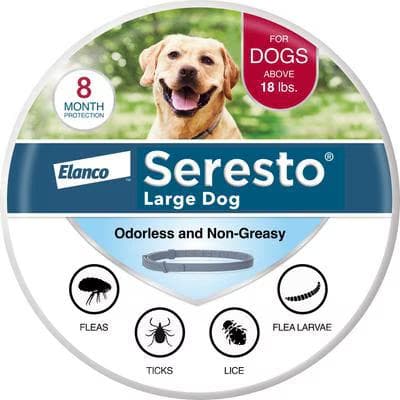
An eight-month flea and tick collar for dogs over 18 lbs that releases protection steadily. A low-effort layer to help keep ticks off between vet-recommended preventives.
Webvet may earn a commission when you click through to Chewy, at no extra cost to you.
Removing an Embedded Tick
The short version: grasp the tick with fine-tipped tweezers as close to the skin as possible and pull straight up with steady, even pressure, without twisting or squeezing the body. Then disinfect the site and wash your hands.
For the full step-by-step, including what to do if the head breaks off and how to use a tick-removal tool, follow our complete guide on how to remove a tick from a dog.
Save the removed tick in a sealed bag or small jar of rubbing alcohol, labeled with the date. If your dog gets sick in the following weeks, identifying the tick species helps your veterinarian narrow down which diseases to test for.
After the Tick Is Removed: Aftercare and Monitoring
After removing an embedded tick, clean the bite site with mild soap and water or a pet-safe antiseptic like dilute chlorhexidine, then leave it alone and check it daily. A small red bump or scab at the site is normal and typically fades within one to two weeks.
Should You Wash Your Dog After Finding a Tick?
A full bath is not required after finding a tick, but it does not hurt, and it gives you a systematic chance to find any other ticks hiding in the coat. Just clean the bite site itself first.
One timing note: if you use a topical spot-on preventive, bathing right afterward can wash it away, so wait per the product label or bathe before reapplying.
The Monitoring Window: What to Watch For
Watch your dog for at least three weeks after a tick bite, because tick-borne diseases have incubation periods that range from days to weeks, and Lyme disease signs can take two to five months to appear. Call your veterinarian if you notice any of the following:
- Fever, lethargy, or loss of appetite
- Limping, stiffness, or lameness that shifts from leg to leg
- Swollen joints or lymph nodes
- Pale gums, unexplained bruising, or nosebleeds
- A bite site that grows redder, swells, oozes, or will not heal
- Weakness in the hind legs or wobbliness, which can signal tick paralysis and is an emergency
Diseases Ticks Can Give Your Dog
Should you worry if you found a tick on your dog? Usually not: a single bite rarely causes lasting harm, and most bites never transmit anything. But ticks do spread several serious canine diseases, so treat a found tick as a prompt to remove it, monitor your dog, and tighten prevention.
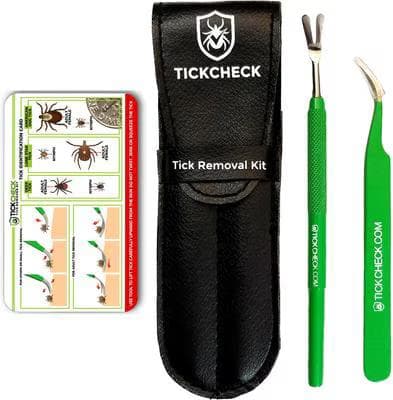
A vet-style tick removal kit with fine-tip tools that grip the tick right at the skin for a clean, straight pull, plus a tick ID card. Easy to keep in your dog-walking bag.
Webvet may earn a commission when you click through to Chewy, at no extra cost to you.
The major tick-borne diseases in US dogs are Lyme disease, ehrlichiosis, anaplasmosis, Rocky Mountain spotted fever, and babesiosis, each carried by particular species such as the black-legged tick, the American dog tick, the brown dog tick, and the lone star tick.
For the species-by-species breakdown, symptoms, and testing for each condition, see our full guide to tick-borne diseases in dogs. Here is a quick sense of what each major disease looks like in a dog:
- Lyme disease: shifting-leg lameness, swollen joints, fever, and lethargy; a small percentage of dogs develop serious kidney complications
- Ehrlichiosis: fever, appetite loss, weight loss, and bleeding problems such as nosebleeds or bruising
- Anaplasmosis: fever, joint pain, and lethargy that can look almost identical to Lyme disease
- Rocky Mountain spotted fever: fever, swelling of the legs or face, and small pinpoint bruises; it can progress quickly and needs prompt treatment
- Babesiosis: pale gums, weakness, and dark urine from red blood cell destruction
Notice the overlap: fever, lethargy, and limping show up across nearly all of them. You do not need to diagnose which disease your dog has; you just need to recognize that a vague, off-color dog with recent tick exposure is a vet visit, and let a blood test do the sorting.
How Soon After a Tick Bite Will a Dog Get Sick?
Transmission is not instant: most tick-borne pathogens need the tick to stay attached for hours to more than a day, which is why prompt removal matters so much. Once a pathogen is transmitted, illness follows on the disease's own clock.
- Ehrlichiosis and anaplasmosis: signs often appear within one to three weeks of the bite
- Lyme disease: signs typically take two to five months to appear, long after the bite is forgotten
Because Lyme disease is the tick-borne illness owners worry about most, we cover its symptoms, testing, treatment, and the vaccine question in a dedicated guide to Lyme disease in dogs.
The short version: finding one deer tick does not mean your dog has Lyme, and a positive screening test does not always require treatment, so work through it with your veterinarian.
Can Humans Get Ticks From Dogs?
Yes. Dogs cannot give you a tick-borne disease directly, but they can carry unattached ticks into your home and yard, and those ticks can then bite people. The American Veterinary Medical Association notes that external parasites on pets are a household issue, not just a pet issue.
Brown dog ticks can even establish indoor infestations. Keeping your dog on year-round prevention protects the whole family.

Preventing Ticks: Sprays, Collars, and Chews
The best tick prevention for most dogs is a year-round product: a monthly or 12-week isoxazoline chew, a monthly topical, or a long-acting collar. CAPC recommends year-round tick control for dogs because ticks can be active in every season, including mild winter days, and lapses in coverage are when infestations start.
Layer these habits on top of the product your veterinarian recommends:
- Do a hands-on tick check after every walk in grassy, brushy, or wooded areas
- Keep grass mowed, clear leaf litter, and create a mulch or gravel border between lawn and woods
- Stick to the center of trails and avoid tall grass during peak season
- Use a dog-labeled tick spray for extra protection on high-exposure outings like hiking or hunting
- Ask your veterinarian about the Lyme vaccine if you live in a high-risk region
Choosing Between a Chew, a Topical, and a Collar
There is no single best product, only the best fit for your dog and household. A few practical rules of thumb from veterinary practice:
- Dogs that swim or get bathed often: an oral chew is not washed off, so coverage stays consistent
- Households with cats or small children: orals avoid the wet-residue window that comes with permethrin topicals
- Dogs with a history of seizures: isoxazolines carry an FDA caution for neurologic reactions in susceptible dogs, so raise it with your veterinarian before choosing an oral
- Budget-driven choices: a long-acting collar or an over-the-counter topical costs less per month than prescription chews and still provides solid protection when used correctly
- Heavy tick country, hunting, or hiking dogs: many vets layer a repellent permethrin topical or collar on top of an oral for dual protection; confirm the combination with your vet first
What Is the Worst Month for Ticks?
In most of the United States, tick activity peaks from spring through early summer, with April through July the heaviest stretch for the nymph-stage ticks most likely to go unnoticed. Adult black-legged ticks surge again in fall.
The practical takeaway: there is no truly safe month. Adult deer ticks quest on any winter day above freezing, which is exactly why veterinary parasitologists push year-round prevention over seasonal dosing.

Does Your Region Change the Tick Plan?
Where you live shapes how much tick pressure your dog faces, but it rarely lowers it to zero. Ticks thrive anywhere there is shade, humidity, leaf litter, and wildlife to feed on, which includes suburban yards and city parks, not just deep woods. Use your local risk to decide how many layers of protection to stack, not whether to bother at all.
- High-pressure regions (the Northeast, upper Midwest, and humid Southeast): expect ticks nine or more months a year, so treat year-round coverage as non-negotiable.
- Drier Western and mountain areas: activity is patchier, but shaded creek beds, tall grass, and irrigated greenbelts stay hospitable, so keep a preventive running.
- Traveling or moving to a higher-risk region: confirm your dog's product is current before you go, because a single camping weekend can expose a dog to ticks it never meets at home.
- Urban and mostly-indoor dogs: not exempt, because ticks hitch rides indoors on other pets, on people, and on the wildlife that visits your yard.
When you are unsure, check the CAPC parasite prevalence maps or ask your veterinarian which species are active in your county; local clinics track the ticks they pull off patients and can tell you whether your area needs a repellent layer on top of a killing product.
When to See a Vet
See a vet if your dog shows fever, lethargy, limping, swollen joints, pale gums, or appetite loss in the weeks after a tick bite, if you cannot remove an embedded tick completely, if you find a heavy infestation, or if the bite site looks infected.
Sudden hind-end weakness after tick exposure is an emergency: tick paralysis can progress quickly but usually resolves fast once the tick is found and removed.
Frequently Asked Questions About Ticks on Dogs
Frequently Asked Questions
What should I do if my dog has ticks?
Remove any attached ticks with fine-tipped tweezers, grasping close to the skin and pulling straight up. Clean each bite site, then start a vet-approved tick product such as an isoxazoline oral chew or a fipronil or permethrin topical to kill any ticks you missed. Watch your dog for fever, limping, or lethargy over the next few weeks, and call your veterinarian if any of those appear.
What kills ticks on dogs instantly?
Nothing safe kills an attached tick literally instantly. Manual removal with tweezers is the fastest way to deal with a tick you can see. Isoxazoline chews and permethrin or fipronil topicals kill ticks reliably within hours of contact or biting. Never use petroleum jelly, heat, or gasoline to try to kill a tick faster; those methods fail and increase disease risk.
Can I treat ticks on dogs at home?
Yes, in most cases. Removing a tick with tweezers and applying an over-the-counter topical or medicated shampoo are all home steps. Prescription oral chews need a veterinarian's authorization but are given at home. What you should not do at home is diagnose illness after a bite: fever, limping, or lethargy following tick exposure needs a vet exam and possibly a blood test.
How long can a tick stay on a dog before causing problems?
Most tick-borne pathogens need the tick attached for several hours to more than a day before transmission occurs, and an undisturbed tick can feed for up to about a week. The sooner you find and remove a tick, the lower the disease risk, which is why a daily tick check during peak season is so effective.
Do indoor dogs need tick prevention?
Yes. Even mostly indoor dogs go outside to potty, and ticks ride in on people, other pets, and wildlife near the home. Brown dog ticks can complete their whole life cycle indoors, which means a single hitchhiker can become a household infestation. Year-round prevention closes that gap for a few dollars a month.
The Bottom Line
Ticks on dogs are common, treatable, and largely preventable. Check the hiding spots after outdoor time, remove attached ticks promptly with tweezers, and let a vet-approved oral chew, topical, or collar kill the rest.
Clean the bite site, watch your dog for a few weeks, and call your veterinarian at the first sign of fever, limping, or lethargy. A two-minute tick check and a year-round preventive beat treating a tick-borne disease every single time.
A two-minute tick check and a year-round preventive beat treating a tick-borne disease every single time.

Editor
The Webvet Editorial Team is the in-house group of pet-care editors and writers behind Webvet, operated by Smart Pet Collective. The team researches, writes, and maintains Webvet's pet health, behavior, and medication content. Every article follows a defined editorial process: research from reputable veterinary and scientific sources, careful drafting, mandatory review of medical content by a credentialed veterinarian, and dated publication. Health and medication articles are medically reviewed by a licensed veterinary professional before they go live and are kept current over time.
Veterinarian · BVMS MRCVS
Dr. Pippa Elliott, BVMS, MRCVS, is a veterinarian with nearly 30 years of experience in companion animal practice. Dr. Elliott earned her Bachelor of Veterinary Medicine and Surgery from the University of Glasgow. She was also designated a Member of the Royal College of Veterinary Surgeons. Married with 2 grown-up kids, Dr. Elliott has a naughty Puggle named Poggle, 3 cats and a bearded dragon.


