Lyme Disease Vaccine for Dogs: Does Your Dog Need It?
A vet-reviewed decision guide to the Lyme disease vaccine for dogs: how well it works, the schedule and boosters, cost, side effects, and which dogs actually need it.

BVMS MRCVS
Medically reviewed by Dr. Pippa Elliott, BVMS MRCVS · Last reviewed

This article contains affiliate links. Webvet may earn a commission when you buy through them, at no extra cost to you.
The Lyme disease vaccine for dogs is a genuinely useful tool, but it is not for every dog. It is a non-core vaccine, which means your veterinarian recommends it based on risk, not by default. If you live in or travel to a region where blacklegged ticks and Lyme disease are common, and your dog spends time in grass, brush, or woods, the vaccine is worth serious consideration. If your dog lives somewhere Lyme is rarely reported and rarely goes into tick habitat, the case is much weaker. This guide walks through exactly how the vaccine works, how well it protects, the schedule and boosters, the cost, the side effects, and the honest debate around Lyme nephritis, so you can make the decision with your vet instead of guessing.
One thing to settle up front: the vaccine is not a replacement for tick prevention. Even fully vaccinated dogs still need year-round tick control, because the same ticks that carry Lyme also carry anaplasmosis, ehrlichiosis, and other diseases the Lyme vaccine does nothing to prevent. Think of the vaccine and monthly or collar-based tick prevention as two layers of the same defense, not an either-or choice.
- 1The Lyme vaccine is non-core: recommended by risk (region plus lifestyle), not given to every dog automatically.
- 2It reduces the chance of infection but is not 100 percent effective, so it never replaces year-round tick prevention.
- 3Initial protection needs two doses two to four weeks apart, then an annual booster to stay protected.
- 4Duration of immunity is about one year, which is why boosters are annual.
- 5Typical cost is roughly $30 to $75 per dose, plus any exam fee.
- 6Serious side effects are uncommon; the widely discussed link between the vaccine and Lyme nephritis is not supported by current evidence.

 Sponsored
Need flea, tick, or parasite care for your dog?
A licensed vet at Dutch can recommend the right preventive and prescribe it when it's appropriate. Annual members get 20% off their first flea and tick order.
Use code Pets30
Plans start at $11/month · covers up to 5 pets
- Licensed vets in most states
- Rx for 150+ conditions
- 4.7 on Trustpilot
Does your dog need the Lyme vaccine? (regional and lifestyle risk)
Whether the Lyme disease vaccine is necessary for your dog comes down to two questions: how much Lyme disease exists where your dog lives or travels, and how much time your dog spends where ticks live. A dog in a high-incidence region who hikes and hunts is a strong candidate. A dog in a low-incidence area who only walks on city sidewalks is usually not. There is no universal yes or no, which is precisely why it is a non-core vaccine that your veterinarian tailors to your dog.

Where Lyme disease is common
Lyme disease is caused by the bacterium Borrelia burgdorferi and is spread by the bite of infected blacklegged ticks, also called deer ticks (Ixodes scapularis in the eastern and central United States, and Ixodes pacificus on the West Coast). Because the disease follows the tick, it is heavily concentrated in specific regions rather than spread evenly across the country.
The highest-risk areas in the United States include:
- The Northeast, from Maine down through Virginia
- The upper Midwest, especially Wisconsin and Minnesota
- Parts of the Pacific Northwest and northern California
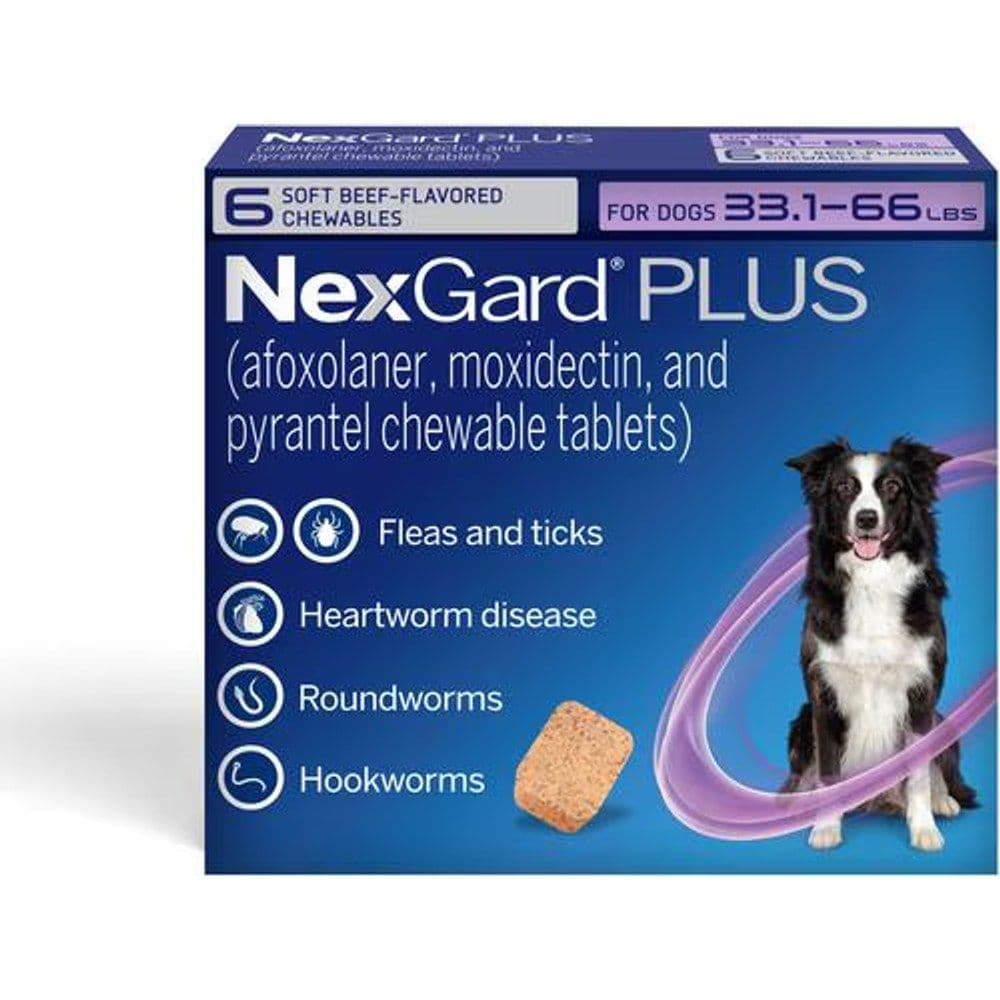
Beef-flavored monthly chew that protects dogs from fleas, ticks, heartworm disease, roundworms, and hookworms.
Webvet may earn a commission when you click through to Chewy, at no extra cost to you.
The range of blacklegged ticks has been expanding for years, so counties that reported little Lyme disease a decade ago now see cases. Your veterinarian knows the local picture better than any national map, including whether cases are climbing in your specific county. That local knowledge is one of the best reasons to make this a conversation rather than a coin flip.

Lifestyle risk: how your dog lives matters as much as where
Two dogs in the same town can have very different Lyme risk. Ticks live in tall grass, leaf litter, brushy field edges, and wooded areas, waiting to climb onto a passing host. A dog who spends time in those places has many more chances to pick up an infected tick than one who does not.
Higher-lifestyle-risk dogs include those who:
- Hike, camp, or spend time on trails and in the woods
- Hunt, do field work, or roam rural and wooded property
- Play in tall grass, brush, or unmowed field edges
- Travel with the family to Lyme-endemic regions
A dog who only potties in a fenced suburban yard and walks on paved streets in a low-incidence area sits at the other end of the spectrum. Lifestyle can move a dog from low to high risk even in a moderate region, and it can keep a dog at low risk even fairly close to endemic areas.
A simple who-should and who-should-not framework
One practical note from veterinary guidance: dogs that have already been exposed to ticks are often tested for existing Lyme infection before vaccination, because vaccinating a dog that is already infected does not treat the infection. Your vet may recommend a quick in-clinic screening test as part of the decision.
How to gauge your dog's local Lyme risk
You do not have to guess about regional risk. There are concrete ways to understand how much Lyme disease is circulating where you live, and they usually point to the same answer your veterinarian would give:
- Ask your vet how many positive Lyme tests they see. General-practice clinics run routine tick-borne disease screening, so your veterinarian has a real-time sense of local positivity that no map can match.
- Check parasite-prevalence resources. Veterinary parasitology groups publish county-level maps of Lyme and tick-borne disease positivity that show where cases are concentrated and where the tick range is expanding.
- Factor in travel. If you spend summers in an endemic region or take your dog on trips to the Northeast or upper Midwest, your dog's real exposure can be far higher than your home county suggests.
Risk is not static, either. Blacklegged ticks have been steadily moving into new areas, mild winters let tick populations survive and spread, and a county that was low-risk a few years ago may now report regular cases. Revisiting the decision at your dog's annual exam, rather than deciding once and never again, is the sensible approach in a changing tick landscape.
How well does the Lyme vaccine work?
The Lyme vaccine reduces the likelihood of infection, but it is not a force field. Reported efficacy in preventing infection generally falls in the range of about 60 to 90 percent depending on the product and the study, which means some vaccinated dogs can still become infected if they are heavily exposed. That is a meaningful reduction in risk, not a guarantee, and it is the single most important thing to understand before relying on the vaccine.
The clever part is how the vaccine works. Most canine Lyme vaccines target a surface protein on the bacterium called OspA (outer surface protein A). When an infected tick bites a vaccinated dog and starts to feed, the dog's OspA antibodies enter the tick's gut along with the blood meal and attack the Borrelia bacteria while they are still inside the tick, before they can migrate into the dog. In effect, the vaccine works inside the tick, which is why it is sometimes called transmission-blocking. Some newer vaccines add a second target, OspC, to broaden protection to bacteria that have already begun changing their surface proteins during transmission.
Because the antibodies do their work in the tick's gut, the vaccine depends on your dog having a good antibody level at the time of the bite. That is the mechanism behind the annual booster: as protection wanes over the year, revaccination keeps antibody levels high enough to intercept bacteria during a feeding tick. It is also why timing the initial series before tick season, rather than in the middle of it, is ideal when possible.
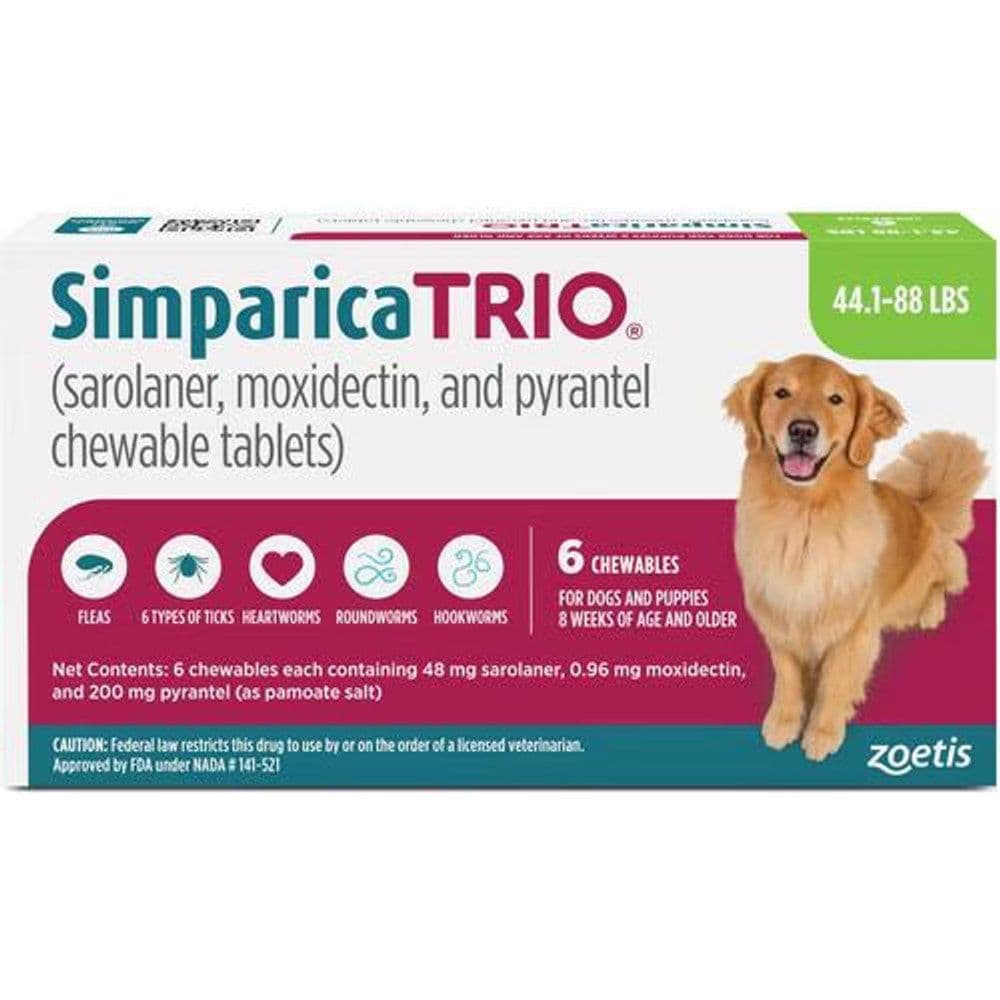
Monthly chew that protects dogs from fleas, six species of ticks, heartworm disease, roundworms, and hookworms.
Webvet may earn a commission when you click through to Chewy, at no extra cost to you.
Here is the honest pros-and-cons summary many owners are looking for:
- Pro: it meaningfully lowers the chance of Lyme infection in exposed dogs.
- Pro: it adds a second layer of defense on top of tick preventives, which can fail if a dose is late or a tick slips through.
- Con: it is not 100 percent effective and protects only against Lyme, not other tick-borne diseases.
- Con: it requires an annual booster to keep working, which is an ongoing cost and clinic visit.
What does an efficacy figure actually mean for your dog? If a vaccine reduces infection risk by, say, 80 percent, it does not mean your dog is 80 percent protected on any given tick bite and then unprotected on the next. It means that across a population of exposed dogs, far fewer vaccinated dogs become infected than unvaccinated ones. For an individual high-risk dog, that translates into a real, worthwhile drop in the odds of catching Lyme over a season of exposure, which is why the vaccine earns its place for dogs who are genuinely in tick country. It also explains why the vaccine is never sold as a guarantee: a small share of vaccinated, heavily exposed dogs can still be infected, and those dogs still rely on tick prevention as a backstop.
Efficacy also depends on the vaccine being kept current. A dog whose booster has lapsed is running on declining antibody levels, and the transmission-blocking mechanism only works well when those levels are high at the moment a tick feeds. In real-world terms, the difference between a vaccine that works and one that does not is often simply whether the annual booster was given on time. That makes owner follow-through, not the specific brand, the biggest lever on how well the vaccine performs.
 Sponsored
Vet care that's always there
Unlimited video calls and messaging with licensed vets for less than a typical vet visit. One membership covers up to five pets.
Use code Pets30
Plans start at $11/month · covers up to 5 pets
- Licensed vets in most states
- Rx for 150+ conditions
- 4.7 on Trustpilot
Which Lyme vaccines are available?
Several licensed canine Lyme vaccines are on the market in the United States, and your veterinarian carries one or two of them. They fall into two broad types: recombinant vaccines that use purified surface proteins, and bacterin vaccines that use inactivated whole bacteria. Both are given the same way and follow the same general schedule, so you generally do not need to request a specific brand. The most commonly seen products include:
| Vaccine | Maker | Type | Key targets |
|---|---|---|---|
| Nobivac Lyme | Merck Animal Health | Recombinant subunit | OspA and OspC |
| Vanguard crLyme | Zoetis | Recombinant chimeric | OspA plus a chimeric OspC |
| Recombitek Lyme | Boehringer Ingelheim | Recombinant subunit | OspA |
| Duramune Lyme / older bacterins | Various | Whole-cell bacterin | Whole inactivated Borrelia |
The practical takeaway is that the newer recombinant vaccines targeting both OspA and OspC are designed to broaden protection, while older whole-cell bacterins expose the immune system to many bacterial proteins at once. All of the currently licensed products are considered effective when used correctly and boosted on schedule. If your dog has had a reaction to a vaccine in the past, mention it, because your vet can factor product type into the plan.
You generally will not choose a brand off a shelf the way you pick a flea preventive. Clinics stock one or two Lyme vaccines and use what they carry, and switching brands between years is usually fine as long as the annual schedule is kept. What matters far more than the specific label is that the product is licensed, stored and handled correctly at the clinic, and boosted on time. If you are moving your dog from another practice, ask the new clinic to note which Lyme vaccine your dog previously received so the record stays complete, but do not lose sleep over matching the exact brand.
If you are wondering about the name of the Lyme disease vaccine for dogs, there is no single one. Several USDA-licensed products are sold under different brand names, and the one your dog receives simply depends on which your clinic stocks. You will usually see the name on your invoice or vaccine record rather than choose it yourself. The names often hint at how each vaccine is built: Nobivac Lyme, for example, is a bacterin, while the 'cr' in Vanguard crLyme stands for chimeric recombinant, an engineered design that pairs the OspA target with OspC. Being able to recognize which product your dog received is genuinely useful if you ever switch clinics, travel to a new area, or want to confirm exactly what is already on your dog's record. Because all of these are legitimately licensed, the practical goal is to recognize the name on the record, not to request a particular brand your clinic may not even carry.
The Lyme vaccines you are most likely to see
- Nobivac Lyme (Merck Animal Health): a bacterin that raises antibodies against both the OspA and OspC surface proteins.
- Vanguard crLyme (Zoetis): a recombinant vaccine that combines OspA with a chimeric OspC target to broaden coverage.
- Recombitek Lyme (Boehringer Ingelheim): an OspA-based recombinant subunit vaccine.
- Duramune Lyme (Elanco): a whole-cell bacterin option some clinics still keep in stock.
Vaccine schedule and boosters
The Lyme vaccine is not a one-and-done shot. Protection is built with an initial two-dose series and then maintained with an annual booster. The duration of immunity is about one year, which is exactly why the booster cadence is yearly rather than every three years like some core vaccines.
The first vaccine can be given to puppies as young as about 8 to 9 weeks of age, followed by a second dose two to four weeks later. A dog is not considered protected until a few weeks after that second dose, so start the series well before peak tick season if you can. After the initial series, dogs get a single booster once a year, ideally timed ahead of the local tick season, to keep antibody levels high. If a dog falls far behind on boosters, your vet may restart the two-dose series rather than give a single shot. This schedule is the same regardless of the dog's size or breed.
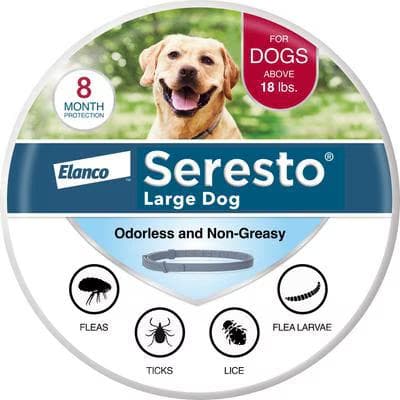
An eight-month flea and tick collar for dogs over 18 lbs that releases protection steadily. A low-effort layer to help keep ticks off between vet-recommended preventives.
Webvet may earn a commission when you click through to Chewy, at no extra cost to you.
| Stage | Timing | What happens |
|---|---|---|
| First dose | As early as 8 to 9 weeks of age | Primes the immune system; no protection yet |
| Second dose | 2 to 4 weeks after the first | Completes the initial series; protection builds over the following weeks |
| Annual booster | Once every 12 months | Maintains immunity; ideally timed before tick season |
| Lapsed dog | If overdue by a long stretch | Vet may restart the two-dose series |
How long does the Lyme vaccine last in dogs? The short answer is at least one year, and that is why an annual booster is required. Immunity gradually declines over the twelve months after vaccination, so skipping a year can leave your dog underprotected heading into the next tick season. Keeping the booster on schedule is the single most important thing you can do to make sure the vaccine actually works when a tick bites.
Timing the booster well is worth a little planning. Because it takes a few weeks for antibody levels to peak after a dose, the ideal window for the annual booster is late winter or early spring in most regions, so your dog is fully topped up before ticks become active. If you adopt a dog whose vaccine history is unknown, or you move into an endemic area partway through the year, your vet can start or restart the series right away rather than waiting for a calendar date. The goal is simply to have strong immunity in place during the months when tick exposure is highest, which in warm climates can be close to year-round.
How much does the Lyme vaccine cost?
How much does a Lyme vaccine cost for dogs? Expect roughly $30 to $75 per dose at a typical general-practice veterinary clinic, with the exact price depending on your region and the specific product. Because the initial series is two doses, budget for that cost twice in the first year, plus one booster dose per year after that.
A few cost details worth knowing:
- The per-dose price often does not include the office or exam fee, which can add $50 to $100 if the vaccine is given at a dedicated visit rather than during a routine wellness exam.
- Low-cost vaccine clinics, shelters, and some pet-store clinic events offer the Lyme vaccine at the lower end of the range, sometimes bundled with other shots.
- Many clinics fold the annual Lyme booster into a yearly wellness package, which can make it more economical than paying for a standalone visit.
Weigh that ongoing cost against the potential cost of treating Lyme disease, which can involve diagnostics, antibiotics, and follow-up care, and in the rare cases that progress to kidney involvement, far more intensive and expensive treatment. For a genuinely high-risk dog, the vaccine is usually the cheaper path over time, and it buys peace of mind through every tick season.
Can you buy or give the Lyme vaccine yourself?
Some farm and ranch stores, including Tractor Supply, stock a range of over-the-counter dog vaccines, but the Lyme vaccine is generally not one of the do-it-yourself options you will find on the shelf. Core vaccines like distemper and parvo are more commonly sold over the counter for livestock and kennel settings, while the Lyme vaccine is typically handled through veterinary clinics. Availability varies by state and store, and it can change, so do not assume you can pick one up with the dewormer.
Can you vaccinate your dog yourself? For the Lyme vaccine, this is strongly not recommended, for several practical reasons:
- Dogs already exposed to ticks should ideally be tested for existing Lyme infection before vaccination, which requires a vet.
- Vaccines can trigger allergic reactions, and a clinic is set up to recognize and treat a reaction immediately.
- Vaccines lose effectiveness if they are not stored and handled at the correct temperature, which is hard to guarantee outside a clinic.
- A vet-administered vaccine comes with proper records and a professional assessment of whether your dog needs it at all.
Because the Lyme vaccine is a risk-based, non-core decision that often depends on a screening test, it belongs in a veterinary conversation rather than a self-service kit. The small savings of a store-bought dose is not worth a missed infection or an unmanaged reaction.
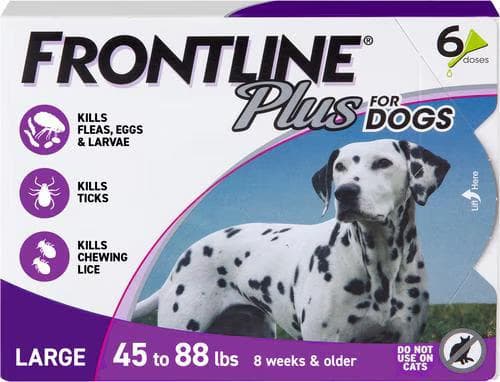
A monthly topical spot-on for large dogs 45 to 88 lbs that kills fleas, ticks, and chewing lice. A waterproof pick for dogs who do better with a topical than an oral chew.
Webvet may earn a commission when you click through to Chewy, at no extra cost to you.
Side effects and the Lyme nephritis question
For the large majority of dogs, the Lyme vaccine is well tolerated and side effects are mild and short-lived. The most common reactions are the same ones seen with many vaccines: mild soreness at the injection site, temporary tiredness or lethargy, a slightly reduced appetite, or a low-grade fever for a day or so. These usually resolve on their own within 24 to 48 hours.

Less common are true allergic reactions. Contact your veterinarian promptly, or seek emergency care, if you notice any of the following in the hours after vaccination:
- Swelling of the face, muzzle, or around the eyes
- Hives or intense, sudden itching
- Repeated vomiting or diarrhea
- Difficulty breathing, weakness, or collapse
Severe reactions like these are uncommon, but they are the reason vaccines are best given in a clinic. If your dog has reacted to a vaccine before, tell your vet, who may pre-treat, monitor your dog after the shot, or reconsider whether the vaccine is the right call.
At home for the first day or two after the shot, keep things low-key: offer water, let your dog rest, and hold off on strenuous exercise if your dog seems tired or sore. Mild lethargy or a tender injection site is normal and self-limiting. Scheduling the vaccine earlier in the day, rather than right before the clinic closes, is a small but smart move, because it means someone is available to call if you notice anything worrying during business hours. If you are ever unsure whether a sign is normal or a true reaction, call your veterinary clinic rather than waiting it out.
The Lyme nephritis debate, explained
You may have read online that the Lyme vaccine can cause Lyme nephritis, a serious and often fatal immune-mediated kidney disease. This is one of the most persistent worries owners raise, and it deserves a clear, honest answer. Lyme nephritis is real, but the current evidence points to it as a rare complication of natural Lyme infection, not of vaccination. In other words, the disease people fear is associated with the tick-borne illness the vaccine is meant to prevent.
The concern has historical roots. Older, whole-cell bacterin vaccines exposed the immune system to a very broad set of bacterial proteins, and there was theoretical worry that this could contribute to immune-complex problems. Modern recombinant vaccines were specifically designed to use targeted surface proteins instead, and large-scale evidence linking today's Lyme vaccines to nephritis has not materialized. Veterinary authorities do not list Lyme nephritis as an expected adverse effect of the current vaccines.
This is exactly the kind of decision where staying organized helps. Keeping your dog's vaccine dates, booster reminders, tick-preventive doses, and any reaction history in one place makes the annual conversation with your vet far easier.
Testing: how do you know your dog's Lyme status?
A question that trips up a lot of owners is whether vaccinating makes it impossible to tell if their dog later catches Lyme. It is a fair worry, and the answer is reassuring. The common in-clinic screening test, often run as part of a combined tick-borne disease panel, looks for antibodies to a specific marker (the C6 peptide) that the body produces in response to natural Borrelia infection, not in response to the OspA-based vaccine. In practical terms, a dog vaccinated with a standard Lyme vaccine can still be screened for true infection, and a positive result generally reflects real exposure rather than the shot.
That distinction matters for a few reasons:
- It is why vets often test before vaccinating a tick-exposed dog, to catch an existing infection the vaccine would not treat.
- It means annual screening still works after vaccination, so you keep useful information about whether ticks are getting through.
- It helps your vet interpret results correctly instead of confusing vaccine antibodies with infection.
There is no routine, widely recommended titer test to prove that an individual dog's Lyme vaccine is still protective, which is another reason the yearly booster is used to maintain immunity rather than trying to measure it dose by dose. If your dog screens positive on a tick-borne panel, that is a conversation to have with your veterinarian about whether treatment or further testing is warranted, separate from the vaccine question.
Special situations: puppies, seniors, and dogs that already had Lyme
The general schedule and risk framework cover most dogs, but a few situations come up often enough to address directly. In all of them, the recommendation is to individualize the decision with your veterinarian rather than apply a blanket rule.
Puppies in high-risk areas
Puppies growing up in endemic regions can start the Lyme series as early as about 8 to 9 weeks of age, fitting it in alongside their core puppy vaccines. Because a puppy is not protected until a couple of weeks after the second dose, high-risk puppies still need strict tick prevention and tick checks during the weeks before immunity kicks in. Coordinating the Lyme series with the rest of the puppy schedule keeps visits efficient and gets protection in place before the pup is out exploring tick habitat.
Senior dogs and dogs with health conditions
Age alone is not a reason to skip the vaccine; a healthy, active senior who still hikes in an endemic area may benefit as much as a young dog. That said, dogs with a history of significant vaccine reactions, certain immune-mediated conditions, or existing kidney disease deserve a careful, individualized conversation. Your veterinarian can weigh the exposure risk against the dog's health picture and decide whether the vaccine, tick prevention alone, or extra precautions make the most sense.
Dogs that already tested positive or had Lyme
Vaccinating does not treat an active infection, so a dog that currently has Lyme needs appropriate treatment first, not a shot. Once a previously infected dog has been treated and cleared, some veterinarians do recommend vaccination going forward, because prior infection does not reliably prevent reinfection and the dog clearly lives in tick country. This is a judgment call your vet will base on the dog's history, current health, and ongoing exposure, so bring the full record to the appointment.
The vaccine plus tick prevention: two layers, not one
The single most important message in this whole guide is that the Lyme vaccine and tick prevention work together, and neither one alone is enough. The vaccine is not 100 percent effective, and it only covers Lyme. Tick preventives kill or repel ticks but can leave gaps if a dose is late, a collar wears out, or a tick attaches long enough to transmit disease before it dies. Running both closes those gaps.
Year-round tick prevention comes in several forms, and your vet can help you choose:
- Prescription oral chewables such as Simparica TRIO, NexGard, Credelio, and Bravecto, which kill ticks after they bite.
- Topical spot-ons like Frontline Plus and K9 Advantix II applied to the skin monthly.
- Long-acting tick collars such as Seresto that provide months of protection.
Note that Simparica TRIO, NexGard, Credelio, and Bravecto are prescription products your veterinarian must authorize. Beyond products, a daily tick check after time outdoors is free and effective, since ticks generally need to stay attached for many hours to transmit Lyme. For a fuller comparison of the options, see our guide to the best flea and tick prevention for dogs, and if you do find a tick, our step-by-step on how to remove a tick from a dog walks through doing it safely.
What Lyme disease does to dogs (and where to read more)
Understanding what you are protecting against helps the vaccine decision make sense. In dogs, Lyme disease can cause fever, lethargy, swollen lymph nodes, and a distinctive shifting lameness as joint inflammation moves from limb to limb. Many infected dogs never show obvious signs, and in a small number of cases the infection contributes to the serious kidney complication discussed above. Because signs can be vague or delayed, prevention matters more than waiting to react.
This guide is focused on the vaccine decision, so we keep the disease detail brief here. For the full picture on symptoms, diagnosis, treatment, and recovery, read our companion guide to Lyme disease in dogs, which covers what to watch for and what treatment looks like. It also pairs well with our overview of tick-borne diseases in dogs, since the same ticks spread more than Lyme.
Frequently Asked Questions
Is the Lyme disease vaccine necessary for dogs?
Not for every dog. The Lyme vaccine is a non-core vaccine, meaning it is recommended based on risk rather than given automatically. It is often necessary for dogs in high-incidence regions like the Northeast, upper Midwest, and parts of the West Coast who spend time in tick habitat, and much less necessary for low-exposure dogs in low-incidence areas. Your veterinarian weighs your region and your dog's lifestyle to decide.
How long does the Lyme disease vaccine last in dogs?
The duration of immunity is about one year, which is why dogs need an annual booster after the initial two-dose series. Protection gradually declines over the twelve months after vaccination, so keeping the yearly booster on schedule, ideally before tick season, is what keeps the vaccine working.
How much does a Lyme vaccine cost for dogs?
Expect roughly $30 to $75 per dose at a typical veterinary clinic, plus any exam fee. The first year needs two doses, and every year after needs one booster. Low-cost vaccine clinics tend to sit at the lower end, and many clinics bundle the annual booster into a wellness package.
Does Tractor Supply sell Lyme vaccine for dogs?
Stores like Tractor Supply carry some over-the-counter dog vaccines, but the Lyme vaccine is generally not among the do-it-yourself options and availability varies by state and store. Because dogs exposed to ticks should be tested before vaccination and reactions are best managed in a clinic, the Lyme vaccine is typically given by a veterinarian rather than bought off the shelf.
Can I vaccinate my dog for Lyme myself?
It is strongly not recommended for the Lyme vaccine. Tick-exposed dogs should be screened for existing infection first, vaccines can cause allergic reactions that need immediate care, and improper storage can make a dose ineffective. A veterinarian also confirms whether your dog actually needs it, which is the whole point of a risk-based, non-core vaccine.
Can the Lyme vaccine cause Lyme nephritis?
Current evidence does not support the idea that today's Lyme vaccines cause Lyme nephritis. This serious kidney complication is linked to natural Lyme infection, not vaccination. The worry traces back to older whole-cell vaccines; modern recombinant vaccines use targeted proteins, and veterinary authorities do not list nephritis as an expected adverse effect. Preventing infection is the best way to reduce nephritis risk.
The bottom line: the Lyme disease vaccine for dogs is a smart, risk-based tool for dogs who are genuinely exposed to blacklegged ticks, and unnecessary for many dogs who are not. Talk through your region and your dog's lifestyle with your veterinarian, keep boosters annual, and always pair the vaccine with year-round tick prevention. That combination, not the vaccine alone, is what keeps a high-risk dog safest.

Editor
The Webvet Editorial Team is the in-house group of pet-care editors and writers behind Webvet, operated by Smart Pet Collective. The team researches, writes, and maintains Webvet's pet health, behavior, and medication content. Every article follows a defined editorial process: research from reputable veterinary and scientific sources, careful drafting, mandatory review of medical content by a credentialed veterinarian, and dated publication. Health and medication articles are medically reviewed by a licensed veterinary professional before they go live and are kept current over time.
Veterinarian · BVMS MRCVS
Dr. Pippa Elliott, BVMS, MRCVS, is a veterinarian with nearly 30 years of experience in companion animal practice. Dr. Elliott earned her Bachelor of Veterinary Medicine and Surgery from the University of Glasgow. She was also designated a Member of the Royal College of Veterinary Surgeons. Married with 2 grown-up kids, Dr. Elliott has a naughty Puggle named Poggle, 3 cats and a bearded dragon.


