Tick-Borne Diseases in Dogs: What Every Pet Parent Needs to Know
Tick-borne diseases in dogs are spreading, and their early signs are easy to miss. Here is a vet-reviewed guide to Lyme, ehrlichiosis, anaplasmosis, and the rest: the symptoms to watch for, how they are tested and treated, and the layered prevention that keeps your dog safe.
Medically reviewed by Dr. Athena Gaffud, DVM · Last reviewed

This article contains affiliate links. Webvet may earn a commission when you buy through them, at no extra cost to you.
Tick-borne diseases in dogs are on the rise, spreading into regions that never used to worry about them as ticks expand their range. The good news for pet parents: nearly all of these illnesses are preventable, and most are treatable when caught early.
The catch is that the early signs, fever, tiredness, sore joints, are vague and easy to miss, and they can appear weeks or months after the bite that caused them. This guide covers the major diseases, how to recognize them, how vets test and treat, and the layered prevention that keeps your dog off the list entirely.
- 1The big five in U.S. dogs are Lyme disease, ehrlichiosis, anaplasmosis, Rocky Mountain spotted fever, and babesiosis; less common ones include bartonellosis and hepatozoonosis.
- 2Symptoms overlap heavily: fever, lethargy, shifting-leg lameness, swollen joints, and loss of appetite are the shared warning signs.
- 3Signs can appear weeks to months after the bite, so prevention and testing matter even if your dog seems fine now.
- 4A quick in-clinic 4Dx test screens for Lyme, ehrlichiosis, and anaplasmosis from a few drops of blood.
- 5Most cases respond well to antibiotics (usually doxycycline); year-round tick prevention plus daily tick checks is the real fix.

What Are Tick-Borne Diseases?
Tick-borne diseases are infections a tick passes to your dog while feeding on its blood. The tick itself is just the delivery vehicle; the illness comes from bacteria or microscopic parasites living in the tick's gut that migrate into the dog during a bite.
A crucial detail drives all prevention advice: most ticks must stay attached for 24 to 48 hours before they transmit disease. That attachment window is precisely why a daily tick check and fast, correct removal are so effective. If you find and pull a tick within a day, you have usually beaten the clock. Our step-by-step guide to removing a tick from a dog walks through doing it safely.

The engorged tick above shows why the window exists. A tick feeds slowly, and the pathogens in its gut need time to activate and migrate to its salivary glands before they can cross into your dog. A tick that has been attached for hours but is still flat has likely not transmitted anything; the swollen, blood-filled ones are the ones that have been feeding long enough to matter, which is another reason a daily check beats a weekly one.
Know Your Ticks: Species and Regions
Different ticks carry different diseases, and knowing which ones live near you sharpens your vigilance. Ranges are expanding, so 'we never had ticks here' is worth rechecking every few years.

| Tick | Where it dominates | Diseases it can carry |
|---|---|---|
| Blacklegged (deer) tick | Northeast, upper Midwest, expanding | Lyme disease, anaplasmosis, babesiosis |
| Brown dog tick | Nationwide, thrives indoors and in kennels | Ehrlichiosis, babesiosis, RMSF |
| Lone star tick | Southeast and eastern U.S., spreading north | Ehrlichiosis, some RMSF-group illness |
| American dog tick | Central and eastern U.S., Pacific coast | Rocky Mountain spotted fever |
Regional pressure changes the calculus. A dog hiking New England trails faces a very different Lyme risk than a dog in Arizona, but the brown dog tick, uniquely able to complete its whole life cycle indoors, can seed ehrlichiosis almost anywhere, including inside homes and boarding facilities.
When tick season peaks
Ticks are most active in the warm months, roughly spring through fall, but 'tick season' is stretching longer as winters mild. Adult deer ticks in particular will quest for a host any day the temperature climbs above freezing, which is why veterinary groups moved from seasonal to year-round prevention advice.
Certain dogs sit at higher baseline risk: hunting and hiking dogs, farm and rural dogs, dogs boarded or kenneled often, and dogs living near deer or rodent populations. If that describes your dog, lean harder on every prevention layer below and ask your vet whether more frequent screening makes sense.
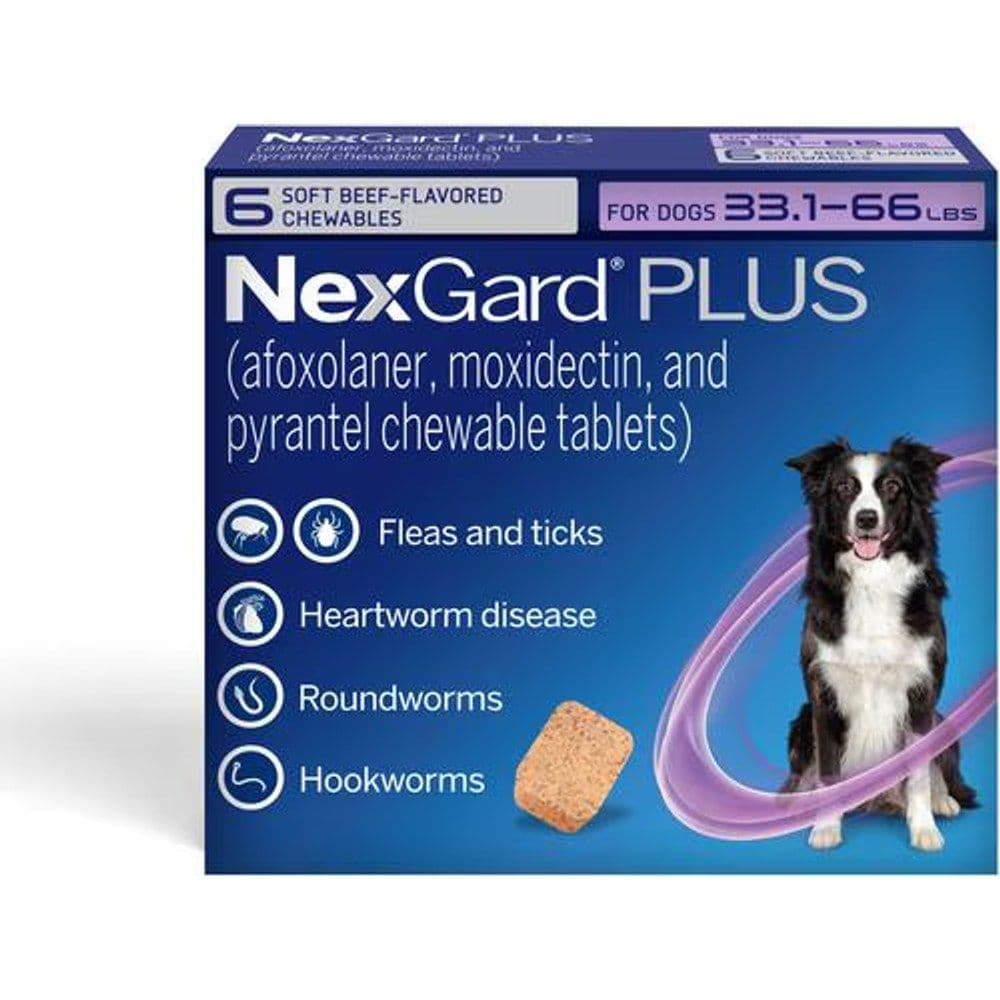
Beef-flavored monthly chew that protects dogs from fleas, ticks, heartworm disease, roundworms, and hookworms.
Webvet may earn a commission when you click through to Chewy, at no extra cost to you.
The Most Common Tick-Borne Diseases in Dogs
Lyme disease
Caused by the bacterium Borrelia burgdorferi and spread by blacklegged (deer) ticks, Lyme is the best-known of the group. The hallmark is shifting-leg lameness from painful, swollen joints, alongside fever, lethargy, and swollen lymph nodes. Dogs do not get the bullseye rash people do.
Most infected dogs never show signs, but a minority develop illness weeks to months later, and a small but serious subset develop Lyme nephritis, a potentially fatal kidney disease that is most common in retrievers. That severe-kidney risk is why prevention and testing matter even when a dog looks healthy. The American Veterinary Medical Association maintains a detailed owner overview.
Canine ehrlichiosis
Ehrlichiosis, spread mainly by the brown dog tick and lone star tick, attacks white blood cells and moves through three phases. The acute phase (fever, lethargy, poor appetite, bruising or nosebleeds from low platelets) can give way to a silent subclinical phase lasting months to years, then a dangerous chronic phase with bone-marrow suppression that is far harder to treat.
Because the middle phase hides, an apparently healthy dog can carry the infection for a long time. This is one of the diseases a routine screening test can catch before it turns chronic.
Anaplasmosis
Anaplasmosis comes in two forms. The common one (Anaplasma phagocytophilum), from the same deer tick that spreads Lyme, infects white blood cells and causes fever, joint pain, lethargy, and stiffness, so co-infection with Lyme is frequent. A second form (Anaplasma platys), from the brown dog tick, infects platelets specifically and causes low platelet counts, bleeding, and bruising.
Because deer ticks can carry both Anaplasma and Borrelia, a dog can be infected with anaplasmosis and Lyme from a single bite, which is one reason the standard screening test checks for both at once.
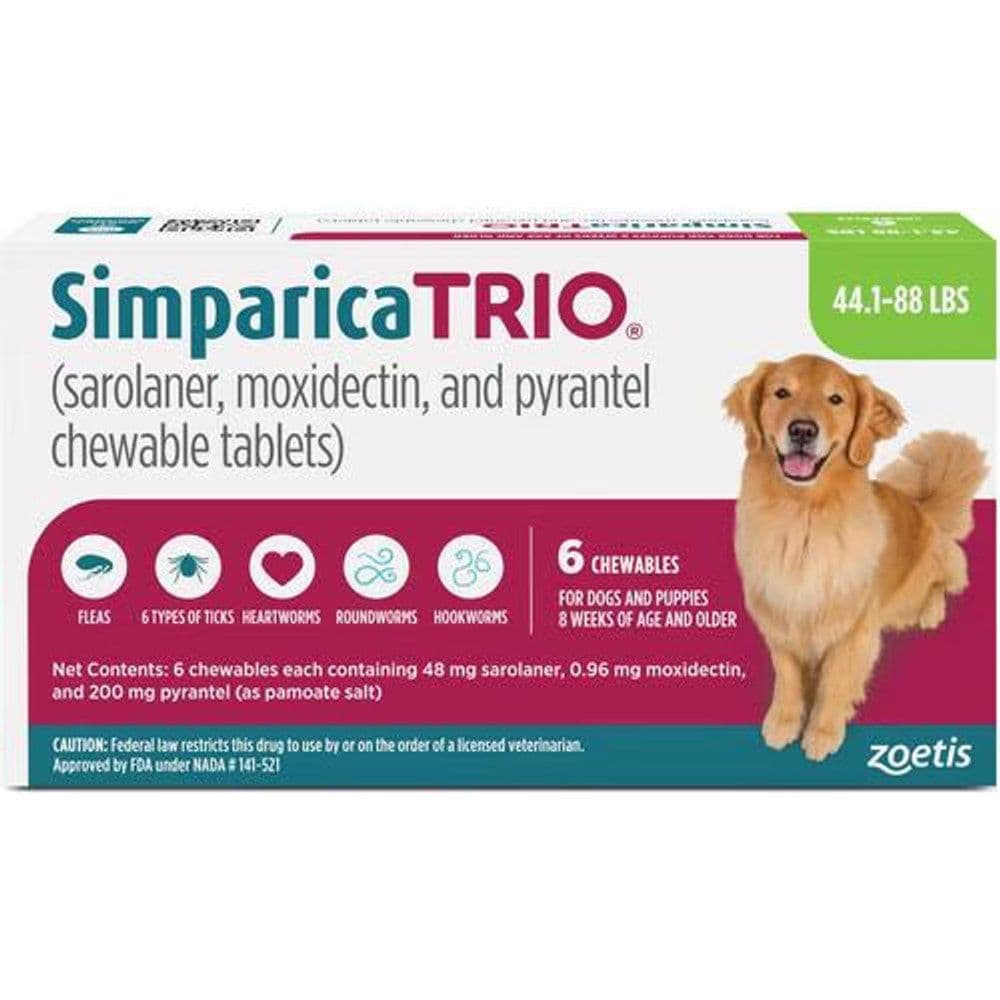
Monthly chew that protects dogs from fleas, six species of ticks, heartworm disease, roundworms, and hookworms.
Webvet may earn a commission when you click through to Chewy, at no extra cost to you.
Rocky Mountain spotted fever (RMSF)
Despite the name, RMSF occurs across much of the U.S. and is carried by the American dog tick and others. It is fast and serious: high fever, lethargy, joint and muscle pain, swelling of the face or legs, and sometimes neurological signs like wobbliness or seizures, all appearing within a couple of days of the bite rather than weeks later.
RMSF is a true time-sensitive illness. Prompt antibiotic treatment usually brings a good outcome, but delays raise the risk of severe complications, so a high fever plus known tick exposure warrants a same-day call to your vet.
Babesiosis
Babesiosis is different: a microscopic parasite (Babesia) that invades and destroys red blood cells, causing anemia, pale gums, weakness, dark or orange-tinged urine, and jaundice. It spreads through tick bites, but also through dog bites and shared blood, which is why it appears in fighting-breed and kennel clusters. Treatment uses antiparasitic drugs rather than standard antibiotics, so accurate diagnosis matters.
The less common ones
Bartonellosis (linked to fever, heart, and lymph-node disease) and hepatozoonosis (unusually, caught when a dog eats an infected tick rather than is bitten, causing pain and fever) round out the list. They are rarer but remind us that the tick-borne category is broad, and that a sick dog with tick exposure deserves a thorough workup.
Symptoms: What to Watch For
The frustrating truth is that these diseases share a vague, flu-like symptom set, which is exactly why they get missed. Any combination of the following in a dog with possible tick exposure deserves a vet call:
- Fever, lethargy, and a noticeable drop in energy
- Shifting-leg lameness, limping that moves from leg to leg, or swollen, painful joints
- Loss of appetite and weight loss
- Swollen lymph nodes (behind the knees, under the jaw)
- Bruising, nosebleeds, or pinpoint red spots on the gums or belly (a low-platelet warning sign)
- Pale gums, weakness, or dark urine (possible anemia from babesiosis)
- Stiffness, wobbliness, or reluctance to move

 $65 · no membership
Need flea, tick, or heartworm prevention for your dog?
A licensed vet can recommend and prescribe the right preventive for your dog online when it's appropriate.
 Talk to a vet
- Licensed vets
- All 50 states
- same-day Rx

Webvet may earn a commission if you book.
How Vets Diagnose Tick-Borne Diseases
Diagnosis combines history, signs, and blood work. The workhorse screening tool is the in-clinic 4Dx (or SNAP 4Dx) test, which uses a few drops of blood to check for heartworm plus three tick-borne diseases, Lyme, ehrlichiosis, and anaplasmosis, in about ten minutes during a routine visit.

A positive screen often leads to confirmatory tests (quantitative antibody titers or PCR to detect the organism's DNA) plus a complete blood count that frequently shows the low platelets typical of these infections. Babesiosis and RMSF need their own specific tests. Because a screening test can turn positive before a dog is sick, and because exposure does not always equal disease, your vet interprets results alongside symptoms rather than treating a number in isolation. Reference material from Michigan State University's veterinary diagnostic lab and the CDC tick program backs the standard approach.
Treatment: What to Expect
The reassuring headline: most bacterial tick-borne diseases respond well to antibiotics, usually doxycycline, and many dogs improve dramatically within 24 to 48 hours of starting treatment. Courses typically run several weeks (often 28 days or more) to fully clear the organism, and stopping early invites relapse or a chronic phase, so finish the full prescription even after your dog perks up.
Supportive care fills in around the antibiotics: pain relief and anti-inflammatories for sore joints, fluids for dehydrated dogs, and, in severe cases with dangerous anemia or bleeding, hospitalization and even blood transfusions. Babesiosis is the exception that proves the rule, requiring antiparasitic medication instead of antibiotics, which is why pinning down the exact disease changes the plan.
Chronic ehrlichiosis and Lyme nephritis are the hard cases, needing longer, more intensive management, and they are precisely the outcomes that early detection and prevention are designed to avoid. Antibiotics are prescription-only and dosing is weight-based and vet-directed; never improvise with leftover human medication.
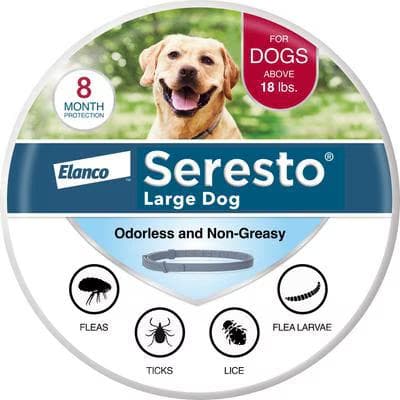
An eight-month flea and tick collar for dogs over 18 lbs that releases protection steadily. A low-effort layer to help keep ticks off between vet-recommended preventives.
Webvet may earn a commission when you click through to Chewy, at no extra cost to you.
Prevention: Your Dog's Best Defense
Every disease above is largely preventable, and the strategy is layered. No single measure is perfect, but stacked together they make infection unlikely.
1. Year-round tick preventives
This is the foundation. Modern products kill or repel ticks before they can transmit disease, and vets recommend them all year because ticks stay active in mild winter spells. Options include monthly oral chews such as NexGard Plus and Simparica Trio, topical spot-ons like Frontline Plus, and long-acting collars such as the 8-month Seresto collar. Our vet guide to the best flea and tick prevention for dogs compares them head to head.
2. Daily tick checks
After walks in grassy, wooded, or brushy areas, run your hands slowly over your dog, checking the ears, face and chin, neck and collar area, armpits, groin, and between the toes, the spots ticks prefer. Because transmission usually takes a day or more, finding and removing a tick promptly often prevents infection outright. Learn to recognize what a tick bite looks like on a dog so you know what you are feeling for.
3. Prompt, correct tick removal
If you find an attached tick, remove it right away with fine-tipped tweezers or a dedicated tool such as the TickCheck removal kit, gripping close to the skin and pulling straight out with steady pressure, no twisting or squeezing. Save the tick in a sealed bag or photo in case symptoms develop later. The full technique is in our tick removal guide.
4. The Lyme vaccine and yard management
For dogs in high-risk Lyme regions, a Lyme vaccine is worth discussing with your vet, especially for hikers and dogs in the Northeast and upper Midwest. At home, keep grass short, clear leaf litter and brush, and create a gravel or wood-chip barrier between wooded edges and play areas to reduce tick habitat where your dog spends time.

Think of these four layers as overlapping nets. A preventive that a dog spits out one month, a tick check skipped after a rushed evening walk, a collar that slipped loose: any single net can fail, but a tick has to slip past all of them to cause disease. Keeping a removal tool and preventive on hand at home, as shown above, makes the whole routine something you actually keep up with.
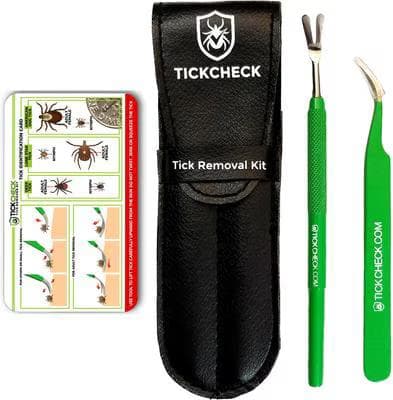
A vet-style tick removal kit with fine-tip tools that grip the tick right at the skin for a clean, straight pull, plus a tick ID card. Easy to keep in your dog-walking bag.
Webvet may earn a commission when you click through to Chewy, at no extra cost to you.
Can People Catch These Diseases From Their Dog?
Not directly. Your dog cannot give you Lyme disease or ehrlichiosis the way a cold passes between people; these infections need a tick bite to spread. But dogs are a sentinel and a taxi: a dog that comes home with ticks is bringing those ticks into spaces you share, where they can later bite a human.
That makes the household angle real. The blacklegged ticks that infect dogs with Lyme and anaplasmosis carry the same diseases to people, and the brown dog tick can establish itself indoors. When your vet flags tick exposure in your dog, treat it as a signal to check yourself and your family after the same outdoor trips, and to talk to your physician if anyone develops fever or a rash. Public-health guidance from the CDC covers the human side.
Oral chews vs collars for tick prevention
Pros
- Oral: nothing on the coat to rub off on children or wash away when swimming
- Oral: many combine tick, flea, and heartworm coverage in one monthly dose
- Collar: up to 8 months of continuous protection from a single product
- Collar: repels and helps stop attachment, useful in heavy-tick regions
Cons
- Oral: a tick must bite to be killed; isoxazolines do not repel
- Oral: prescription required, and a seizure history needs a vet discussion first
- Collar: must fit snugly against the skin to work; check for neck irritation
- Collar: should be removed before swimming for best longevity
When to See Your Veterinarian
If you simply found and removed a tick but your dog seems fine, you usually do not need an emergency visit; note the date, watch for the signs above over the following weeks, and mention it at the next appointment. Many vets also suggest a 4Dx screen a few weeks after a known bite, since antibodies take time to appear.
Frequently Asked Questions
Can a dog recover from tick-borne disease?
Yes. Most dogs recover well, especially when the disease is caught early and treated promptly. Bacterial infections like Lyme, ehrlichiosis, anaplasmosis, and RMSF usually respond to doxycycline, often with visible improvement within a day or two. Chronic ehrlichiosis and Lyme kidney disease are harder and are exactly why early detection matters.
How to tell if your dog has a tick-borne disease?
Watch for fever, lethargy, limping or shifting-leg lameness, swollen joints, loss of appetite, and swollen lymph nodes, particularly in the weeks to months after possible tick exposure. Because signs are vague and overlap with other illnesses, a vet visit with a 4Dx blood screen is the reliable way to confirm it.
How serious is anaplasmosis in dogs?
Many dogs clear anaplasmosis with few or no signs, and those that get sick usually respond quickly to doxycycline. It becomes serious when it causes significant bleeding from low platelets, or when it occurs alongside Lyme disease from the same deer tick. Prompt treatment gives most dogs an excellent prognosis.
How long does it take for tick-borne illness to show up in dogs?
It varies by disease. Rocky Mountain spotted fever can appear within 2 to 14 days of the bite, while Lyme disease often takes 2 to 5 months to cause symptoms, and ehrlichiosis can hide for months to years before a chronic phase emerges. This long, variable lag is why prevention and screening beat waiting for signs.
Can I use hydrogen peroxide to clean my dog's tick bite?
After removing a tick, clean the small bite site with a pet-safe antiseptic or mild soap and water; a dab of diluted antiseptic is fine. Avoid scrubbing repeatedly with hydrogen peroxide, which can irritate tissue and slow healing. Watch the spot for a few days; a little redness is normal, but spreading redness, swelling, or oozing warrants a vet call.
What are the first signs of Lyme disease in a dog?
The earliest visible signs are usually fever, lethargy, loss of appetite, swollen lymph nodes, and lameness that shifts from leg to leg due to painful, swollen joints. Unlike people, dogs do not develop the bullseye rash. Many infected dogs show no early signs at all, which is why testing after known exposure is valuable.
What smell do ticks hate the most?
Ticks are repelled by certain strong scents, including cedar, eucalyptus, and some other essential oils, and permethrin-based products (dog-only) actively repel and kill them. Scent alone is not reliable protection, and many essential oils are toxic to pets if misused, so lean on vet-approved preventives as the real defense rather than home fragrances.
The Bottom Line
Tick-borne diseases in dogs are widespread and can be serious, but they sit among the most preventable illnesses in veterinary medicine. Learn the ticks in your region, know the vague warning signs, and treat any fever-plus-lameness picture after tick exposure as a reason to call your vet, not to wait.
The winning strategy is layered and boring in the best way: year-round preventives, daily tick checks, fast correct removal, and a screening test at your dog's annual exam. Do those four things and the diseases in this guide become problems your dog is very unlikely to ever face.
$65 · no membershipNeed flea, tick, or heartworm prevention for your dog?
A licensed vet can recommend and prescribe the right preventive for your dog online when it's appropriate.
Talk to a vet- Licensed vets
- All 50 states
- same-day Rx
Webvet may earn a commission if you book.

Veterinarian · DVM
Athena Gaffud, DVM, is a licensed veterinarian and writer based in the Cagayan Valley of the northern Philippines. She runs the website countryvetmom.com. Dr. Gaffud earned her Doctor of Veterinary Medicine degree from the University of the Philippines Los Baños in 2011, ranking in the top 10 and receiving the Best Undergraduate Thesis Award in Large Animals. With over a decade of experience, she has worked as a researcher, a practitioner for small and large animals, and in veterinary technical sales, marketing, and pet insurance. A published author, Dr. Gaffud promotes responsible pet ownership and combats misinformation on animal care through her platforms, including the DocAthena Facebook Page and DocAthena YouTube channel. She is a writer and editor for various pet-related websites such as Total Vet, Honest Paws, PangoVet, Dogster, Catster, My Best PH, Paw Origins, Bully Max, Not a Bully, Paws and Claws CBD, many others. She was also cited in different pet-related media articles such as The Dog People, USA Today, Newsweek, New York Post, Reader’s Digest, Smithsonian Magazine, Woman’s World, Dog Time, Patch, Kinship, Martha Stewart, and many others. Moreover, she is also a published fiction author on Kindle.


