What Do Tick Bites Look Like on Dogs? (With Pictures)
Wondering what tick bites look like on dogs? This vet-reviewed photo guide shows how to spot a fresh or healing bite, identify an embedded tick, recognize common US tick species, read the signs of tick-borne illness, and remove a tick safely.

BVMS MRCVS
Medically reviewed by Dr. Pippa Elliott, BVMS MRCVS · Last reviewed

This article contains affiliate links. Webvet may earn a commission when you buy through them, at no extra cost to you.
WebVet may earn a commission when you buy through links on this page, at no extra cost to you.
You found a bump on your dog and now you are asking what do tick bites look like on dogs. In most cases, a tick bite on a dog looks like a small, red, raised bump, a lot like a mosquito bite.
Sometimes there is a tiny central hole or a small scab where the tick attached.
If the tick is still there, you will see the body sticking out of the skin while the head stays buried. Bites are usually harmless on their own, but because ticks can pass on serious diseases, knowing what to look for matters.
This guide answers what do tick bites look like on dogs at each stage, how to spot an embedded tick, how to recognize the common US tick species, which symptoms signal trouble, and how to remove a tick safely.
It is written for worried owners and reviewed against current veterinary guidance so you can act with confidence.
- 1A typical tick bite on a dog looks like a small red raised bump, often with a tiny central scab or hole, similar to a mosquito or flea bite.
- 2Unlike people, dogs almost never develop the classic bullseye rash, so a normal-looking bump does not rule out a tick-borne disease.
- 3An embedded tick looks like a small dark seed, skin tag, or wart with legs; engorged ticks swell into a gray or pale oval the size of a corn kernel or small grape.
- 4Most disease transmission requires the tick to stay attached for roughly 36 to 48 hours, so prompt, correct removal is your best protection.
- 5Watch for fever, lethargy, limping or shifting-leg lameness, swollen joints, or loss of appetite in the weeks after a bite, and call your vet if you see them.

 Sponsored
Need flea, tick, or parasite care for your dog?
A licensed vet at Dutch can recommend the right preventive and prescribe it when it's appropriate. Annual members get 20% off their first flea and tick order.
Use code Pets60
Plans start at $12/month · covers up to 5 pets
- Licensed vets in most states
- Rx for 150+ conditions
- 4.7 on Trustpilot
What Do Tick Bites Look Like on Dogs? (Quick Answer + Photos)
The short answer to what do tick bites look like on dogs is this: a tick bite on a dog usually looks like a small, firm, red bump on the skin, often only a few millimeters across. The redness comes from the dog's immune response to the tick's saliva.
Because tick saliva contains numbing compounds, the bite itself is typically painless, which is why so many bites go unnoticed until you feel a lump during petting or a tick check.
What a fresh tick bite looks like

A fresh tick bite is a small, pink-to-red, slightly raised bump. Look closely and you may see a tiny central point, called a punctum, where the tick's mouthparts entered the skin.
The surrounding skin can look mildly irritated or pink, especially if your dog has been scratching or licking the spot. There is usually little to no swelling beyond the bump itself.
What a healing or older tick bite looks like
As a bite heals, the redness fades and a small, dry scab often forms over the punctum. You might also see a tiny patch of flaky or dry-looking skin, or a small dark mark that can linger for a week or two.
A healing bite that is shrinking, drying, and not bothering your dog is generally a good sign. A bite that grows, reddens, weeps, or stays scabbed and irritated for more than a couple of weeks deserves a vet's look.
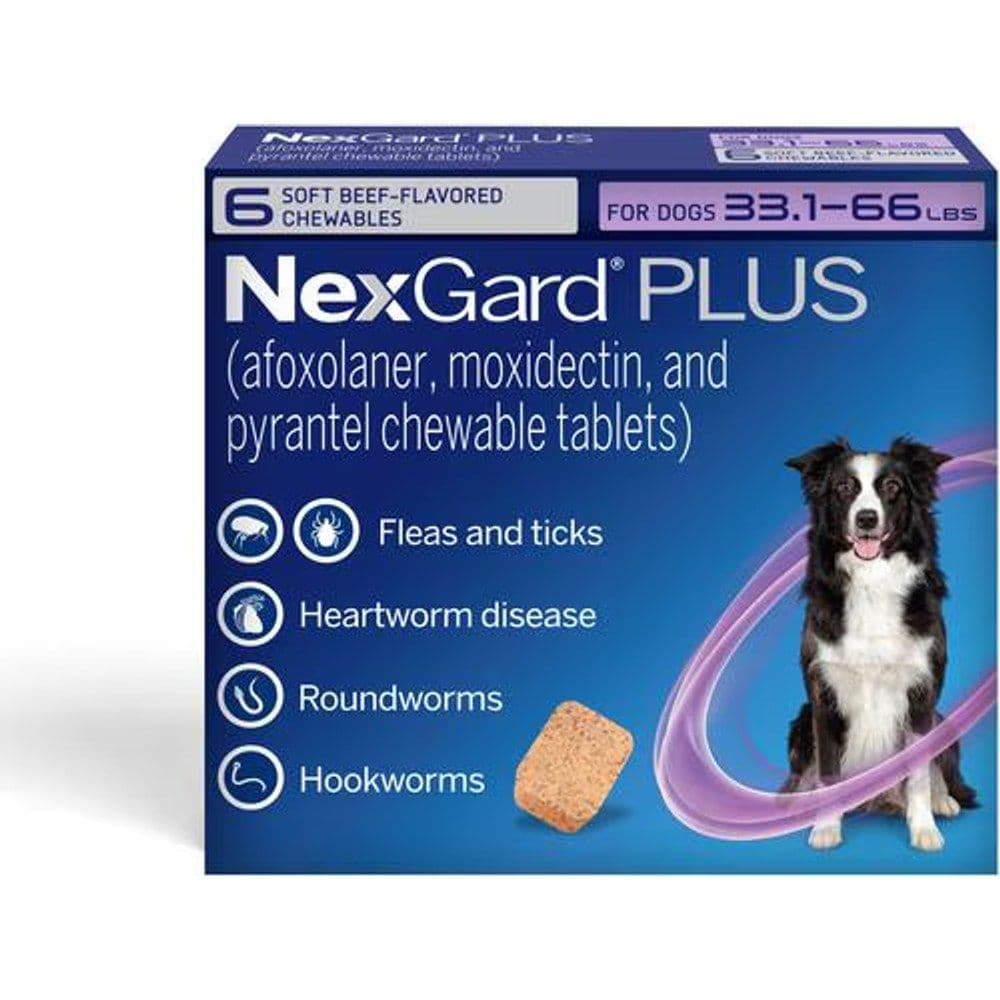
Beef-flavored monthly chew that protects dogs from fleas, ticks, heartworm disease, roundworms, and hookworms.
Webvet may earn a commission when you click through to Chewy, at no extra cost to you.
What the bite looks like with the tick still attached vs. after removal
With the tick still attached, you will see the tick's body protruding from the skin while its head is anchored beneath the surface. Unfed, it looks like a small dark speck with legs; after feeding, the body swells and may look like a smooth gray or tan balloon.
People sometimes mistake the legs for the bump being a wart or skin tag, so a close look for legs is the giveaway.
After you remove the tick, the spot that is left behind often looks like a small red bump or a slightly raised, irritated nodule.
A firm lump can persist for days to a few weeks as the skin heals, even when nothing is wrong. This is a normal local reaction, not proof of infection.
Why dogs rarely get the "bullseye" rash humans do
In people, Lyme disease can produce a distinctive expanding bullseye rash around the bite. Dogs almost never show this. Their fur hides the skin, and dogs simply do not tend to develop that target-shaped rash the way humans can.
This is important: the absence of a bullseye does not mean your dog is in the clear. A plain little bump can still come from a tick that carried disease, which is why monitoring your dog's overall health after a bite matters more than watching the skin alone.
How to Prevent Tick Bites on Dogs
Prevention is far easier than treating disease. A combination of year-round preventives, daily checks, and environment control gives your dog strong protection.
| Product | Type | What it does | Best for | Price |
|---|---|---|---|---|
| Credelio | Oral chew | Kills ticks and fleas | Fast monthly control, no topical residue | $$ |
| Frontline Plus | Topical | Kills ticks, fleas, and lice | Dogs who will not take a pill | $$$ |
| K9 Advantix II | Topical | Repels and kills, plus mosquitoes | Repelling ticks before they bite | $$$ |
| Seresto | Collar | Kills and repels for 8 months | Hands-off, long-term protection | $$$ |
| TickCheck Kit | Removal tool | Safe tick removal | Getting an attached tick out cleanly | $ |
| Adams Plus | Shampoo | Kills ticks on contact | Washing your dog down after a hike | $ |
Year-round preventives
Modern tick preventives come in several classes, and each works differently:
- Oral chews: Including the isoxazoline class, are given monthly or every few months and kill ticks after they bite. A popular monthly option is Credelio.
- Topical spot-ons: Applied to the skin and repel or kill ticks. Popular picks include Frontline Plus and K9 Advantix II.
- Tick collars: Provide longer-lasting protection. A widely used one is the Seresto collar.
Ask your veterinarian which product or combination suits your dog's age, health, lifestyle, and region. Year-round use is now recommended in most of the US because ticks can be active even in mild winter weather. For a vet's rundown of the top options by type, see our guide to the best flea and tick prevention for dogs.
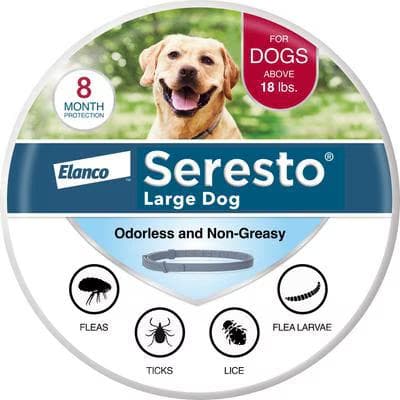
An eight-month flea and tick collar for dogs over 18 lbs that releases protection steadily. A low-effort layer to help keep ticks off between vet-recommended preventives.
Webvet may earn a commission when you click through to Chewy, at no extra cost to you.
Daily tick checks after time outdoors
After walks, hikes, or time in tall grass or wooded areas, run your hands slowly over your dog's whole body, feeling for small bumps. Pay extra attention to the ears, between the toes, the groin, the armpits, under the collar, around the eyelids, and under the tail.
Catching and removing a tick before the 36 to 48 hour window closes is one of the most effective things you can do.
Yard and environment control
Make your yard less tick-friendly with a few simple measures:
- Keep grass mowed short.
- Clear leaf litter and brush.
- Create a barrier between lawn and woods.
On walks, stick to the center of trails and avoid brushing through tall grass and undergrowth where ticks wait for a host. Discouraging deer and other wildlife from your property also reduces tick numbers.
Tick-season and US hot-spot awareness
Tick activity peaks in spring and fall but increasingly occurs year-round, especially in warmer regions. Lyme disease is concentrated in the Northeast, mid-Atlantic, and upper Midwest, while other species and diseases dominate the South, the Gulf Coast, and the Rocky Mountain states. You can check current tick prevalence for your area on the CAPC parasite prevalence maps.
Knowing which ticks are common where you live, and where you travel, helps you and your vet plan the right protection.
What Does an Embedded Tick Look Like on a Dog?

An embedded tick on a dog looks like a small, dark, seed-shaped lump attached to the skin, usually with tiny legs visible if you part the fur and look closely. The tick buries its mouthparts to feed, so the head sits below the skin while the body stays on top.
Run your fingers slowly over your dog and an attached tick often feels like a small, firm bump that does not belong.
Size range, before vs. after feeding (engorged)

Unfed ticks are tiny, ranging from a pinhead to a sesame seed depending on the species and life stage. Larvae and nymphs can be as small as a poppy seed.
Once a tick attaches and feeds on blood, it engorges and swells dramatically over hours to days, growing to the size of a corn kernel, a coffee bean, or even a small grape in heavily fed adults. A gray, smooth, balloon-like lump on your dog is often an engorged, fully fed tick.
Color and shape
Unfed ticks are usually flat and oval, in shades of black, dark brown, or reddish brown, sometimes with pale or mottled markings on the back. As a tick fills with blood it becomes rounder and lighter, often turning gray, blue-gray, or tan and shiny.
The legs cluster near the head end, which is the part pressed against your dog's skin. Spotting those legs is the clearest way to confirm you are looking at a tick rather than a skin growth.
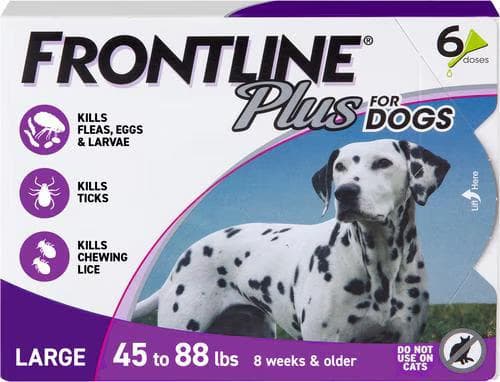
A monthly topical spot-on for large dogs 45 to 88 lbs that kills fleas, ticks, and chewing lice. A waterproof pick for dogs who do better with a topical than a chew.
Webvet may earn a commission when you click through to Chewy, at no extra cost to you.
Tick vs. skin tag vs. scab vs. nipple vs. wart: how to tell the difference

Embedded ticks are easy to confuse with normal lumps. A few quick checks help you tell them apart:
- Legs: Ticks have eight tiny legs near the head. Skin tags, warts, scabs, and nipples never do.
- Texture: A tick feels firm and slightly crunchy and sits on top of the skin. Skin tags are soft and flesh-colored, and warts are usually rough and cauliflower-like.
- Symmetry and location: Nipples come in an even, paired pattern along the belly and chest. A single lump in an odd spot is more suspicious for a tick.
- Color: Scabs are dark, dry, and crusty with no legs; an engorged tick is smooth, rounded, and often gray.
If you are still unsure, our guide to telling skin lumps and irritations apart can help, and when in doubt your veterinarian can identify the lump in seconds.
Where ticks hide on a dog

Ticks prefer warm, sheltered, hard-to-see spots. During a tick check, pay special attention to:
- In and around the ears, including the inner flap
- Between the toes and in the webbing of the paws
- The groin and armpits, where skin is thin and warm
- Under the collar and around the neck
- Around the eyelids and on the face
- Under the tail and around the back end
 Sponsored
Vet care that's always there
Unlimited video calls and messaging with licensed vets for less than a typical vet visit. One membership covers up to five pets.
Use code Pets60
Plans start at $12/month · covers up to 5 pets
- Licensed vets in most states
- Rx for 150+ conditions
- 4.7 on Trustpilot
What Do Ticks Look Like on Dogs? Types of Ticks (With Pictures)

Ticks are not insects; they are arachnids, related to spiders, with eight legs as adults and a flat, oval, hard-shelled body. What ticks look like on dogs depends on the species, the life stage, and whether they have fed. Here are the species you are most likely to encounter in the United States. For a focused side-by-side identification guide, use our deer tick vs dog tick comparison.
American dog tick
One of the most common ticks found on dogs, the American dog tick is reddish brown with distinctive whitish or gray mottled markings on its back. Adults are relatively large and easy to see. It is found widely east of the Rocky Mountains and along the West Coast, and it can transmit Rocky Mountain spotted fever.
Brown dog tick
The brown dog tick is uniformly reddish brown with no obvious markings and a narrow, elongated body. It is unusual because it can complete its entire life cycle indoors, so it can infest homes and kennels. Found across the country, it can spread ehrlichiosis and babesiosis.
Black-legged / deer tick
The black-legged tick, commonly called the deer tick, is small and dark, with an orange-red body and darker legs in the adult female. It is the primary carrier of Lyme disease and also transmits anaplasmosis.
Because nymphs are so tiny, no bigger than a poppy seed, deer ticks are among the hardest to spot. They are most common in the Northeast, mid-Atlantic, upper Midwest, and parts of the West.
Lone star tick (white-dot female)
The lone star tick is reddish brown and rounded, and the adult female carries a single bright white dot in the center of her back, which makes her easy to identify. It is aggressive and common in the Southeast and Eastern US.
It can transmit ehrlichiosis and is linked to a meat allergy in people, though that allergy is a human concern rather than a canine one.
Rocky Mountain wood tick
The Rocky Mountain wood tick is brown with pale markings and resembles the American dog tick. It lives in the Rocky Mountain states at higher elevations and is most active in spring and early summer. It can transmit Rocky Mountain spotted fever and is one cause of tick paralysis.
Gulf Coast tick
The Gulf Coast tick is brown with silvery markings, similar in appearance to the American dog tick. As its name suggests, it is found along the Gulf Coast and increasingly in nearby southeastern states. It can transmit a spotted-fever-group bacterium and tends to attach around the ears.
Tick identification chart by size, color & US region
| Tick | Color & markings | Adult size (unfed) | US region | Key disease risk |
|---|---|---|---|---|
| American dog tick | Reddish brown with gray or white mottling | Sesame seed | East of Rockies, West Coast | Rocky Mountain spotted fever |
| Brown dog tick | Uniform reddish brown, narrow body | Sesame seed | Nationwide, including indoors | Ehrlichiosis, babesiosis |
| Black-legged (deer) tick | Orange-red body, dark legs | Poppy to sesame seed | Northeast, Midwest, mid-Atlantic, West | Lyme disease, anaplasmosis |
| Lone star tick | Reddish brown; female has one white dot | Sesame seed | Southeast, Eastern US | Ehrlichiosis |
| Rocky Mountain wood tick | Brown with pale markings | Sesame seed | Rocky Mountain states | Rocky Mountain spotted fever, tick paralysis |
| Gulf Coast tick | Brown with silvery markings | Sesame seed | Gulf Coast, Southeast | Spotted-fever-group illness |
Tick larvae & nymphs: why the dangerous ones are the hardest to see
Ticks pass through larva, nymph, and adult stages, and they can bite at every stage. Larvae have six legs and are nearly microscopic; nymphs have eight legs and are about the size of a poppy seed or a pinhead.
These immature stages cause a large share of disease transmission precisely because they are so small that owners miss them. A nymph tucked between the toes or inside an ear can easily go unseen until it has fed. This is why a careful, hands-on tick check beats a quick glance every time.
Tick Bite Symptoms in Dogs
Tick bites on dogs range from completely silent to a clear local reaction, and in some cases they precede signs of illness. Knowing the spectrum helps you decide when to relax and when to act.
Why most tick bites cause no symptoms
Tick saliva contains compounds that numb the skin and dampen the local immune response, which lets the tick feed undisturbed. As a result, most bites cause no pain and no obvious symptoms at all.
A bite with no reaction is the norm, not a sign that everything is fine internally, so the lack of symptoms is not a reason to skip monitoring.
Local skin signs
When a bite does react locally, you may see mild redness, a small raised bump, or slight swelling at the site. Some dogs lick, chew, or scratch the spot, which can worsen the irritation.
A small firm nodule can persist for days to weeks after the tick is gone. These local signs are usually minor and resolve on their own.
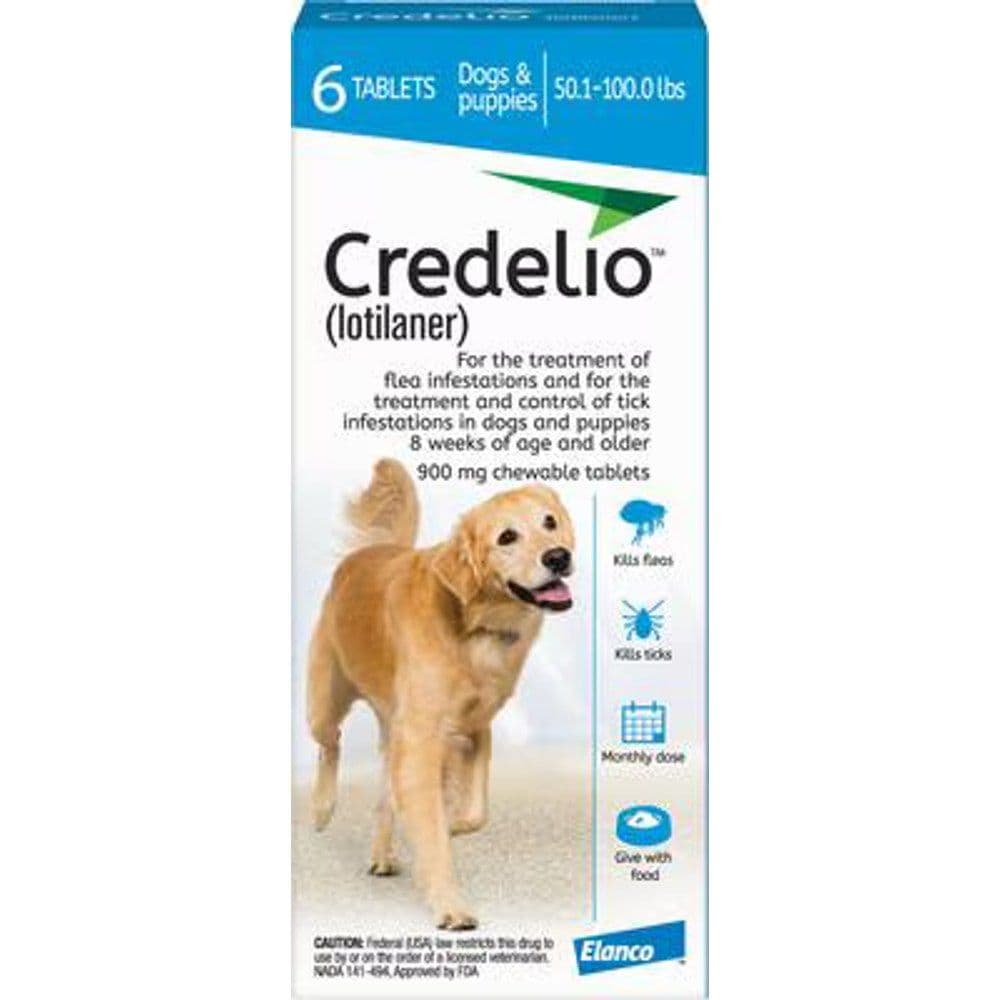
Monthly prescription chew that kills fleas and ticks on dogs, including the black-legged (deer) ticks that can spread Lyme disease.
Webvet may earn a commission when you click through to Chewy, at no extra cost to you.
Signs of an infected tick bite
Occasionally a bite site becomes secondarily infected, often after a dog has been chewing at it or when part of the tick is left behind. An infected site should be seen by your veterinarian, who may prescribe treatment. Signs of an infected tick bite include:
- Spreading redness around the site
- Warmth and swelling
- Pus or oozing discharge
- A foul smell
- A scab that will not heal and stays painful
Whole-body warning signs of tick-borne illness
The bigger concern is not the skin but what a tick may have transmitted. In the days to weeks after a bite, watch for these systemic warning signs:
- Fever
- Lethargy or unusual tiredness
- Lameness, stiffness, or shifting-leg limping that moves from leg to leg
- Loss of appetite
- Swollen, painful joints or swollen lymph nodes
- Pale gums, nosebleeds, or unusual bruising
Any of these signs in a dog with a known or possible tick exposure warrants a vet visit. Learn more in our overview of tick-borne diseases in dogs.
Tick paralysis: the emergency that looks different
Tick paralysis is a separate, fast-moving emergency caused by a toxin in the saliva of certain attached female ticks. It typically begins as weakness in the hind legs that climbs forward over hours to days, an ascending paralysis.
A dog may wobble, struggle to stand, or develop changes in bark, breathing, or swallowing. Removing the tick often reverses it, but breathing can be affected, so this is an emergency. If you see progressive weakness, seek veterinary care right away.
How Long After a Tick Bite Do Symptoms Appear?
There is no single answer, because it depends on whether you mean the local bite reaction or a tick-borne disease. A local skin bump can appear within hours and fade within a week or two. Symptoms of disease, however, can take days to weeks, and sometimes longer, to show up.
- 1A local skin bump can appear within hours of a bite and usually fades within a week or two.
- 2Most tick-borne diseases need the tick attached for roughly 36 to 48 hours to transmit, so prompt removal prevents most infections.
- 3Anaplasmosis and ehrlichiosis can show signs within days to a few weeks of the bite.
- 4Lyme disease signs often appear later, commonly weeks to a few months afterward.
- 5Mark the date of the bite and watch your dog's energy, appetite, and movement for several weeks.
Disease incubation windows and the 36 to 48 hour rule
Most tick-borne pathogens are not transmitted the instant a tick bites. For many diseases, including Lyme disease, the tick generally needs to stay attached for roughly 36 to 48 hours before transmission occurs, though some pathogens can transfer faster, a timeline detailed by the AKC Canine Health Foundation. That delay is exactly why prompt removal works so well as prevention.
Once a dog is infected, signs of Lyme disease often appear weeks after the bite, commonly in the range of 2 to 5 months for some dogs, while diseases like anaplasmosis and ehrlichiosis can show signs within days to a few weeks. Because windows vary, mark the date of the bite and keep watching.
When to just monitor vs. when it's urgent
If you removed a tick promptly and your dog is acting normal, it is reasonable to monitor at home and simply keep an eye on the bite site and your dog's energy, appetite, and movement for several weeks.
Call your vet promptly if any whole-body warning signs appear, if the tick was attached for more than a day, or if you could not remove the whole tick. Seek urgent care for the emergency signs listed above.
Tick-Borne Diseases in Dogs (and Their Skin & Body Signs)
Different ticks carry different illnesses, and the signs overlap. Here is a quick orientation to the main canine tick-borne diseases in the US; for a deeper look, see our full guide to tick-borne diseases in dogs.
| Disease | Spread by (tick) | Signs to watch for |
|---|---|---|
| Lyme disease | Black-legged (deer) tick | Shifting-leg lameness, fever, swollen joints, lethargy, low appetite |
| Anaplasmosis | Black-legged (deer) tick | Fever, lethargy, joint pain and lameness, sometimes low platelets |
| Ehrlichiosis | Brown dog and lone star ticks | Fever, lethargy, low appetite, nosebleeds or bruising, swollen nodes |
| Rocky Mountain spotted fever | American dog and Rocky Mountain wood ticks | Fever, lethargy, limb or face swelling, joint and muscle pain, bruising |
| Babesiosis | Brown dog tick | Anemia, pale gums, weakness, dark urine, fever |
| Hepatozoonosis | Eating an infected tick, not a bite | Fever, muscle pain and stiffness, weight loss, weakness (mainly southern US) |
| Bartonellosis | Ticks and fleas (still being studied) | Fever, lameness, heart inflammation, other vague signs |
| Co-infections | Any tick carrying two or more pathogens | Overlapping, harder-to-read, and often more severe signs |
What to Do If You Find a Tick Bite (or an Embedded Tick) on Your Dog
If you find an attached tick, stay calm and remove it promptly and correctly. Speed matters more than perfection because reducing attachment time lowers disease risk. For a full walkthrough, see our guide on how to remove a tick from a dog.
How to safely remove an attached tick (step-by-step)

- Use fine-tipped tweezers or a dedicated tick-removal tool. Grasp the tick as close to your dog's skin as possible, right at the head.
- Pull straight upward with steady, even pressure. Do not twist or jerk, which can leave mouthparts behind.
- Avoid squeezing the tick's body, which can push more saliva into the wound.
- Clean the bite site and your hands with soap and water or a pet-safe antiseptic.
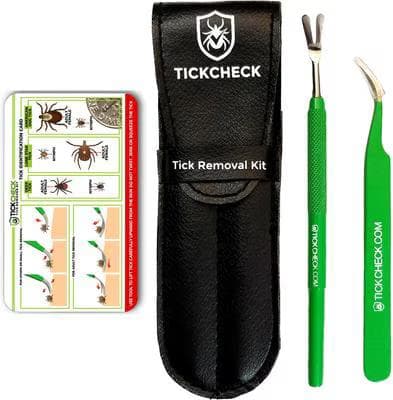
A vet-style tick removal kit with fine-tip tools that grip the tick right at the skin for a clean, straight pull, plus a tick ID card. Easy to keep in your dog-walking bag.
Webvet may earn a commission when you click through to Chewy, at no extra cost to you.
What to do if the tick's head breaks off and stays in the skin
If a small piece of mouthpart stays behind, do not dig aggressively at the skin. If it is right at the surface and comes out easily with clean tweezers, you can remove it; otherwise, leave it alone.
The body often expels a small fragment on its own, much like a splinter. Clean the area and watch for signs of infection such as spreading redness, swelling, or pus, and contact your vet if those develop or if you are concerned.
How to clean and monitor the bite site afterward
After removal, keep the area clean and check it daily for a week or two. A small bump or scab is normal and should slowly shrink. Note the date in case symptoms appear later, and keep your dog from chewing the spot, which can cause a secondary infection.
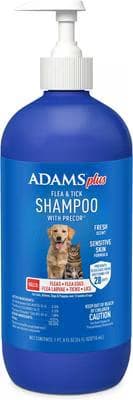
A gentle flea and tick shampoo for cats and dogs that kills ticks on contact and soothes sensitive skin. Handy for washing your dog down after a hike.
Webvet may earn a commission when you click through to Chewy, at no extra cost to you.
Should you save the tick?
It can be useful to save the removed tick in a sealed bag or small container, or to photograph it. Identifying the species helps your vet judge which diseases are a concern, and in some cases a tick can be tested.
At minimum, knowing what kind of tick it was, and roughly how long it was attached, gives your veterinarian valuable context.
Myths to avoid
Skip the old folk remedies while a tick is attached. These methods are slow and can stress the tick into releasing more saliva into your dog, raising infection risk. A clean, steady pull with the right tool is the safest approach.
- Do not burn the tick with a match.
- Do not smother it with petroleum jelly, nail polish, or rubbing alcohol while it is attached.
When to Call or See Your Veterinarian
Most tick bites can be handled at home, but some situations need professional input. Use this quick triage guide.
| Call for a routine appointment | Treat as an emergency |
|---|---|
| The bite site is mildly red, swollen, or scabbed for more than 1 to 2 weeks | Progressive weakness or paralysis, especially starting in the hind legs |
| You could not remove the entire tick | Difficulty breathing or collapse |
| The tick was attached for more than a day, or you are unsure | Pale or white gums, or signs of bleeding |
| Mild lethargy, stiffness, or off appetite in the weeks after a bite | High fever, repeated vomiting, or sudden severe lameness |
The Bottom Line
So what do tick bites look like on dogs in the end? A tick bite on a dog usually looks like a small red bump, sometimes with a central scab, and an embedded tick looks like a tiny dark lump with legs that swells as it feeds.
The bite itself is rarely the real danger; the diseases ticks carry are. Because most transmission takes 36 to 48 hours, prompt and correct removal, paired with year-round prevention and regular checks, is your best defense. When in doubt about a lump, a symptom, or a bite, your veterinarian is the right call.
- 1Identification: a tick bite is a small red bump, often with a central scab; an embedded tick is a dark, seed-like lump with legs that swells when engorged.
- 2Timing: most disease transmission needs 36 to 48 hours of attachment, so remove ticks promptly with a straight, steady pull using fine-tipped tweezers.
- 3When in doubt, see your vet, especially for whole-body signs like fever, lethargy, limping, or any progressive weakness, which is an emergency.
Frequently Asked Questions
What does a tick bite look like on a dog after the tick is removed?
After removal, a tick bite usually looks like a small red bump or a slightly raised, irritated nodule where the tick was attached. A firm lump or small scab can persist for several days up to a couple of weeks as the skin heals, which is normal. Watch for spreading redness, swelling, warmth, or pus, which can signal infection and a reason to call your vet.
How can you tell the difference between a tick and a scab or skin tag on a dog?
Look for legs. A tick has eight tiny legs clustered near its head, while scabs, skin tags, warts, and nipples never do. A tick also feels firm and slightly crunchy and sits on top of the skin, whereas a skin tag is soft and a scab is dry and crusty. If you part the fur and see legs or a clear body shape, it is a tick. When unsure, your vet can confirm it instantly.
How long can a tick stay attached to a dog?
A tick can stay attached and feed for several days, often anywhere from 3 to 10 days, before it becomes engorged and drops off on its own. The longer it stays, the higher the risk of disease transmission, since many pathogens require about 36 to 48 hours of attachment. This is why removing a tick as soon as you find it is so important.
What kills ticks on dogs instantly?
No safe product kills an attached tick the instant it bites. Vet-recommended preventives such as oral chews in the isoxazoline class and certain topical spot-ons kill ticks quickly, usually within hours of attachment, which greatly reduces disease risk. For a tick already on your dog, the fastest safe option is physical removal with fine-tipped tweezers, not chemicals or home remedies.
Can a tick bite make a dog sick even after it's removed?
Yes. If a tick transmitted a disease before you removed it, your dog can still develop illness days to weeks later, even though the tick is gone. That is why you should note the date of the bite and watch for signs like fever, lethargy, limping, or loss of appetite for several weeks. Removing the tick stops further transmission but cannot undo an infection that has already started.
What does an infected tick bite look like on a dog?
An infected tick bite tends to look angrier than a normal healing bite. Signs include spreading redness, noticeable swelling, warmth, pus or oozing discharge, a bad smell, or a scab that stays painful and will not heal. Your dog may also lick or chew the spot persistently. An infected bite site should be evaluated by your veterinarian, who may prescribe treatment.
Should you be worried if you find a dried, dead tick on your dog?
A dried, dead tick means it was attached for some time before it died or fell off, possibly because your dog is on a preventive that killed it. Remove it as you would a live tick and clean the area. The main thing to consider is how long it may have been attached, since longer attachment raises disease risk. If you are unsure or your dog shows any symptoms, check in with your vet.
How long after a tick bite do symptoms appear in dogs?
It varies by disease. A local skin reaction can show within hours and fade in a week or two. Tick-borne illnesses take longer: anaplasmosis and ehrlichiosis may cause signs within days to a few weeks, while Lyme disease often appears weeks to a few months after the bite. Because windows differ, monitor your dog for several weeks and contact your vet if anything seems off.
Do dogs get a bullseye rash from tick bites like people do?
No, dogs almost never develop the classic bullseye rash that some people get with Lyme disease. Their fur hides the skin, and they simply do not tend to form that target-shaped mark. This means you cannot rely on a bullseye to warn you. A normal-looking little bump can still come from a disease-carrying tick, so watch your dog's overall health, not just the bite.
Can ticks bite a dog without attaching, or jump onto a dog?
Ticks cannot jump or fly. They climb onto a dog through direct contact, a behavior called questing, where they wait on grass or brush with their legs outstretched and grab on as your dog passes. They generally need to attach and feed to transmit disease, so a tick that is merely crawling on the coat and brushed off before it bites poses little risk. That is exactly why post-walk tick checks work so well.
Finding a tick or a strange bump on your dog is unsettling, but with a calm tick check, prompt removal, and year-round prevention, you have the tools to protect your dog.
If you spot whole-body warning signs, an infected-looking bite, or anything resembling progressive weakness, do not wait, contact your veterinarian, who can test, diagnose, and treat tick-borne illness before it becomes serious.
Veterinarian · BVMS MRCVS
Dr. Pippa Elliott, BVMS, MRCVS, is a veterinarian with nearly 30 years of experience in companion animal practice. Dr. Elliott earned her Bachelor of Veterinary Medicine and Surgery from the University of Glasgow. She was also designated a Member of the Royal College of Veterinary Surgeons. Married with 2 grown-up kids, Dr. Elliott has a naughty Puggle named Poggle, 3 cats and a bearded dragon.


