Puppy Dewormer: Schedule, Signs & Best Picks
A vet-backed puppy dewormer schedule from 2 to 16 weeks, the signs of worms, which over-the-counter picks are safe, and exactly when your puppy needs a vet.

BVMS MRCVS
Medically reviewed by Dr. Pippa Elliott, BVMS MRCVS · Last reviewed

This article contains affiliate links. Webvet may earn a commission when you buy through them, at no extra cost to you.
WebVet may earn a commission from qualifying purchases made through links on this page, at no additional cost to you.
A puppy dewormer is one of the first health steps a new puppy needs, often before you even bring your pup home. Nearly all puppies are born with roundworms or pick up worms through their mother's milk, so a single dose is rarely enough. This guide lays out a clear deworming schedule from 2 to 16 weeks of age, the signs of worms to watch for, which over-the-counter picks are safe, and exactly when your puppy needs a veterinarian instead of a store-bought product.
- 1Start deworming at 2 weeks of age and repeat every 2 weeks until at least 8 weeks, then continue with a monthly parasite preventive.
- 2Puppies need repeat doses because dewormers kill adult worms in the gut but not the migrating larvae that mature later.
- 3Pyrantel pamoate is a safe over-the-counter starting dewormer; whipworms, tapeworms, and Giardia usually need a vet-prescribed product.
- 4Natural puppy dewormers are unproven and can be risky for young puppies, so they are not a substitute for a real dewormer.
- 5See a vet for bloody diarrhea, a swollen belly, pale gums, vomiting, or any puppy that is not thriving.
Worms are so common in young dogs that veterinary parasitologists treat every puppy as infected until proven otherwise. The good news is that treatment is cheap, safe, and effective when you follow the right timeline. The trickier part is knowing which worms a store-bought dewormer actually covers, and recognizing the moments when a puppy needs professional care rather than another dose at home.
Most owners can start with a simple over-the-counter product. A pyrantel pamoate liquid or tablet such as Nemex-2 or generic pyrantel pamoate is labeled for puppies from 2 weeks of age and clears the two most common worms: roundworms and hookworms. For broader coverage, a fenbendazole product such as Panacur adds whipworms and some tapeworms, while a combination tablet like Bayer Quad Dewormer (or Drontal Plus) also targets tapeworms. Which one you reach for depends on your puppy's age, weight, and what a fecal test finds.
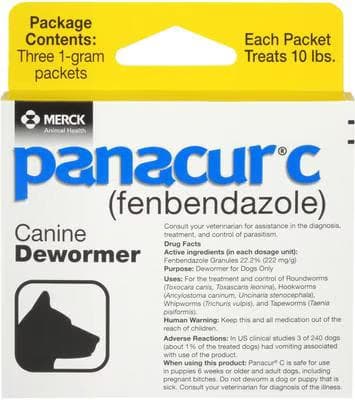
Broad-spectrum dog dewormer (fenbendazole) that treats roundworms, hookworms, whipworms, and Taenia tapeworms. Three daily 1-gram packets dosed by weight.
Webvet may earn a commission when you click through to Chewy, at no extra cost to you.
Puppy deworming schedule by age
When should you give a puppy dewormer? Start at 2 weeks of age, then repeat every 2 weeks until your puppy is at least 8 weeks old, and continue with a monthly parasite preventive after that. This every-two-weeks rhythm is the single most important thing to get right, because it is timed to catch new adult worms as they emerge.
The reason for the tight spacing is biology. A dewormer kills the adult worms living in your puppy's intestine on the day you give it, but it does not reliably kill the immature larvae migrating through the liver, lungs, and other tissues. Over the following days, those larvae travel to the gut and grow into egg-laying adults, so a second dose two weeks later mops up the next wave. Skipping doses lets worms mature, shed eggs, and reinfect your puppy and your yard.

Why puppies need repeat deworming
Puppies are exposed to worms remarkably early. Roundworm larvae can cross the placenta before birth, so many puppies are already infected on the day they are born. Both roundworms and hookworms also pass through the mother's milk during nursing. That is why deworming starts at 2 weeks of age, before those worms are old enough to shed eggs of their own.
A single dewormer only reaches the adult worms living in the intestine at the moment you give it. Larvae that are still migrating through the liver, lungs, and muscle are shielded from the drug. Each repeat dose two weeks later catches the batch that has since arrived in the gut and matured, steadily draining the reservoir until it finally runs dry.
Each dose in the early schedule does a specific job:
- The 2-week dose clears the first wave of roundworms and hookworms acquired before birth and through nursing
- The 4-, 6-, and 8-week doses catch each new batch of larvae as it matures into egg-laying adults in the gut
- The follow-up fecal exam confirms whether stubborn parasites like whipworms or Giardia are still present
Deworming the mother dog during pregnancy and nursing, under veterinary guidance, further lowers the number of larvae passed to the litter. That is why responsible breeders treat the dam as well as the pups, and why a puppy from an unknown background should be assumed to be infected.
The schedule below follows the deworming approach used in the Companion Animal Parasite Council parasite-control guidelines and echoed by most veterinary practices. Ages are a guide; your veterinarian may adjust the plan based on your puppy's fecal test results, breed, and risk. For the full rationale on repeat dosing, the CAPC puppy deworming guidelines are the primary source.
| Puppy age | What to do | Why |
|---|---|---|
| 2 weeks | First dewormer (pyrantel pamoate) | Clears roundworms and hookworms passed from the mother |
| 4 weeks | Repeat dewormer | Catches larvae that have since matured into adults |
| 6 weeks | Repeat dewormer | Continues to break the reinfection cycle |
| 8 weeks | Repeat dewormer + first fecal exam | Confirms which worms remain; overlaps with first vaccines |
| 12 weeks | Dewormer or start monthly preventive | Bridges toward year-round prevention |
| 16 weeks | Monthly parasite preventive | Ongoing protection against worms and heartworm |
After 16 weeks, deworming shifts from a stand-alone treatment to a routine covered by most monthly heartworm and broad-spectrum parasite preventives, many of which also control intestinal worms. That is why puppies who finish their early schedule and go onto a monthly preventive rarely need separate dewormers as adults.

 Sponsored
Need flea, tick, or parasite care for your dog?
A licensed vet at Dutch can recommend the right preventive and prescribe it when it's appropriate. Annual members get 20% off their first flea and tick order.
Use code Pets60
Plans start at $12/month · covers up to 5 pets
- Licensed vets in most states
- Rx for 150+ conditions
- 4.7 on Trustpilot
Signs your puppy has worms
What are the signs of a puppy having worms? Many infected puppies look surprisingly normal, which is exactly why routine deworming matters. When symptoms do appear, they tend to show up in the belly, the stool, and the coat. Watch for the following signs, and treat any combination of them as a reason to deworm and to call your vet.
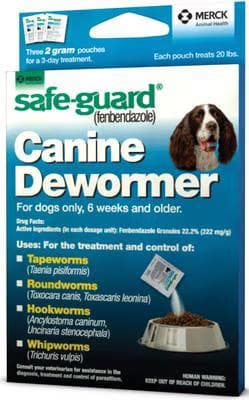
Fenbendazole 3-day dewormer that treats tapeworms (Taenia), roundworms, hookworms, and whipworms. Over the counter, for dogs 6 weeks and older.
Webvet may earn a commission when you click through to Chewy, at no extra cost to you.
- A pot-bellied, swollen abdomen, the classic sign of a heavy roundworm burden in a young puppy
- Visible worms in stool or vomit: roundworms look like spaghetti, while tapeworm segments look like grains of rice
- Diarrhea, sometimes with blood or mucus, which is common with hookworms and whipworms
- Poor growth or weight loss even though your puppy is eating well
- A dull, dry coat and generally poor condition
- Lethargy and weakness, or pale gums, which can signal anemia from blood-sucking hookworms
- Scooting or licking the rear, which can point to tapeworms
- An occasional dry cough, which can occur as roundworm larvae migrate through the lungs

The common worms behind the symptoms
Five parasites cause most of the worm trouble in puppies, and knowing them helps explain why one dewormer is not enough:
- Roundworms (Toxocara canis) are the most common puppy worm, look spaghetti-like, and are responsible for the classic pot belly; they are passed before birth and through milk
- Hookworms are tiny blood-suckers that latch onto the gut wall and can cause dangerous anemia and dark, tarry stool in young puppies
- Tapeworms are flat, segmented worms usually caught by swallowing an infected flea; their segments look like grains of rice near the tail
- Whipworms live in the large intestine, cause chronic diarrhea, and are not touched by pyrantel, so they need fenbendazole
- Giardia is a single-celled parasite, not a true worm, that causes soft, greasy stool and needs a specific treatment your vet prescribes
Because pyrantel pamoate only reaches roundworms and hookworms, a puppy with whipworms, tapeworms, or Giardia will keep having symptoms until the right drug is used. That is the single biggest reason a fecal exam is worth its small cost before you assume a home dewormer has failed.
Our whipworms in dogs guide explains how testing, a complete treatment plan, follow-up, and reducing contaminated-soil exposure work together.
Some of these signs overlap with other puppy illnesses, so worms are not the only explanation for a soft stool or a picky appetite. If your puppy has ongoing loose stools, our guide to the common causes of dog diarrhea can help you sort out whether worms or something else is to blame.
Because roundworms and hookworms are zoonotic, meaning they can infect people, the signs of worms in puppies are also a household hygiene issue. Children are most at risk. Pick up stool promptly, wash hands after handling your puppy, and keep the puppy on schedule. You can read more about worm-related digestive upset in our guide to the causes of dog diarrhea.
 Sponsored
Vet care that's always there
Unlimited video calls and messaging with licensed vets for less than a typical vet visit. One membership covers up to five pets.
Use code Pets60
Plans start at $12/month · covers up to 5 pets
- Licensed vets in most states
- Rx for 150+ conditions
- 4.7 on Trustpilot
Choosing the best dewormer for your puppy
What dewormer is best for puppies? For most healthy puppies, the best starting dewormer is pyrantel pamoate, an over-the-counter medication that safely treats roundworms and hookworms from 2 weeks of age. When a puppy needs broader coverage, fenbendazole adds whipworms, some tapeworms, and Giardia, and praziquantel is the drug that reliably kills the common flea tapeworm. The right pick depends on which worms are actually present, which is why a fecal exam is so useful.
No single over-the-counter dewormer covers every worm. That is the most important thing product listicles tend to gloss over. Pyrantel is an excellent, gentle first step, but it does nothing for whipworms or tapeworms. Matching the drug to the parasite, rather than grabbing the first bottle on the shelf, is what makes deworming actually work.
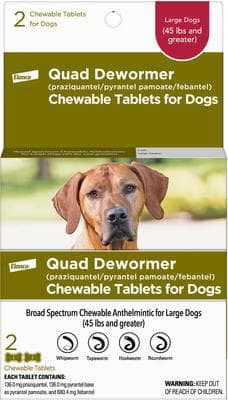
Broad-spectrum chewable dewormer (praziquantel, pyrantel, febantel) that treats tapeworms, roundworms, hookworms, and whipworms in one course. For large dogs 45 lbs and over.
Webvet may earn a commission when you click through to Chewy, at no extra cost to you.
The table below maps the common active ingredients to the worms they treat and whether you can buy them over the counter. Use it alongside your veterinarian's fecal results, not as a replacement for them.
| Active ingredient (example brand) | Worms it treats | OTC or vet |
|---|---|---|
| Pyrantel pamoate (Nemex-2, Strongid) | Roundworms, hookworms | Over the counter |
| Fenbendazole (Panacur) | Roundworms, hookworms, whipworms, some tapeworms, Giardia | Over the counter (often vet-guided) |
| Praziquantel (in Drontal, Bayer Quad) | Tapeworms | Over the counter in combination products |
| Combination tablets (Drontal Plus, Bayer Quad) | Roundworms, hookworms, whipworms, tapeworms | Over the counter, weight-dependent |
| Prescription broad-spectrum preventives | Intestinal worms plus heartworm | Veterinarian only |

Dewormers come in liquids, granules you sprinkle on food, and flavored tablets. Liquids like pyrantel pamoate suspension are easy to dose precisely for tiny puppies, while granules such as Panacur are handy for a multi-day course. Whatever the format, dosing is by body weight, so weigh your puppy first and follow the label to the gram.
Are puppy dewormers safe? Side effects to watch
Modern dewormers have a wide safety margin, and pyrantel pamoate in particular is gentle enough for 2-week-old puppies. Serious reactions are uncommon when you dose by weight and follow the label, and most puppies show no side effects at all.
When mild effects do appear, they are usually short-lived. Contact your vet if anything is severe or lasts more than a day:
- Mild vomiting or drooling shortly after a dose, which is more likely on an empty stomach
- A soft stool or brief diarrhea as worms are cleared from the gut
- A temporarily lower appetite or a quiet, sleepy few hours
- Visible dead worms in the stool, which is a normal sign the product is working rather than a side effect
The bigger risk with home deworming is not the drug itself but under-dosing a fast-growing puppy or missing the worms a product does not cover. Both are avoided with an accurate weight and a quick fecal check, so treat those two steps as part of the dose.
Over-the-counter versus vet-prescribed: how to choose
Here is the honest decision guide competitors leave out. Over-the-counter deworming is appropriate for a healthy, thriving puppy on a routine schedule. A veterinarian is the right call when the situation is more complicated or when the common OTC drugs will not reach the worm involved.
For a start-to-finish walk-through of dosing, timing, and follow-up fecal checks, our guide on how to deworm a dog covers the mechanics for puppies and adults alike. When you are ready to buy, matching the product to your fecal results will save you money and repeat doses.
Can you deworm a puppy yourself?
Can you deworm your puppies yourself? Yes, in most routine cases you can, as long as you use an appropriate over-the-counter dewormer, dose by your puppy's current weight, and follow the every-two-weeks schedule. At-home deworming with pyrantel pamoate is how most breeders and shelters handle the first several doses. What you cannot do at home is diagnose which worms are present or safely manage a sick puppy.
Doing it yourself works well for the common, expected worms. It goes wrong when owners guess the dose, skip the repeat doses, or assume one bottle cures everything. A puppy dewormer without a vet is fine for maintenance, but it is not a diagnosis.
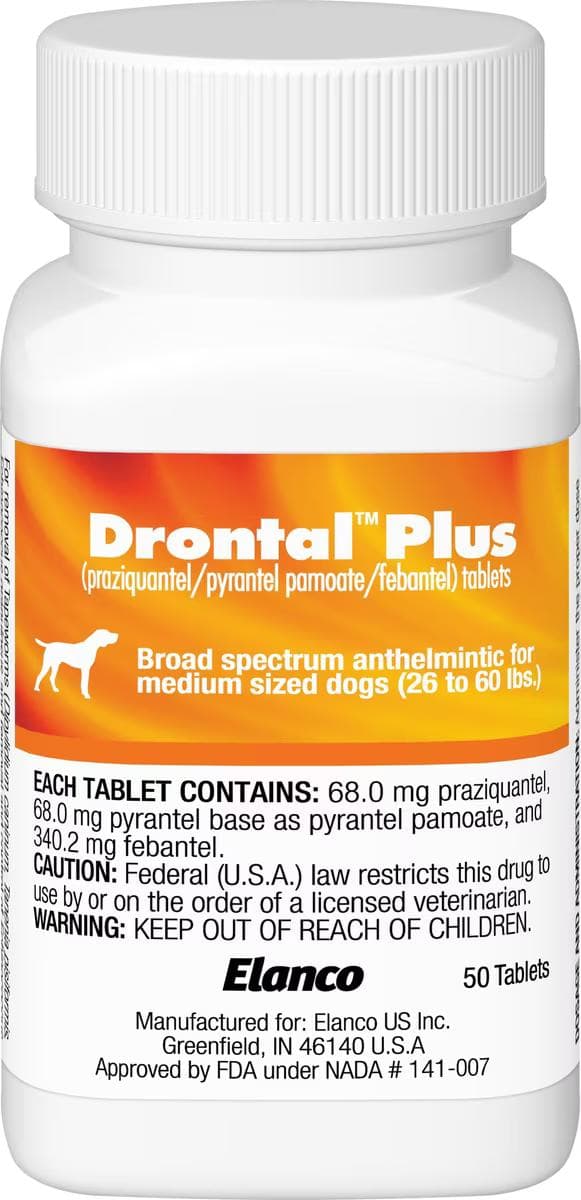
Broad-spectrum prescription dewormer (praziquantel, pyrantel, febantel) that clears tapeworms, roundworms, hookworms, and whipworms in one dose. Prescription required.
Webvet may earn a commission when you click through to Chewy, at no extra cost to you.

If you are deworming at home, follow these steps to do it safely:
- Weigh your puppy right before dosing, since puppies gain weight fast and the dose is weight-based
- Choose a product labeled for your puppy's age and weight, and read the active ingredient, not just the brand
- Measure the exact dose with the supplied syringe or cup, and give it with a little food if the label allows
- Mark the calendar and repeat every 2 weeks until at least 8 weeks of age
- Take a fresh stool sample to your vet around 8 weeks to confirm the worms are gone
- Watch for side effects such as mild vomiting or soft stool, and call your vet if your puppy seems unwell
The most common at-home mistakes are easy to avoid. Owners guess the weight instead of using a scale, stop after one dose because the puppy looks better, or assume a single over-the-counter product treats every worm. Keep the schedule, finish every dose, and confirm with a fecal exam, and home deworming works just as well as a clinic visit for routine roundworms and hookworms.
Do natural puppy dewormers work?
What naturally kills worms in puppies? The honest answer is that no natural or home remedy has been proven to reliably rid a puppy of intestinal worms. Pumpkin seeds, food-grade diatomaceous earth, carrots, apple cider vinegar, and garlic circulate widely online, but the evidence in dogs is thin to nonexistent, and some of these carry real risks for young puppies.
It is worth understanding why the popular options fall short, because the reasoning also explains why proven dewormers are worth using:
- Pumpkin seeds contain a compound called cucurbitacin that can paralyze worms in lab settings, but there is no reliable dosing or proof it clears infections in puppies
- Food-grade diatomaceous earth works by abrasion when dry, but it does not stay abrasive in the moist gut, and the powder can irritate the lungs if inhaled
- Carrots and other coarse vegetables may pass through the gut but do not kill worms
- Apple cider vinegar has no evidence for deworming and can upset a puppy's stomach
- Garlic is toxic to dogs and can damage red blood cells, so it should never be used as a dewormer
None of this means diet and hygiene are pointless. A clean environment, prompt stool removal, and good flea control genuinely reduce how often a puppy is reinfected, because fleas spread tapeworms and contaminated ground spreads roundworm and hookworm eggs. Prevention is where sensible, natural care actually earns its keep, working alongside a proven dewormer rather than trying to replace it.
If you prefer a gentler routine overall, the best move is prevention and hygiene, not a home brew: keep your puppy on the deworming schedule, pick up stool promptly, and ask your veterinarian about a monthly preventive. The gastrointestinal parasites of dogs overview from the Merck Veterinary Manual is a reliable, plain-language primary source if you want to read further.
Deworming an adult dog
Adult dogs follow a different rhythm than puppies. Instead of the tight every-two-weeks puppy schedule, most adults are protected year-round by a monthly broad-spectrum parasite preventive, with periodic fecal checks to catch anything the preventive misses. Because the products, dosing, and worm risks differ, we cover the full adult picture in our dedicated dog dewormer guide, which owns broad deworming for dogs of every age.
Preventing worms from coming back
Deworming empties the gut, but a puppy can be reinfected within days if the environment is full of worm eggs or fleas. Breaking that cycle is what keeps worms gone for good, and it takes a little routine rather than any single product.
Focus on the sources that actually reinfect puppies:
- Pick up stool from the yard daily, since roundworm and hookworm eggs build up in contaminated soil over time
- Keep your puppy on a monthly parasite preventive once your veterinarian says the timing is right
- Control fleas year-round, because swallowing a single infected flea is enough to give your puppy tapeworms
- Wash bedding and clean living areas regularly, which matters most when a new litter is around
- Wash hands after handling puppies or stool, and keep young children away from soiled play areas until worms are controlled
These habits matter more than any home remedy. Combined with the deworming schedule and, when appropriate, a dog dewormer or monthly preventive chosen with your vet, they turn a one-time treatment into lasting protection and cut the odds that worms, or the illness they cause, come back.
When your puppy needs a veterinarian
Routine deworming is a job you can largely handle at home, but a veterinarian remains the safety net for anything beyond the ordinary. A quick, inexpensive fecal exam is the single most useful thing a vet does here, because it tells you exactly which worms your puppy has so you can treat the right ones.
Book a veterinary visit if your puppy shows any of the following:
- Blood in the stool, black tarry stool, or persistent diarrhea
- Pale or white gums, weakness, or collapse, which can signal anemia
- Repeated vomiting or a swollen, painful belly
- Failure to gain weight or grow despite eating normally
- Worms that keep coming back after deworming, or a fecal test showing whipworms, tapeworms, or Giardia
- Any puppy under 6 weeks old that seems unwell
Deworming also fits into your puppy's broader preventive plan, alongside vaccines and year-round parasite control. The U.S. Food and Drug Administration's animal and veterinary resources list approved products, and your veterinarian can tailor a plan to your region, where risks like heartworm and specific worms vary. Keeping your puppy on schedule now is the cheapest insurance against bigger problems later.
Puppy dewormer FAQ
Frequently Asked Questions
How often should I deworm my puppy?
Deworm your puppy every 2 weeks starting at 2 weeks of age until at least 8 weeks old, then move to a monthly parasite preventive. The frequent early doses are timed to catch worm larvae as they mature into adults, which a single dose cannot do.
Can I give a puppy dewormer without seeing a vet first?
For routine roundworm and hookworm control, yes. An over-the-counter pyrantel pamoate product dosed by weight is safe from 2 weeks of age. See a vet first if your puppy is sick, has bloody diarrhea or pale gums, or if you need to treat whipworms, tapeworms, or Giardia, which usually require a prescription product.
How long after deworming will my puppy pass worms?
You may see dead or dying worms in the stool within a day or two of a dose, especially with a heavy roundworm burden. Seeing worms is normal and not a cause for alarm, but if your puppy seems unwell, has ongoing diarrhea, or the belly stays bloated, contact your veterinarian.
Is it normal for a puppy to have diarrhea after a dewormer?
A mild, short-lived soft stool can happen as worms are cleared, and it usually settles within a day. Persistent diarrhea, blood in the stool, vomiting, or lethargy is not a normal reaction and warrants a call to your vet to rule out a heavier infection or another problem.
Do puppy dewormers expire, and does the type matter?
Yes, dewormers have expiration dates and should be stored as the label directs; an expired product may not work. The type matters too, because pyrantel treats roundworms and hookworms only, while whipworms and tapeworms need fenbendazole or praziquantel. Always match the drug to the worm your vet identifies.
What is the best over-the-counter puppy dewormer?
For routine roundworm and hookworm control, a pyrantel pamoate product such as Nemex-2 or a generic equivalent is the standard over-the-counter choice and is safe from 2 weeks of age. For broader coverage that includes whipworms or tapeworms, a fenbendazole product like Panacur or a combination tablet is better, though a vet's fecal test should guide which one you actually need.
Can worms from my puppy infect my family?
Yes. Roundworms and hookworms are zoonotic and can, rarely, cause disease in people, with young children most at risk. The risk stays low with good hygiene: pick up stool promptly, wash hands after handling your puppy, and keep your puppy on its deworming schedule. Speak with your doctor if a family member develops unexplained symptoms.

Editor
The Webvet Editorial Team is the in-house group of pet-care editors and writers behind Webvet, operated by Smart Pet Collective. The team researches, writes, and maintains Webvet's pet health, behavior, and medication content. Every article follows a defined editorial process: research from reputable veterinary and scientific sources, careful drafting, mandatory review of medical content by a credentialed veterinarian, and dated publication. Health and medication articles are medically reviewed by a licensed veterinary professional before they go live and are kept current over time.
Veterinarian · BVMS MRCVS
Dr. Pippa Elliott, BVMS, MRCVS, is a veterinarian with nearly 30 years of experience in companion animal practice. Dr. Elliott earned her Bachelor of Veterinary Medicine and Surgery from the University of Glasgow. She was also designated a Member of the Royal College of Veterinary Surgeons. Married with 2 grown-up kids, Dr. Elliott has a naughty Puggle named Poggle, 3 cats and a bearded dragon.


