Best Cat Dewormer: OTC vs. Prescription Guide
Compare the best cat dewormer options by worm type: which OTC and prescription products treat roundworms, hookworms, and tapeworms, the signs your cat needs deworming, and how to dose safely.

BVMS MRCVS
Medically reviewed by Dr. Pippa Elliott, BVMS MRCVS · Last reviewed

This article contains affiliate links. Webvet may earn a commission when you buy through them, at no extra cost to you.
WebVet may earn a commission from qualifying purchases made through links on this page, at no additional cost to you.
Choosing a cat dewormer comes down to two questions: which worm is your cat actually carrying, and does the product you are reaching for treat that specific parasite. Most owners grab whatever is on the shelf, but intestinal worms in cats are not interchangeable, and neither are the drugs that kill them. This guide compares over-the-counter and prescription options, maps each active ingredient to the worm it targets, and shows you when at-home deworming is safe versus when your cat needs a veterinarian.
- 1No single cat dewormer kills every worm: pyrantel handles roundworms and hookworms, praziquantel handles tapeworms, and broad-spectrum combinations cover all three.
- 2Over-the-counter dewormers work for confirmed roundworm and tapeworm infections, while prescription monthly preventives protect against a wider range of parasites.
- 3A fecal exam at the vet is the only reliable way to know which worm your cat has and which drug to use.
- 4Kittens, pregnant or nursing cats, and any cat that is vomiting, lethargic, or passing bloody stool should be dewormed under veterinary guidance, not at home.
- 5Some cat worms are zoonotic, meaning they can infect people, so year-round parasite control protects your whole household.

 Sponsored
Need flea, tick, or parasite care for your cat?
A licensed vet at Dutch can recommend the right preventive and prescribe it when it's appropriate. Annual members get 20% off their first flea and tick order.
Use code Pets60
Plans start at $12/month · covers up to 5 pets
- Licensed vets in most states
- Rx for 150+ conditions
- 4.7 on Trustpilot
How to choose the best cat dewormer
A cat dewormer is a medication that kills intestinal parasites such as roundworms, hookworms, and tapeworms. Dewormers fall into two groups: over-the-counter products you can buy without a prescription, and prescription products that require a veterinarian. The over-the-counter versions treat the most common worms directly, while prescription dewormers are usually broad-spectrum monthly preventives that also cover fleas, ear mites, or heartworm.
The active ingredient matters far more than the brand on the box. Common over-the-counter choices include pyrantel pamoate products such as Elanco Pro-Sense for roundworms and hookworms, and Bayer Tapeworm Dewormer (praziquantel) for tapeworms. Panacur (fenbendazole) is a broader over-the-counter granule that covers several worms plus Giardia off-label, and Drontal combines praziquantel and pyrantel to hit roundworms, hookworms, and tapeworms in one dose. Match the drug to the worm rather than assuming any dewormer treats everything.

So what is the best deworming for cats? There is no universal winner, because the best product is the one matched to the parasite your cat actually has. For a cat with only roundworms or hookworms, a pyrantel product is inexpensive and effective. For tapeworms, praziquantel is the drug of choice. For a cat that goes outdoors, hunts, or lives with fleas, a vet-prescribed broad-spectrum monthly preventive is usually the best long-term choice because it covers multiple parasites at once. You can confirm that any product is a genuine, tested treatment by checking that it appears in the FDA list of approved animal drugs.
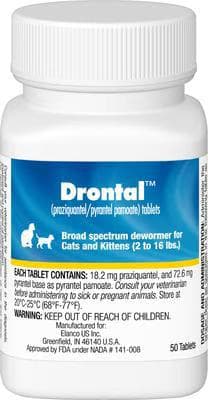
Broad-spectrum cat dewormer (praziquantel and pyrantel) that clears tapeworms, roundworms, and hookworms. For cats and kittens 2 to 16 lbs. Prescription required.
Webvet may earn a commission when you click through to Chewy, at no extra cost to you.
There is a real tradeoff between reaching for a targeted single-worm product and a broad-spectrum one. A targeted dewormer is cheaper and treats exactly what you have confirmed, but it does nothing for a worm you did not know about. A broad-spectrum combination or monthly preventive costs more and covers several parasites at once, which is reassuring when you cannot be certain what your cat is carrying. If your cat has a low-risk indoor lifestyle and a confirmed single worm, targeted is fine. If the picture is murky or your cat is regularly exposed, broad coverage buys peace of mind.
| Factor | Over-the-counter dewormer | Prescription dewormer |
|---|---|---|
| Where to buy | Pet store, pharmacy, or online without a vet | Requires a veterinarian's authorization |
| Typical active ingredients | Pyrantel pamoate, praziquantel, fenbendazole | Selamectin, moxidectin, milbemycin, emodepside |
| Worms covered | Roundworms, hookworms, tapeworms (depending on product) | The above plus heartworm, ear mites, fleas, and more |
| Best for | A known, single worm infection in a healthy adult cat | At-risk cats, kittens, or ongoing year-round prevention |
| Cost | Lower per dose | Higher, but often bundled as a monthly all-in-one |
Use a short decision framework before you buy. Working through these questions steers you toward the right product and away from a wasted dose:
- Which worm is it? If you have seen the worm or a fecal test named it, buy the product that treats that exact parasite.
- How old is your cat? Kittens need weight-appropriate products on a strict schedule, not adult formulas.
- What is your cat's lifestyle? Outdoor hunters and flea-exposed cats reinfect easily and benefit from a broad-spectrum preventive.
- Are there other pets or young children at home? Zoonotic risk pushes the decision toward reliable, vet-guided prevention.
Oral, topical, and spot-on formulations
Cat dewormers come in several formats, and the format you can realistically get into your cat matters as much as the ingredient. A drug that works perfectly on paper does nothing if half the dose ends up on the kitchen floor. Choose the formulation that fits both the parasite and your cat's temperament:
- Tablets and chewables: precise dosing and low cost, but hard to give to a cat that resists pilling
- Liquid or paste dewormers: easier to squirt into the mouth, popular for kittens and fussy eaters
- Topical spot-on products: applied to the skin at the back of the neck, often prescription and broad-spectrum, ideal for cats you cannot pill
- Granules mixed into food: convenient for multi-day fenbendazole courses, as long as your cat eats the full portion
Prescription broad-spectrum preventives, usually monthly topical or oral products, tend to combine an intestinal dewormer with protection against fleas, ear mites, and sometimes heartworm. For a cat that goes outside or lives with other pets, one of these all-in-one products is frequently the most practical way to stay ahead of worms rather than reacting to each infection after it appears.
Signs your cat needs deworming
How to know if your cat needs deworming: the clearest signs a cat needs deworming include visible worms or rice-like segments near the tail, a pot-bellied look, unexplained weight loss despite a normal appetite, a dull coat, and scooting. Indoor and outdoor cats can both carry worms, so watch for these signs even if your cat never goes outside.
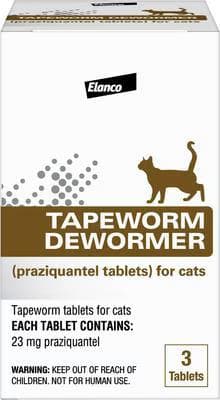
A single-dose praziquantel tablet that clears tapeworms in cats, the same active ingredient vets use. Three tablets per pack.
Webvet may earn a commission when you click through to Chewy, at no extra cost to you.
Early on, worms often cause no obvious symptoms at all, which is why routine screening matters. When signs do appear, the first signs of worms in cats are usually subtle and easy to miss. Watch for these early indicators:
- Visible worms or worm segments in the stool, in vomit, or stuck to the fur around the anus

- Occasional vomiting or intermittent soft stool and diarrhea
- Scooting the rear along the floor or excessive licking under the tail
- A dull, rough coat that has lost its usual shine
- Mild weight loss even though appetite looks normal or increased
As an infection builds, the signs become harder to ignore. A heavy roundworm burden gives kittens the classic pot-bellied look, and hookworms can rob a cat of blood, leaving pale gums and low energy. Guidance from the Cornell Feline Health Center notes that severe intestinal parasite loads can stunt a kitten's growth and, in extreme cases, become life-threatening. Contact your veterinarian if you notice the more advanced signs below.
- Pronounced, swollen belly, especially in kittens
- Pale gums, weakness, or lethargy that suggests anemia
- Ongoing diarrhea, sometimes with blood or mucus
- Steady weight loss or failure to gain weight and grow
- Coughing, which can occur as immature roundworms migrate through the lungs
Because many infected cats look completely healthy, the signs above are only part of the picture. Vets confirm worms with a fecal flotation test, which spins a stool sample to float parasite eggs to the surface where they can be identified under a microscope. This is why a fecal exam beats guessing: it names the exact worm and catches infections that show no outward symptoms. One caveat worth knowing is that tapeworm segments do not always release eggs into a stool sample, so a fecal test can miss them. If you have seen rice-grain segments near your cat's rear, tell your vet directly rather than relying on the test alone.
SponsoredVet care that's always there
Unlimited video calls and messaging with licensed vets for less than a typical vet visit. One membership covers up to five pets.
Use code Pets60
Plans start at $12/month · covers up to 5 pets
- Licensed vets in most states
- Rx for 150+ conditions
- 4.7 on Trustpilot
Types of worms cat dewormers treat
Understanding the types of worms in cats is what makes deworming work, because each worm responds to different drugs. The three you will encounter most are roundworms, hookworms, and tapeworms. Veterinary references such as the Merck Veterinary Manual describe these as the core feline intestinal parasites, and each one looks different and spreads in its own way.

Roundworms
Roundworms (Toxocara cati) are the most common worm in cats and look like pale, spaghetti-like strands in stool or vomit. Kittens frequently get them through their mother's milk, and adults pick them up by eating infected rodents or contaminated soil. The eggs are hardy and can survive in the environment for a long time, which is part of why reinfection is so easy and why prompt litter-box cleaning matters. Pyrantel pamoate and fenbendazole both treat roundworms effectively, and they are widely available over the counter.
Hookworms
Hookworms (Ancylostoma species) are smaller and attach to the intestinal wall to feed on blood, which can cause anemia in kittens and debilitated cats. Cats become infected through the skin, ingestion, or nursing, so an indoor-outdoor cat that walks through contaminated soil is at real risk even without hunting. Because hookworms are rarely visible to the naked eye, they are often found only on a fecal test rather than spotted in the litter box. The same pyrantel and fenbendazole products that clear roundworms also treat hookworms, which is why these two worms are often addressed together.
Tapeworms
Tapeworms (most often Dipylidium caninum) show up as flat, rice-grain segments near the anus or on bedding. Cats get them by swallowing an infected flea during grooming or by eating prey, so flea control and tapeworm control go hand in hand. Pyrantel does not touch tapeworms; you need praziquantel or epsiprantel instead. Because the treatment and prevention differ, we cover them in depth in our guide to dewormer for cats with tapeworms.
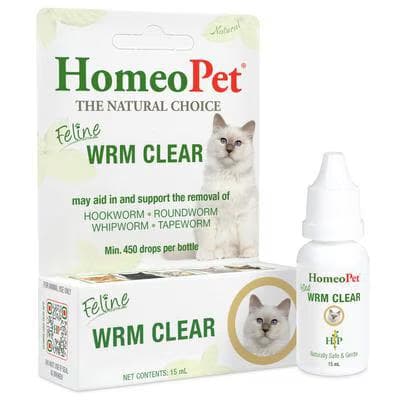
Natural liquid dewormer drops formulated to support the removal of hookworms, roundworms, tapeworms, and whipworms in cats. Over the counter, no tablets to hide.
Webvet may earn a commission when you click through to Chewy, at no extra cost to you.
| Worm type | What it looks like | Active ingredient that treats it | OTC or prescription |
|---|---|---|---|
| Roundworms | Pale, spaghetti-like strands | Pyrantel pamoate, fenbendazole | Over the counter |
| Hookworms | Tiny, thread-like; rarely seen | Pyrantel pamoate, fenbendazole | Over the counter |
| Tapeworms | Flat, rice-grain segments | Praziquantel, epsiprantel | OTC (praziquantel) or Rx |
| Whipworms (rare in cats) | Not usually visible | Fenbendazole | Over the counter |
| Multiple worms at once | Mixed signs | Combination product (praziquantel + pyrantel) | OTC or prescription |
The single most common deworming mistake is treating a tapeworm with a roundworm product. If you saw rice-grain segments, a plain pyrantel dewormer will do nothing, and vice versa. When you are unsure which worm is present, or if more than one type may be involved, a broad-spectrum combination product or a vet-confirmed diagnosis is the safer path.
Less common worms and lookalikes
A few other parasites round out the picture, though most cat owners will never see them. Knowing they exist helps you understand why a broad-spectrum or vet-guided approach is sometimes necessary:
- Whipworms are rare in cats but occasionally appear and respond to fenbendazole
- Lungworms cause coughing rather than digestive signs and need specific veterinary treatment, not a standard dewormer
- Heartworm is spread by mosquitoes, is not an intestinal worm, and is prevented rather than treated with a dewormer
- Giardia and other single-celled parasites can mimic worm signs but are not worms and require different medication
How cat dewormers actually work
Dewormers do not dissolve worms so much as disable them. Pyrantel pamoate paralyzes roundworms and hookworms so they lose their grip on the intestinal wall and pass out in the stool. Praziquantel works differently, damaging the tapeworm's protective outer layer so the body can break it down, which is why you may not see intact tapeworms after treatment the way you see roundworms. Fenbendazole interferes with the worm's ability to absorb nutrients over a multi-day course. Because most dewormers kill adult worms but not eggs or migrating larvae, a follow-up dose two to three weeks later is often needed to clear the next generation as it matures.
How to deworm a cat safely at home vs. at the vet
Can you deworm a cat without going to the vet? For a healthy adult cat with a clearly identified worm, yes. Can you deworm a cat yourself with an over-the-counter product? Also yes, as long as you match the drug to the worm and dose by your cat's weight. The catch is that at-home deworming only works when you already know which parasite you are treating, and store-bought products cover a narrower range than prescription ones. If you are guessing, you are as likely to miss the infection as to cure it.

If you do choose to deworm at home, follow these steps to do it safely:
- Confirm the worm. Ideally have a fecal exam done, or at minimum identify what you saw (spaghetti-like roundworms versus rice-grain tapeworm segments).
- Weigh your cat and buy a product labeled for that weight and for cats specifically. Never split or scale a dog dewormer.
- Read the label for the correct dose and whether a second dose is needed two to three weeks later to catch newly hatched worms.
- Give the dose exactly as directed, then monitor the litter box and watch for any adverse reaction such as repeated vomiting.
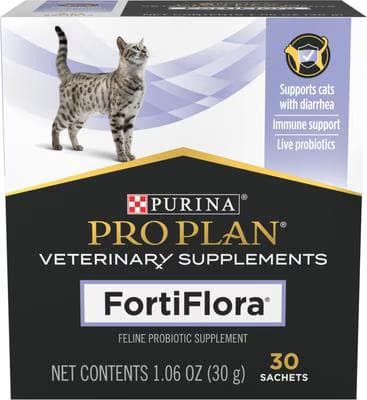
The #1 vet-recommended probiotic for cats. Daily powder sachets support healthy digestion and firmer stools, and can help cats coping with diarrhea or GI upset.
Webvet may earn a commission when you click through to Chewy, at no extra cost to you.
- Address the source: treat fleas if tapeworms were involved, and clean the litter box daily to prevent reinfection.
At-home deworming is reasonable for routine roundworm or tapeworm treatment in an otherwise healthy adult cat, and for following a kitten's scheduled deworming once your vet has set it up. It is not the right call for a sick cat or an unknown infection.
What to expect after deworming
Knowing what is normal after a dose keeps you from panicking or, worse, dosing again too soon. In the day or two after treatment you may notice some of the following, most of which resolve on their own:
- Dead or dying worms passed in the stool, sometimes still moving, which is expected and not a sign the drug failed
- Mild, short-lived digestive upset such as soft stool or a single episode of vomiting
- A temporarily reduced appetite for a day, after which your cat should return to normal
- No visible change at all, which is common with hookworms and tapeworms that are too small to spot
Call your vet if vomiting is repeated, if diarrhea persists beyond a day or two, or if your cat seems genuinely unwell rather than mildly off. Also mark your calendar for the follow-up dose if the label calls for one, because skipping it is the most common reason a worm infection appears to come back.
Getting the dose in is often the hardest part. For a tablet, tip the head gently back, place the pill as far back on the tongue as you can reach, then hold the mouth closed and stroke the throat until your cat swallows, offering a little water or a lick of food to wash it down. A pill popper or a small amount of food specifically made to hide medication can help with a resistant cat. Liquid dewormers go into the cheek pouch slowly so your cat can swallow rather than choke. If your cat fights hard enough that you cannot deliver a full, accurate dose, that is a sign to switch to a topical product or let your vet administer it, because a partial dose can leave worms behind.
Kitten deworming schedule
Kittens are born with, or quickly pick up, roundworms, so they are dewormed on a repeating schedule rather than once. Veterinary guidance generally follows this pattern, but confirm the exact timing with your own vet:
- Begin deworming at around 2 to 3 weeks of age
- Repeat every 2 weeks until roughly 8 to 9 weeks of age
- Continue monthly until about 6 months of age
- Transition to a year-round monthly parasite preventive after that
When to skip home treatment and see the vet
Some situations call for professional care from the start. Book a veterinary visit instead of reaching for an over-the-counter dewormer when any of these apply:
- Your cat is a young kitten, pregnant, or nursing
- Your cat is vomiting repeatedly, lethargic, or passing bloody or black stool
- You do not know which worm is present and cannot get a clear look
- You treated at home and saw no improvement, or the worms came back quickly
- You want protection against heartworm, ear mites, or fleas alongside intestinal worms, which needs a prescription product
Zoonotic risk: worms and your family
Deworming is not only about your cat. Feline roundworms and hookworms are zoonotic, meaning they can infect people, and children are most at risk because of contact with soil and litter. Roundworm larvae can migrate through human tissue, and hookworm larvae can cause an itchy skin condition. This is a major reason vets push year-round prevention rather than one-off treatment. Because worms are also a frequent cause of diarrhea in cats, persistent digestive upset is worth investigating for parasites. Protect your household with these habits:
- Scoop the litter box daily and wash your hands afterward
- Keep cats on a year-round broad-spectrum parasite preventive
- Control fleas, which transmit the most common tapeworm
- Have kittens and new cats tested and dewormed before they join the household
Tapeworms: when your cat needs a targeted dewormer
Tapeworms deserve special mention because they are the worm most often treated with the wrong product. Since the common flea tapeworm is spread by fleas, deworming without controlling fleas almost guarantees reinfection. Praziquantel clears the current tapeworms, but flea prevention is what keeps them gone. If tapeworms are your cat's specific problem, our dedicated guide to dewormer for cats with tapeworms walks through the targeted products, dosing, and the flea-control step in detail.
In multi-pet homes, treat parasites across the household, since dogs and cats can share environmental worm sources even when the specific parasites differ. If you also have a dog, our guide to dog dewormers covers the canine equivalents, and coordinating both pets' deworming schedules makes reinfection far less likely.
Cat dewormer FAQ
Frequently Asked Questions
How often should I deworm my cat?
Adult indoor cats with low exposure are often dewormed a few times a year, while outdoor cats, hunters, and flea-exposed cats usually need year-round monthly prevention. Kittens follow a much more frequent schedule. Your veterinarian sets the right interval based on your cat's lifestyle and local parasite risk.
How long does a cat dewormer take to work?
Most oral dewormers begin killing worms within hours, and you may see dead worms passed in the stool for a few days afterward. A single dose does not always finish the job, because it kills adult worms but not eggs or larvae, so many products call for a repeat dose two to three weeks later.
Can I use a dog dewormer on my cat?
No. Even when a dog and cat product share an active ingredient, the concentration and dosing differ, and some ingredients safe for dogs are dangerous for cats. Always use a dewormer labeled specifically for cats and dosed for your cat's weight.
Do indoor cats need to be dewormed?
Yes, though usually less often. Indoor cats can still get worms from fleas that hitch a ride inside, from hunting the occasional mouse, or from a new pet. Because some worms are zoonotic, routine prevention protects your family as well as your cat.
Are natural or home-remedy cat dewormers effective?
Evidence for natural dewormers such as pumpkin seeds, garlic, or diatomaceous earth is very limited, and none are proven to reliably clear a feline worm infection. Garlic in particular can be toxic to cats. Home remedies are not a safe substitute for a proven dewormer, so use veterinary-recommended products and see your vet if you suspect worms.
Will my cat feel sick after being dewormed?
Most cats tolerate deworming well. A minority have mild, brief side effects such as soft stool, a little vomiting, or a quiet appetite for a day. These usually pass without treatment. Contact your vet if the reaction is strong or lasts more than a day or two, which is uncommon but worth ruling out.
How much does it cost to deworm a cat?
Over-the-counter dewormers typically run a few dollars per dose, while a vet visit with a fecal exam and a targeted or prescription product costs more. The exact price depends on your location, the worm involved, and whether you choose a monthly broad-spectrum preventive. For an unclear or recurring infection, the vet route is usually money well spent because it treats the right parasite the first time.
It is worth remembering that prevention is almost always cheaper and easier than treating an established infection. A cat kept on year-round parasite control rarely builds the heavy worm burden that leads to weight loss, anemia, or an emergency vet bill, and consistent prevention also lowers the zoonotic risk to the people in your home. Reacting to worms one infection at a time works, but staying ahead of them works better, especially for outdoor cats and multi-pet households where reinfection is a constant threat.
The bottom line: the best cat dewormer is the one that matches the worm your cat actually has, dosed for your cat's weight and age. Over-the-counter products work well for confirmed roundworm and tapeworm infections in healthy adult cats, but a fecal exam and veterinary guidance remain the most reliable path, especially for kittens, sick cats, and year-round prevention. When in doubt, let your vet identify the parasite and confirm the safest treatment.

Editor
The Webvet Editorial Team is the in-house group of pet-care editors and writers behind Webvet, operated by Smart Pet Collective. The team researches, writes, and maintains Webvet's pet health, behavior, and medication content. Every article follows a defined editorial process: research from reputable veterinary and scientific sources, careful drafting, mandatory review of medical content by a credentialed veterinarian, and dated publication. Health and medication articles are medically reviewed by a licensed veterinary professional before they go live and are kept current over time.
Veterinarian · BVMS MRCVS
Dr. Pippa Elliott, BVMS, MRCVS, is a veterinarian with nearly 30 years of experience in companion animal practice. Dr. Elliott earned her Bachelor of Veterinary Medicine and Surgery from the University of Glasgow. She was also designated a Member of the Royal College of Veterinary Surgeons. Married with 2 grown-up kids, Dr. Elliott has a naughty Puggle named Poggle, 3 cats and a bearded dragon.


