Dog Dewormer: Best Vet and OTC Options by Worm Type
Dog Dewormer explained: see the vet-reviewed dosage-by-weight chart, side effects, safety warnings, cost, and when to call your veterinarian.

BVMS MRCVS
Medically reviewed by Dr. Pippa Elliott, BVMS MRCVS · Last reviewed

Drug facts
Rx Database sponsored by
Varies by selected dewormer
Varies by selected dewormer is the medication or medication group covered in this vet-reviewed WebVet consumer safety guide.
 Sponsored
Is Varies by selected dewormer right for your dog?
Ask a licensed vet at Dutch over video before you start Varies by selected dewormer. Unlimited calls and messaging are included.
Use code Pets60
Plans start at $12/month · covers up to 5 pets
- Licensed vets in most states
- Rx for 150+ conditions
- 4.7 on Trustpilot
A dog dewormer works only when its active ingredient matches the parasite. Roundworms, hookworms, whipworms, and tapeworms do not all respond to the same medicine, and exact weight bands differ by product. Confirm the worm and current weight with your veterinarian, then follow the selected dog product's label rather than copying a dose from another box.
Dog Dewormer Dosage Chart: Match the Product to the Worm and Weight
There is no safe universal milligram chart for dog dewormers. The correct dose comes from the exact product label after the parasite, age, health status, and current weight are known. Combination products also contain different active ingredients, so matching a package weight band is only useful after the right product has been chosen.
| What you know | What the chart can safely tell you | What still requires confirmation |
|---|---|---|
| Current body weight | Which package weight band may apply | The exact product and amount on its label |
| Roundworm or hookworm diagnosis | Pyrantel pamoate or fenbendazole may fit, depending on the label | Species, life stage, repeat plan, and health status |
| Whipworm diagnosis | Fenbendazole or another labeled active ingredient may be needed | Product coverage and follow-up testing |
| Tapeworm segments or diagnosis | A praziquantel-containing product may fit | Tapeworm species, flea control, and exact dog product |
| Unknown parasite | No weight row can choose the medicine | Fecal testing and veterinary selection come first |
| Possible dosing mistake | Do not give more or switch boxes | Call a veterinarian or animal poison service with the package |
The safe sequence is diagnosis, current weight, active ingredient, dog-specific product, then label amount. Reversing that sequence by starting with price or a familiar brand can produce ineffective treatment or an overdose.
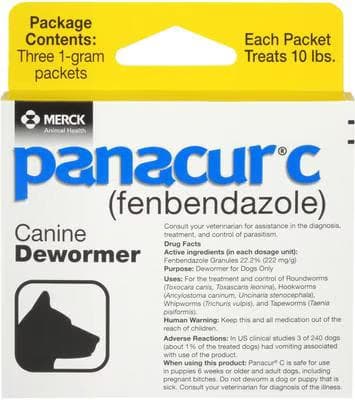
Broad-spectrum dog dewormer (fenbendazole) that treats roundworms, hookworms, whipworms, and Taenia tapeworms. Three daily 1-gram packets dosed by weight.
Webvet may earn a commission when you click through to Chewy, at no extra cost to you.

How to weigh before choosing a package
Use a reliable scale and record the dog's current weight. Small dogs and growing puppies can move into a different package band quickly, while weight loss from parasites can make an old number inaccurate. If the dog falls between bands, ask the veterinarian or manufacturer how that exact label should be followed rather than combining or splitting products on your own.
Read the active-ingredient panel, treated-parasite list, age and health restrictions, weight band, amount, repeat directions, and expiration date. Similar-looking boxes may have different spectra even when both say broad-spectrum dewormer.
How to read a dewormer label
Start with the intended species. A package for dogs is not automatically right for every dog, but a livestock or cat label is an immediate stop sign unless a veterinarian has prescribed that exact formulation. Next, find the active ingredient and the specific parasites named in the coverage statement.
Then check the patient restrictions and directions:
- minimum age and any health warnings
- current body-weight band
- amount for one administration
- whether the product is a single treatment or a course
- whether repeat treatment or testing is directed
- storage, expiration, and disposal language
- contact information for product questions or adverse events
Do not combine instructions from two boxes. A familiar active ingredient may come in a different strength, combination, or package size. If the dog's weight sits at a boundary or the wording is unclear, ask the veterinarian or manufacturer before dosing.
Check the current prevention plan for overlap
Some heartworm and flea-control plans also address selected intestinal parasites. That does not mean every worm is covered, but it does mean a new shelf product could duplicate an ingredient or create unnecessary treatment.
Take photographs of the front and active-ingredient panels of every preventive and dewormer. Include the last administration date. The clinic can then identify what is already covered, what remains a gap, and whether testing is more useful than another product.
Signs a Dog May Need Deworming
Worms may be visible, but many infected dogs show only vague signs or none at all. A fecal examination is the reliable way to identify common intestinal parasites and check whether treatment worked.
- 1No single dewormer reliably covers every intestinal parasite.
- 2Visible worms can suggest a category, but fecal testing provides a safer treatment target.
- 3Puppies, pregnant or nursing dogs, sick dogs, and dogs with blood loss need veterinary care before home treatment.
- 4A product label controls weight bands and repeat directions.
- 5Persistent illness after deworming means reassessment, not repeated random products.

Possible signs include:
- spaghetti-like worms in stool or vomit
- rice-like segments near the tail, in bedding, or on fresh stool
- diarrhea, mucus, or blood in stool
- vomiting or poor appetite
- a swollen or pot-bellied appearance, especially in a puppy
- weight loss, poor growth, or a dull coat
- scooting or frequent licking around the rear
- weakness or pale gums, which can occur with blood-feeding parasites
- coughing in some migration stages
These signs overlap with diet problems, infection, pancreatitis, inflammatory disease, and other conditions. Rice-like segments make tapeworm more likely, but the source of reinfection still matters. Flea control is essential when the common flea-transmitted tapeworm is involved.
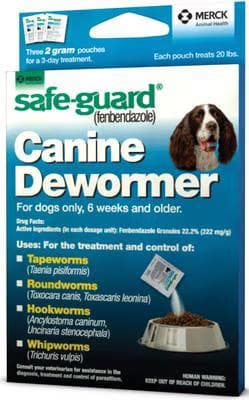
Fenbendazole 3-day dewormer that treats tapeworms (Taenia), roundworms, hookworms, and whipworms. Over the counter, for dogs 6 weeks and older.
Webvet may earn a commission when you click through to Chewy, at no extra cost to you.
Can I deworm my dog myself?
A healthy adult dog with a known parasite may be treated with an appropriate over-the-counter dog product exactly as labeled. Self-treatment becomes unsafe when the worm is unknown, the dog is very young, pregnant, nursing, chronically ill, underweight, weak, or showing blood, repeated vomiting, pain, or dehydration.
The limitation is diagnosis, not simply access. A shelf product can be genuine and still be wrong for the worm. A pyrantel-only product may help with susceptible roundworms and hookworms but will not become a tapeworm or whipworm treatment because another dose is given.
When a fecal test should come first
Testing is especially valuable when:
- no worms are visible but symptoms persist
- treatment has already failed
- diarrhea keeps returning
- several pets share the home
- a puppy or medically vulnerable dog is affected
- weight loss, anemia, pain, or blood is present
- the owner is choosing between products with different spectra
Bring a fresh sample as the clinic directs and tell the veterinarian which parasite products, flea preventives, and heartworm preventives the dog already receives. Monthly prevention may already contain an intestinal deworming ingredient, and duplication should be avoided.
Why visible worms do not tell the whole story
Appearance can narrow the possibilities but cannot reliably define the entire infection. A dog may carry more than one parasite, and eggs or microscopic organisms will not look like adult worms in stool. Conversely, mucus, food material, and other debris can be mistaken for a parasite.
Take a clear photograph and collect a fresh sample if the clinic requests one. Do not rely on an image search to select a medicine. The veterinarian may combine the visual clue with fecal testing, exposure history, age, prevention records, and the dog's physical condition.
The absence of visible worms is not reassurance when a dog has persistent diarrhea, poor growth, weight loss, weakness, or pale gums. Several important intestinal parasites are discovered through testing rather than by seeing an adult worm.
Dog Dewormers Compared by Worm Type and Active Ingredient
The best deworming medicine is the one whose active ingredients cover the diagnosed worm and whose label fits the dog. This table preserves the existing article's core parasite-to-ingredient decision.
| Worm type | Common clues | Active ingredients commonly used | Product-selection note |
|---|---|---|---|
| Roundworms | Spaghetti-like worms, pot belly, poor growth | Pyrantel pamoate, fenbendazole | Many OTC dog products cover susceptible roundworms |
| Hookworms | Pale gums, weakness, dark or bloody stool | Pyrantel pamoate, fenbendazole, other label-approved options | Heavy infection can cause dangerous anemia and needs veterinary care |
| Whipworms | Chronic or recurrent diarrhea, sometimes blood | Fenbendazole or another specifically labeled ingredient | Pyrantel-only products do not provide whipworm coverage |
| Tapeworms | Rice-like segments near the tail or on bedding | Praziquantel or another tapeworm-specific ingredient | Flea control or other source control prevents reinfection |
| Unknown parasite | Vague GI signs or no visible worms | Cannot be selected safely from symptoms alone | Fecal testing should choose the treatment target |
Current product options by active ingredient
The following examples are not interchangeable. Read each current label for treated worm species, age restrictions, weight band, contraindications, and repeat directions.
- Panacur C canine dewormer contains fenbendazole and is used for labeled susceptible intestinal worms.
- Safe-Guard canine dewormer is another fenbendazole option with its own package directions.
- Drontal Plus tablets for dogs combine praziquantel, pyrantel pamoate, and febantel for broad labeled intestinal-worm coverage.
- Elanco Quad dewormer for dogs also combines active ingredients for several common intestinal worms and must be matched to its label.
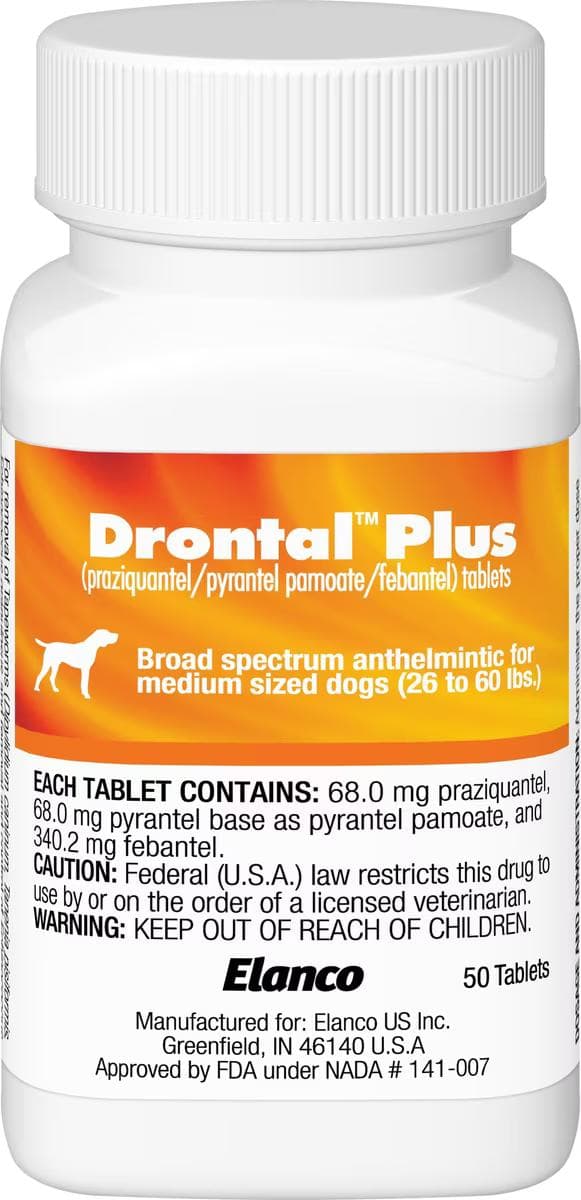
Broad-spectrum prescription dewormer (praziquantel, pyrantel, febantel) that clears tapeworms, roundworms, hookworms, and whipworms in one dose. Prescription required.
Webvet may earn a commission when you click through to Chewy, at no extra cost to you.
Choose the ingredient and spectrum before the brand. Two products that both say dewormer may treat different parasites. Two fenbendazole products may share an active ingredient but use different package sizes or directions.
For ingredient-specific clinical details, use WebVet's pyrantel pamoate for dogs and cats and fenbendazole for dogs monographs. Cat products and schedules differ, so multi-pet homes should use the separate cat dewormer guide.
Roundworms and hookworms
Roundworms are common in puppies and can be passed through maternal routes or environmental exposure. Hookworms attach to the intestinal lining and feed on blood, which makes weakness and pale gums more concerning than an uncomplicated visible-worm finding.
Pyrantel pamoate and fenbendazole are common active ingredients for susceptible roundworms and hookworms. Exact parasite species and label claims still matter. Heavy infections in puppies can become life-threatening and should not be managed by cycling through OTC products.
Whipworms
Whipworms live in the large intestine and can cause recurring diarrhea, weight loss, or blood. Reinfection can occur from a contaminated environment, so treatment and follow-up may require more than one product purchase.
Many pyrantel-only products do not cover whipworms. Fenbendazole or another specifically labeled active ingredient may fit after diagnosis. Persistent diarrhea needs reassessment because several non-parasite diseases can look similar.
Tapeworms
Tapeworm segments often resemble rice around the tail or on bedding. Praziquantel is a common tapeworm ingredient in dog products. Plain pyrantel does not become a tapeworm treatment, and flea-transmitted tapeworms will return if flea control is not addressed.
Not every tapeworm has the same source. Tell the veterinarian about flea exposure, hunting, scavenging, and raw prey. The exposure history helps connect treatment with reinfection prevention.
 Sponsored
Vet care that's always there
Unlimited video calls and messaging with licensed vets for less than a typical vet visit. One membership covers up to five pets.
Use code Pets60
Plans start at $12/month · covers up to 5 pets
- Licensed vets in most states
- Rx for 150+ conditions
- 4.7 on Trustpilot
Choosing narrow or broad coverage
A single-ingredient product can be a precise choice when testing identifies a susceptible parasite and the dog's other preventives are known. A combination product may fit when its complete spectrum is needed and every ingredient is appropriate. Neither approach is automatically superior.
Use these questions to compare options:
- Which diagnosed or strongly suspected worms does this product cover?
- Which ingredients duplicate the dog's current prevention?
- Does the label fit the dog's age, weight, and health status?
- Can the caregiver administer the full amount accurately?
- What sign or test will show whether the plan worked?
- What exposure must be controlled to prevent reinfection?
The best product recommendation should be explainable in one sentence: this active ingredient fits this parasite in this dog. If the explanation is only that the box says broad-spectrum, the selection process is incomplete.
Dewormer Side Effects and When a Vet Test Comes First
For a focused medication reference, see WebVet’s vet-reviewed Ivermectin for Dogs: Dosage Safety, MDR1 Risk, and Side Effects guide, including the dosage, side effects, and safety questions to confirm with your veterinarian.
Possible short-term effects after a correctly labeled dog dewormer can include vomiting, diarrhea, appetite change, tiredness, drooling, or abdominal discomfort. The medicine, dying parasites, or the original illness can produce similar signs, so timing and severity matter.

| What you see | What it may mean | What to do |
|---|---|---|
| Mild brief stomach upset in an otherwise bright dog | Product effect, parasites, or unrelated GI irritation | Follow the label and call if it persists or worsens |
| Worms or segments in stool | Treatment may be affecting adult parasites | Complete the label plan and follow the testing recommendation |
| No improvement or returning signs | Wrong parasite, reinfection, resistance concern, or another disease | Arrange fecal testing and veterinary reassessment |
| Repeated vomiting, bloody diarrhea, painful swollen belly, weakness, or pale gums | Heavy parasite burden or another urgent illness | Seek veterinary care promptly |
| Tremors, collapse, trouble breathing, severe weakness, or inability to stand | Possible toxicity or another emergency | Go to an emergency veterinarian now |
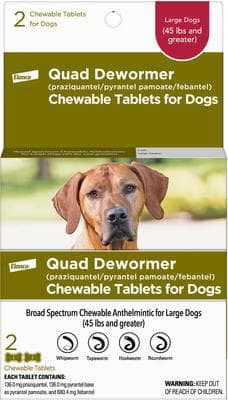
Broad-spectrum chewable dewormer (praziquantel, pyrantel, febantel) that treats tapeworms, roundworms, hookworms, and whipworms in one course. For large dogs 45 lbs and over.
Webvet may earn a commission when you click through to Chewy, at no extra cost to you.
Possible overdose or product mix-up
Call immediately if the wrong package band was given, two caregivers may have dosed the dog, a livestock product was used, or a dog chewed into a package. Report the product, active ingredients, amount missing, time, weight, age, health conditions, and current signs.
Do not induce vomiting or give a home antidote unless a veterinary professional directs it. Keep the packaging because concentration and inactive ingredients affect triage.
Natural dewormers are not substitutes
Pumpkin seeds, carrots, diatomaceous earth, fermented foods, probiotics, garlic, and herbs are promoted online, but they do not reliably clear an established intestinal-worm infection. Garlic and onion can damage canine red blood cells, and inhaled powders can irritate the lungs.
Supportive food or probiotics may fit a veterinarian-directed recovery plan, but they are not anthelmintic treatment. The risk of a natural-only approach is delayed care while hookworms cause blood loss or another parasite keeps contaminating the environment.
Why treatment may appear not to work
Persistent symptoms do not automatically justify a stronger product or another dose. The original medicine may not cover the parasite, the dog may not have swallowed the full amount, reinfection may have occurred, or the illness may not be caused by worms.
A useful reassessment separates those possibilities:
- Confirm the exact product, active ingredient, amount, and administration date.
- Review whether the dog vomited, refused food, or lost part of the dose.
- Repeat or expand fecal testing when the veterinarian recommends it.
- Check for flea, prey, fecal, or shared-environment exposure.
- Evaluate anemia, dehydration, weight loss, pain, or another systemic problem.
- Investigate non-parasite gastrointestinal disease when evidence points away from worms.
Do not start several products before the appointment. Overlapping ingredients can create safety problems and make it difficult to identify what helped or harmed the dog.
Puppies and medically vulnerable dogs
Puppies can become ill quickly when parasites contribute to diarrhea, poor intake, or blood loss. A pot belly or visible worm is not a reason to skip assessment when the puppy is weak, vomiting, dehydrated, or pale. Supportive care may be as important as parasite treatment.
Pregnant, nursing, underweight, elderly, or chronically ill dogs also need a patient-specific selection. A product that is appropriate for a healthy adult may have label restrictions or require a different clinical decision in these groups.
Bring breeder, shelter, and previous-veterinarian records when available. Vague statements such as “dewormed” do not identify the active ingredient, parasite coverage, amount, or date, so they cannot safely substitute for a treatment history.
Dog Dewormer Cost: OTC Products vs. Vet Treatment
OTC products may cost less at the register, while veterinary treatment adds examination, fecal testing, and dispensing costs. The honest comparison is the total cost of identifying and clearing the parasite, not the price of one box.
Costs vary with:
- active ingredient and spectrum
- dog weight and package band
- single-ingredient versus combination product
- prescription, pharmacy, or retail source
- fecal testing and recheck needs
- treatment of anemia, dehydration, infection, or another complication
- flea or environmental control needed to prevent recurrence
An inexpensive product that misses the worm creates repeat purchases and delays. A broad combination can also be poor value when a test shows that a targeted ingredient is enough. Ask what the fecal result changes and what follow-up will confirm success.
Vet product or OTC product?
OTC can be reasonable for a healthy adult dog with a known susceptible parasite and a dog-labeled product. Veterinary treatment is the better starting point for puppies, pregnant or nursing dogs, medically fragile dogs, unknown parasites, failed treatment, blood loss, weight loss, repeated vomiting, or persistent diarrhea.
The decision is not a moral choice between home care and a clinic. It is a risk and information choice. When the diagnosis is clear and the dog is stable, the label may be enough. When either is uncertain, testing protects the dog and the budget.
How to compare the full cost
Ask each seller or clinic to quote the complete labeled course for the dog's current weight, not one tablet or packet. Verify that the compared products cover the same parasite. A single-ingredient roundworm product and a broad combination are not interchangeable price quotes.
Include the costs that make treatment successful:
- fecal testing that identifies the target
- recheck testing when needed
- enough product to complete the directed plan
- treatment for anemia, dehydration, or infection
- veterinarian-recommended flea prevention for flea-transmitted tapeworm
- household or yard steps that reduce reinfection
A clinic plan can cost more upfront and less overall when it avoids repeated mismatched purchases. An OTC option can be cost-effective when the worm is known, the dog is stable, and the label fits. Honest cost advice explains which situation applies.
Preventing Reinfection
Deworming removes susceptible parasites from the dog but does not automatically remove eggs, larvae, fleas, prey exposure, or contaminated feces from the environment. Prevention follows the worm's transmission route.
Useful steps include:
- remove feces promptly from yards and shared areas
- wash hands after handling stool and before eating
- keep children away from contaminated soil and dog waste
- maintain veterinarian-recommended flea control
- prevent scavenging and raw-prey consumption where possible
- clean bedding and sleeping areas after visible tapeworm segments
- follow the veterinarian's fecal-testing and prevention schedule
- treat other pets only with species-appropriate products and plans
Some dog worms can infect people. Good hygiene, routine prevention, and prompt feces removal reduce risk without treating the dog as dangerous. Focus on breaking transmission rather than avoiding normal companionship.
Build prevention around the transmission route
Roundworm and hookworm control centers on feces and contaminated environments. Tapeworm prevention may depend on controlling fleas or stopping access to prey. A generic cleaning routine can miss the actual route, so ask which parasite was found and how that parasite returns.
In a multi-pet home, keep separate records for each animal. Do not split dog packages between pets or give a dog product to a cat. The veterinarian may recommend testing one animal, treating several, or changing prevention based on their different exposures.
Reinfection does not always mean the medication failed. It can mean the medicine cleared susceptible parasites while the dog returned to the same source. Linking the product decision to yard hygiene, flea control, travel, boarding, hunting, or shared spaces makes the result more durable.
Dog Dewormer FAQs
Frequently Asked Questions
Can I let my dog lick me if he has worms?
Do not let a dog with worms lick your face or mouth until the parasite is identified and treatment and hygiene are underway. Normal companionship can continue with sensible precautions. Wash hands after handling stool, clean contaminated areas, and ask the veterinarian which worm is involved because transmission routes differ and the prevention plan should match the actual parasite.
How often should you deworm a dog?
A dog should be dewormed as often as its veterinarian-directed testing and prevention plan requires, not on one universal schedule. The decision to deworm depends on age, fecal results, heartworm preventive coverage, hunting, scavenging, fleas, travel, and household exposure. Ask the veterinarian when to test and when treatment is appropriate rather than repeatedly using an over-the-counter product on a generic calendar.
How to tell if your dog is getting rid of worms?
A dog getting rid of susceptible worms may pass visible worms or segments after treatment, but seeing them is not required and their absence does not prove success. Improving stool, appetite, weight, and energy are encouraging signs. Follow-up fecal testing is the reliable way to confirm clearance when the veterinarian recommends it, especially after persistent or returning symptoms.
The Bottom Line
The best dog dewormer is not one universal product. It is the dog-labeled active ingredient that matches the diagnosed worm, current weight, age, and health status. Use the package label for exact weight bands, address flea or environmental reinfection, and use testing when the parasite or response is uncertain.

Editor
The Webvet Editorial Team is the in-house group of pet-care editors and writers behind Webvet, operated by Smart Pet Collective. The team researches, writes, and maintains Webvet's pet health, behavior, and medication content. Every article follows a defined editorial process: research from reputable veterinary and scientific sources, careful drafting, mandatory review of medical content by a credentialed veterinarian, and dated publication. Health and medication articles are medically reviewed by a licensed veterinary professional before they go live and are kept current over time.
Veterinarian · BVMS MRCVS
Dr. Pippa Elliott, BVMS, MRCVS, is a veterinarian with nearly 30 years of experience in companion animal practice. Dr. Elliott earned her Bachelor of Veterinary Medicine and Surgery from the University of Glasgow. She was also designated a Member of the Royal College of Veterinary Surgeons. Married with 2 grown-up kids, Dr. Elliott has a naughty Puggle named Poggle, 3 cats and a bearded dragon.


