Dewormer for Cats Tapeworms: What Actually Works
Tapeworms are one of the most common feline parasites, and the right dewormer for cats tapeworms clears them fast. Here is what actually works, from OTC praziquantel to when your cat truly needs a vet.

BVMS MRCVS
Medically reviewed by Dr. Pippa Elliott, BVMS MRCVS · Last reviewed

This article contains affiliate links. Webvet may earn a commission when you buy through them, at no extra cost to you.
WebVet may earn a commission from qualifying purchases made through links on this page, at no additional cost to you.
Tapeworms are one of the most common intestinal parasites in cats, and they are also one of the easiest to treat once you use the right product. If you have spotted what look like small grains of rice near your cat's tail or in the litter box, you are almost certainly dealing with tapeworm segments. The good news is that a proven dewormer for cats tapeworms clears the infection quickly, and most cats are barely bothered by the treatment. The catch is choosing a product with the correct active ingredient, because many general worm treatments on the shelf do nothing at all against tapeworms.
This guide covers exactly which dewormers work, what you can safely handle at home versus when your cat needs a veterinarian, how long treatment takes, and how to stop the infection from coming straight back. If you are shopping for an all-purpose product that also covers roundworms and hookworms, our full guide to the best cat dewormer overall breaks down broad-spectrum options. Here, we stay focused specifically on tapeworms.
- 1Praziquantel is the active ingredient that actually kills cat tapeworms; pyrantel-only products do not touch them.
- 2You can buy effective over-the-counter tapeworm dewormers, but a vet visit is smart for kittens, sick cats, or an uncertain diagnosis.
- 3Tapeworms will not go away on their own and are not cleared by a cat's immune system.
- 4Fleas spread the most common cat tapeworm, so year-round flea control is the real key to preventing reinfection.
- 5After deworming, the tapeworm is usually digested inside the gut, so you often will not see a whole worm passed.
 Sponsored
Need flea, tick, or parasite care for your cat?
A licensed vet at Dutch can recommend the right preventive and prescribe it when it's appropriate. Annual members get 20% off their first flea and tick order.
Use code Pets60
Plans start at $12/month · covers up to 5 pets
- Licensed vets in most states
- Rx for 150+ conditions
- 4.7 on Trustpilot
How to tell if your cat has tapeworms
Tapeworms are unusual among cat parasites because you can often see the evidence with your own eyes. The classic sign is the segments themselves, which look like small moving grains of white rice when fresh and like hard, golden sesame seeds once they dry out. Beyond that, the signs are usually mild, which is part of why the infection is so easy to miss for weeks at a time.
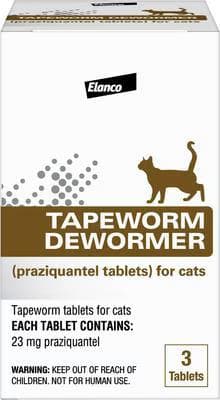
A single-dose praziquantel tablet that clears tapeworms in cats, the same active ingredient vets use. Three tablets per pack.
Webvet may earn a commission when you click through to Chewy, at no extra cost to you.
Watch for these common signs of tapeworms in cats:

- Rice-like segments stuck in the fur around the anus, or left behind on bedding and favorite resting spots.
- Scooting or dragging the rear along the floor, or unusual licking and grooming under the tail.
- Occasional visible segments in the stool, sometimes still slowly moving.
- A dull coat, mild weight loss, or a noticeably bigger appetite in heavier infections.
- In kittens or very heavy infections, a pot-bellied look or general digestive upset.
Most adult cats stay bright and act completely normal even with an active infection, so do not wait for your cat to seem ill before treating. Spotting the segments is reason enough to act, and it is often the only clue you will get.
Best dewormers for cat tapeworms
The single most important thing to understand is the active ingredient. Praziquantel is the drug that kills tapeworms in cats, and it is the veterinary standard for tapeworm treatment. It works against both common feline species: Dipylidium caninum (the flea tapeworm) and Taenia species (picked up from hunting rodents). If you want the short answer to what kills tapeworms fast, it is praziquantel, and it begins killing the worms within about 24 hours of a single dose.
A few specific products carry praziquantel at the right dose for cats. Elanco Tapeworm Dewormer (formerly sold as Bayer Tapeworm Dewormer) is an over-the-counter praziquantel tablet made specifically for cats. Drontal for cats combines praziquantel with pyrantel pamoate, so it clears tapeworms along with roundworms and hookworms in one dose. For cats that refuse pills, Profender is a prescription spot-on that your vet applies to the skin, pairing praziquantel with emodepside.
Where owners go wrong is grabbing a general dewormer that contains only pyrantel pamoate. Pyrantel treats roundworms and hookworms but has no effect on tapeworms at all. Fenbendazole, the active ingredient in Panacur, clears Taenia tapeworms but is not reliably effective against the far more common flea tapeworm, so on its own it is not a dependable choice for most cases.

The active ingredients that kill cat tapeworms
- Praziquantel: the gold standard. It kills both Dipylidium and Taenia tapeworms and is available over the counter and by prescription.
- Epsiprantel: a prescription-only tapeworm drug (sold as Cestex) that works in a similar way to praziquantel.
- Emodepside plus praziquantel: the combination in the prescription Profender spot-on, useful for cats that will not take a tablet.
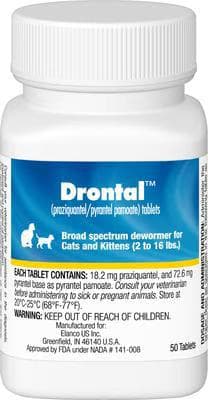
Broad-spectrum cat dewormer (praziquantel and pyrantel) that clears tapeworms, roundworms, and hookworms. For cats and kittens 2 to 16 lbs. Prescription required.
Webvet may earn a commission when you click through to Chewy, at no extra cost to you.
- Fenbendazole: effective against Taenia species but not the common flea tapeworm, so it is a partial solution at best.
Whichever product you choose, dose it by your cat's weight and follow the label exactly. Praziquantel is very well tolerated, but giving too little can leave part of the infection behind. Tablets can be hidden in a small amount of food or given directly, and the prescription spot-on is a good option for cats that fight pills. If your cat spits out the tablet or you are unsure of the correct dose, your veterinarian can give the treatment for you and confirm it worked.
| Product (active ingredient) | Tapeworm coverage | OTC or Rx | When a vet is needed |
|---|---|---|---|
| Elanco Tapeworm Dewormer (praziquantel) | Flea and Taenia tapeworms | Over the counter | Kittens, sick cats, or unclear diagnosis |
| Drontal (praziquantel + pyrantel) | Tapeworms plus round and hookworms | Over the counter / behind counter | Multi-parasite or unsure of the worm |
| Profender (emodepside + praziquantel) | Flea and Taenia tapeworms | Prescription | Cats that will not take a pill |
| Panacur (fenbendazole) | Taenia only, not the flea tapeworm | Over the counter | Confirmed Taenia or mixed infection |
| Generic pyrantel dewormer | None against tapeworms | Over the counter | Do not rely on it for tapeworms |
One question owners ask a lot is whether the infection will just clear up if they wait. It will not. A cat's immune system does not expel adult tapeworms, and an untreated tapeworm can live in the intestine for months or even years, shedding segments the entire time. A tapeworm in a cat will not go away on its own, so a dewormer is always necessary to end the infection.
 Sponsored
Vet care that's always there
Unlimited video calls and messaging with licensed vets for less than a typical vet visit. One membership covers up to five pets.
Use code Pets60
Plans start at $12/month · covers up to 5 pets
- Licensed vets in most states
- Rx for 150+ conditions
- 4.7 on Trustpilot
Can you treat cat tapeworms without a vet?
In many straightforward cases, yes. Because effective praziquantel dewormers are sold over the counter, plenty of owners successfully treat a healthy adult cat's tapeworms at home. If you have clearly seen the rice-like segments and your cat is otherwise well, giving a labeled over-the-counter praziquantel dose is a reasonable first step. That is the practical answer to how to get rid of tapeworms in cats without a vet, and it is also why so many people ask whether they can deworm their cat themselves. For a healthy adult cat with an obvious infection, you usually can.
That said, treating at home has real limits. A dewormer only helps if tapeworms are truly the problem, and other parasites or illnesses can look similar. Kittens, pregnant or nursing cats, and cats that are sick, losing weight, or having diarrhea should be seen by a veterinarian rather than treated blind. There is also a rare but serious tapeworm, Echinococcus, that carries genuine risk to people and needs professional diagnosis and handling.
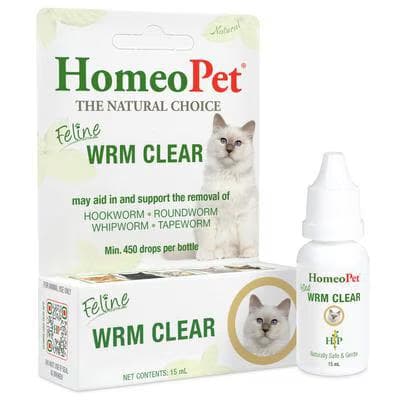
Natural liquid dewormer drops formulated to support the removal of hookworms, roundworms, tapeworms, and whipworms in cats. Over the counter, no tablets to hide.
Webvet may earn a commission when you click through to Chewy, at no extra cost to you.
You can usually treat at home when all of the following are true:
- Your adult cat is otherwise healthy and eating normally.
- You have actually seen the rice-like segments, so tapeworms are the confirmed problem and not a guess.
- You are using a product clearly labeled for cats with praziquantel at the correct weight-based dose.
- You can pair the treatment with real flea control to stop reinfection.
It is worth knowing that a routine fecal flotation test often misses tapeworms, because their segments and eggs are shed only intermittently. Actually seeing the rice-like segments yourself is one of the more reliable ways tapeworms are diagnosed, according to the Cornell Feline Health Center, which is why your own description matters so much to the vet.
You will also find plenty of natural tapeworm remedies online, from pumpkin seeds to diatomaceous earth to garlic. The honest answer is that these have little to no reliable scientific evidence for clearing tapeworms in cats, and some are dangerous. Garlic in particular is toxic to cats and should never be used as a dewormer. When a safe, proven, inexpensive drug like praziquantel exists, home remedies are not a sound substitute for it.

How long deworming takes and what to expect
The medicine itself works fast. Praziquantel starts killing tapeworms within about 24 hours of the dose, and a single treatment is often enough to clear an existing infection. So the deworming step itself takes roughly a day. The reason the whole process can feel longer is that stopping reinfection, which means breaking the flea cycle, takes several weeks of consistent flea control. How long it takes to deworm a cat with tapeworms is therefore a day for the worm, but a few weeks to truly close the door on it.
Owners often expect to see a large worm come out in the litter box, but that usually does not happen. Praziquantel damages the tapeworm so that it is digested and broken apart inside the intestine, so most cats do not pass a whole, recognizable worm at all. You may see small dried segments that look like rice or sesame seeds for a day or two afterward as the last pieces clear, and that is completely normal. So when people ask whether cats poop out tapeworms after being dewormed, the answer is that they rarely pass a visible whole worm.
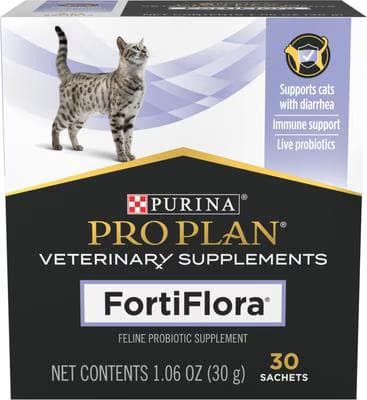
The #1 vet-recommended probiotic for cats. Daily powder sachets support healthy digestion and firmer stools, and can help cats coping with diarrhea or GI upset.
Webvet may earn a commission when you click through to Chewy, at no extra cost to you.
- Within 24 hours: the tapeworms are killed and begin breaking down inside the gut.
- The first day or two: you may notice a few dried, rice-like segments in the stool or bedding, while whole worms are rarely seen.
- Within a week: segments should stop appearing, as long as fleas are also under control.
- Two to three weeks later: some vets recommend a second dose, especially if fleas were heavy, to catch any newly matured worms.
If you keep seeing fresh, moving segments a week or more after treatment, that almost always means reinfection rather than a failed dewormer, and it points straight back to fleas. This is exactly why treating the worm without treating the fleas is a losing battle, which brings us to prevention.
Preventing tapeworm reinfection: fleas and home cleaning
The most common cat tapeworm, Dipylidium caninum, cannot spread directly from cat to cat. Your cat gets it by swallowing an infected flea while grooming, which means the flea is the real culprit. According to companion animal parasite guidelines from the Companion Animal Parasite Council, controlling fleas year-round is the single most effective way to prevent tapeworms. Intestinal worms can also contribute to loose stool, so if your cat has ongoing digestive upset it is worth reading our guide on why your cat has diarrhea as well.

Here is a point that surprises many owners: you do not need to deep-disinfect your home to get rid of tapeworms. Unlike some parasites, tapeworm eggs on their own are not directly infectious to your cat from household surfaces, because the flea has to be part of the cycle. So if you are wondering whether you need to disinfect your house because your cat has tapeworms, the honest answer is no. What actually matters is eliminating fleas from the home, not scrubbing every surface with disinfectant.
To break the cycle at home, focus your effort on fleas:
- Treat every pet in the household with a vet-recommended flea preventive, year-round.
- Vacuum floors, rugs, and furniture frequently, and empty the vacuum outside.
- Wash your cat's bedding and any soft surfaces they favor in hot water.
- Treat the home environment for fleas if you have an active infestation, following product directions.
- Limit hunting where you can, since rodents and other prey carry the second type of tapeworm.
It helps to understand why year-round prevention matters so much. Fleas can complete their life cycle in as little as a few weeks, and a cat only needs to swallow one infected flea to be reinfected. Skipping flea prevention over the winter, or treating only your cat while ignoring other pets and the environment, leaves an open door for tapeworms to return. Steady, whole-household flea control is what finally breaks the cycle for good.

Choosing a broad-spectrum cat dewormer
Tapeworms are only one of several worms cats can carry. If you are not certain what you are dealing with, or you want a single product that also covers roundworms and hookworms, a broad-spectrum dewormer may make more sense than a tapeworm-only tablet. Our complete guide to the best cat dewormer compares broad-spectrum options, active ingredients, and how to match a product to your cat's specific parasites.
The bottom line
Tapeworms in cats are common, rarely dangerous when treated, and very responsive to the right product. Reach for a praziquantel dewormer, confirm you are actually seeing tapeworm segments, and pair treatment with serious flea control so the problem does not return. When in doubt, or if your cat is very young, pregnant, or unwell, let your veterinarian confirm the diagnosis and guide treatment. A quick vet check is always worth it when your cat's health is on the line.
Frequently Asked Questions
Are cat tapeworms contagious to humans?
Direct cat-to-human spread is very rare. A person, usually a young child, would have to accidentally swallow an infected flea to catch the common flea tapeworm, so ordinary contact with your cat is not a meaningful risk. Routine flea control and hand-washing keep that small risk even lower. The Echinococcus tapeworm is a more serious human concern, and it is one reason to involve your vet if it is a possibility.
Can indoor cats get tapeworms?
Yes. Indoor cats can still get fleas that hitch a ride inside on people, dogs, or other pets, and a single infected flea is all it takes. Indoor cats that catch the occasional mouse or insect can also pick up tapeworms that way, so indoor status does not remove the need for flea prevention.
Do I need a prescription for a cat tapeworm dewormer?
Not always. Praziquantel tapeworm tablets are sold over the counter for cats, so you can buy an effective product without a prescription. Prescription options like the Profender spot-on or combination dewormers exist for cats that will not take a pill or that need broader coverage, and your vet can advise which is best.
How much does it cost to treat tapeworms in a cat?
An over-the-counter praziquantel tablet is inexpensive, often just a few dollars per dose. A vet visit with an exam and dewormer costs more, but it buys you a confirmed diagnosis and professional guidance, which is well worth it for kittens, sick cats, or infections that keep coming back.
Can I give my cat a dog tapeworm dewormer?
Only if the product is specifically labeled for cats and dosed for your cat's weight. Some tapeworm dewormers use the same active ingredient, praziquantel, for both species, but many dog products are not formulated or dosed for cats, and a few canine parasite products contain ingredients that are unsafe for cats. Never assume a dog dewormer is safe for a cat. Check the label carefully, or ask your veterinarian first.

Editor
The Webvet Editorial Team is the in-house group of pet-care editors and writers behind Webvet, operated by Smart Pet Collective. The team researches, writes, and maintains Webvet's pet health, behavior, and medication content. Every article follows a defined editorial process: research from reputable veterinary and scientific sources, careful drafting, mandatory review of medical content by a credentialed veterinarian, and dated publication. Health and medication articles are medically reviewed by a licensed veterinary professional before they go live and are kept current over time.
Veterinarian · BVMS MRCVS
Dr. Pippa Elliott, BVMS, MRCVS, is a veterinarian with nearly 30 years of experience in companion animal practice. Dr. Elliott earned her Bachelor of Veterinary Medicine and Surgery from the University of Glasgow. She was also designated a Member of the Royal College of Veterinary Surgeons. Married with 2 grown-up kids, Dr. Elliott has a naughty Puggle named Poggle, 3 cats and a bearded dragon.


