How to Deworm a Dog: Vet-Backed Step-by-Step
Learn how to deworm a dog at home the safe way: a vet-backed step-by-step process, how to match the right dewormer to each worm, when over-the-counter products are enough, the honest truth about natural remedies, and when to see a vet.

BVMS MRCVS
Medically reviewed by Dr. Pippa Elliott, BVMS MRCVS · Last reviewed

This article contains affiliate links. Webvet may earn a commission when you buy through them, at no extra cost to you.
WebVet may earn a commission from qualifying purchases made through links on this page, at no additional cost to you.
Knowing how to deworm a dog is one of the most useful skills a pet owner can learn, because intestinal worms are common, treatable, and largely preventable once you understand the process. This guide walks through the safe, step-by-step way to deworm a dog at home, when an over-the-counter product like Panacur (fenbendazole), pyrantel pamoate, or a broad-spectrum combination such as Bayer Quad Dewormer is enough, and the specific situations where a veterinarian needs to be involved. Deworming is rarely an emergency, but doing it correctly, with the right drug for the right parasite, matters far more than most product labels admit.
Most dogs will need deworming at some point in their lives. Puppies are almost always born with or quickly pick up roundworms and hookworms, and adult dogs can be reinfected through soil, feces, fleas, prey animals, or contaminated water. The reassuring part is that the medicines that clear these parasites are well studied, widely available, and safe when they are matched to your dog's weight and to the specific worm involved.
The catch, and the reason this article exists, is that deworming is not a single action. It is a short set of decisions: which worm your dog actually has, which active ingredient kills that worm, whether you can buy that ingredient over the counter, and whether your dog's age or health calls for a veterinary exam first. Get those four decisions right and the process is genuinely simple. Get them wrong and you can dose a dog for weeks without ever touching the parasite that is actually there.
- 1Deworming means matching the right drug to the right parasite: pyrantel and fenbendazole cover the most common intestinal worms, but only praziquantel reliably kills tapeworms.
- 2You can deworm a dog at home with over-the-counter products for routine roundworms and hookworms, but a fecal test from your vet is the only way to know exactly what you are treating.
- 3Puppies need a schedule, not a single dose: deworming starts at about 2 weeks of age and repeats every 2 weeks until weaning.
- 4Natural dewormers such as pumpkin seeds have little reliable evidence behind them and should never replace a proven medication.
- 5See a vet if your dog is very young, pregnant, visibly ill, passing blood, or not improving after correct treatment.
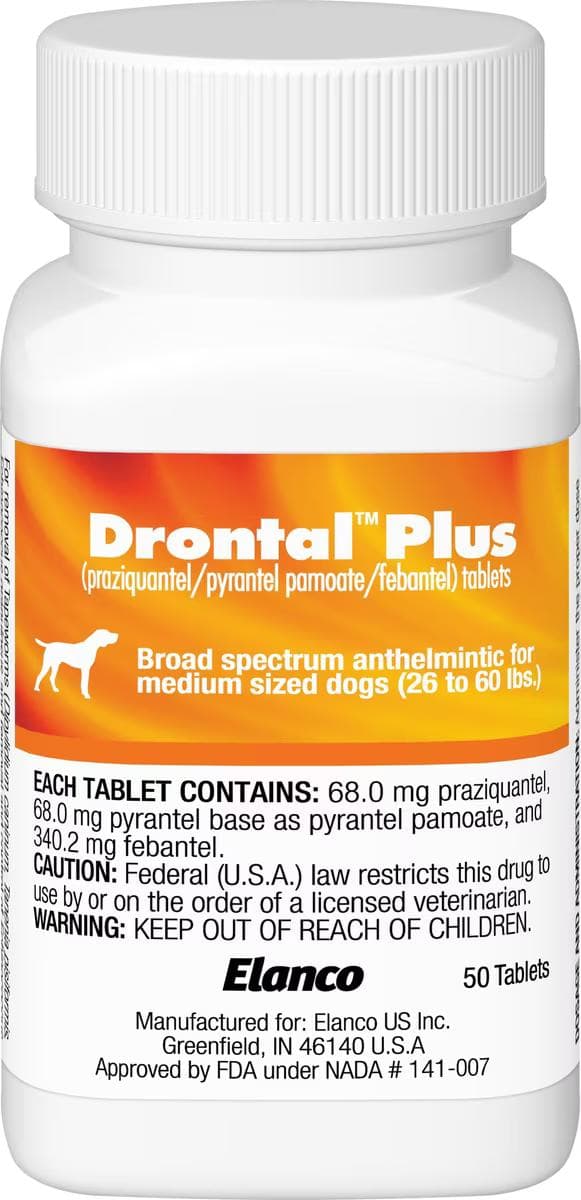
Broad-spectrum prescription dewormer (praziquantel, pyrantel, febantel) that clears tapeworms, roundworms, hookworms, and whipworms in one dose. Prescription required.
Webvet may earn a commission when you click through to Chewy, at no extra cost to you.
How to deworm a dog step by step
You can deworm most healthy adult dogs at home in a handful of straightforward steps. The sequence below is what a veterinarian would confirm, and it works whether you are treating a confirmed infection or following a routine prevention schedule. If you are wondering how to deworm a dog at home without overcomplicating it, this is the core process, and each step exists to fix one of the mistakes that make deworming fail.

Here is the step-by-step process, in order:
- Confirm what you are treating. Ideally, collect a fresh stool sample and have your veterinarian run a fecal test. Worms and their eggs are not always visible in feces, and the test tells you exactly which parasite is present so you can pick a drug that actually kills it rather than guessing.
- Weigh your dog accurately. Dewormer doses are based on body weight, and underdosing is one of the most common reasons a treatment fails to clear an infection. Use a current, accurate weight, not an old number or a guess, and weigh puppies again right before each repeat dose because they grow quickly.
- Choose the right product for the worm. Match the active ingredient to the parasite: pyrantel pamoate for roundworms and hookworms, fenbendazole for roundworms, hookworms, whipworms, and one type of tapeworm, and praziquantel for the flea tapeworm that most dogs actually get.
- Read the label and confirm the age and weight minimums. Most over-the-counter dewormers list a minimum age and weight on the box. Do not use an adult product on a very young puppy without checking, and never split a large-dog dose by eye to treat a small dog, because that is how accidental underdosing and overdosing both happen.
- Give the dose correctly. Many dewormers come as flavored chewables or tablets you can offer by hand or hide in a small amount of food, while others, such as fenbendazole granules, are mixed into wet food. Whatever the form, make sure your dog swallows the entire dose and does not spit part of it out later.
- Complete the full course. Some products, including fenbendazole, are given once daily for three consecutive days. Others are a single dose repeated in two to four weeks to catch worms that were still immature at the first dose. Finishing the course, rather than stopping when your dog looks better, is what actually clears the infection.
- Repeat as directed and control fleas. Because eggs in the environment and fleas can reinfect your dog, a single dose is rarely the end of the story. Follow up on schedule, pick up stool promptly, and keep your dog on year-round flea control to stop tapeworms from returning through swallowed fleas.
The single most important decision in that list is matching the drug to the parasite, because no over-the-counter dewormer covers every worm. The table below maps the common canine intestinal worms to the active ingredients that treat them, along with familiar products like Panacur and Drontal Plus. If you remember only one thing from this guide, make it this: a plain pyrantel product will not touch a tapeworm.
| Parasite | Active ingredient that treats it | Common products | Over the counter? |
|---|---|---|---|
| Roundworms | Pyrantel pamoate, fenbendazole, milbemycin oxime | Nemex, Panacur, Bayer Quad Dewormer | Yes (pyrantel, fenbendazole) |
| Hookworms | Pyrantel pamoate, fenbendazole, milbemycin oxime | Nemex, Panacur, Bayer Quad Dewormer | Yes (pyrantel, fenbendazole) |
| Whipworms | Fenbendazole, milbemycin oxime | Panacur, Interceptor | Fenbendazole yes; milbemycin Rx |
| Tapeworms (flea) | Praziquantel | Drontal Plus, Bayer Quad Dewormer | Yes, in combination products |
| Heartworm | Not treated by routine dewormers | Prescription protocol only | No, veterinary care required |
Notice that fenbendazole covers the widest range of the everyday intestinal worms, which is why products like Panacur are a common first choice for a suspected mixed infection. But it does not reliably kill Dipylidium caninum, the tapeworm dogs get from swallowing fleas, and that species is the one owners usually notice as rice-like segments near the tail or in bedding. For tapeworms you need praziquantel, which is exactly why broad-spectrum combination dewormers pair pyrantel or fenbendazole with praziquantel in a single product.
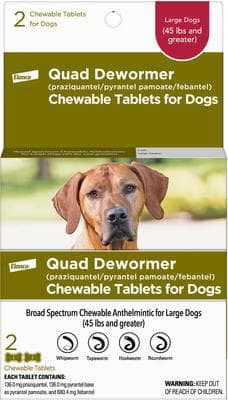
Broad-spectrum chewable dewormer (praziquantel, pyrantel, febantel) that treats tapeworms, roundworms, hookworms, and whipworms in one course. For large dogs 45 lbs and over.
Webvet may earn a commission when you click through to Chewy, at no extra cost to you.
After a correct dose, do not be alarmed if you see whole worms in your dog's stool over the next day or two, because that is simply the medication working and the dead parasites passing through. Some dewormers dissolve the worms so you see nothing at all, which is equally normal and does not mean the product failed. What matters is not what shows up in the stool but whether you completed the course and scheduled the follow-up dose, since that repeat treatment is what clears the worms that were too immature to be affected the first time around.

 Sponsored
Need flea, tick, or parasite care for your dog?
A licensed vet at Dutch can recommend the right preventive and prescribe it when it's appropriate. Annual members get 20% off their first flea and tick order.
Use code Pets60
Plans start at $12/month · covers up to 5 pets
- Licensed vets in most states
- Rx for 150+ conditions
- 4.7 on Trustpilot
Can you deworm a dog without a vet?
Yes, you can deworm a dog without a vet in many routine cases, but with an important caveat. Over-the-counter dewormers containing pyrantel pamoate or fenbendazole are sold specifically so owners can treat common roundworms and hookworms at home, and for a healthy adult dog on a routine schedule that is perfectly reasonable. What you cannot safely do without a veterinarian is diagnose which worm is present, rule out the parasites that need prescription drugs, or treat a dog that is very young, pregnant, or visibly unwell.

So the honest version of can I deworm my dog myself is this: yes for the common worms, with the right product and the right weight-based dose, and no when the situation falls outside that routine. A dog that is losing weight, vomiting, passing blood, or failing to respond to an over-the-counter product has moved past the do-it-yourself zone and needs a professional exam and, often, a targeted or prescription-strength drug.
Use this quick framework to decide whether to treat at home or book a veterinary visit:
- Treating at home is reasonable when your dog is a healthy adult, you are following a routine prevention schedule, and you are using an over-the-counter pyrantel or fenbendazole product at the correct weight-based dose.
- See a vet first when your dog is a young puppy, pregnant, nursing, elderly, or has any chronic illness, because drug choice and dosing all need professional judgment in those cases.
- See a vet soon when you see actual worms or rice-like segments, blood or mucus in the stool, persistent diarrhea or vomiting, a bloated belly, noticeable weight loss, or a dull coat despite a good appetite.
- See a vet before assuming failure when your dog was treated correctly but symptoms continue, which usually means the wrong parasite was targeted or reinfection is happening from the home environment.
Because worms are one of the leading causes of digestive upset, a dog that keeps having loose stools may be dealing with parasites, a food problem, or something else entirely, and our guide to what causes dog diarrhea helps you sort the possibilities. For a full breakdown of the different worms and how each one behaves, our main dog dewormer guide covers identification in far more depth than a how-to article can.
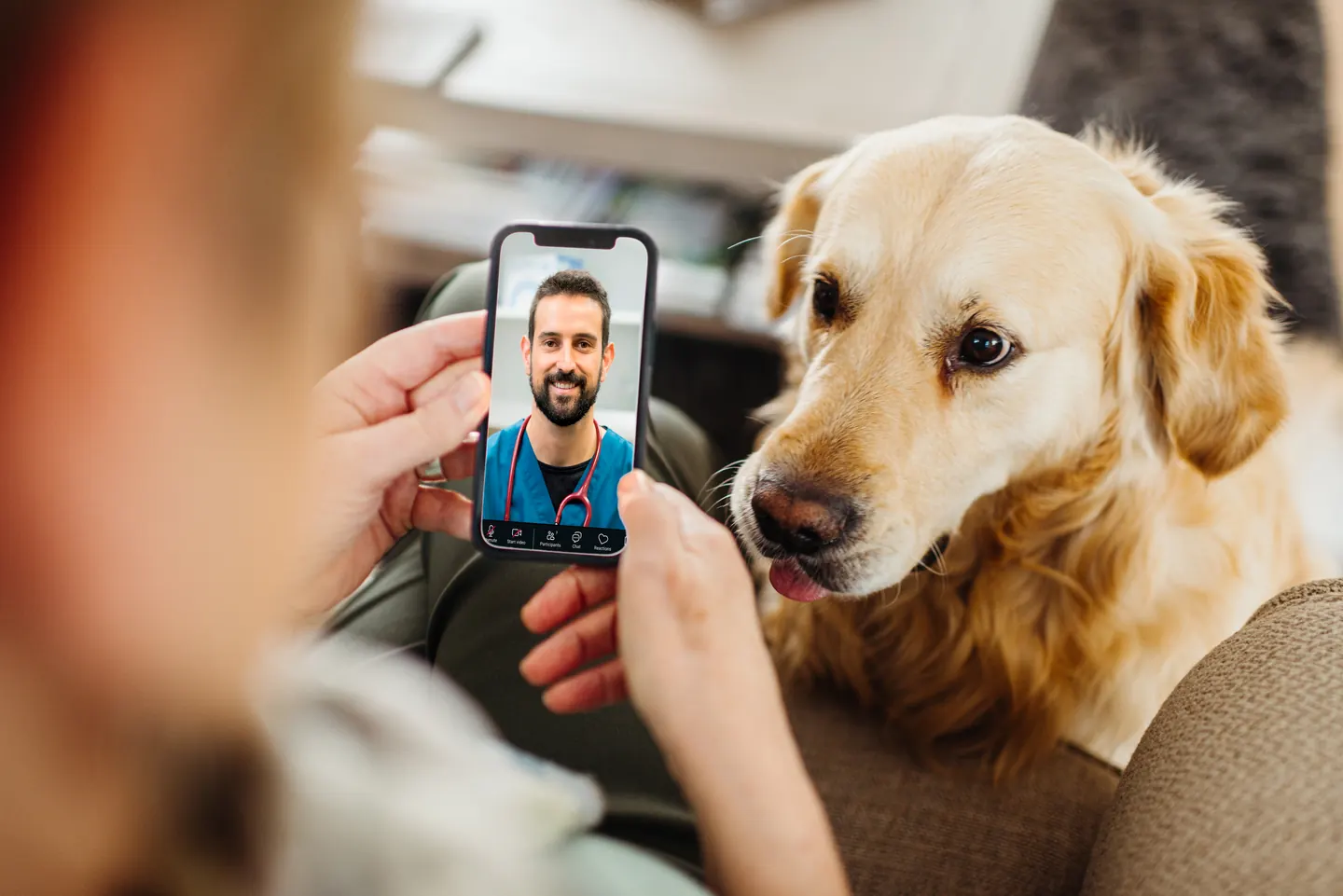 Sponsored
Vet care that's always there
Unlimited video calls and messaging with licensed vets for less than a typical vet visit. One membership covers up to five pets.
Use code Pets60
Plans start at $12/month · covers up to 5 pets
- Licensed vets in most states
- Rx for 150+ conditions
- 4.7 on Trustpilot
Do natural dewormers for dogs work?
The honest answer to what naturally kills worms in dogs is that nothing you can buy at a grocery store reliably clears an established worm infection. Home remedies like pumpkin seeds, carrots, and diatomaceous earth circulate widely online, but the evidence behind them ranges from thin to nonexistent, and treating a real parasite load with food alone lets the infection, and the damage it can do, continue for weeks.
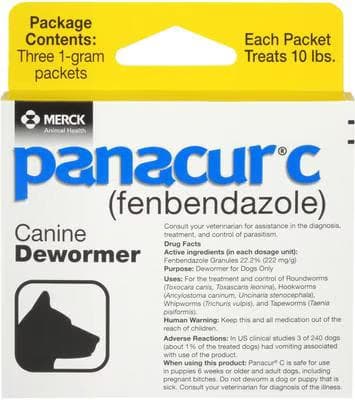
Broad-spectrum dog dewormer (fenbendazole) that treats roundworms, hookworms, whipworms, and Taenia tapeworms. Three daily 1-gram packets dosed by weight.
Webvet may earn a commission when you click through to Chewy, at no extra cost to you.

That does not mean every natural idea is worthless, only that these options are supportive at best and never a substitute for a proven dewormer when worms are actually present. Here is where the popular home remedies genuinely stand:
- Pumpkin seeds contain a compound called cucurbitin that has been studied for paralyzing intestinal worms in some species, but there is no reliable evidence that a realistic serving clears worms in dogs. Treat them as a safe snack, not a treatment.
- Carrots and other coarse vegetables are sometimes said to scrape worms from the gut wall. There is no good evidence for this, and it does nothing about the eggs and larvae that keep an infection going.
- Diatomaceous earth is heavily promoted as a dewormer, but it does not work reliably in the moist environment of the gut, and inhaling the fine dust can irritate a dog's airways. This is one to skip.
- Pineapple, apple cider vinegar, and herbal blends have no credible evidence of a deworming effect. Garlic in particular is worth avoiding entirely, because it can damage a dog's red blood cells and cause anemia.
- Fasting or sudden diet changes will not remove parasites and can be risky, especially in puppies, who have little energy reserve to spare.
The reason veterinarians push back on natural dewormers is not brand loyalty to pharmaceuticals; it is that intestinal worms cause real harm. Hookworms feed on blood and can cause dangerous anemia in puppies, and roundworms and hookworms can also infect people, a zoonotic risk that the American Veterinary Medical Association highlights as a reason to rely on proven medication and routine testing. If you want to lower your dog's worm burden naturally, the highest-impact moves are prevention, not cures: prompt stool pickup, consistent flea control, and keeping your dog from eating prey animals or contaminated soil. Sanitation does more heavy lifting here than any supplement, because it removes the eggs your dog would otherwise re-ingest from the yard and start the cycle over again.
Choosing an over-the-counter dewormer
Once you know you are dealing with routine roundworms or hookworms, choosing an over-the-counter dewormer comes down to the active ingredient and the range of worms you need to cover. This section gives you the decision framework; for a full product-by-product breakdown, our dedicated guide to over-the-counter dog dewormers compares the specific options, brands, and doses in detail.
The core distinction is between single-ingredient products and broad-spectrum combinations, and between what you can grab off the shelf and what stays behind the veterinary counter. The comparison below lays out the practical differences.

| Option | Active ingredient(s) | Worms covered | OTC or prescription |
|---|---|---|---|
| Pyrantel pamoate liquid or chews | Pyrantel pamoate | Roundworms, hookworms | Over the counter |
| Fenbendazole (Panacur, Safe-Guard) | Fenbendazole | Roundworms, hookworms, whipworms, Taenia tapeworm | Over the counter |
| Broad-spectrum combo (Bayer Quad Dewormer) | Febantel, pyrantel, praziquantel | Roundworms, hookworms, whipworms, tapeworms | Over the counter |
| Drontal Plus | Febantel, pyrantel, praziquantel | Roundworms, hookworms, whipworms, tapeworms | Often sold through vets |
| Milbemycin combinations (Interceptor, Sentinel) | Milbemycin oxime | Roundworms, hookworms, whipworms, plus heartworm prevention | Prescription |
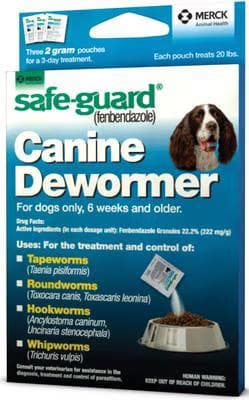
Fenbendazole 3-day dewormer that treats tapeworms (Taenia), roundworms, hookworms, and whipworms. Over the counter, for dogs 6 weeks and older.
Webvet may earn a commission when you click through to Chewy, at no extra cost to you.
To choose among these, work through a short set of questions in order:
- Do you know the worm? If a fecal test confirmed only roundworms or hookworms, a simple pyrantel product is enough and is gentle enough for most puppies and pregnant dogs under veterinary guidance.
- Do you need whipworm coverage? Whipworms are stubborn and are not touched by pyrantel, so you need fenbendazole or a prescription milbemycin product to reach them.
- Could tapeworms be involved? If your dog has fleas or hunts, choose a combination product with praziquantel, because nothing else on the over-the-counter shelf reliably kills tapeworms.
- Do you also want heartworm prevention? That is prescription territory: monthly preventives that include an intestinal dewormer, such as milbemycin-based products, require a veterinary heartworm test first.
If you are still unsure which worm you are dealing with, start with identification rather than a product. Pairing a fecal test with the right guide will always point you to the correct shelf faster than trial and error, and it keeps you from cycling through products that were never going to work on the parasite your dog has.
Signs your dog has worms
Worm infections are often silent, especially early on, which is exactly why routine deworming and periodic fecal testing matter so much. When signs do appear, they tend to show up in the stool, the belly, and the coat. Because full worm identification belongs in our dedicated pillar guide, here is only a short orientation, with the deep detail one link away.
- Visible worms in the stool, or rice-like tapeworm segments around the tail or in bedding
- Diarrhea, sometimes with blood or mucus, or ongoing soft stools that do not resolve
- A pot-bellied appearance, particularly in puppies with a heavy roundworm load
- Weight loss or poor growth despite a normal or even increased appetite
- A dull coat, low energy, or scooting the rear along the ground
If any of these sound familiar, do not try to guess the exact species from symptoms alone, because they overlap heavily and a wrong guess wastes weeks. Our complete guide to the signs of worms in dogs explains how each parasite presents and what it means, and a fecal test confirms it. Matching treatment to a confirmed diagnosis always beats treating a symptom in the dark.
Puppy deworming schedule: why timing matters
Puppies are the one group where deworming is almost never optional. Many are born already carrying roundworms passed from their mother, or pick up hookworms through her milk, so a single dose at eight weeks is not nearly enough. The Companion Animal Parasite Council's companion animal parasite guidelines recommend starting deworming early and repeating it on a schedule that catches worms as they mature into egg-laying adults.
A typical puppy deworming schedule, which your veterinarian will tailor to your litter or your individual pup, looks like this:
- Begin deworming at about 2 weeks of age, targeting roundworms and hookworms with a puppy-safe drug like pyrantel pamoate.
- Repeat the dose every 2 weeks until roughly 8 weeks of age, because new worms keep maturing in the gut between treatments.
- Continue with monthly deworming or a monthly parasite preventive from about 8 weeks through 6 months of age.
- Deworm the nursing mother alongside her puppies, since she is very often the original source of the infection.
- Transition to a year-round monthly preventive that includes intestinal worm control once your puppy is old enough, so protection never lapses.
Because puppy dosing is weight-sensitive and the every-two-weeks schedule is easy to lose track of, many owners use a dedicated puppy product and a calendar reminder. Our guide to puppy dewormers covers the safe options, minimum ages, and doses in detail, and it pairs naturally with your veterinarian's first-visit plan.
When to see a vet for deworming
Deworming is usually a routine home task, but a few situations move it firmly into veterinary territory. Recognizing them protects your dog from both undertreatment and the separate risk of dosing the wrong drug. Book a visit in any of these cases:
- Your dog is a young puppy, pregnant, nursing, or a senior with existing health problems
- You see blood in the stool, black tarry stools, or persistent diarrhea or vomiting
- Your dog is lethargic, losing weight, or has pale gums, which can signal anemia from hookworms
- An over-the-counter treatment has not worked despite correct, weight-based dosing
- You suspect tapeworms, whipworms, or a mixed infection that needs a targeted or prescription drug
- You want heartworm prevention, which always requires a test and a prescription before starting
There is also a plain safety reason to involve a veterinarian for anything beyond routine worms. Some antiparasitic drugs interact with a dog's breed, age, or other medications, and the FDA's animal drug safety information is a reminder that even common products carry label warnings worth respecting. A quick exam and fecal test cost very little and remove the guesswork that leads to repeat treatments.
Frequently asked questions
How often should I deworm my dog?
For most healthy adult dogs, veterinarians commonly recommend deworming or fecal testing several times a year, and many dogs are covered by a monthly parasite preventive that includes intestinal worm control. The right frequency depends on your dog's lifestyle: dogs that hunt, visit dog parks, or live with children often need more frequent attention. Puppies follow a much tighter schedule, starting at about 2 weeks of age. Your veterinarian can set an interval based on your dog's risk rather than a one-size-fits-all number, and many clinics fold this into an annual wellness plan so the timing is not left to memory.
Can I deworm my dog at home?
Yes, for routine roundworms and hookworms in a healthy adult dog you can deworm at home with an over-the-counter pyrantel or fenbendazole product. Weigh your dog, follow the label dose, and complete the full course, then repeat as directed to catch worms that were immature at the first dose. Move from home care to a veterinary visit if your dog is a puppy, pregnant, or unwell, if you suspect tapeworms or whipworms, or if the treatment does not work.
How long after deworming will the worms be gone?
Many dewormers begin killing worms within a day, and you may see dead worms passed in the stool over the following few days, which is normal. A single dose does not end the story, though, because eggs and immature worms in the gut and environment survive it. That is why most protocols call for a second dose two to four weeks later, and why fenbendazole is often given for three days in a row. Full clearance depends on finishing the course and preventing reinfection.
Do indoor dogs need to be dewormed?
Yes. Indoor dogs are still exposed to parasites in several ways: fleas carried inside can transmit tapeworms, roundworm and hookworm eggs travel indoors on shoes and soil, and any trip outside to relieve themselves creates opportunity. Indoor dogs generally carry lower risk than dogs with heavy outdoor exposure, but they are not risk-free, so routine prevention and periodic fecal testing still apply. A single flea carried indoors can start a tapeworm infection, which is why year-round flea control matters even for dogs that rarely set foot outside.
What happens if I do not deworm my dog?
An untreated worm infection tends to worsen over time. Hookworms can cause anemia, roundworms can interfere with a puppy's growth and nutrition, and heavy infections lead to weight loss, poor coat quality, and ongoing digestive upset. Some canine worms are also zoonotic, meaning they can infect people, especially children, which is a strong reason to keep on top of deworming rather than letting an infection run.
The bottom line
Learning how to deworm a dog comes down to a simple sequence: find out which worm you are dealing with, match it to the right active ingredient, dose by weight, and finish the full course. For routine roundworms and hookworms in a healthy adult dog, an over-the-counter product does the job at home. For tapeworms, whipworms, puppies, pregnant dogs, or a dog that is genuinely unwell, a veterinarian and a fecal test turn guesswork into an actual cure. The four decisions at the heart of this guide, the worm, the drug, the dose, and the follow-up, are what separate a dog that gets better from one that keeps getting reinfected.
Skip the miracle-cure home remedies, keep your dog on flea control and a year-round preventive, and pick up stool promptly to break the reinfection cycle. Do that, and deworming becomes a small, predictable part of keeping your dog healthy rather than a problem you keep fighting.

Editor
The Webvet Editorial Team is the in-house group of pet-care editors and writers behind Webvet, operated by Smart Pet Collective. The team researches, writes, and maintains Webvet's pet health, behavior, and medication content. Every article follows a defined editorial process: research from reputable veterinary and scientific sources, careful drafting, mandatory review of medical content by a credentialed veterinarian, and dated publication. Health and medication articles are medically reviewed by a licensed veterinary professional before they go live and are kept current over time.
Veterinarian · BVMS MRCVS
Dr. Pippa Elliott, BVMS, MRCVS, is a veterinarian with nearly 30 years of experience in companion animal practice. Dr. Elliott earned her Bachelor of Veterinary Medicine and Surgery from the University of Glasgow. She was also designated a Member of the Royal College of Veterinary Surgeons. Married with 2 grown-up kids, Dr. Elliott has a naughty Puggle named Poggle, 3 cats and a bearded dragon.


