Flea Collar for Dogs: Do They Work? A Vet-Reviewed Guide
Do flea collars for dogs actually work? A vet-reviewed guide to how modern collars like Seresto compare to cheap ones, the EPA safety review, correct fit, and our top picks.

BVMS MRCVS
Medically reviewed by Dr. Pippa Elliott, BVMS MRCVS · Last reviewed

This article contains affiliate links. Webvet may earn a commission when you buy through them, at no extra cost to you.
A flea collar for dogs can absolutely work, but only if you buy the right kind. Modern sustained-release collars that combine imidacloprid and flumethrin, like Seresto, both repel and kill fleas and ticks for months. Cheap repellent-only collars built around older pesticides mostly do not.
That gap between a 4 dollar collar and a 60 dollar collar confuses a lot of dog owners, and the headlines about Seresto safety have not helped. This guide walks through how flea collars actually work, what the EPA review of Seresto really concluded, how to fit one correctly, and which collars are worth buying.
- 1Modern imidacloprid plus flumethrin collars (Seresto) work well as flea and tick prevention; cheap repellent-only collars generally do not.
- 2After a multi-year registration review, the EPA allowed Seresto to stay on the market in 2023 with new safety measures, including updated labeling and enhanced incident reporting.
- 3Fit matters: snug enough that two fingers slide underneath, with the excess trimmed off.
- 4A collar prevents infestations. If your dog already has fleas, pair it with a fast-acting treatment.
- 5Buy from your veterinarian or an authorized retailer. Counterfeit Seresto collars are a documented problem on third-party marketplaces.

 Sponsored
Need flea, tick, or parasite care for your dog?
A licensed vet at Dutch can recommend the right preventive and prescribe it when it's appropriate. Annual members get 20% off their first flea and tick order.
Use code Pets60
Plans start at $12/month · covers up to 5 pets
- Licensed vets in most states
- Rx for 150+ conditions
- 4.7 on Trustpilot
Do flea collars actually work?
Yes, flea collars work, with one big caveat: the technology inside the collar determines everything. Modern collars that release imidacloprid and flumethrin continuously into the oils of your dog's skin and coat repel and kill fleas and ticks on contact, before a bite happens. Old-style collars that just sit on the neck and give off a pesticide odor protect very little beyond the collar itself.
Veterinary parasitology groups such as the Companion Animal Parasite Council recommend year-round flea control for dogs, and they consider modern collar formulations one of several effective options alongside oral and topical preventives.
How modern flea collars work
A sustained-release collar is less like a scented band and more like a slow-motion topical treatment. The active ingredients are embedded in the collar's polymer matrix and transfer continuously into the lipid layer of the skin at low, controlled doses.
- Imidacloprid kills adult fleas and flea larvae by disrupting their nervous system. Fleas die on contact with the treated skin and coat, so they do not need to bite first.
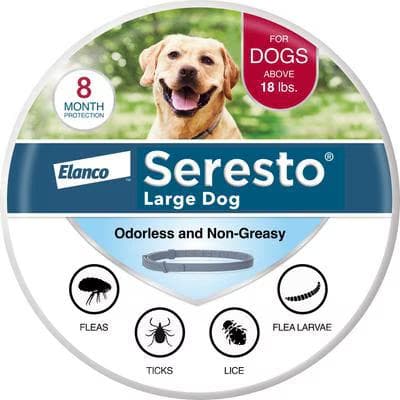
An eight-month flea and tick collar for dogs over 18 lbs that releases protection steadily. A low-effort layer to help keep ticks off between vet-recommended preventives.
Webvet may earn a commission when you click through to Chewy, at no extra cost to you.
- Flumethrin repels and kills ticks, including nymph stages, again through contact rather than through a blood meal.
- Sustained release means the collar keeps redistributing active ingredient across the whole body for up to 8 months, not just around the neck.
That whole-body spread is the key difference. Because the ingredients ride the natural skin oils from head to tail, a properly fitted modern collar protects the rump and tail base, the classic flea hangout, just as well as the neck.
Why cheap flea collars are a different product
Most bargain-bin collars rely on tetrachlorvinphos (TCVP), an organophosphate pesticide, or on essential-oil blends. TCVP collars mainly release pesticide as a vapor and dust concentrated near the neck. They can knock down some fleas close to the collar, but coverage falls off fast toward the back half of the dog, which is exactly where fleas congregate.
TCVP also carries its own safety baggage. Environmental and public-health groups have petitioned the EPA for years to ban TCVP in pet collars over concerns about residue exposure in children who pet and hug dogs. The EPA's pet products program advises owners to read pesticide collar labels carefully and follow them exactly.
| Cheap repellent-style collar (TCVP or essential oils) | Modern sustained-release collar (imidacloprid + flumethrin) | |
|---|---|---|
| How it works | Pesticide vapor and dust concentrated near the collar | Continuous low-dose release into skin oils across the whole body |
| Coverage | Mostly head and neck | Head to tail, including the rump and tail base |
| Kills fleas without a bite | Inconsistent | Yes, kills on contact |
| Tick protection | Weak to none | Repels and kills ticks |
| Duration | Weeks of meaningful effect, if that | Up to 8 months |
| Typical cost | 4 to 12 dollars | 50 to 70 dollars |
| Vet-recommended | Generally no | Commonly, as one option among oral and topical preventives |
Do flea collars work if a dog already has fleas?
A modern flea collar will start killing an existing infestation, but it is not the fastest tool for the job. Imidacloprid begins killing fleas within hours of the collar being fitted, and reinfesting fleas within about 2 hours once the collar has spread through the coat. What a collar cannot do is instantly clear the eggs, larvae, and pupae already seeded through your home, which make up the vast majority of an infestation.
For an active infestation, veterinarians typically pair prevention with a fast-kill product and environmental cleanup. Our guide to the safest flea treatment for dogs covers the fast-acting options, including oral tablets that start killing fleas within 30 minutes to a few hours.
Can a dog still get fleas while wearing a flea collar?
Yes. No preventive is 100 percent, and you may still spot the occasional flea on a collared dog, especially in heavy-exposure environments. A stray flea that hops on should die before it can establish, so a few dead or dying fleas is not failure. Live, thriving fleas on a collared dog usually mean the collar is fitted too loosely, is expired, is counterfeit, or the home itself is infested.
Not sure whether what you are seeing is fleas at all? Start with our guide to what fleas look like on dogs and how to stop them, which covers flea dirt, bite patterns, and comb checks.

Flea collar safety: the Seresto controversy, explained
The honest answer on flea collar safety: the EPA completed a multi-year review of the Seresto collar and decided in 2023 that it could stay on the market, with new mitigation measures attached. That outcome sits between the two extremes you may have read, so it is worth walking through what actually happened.
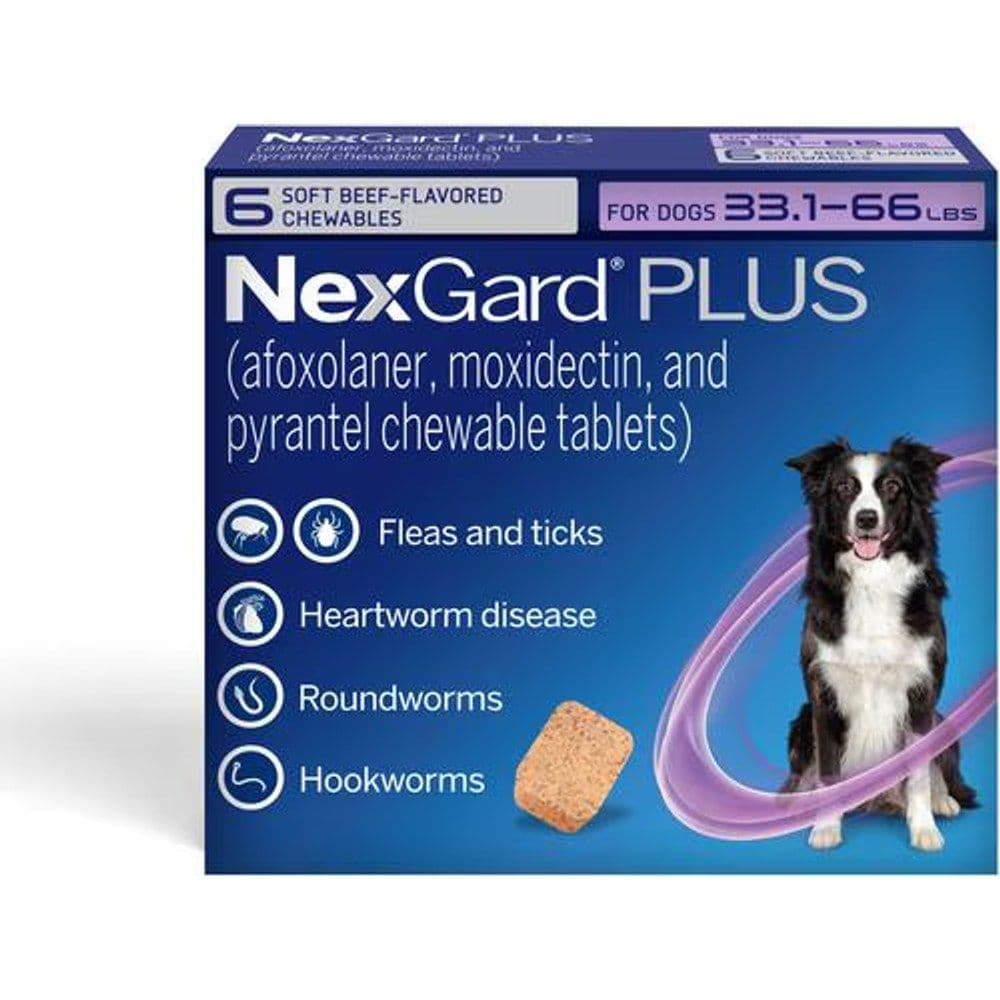
Beef-flavored monthly chew that protects dogs from fleas, ticks, heartworm disease, roundworms, and hookworms.
Webvet may earn a commission when you click through to Chewy, at no extra cost to you.
What the headlines said
In 2021, media reports drew attention to incident reports that had accumulated in the EPA's database linking Seresto collars to pet illnesses and deaths since the product launched in 2012. The Center for Biological Diversity petitioned the EPA to cancel the collar's registration, and a congressional subcommittee later urged a temporary recall while the science was sorted out.
Incident report databases are genuinely hard to interpret. Reports are unverified, they do not establish that the collar caused the outcome, and a product worn continuously by millions of dogs will accumulate reports of everything that happens to those dogs. That is not a dismissal, it is why the EPA ran a formal review instead of reacting to raw counts.
What the EPA actually concluded in 2023
In 2023 the EPA announced its decision on the cancellation petition: Seresto's registration would continue, with conditions. The agency found that the majority of reported incidents involved minor effects such as skin irritation and hair loss at the collar site, and that the available data did not support cancellation. You can read the agency's own summary on the EPA's Seresto flea and tick collar page.
The continued registration came with mitigation measures, including:
- Updated product labeling with clearer warnings, fitting instructions, and guidance on removing the collar and contacting a vet if a reaction occurs.
- Enhanced incident reporting obligations for Elanco, the manufacturer, including more detailed follow-up on reported deaths and serious effects.
- A time-limited registration: the collar's registration runs for a set 5-year term rather than indefinitely, so the EPA revisits the data on a schedule.
- Continued monitoring, with the agency retaining the option to act if new data changes the risk picture.
What are the downsides of flea collars?
The most common downsides of flea collars are local and mild: skin redness, itching, or hair thinning where the collar sits. Less commonly, dogs show gastrointestinal upset or lethargy. Rarely, more serious neurologic signs have been reported. There are also practical downsides: collars can be a hazard if a dog chews another dog's collar during play, and cheap TCVP collars pose residue-exposure questions for households with small children.
One more safety note that gets lost in the controversy coverage: never put a dog flea collar on a cat, and be careful in multi-pet homes. Some dog-only flea products, particularly permethrin-based topicals, are dangerous to cats. Seresto makes a separate cat collar; the dog and cat products are not interchangeable.
Cat owners have their own set of collar choices, age minimums and safety rules; see our guide to the flea collar for cats before choosing one.
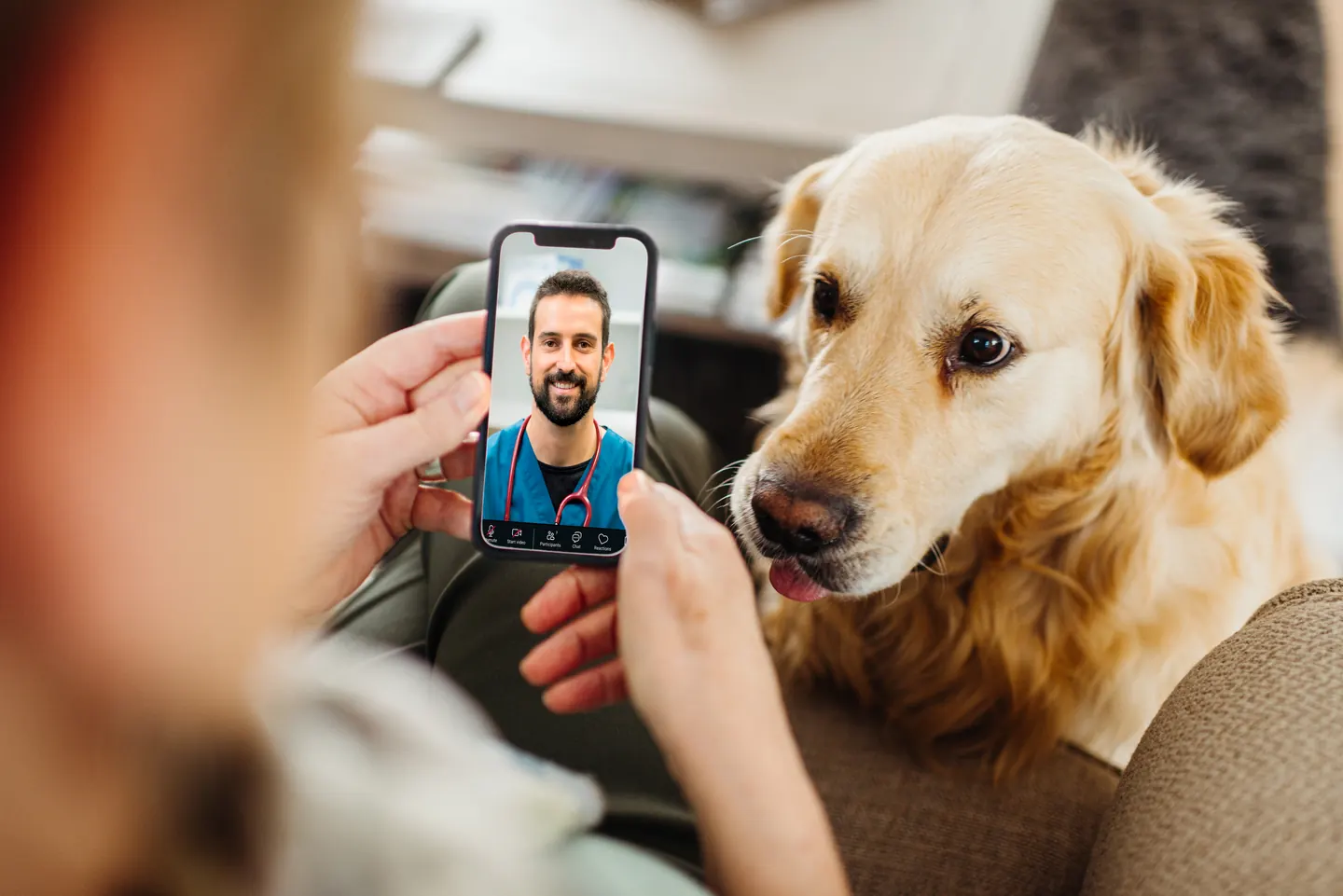 Sponsored
Vet care that's always there
Unlimited video calls and messaging with licensed vets for less than a typical vet visit. One membership covers up to five pets.
Use code Pets60
Plans start at $12/month · covers up to 5 pets
- Licensed vets in most states
- Rx for 150+ conditions
- 4.7 on Trustpilot
Fit, sizing, and using a flea collar safely at home
A flea collar only works when it touches the skin, so fit is not a detail, it is the mechanism. A collar dangling loosely off the neck cannot transfer active ingredient into the skin oils, which is one of the most common reasons owners conclude that a good collar failed.

The two-finger rule
Fit the collar snugly, then check it: you should be able to slide two fingers flat between the collar and your dog's neck. Tighter risks irritation and rubbing; looser breaks skin contact and invites a chewing hazard.
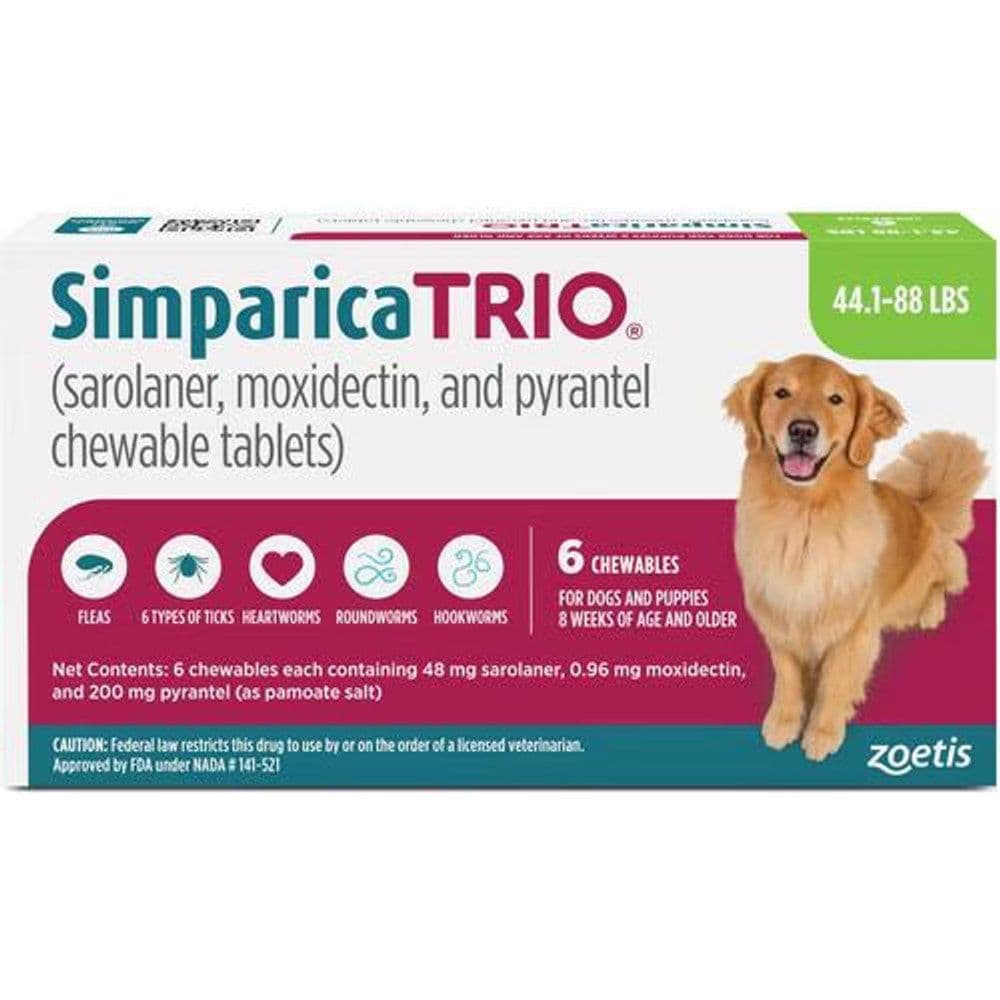
Monthly chew that protects dogs from fleas, six species of ticks, heartworm disease, roundworms, and hookworms.
Webvet may earn a commission when you click through to Chewy, at no extra cost to you.
- Fasten the collar so it rests against the skin without compressing it, then do the two-finger check.
- Trim off the excess length beyond the loop, leaving an inch or two of tail. Long dangling ends are chew targets.
- Recheck fit every couple of weeks. Puppies grow, coats thicken seasonally, and weight changes alter fit.
- Keep the flea collar on alongside the regular collar; it is a medication delivery device, not a replacement for ID tags and a leash attachment point.
Weight and age minimums
Sustained-release collars come in size bands and carry age minimums. Seresto's dog collars, for example, are sold in a small-dog version for dogs up to 18 pounds and a large-dog version for dogs over 18 pounds, and the label sets a minimum age of 7 weeks. Do not put an adult-size collar on a puppy and plan to grow into it; dosing assumes the labeled size range.
For tiny breeds, seniors, pregnant or nursing dogs, and dogs with chronic illness, ask your veterinarian before using any pesticide-based collar. This is also true if your dog already takes an oral flea preventive; doubling up products should be a vet decision, not a default.
Kids, cuddling, and household safety
Modern collar labels address the obvious family question: can the kids still hug the dog? With an imidacloprid plus flumethrin collar, casual contact with a collared dog is considered acceptable under the label, but children should not handle, mouth, or play with the collar itself, and everyone should wash hands after handling it. Do not let children sleep in prolonged direct contact with the collar.
This is one more argument against old TCVP collars in family homes. Organophosphate residue transfer to children through petting is the specific concern that has kept TCVP collars in front of EPA petitions for a decade.
Water, baths, and swimming
Modern collars are water-resistant, not water-proof in the marketing sense. Occasional baths and swims are fine, and Seresto's label states the collar remains effective after bathing. Frequent water exposure shortens the working life: with monthly bathing or regular swimming, expect closer to 5 months of flea protection instead of 8. Remove the collar during medicated shampoo baths and refit it once the coat is dry.
How to spot a counterfeit collar
Counterfeit Seresto collars are a real, documented problem, and they are the dark-horse explanation behind many collar failure and reaction stories. Fakes sold through third-party marketplace sellers can contain the wrong dose, the wrong chemistry, or nothing useful at all.
- Buy from your veterinarian, a pharmacy your vet recommends, or an authorized retailer such as a major pet specialty chain or Chewy, not from unknown third-party marketplace sellers.
- Be suspicious of prices far below the normal 50 to 70 dollar range; a 25 dollar Seresto is a red flag, not a deal.
- Check the packaging: authentic collars come in a sealed tin with a lot number and expiration date that match the outer box, plus a reflector-clip set and full label booklet.
- Look for misspellings, blurry printing, or a collar that smells strongly of chemicals; genuine Seresto collars are essentially odorless.
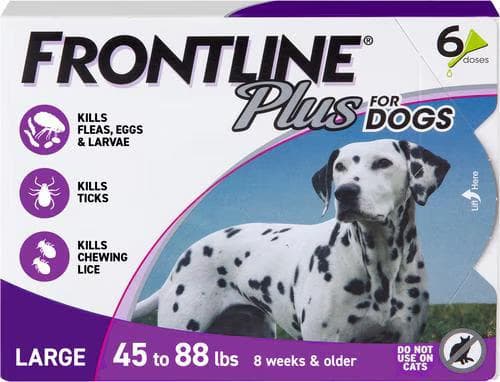
A monthly topical spot-on for large dogs 45 to 88 lbs that kills fleas, ticks, and chewing lice. A waterproof pick for dogs who do better with a topical than an oral chew.
Webvet may earn a commission when you click through to Chewy, at no extra cost to you.
- If you suspect a fake, do not put it on your dog. Report the listing and contact Elanco to verify the lot number.
The best flea collars for dogs: our picks
The most effective flea collar for dogs is the Seresto collar, and it is not a close race. It is the only collar with the sustained-release imidacloprid plus flumethrin chemistry, months of published field data behind it, and a completed EPA review on the record. Most of the collar category is either Seresto, a cheap collar that does not do the same job, or an essential-oil collar sold on scent.

Best overall: Seresto flea and tick collar
Seresto earns the top spot on mechanism and duration. One collar delivers up to 8 months of flea and tick prevention, kills through contact rather than requiring a bite, and costs less per month of protection than most oral or topical products. It is odorless, low-maintenance, and a strong fit for owners who struggle to remember monthly doses.
Choose the small-dog version for dogs up to 18 pounds and the large-dog version above that. Factor in the safety conversation above: follow the label, fit it correctly, buy from an authorized seller, and watch the collar site for irritation in the first weeks.
Budget pick: there is not a good one, and that is the honest answer
We looked for a cheap collar worth recommending and did not find one. TCVP collars have weak whole-body efficacy and a child-exposure question we are not willing to hand-wave. If a Seresto is outside the budget, a better play is a generic imidacloprid topical or asking your vet about lower-cost oral options, rather than a 5 dollar collar that mostly protects the collar.
What about natural flea collars for dogs?
Natural flea collars built on cedarwood, peppermint, citronella, or other essential oils are popular, and the appeal is understandable. The evidence is not there. Essential-oil collars have little published efficacy data, their repellency fades quickly, and essential oils are themselves a real source of skin reactions in dogs. If you want to avoid conventional pesticides entirely, talk to your vet about a plan built on flea combing, environmental control, and regular washing rather than relying on a scented collar as protection.
Do vets recommend flea collars for dogs?
Many veterinarians do recommend the Seresto collar as a legitimate first-line preventive, particularly for owners who prefer not to give monthly oral products or who need long-duration, low-effort protection. Other vets lean toward prescription oral isoxazoline products such as NexGard PLUS, Simparica TRIO, Credelio, or Bravecto because dosing is exact and compliance is verifiable. What vets almost universally do not recommend is the cheap repellent-collar category. The consistent message: pick a modern product, any modern product, and use it year-round.

Flea collar vs. oral vs. topical: which should you choose?
All three modern formats work well; the choice is about your dog and your habits. A collar wins on duration and cost per month. Oral products win on dosing certainty and are unaffected by bathing and swimming. Topicals split the difference and include some over-the-counter options.
On the classic Frontline versus Seresto question: Seresto generally comes out ahead for most dogs today. Frontline Plus is a topical built on fipronil, a molecule fleas in many regions have had decades of exposure to, and real-world owners increasingly report reduced performance. Seresto's contact-kill chemistry and 8-month duration make it the stronger default, while fipronil topicals remain a reasonable budget layer.
- Pick a collar if: you want set-and-forget protection, your dog tolerates neckwear, and monthly dosing keeps slipping through the cracks.
- Pick an oral if: your dog swims constantly, kids sleep tangled up with the dog, or you want prescription-grade certainty that the full dose was delivered.
- Pick a topical if: your dog will not wear a collar and will not take a chew, or you need an over-the-counter option fast.
That is the short version. For the full landscape, including how the prescription isoxazolines compare and how to build a plan for high-risk tick regions, see our complete guide to the best flea and tick prevention for dogs.

What if your dog already has fleas?
A flea collar is prevention. If your dog is scratching now and you are combing out live fleas, you need a treatment plan, not just a collar: a fast-kill product for the dog, treatment for every pet in the house, and an environmental attack on the eggs and larvae in bedding, carpet, and furniture. Adult fleas on the dog are roughly 5 percent of the infestation; the other 95 percent is living in your home.
Our vet-reviewed guide to the safest flea treatment for dogs walks through the kill-speed options, including fast-acting oral treatments, and how to layer them with ongoing prevention like a collar once the infestation is broken.
Frequently asked questions
How long does a flea collar take to start working?
A modern imidacloprid plus flumethrin collar begins killing fleas within about 24 hours of first fitting, and kills reinfesting fleas within roughly 2 hours once the active ingredients have spread through the skin and coat. Tick protection builds over the first 48 hours. Cheap repellent collars have no meaningful ramp-up because they have little meaningful effect.
Can my dog wear a flea collar and take oral flea medication at the same time?
Sometimes, but this should be a veterinarian's call, not a default. In high-pressure flea or tick environments vets do occasionally combine a collar with an oral product because the ingredients work differently, but doubling up raises total pesticide exposure and is unnecessary for most dogs. Ask your vet before layering products.
How long does a Seresto collar really last?
Up to 8 months against fleas and ticks under normal conditions. Frequent bathing or regular swimming shortens flea protection to around 5 months. Mark the replacement date on your calendar when you fit the collar; an expired collar on the neck is the same as no collar.
Are flea collars safe for puppies?
Only within the label's limits. Seresto's dog collar is labeled for puppies 7 weeks and older, in the correct size band for the puppy's weight. Never use an adult large-dog collar on a young puppy, and never use a dog collar of any kind on a cat or kitten. For very young puppies below label age, ask your vet about safe alternatives like flea combing and environmental control.
Why is my dog still scratching with a flea collar on?
Check four things in order. First, fit: a loose collar cannot transfer ingredient to the skin. Second, age: collars expire, typically at 8 months. Third, authenticity: counterfeit collars from marketplace sellers are common and often inert. Fourth, the home: an established infestation keeps producing new fleas faster than prevention alone can clear it. If all four check out, the itch may not be fleas at all; allergies are the next suspect, and that is a vet visit.
Should I take the flea collar off at night?
No. Sustained-release collars are designed for continuous wear, and taking the collar off nightly interrupts the steady transfer of active ingredient into the skin oils. The exceptions are medicated baths, grooming appointments where the groomer requests removal, and any sign of a skin reaction, in which case the collar comes off and stays off until you have talked to your vet.
The bottom line
A flea collar for dogs is a legitimate, vet-recognized way to prevent fleas and ticks, provided it is a modern sustained-release collar and not a bargain-bin repellent band. The Seresto collar is the category's clear leader: contact-kill chemistry, 8 months of protection, strong cost-per-month math, and a completed EPA review that ended in continued registration with tightened safety measures rather than a ban.
Fit it snugly with the two-finger check, buy it from a source you trust, watch the collar site early on, and keep prevention running year-round. And if fleas are already on board, treat first, then let the collar keep them from coming back.

Editor
The Webvet Editorial Team is the in-house group of pet-care editors and writers behind Webvet, operated by Smart Pet Collective. The team researches, writes, and maintains Webvet's pet health, behavior, and medication content. Every article follows a defined editorial process: research from reputable veterinary and scientific sources, careful drafting, mandatory review of medical content by a credentialed veterinarian, and dated publication. Health and medication articles are medically reviewed by a licensed veterinary professional before they go live and are kept current over time.
Veterinarian · BVMS MRCVS
Dr. Pippa Elliott, BVMS, MRCVS, is a veterinarian with nearly 30 years of experience in companion animal practice. Dr. Elliott earned her Bachelor of Veterinary Medicine and Surgery from the University of Glasgow. She was also designated a Member of the Royal College of Veterinary Surgeons. Married with 2 grown-up kids, Dr. Elliott has a naughty Puggle named Poggle, 3 cats and a bearded dragon.


