Oral Flea Treatment for Dogs: A Vet-Reviewed Guide
A vet-reviewed guide to oral flea treatment for dogs: how isoxazolines, spinosad, and nitenpyram work, how the top chews compare on speed and coverage, and what the FDA seizure advisory really means.

BVMS MRCVS
Medically reviewed by Dr. Pippa Elliott, BVMS MRCVS · Last reviewed

This article contains affiliate links. Webvet may earn a commission when you buy through them, at no extra cost to you.
Oral flea treatment for dogs comes in three drug classes: isoxazolines (NexGard, Simparica, Credelio, Bravecto), spinosad (Trifexis), and nitenpyram (Capstar). All are given by mouth and kill fleas through the dog's bloodstream, so there is no residue to rub off, no bath restrictions, and no gap in coverage from swimming.
The right chew depends on your dog, not on marketing. This vet-reviewed guide explains how each class works, compares the six major products on speed of kill, duration, and parasite coverage, and walks through the FDA isoxazoline seizure advisory honestly so you can have an informed conversation with your veterinarian.
- 1Most monthly flea chews (NexGard PLUS, Simparica TRIO, Credelio, Bravecto) are isoxazolines: prescription products that start killing fleas within 2 to 8 hours.
- 2Capstar (nitenpyram) is the fastest option, starting in about 30 minutes, but it only lasts roughly 24 hours and is not a preventive.
- 3The FDA warns that isoxazolines can cause tremors, ataxia, or seizures in a small number of dogs, including some with no seizure history. Dogs with epilepsy need a different plan.
- 4Choose by dog: weight and age minimums, seizure history, tick exposure, heartworm prevention needs, and whether your dog will actually eat a chew.

 Sponsored
Need flea, tick, or parasite care for your dog?
A licensed vet at Dutch can recommend the right preventive and prescribe it when it's appropriate. Annual members get 20% off their first flea and tick order.
Use code Pets60
Plans start at $12/month · covers up to 5 pets
- Licensed vets in most states
- Rx for 150+ conditions
- 4.7 on Trustpilot
What oral flea treatment for dogs is (and when pills beat other options)
An oral flea treatment is a tablet or flavored chew that circulates an insecticide in your dog's bloodstream. When a flea bites, it ingests the drug and dies. Because the medication works from the inside out, it cannot be washed off, rubbed onto furniture, or transferred to children's hands the way some topicals can.
One honest tradeoff: the flea must bite before it dies. Oral products do not repel fleas or ticks. For most dogs that distinction is clinically meaningless, because modern chews kill fleas faster than the flea life cycle can continue. It matters most for dogs with severe flea allergy dermatitis, where even a few bites trigger intense itching.
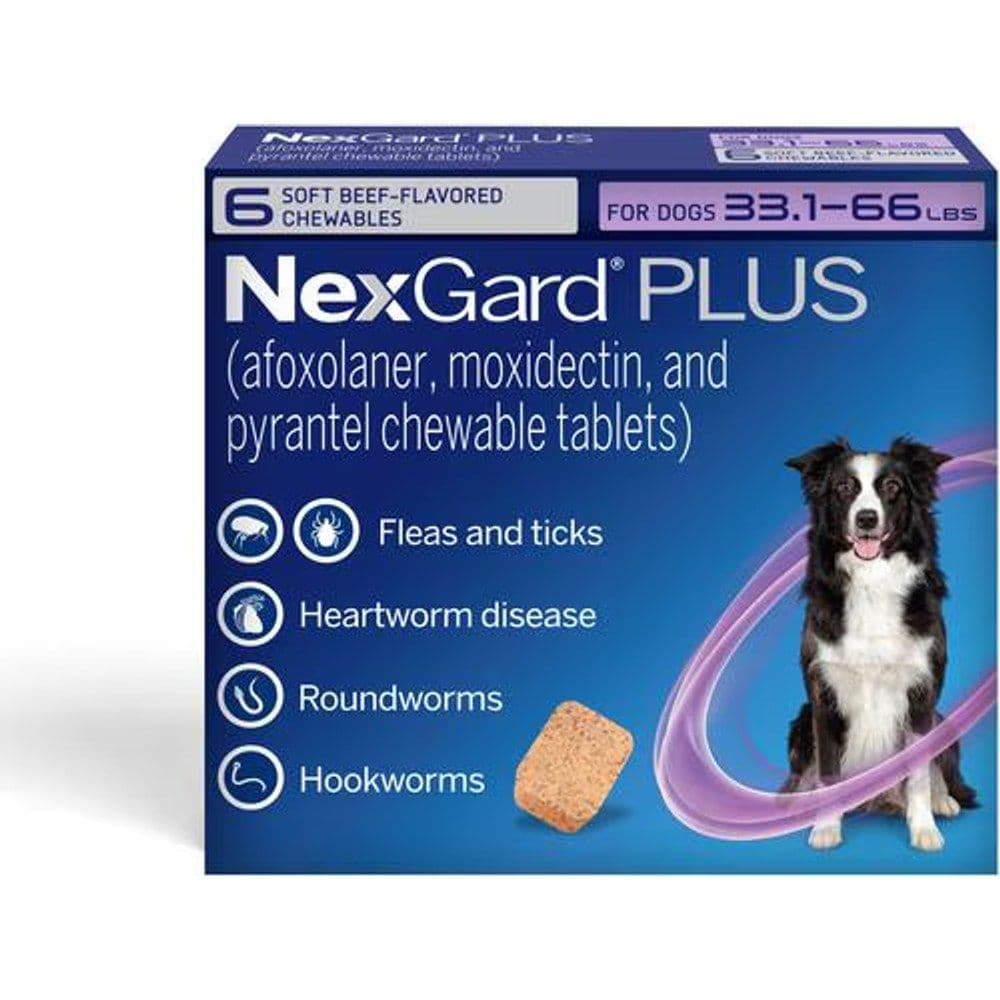
Beef-flavored monthly chew that protects dogs from fleas, ticks, heartworm disease, roundworms, and hookworms.
Webvet may earn a commission when you click through to Chewy, at no extra cost to you.
Oral treatment tends to be the best fit when:
- Your dog swims or gets bathed often, which shortens the life of many topicals
- Children or cats in the home make wet topical residue a concern
- Your dog has skin disease or reacts to spot-on carriers
- You want combined flea, tick, heartworm, and intestinal worm coverage in one monthly dose
- You need proof the dose actually went in, rather than hoping a spot-on absorbed correctly
Chews are one piece of a bigger picture. For the year-round strategy, including environmental control and seasonal timing, see our full guide to flea and tick prevention for dogs.
How oral flea medications work: the three drug classes
If you are wondering what you can give your dog orally to get rid of fleas, every effective option belongs to one of three drug classes: isoxazolines, spinosad, or nitenpyram. Each kills fleas through the bloodstream, but they differ in speed, duration, and what else they cover.

Isoxazolines: the monthly (or 12-week) workhorses
The isoxazoline class includes afoxolaner (NexGard, NexGard PLUS), sarolaner (Simparica, Simparica TRIO), lotilaner (Credelio), and fluralaner (Bravecto). These drugs block insect nerve channels, causing uncontrolled nervous system firing in fleas and ticks. Insect nerve receptors differ enough from mammalian ones that dogs tolerate labeled doses well.
Isoxazolines are the only oral class that also kills ticks, which is why they dominate veterinary recommendations. All are prescription products in the United States. Depending on the product, one dose protects for one month or, in Bravecto's case, about 12 weeks.
Spinosad: the fast monthly flea-only ingredient
Spinosad, derived from a soil bacterium, activates insect nicotinic receptors and starts killing fleas in about 30 minutes. In Trifexis, spinosad is paired with milbemycin oxime, adding heartworm prevention and intestinal worm control. Spinosad does not kill ticks, and its label advises caution in dogs with pre-existing epilepsy.
Nitenpyram: the 24-hour knockdown
Nitenpyram (Capstar) is a neonicotinoid that begins killing adult fleas within about 30 minutes but clears the body within roughly a day. It is the only oral flea drug sold without a prescription in the US. It is a rescue tool, not a preventive, and it pairs well with a monthly product rather than replacing one.
Whichever class you use, the Companion Animal Parasite Council recommends year-round flea control for dogs, because indoor heat lets fleas reproduce in every season. You can read the full CAPC flea control guidelines for the parasitology behind that advice.
How oral flea treatments work at a glance
Zooming out from the individual ingredients, how oral flea treatments work is the same across all three drug classes: your dog swallows a systemic insecticide, it circulates in the bloodstream, and a feeding flea or tick takes in a lethal dose within minutes of biting. What separates the classes is which insect receptor each drug targets and how long it stays at killing strength.
- Isoxazolines (afoxolaner, sarolaner, lotilaner, fluralaner) block GABA- and glutamate-gated chloride channels in insect nerves, and they are the only oral class that also kills ticks.
- Spinosad targets insect nicotinic acetylcholine receptors, which makes it a fast-acting but flea-only ingredient with no tick coverage.
- Nitenpyram shares that neonicotinoid receptor target but clears the body within about a day, so it is a knockdown tool rather than a monthly preventive.
Comparing the top oral flea and tick medications
The most effective oral flea treatment for dogs is any correctly dosed isoxazoline or spinosad product given on schedule: head-to-head studies show all of them kill well over 90 percent of fleas within 24 hours. The real differences are speed of kill, duration, and which other parasites each product covers.
| Product | Active ingredient (class) | Starts killing fleas | Duration | Also covers | Rx status |
|---|---|---|---|---|---|
| NexGard PLUS | Afoxolaner + moxidectin + pyrantel (isoxazoline combo) | Within about 4 hours | 1 month | Ticks, heartworm prevention, roundworms, hookworms | Prescription |
| Simparica TRIO | Sarolaner + moxidectin + pyrantel (isoxazoline combo) | Within about 4 hours | 1 month | Ticks, heartworm prevention, roundworms, hookworms | Prescription |
| Credelio | Lotilaner (isoxazoline) | Within about 4 hours | 1 month | Ticks | Prescription |
| Bravecto | Fluralaner (isoxazoline) | Within about 2 hours | About 12 weeks | Ticks | Prescription |
| Trifexis | Spinosad + milbemycin oxime | Within about 30 minutes | 1 month | Heartworm prevention, roundworms, hookworms, whipworms (no ticks) | Prescription |
| Capstar | Nitenpyram (neonicotinoid) | Within about 30 minutes | About 24 hours | Nothing else (adult fleas only) | Over the counter |
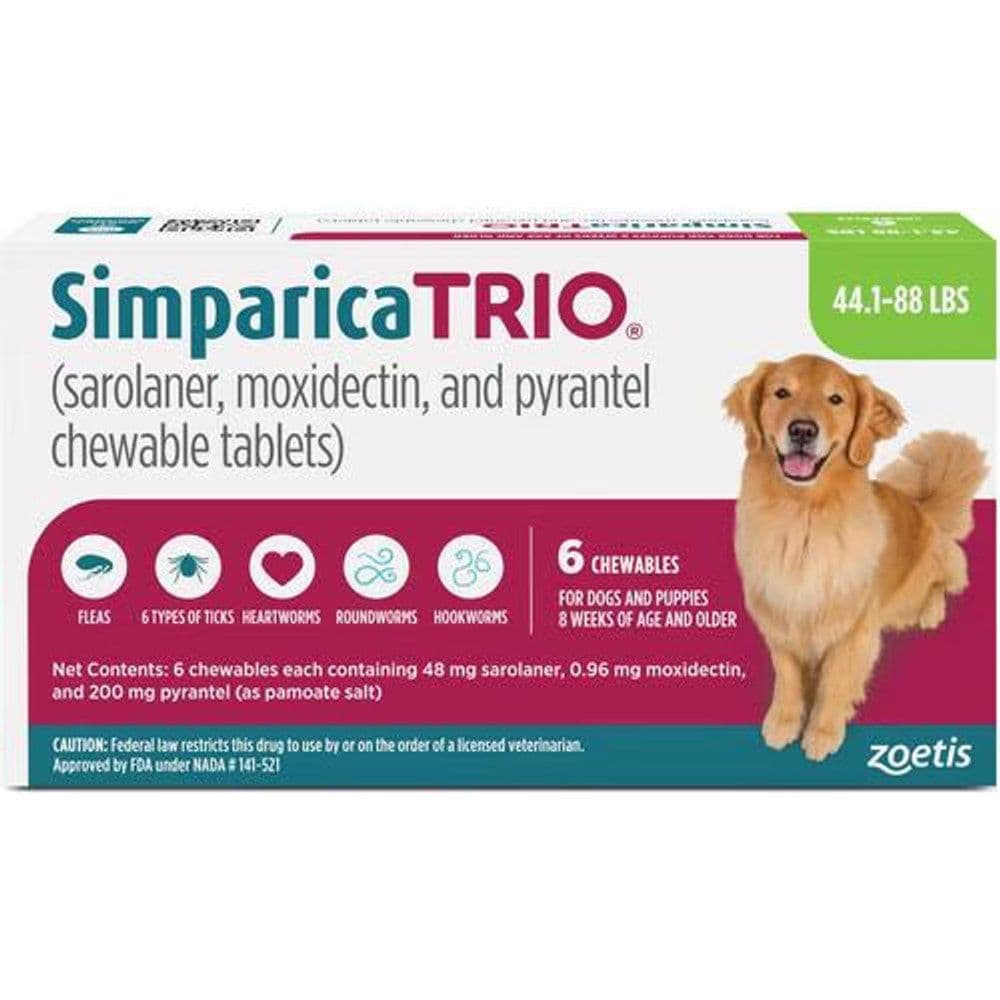
Monthly chew that protects dogs from fleas, six species of ticks, heartworm disease, roundworms, and hookworms.
Webvet may earn a commission when you click through to Chewy, at no extra cost to you.
A practical way to read that table is by use case:
- Best all-in-one: NexGard PLUS or Simparica TRIO, which fold fleas, ticks, heartworm prevention, and common intestinal worms into one monthly chew
- Longest-lasting: Bravecto, with roughly 12 weeks of flea and tick coverage per chew, useful for owners who forget monthly doses
- Flea and tick without extras: Credelio or original NexGard, for dogs already on a separate heartworm preventive
- Isoxazoline-free monthly option: Trifexis, when a vet wants flea plus heartworm coverage while avoiding the isoxazoline class
- Fastest OTC knockdown: Capstar, the same-day rescue tablet for an active infestation
Speed of kill deserves one caveat: the listed times are when each active ingredient starts killing fleas, per label studies. Full knockdown of an infestation takes 8 to 24 hours for the monthly products, and new fleas will keep hopping on from the environment for several weeks until immature stages die out.
 Sponsored
Vet care that's always there
Unlimited video calls and messaging with licensed vets for less than a typical vet visit. One membership covers up to five pets.
Use code Pets60
Plans start at $12/month · covers up to 5 pets
- Licensed vets in most states
- Rx for 150+ conditions
- 4.7 on Trustpilot
Capstar and nitenpyram: same-day flea kill
The fastest acting oral flea treatment for dogs is Capstar (nitenpyram). It begins killing adult fleas within about 30 minutes, and label studies show it kills more than 90 percent of adult fleas on dogs within four hours. Nothing else, oral or topical, matches that same-day speed.
Speed is also Capstar's limitation. The drug clears the body in roughly 24 hours, so any flea that jumps on tomorrow is unharmed. It kills only adult fleas, leaving eggs, larvae, and pupae in your home untouched. Used alone, it turns into an expensive daily habit that never breaks the flea life cycle.
So is NexGard or Capstar better for fleas? They answer different questions. Capstar wins the first afternoon: it is faster and needs no prescription. NexGard wins every day after that, killing new fleas for a full month and covering ticks. Many vets use both together for a heavy infestation: Capstar for immediate relief, an isoxazoline for lasting control.
Sensible uses for Capstar look like this:
- Knocking down a visible infestation the same day, before a monthly product takes over
- Treating a newly adopted or foster dog before it enters your home
- Puppies as young as 4 weeks and 2 pounds, ages when most monthly chews are not yet labeled
- Bridging a gap when a prescription refill is delayed
The FDA isoxazoline seizure warning, explained honestly
In September 2018, the FDA's Center for Veterinary Medicine alerted pet owners and veterinarians that drugs in the isoxazoline class have been associated with neurologic adverse events in some dogs and cats: muscle tremors, ataxia (wobbly gait), and seizures. The agency's FDA isoxazoline fact sheet names the affected products, which now carry this information on their labels.
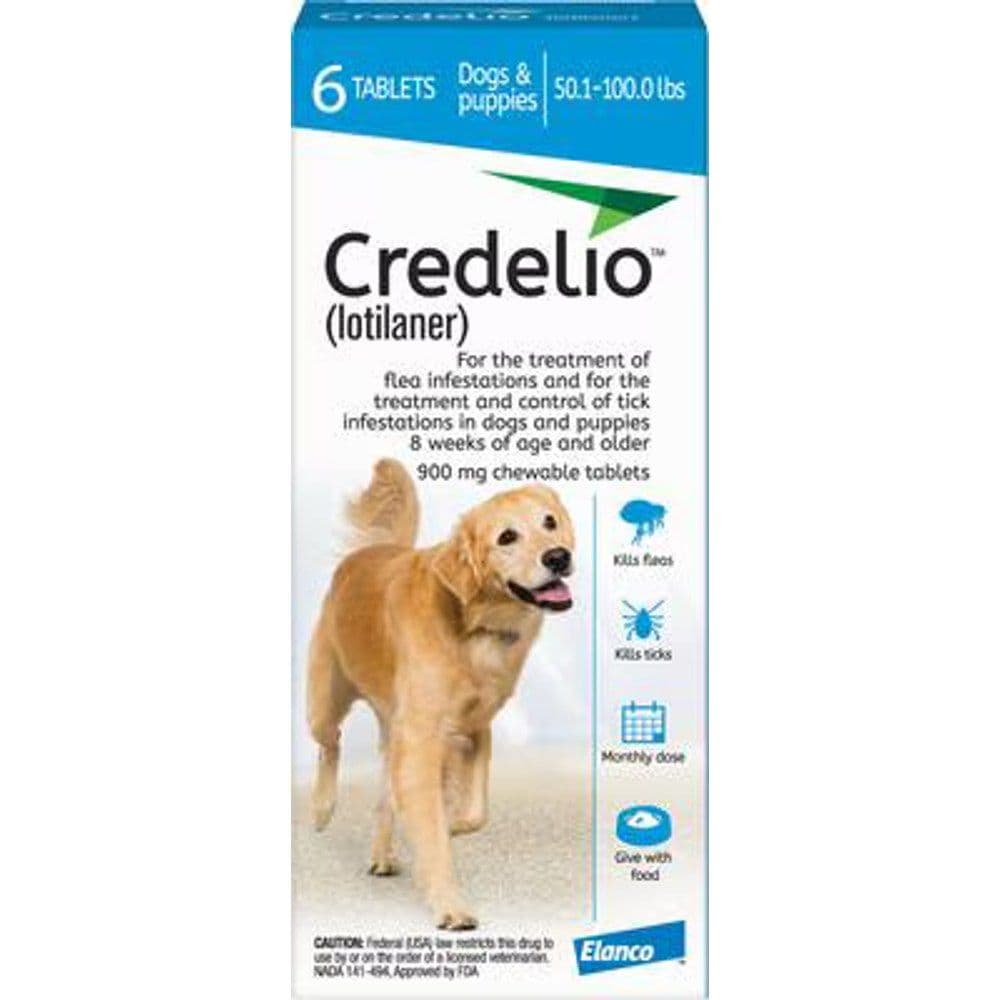
Monthly prescription chew that kills fleas and ticks on dogs, including the black-legged (deer) ticks that can spread Lyme disease.
Webvet may earn a commission when you click through to Chewy, at no extra cost to you.
Two facts from that advisory deserve equal weight. First, the FDA states that these products are safe and effective for most animals, and it continues to approve them. Second, some of the reported seizures occurred in dogs with no prior seizure history. Both things are true, and pretending otherwise in either direction does dog owners no favors.

Context matters for risk. Millions of doses of these drugs are given every month, and reported neurologic events represent a very small fraction of treated dogs. Untreated flea and tick infestations carry their own well-documented risks: flea allergy dermatitis, tapeworms, anemia in small dogs, and tick-borne diseases like Lyme and ehrlichiosis.
Higher-caution dogs, where you and your vet should discuss alternatives before choosing an isoxazoline:
- Dogs with a history of seizures or diagnosed epilepsy
- Dogs that showed tremors, stumbling, or unusual behavior after a previous dose of any flea product
- Dogs with other neurologic conditions, where your vet may prefer a non-isoxazoline plan
Note that spinosad is not a free pass for epileptic dogs either: the Trifexis label advises caution in dogs with pre-existing epilepsy. For a seizure-prone dog, the safer conversation usually centers on certain topicals or collars, chosen with your veterinarian rather than off a store shelf.
What to tell your vet before starting an isoxazoline: any past seizures or fainting episodes, all current medications and supplements, prior reactions to parasite products, and your dog's breed if it carries the MDR1 mutation, which matters for some combination products' other ingredients.
So what is the safest oral flea treatment for dogs?
Owners often want a single safest oral flea treatment for dogs, but the honest answer is that safety is dog-specific rather than a fixed ranking. For a healthy adult with no seizure history, a correctly dosed isoxazoline is both highly effective and well tolerated. For a dog with a neurologic history, the safest oral choice may be no isoxazoline at all, which shifts the conversation toward spinosad used only with caution, or toward a non-oral method entirely.
- Dose to your dog's current weight, and reweigh a growing puppy before every dose.
- Give the chew with a full meal, which improves absorption and eases stomach upset.
- Report any tremor, wobble, or unusual behavior after a dose before giving the next one.
Put simply, the safest product is the one your veterinarian matches to your dog's history, then given on schedule.
How to choose an oral flea treatment by dog
The best chew is the one matched to your dog's age, weight, health history, and lifestyle. Run through this checklist with your veterinarian rather than picking by brand recognition.

- Puppies and tiny dogs: check minimums. Simparica TRIO is labeled from 8 weeks and 2.8 pounds, Credelio from 8 weeks and 4.4 pounds, NexGard products from 8 weeks and 4 pounds, Trifexis from 8 weeks and 5 pounds. Bravecto waits until 6 months of age. Below those thresholds, Capstar (4 weeks, 2 pounds) plus flea combing bridges the gap.
- Seizure history: avoid isoxazolines and use spinosad only with explicit veterinary caution. Your vet will usually build a topical or collar plan instead.
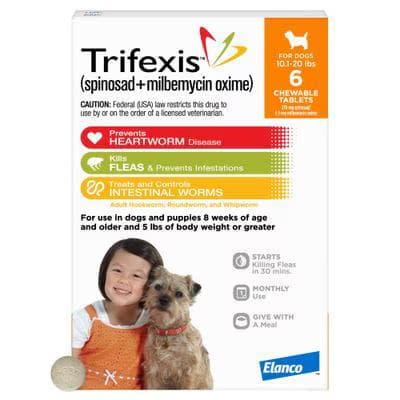
A monthly chew (spinosad and milbemycin oxime) that kills fleas, prevents heartworm, and treats intestinal worms. A non-isoxazoline oral option that starts killing fleas within 30 minutes.
Webvet may earn a commission when you click through to Chewy, at no extra cost to you.
- Tick country: choose an isoxazoline. It is the only oral class labeled for ticks.
- Simplifying multiple meds: NexGard PLUS or Simparica TRIO replaces separate heartworm and flea/tick products with one chew, which also removes one chance to forget a dose.
- Forgetful households: Bravecto's roughly 12-week dose means four doses a year instead of twelve.
- Pill-refusers and dogs with food allergies: most chews are beef-flavored and may contain animal proteins. A dog that spits out chews, or one with a protein allergy, may do better on a topical. Giving the chew with food also improves absorption for several of these products.
- Severe flea allergy dermatitis: speed matters most, so vets often favor the fastest-starting options and sometimes add environmental treatment to cut bites to near zero.
Prescription vs. over-the-counter oral flea treatments
Every monthly or 12-week oral flea and tick product in the US (NexGard PLUS, Simparica TRIO, Credelio, Bravecto, Trifexis) requires a prescription. The only true over-the-counter oral option is Capstar, and it lasts about a day. There is currently no monthly flea pill for dogs sold without a vet prescription.
If a prescription is not realistic for you right now, effective non-prescription routes do exist: Capstar plus certain topicals, collars, and environmental control. We break down the strongest OTC flea treatments without a prescription in a dedicated guide, including which store-shelf products are worth skipping.
Oral pills vs. topicals vs. collars: when a chew is the right call
Yes, vets widely recommend oral flea treatment, and for many practices the isoxazoline chews are the default first choice for healthy adult dogs. Dosing is verifiable, efficacy does not depend on skin condition or bathing, and combination chews cover multiple parasites at once.
That said, orals are not automatically the safest or best fit for every dog. Topicals and collars still earn their place for seizure-prone dogs, dogs that refuse chews, and owners who want repellency so fleas and ticks are deterred before they bite.
The full oral vs. topical vs. collar safety comparison, including how to choose for puppies, seniors, and dogs with health conditions, lives in our guide to the safest flea treatment options for dogs. The short version: pick the delivery method that matches your dog's health history, then pick the product within it with your vet.
What to expect after the first dose
Expect dying fleas to become more visible before they disappear. As the drug takes effect, fleas move toward the surface of the coat and become sluggish, so owners sometimes see more fleas in the first hours after dosing and assume the chew failed. It is working; you are watching it work.
A realistic timeline for a dog with an established infestation looks like this:
- First 24 hours: the adult fleas on your dog die. Itching may briefly spike as fleas become agitated.
- Weeks 1 to 3: eggs and larvae already in your carpet, bedding, and floor cracks keep maturing. New adults jump on the dog and die within hours, so occasional live fleas are normal.
- Weeks 4 to 8: the environmental reservoir burns out as long as every pet in the home is on effective treatment. Pupae are resistant to almost everything, so this stage cannot be rushed with more medication.
- Ongoing: staying on schedule matters more than which premium chew you picked. Most perceived product failures trace back to a late dose, an untreated cat in the house, or an unwashed dog bed.
Speed that cleanup along by washing pet bedding in hot water, vacuuming daily for the first two weeks (and emptying the canister outside), and treating every dog and cat in the household on the same start date. If you are still finding steady numbers of fleas past the two-month mark, call your vet: the plan needs adjusting, not just repeating.
Frequently asked questions
How long does an oral flea treatment take to work?
Capstar and Trifexis start killing fleas in about 30 minutes, Bravecto within about 2 hours, and the monthly isoxazoline chews within about 4 hours. Clearing every flea on the dog typically takes 8 to 24 hours, and you may see stray fleas from the environment for a few weeks as eggs and pupae in your home finish hatching.
Should I give oral flea medication with food?
For several products, yes. Trifexis and Bravecto are labeled for administration with food, which improves absorption, and giving any chew with a meal reduces the chance of vomiting. If your dog vomits shortly after dosing, call your vet or the manufacturer's line before redosing; guidance differs by product.
What happens if I miss a monthly dose?
Give the missed dose as soon as you remember, then restart the schedule from that date. A gap of even a week or two can let fleas re-establish, especially in warm months. If the product also prevents heartworm, ask your vet whether a heartworm test is needed after a long lapse before restarting.
What are the common side effects of oral flea treatments besides the seizure warning?
The most commonly reported side effect across oral flea products is vomiting, followed by decreased appetite, diarrhea, and lethargy, usually mild and short-lived. Persistent vomiting, marked lethargy, or any neurologic sign such as trembling or stumbling warrants a call to your veterinarian the same day.
Do garlic, brewer's yeast, or other natural flea pills work?
No. Controlled studies have not shown garlic or brewer's yeast to repel or kill fleas, and garlic in meaningful quantities is toxic to dogs, damaging red blood cells. If you want to avoid a specific drug class, the answer is a different vet-approved class or delivery method, not an unproven supplement that leaves your dog unprotected.
Why does my vet want a heartworm test before some of these chews?
NexGard PLUS, Simparica TRIO, and Trifexis all contain a heartworm preventive, and giving a preventive to a dog with an existing adult heartworm infection can trigger a dangerous reaction to dying microfilariae. A negative test first is a safety step, not an upsell, and it is one reason these combination products are prescription-only.
Can I combine Capstar with a monthly flea chew?
Yes. Capstar's label allows it to be used alongside monthly preventives, and vets commonly pair a Capstar tablet for same-day knockdown with an isoxazoline chew for month-long control during a heavy infestation. Confirm the combination with your vet first if your dog is very young, very small, pregnant, or has health conditions.
The bottom line
Oral flea treatment for dogs is fast, reliable, and for most dogs the most convenient form of parasite control available. Isoxazoline chews handle fleas and ticks for a month or more, Trifexis offers an isoxazoline-free monthly option, and Capstar rescues a bad flea day in half an hour.
The FDA seizure advisory is real but manageable: it changes the choice for seizure-prone dogs, not the math for healthy ones. Bring your dog's full history to your veterinarian, match the product to the dog in front of you, and give it on schedule. That combination beats any single brand name.

Editor
The Webvet Editorial Team is the in-house group of pet-care editors and writers behind Webvet, operated by Smart Pet Collective. The team researches, writes, and maintains Webvet's pet health, behavior, and medication content. Every article follows a defined editorial process: research from reputable veterinary and scientific sources, careful drafting, mandatory review of medical content by a credentialed veterinarian, and dated publication. Health and medication articles are medically reviewed by a licensed veterinary professional before they go live and are kept current over time.
Veterinarian · BVMS MRCVS
Dr. Pippa Elliott, BVMS, MRCVS, is a veterinarian with nearly 30 years of experience in companion animal practice. Dr. Elliott earned her Bachelor of Veterinary Medicine and Surgery from the University of Glasgow. She was also designated a Member of the Royal College of Veterinary Surgeons. Married with 2 grown-up kids, Dr. Elliott has a naughty Puggle named Poggle, 3 cats and a bearded dragon.


