Does Bleach Kill Fleas? What Works and What Is Safe Around Pets
No veterinary or extension source tests household bleach against fleas, and it never reaches the eggs and larvae hiding deep in carpet. It can also irritate skin and eyes. Here is where bleach helps and the cleaning routine that works.

BVMS MRCVS
Medically reviewed by Dr. Pippa Elliott, BVMS MRCVS · Last reviewed

This article contains affiliate links. Webvet may earn a commission when you buy through them, at no extra cost to you.
Does bleach kill fleas? No published test shows that it does. Bleach cannot reach the eggs and larvae hiding deep in carpet, and it carries real risks for pets. Here is where bleach does help, and the cleaning steps that actually break the flea life cycle.
 Sponsored
Need flea, tick, or parasite care for your pet?
A licensed vet at Dutch can recommend the right preventive and prescribe it when it's appropriate. Annual members get 20% off their first flea and tick order.
Use code Pets30
Plans start at $11/month · covers up to 5 pets
- Licensed vets in most states
- Rx for 150+ conditions
- 4.7 on Trustpilot
Does bleach kill fleas?
There is no published test of bleach against fleas. No extension, EPA, or veterinary source we reviewed gives a kill rate or contact time for household bleach, and it cannot reach the eggs and larvae that the Merck Veterinary Manual says move deep into carpet fibers.
- 1No published test shows that bleach kills fleas, and none gives a contact time.
- 2Eggs and pupae survive surface cleaning: larvae sit deep in carpet, pupae in insecticide-proof cocoons.
- 3Undiluted bleach can injure skin, eyes, and gut; mixed with ammonia, it releases chloramine gas.
- 4What works: treat the pet, vacuum, wash and dry bedding, and use an insect growth regulator.
Nothing supports claims that bleach kills fleas instantly or on contact, since no source gives a contact time. The same gap covers Clorox or diluted bleach water on floors, bleach on bedding or in laundry, bleach outside, and cat fleas. The University of Georgia Extension adds that home remedies are rarely effective against fleas and ticks.
Instead, University of Kentucky Entomology says treating the pet is essential, because adult fleas spend most of their time on the dog or cat. For the house, it names insecticides such as permethrin, imidacloprid, or dinotefuran for adults, plus an insect growth regulator such as methoprene or pyriproxyfen to stop eggs and larvae developing.
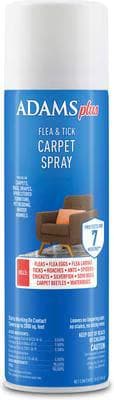
A carpet spray that pairs S-methoprene, an insect growth regulator, with etofenprox and prallethrin. Never spray it on a pet, and keep pets, especially cats, off treated carpet until it is completely dry.
Webvet may earn a commission when you click through to Chewy, at no extra cost to you.
Why bleach does not stop a flea infestation
The bigger problem is where fleas live. VCA Animal Hospitals says the adult fleas on your pet make up only about 5% of the flea population; the other 95% are in your home, still growing up as eggs, larvae, and pupae.
Kentucky's extension says a flea lays 40 to 50 eggs a day that soon fall into carpeting and under cushions. Larvae move deep into carpet fibers and pupae sit in cocoons impervious to insecticides, so eggs and pupae survive surface cleaning.
Do fleas live in carpet?
Yes, in their young stages. Adult fleas mostly live on the animal, Merck says, but NC State Extension notes that carpet edges and crevices are ideal hiding spots for larvae and pupae. Vacuuming targets those spots, and Kentucky's extension says it also prompts fleas to leave their cocoons sooner, exposing them to treatment.
Is bleach safe to use around dogs and cats?
Bleach safety around pets depends on strength. Merck says undiluted chlorine bleach can irritate or ulcerate the gut, skin, and eyes, inhaled chlorine can cause immediate coughing, gagging, sneezing, or retching, and concentrated fumes can cause fluid in the lungs 12 to 24 hours later.
Skin contact often turns into swallowing as pets lick bleach off, the helpline adds, and concentrated or "ultra" bleaches may cause chemical burns. If your pet walks through bleach, rinse its feet well, including the toe webs and pads, and call your veterinarian if it seems unwell.
Where bleach can help: hard floors, laundry, and crates

Start with the vacuum, not the bleach. On hard floors, vacuum cracks and baseboard edges first, the crevices where larvae and pupae hide; bleach is only the disinfecting step that comes after.
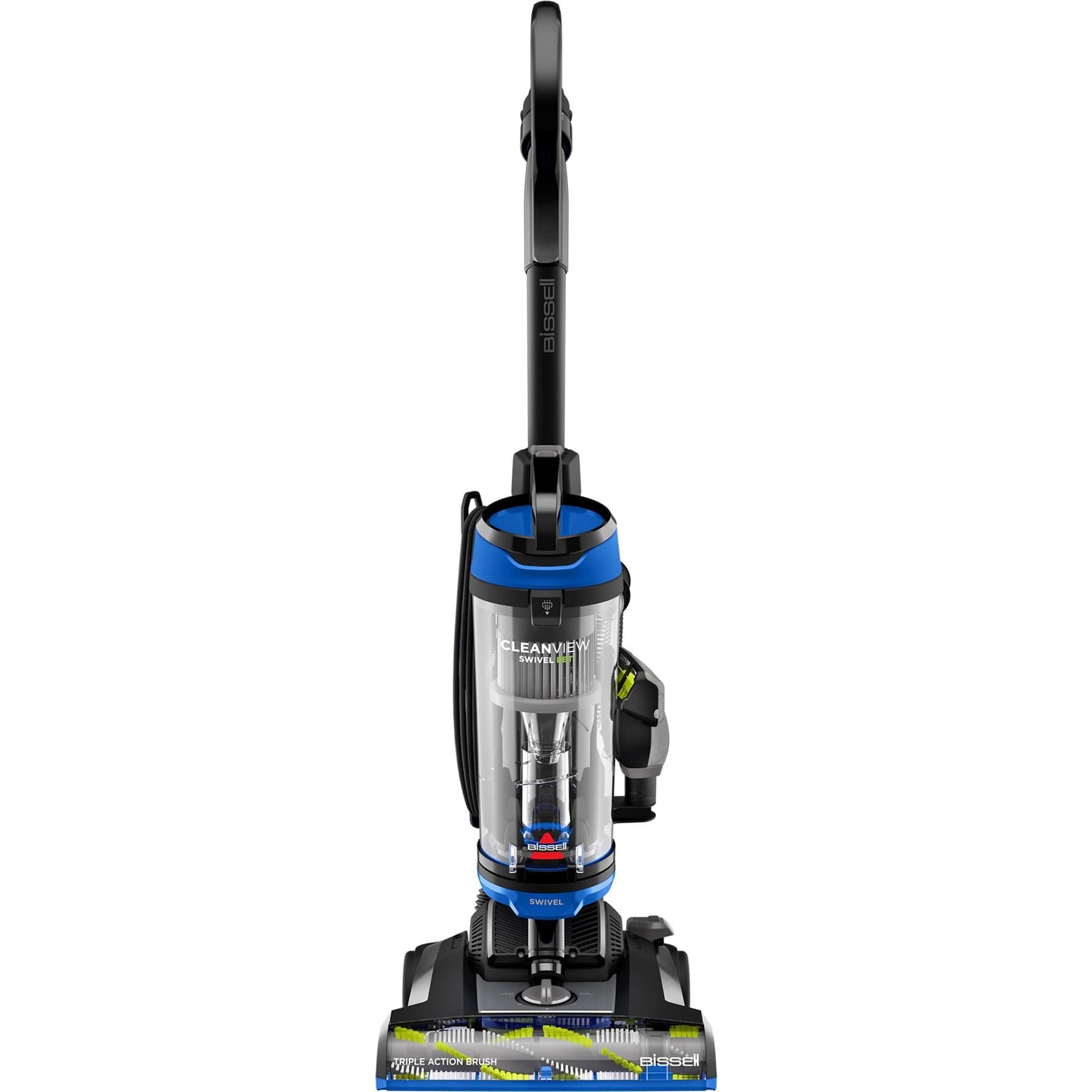
A Bissell upright pet vacuum for daily passes over carpet, rugs, and the spots where your pet rests; extension guides rank vacuuming first indoors.
Webvet may earn a commission when you click through to Chewy, at no extra cost to you.
Safe bleach uses around pets are about disinfecting, not flea control. Household bleach is a sodium hypochlorite solution, and the CDC calls for plain, unscented bleach at 5% to 9% strength. The ASPCA notes that bleach has no detergent activity, so surfaces need a detergent wash first.
- Wash the floor or crate with detergent and water.
- Mix 1/2 cup of 5.25% bleach into 1 gallon of water, the ASPCA's general 1:32 dilution, and make it fresh daily; the CDC's 1 cup per gallon is meant for mold.
- Apply it, wait the contact time on your bleach label, then rinse with plain water.
- Let the surface air dry, and keep pets off until it is rinsed and fully dry.
Crates get the same wash, bleach, rinse, and dry routine, and should be completely dry before your pet goes back in.
In the laundry, bleach is optional. NC State Extension says washing and drying bedding kills all flea life stages in it, so the wash and the dryer do the work, and no published test shows bleach adds anything.
 Sponsored
Vet care that's always there
Unlimited video calls and messaging with licensed vets for less than a typical vet visit. One membership covers up to five pets.
Use code Pets30
Plans start at $11/month · covers up to 5 pets
- Licensed vets in most states
- Rx for 150+ conditions
- 4.7 on Trustpilot
Does vinegar, Dawn, baking soda, salt, or Lysol kill fleas?
Most household product myths share one problem: no published test backs them. No extension, veterinary, or EPA source we reviewed tests vinegar, Dawn, baking soda, salt, or Lysol as a flea killer, and UGA's extension tells owners to be suspicious of flea remedies recommended on the web.
Dish soap is in the same position: no published test supports Dawn, Palmolive, or any other dish soap as a flea killer, and none of the guides we reviewed tests whether fleas drown in plain water, a soapy bath, or a dish soap flea trap. Other popular remedies fare no better:
- Salt and baking soda: no published test backs sprinkling either one on carpet or hardwood floors.
- Diatomaceous earth: UGA says it should not be used on dogs or cats, or any other animal.
- Boric acid: UGA says it does not kill adult fleas.
- Garlic and brewer's yeast: UGA says neither kills fleas.
- Ultrasonic devices and herbal collars: UGA says ultrasonic devices do not kill fleas, and the University of California IPM program (UC IPM) says neither works as a repellent.
- Peppermint, tea tree, neem, and coconut oil: no source we reviewed shows a smell fleas hate or an oil that repels them, and Merck names tea tree oil as the essential oil most often reported in pet poisonings.
- Rubbing alcohol: EPA bed bug guidance warns it can harm your family and easily ignite.
Lysol is a label check. Merck says phenol-based disinfectants are best avoided around cats but does not name Lysol, so read the active ingredients. Pet Poison Helpline adds that quaternary ammonium compounds in some disinfecting wipes and sprays can cause corrosive injury. No source we reviewed supports Pine-Sol or hydrogen peroxide as a flea killer.
Bug sprays and dusts such as Raid, Home Defense, bifenthrin, or Sevin dust are pesticides, not cleaners. UGA says to read and follow the label on any pesticide, so use one indoors only if its label lists fleas. For picking products around animals, see our guides to pet safe pest control and pet safe roach killer.
Cold weather is no cure either. Merck notes that adult cat fleas survive winter on untreated dogs, cats, and small wild mammals. Heat has better support: fleas in bedding die in the wash and dryer, per NC State, though no source gives a flea-specific dryer time or temperature.
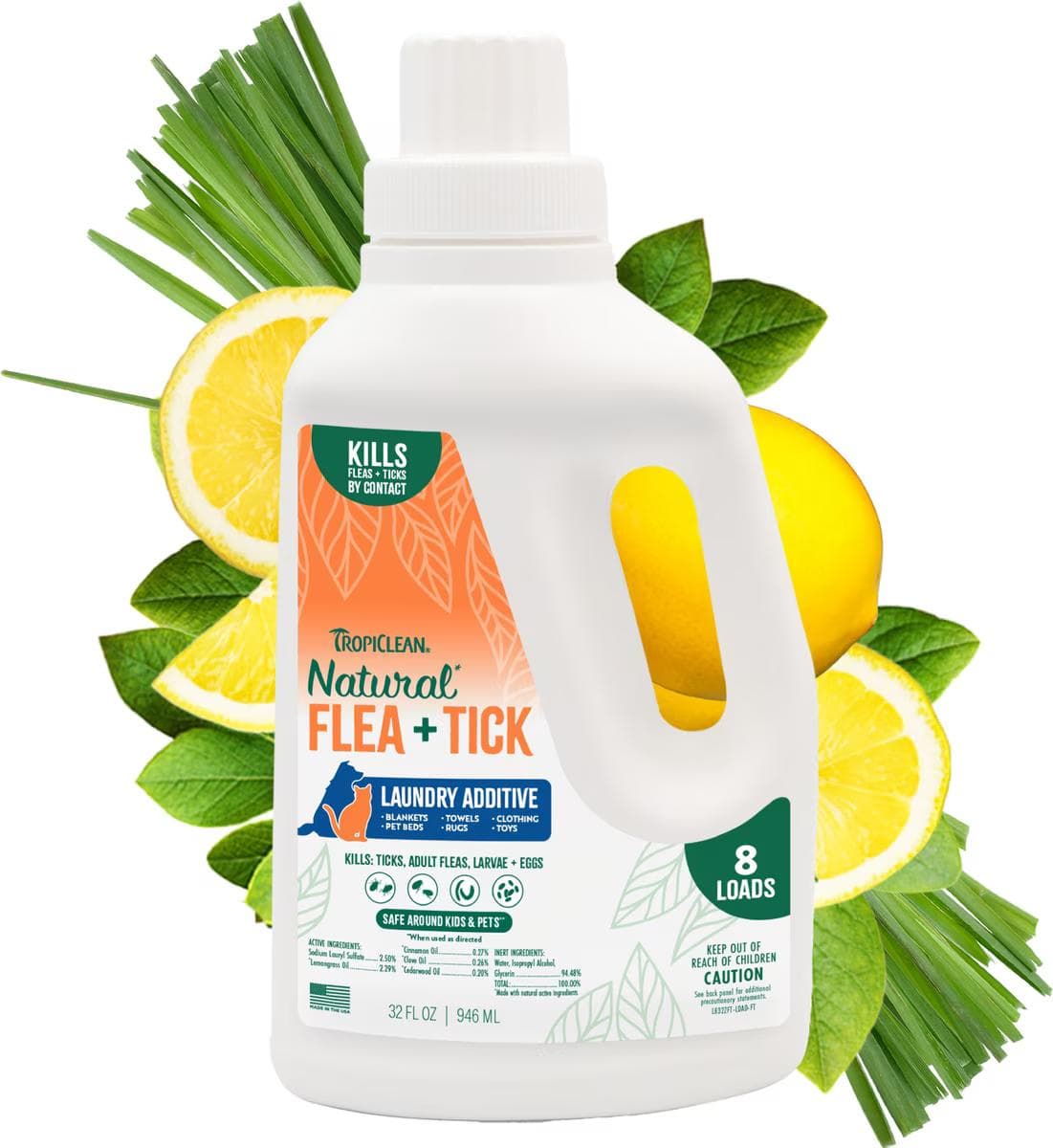
An optional wash additive for pet bedding made with lemongrass, clove, cinnamon, and cedarwood oils; its directions say not for use on pets, and hot water and the dryer do the main work.
Webvet may earn a commission when you click through to Chewy, at no extra cost to you.
Here is a verdict for each household flea remedy with a pet safety flag, drawn from the extension and veterinary sources. "No published test" means no source we reviewed tested the remedy against fleas; "no source support" means none of them backs it.
| Remedy | Kills adults | Kills eggs and larvae | Pet safety flag |
|---|---|---|---|
| Bleach (sodium hypochlorite) | No published test | No published test; cannot reach larvae deep in carpet | Can injure skin, eyes, and gut; never mix with ammonia |
| White or apple cider vinegar | No published test | No published test | No veterinary source supports it |
| Dawn or other dish soap | No published test | No published test | No veterinary source supports it |
| Baking soda | No published test | No published test | No veterinary source supports it |
| Salt | No published test | No published test | No veterinary source supports it |
| Lysol and other disinfectant sprays | No published test | No published test | Check the label; avoid phenols around cats |
| Tea tree and other essential oils | No source support | No source support | Toxic risk, higher for cats |
| Diatomaceous earth | No source support | No source support | UGA: not for use on dogs or cats |
| Boric acid | Does not kill adults (UGA) | No source support | No veterinary source supports it |
| Rubbing alcohol | No source support | No source support | Flammable; can harm people (EPA) |
| Steam extraction cleaning | Yes, all stages (UMN) | Yes (UMN) | No pesticide involved |
| Washing and drying bedding | Yes, all stages (NC State) | Yes (NC State) | No pesticide involved |
| Vacuuming | 96% of adults in a lab study (Ohio State) | Removes many; sources differ on how many | No pesticide involved |
Homemade flea sprays for your dog's coat are a separate question; UGA's caution about home remedies applies there too, and our guide to natural remedies for fleas on cats covers sprays applied to pets.
Does steam kill fleas and eggs?
Yes, and it is one of the few household methods with extension support. The University of Minnesota Extension says a steam extraction carpet cleaner is effective in killing all stages of fleas, and the University of Maryland Extension says shampooing rugs and carpet, especially with steam, kills and removes many fleas.
Can vinegar be used to treat fleas on dogs?
No. None of the extension or veterinary sources we reviewed supports white or apple cider vinegar as a flea treatment for dogs. Kentucky's extension says modern oral and spot-on products kill adult fleas within 24 hours of landing on the dog; see how to get rid of fleas on dogs for options.
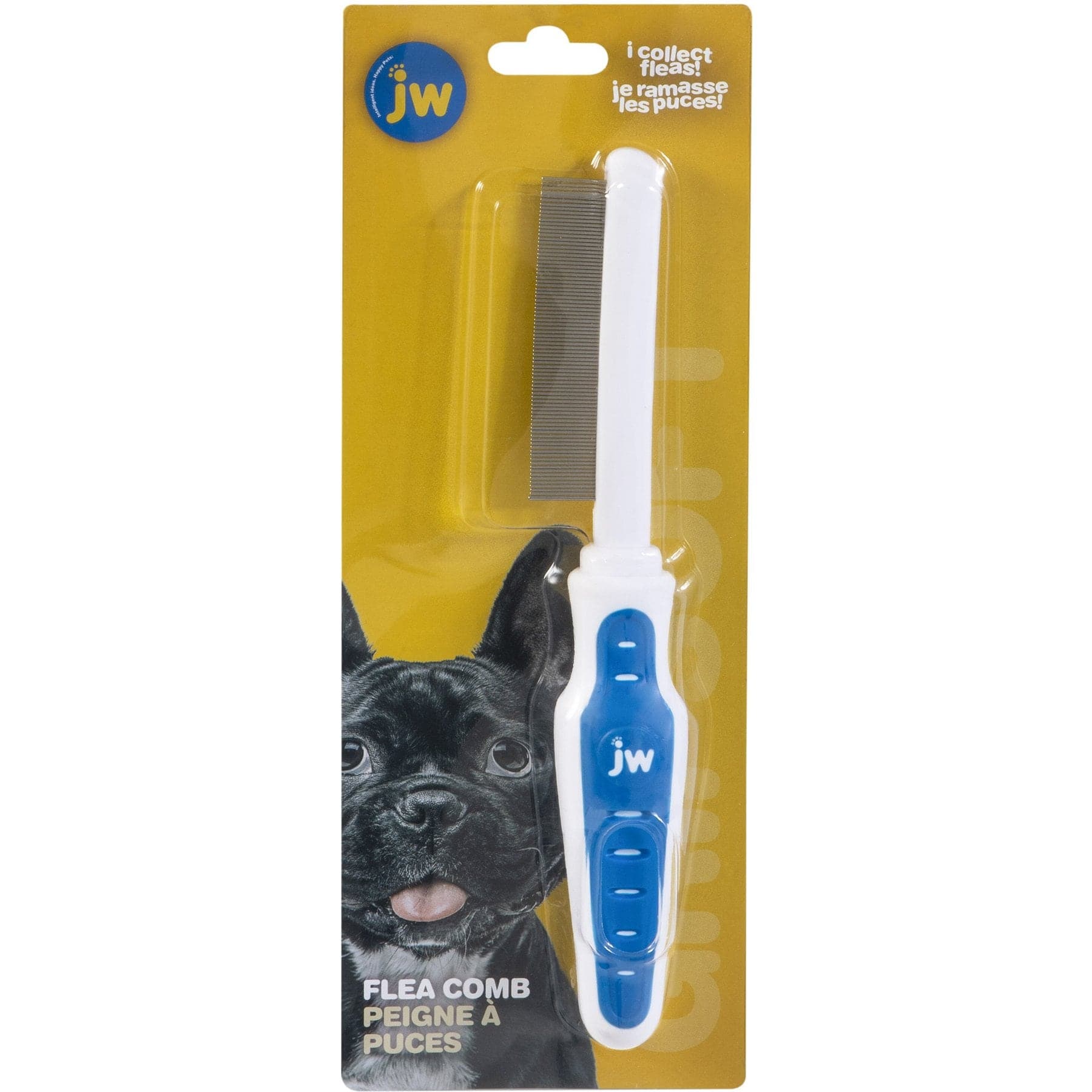
JW Pet's Gripsoft flea comb has a plastic grip handle and metal teeth for checking your dog's or cat's coat for fleas.
Webvet may earn a commission when you click through to Chewy, at no extra cost to you.
What actually kills fleas in the house
The proven home treatments hit the pet and the house together. Minnesota's extension stresses treating pets at the same time as the home, and Merck notes that even with newer pet products, severe cases may still need household treatment. For cats, see how to get rid of fleas on cats.
Indoors, the key tool is an insect growth regulator (IGR). Minnesota's extension says IGRs are effective against immature fleas but do not kill adults, so Kentucky's extension favors pairing one with an adult-killing insecticide. UC IPM says the most effective products contain methoprene or pyriproxyfen, and Merck says methoprene keeps insects from maturing and reproducing.
For carpet, use a spray labeled for fleas, such as the 16-fl oz Adams Plus Flea & Tick Carpet Spray, which lists S-methoprene among its actives and warns against spraying wood floors. Before you spray:
- Keep pets, especially cats, out of treated rooms until the carpet is completely dry and the room is aired out, as NPIC advises.
- Never spray a carpet or house product on a pet.
- Remember that permethrin, which Kentucky names for the house, is a pyrethroid, and VCA says cats break pyrethroids down slowly and must stay off treated areas until they have completely dried.
Kentucky's extension says total-release foggers are seldom effective against fleas; our best flea spray for home guide compares sprays.
What kills fleas instantly?
Nothing wipes out a whole infestation instantly, UGA notes, since no insecticide reaches fleas still in cocoons. On the pet, Merck says that with nitenpyram, fleas begin to die within 20 to 30 minutes and all are dead within 3 to 4 hours, though the drug is short-acting.
What time of year are fleas worst?
None of the sources we reviewed names a single worst month. UGA advises treating pets early in spring, before fleas become a problem, and indoor development keeps going at room temperature: about 18 days for the full cycle per UC IPM, or 3 to 8 weeks for cat fleas per Merck, so sources differ.
Humidity matters too: Merck says prolonged relative humidity below 50% is lethal to flea larvae.
What can I do if I can't get rid of fleas?
Give treatment time, then escalate. UC IPM says fleas keep emerging for about 2 weeks after a spray because it does not kill pupae, and Merck notes that emergence from the cocoon can be delayed up to 30 weeks.
If adult fleas still appear after 4 weeks, Kentucky's extension says the home or pets may need retreatment, and a professional pest control firm is an option.
How to clean your house after fleas, room by room

A room-by-room cleaning plan works because it goes where young fleas develop. The University of Maryland Extension calls thorough vacuuming the primary indoor control strategy, the University of Minnesota says to vacuum daily where fleas have been found, and Penn State Extension advises daily vacuuming of pet bedding, carpets, floors, and upholstery for several weeks.
Can vacuuming get rid of fleas? It removes many, though sources differ on how many. An Ohio State University lab study found vacuuming killed an average of 96% of adult cat fleas and all of the younger ones, while NC State says it can remove up to 30% of larvae and 60% of eggs from carpet.
- Living room: vacuum carpets, rugs, carpet edges, and under cushions, where Kentucky's extension says eggs land.
- Bedrooms and pet beds: launder pet bedding in hot, soapy water at least weekly, as UC IPM advises; fleas die in the washing machine and dryer, since NC State says washing and drying kills all life stages.
- Kitchen, bath, and hard floors: vacuum cracks, wash with detergent, then use diluted bleach only as an optional disinfecting step, rinse, and let it dry.
- Carriers and throw rugs: Merck's dog owner guidance says to wash pet blankets, throw rugs, and pet carriers.
- Vacuum bags: Kentucky and Maryland advise sealing or emptying the bag, while UC IPM says destroying bags may be unnecessary.
- Yard: the Cornell University College of Veterinary Medicine says treatment has to interrupt the life cycle in the home and yard; our guide on how to get rid of fleas in your house and yard covers outdoor steps.
Keep at it for at least 2 weeks after treatment, since UC IPM says to vacuum regularly to remove adults emerging from pupae over that stretch. An upright such as the Bissell CleanViewSwivel Pet Upright Vacuum Cleaner is one option for those daily passes.
Does bleach kill fleas questions
Frequently Asked Questions
What smells do fleas hate?
There is no proven scent that keeps fleas away. No source we reviewed identifies a smell fleas hate, and UC IPM says herbal collars are not effective flea repellents. Essential oil flea products carry a toxicity risk, and Merck says cats are more sensitive to them, which makes essential oils risky for cats.
Is baking soda a flea repellent?
No veterinary source or extension guide we reviewed supports baking soda as a flea repellent or flea killer, whether it is sprinkled on carpet or used on a pet. The University of Georgia Extension sums up the category: home remedies are rarely effective against fleas. For carpet, the extension guides lean on thorough vacuuming instead.
Can I mop with bleach if I have a dog?
Yes, as a cleaning step rather than a flea treatment. Dilute and rinse it: ASPCA shelter guidance uses 1/2 cup of 5.25% bleach per gallon of water after a detergent wash, then a plain-water rinse. Keep your dog out of the room while you mop, and keep its paws off the floor until it is dry.
Does washing bedding in hot water kill fleas?
Yes. NC State Extension says washing and drying bedding kills all flea life stages in it, and the University of Minnesota and VCA both say to use hot water. No flea source gives an exact temperature or dryer time, and Ask Extension told one owner that normal hot or warm water temperatures are fine.
Does bleach kill flea eggs and larvae?
There is no published test showing that it does. Eggs drop from the pet into carpet and cushions, and Merck says larvae avoid light and move deep in carpet fibers, beyond the reach of surface cleaning. Kentucky's extension says an insect growth regulator such as methoprene or pyriproxyfen is what halts egg and larva development.
How long should pets stay off a bleached floor?
Until it is rinsed and fully dry. No veterinary or public health source we reviewed gives a minute count. The ASPCA says to rinse bleach solution from surfaces, so rinse with plain water, then let the floor air dry as the CDC advises. If your pet steps on it early, rinse its paws well.

Editor
The Webvet Editorial Team is the in-house group of pet-care editors and writers behind Webvet, operated by Smart Pet Collective. The team researches, writes, and maintains Webvet's pet health, behavior, and medication content. Every article follows a defined editorial process: research from reputable veterinary and scientific sources, careful drafting, mandatory review of medical content by a credentialed veterinarian, and dated publication. Health and medication articles are medically reviewed by a licensed veterinary professional before they go live and are kept current over time.
Veterinarian · BVMS MRCVS
Dr. Pippa Elliott, BVMS, MRCVS, is a veterinarian with nearly 30 years of experience in companion animal practice. Dr. Elliott earned her Bachelor of Veterinary Medicine and Surgery from the University of Glasgow. She was also designated a Member of the Royal College of Veterinary Surgeons. Married with 2 grown-up kids, Dr. Elliott has a naughty Puggle named Poggle, 3 cats and a bearded dragon.


