Coccidia in Dogs: Symptoms, Treatment, and Preventing Reinfection
Coccidia can cause diarrhea and dehydration in puppies. Learn what stool testing, prescribed treatment, cleanup and follow-up each contribute to recovery.

BVMS MRCVS
Medically reviewed by Dr. Pippa Elliott, BVMS MRCVS · Last reviewed

This article contains affiliate links. Webvet may earn a commission when you buy through them, at no extra cost to you.
Coccidia in dogs are microscopic intestinal parasites, usually Cystoisospora, that can cause diarrhea and poor growth, especially in puppies. Some infected dogs appear well. A stool photograph cannot confirm infection: veterinary assessment and fecal testing help establish whether coccidia, another illness, or several problems together explain the signs.
A puppy with repeated diarrhea, vomiting, weakness or reduced drinking needs prompt veterinary advice. Treatment has two separate jobs: prescribed medication addresses the infection, while prompt poop removal and cleaning reduce the chance of swallowing infectious material again. Neither job replaces the other.
 Sponsored
Looking for the right treatment for your dog?
A licensed vet at Dutch can assess your dog over video and prescribe treatment when it's appropriate, delivered to your door.
Use code Pets60
Plans start at $12/month · covers up to 5 pets
- Licensed vets in most states
- Rx for 150+ conditions
- 4.7 on Trustpilot
Coccidia and why puppies are vulnerable
Coccidia are intestinal protozoa, not visible worms. Young puppies can become dehydrated quickly. Arrange veterinary assessment for diarrhea and remove feces promptly while following the prescribed treatment plan.
Dogs acquire Cystoisospora infection by swallowing infectious oocysts from fecally contaminated surroundings or by eating an infected transport host, such as a rodent. The coccidia life cycle includes microscopic oocysts passed in poop. They mature in the environment through sporulation before becoming infectious, which makes timely collection especially useful.
An unscented waste bag is a practical collection tool on every toilet trip. Earth Rated Unscented Dog Poop Bags let you collect and contain feces promptly; the bag does not disinfect the ground. Keep a supply by the exit so cleanup happens immediately rather than at the end of the day.

Unscented bags for prompt feces collection on each toilet trip.
Webvet may earn a commission when you click through to Chewy, at no extra cost to you.
Age, immunity and household history
Coccidia are common in puppies, but infection does not always cause illness. Adult dogs and older dogs can carry and shed them too. Weaning, moving home, crowding and concurrent disease can make an infection more troublesome. The term coccidiosis describes the disease associated with these parasites; a positive result and a sick dog still require interpretation together.
For 2-week-old puppies, or a litter at 4 or 5 weeks, do not try to adapt a treatment dose found for an older puppy. Tell the clinic each puppy's age, current weight, nursing or weaning status and whether littermates have diarrhea. Pregnant and nursing dogs also need an individual medication decision. The mother's apparently normal stool does not tell you whether the shared environment is free of contamination.
You may see the older name Isospora on a report. Canine Cystoisospora includes C. canis and the smaller species grouped around C. ohioensis. These are single-celled protozoa, not roundworms or tapeworms. A report of a different coccidian organism should be discussed with the veterinarian rather than assumed to mean the same infection. VCA's clinical overview explains the intestinal infection and why apparently healthy dogs can still shed parasites.
Symptoms and urgent dehydration signs
The symptoms of coccidia in dogs are variable. Five useful changes to watch for are diarrhea, reduced appetite, vomiting, lethargy and poor weight gain or weight loss. These signs are not a diagnostic checklist: a puppy can have several because of another infection, a dietary problem or a combination of illnesses.
- Diarrhea: stool may be loose or watery, with mucus and sometimes blood.
- Poor appetite: record what was actually eaten, not simply whether food was offered.
- Vomiting: report the number of episodes and whether water stays down.
- Low energy: unusual quietness or reluctance to stand matters, especially in a puppy.
- Weight change: a growing puppy that stops gaining or loses weight needs assessment.
Once the clinic has advised home monitoring, a washable barrier can make accidents easier to manage. The Paw Inspired Washable Pee Pad, 48 by 60 inches fits a relatively large floor or resting area. Change it promptly after soiling and wash it separately; leaving contaminated material on a pad undermines the purpose of collecting feces.
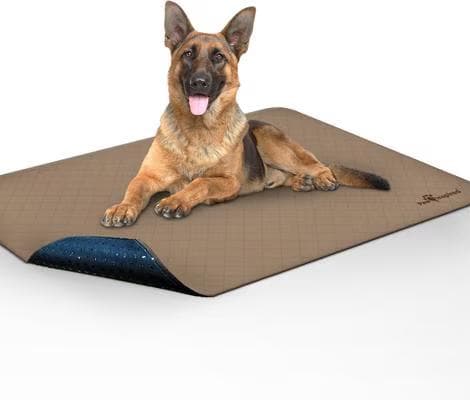
A large washable barrier for a resting area during accidents; change promptly after soiling.
Webvet may earn a commission when you click through to Chewy, at no extra cost to you.

Stool appearance cannot identify the parasite. Coccidia poop has no unique color, smell or visible shape. Normal-looking stool cannot identify coccidia or exclude it, and pictures of diarrhea cannot distinguish it from Giardia. You will not see Cystoisospora oocysts with the naked eye. Save a sample as instructed rather than searching for visible “coccidia worms.”
When the situation is urgent
Puppy dehydration develops when diarrhea or vomiting removes more fluid than the puppy replaces. Reduced drinking makes that imbalance worse; putting down another bowl is insufficient if the puppy cannot drink or retain water. The clinic may need to give fluids and assess electrolytes.
Seek urgent care for any of these changes:
- Collapse or marked weakness.
- Repeated vomiting or inability to keep water down.
- Substantial blood loss or a puppy that will not eat or drink.
Severe coccidiosis can be deadly, particularly when fluid losses and another illness occur together. Do not wait for every classic sign before calling. Our guide to dehydration in dogs explains additional changes to report.
Seizures are not a routine identifying sign of intestinal coccidia; they require urgent assessment for serious illness or another cause. Similarly, coccidia does not explain an itchy or discharging ear simply because a stool test is positive. Mention both problems so the veterinarian can assess them separately.
There is no reliable symptom-onset countdown for an individual dog after exposure. Infection stage, the amount swallowed, age and immunity affect the course, and some dogs never show signs. A recent move or breeder diagnosis is useful history, but it does not establish the exact place or day the infection began.
Fecal testing and coccidia versus Giardia
Veterinarians test for coccidia using stool examinations, commonly centrifugal fecal flotation, with additional antigen or PCR testing when appropriate. Under the microscope, an experienced examiner looks at the size and structure of oocysts. What owners call “coccidia eggs” are these microscopic oocysts, not visible egg clusters in poop.
A single negative sample does not always settle persistent diarrhea. Ask whether the sample amount, timing, intermittent shedding or another organism warrants repeat testing. Conversely, finding oocysts does not prove they are the only cause of illness. The examination, hydration assessment, vaccination history and other test results still matter.
The practical difference from Giardia
Giardia in dogs is another protozoal infection, but Giardia and coccidiosis have important differences. Giardia and Cystoisospora are different organisms. Either can cause diarrhea, either can occur without obvious signs, and a dog can have both. Giardia passes cysts, whereas Cystoisospora passes oocysts that must mature outside the dog to become infectious. Their diagnostic appearance and medication plans differ. A prescription that targets one must not be assumed to clear the other.
If both Giardia and coccidia are detected in a puppy, ask the clinic to identify which medicine addresses each organism and which supportive measures address the diarrhea. Our Giardia treatment guide covers that separate treatment decision. Do not add medicines from two online plans together.
Dogs that eat rabbit or livestock feces may pass Eimeria oocysts without being infected by that species. These are sometimes called pseudoparasites; a laboratory may describe them as non-pathogenic coccidia in dogs. Tell the clinic about scavenging, access to chickens or rabbits, and hunting rodents. Identifying the organism prevents treating every coccidia-like laboratory finding as canine Cystoisospora disease. The CAPC guideline describes this distinction and the available fecal tests.

Figure 1 from Ogedengbe et al. (2016), reproduced under CC BY 4.0. Canine Cystoisospora oocysts appear in panels A and B. The complete published figure also includes feline species in D and F, a different canine parasite in C, and a pig species in E; it is a laboratory reference, not a home identification test.
 Sponsored
Vet care that's always there
Unlimited video calls and messaging with licensed vets for less than a typical vet visit. One membership covers up to five pets.
Use code Pets60
Plans start at $12/month · covers up to 5 pets
- Licensed vets in most states
- Rx for 150+ conditions
- 4.7 on Trustpilot
Veterinary treatment and follow-up
Treatment for coccidia in dogs combines an appropriate anticoccidial medicine with supportive care when needed. A dehydrated puppy may need veterinary fluids and nutritional support as urgently as parasite medication. Tell the clinic about every current prescription, supplement and recent dewormer before treatment starts.
| Medication question | What to confirm with the clinic |
|---|---|
| Albon or sulfadimethoxine prescribed | Exact formulation, measured dose and duration for this dog's weight. |
| Ponazuril or another off-label option prescribed | Concentration, preparation, storage and individual dosing instructions. |
| Giardia and coccidia found together | Which medicine targets each organism and which signs need a recheck. |
| Dose missed or vomited | Whether to repeat it; never assume a double dose is appropriate. |
Which medicines are used?
Sulfadimethoxine, commonly known as Albon, is a labeled U.S. treatment for enteritis associated with coccidiosis. Veterinarians also use ponazuril off label, particularly in shelter medicine. These are not interchangeable household dosing recipes. Coccidiostats inhibit parasite development; the broader term anticoccidial drugs also includes medicines with different actions.
Separate feeding equipment makes portions easier to track during home care. The small OurPets Durapet Stainless Steel Bowl, 0.75 cups can suit a small puppy's measured meal. Choose a larger capacity for a larger dog, wash it after use and keep fresh water available as directed. A bowl or extra water offered at home cannot correct severe dehydration.
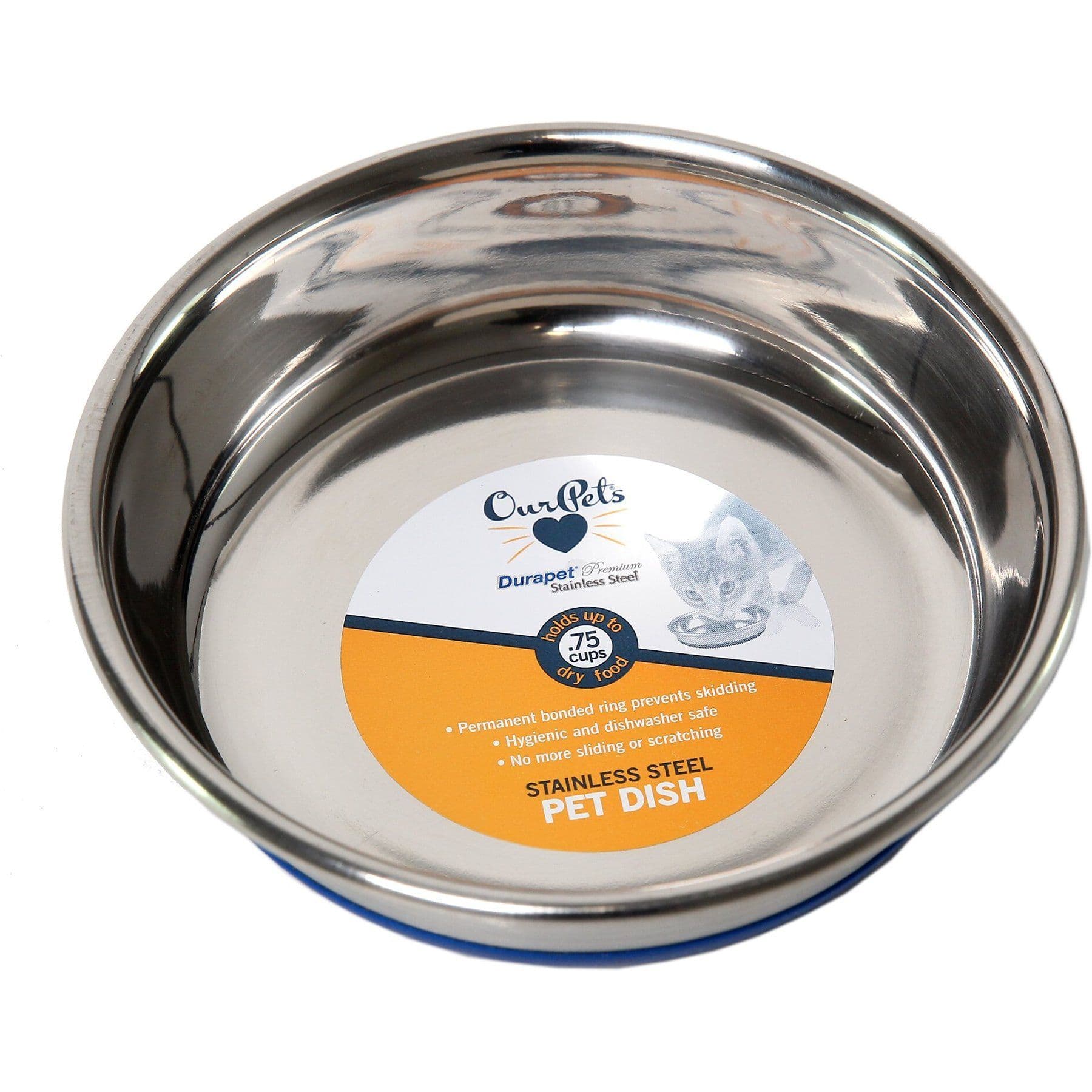
A small washable bowl for measured puppy portions; match capacity to the patient.
Webvet may earn a commission when you click through to Chewy, at no extra cost to you.
The Albon dose and course depend on the prescribed formulation, weight and clinical plan. Sulfadimethoxine tablets and liquids require different measuring instructions. Ask the pharmacy to mark the syringe and confirm the concentration. If a dose is vomited or missed, call for advice rather than automatically doubling the next dose.
Ponazuril may be supplied as a veterinary compounded preparation. Toltrazuril, including products sold under the Baycox name in some countries, has also been used, but availability and legal prescribing conditions vary. Do not improvise dilutions from horse or livestock products. The ASPCA's shelter medicine guidance discusses these treatment choices and the need for accurate preparation.
Medicines that are not automatic substitutes
- Panacur or fenbendazole: a worm or Giardia treatment is not automatically an effective Cystoisospora treatment. Confirm the target organism.
- Metronidazole or Flagyl: receiving it for diarrhea or Giardia does not establish that coccidia is being treated.
- Amoxicillin or tylosin, sometimes called Tylan: do not substitute an antibiotic left over from another illness for the prescribed anticoccidial plan.
- Corid or amprolium: livestock directions are not puppy directions. Do not use an over-the-counter livestock product without the veterinarian's specific instructions.
- Primor or trimethoprim-sulfonamide combinations: these are different formulations and combinations, not alternate names for an Albon dose. Their suitability requires a prescribing decision.
There is no dependable over-the-counter cure to select solely because a package says “dewormer.” Natural remedies for coccidia in dogs, including coconut oil, apple cider vinegar and diatomaceous earth, are not established substitutes for veterinary medication. Trying to treat it naturally must not delay care. Adding these to a sick puppy's diet can distract from the urgent questions of hydration, intake and the correct diagnosis.
How long treatment and recovery take
Getting rid of coccidia is not a single fixed number of days. For context, ASPCA shelter guidance describes ponazuril courses of 3–5 days and sulfadimethoxine courses of 1–3 weeks. These are examples of veterinary regimens, not instructions to choose a course yourself. Clinical improvement, finishing medication and confirming control of infection are different milestones. Follow the exact prescription even if the stool firms up early. The veterinarian decides whether and when follow-up testing is useful.
In some healthy adult dogs, coccidia may go away on its own as immunity controls a mild infection, but that is not a safe assumption for a puppy with diarrhea. Coccidia can kill a severely affected dog. If appetite, energy or stool is worsening rather than improving, contact the clinic during treatment instead of waiting for the final dose. Repeated diarrhea may reflect reinfection, a coinfection or a different problem, not simply a need for more of the same drug.
Ask what to feed the puppy, how much and how often. A suitable complete puppy diet or prescribed gastrointestinal diet may be recommended; avoid fasting a young puppy or making repeated abrupt food changes without advice. Treatment cost depends on examination, fecal tests, medication and whether fluids or hospitalization are needed. Request an itemized estimate and explain financial limits early; a stable outpatient and a dehydrated hospitalized puppy have very different needs.
Prompt poop removal and household cleaning
To prevent coccidia reinfection in dogs, clean the areas the dog has contaminated and remove feces promptly. Yes, household cleaning is needed when coccidia is diagnosed. Focus on feces, soiled bedding, equipment and shared toilet areas. Spraying every room while leaving poop outdoors misses an important exposure route. Keep animals away during cleaning and return them only when surfaces are safe, rinsed where required and dry.
A resting surface with a removable washable cover can simplify this routine. The FurHaven NAP Ultra Plush Full Support Deluxe Bed in Jumbo is an option for a large dog or a space that accommodates its dimensions. Confirm the cover's care directions before buying; a plush bed that cannot be cleaned as needed may be less practical during active accidents.
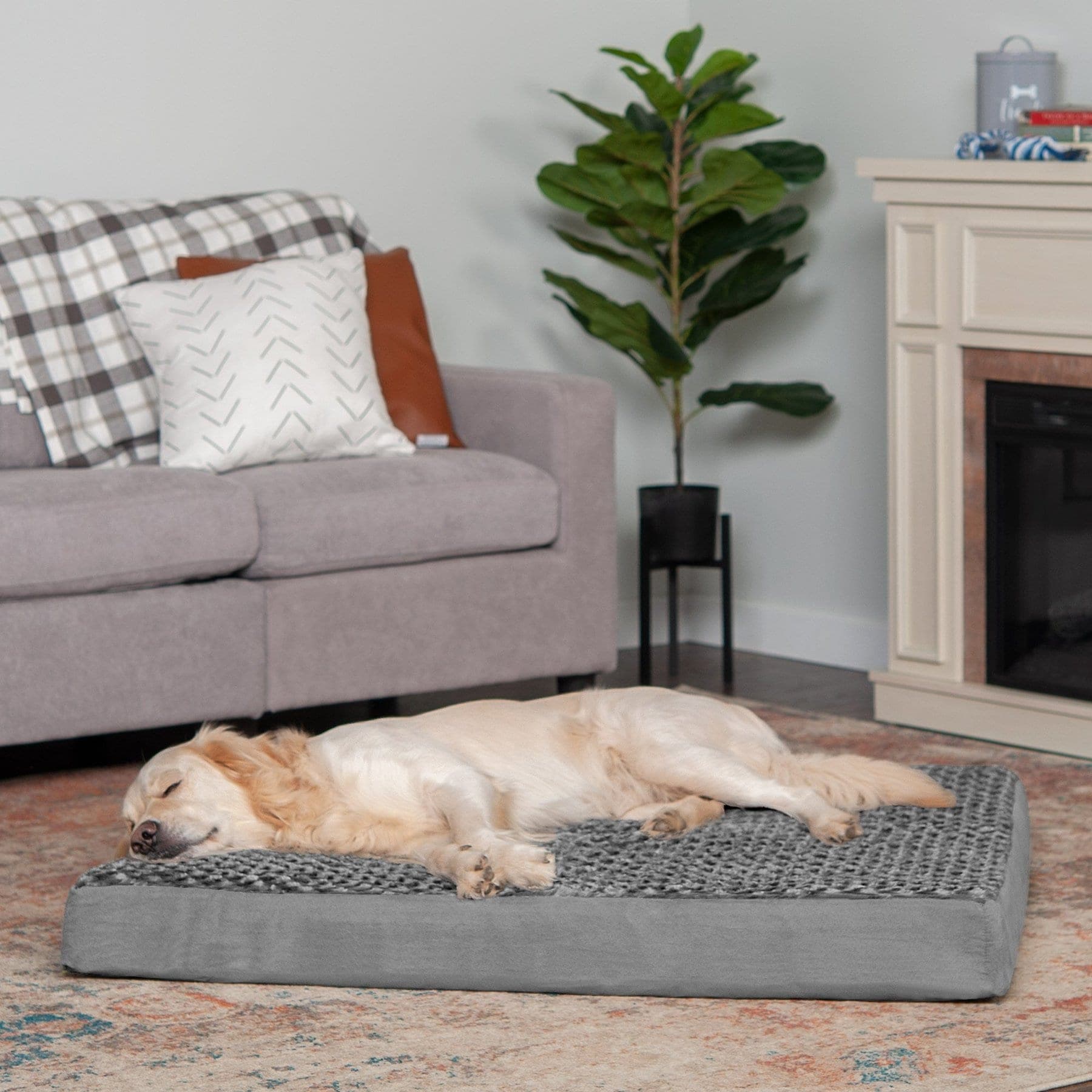
A Jumbo resting option for a large dog; confirm dimensions and removable-cover care.
Webvet may earn a commission when you click through to Chewy, at no extra cost to you.
| Cleanup task and its purpose | What to do next |
|---|---|
| Prompt feces removal limits environmental contamination | Collect each bowel movement, contain it and dispose of it appropriately. |
| Mechanical cleaning removes remaining organic material | Scrub washable surfaces with detergent before any veterinarian-recommended sanitation step. |
| Bedding and equipment need separate attention | Remove soiled material promptly, follow care labels and keep clean items apart from dirty ones. |
| Drying makes the resting area usable again | Rinse as required and let surfaces and laundry become thoroughly dry. |
| Follow-up testing checks the treatment question | Ask the clinic which sample to bring and when; cleaning alone does not prove clearance. |
Oocysts resist many ordinary disinfectants once they become infectious. Do not assume that routine bleach use sterilizes a yard or that a household spray has a proven coccidia claim. High-concentration ammonia has been discussed for professional settings, but fumes and exposure hazards make a do-it-yourself mixture inappropriate. Never mix ammonia and bleach.
Ask the veterinary team for a surface-specific cleaning plan if contamination is extensive. Heat or steam may help on suitable hard surfaces, but burn risks, material damage and incomplete contact matter. Soil and grass cannot be managed like an empty washable kennel. Prioritize feces removal and restricting access to contaminated areas instead of saturating the yard with chemicals.
For a dog with feces on the coat, ask how and when to clean the hindquarters safely. Remove contamination without chilling a young puppy, rubbing damaged skin or allowing licking of cleaning products. Use dedicated cleaning equipment, wash hands afterward and keep food preparation separate from specimen handling and dirty laundry.
Preventing reinfection around other dogs
Coccidia can spread between dogs through a contaminated environment. It is not simply a matter of whether two dogs touch noses. Shared runs, toilet areas, dirty paws and equipment can move fecal material into places where another dog swallows it. Avoid daycare, communal play yards and shared puppy toilet areas until the veterinarian advises return.

There is no universal “noncontagious after the last dose” deadline. How long a dog remains a source of contamination depends on shedding, treatment response and new exposure. Ask what follow-up is needed before rejoining other dogs. Healthy-looking housemates, especially puppies, may also need assessment; do not give every animal the sick dog's prescription by default.
Cross-species exposure and human risk
Canine Cystoisospora is host-specific and is not considered a human infection risk. The canine species do not establish the usual feline infection, and feline Cystoisospora does not transfer to dogs in the same way. Our separate guide to coccidia in cats covers the feline patient. Shared dirty surroundings can still expose each pet to its own parasites or other fecal organisms.
Dogs do not acquire a canine Cystoisospora infection simply because chicken or rabbit droppings contain that animal's coccidia. Eating droppings can produce misleading laboratory findings, and scavenging or predation has other health risks. Prevent access to feces and prey rather than treating all species' parasites as interchangeable.
Good hygiene remains sensible even though canine Cystoisospora is not zoonotic: wash hands after cleanup, supervise children and keep contaminated equipment away from food. A person with illness after animal-feces exposure should seek human medical advice; the dog's positive test does not diagnose the person's condition.
New puppies and ongoing prevention
There is no routine coccidia vaccine for dogs. A standard puppy dewormer schedule may target other parasites and must not be assumed to prevent Cystoisospora. Prevention relies on prompt cleanup, appropriate veterinary screening, reducing crowding and avoiding repeated access to contaminated areas.
If a breeder reports coccidia in a puppy you may buy, ask for the actual test result, medication record, current signs and veterinary follow-up plan. A diagnosis alone does not tell you whether the puppy is ready to move or whether your resident dogs can be protected. Discuss the home setup and any vulnerable animals with your veterinarian before deciding. Persistent diarrhea, poor growth or incomplete records deserve resolution before transport.
Keep a short record during recovery: meals eaten, vomiting, stool frequency, medicine doses and unusual behavior. Send changes to the clinic with dates. This gives the team a more useful basis for a recheck than a series of stool photographs without information about how the puppy feels.
Coordinating care when more than one dog is involved
Give the clinic a list of all dogs sharing the property, including their ages, symptoms and separate medication histories. A nursing mother, a healthy adult and a small puppy may need different decisions even when they share a run. Mark each patient's medicine clearly and confirm the dog's identity before administering a dose. Do not estimate weight by comparing littermates visually.
If someone else takes over care, leave a simple written handoff: the last dose given, the next scheduled dose, meals eaten, any vomiting and the clinic's contact details. This reduces accidental repeat dosing and makes a worsening pattern easier to recognize. Keep the actual prescription label with the medicine rather than transferring an unidentified liquid to another bottle.
For a foster or newly adopted puppy, agree who arranges the recheck and pays for additional testing before the move. Request the original result and current prescription rather than relying on a verbal statement that the puppy was dewormed. Tell the receiving veterinarian whether diarrhea is continuing and whether other animals at the previous home are affected.
What to ask when diarrhea returns
A recurrence does not automatically mean the first drug failed. Tell the veterinarian when the stool first improved, when it worsened again, whether the course was completed and whether access to a shared yard resumed. Ask whether another fecal sample should be collected before changing medication. A test result, the dog's condition and exposure history together support a better decision than an extra empiric dose alone.
Keep the cleaning routine realistic enough to continue while the dog recovers. Assign someone to collect feces, someone to check food and water intake, and a place for dirty equipment. In a one-person household, keep those tasks in a consistent order. The aim is to interrupt repeated exposure while noticing illness early, not to promise that every outdoor surface can be made sterile.
Coccidia questions
Frequently Asked Questions
What naturally kills coccidia?
There is no proven home cure that safely replaces veterinary treatment of a sick dog. Natural remedies such as vinegar, coconut oil or diatomaceous earth do not supply a reliable anticoccidial plan. Environmental cleanup reduces exposure, but do not feed disinfectants or apply concentrated cleaning products to the dog.
Can a puppy survive coccidia?
Yes. Many puppies recover with prompt treatment and appropriate supportive care. The immediate concern is dehydration risk, especially with vomiting, poor intake or another infection. A weak puppy or one unable to keep water down needs urgent care; no survival promise can be made from a positive stool test alone.
Does dewormer get rid of coccidia?
Not necessarily. Coccidia is not an intestinal worm, so a routine worming product may leave it untreated. Ask whether the prescription provides organism-specific treatment for Cystoisospora and whether any separate worm or Giardia infection also needs medication. Do not repeat or combine products without that clarification.
Veterinarian · BVMS MRCVS
Dr. Pippa Elliott, BVMS, MRCVS, is a veterinarian with nearly 30 years of experience in companion animal practice. Dr. Elliott earned her Bachelor of Veterinary Medicine and Surgery from the University of Glasgow. She was also designated a Member of the Royal College of Veterinary Surgeons. Married with 2 grown-up kids, Dr. Elliott has a naughty Puggle named Poggle, 3 cats and a bearded dragon.
Related reading

Myiasis in Dogs and Cats: Maggots in a Wound, Signs, and What to Do

Screwworm Treatment and Prevention for Dogs and Cats: What Works

Screwworm in Dogs and Cats: Signs, What It Looks Like, and What to Do
