Screwworm Treatment and Prevention for Dogs and Cats: What Works
Screwworm treatment starts at the vet: the larvae are removed, the wound is cleaned, and a prescription drug may be used. This guide covers what vets do, which drugs FDA has acted on for dogs and cats, what flea and tick products can and cannot do, and how to lower the risk.

BVMS MRCVS
Medically reviewed by Dr. Pippa Elliott, BVMS MRCVS · Last reviewed

This article contains affiliate links. Webvet may earn a commission when you buy through them, at no extra cost to you.
Screwworm treatment for dogs and cats: what works and why it starts at the vet
Screwworm treatment for dogs and cats starts at the vet: every larva is removed from the wound, the wound is cleaned, and the vet may add a prescription drug that kills larvae. The Companion Animal Parasite Council (CAPC) describes treatment as removing visible eggs and larvae and then thoroughly cleaning the wound.
So yes, there is a treatment for New World screwworm, and pets can recover well when it starts early. Flea and tick products are not a substitute for that vet visit, and a suspected case is reported to animal health officials. USDA APHIS says infested animals should be treated according to their veterinarian's recommendations.
- 1Treatment means what the vet does to the wound: removing every larva, cleaning the tissue, and treating pain and infection.
- 2As for which drugs FDA has acted on, one conditional approval and several Emergency Use Authorizations cover dogs or cats, and none has full approval for screwworm.
- 3Most of those drugs are prescription chews or topicals your vet chooses; Capstar and generic nitenpyram are the over-the-counter exceptions.
- 4Livestock ivermectin, wound sprays made for cattle, and home remedies are not the answer for a pet.
- 5A suspected case goes to your vet, who reports it to state and federal officials.
Screwworm myiasis is an infestation, not an infection a pet catches from another animal. The screwworm fly lays eggs on a wound, and the larvae (maggots) eat living tissue. APHIS says the larvae cause serious, often deadly damage, and that New World screwworm can infest pets, livestock, wildlife, and in rare cases people.
The good news is that the tools are better than they were a year ago. The FDA Center for Veterinary Medicine has now acted on several flea and tick medicines for this use in dogs and in cats, and it also states plainly that no drug yet has full FDA approval for screwworm myiasis.
One of those medicines is sold without a prescription: FDA has authorized Capstar (nitenpyram) tablets to prevent and treat screwworm larvae in dogs and cats that weigh at least 2 pounds and are at least 4 weeks old. It does not replace the exam, because a vet still has to clean out the wound.
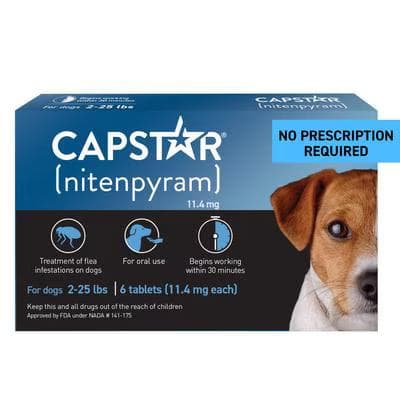
Over-the-counter nitenpyram tablets for dogs 2 to 25 lbs; FDA has authorized nitenpyram for screwworm larvae in dogs and cats.
Webvet may earn a commission when you click through to Chewy, at no extra cost to you.

How to recognize screwworm, what the wound looks like, and where the outbreak is are covered in the companion guide on screwworm in dogs. Ordinary maggots in a dirty wound, which are a different problem, are explained in the guide to myiasis in dogs.

 Sponsored
Need flea, tick, or parasite care for your pet?
A licensed vet at Dutch can recommend the right preventive and prescribe it when it's appropriate. Annual members get 20% off their first flea and tick order.
Use code Pets60
Plans start at $12/month · covers up to 5 pets
- Licensed vets in most states
- Rx for 150+ conditions
- 4.7 on Trustpilot
How vets treat a screwworm wound: larva removal, wound care, and pain control
Are screwworms maggots? Yes. They are the larvae of the New World screwworm fly, and unlike most blow fly maggots they feed on healthy living flesh. APHIS explains that the maggots tear tissue with sharp mouth hooks, and the wound grows larger and deeper as more larvae hatch and feed.
That is why a screwworm wound is never a home project. Treatment at the clinic usually follows these steps:
- Larva removal. The vet removes every visible larva and egg, often with forceps, and may sedate or anesthetize the pet so deep larvae can be reached. Texas A&M AgriLife Extension says a veterinary professional must promptly remove and kill all fly larvae.
- Sample collection. CAPC advises collecting larvae from the deepest part of the wound and saving them in 70% ethanol or isopropyl alcohol for identification at the National Veterinary Services Laboratories in Ames, Iowa.
- Cleaning and debridement. The wound is thoroughly cleaned and dead tissue is trimmed away.
- Medicines. CAPC notes that, depending on severity, a pet may need extensive wound care, systemic antimicrobials, and analgesics for pain.
- A larvicidal drug. The vet may give an oral or topical drug that kills larvae left deep in the tissue.

What kills the screwworm?
In a pet, two things kill the screwworm larvae together: mechanical removal by the vet and a larvicidal drug. CAPC reports that the isoxazolines afoxolaner, lotilaner, and sarolaner showed 100% overall efficacy in naturally infested dogs at standard monthly doses, and that nitenpyram also showed 100% efficacy in affected animals. CAPC adds that removal and supportive care should always go with any drug.
Is that a cure for screwworm? For an individual pet, it can be. Texas A&M's veterinary college notes that when the insects are removed, the animal typically recovers, especially if attention is given early. Deep or neglected wounds take longer and may need repeat cleaning.
Drugs do part of the work alongside removal. FDA has conditionally approved Credelio Quattro-CA1, a prescription chewable, to treat screwworm larvae in dogs and puppies; your vet decides whether it is right for your dog and sets the dose.
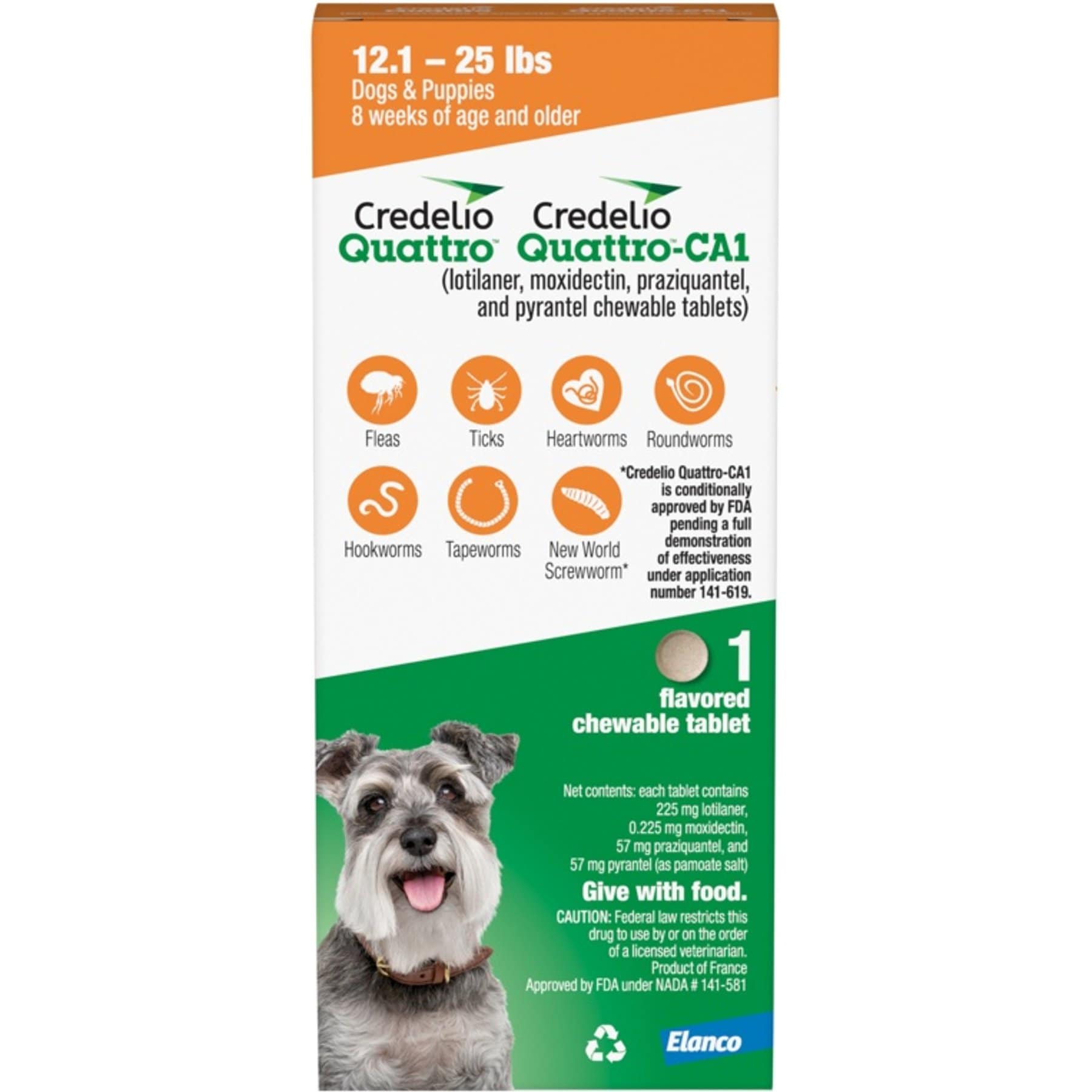
A prescription chewable for dogs; FDA conditionally approved Credelio Quattro-CA1 to treat screwworm larvae in dogs and puppies.
Webvet may earn a commission when you click through to Chewy, at no extra cost to you.
Screwworm drugs for dogs and cats: what FDA has approved or authorized
| Product | FDA status for screwworm | Dogs or cats | What to know |
|---|---|---|---|
| Credelio Quattro-CA1 (lotilaner, moxidectin, praziquantel, pyrantel) | Conditional approval, prescription | Dogs and puppies at least 8 weeks and 3.3 lb | Treatment only; your vet decides if it fits this dog |
| Credelio (lotilaner) | Emergency Use Authorization, prescription | Dogs and puppies | Treatment of screwworm larvae |
| Credelio CAT (lotilaner) | Emergency Use Authorization, prescription | Cats and kittens | First drug FDA authorized for screwworm in cats |
| NexGard (afoxolaner) | Emergency Use Authorization, prescription | Dogs and puppies | Treatment, not listed for prevention |
| NexGard COMBO (esafoxolaner, eprinomectin, praziquantel) | Emergency Use Authorization, prescription | Cats and kittens | Topical treatment |
| Simparica TRIO (sarolaner, moxidectin, pyrantel) | Emergency Use Authorization, prescription | Dogs and puppies | Treatment only; FDA says it is not authorized for prevention |
| Bravecto (fluralaner) chews | Emergency Use Authorization, prescription | Dogs and puppies | Treatment of screwworm larvae |
| Capstar and generic nitenpyram tablets | Emergency Use Authorization, over the counter | Dogs and cats at least 2 lb and 4 weeks old | Prevention and treatment; still needs vet wound care |
| Seresto, Frontline, other flea and tick products | Not on FDA's screwworm list | Dogs and cats | No screwworm claim; your vet decides |
| Ivermectin (Ivomec, Bimectin, horse ivermectin liquid) | Emergency Use Authorization for cattle or horses only | Not dogs or cats | Livestock formulas are not for pets |
| Dectomax (doramectin) | Conditional approval or EUA for livestock only | Not dogs or cats | Cattle, horses, swine, sheep, deer |
| F10 wound spray, CLiK Extra, livestock powders | EUA for livestock, birds, or zoo species only | Not dogs or cats | Extralabel use of F10 products is not permitted |
| Home remedies (dish soap, vinegar, kerosene, peroxide) | No FDA status | Neither | Do not use; see your vet |
As of November 3, 2026, FDA reports 16 Emergency Use Authorizations and three conditional approvals for animal drugs against New World screwworm, across all species. For pets, the list of screwworm medication is short and specific, and every product on it except nitenpyram needs a veterinary prescription.
The three FDA terms mean different things, and they matter when choosing a medicine for screwworm:
- Full approval. FDA says no drug has full approval for screwworm myiasis yet.
- Conditional approval. The drug has met full-approval standards except substantial evidence of effectiveness. It has a reasonable expectation of effectiveness.
- Emergency Use Authorization (EUA). Issued under an HHS declaration when it is reasonable to believe the drug may be effective. FDA says an EUA lasts for the duration of the screwworm declaration unless revoked sooner.
FDA also requires vets to make sure owners understand that an EUA drug is authorized for emergency use but not FDA-approved for screwworm.

Lotilaner products for dogs and cats
On December 17, 2025, FDA conditionally approved Credelio Quattro-CA1 to treat screwworm in dogs and puppies at least eight weeks old and weighing at least 3.3 pounds. It is available only by prescription, and FDA says owners should consult a veterinarian about whether it is appropriate for their dog. Credelio Quattro, the same chewable, is already fully approved for flea, tick, and worm uses in dogs; it is sold as Credelio Quattro/Credelio Quattro-CA1 Chewable Tablets for Dogs, 12.1-25 lbs, 1 Chewable (1-mo. supply).
FDA also issued an EUA for Credelio (lotilaner) in dogs on October 24, 2025, and an EUA for Credelio CAT on November 21, 2025, the first drug FDA authorized for screwworm in cats. FDA keeps these prescription only because professional expertise is needed to monitor for and respond to adverse reactions.
Dectomax, extralabel drug use, and the over-the-counter option
Dectomax for screwworm is a livestock product. FDA lists Dectomax-CA1 as conditionally approved for cattle, and Dectomax under an EUA for dairy cattle, horses, swine, sheep, and deer. Dogs and cats are not on either listing.
Extralabel drug use is the vet's legal tool, with limits:
- FDA says the law does not permit extralabel use of conditionally approved or EUA products for screwworm.
- A drug that has full approval for another use can be used extralabel by a vet with a valid veterinarian-client-patient relationship.
Capstar and generic nitenpyram tablets are the over-the-counter exception, authorized for dogs and cats at least 2 pounds and 4 weeks old. Even then, FDA tells owners to consult a veterinarian about wound care and how to lower the risk of reinfestation.
NexGard is one of the prescription flea and tick chews on that list: its Emergency Use Authorization covers treating screwworm larvae in dogs and puppies, and your vet decides whether to use it.
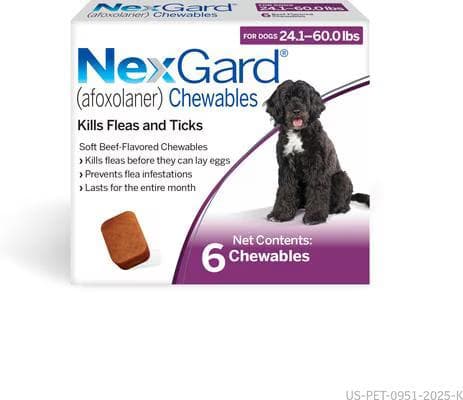
A prescription flea and tick chew for dogs; FDA has authorized NexGard to treat screwworm larvae in dogs and puppies.
Webvet may earn a commission when you click through to Chewy, at no extra cost to you.
Do NexGard, ivermectin, and other flea and tick products work on screwworm?
Some flea and tick products now have an FDA screwworm authorization, and many do not. What flea and tick products can do depends on the exact product and species, so the label and FDA's list decide, not the brand family.
- NexGard. FDA issued an EUA on February 18, 2026, for NexGard to treat screwworm in dogs and NexGard COMBO in cats. Both are prescription only, and the authorization covers treatment.
- Simparica TRIO. FDA issued an EUA on August 13, 2026, to treat screwworm in dogs and says it is not authorized for prevention. Monthly Simparica Trio Chewable Tablet for Dogs, 44.1-88 lbs, 1 Chewable Tablet (1-mo. supply) is a prescription preventive labeled for fleas, ticks, heartworm, and worms.
- Bravecto. FDA issued an EUA on November 3, 2026, for Bravecto chews to treat screwworm in dogs, by prescription.
- Seresto and Frontline. Neither appears on FDA's screwworm list, so neither carries a screwworm claim.
For a dog already taking Simparica TRIO, the authorization covers treatment by prescription, not prevention, so daily wound checks still matter.
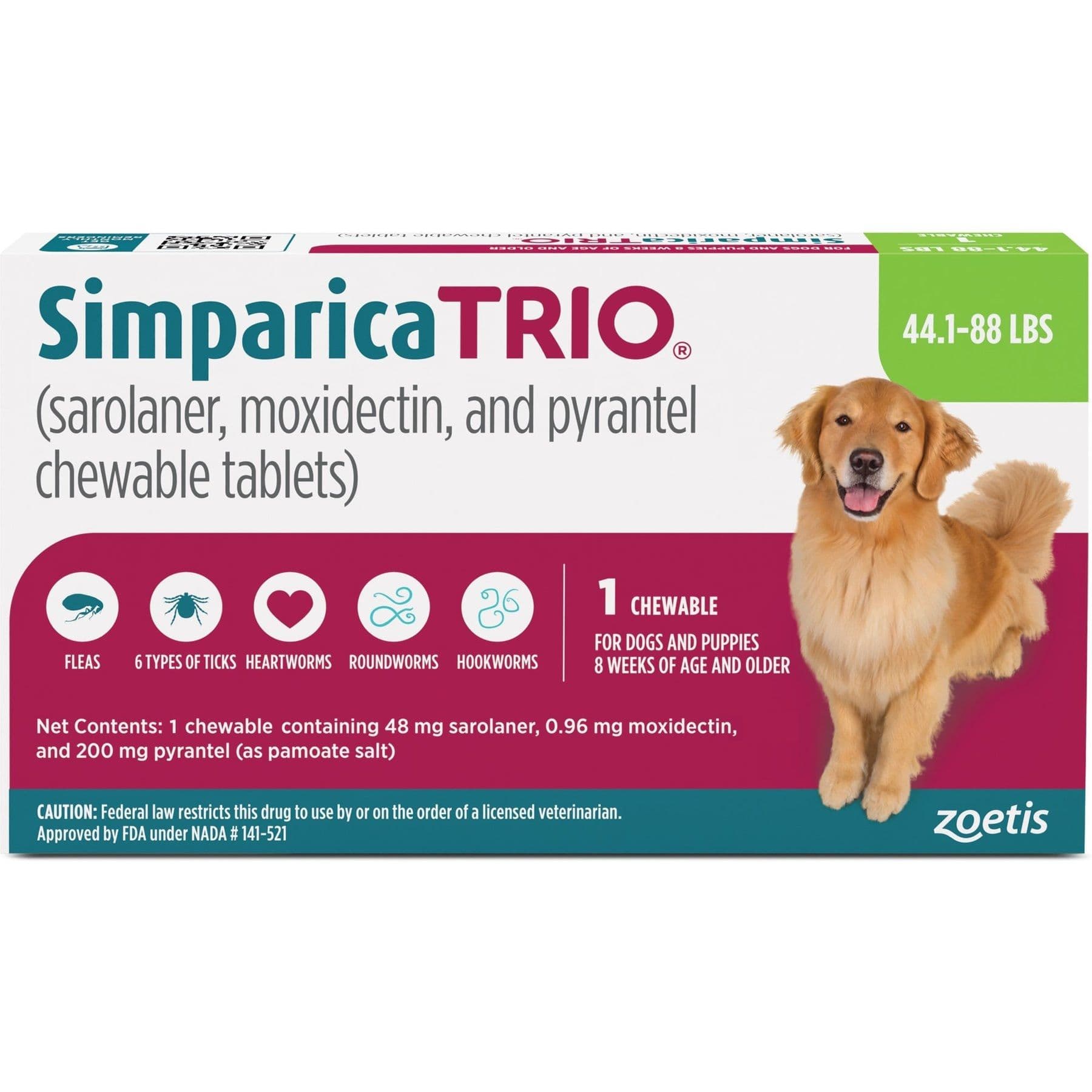
A prescription monthly chew for dogs; FDA has authorized Simparica TRIO to treat screwworm larvae, not to prevent them.
Webvet may earn a commission when you click through to Chewy, at no extra cost to you.
These drugs belong to the isoxazoline class, and FDA notes that isoxazolines have been linked to neurologic adverse reactions, including muscle tremors, ataxia, and seizures. That is one reason your vet chooses the product and dose. For everyday parasite choices, see the guides to the best flea and tick prevention for dogs and the safest flea treatment for dogs.
Will ivermectin help with screwworms?
Ivermectin can kill screwworms in livestock, but it is not a pet treatment. FDA's ivermectin authorizations for New World screwworm cover cattle (Ivomec, Bimectin) and horses only. The Merck Veterinary Manual says livestock macrocyclic lactone formulations should be avoided in dogs, and notes nervous system toxicity in Collie-type dogs.
CAPC does cite studies showing ivermectin and doramectin can prevent and treat screwworm, mostly in livestock. Whether any ivermectin-family drug fits a particular dog or cat is a vet decision under extralabel drug use rules, never a farm-store purchase.
What spray kills screwworms?
No spray is on FDA's screwworm list for dogs or cats. The sprays FDA has authorized, such as F10 Antiseptic Wound Spray with Insecticide and CLiK Extra, are for cattle, horses, sheep, birds, zoo animals, and similar species. FDA marks F10 products as not permitted for extralabel use, so a vet cannot use them on a pet either.
Flea control around the house is a separate job from treating a wound. For cats, Capstar Flea Oral Treatment for Cats and the Seresto Flea & Tick Collar for Cats are common label-use options for fleas.
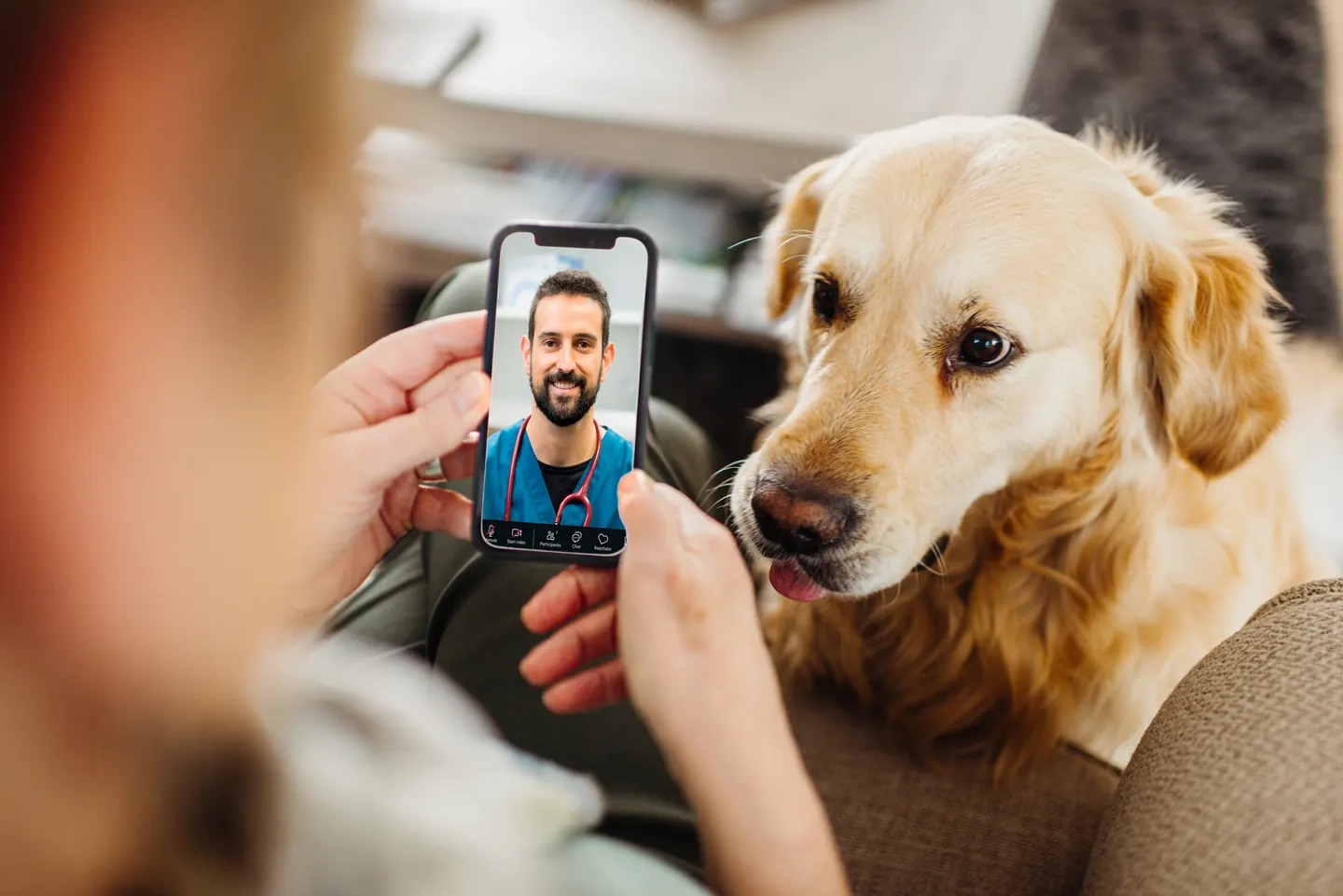 Sponsored
Vet care that's always there
Unlimited video calls and messaging with licensed vets for less than a typical vet visit. One membership covers up to five pets.
Use code Pets60
Plans start at $12/month · covers up to 5 pets
- Licensed vets in most states
- Rx for 150+ conditions
- 4.7 on Trustpilot
What not to do at home, and when screwworm is an emergency
What not to try at home is a longer list than most owners expect. CAPC tells vets not to start treatment before contacting state and federal agencies, because the larvae are evidence that officials need to identify.
- Do not pull larvae out and throw them away. CAPC says samples should not be collected or sent without first consulting officials, and a Foreign Animal Disease Diagnostician usually collects them.
- Do not pour anything into the wound. Gasoline, kerosene, bleach, hydrogen peroxide, essential oils, dish soap, and vinegar are not screwworm treatments and can damage tissue.
- Do not use livestock insecticides, sprays, or pour-ons on a dog or cat.
- Do not give ivermectin from a farm store.
- Do not wait to see if it heals. Texas A&M AgriLife says to isolate a suspected animal and contact your local veterinarian.
Texas A&M's veterinary college lists visible larvae in a wound, wounds that worsen quickly, a foul odor, and swelling or irritation around a wound as signs to act on. AgriLife adds that infested animals may lose interest in food and become aggressive or lethargic.
Phone the clinic before arriving so staff can prepare and keep the pet away from other patients. Cover the wound loosely with a clean cloth for the trip if the pet allows it.
Screwworm prevention for dogs and cats: wound checks, fly control, and travel
Screwworm prevention for dogs comes down to one idea: the fly needs a wound. Lowering the risk in affected areas means finding and caring for wounds before a fly does. Texas A&M AgriLife recommends these steps:
- Check pets daily for wounds, including old tick-bite sites.
- Care for and dress any wound, including recent spay or neuter incisions.
- Remove injury hazards such as metal collars or chains, wire fencing, and sharp vegetation.
- Watch for wound-licking, limb-shaking, or a foul odor.

CAPC recommends keeping pets on a year-round ectoparasite control product, and APHIS lists protecting pets from wound-causing parasites such as ticks among its prevention steps. For dogs that also means current heartworm protection, covered in the guide to flea, tick, and heartworm prevention for dogs. For cats, see the best flea treatment for cats.
For a large dog, a long-acting collar such as the Seresto Flea & Tick Collar for Dogs, Over 18 lbs (8-Month Protection) is a common flea and tick option, though it has no screwworm claim.
What keeps screw screwworm away?
Daily wound checks, prompt wound care, and steady tick control keep screwworm away from an individual pet. On a larger scale, screwworm control depends on sterile flies. APHIS says eradicating screwworm is only possible through the sterile insect technique, which releases sterile male flies so wild females lay eggs that never hatch.
USDA is taking steps to protect against New World screwworm by expanding that program. The Stop Screwworm response page says production will approach approximately 500 million sterile flies per week. Of the pet drugs, only nitenpyram carries a prevention authorization.
Can you vaccinate against screwworm?
No. There is no screwworm vaccine for dogs or cats, and every product on FDA's screwworm list is a drug, not a vaccine. Protection comes from wound checks, wound care, parasite control, and the national sterile fly program. Ask your vet whether a pet traveling to an affected area should be pretreated, as AgriLife suggests.
Are there screwworms in the USA? Yes. USDA confirmed a case in a dog in Cochise County, Arizona, announced October 28, 2026, and the APHIS current status page lets you search an address for a zone in Texas, New Mexico, or Arizona and view the confirmed-detection dashboard. The details are in the guide to screwworm in dogs.
When traveling, the Texas Animal Health Commission says to make sure pets and vehicles are inspected for screwworm flies and larvae, especially in infested areas. APHIS also asks that pets traveling internationally be inspected.
Recovery, follow-up, and reporting a suspected case
Recovery with follow-up checks is the norm. Expect at least one recheck so the vet can confirm no larvae remain and the tissue is healing. AgriLife notes that daily inspection and proper wound care are needed to avoid reinfestation, since a healing wound can attract another fly.
At home, follow the vet's wound care instructions exactly. If the vet asks you to clean the area, a product such as Vetericyn Plus Antimicrobial Wound Care Spray for Dogs, Cats, Horses, Birds & Small Pets, 8-fl oz bottle or Davis Chlorhexidine Dog & Cat Spray, 16-fl oz bundle may be part of that plan once the larvae are gone. More general steps are in the guide to dog wound care.
A healing wound must be protected from licking. Many vets send pets home in a cone, and a soft option such as the All Four Paws Comfy Cone E-Collar for Dogs & Cats, Tan, Medium suits some dogs; see the dog cone guide for fit.

Who reports a suspected case
Screwworm reporting starts with your vet. APHIS tells pet owners who suspect screwworm to contact their veterinarian to evaluate the animal. Vets then report to the APHIS Area Veterinarian in Charge and the state animal health official.
- Texas. The Texas Animal Health Commission says screwworm is reportable within 24 hours of suspicion; its Veterinarian on Call line is 1-800-550-8242.
- Screwworm quarantine. In Texas, warm-blooded animals in an infested zone may not move out of the zone without prior authorization, so check with the commission before moving a pet.
- The USDA response. For New World screwworm, APHIS and state agencies use those reports to confirm the fly and respond before a population becomes established.
Can people get infected by the screwworm?
Yes, though it is rare. The CDC says screwworm is not transmitted directly between humans or between humans and animals, so an infested pet does not pass it to you. People are infested only when the fly lays eggs in an open wound, and CDC rates the current risk to the general U.S. population as very low. If you have concerns about your own health or a wound, see your doctor.
Screwworm treatment questions
Frequently Asked Questions
Is Credelio approved for screwworm in dogs?
Not fully. Credelio Quattro-CA1 has a conditional approval for treating screwworm in dogs, and plain Credelio (lotilaner) has an Emergency Use Authorization. FDA states no drug has full approval for screwworm yet. Both are prescription products, so your vet decides whether lotilaner is right for your dog.
Does NexGard prevent screwworm?
FDA's NexGard authorization covers treatment of screwworm in dogs, not prevention. NexGard's regular label covers fleas and ticks. Monthly flea and tick control still matters, because ticks leave bite wounds that flies can find.
Does ivermectin kill screwworm in dogs?
Ivermectin can kill screwworm larvae, but no ivermectin product is authorized for screwworm in dogs. Livestock ivermectin can poison some dogs, especially Collie types. Ask your vet, who can choose an authorized product instead.
How can I prevent screwworm in my dog?
Look over your dog daily for wounds, scabs, and tick bites, and keep any wounds clean and covered as your vet directs. Keep up year-round parasite control, and limit scrapes from fences or brush in affected areas.
Can I treat screwworm at home?
No. Larvae burrow deep into living tissue, and only a vet can remove them all, control pain, and report the case. Keep the pet calm and call the clinic right away.
Veterinarian · BVMS MRCVS
Dr. Pippa Elliott, BVMS, MRCVS, is a veterinarian with nearly 30 years of experience in companion animal practice. Dr. Elliott earned her Bachelor of Veterinary Medicine and Surgery from the University of Glasgow. She was also designated a Member of the Royal College of Veterinary Surgeons. Married with 2 grown-up kids, Dr. Elliott has a naughty Puggle named Poggle, 3 cats and a bearded dragon.
Related reading

Myiasis in Dogs and Cats: Maggots in a Wound, Signs, and What to Do

Screwworm in Dogs and Cats: Signs, What It Looks Like, and What to Do

Toxoplasmosis in Cats: Symptoms, Pregnancy Risk, Testing, and Treatment
