Myiasis in Dogs and Cats: Maggots in a Wound, Signs, and What to Do
Myiasis means fly larvae (maggots) living on a dog or cat, usually in a wound or under soiled, matted fur. It is urgent and treatable. This guide covers how it happens, the signs, what to do right now, how vets treat it, and how to prevent it.

BVMS MRCVS
Medically reviewed by Dr. Pippa Elliott, BVMS MRCVS · Last reviewed

This article contains affiliate links. Webvet may earn a commission when you buy through them, at no extra cost to you.
Myiasis in dogs and cats is an infestation of fly larvae (maggots) on a living pet, usually in a wound or under soiled, matted fur. It gets worse within hours to days, so a pet with maggots needs a vet the same day, even if the patch looks small.
The good news is that myiasis in dogs is very treatable when it is caught early. The vet clips the coat, removes every larva, cleans the wound, and treats any infection.

 Sponsored
Need flea, tick, or parasite care for your pet?
A licensed vet at Dutch can recommend the right preventive and prescribe it when it's appropriate. Annual members get 20% off their first flea and tick order.
Use code Pets60
Plans start at $12/month · covers up to 5 pets
- Licensed vets in most states
- Rx for 150+ conditions
- 4.7 on Trustpilot
Myiasis in dogs and cats: what maggots in a wound mean and why it is urgent
- 1Myiasis is a fly larvae (maggot) infestation of a living dog or cat, usually in a wound or under soiled, matted fur.
- 2Knowing why maggots appear on a pet helps: flies lay eggs where skin is wet, wounded, or dirty with urine or feces.
- 3The pets most at risk are older, long-coated, incontinent, ill, or outdoor pets and any pet with an open or surgical wound.
- 4Maggots on a pet need a vet the same day; do not try to dig them out at home.
- 5Early vet care (clipping, larva removal, wound cleaning, and treatment for infection) improves the outcome.
According to VCA Animal Hospitals, myiasis is a parasitic infestation of fly larvae, also called flystrike. Most cases in pets are cutaneous myiasis, meaning the maggots live in the skin, a wound, or the coat. The flies involved include blowflies, bottle flies, and flesh flies.
The Merck Veterinary Manual explains that these flies lay eggs in infected skin wounds, and that once inside a wound the larvae quickly invade the surrounding tissue. That is why a dog with maggots in wounds, or a cat with maggots in a wound, is never a wait-and-see situation.

Can maggots kill dogs and cats? Yes, if they are left alone. The Merck Veterinary Manual professional section on myiasis-producing flies states that, without treatment, infested animals can die from shock, toxins, tissue breakdown, or infection, and that larvae found on dogs and cats need immediate treatment.
Early treatment improves the outcome, VCA notes. In a Canadian Veterinary Journal study of pet myiasis, the typical case was an elderly, long-haired animal with a matted, soiled coat, and removing the matted hair and cleaning the area was usually all that was needed.
Recovery at home means keeping the pet from licking or chewing the area while the skin heals, which is what a recovery cone is for.

A soft recovery cone that keeps a dog or cat from licking or chewing a healing wound.
Webvet may earn a commission when you click through to Chewy, at no extra cost to you.
Myiasis in cats follows the same pattern as in dogs. Maggots on a cat often hide under long fur near the tail and bottom, so how to know if your cat has maggots usually comes down to a bad smell, a damp patch of fur, or a cat that suddenly grooms one spot or hides.
What owners describe varies:
- Maggots coming out of my dog's skin, a wound, or a matted patch of fur is cutaneous myiasis and needs a vet the same day.
- Maggots in dog urine or cat urine on the floor can point to eggs laid on fur soaked with urine around the genitals, which needs the same check.
- Maggots in a stool sample are often swallowed larvae, or flies laid eggs on the stool after it was passed.
Owners searching photos of maggots in dogs are usually trying to confirm what they see: small, cream-colored, moving larvae in a wound or wet fur. If you see that, treat it as myiasis and call your vet; a photo you take yourself can also help the clinic triage.
Antibiotics for myiasis in dogs are part of treatment only when a vet finds or suspects infection, and they never replace removing the larvae. Intestinal myiasis in dogs, where larvae are swallowed, is a different and usually milder problem.
How dogs and cats get maggots: wounds, soiled fur, and the pets most at risk
| Who is at risk | Where to look | How often to check in warm weather |
|---|---|---|
| Any pet with an open wound, bite, or recent surgery | The wound edges, stitches, and fur around them | At least daily, more often if the wound is moist |
| Long-haired or matted dogs and cats | Under mats, behind the ears, the tail, and the bottom | Daily during fly season |
| Incontinent pets or pets with diarrhea | Rear end, tail base, belly, inner thighs, and genitals | Every day, after each cleaning |
| Elderly, weak, overweight, or ill pets | Rear end, skin folds, pressure points, and any sore | Daily |
| Pets kept mostly outdoors | Ears, face, back, rear end, and any scrape | Daily, plus a hands-on coat check |
| Newborn puppies, kittens, and a mother that recently gave birth | Belly button stub, genitals, and the bedding | Daily |
Itchy skin raises the risk too, because scratching opens the skin. Keeping fleas under control is part of keeping skin intact, and Capstar is an over-the-counter tablet labeled to kill adult fleas on dogs.
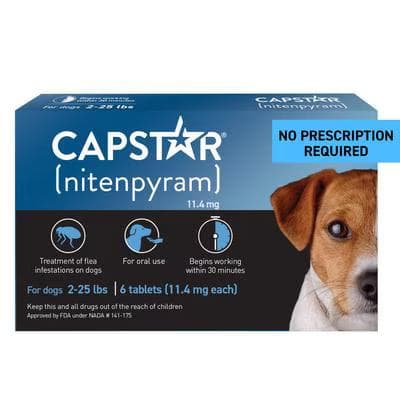
Over-the-counter nitenpyram tablets labeled to kill adult fleas on dogs 2 to 25 lbs.
Webvet may earn a commission when you click through to Chewy, at no extra cost to you.
Can cats get maggots? Yes, and dogs and cats get them the same way. Flies are drawn to wounds, moist or infected skin, and soiled fur. VCA Animal Hospitals notes that one batch of eggs can hatch into hundreds or thousands of larvae, which may or may not be visible.
The main myiasis causes are a wound left untreated and fur soiled with urine or feces. In the Canadian Veterinary Journal study, matted hair with built-up urine and feces started the first strike in most cases. Wounds, bacterial skin infection, being in heat, and old age also played a part.
VCA lists the pets most at risk as those with:
- Open wounds or surgical wounds
- Skin disease
- Weakness or other illness
- Incontinence, which also brings urine scald
- Unsanitary housing or warm, wet surroundings
- Lots of time outdoors (indoor pets are still at risk)
- A recent birth
Knowing where to look and how often to check turns the advice to keep wounds clean into a habit. An outdoor, elderly, long-coated, or incontinent pet, a pet with diarrhea, or one with an open wound or recent surgery needs its rear end, coat, and any wound checked every day in warm weather, so eggs or larvae are found on day one rather than day three.
The same study notes that long coats and mats trap excrement near the genitals, and that this gets worse when a pet is elderly or debilitated and can no longer clean itself. If your cat has a long coat, the guide to matted cat fur covers safe ways to keep it clear.
Can cats get maggots in their stomach? The Merck Veterinary Manual cat owner page says cats can swallow maggots while grooming or eating infested flesh. This is called pseudomyiasis, and in most cases the maggots pass through undigested.

How long does it take for maggots to infest a body?
Sources give different times. The Merck Veterinary Manual says fly eggs hatch within 24 hours if conditions are moist. Veterinary Partner warns it can take only an hour on a hot day for eggs to become tissue-eating maggots. Either way, a pet can go from eggs to an active infestation within a day.
How fast can myiasis kill a dog? The veterinary references used for this guide give no fixed timeline for ordinary maggots; New World screwworm, covered in its own guide, has its own. In the Canadian study, the oldest maggots taken from pets were 2 to 3 days old, and Merck notes that bad strikes can be fatal. Speed of treatment is what changes the outcome.
How common is myiasis?
It is more common than many owners expect. In the Canadian Veterinary Journal survey, most responding clinics in British Columbia saw 5 to 10 pet myiasis cases a year, some up to 30, with dogs affected most and cats next. The authors call it relatively common and entirely preventable. Fly strike is most likely in calm weather at about 63 to 104°F, according to Merck.
 Sponsored
Vet care that's always there
Unlimited video calls and messaging with licensed vets for less than a typical vet visit. One membership covers up to five pets.
Use code Pets60
Plans start at $12/month · covers up to 5 pets
- Licensed vets in most states
- Rx for 150+ conditions
- 4.7 on Trustpilot
Signs of maggots on a dog or cat and where to look
Myiasis in dogs symptoms depend on where the larvae are. The signs of maggots in dogs and cats that VCA Animal Hospitals lists include:
- A foul smell of decay
- Wounds or tunnels under the skin that grow or join together
- Wounds around the eyes, nose, mouth, or anus
- Round lumps under the skin or small holes that ooze fluid
- Restlessness, low mood, or poor appetite
- Visible maggots or eggs in a wound or on moist skin
Merck adds that affected cats often have raised, red sores that can look like an abscess. If you are unsure whether a swelling is a cat abscess or something living under the skin, the vet can tell quickly.
How would I know if my dog has maggots?
Smell is often the first clue: Merck describes a distinct, pungent odor from infested tissue. Then look. Part the fur over any wound, wet patch, or mat and watch for small, cream-colored, moving larvae or clusters of tiny eggs. A dog that keeps licking, chewing, or hiding one area deserves a close look.

Where to look on the body depends on what draws flies:
- The rear end: maggots around a dog's anus or a cat's bum or bottom can mean soiled fur there, so lift the tail and look.
- The tail: maggots in a cat's tail often sit under mats at the tail base.
- The eyes, nose, and mouth: maggots in a cat's eyes or around the face need urgent care.
- The ears: maggots in a dog ear need vet treatment, which includes treating any ear infection underneath.
- The back and sides: a dog with maggots on the back can have a hidden scrape, hot spot, or bite.
- Kittens: maggots in a kitten's anus or belly button area can occur in soiled young litters.
For maggots on a cat's bum, treatment is the same vet visit as anywhere else: clipping, removal, cleaning, and care for the skin underneath.
Do cat worms look like maggots? They can, and the confusion runs both ways. Merck notes that maggots in a stool sample that is not fresh can come from flies laying eggs on it after it was passed, and owners can mistake them for intestinal worms. The symptoms of intestinal myiasis in dogs are usually mild or absent because most swallowed larvae pass undigested. Bring a fresh sample to your vet.
Flies are particularly attracted to wounds, VCA notes, so clean minor wounds promptly as your vet directs and check them at least daily until they close.
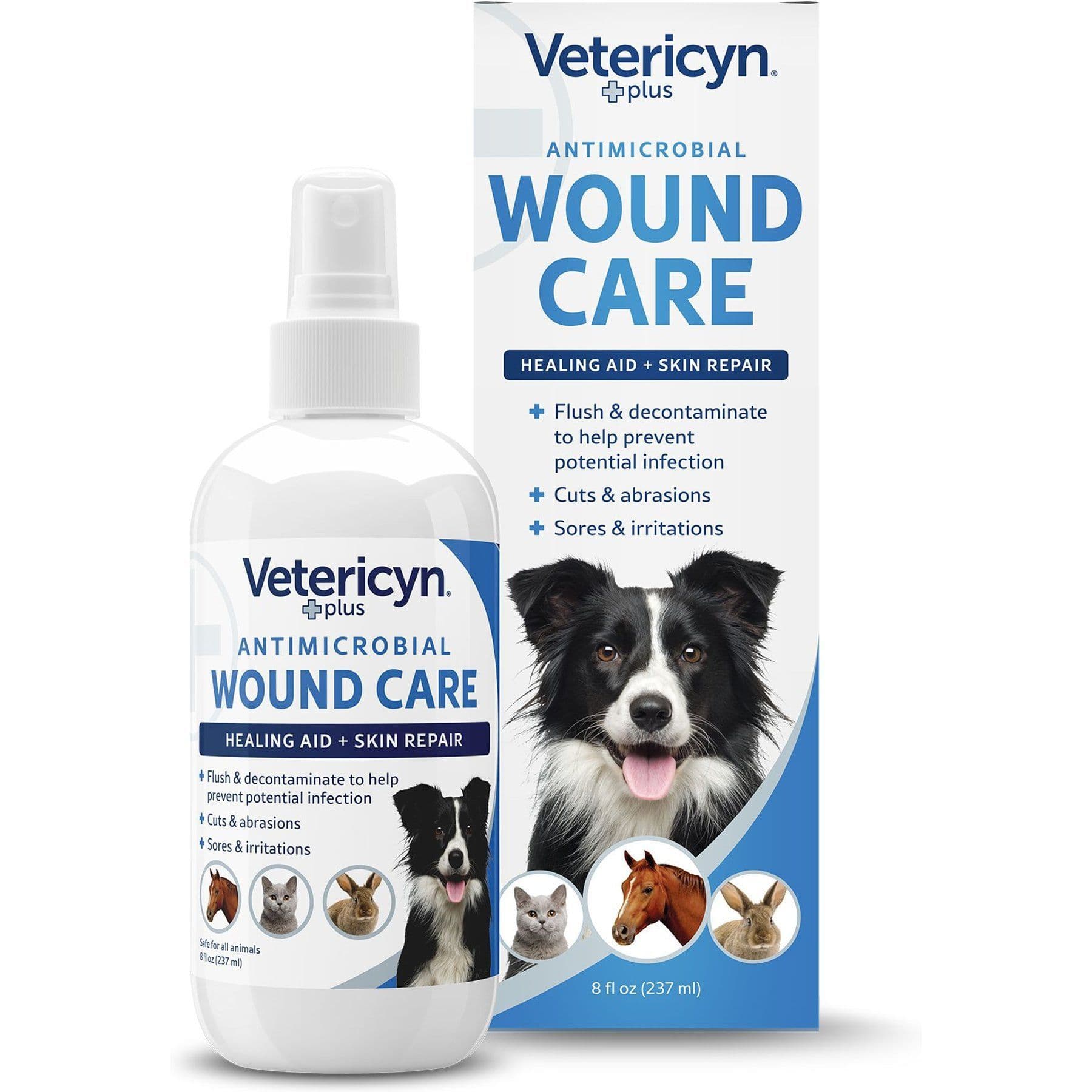
An antimicrobial wound and skin care spray for dogs and cats, for cleaning minor wounds as your vet directs.
Webvet may earn a commission when you click through to Chewy, at no extra cost to you.
Ordinary maggots, screwworm, or botfly: how they differ
Most maggots on pets are ordinary blowfly larvae. Merck explains that these larvae feed on dead cells, fluid, and debris rather than live tissue. They still damage skin layer by layer and draw more flies, which is why they need prompt removal.
Veterinary Partner's screwworm guide notes that many blowfly larvae look alike to the untrained eye, so owners cannot reliably tell them apart. The main differences the sources describe:
- Ordinary blowfly maggots: often many larvae, feeding on dead tissue in a wound or soiled coat.
- New World screwworm larvae: feed on living, healthy tissue, unlike many other fly larvae, so the wound keeps deepening.
- Botfly larvae (Cuterebra): Merck describes a single larva in a boil-like swelling about 0.4 inch (1 cm) across, usually on the head, neck, or trunk in summer and fall.
In an area where screwworm has been found, a wound infestation could be New World screwworm. The USDA APHIS screwworm page says anyone who thinks they have found a screwworm should report it immediately to the State animal health official and APHIS office, and owners should contact their veterinarian. Merck adds that a screwworm case in a pet must be reported by the veterinarian to state and federal authorities.
The signs and the current outbreak are covered in screwworm in dogs, and the drugs FDA has authorized or conditionally approved are covered in screwworm treatment for dogs and cats. For botfly warbles, see treating Cuterebra infestations in pets.
Routine flea control does not stop flies, but it keeps scratching, sores, and broken skin to a minimum, and that lowers the number of places flies can lay eggs. For cats, Capstar comes as an over-the-counter flea tablet too.

Over-the-counter nitenpyram tablets labeled to kill adult fleas on cats.
Webvet may earn a commission when you click through to Chewy, at no extra cost to you.
What to do right now if you find maggots on your pet
Are maggots harmful to cats and dogs? Yes. Maggots are dangerous to cats and dogs because they keep feeding and spreading, and Merck notes that infested animals can die from shock or infection without treatment. Left untreated, myiasis can kill a cat or a dog, which is why the next steps matter.
Follow these steps:
- Call your vet now and describe what you see.
- Tell the clinic every place your pet has been in the past month, as VCA Animal Hospitals advises.
- Keep the pet indoors and away from flies, and keep other pets away from the wound.
- Take clear photos of the wound to show the vet.
- Wear gloves if you need to handle the pet, and wash your hands afterward.
Merck is clear that owners should not try to remove maggots themselves; wound cleaning and maggot removal by a veterinarian is required, often under sedation. If screwworm is a possibility where you live, your vet decides how larvae are collected for identification and makes the report.
A kitten with maggots is an emergency. A kitten infested with maggots has little body reserve, and soiled young kittens are at high risk, so take it in right away rather than trying to bathe it clean first.
Can you catch it from your pet? The CDC states that people cannot get myiasis from another person, and VCA says an infested pet cannot directly infest you or other pets. Infested pets do mean the flies are nearby. Ask your doctor about any concern for your own health.
How vets treat myiasis: removal, wound care, and medication

The treatment of myiasis in dogs and cats follows the same steps. Merck describes the vet's approach:
- Clip the hair to see the full extent of the lesion and remove larvae caught in the coat.
- Sedate or anesthetize the pet, since removing maggots from deep pockets is difficult.
- Remove each larva and flush the wound.
- Cut away dead tissue (debridement), as VCA Animal Hospitals describes.
- Recheck the wound on following days, because eggs do not all hatch at once.
Myiasis removal in dogs is a careful job. Squeezing maggots out of a dog at home is a bad idea: Merck says owners should not remove them, and for boil-like botfly swellings it warns that squeezing can rupture the larva and cause infection or, rarely, a severe allergic reaction.
Medication comes after removal, never instead of it:
- Parasite medication: VCA notes that one or a combination of parasite medications may be recommended to kill remaining larvae.
- Antibiotics: on myiasis treatment and antibiotics, Merck advises culture testing where possible and broad-spectrum antimicrobials when a secondary bacterial or fungal infection is present.
- Supportive care: severe cases may need fluids, pain relief, and a special diet, according to VCA.
Myiasis in cats treatment is the same, with one addition from Merck: a cat may need daily exams after maggot removal because eggs hatch on different days. Cutaneous myiasis treatment of either species also includes treating whatever started it, such as an ear or skin infection.
Furuncular myiasis treatment differs. The Merck section on obligatory myiasis-producing flies describes furuncular myiasis as the boil-like form caused by some bot flies, and the vet removes the single larva intact rather than flushing a wound full of maggots.
For screwworm specifically, the FDA Center for Veterinary Medicine conditionally approved Credelio Quattro-CA1 (lotilaner, moxidectin, praziquantel, pyrantel) for treating New World screwworm larvae in dogs and puppies. It needs a veterinary prescription, and your vet decides whether it is right for your dog. It is sold as Credelio Quattro/Credelio Quattro-CA1 Chewable Tablets for Dogs, 12.1-25 lbs, 1 Chewable (1-mo. supply).
Can you get rid of myiasis?
Yes. Myiasis treatment works well when every larva is removed and the wound is cleaned and allowed to heal. The Canadian Veterinary Journal study found that clipping matted hair and cleaning the area was usually all that typical cases needed. Deep or neglected wounds take longer and need follow-up visits until no new larvae appear.
What kills maggots on dogs' skin?
On a dog's skin, larvae are removed rather than poisoned at home. The vet clips, picks out, and flushes them, and may use parasite medication to kill any that remain, according to VCA. Which medicine, and whether to use one, is the vet's decision based on the pet, the wound, and where the pet lives.
Home remedies to avoid, prevention, and recovery
Searches for what kills maggots on a dog turn up kerosene, gasoline, bleach, essential oils, and livestock sprays. None of these belong on a pet. Veterinary Partner advises against even peroxide or alcohol in wounds because they damage healthy tissue.
Can Dettol kill maggots in dogs, and how fast? None of the veterinary references used for this guide recommend household disinfectants for maggots. Merck warns that phenol-based disinfectants are highly toxic to cats and best avoided in homes with cats. Speed is beside the point: a product that only reaches surface larvae leaves the deep ones feeding.
How fast can maggots kill a cat naturally? The references used here give no timeline for ordinary maggots, and waiting is the risk. Merck says strikes spread rapidly and bad strikes can be fatal, so a cat with maggots should not be left to see if they go away.
Will Dawn dish liquid kill maggots?
None of the veterinary references used for this guide recommend Dawn or any dish liquid as a maggot treatment for pets. A soapy bath cannot reach larvae inside a wound or under the skin, and it delays the vet visit that actually removes them. If a coat is soiled, let the clinic clip and clean it as part of treatment.
What kills maggots instantly?
Nothing safe for a pet kills every maggot instantly at home. Harsh chemicals that kill larvae on contact also injure the wound. The fastest safe route is the vet: clipping, removal, flushing, and sometimes medication. Around the house, keeping garbage closed and clearing waste removes what draws flies.

Myiasis in dogs prevention comes down to clean skin, quick wound care, and fewer flies. To prevent myiasis in dogs and cats, follow the steps from VCA, Merck, Veterinary Partner, and the Canadian study:
- Keep your pet clean and dry, and never let urine or feces collect in the coat.
- Bathe incontinent pets at least every few days to prevent odor and urine scald.
- Treat open wounds quickly and check them at least daily.
- Keep pets with wounds in a fly-free area indoors.
- Groom long coats so mats never form, and examine the skin while you do.
- Manage allergic skin disease and make sure collars do not rub.
- Pick up feces and uneaten food, and keep garbage cans closed.
- Use routine parasite prevention, including repellents, as your vet recommends.
- Be extra watchful in summer, when flies are most active.
Recovery depends on keeping the healed area clean. Your vet may suggest a wound spray between rechecks, such as Vetericyn Plus Antimicrobial Wound Care Spray for Dogs, Cats, Horses, Birds & Small Pets, 8-fl oz bottle, or a chlorhexidine antiseptic spray such as Davis Chlorhexidine Dog & Cat Spray, 16-fl oz bundle. Use these only as your vet directs once the larvae are gone.
A healing wound must be protected from licking. A soft cone like the All Four Paws Comfy Cone E-Collar for Dogs & Cats, Tan, Medium is one option; the guide to choosing a dog cone covers fit. General dog wound care and the normal dog wound healing stages help you spot a wound that is not healing as expected.
Routine flea and tick control keeps skin from being scratched open. For dogs, options include the Seresto Flea & Tick Collar for Dogs, Over 18 lbs (8-Month Protection); for cats, the Capstar Flea Oral Treatment for Cats kills adult fleas. Seresto is a flea and tick collar, not a fly or maggot product, and it is not among the products FDA lists for screwworm. FDA has issued an Emergency Use Authorization for Capstar (nitenpyram) tablets for screwworm larvae in dogs and cats that weigh at least 2 pounds and are 4 weeks or older; using it that way is a decision for your vet.
Myiasis in dogs questions
Frequently Asked Questions
Can maggots kill a dog or cat?
Yes. Without treatment, Merck says infested animals can die from shock, toxins released as tissue breaks down, or infection. Early treatment improves the outcome: the vet removes every larva and treats any secondary infection.
Why does my cat have maggots?
Flies lay eggs where skin is damaged or dirty. A bite wound, an abscess, or fur soiled with urine or feces near the tail is the usual starting point. Long-haired, elderly, or unwell cats that cannot groom well are most likely to be affected.
What should I do about maggots in a dog wound?
Call your vet and have your dog seen the same day. Keep the dog indoors away from flies, take photos, and leave removal to the vet, who can sedate the dog and reach larvae deep in the wound.
What is fly strike in dogs?
Fly strike is another name for myiasis. Flies lay eggs on a wound or soiled coat, the eggs hatch into maggots, and the maggots feed on the skin. Merck notes the first larvae make the wound more attractive to other flies.
How do I get rid of maggots on a dog?
Let your vet do it. The vet will clip the fur, remove each maggot, flush and clean the wound, and treat infection. At home, your job afterward is to keep the area clean, stop licking, and remove what draws flies.
Veterinarian · BVMS MRCVS
Dr. Pippa Elliott, BVMS, MRCVS, is a veterinarian with nearly 30 years of experience in companion animal practice. Dr. Elliott earned her Bachelor of Veterinary Medicine and Surgery from the University of Glasgow. She was also designated a Member of the Royal College of Veterinary Surgeons. Married with 2 grown-up kids, Dr. Elliott has a naughty Puggle named Poggle, 3 cats and a bearded dragon.
Related reading

Screwworm Treatment and Prevention for Dogs and Cats: What Works

Screwworm in Dogs and Cats: Signs, What It Looks Like, and What to Do

Toxoplasmosis in Cats: Symptoms, Pregnancy Risk, Testing, and Treatment
