Botfly (Cuterebra) in Dogs and Cats: Warbles, Removal and Prevention
A botfly warble is a firm lump with a small breathing hole, usually on a pet's head or neck. Here's how to spot Cuterebra in dogs and cats, why you should never squeeze it, and how removal and recovery work.

BVMS MRCVS
Medically reviewed by Dr. Pippa Elliott, BVMS MRCVS · Last reviewed

This article contains affiliate links. Webvet may earn a commission when you buy through them, at no extra cost to you.
A botfly on a dog or cat usually shows up as a warble: a firm lump under the skin with a small, round breathing hole on top. The larva inside is a Cuterebra, the North American rabbit and rodent bot fly, and it most often settles on the head, neck or face.
Please do not squeeze it. A veterinarian widens the hole and lifts the larva out whole, and pets with only one or a few warbles usually recover well.
Botfly Warbles at a Glance
- 1A botfly warble is a firm lump with a round breathing hole about 2–4 mm wide, most often on the head, neck or face.
- 2Never squeeze, pull or crush the larva. A ruptured larva can cause a lasting inflammatory reaction and infection.
- 3A vet removes the larva in one piece, flushes the pocket and may send home antibiotics or pain relief.
- 4Sneezing fits, breathing trouble, eye changes, seizures or odd behavior need same-day veterinary care.
- 5Keeping pets away from rabbit and rodent burrows is the most reliable prevention.
How to Tell If Your Dog or Cat Has a Botfly
Most owners find a botfly in one of three ways: a lump they feel while petting, a matted or damp patch of fur their pet keeps licking, or a tiny hole with a little fluid around it. The Merck Veterinary Manual notes that matted fur is often the first sign in cats.
Common bot fly symptoms in dogs and cats include:
- A firm, raised swelling under the skin, often about 1 cm across or larger
- A round opening about 2–4 mm wide at the top of the lump
- Clear to slightly bloody fluid, crusting or a damp spot in the coat
- Movement inside the hole when you look closely
- Licking, scratching or rubbing at one spot, sometimes with hair loss around it
Check the head, cheeks, neck and chin first. VCA Animal Hospitals notes that most warbles appear around the head and neck, and Today's Veterinary Practice reports them along the shoulders, chest and sides as well.

Thick or long coats can hide a small breathing hole. After walks in fields or woods, run your fingertips against the grain of the fur, then gently part any damp or matted patch with a fine-tooth flea comb so you can see the skin underneath.
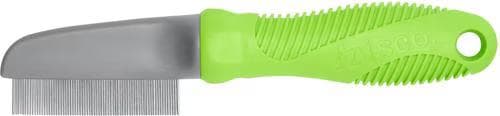
Webvet may earn a commission when you click through to Chewy, at no extra cost to you.
A quick routine during botfly season:
- Check in good light after outdoor time, especially from summer through early fall.
- Feel slowly over the head, face, neck, chest, shoulders and sides.
- Look for a round hole at the top of any lump, and watch it for a few seconds.
- If you find one, note the spot and its size, take a photo and call your vet.
What a Botfly Warble Looks Like on a Dog or Cat
A warble is the pocket of skin that forms around a bot fly larva. It looks like a raised bump or small boil with a neat, round opening on top. The larva breathes through that hole, so it stays open, and it widens as the larva grows.
Botfly larvae, sometimes called warble worms or wolf worms, darken and grow in size over several weeks. They are the same rodent bot fly larvae that grow in wild mice and rabbits.
Once removed, a fully grown botfly maggot looks like a thick, dark, segmented grub 3–4.5 cm long with rows of black spines, according to the Companion Animal Parasite Council (CAPC).
| Feature | What you may see | What it tells you |
|---|---|---|
| Lump | A firm, raised, well-defined swelling under the skin | A larva is growing in a pocket beneath it |
| Breathing hole | A round opening about 2–4 mm wide with clean edges | The larva's air supply, not a bite or puncture |
| Discharge | Clear or straw-colored fluid, crust or a damp patch of fur | Local irritation around the larva |
| Movement | The dark rear end of the larva shifting in the hole | A live larva that still needs removal |
| Young larva | White to cream, spiny and about 5–15 mm long | An early warble that can be hard to spot |
| Mature larva | Dark, spiny and 3–4.5 cm long | Near the end of its time under the skin |
| Empty warble | An open, crater-like hole that drains or swells | The larva has left, and infection risk remains |
When a Botfly Is an Emergency
A single skin warble on a pet that is eating, active and comfortable is not usually an emergency. CAPC notes that larvae under the skin typically cause no signs of distress. Call your vet for a prompt appointment, and go the same day for any sign below.
Can a botfly kill a dog or cat? Rarely, but yes. Instead of settling under the skin, a larva occasionally wanders into the host's nose, throat, eyes, brain or spinal cord. CAPC reports neurologic disease more often in cats than dogs and describes it as usually rapidly progressive and ultimately fatal, which is why these signs cannot wait.
In cats, breathing signs can come first. CAPC notes that neurologic signs typically follow respiratory signs by 1–2 weeks, though the gap can be as long as 4–10 weeks, and it links Cuterebra migration to feline ischemic encephalopathy, a sudden brain injury caused by reduced blood flow.
For a cat sneezing blood or breathing with its mouth open, see our guides to cat sneezing blood and open-mouth breathing in cats.
Why You Should Not Squeeze or Pull Out a Botfly
It is tempting to pull a botfly out yourself, but please don't. The breathing hole is far smaller than the larva, so squeezing tends to crush it. The Merck Veterinary Manual warns that a ruptured larva can cause a chronic foreign-body reaction and secondary infection.
Removal can also set off an allergic reaction, so VCA notes that vets sometimes give an antihistamine or corticosteroid first. Today's Veterinary Practice adds that anaphylaxis is rare, but killing the larvae in place may incite more inflammation.
Home treatment for a botfly in dogs or cats should stop at protecting the spot. Keep your pet from licking or scratching it, cover it loosely with a clean, soft cloth if needed, and book a vet visit. Cuterebra removal at home risks leaving parts of the larva behind.
Will a botfly go away on its own?
Eventually, yes: a botfly will go away on its own once the larva finishes growing and backs out to pupate in the soil. Waiting it out is still a poor plan. The empty pocket often turns into a deep abscess, and VCA notes this secondary infection can cause more damage than the larva itself.
What happens if a botfly is not removed
If you don't remove a botfly from a dog or cat, expect weeks of irritation, licking and drainage, then an open pocket that can become infected.
In rare cases a larva migrates to the nose, eyes or brain, and Merck notes some dogs, Yorkshire terriers in particular, develop a severe whole-body inflammatory response. VCA adds that earlier removal means less chance of permanent damage.
 $65 · no membership
Need flea, tick, or heartworm prevention for your pet?
A licensed vet can recommend and prescribe the right preventive for your pet online when it's appropriate.
 Talk to a vet
- Licensed vets
- All 50 states
- same-day Rx

Webvet may earn a commission if you book.
How Vets Remove a Botfly
The safe way to get rid of botflies on your dog or cat is to have a veterinarian remove each larva whole. Botfly removal is usually quick. Depending on your pet and the warble's location, your vet may remove it with or without sedation or anesthesia, sometimes giving an antihistamine or steroid first.
Typical steps in a botfly extraction, based on guidance from Merck and VCA:
- Examine the lump and check the rest of the body for more warbles.
- Gently widen the breathing hole with fine forceps or a tiny incision.
- Grasp the larva and ease it out in one piece without crushing it.
- Flush the pocket with sterile saline and remove damaged tissue.
- Usually leave the wound open to heal from the inside, with antibiotics or pain relief if needed.
The same bot fly treatment applies to puppies, kittens and adult pets. If the larva has already left, treatment focuses on cleaning the empty pocket and treating infection. For larvae that migrate inside the body, Merck notes that CT or MRI can help find them.
How vets get rid of Cuterebra in cats
Getting rid of Cuterebra in cats follows the same steps for a skin warble. Cats with respiratory or neurologic signs need more: CAPC notes that ivermectin has been effective against migrating larvae and that pairing it with corticosteroids may help cats with Cuterebra-related respiratory disease.
These are prescription decisions for your veterinarian, not home treatments. Merck also cites reports of isoxazoline parasiticides (sarolaner in dogs, fluralaner in cats) treating fly-larva infestations. CAPC notes that no successful surgical removal of larvae from the brain or spinal cord has been reported, so early care for sneezing or behavior changes matters.
What botfly removal costs
Clinics rarely post a set price, because the cost to remove a botfly from a dog or cat depends on:
- The exam fee, and whether it is a regular or after-hours visit
- Whether sedation or anesthesia is needed
- How many warbles there are and where they sit, since the eyes and nose take extra care
- Whether the pocket is infected and needs cleaning
- Take-home antibiotics, pain relief and recheck visits
For typical fees, see our guides to what a vet visit costs and emergency vet costs.
If a surprise bill like this would strain your budget, a Lemonade pet insurance quote shows what future coverage would cost, and our comparison of wellness plans and pet insurance explains what each covers. Insurance generally does not cover a problem that started before the policy began.
Botfly Recovery and Aftercare
After botfly removal, give any prescribed medicine, keep the wound as clean as your vet directs and stop your pet from licking, scratching or rubbing it. Your vet may ask you to clean the area gently each day, so follow the discharge instructions exactly.
Match the barrier to the warble's location. For wounds on the face, head or neck, a soft cone that reaches past the nose keeps paws and tongues away, and many pets tolerate a padded fabric cone better than hard plastic.

A lightweight, padded fabric cone that gently blocks a pet from pawing, scratching, or rubbing a healing eye, wound, or hot spot, and it is far softer and less stressful than a hard plastic cone.
Webvet may earn a commission when you click through to Chewy, at no extra cost to you.
A donut-style collar such as the KONG Cloud Collar stops many pets from turning to lick the body, but it does little for the face. Wounds on the chest, shoulders or sides are often easier to protect with a recovery suit.
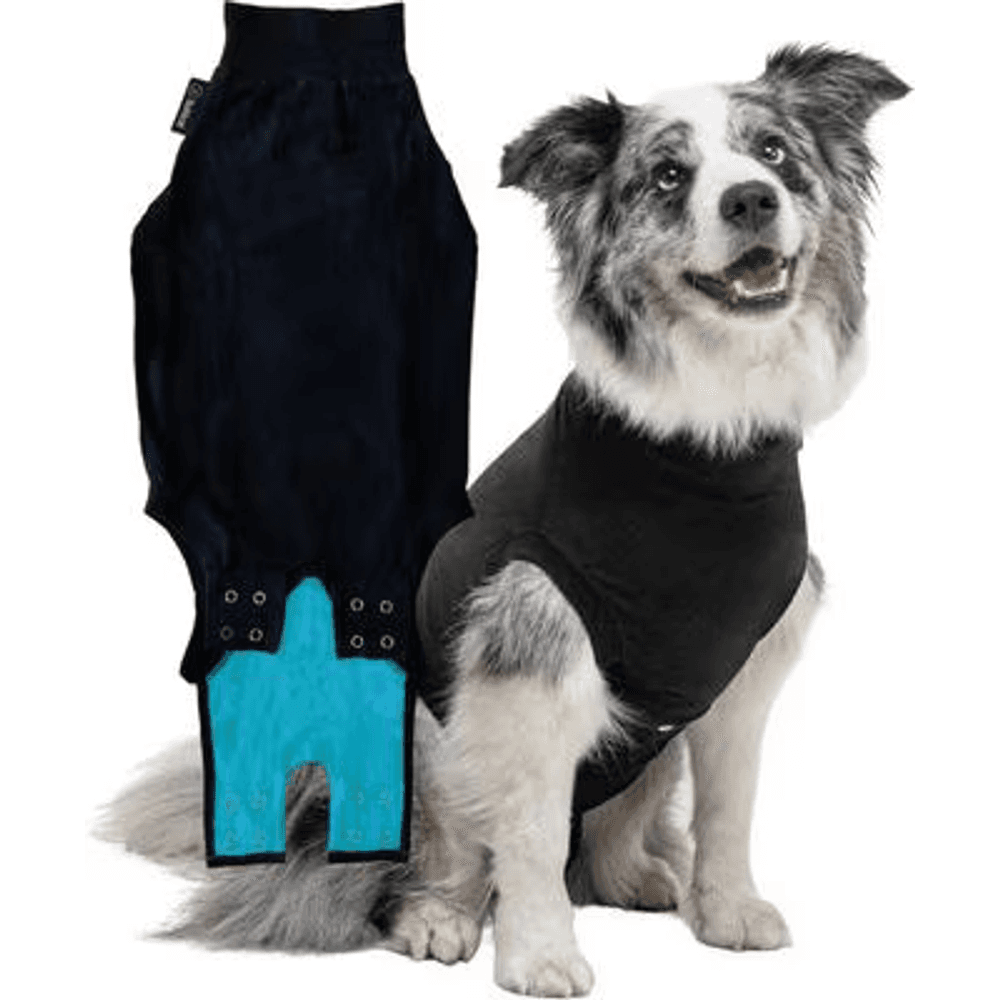
A breathable full-body recovery suit that covers wounds on the chest, shoulders and sides, a cone alternative that lets a dog rest and move normally while keeping its tongue off the healing site.
Webvet may earn a commission when you click through to Chewy, at no extra cost to you.
Cats need their own cut, such as the Suitical Recovery Suit for Cats. For more choices, see our guide to cone alternatives.

Call your vet during recovery if you notice:
- Swelling, heat or redness that grows instead of shrinking
- Thick pus, a foul smell or fresh bleeding
- Fever, lethargy or poor appetite
- A new lump nearby, which may be a second warble
What a healing botfly wound looks like
A healing botfly wound on a dog or cat looks like a small open crater at first. It may drain clear or pink fluid for a few days, then slowly fill in with moist, pink tissue from the bottom up. Merck notes these wounds usually heal this way, which can take weeks to months.
The wound should look smaller and drier each week, and a photo every few days makes changes easy to compare at the recheck.
How to Prevent Botflies in Dogs and Cats
No product, including any bot fly repellent for dogs, is labeled to prevent Cuterebra, according to CAPC. The best way to keep bot flies off your dog or cat is to limit contact with the places where the flies lay eggs, then check the skin during fly season.
Keep pets away from burrows and nests
Female bot flies lay eggs in small groups on grass stems, wood chips and bark along rodent runs and near burrows, according to CAPC. During botfly season, keep dogs leashed or on a long line in fields and woods, and steer them away from rabbit nests, woodpiles and holes in the ground.

- Keep cats indoors, or limit outdoor time to a screened catio or supervised harness walks.
- Discourage digging and hunting around rodent and rabbit burrows.
- Reduce rodent activity near the house, and block access to burrows under decks and sheds.
- Keep checking the head, neck and chest from summer through fall.
Ask your vet about parasite preventives
Parasite preventives can add some protection, with limits. CAPC notes that topical insecticides such as fipronil and imidacloprid may provide some protection, and that systemic macrocyclic lactones, the drug class in many heartworm preventives, may kill larvae during migration. None of these products is labeled for botflies.
For cats that spend time outdoors, a fipronil spot-on such as Frontline Plus for Cats is an over-the-counter choice. Use only products made for cats, since some dog flea treatments are dangerous to them.
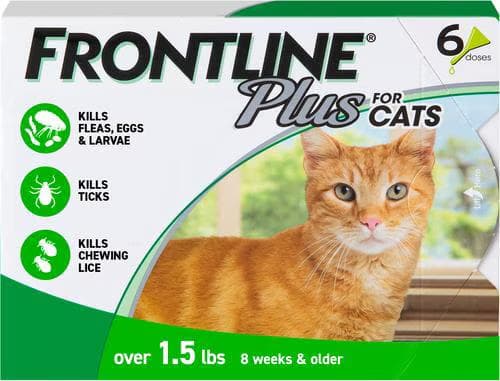
Webvet may earn a commission when you click through to Chewy, at no extra cost to you.
For dogs, an imidacloprid spot-on such as Advantage II for dogs is sold without a prescription. If your vet prefers a monthly product with a macrocyclic lactone, Simparica TRIO for dogs and Revolution Plus for cats are prescription options that need your veterinarian's approval.
Our guides to over-the-counter flea treatment for dogs, flea, tick and heartworm prevention for dogs and flea and tick prevention for cats can help you weigh the options with your vet.
Can you get rid of botflies around your home?
Not really. Cuterebra flies breed in wild rodents and rabbits, and CAPC notes that infection rates in those hosts may be as high as 30% to 70%.
You cannot get rid of bot flies the way you treat a flea problem, and no yard product is labeled for them. Fewer burrows near the house and steady skin checks are what help.
Bot Fly Bite Stages: How a Warble Changes Over Time
Botflies do not actually bite. What people call a bot fly bite on a dog or cat is the warble a larva makes after it enters the body, usually through the mouth or nose while the pet grooms, according to Merck. Here is how a Cuterebra warble changes, and how long each part lasts.
| Stage | Rough timing | What you may notice |
|---|---|---|
| Entry | Day of exposure | Nothing; a tiny larva enters through the mouth, nose or another body opening |
| Migration | Early weeks | Usually no signs while the larva travels to its final spot |
| Early warble | Within the first few weeks | A small, firm swelling with a pinpoint hole |
| Mature warble | About 3–6 weeks after infection | A larger lump, a 2–4 mm hole, fluid and visible movement |
| Exit | After the larva matures | The larva backs out and leaves an open, draining hole |
| Healing | Weeks to months | The pocket fills in from the bottom, and infection slows healing |
Put together, a Cuterebra larva usually lasts about 3–6 weeks from infection until it matures and backs out, though Today's Veterinary Practice notes development can take up to 2–3 months. The wound it leaves can take weeks to months more to heal. Most owners first notice the mature warble stage, since earlier stages are hard to see. A bot fly bite on a dog that has grown a breathing hole should be checked by a vet, ideally before the larva exits and leaves an open wound.
Botfly Warble or Something Else?
Several common botfly lookalikes can fool owners. The breathing hole is the best clue: a botfly warble has one neat, round opening, and you may see the larva move. Our guide to lumps on dogs covers other causes of bumps. Petful also explains when a lump on your dog needs a vet.
| Lump or wound | Key clues | How it differs from a botfly warble |
|---|---|---|
| Botfly warble | Firm lump, one round 2–4 mm hole, fluid, movement | One larva living in a pocket under the skin |
| Abscess | Hot, painful swelling that may burst and drain pus | No breathing hole or larva before it opens |
| Tick | A small body attached at the skin, with tiny legs visible where it meets the skin | Sits on top of the skin, not under it |
| Cyst | Smooth, slow-growing lump that may ooze thick material | No round breathing hole and no movement |
| Screwworm | Several maggots feeding in an open wound, with a foul smell | Larvae eat living tissue and must be reported |
A tick, unlike a botfly, is safe to remove at home with a tick tool such as the TickCheck Premium Dog Tick Removal Kit, and our guide to removing a tick from a dog walks through it. For smooth lumps without a hole, our dog cyst guide explains what to watch.
Screwworm versus botfly matters. APHIS describes New World screwworm as a fly whose larvae burrow into the flesh of living animals, including pets, and asks anyone who suspects it to contact their state animal health official and APHIS immediately. If you see several maggots in a wound, call your vet right away.
Botflies in Dogs vs Cats
Dogs and cats get the same Cuterebra larvae, but how they meet them and where warbles show up differ a little.
Botflies on dogs
A bot fly on a dog usually sits on the head, face or neck, where a curious nose meets rabbit runs and rodent burrows. Dogs that dig, hunt or push through brush get the most exposure, and botfly larvae in dogs can also settle along the shoulders, chest or sides.
Warbles on the legs, paws or belly are less common, but any bump with a breathing hole deserves the same care. The Merck Veterinary Manual notes that Yorkshire terriers may be at increased risk of this parasite infestation and can develop a strong whole-body inflammatory reaction.
If your dog loves to dig near nests and holes, our guide to why dogs dig can help you redirect the habit away from burrows.
Cat warbles and botflies in cats
Cats usually pick up botfly larvae while hunting rodents and rabbits, so outdoor cats and roaming kittens are most exposed. The Merck Veterinary Manual notes that free-roaming cats are more likely than indoor cats to develop Cuterebra lesions.

A cat warble most often appears on the neck, face or chin, sometimes near an ear or the nose, and the first clue is often a matted patch the cat keeps grooming. What owners call a bot fly bite on a cat is really this warble.
In feline cuterebriasis, Merck lists a sudden bout of violent sneezing weeks to months before neurologic illness as a key clue, so watch for the emergency signs above. VCA covers cat warbles in detail.
What Is a Botfly (Cuterebra)?
Is a Cuterebra a botfly? Yes. Cuterebra is the genus of North American rodent and rabbit bot flies, and CAPC counts about 34 species. Their larvae, also called bots or wolf worms, normally grow in mice, chipmunks, squirrels and rabbits, and dogs and cats are accidental hosts of this parasite.
The medical term for the infestation is cuterebriasis. Adult botflies are large, hairy, bee-like flies that rarely draw attention. Cuterebra is not the same as the human botfly, a tropical species, or the warble flies that infest cattle.
How dogs and cats pick up botfly larvae
A cat or dog gets Cuterebra by brushing past eggs near a burrow, not from another pet, and a cat warble or dog warble starts the same way. The bot fly life cycle, drawn from CAPC and the Merck Veterinary Manual, runs like this:
| Stage | What happens |
|---|---|
| Eggs | Female bot flies lay eggs in groups of 5–15 on grass stems, wood chips and bark along rodent runs |
| Hatching | Body heat from a passing animal triggers the eggs to hatch, and the tiny larva climbs onto the fur |
| Entry | The larva enters through the mouth or nose during grooming, or another body opening or wound, but not intact skin |
| Growth | It travels to a spot under the skin, opens a breathing hole and grows for 3–6 weeks |
| Exit | The mature larva backs out, drops to the ground and pupates in the soil |
| Adult | New adult flies emerge months to years later, depending on species and climate |
That route explains the risk pattern: dogs that nose into burrows and cats that hunt and then groom are the pets most likely to pick up a newly hatched larva.
How long a botfly stays in a pet
Bot flies stay in dogs and cats for several weeks, about as long as the larva needs to finish growing. CAPC puts growth from newly hatched larva to fully formed third-stage larva at 3–6 weeks, and VCA describes the larva sitting in its skin cyst for about a month before it leaves.
Where and when botflies are active
Cuterebra botflies live across North America, and veterinary sources describe their range by region rather than state by state. Today's Veterinary Practice maps cat cases in many US states and reports that most North American cases are found June through October in the eastern United States and Ontario, Canada.
Their habitat is anywhere rodents and rabbits nest: fields, woodland edges, brush piles and yards. In northern states and other colder regions, cases cluster in summer and early fall because the flies lay eggs once a year, while in warm southern climates flies can lay eggs year-round, according to CAPC.
Individual species have narrower ranges. UF/IFAS places the tree squirrel bot fly east of the Mississippi River, including northern and central Florida. Merck notes that infestations are most common in late summer or early autumn, and those locations and seasons tell you when skin checks matter most.
Are botflies contagious?
No. Bot flies are not contagious between pets, because every larva comes from eggs in the environment rather than from another animal. A dog with a warble cannot pass it to your cat, and a cat warble cannot spread through the household.
Botflies in Rabbits, Squirrels and Other Animals
Rabbits and rodents are the botfly's natural hosts. CAPC splits the genus into species that parasitize rodents and species that parasitize rabbits (lagomorphs). The Merck Veterinary Manual notes that pet rabbits housed outdoors can be infested too, so a rabbit kept outside can develop a warble.
Rabbit botfly symptoms look much like those in cats and dogs: a lump with a breathing hole and a damp patch of fur. Prevention in rabbits means limiting unsupervised outdoor time during fly season, and removal belongs with a rabbit-savvy vet.
Botfly Questions From Dog and Cat Owners
Frequently Asked Questions
Is Cuterebra contagious to people?
No. CAPC states that the larva in a cat or dog poses no health risk to humans. People are rarely infected, and when they are, a larva from the environment enters through a body opening, just as in pets. Cuterebra is not contagious from pets to people.
The larva already came out. Does my pet still need a vet?
Yes. An empty warble is an open pocket under the skin, and VCA notes that many pets develop a deep abscess or skin infection after the larva leaves. A vet can flush the pocket, check for other warbles and decide whether antibiotics are needed. Bring a photo of the larva if you have one.
Can my dog or cat get botflies more than once?
Yes. Pets can pick up new larvae whenever they return to areas with infected rodents and rabbits, so a dog that hunts or a cat that roams may get warbles in later seasons too. Limit time around burrows and check the head and neck often from summer through fall.
Are warbles and bot flies the same thing?
Not quite. A warble is the swelling a bot fly larva makes under the skin, and the word is often used for the larva itself. The bot fly is the adult insect. In livestock, "warble fly" usually means Hypoderma, a different botfly that infests cattle, while the warbles on dogs and cats come from Cuterebra.
Does a botfly warble hurt my pet?
Often less than it looks. CAPC notes that larvae under the skin usually cause no signs of distress, but many pets lick, scratch or flinch at the spot, and infection makes it painful. Pain, spreading swelling or a pet that stops eating needs a prompt visit.
Can indoor cats get botflies?
It is uncommon. The Merck Veterinary Manual notes that free-roaming cats are more likely than indoor cats to develop Cuterebra lesions, because the eggs sit along rodent runs outdoors. An indoor cat that slips outside or spends time in an outdoor enclosure near burrows can still be exposed.
$65 · no membershipNeed flea, tick, or heartworm prevention for your pet?
A licensed vet can recommend and prescribe the right preventive for your pet online when it's appropriate.
Talk to a vet- Licensed vets
- All 50 states
- same-day Rx
Webvet may earn a commission if you book.

Editor
The Webvet Editorial Team is the in-house group of pet-care editors and writers behind Webvet, operated by Smart Pet Collective. The team researches, writes, and maintains Webvet's pet health, behavior, and medication content. Every article follows a defined editorial process: research from reputable veterinary and scientific sources, careful drafting, mandatory review of medical content by a credentialed veterinarian, and dated publication. Health and medication articles are medically reviewed by a licensed veterinary professional before they go live and are kept current over time.
Veterinarian · BVMS MRCVS
Dr. Pippa Elliott, BVMS, MRCVS, is a veterinarian with nearly 30 years of experience in companion animal practice. Dr. Elliott earned her Bachelor of Veterinary Medicine and Surgery from the University of Glasgow. She was also designated a Member of the Royal College of Veterinary Surgeons. Married with 2 grown-up kids, Dr. Elliott has a naughty Puggle named Poggle, 3 cats and a bearded dragon.


