Cat Abscess: Signs, Treatment, Costs, and Burst Wounds
A cat abscess may hide beneath the fur or leave a draining hole after a bite. Find out how to arrange safe care, what treatment involves, how to compare costs, and when recovery needs another check.

BVMS MRCVS
Medically reviewed by Dr. Pippa Elliott, BVMS MRCVS · Last reviewed

This article contains affiliate links. Webvet may earn a commission when you buy through them, at no extra cost to you.
A cat abscess is a pocket of pus, often caused by bacteria entering through a bite wound. You may discover a painful swelling under the fur, notice your cat hiding or limping, or find a wet patch where an abscess has burst. Contact your veterinarian promptly for any of these changes. A draining hole can still lead into a larger infected pocket.
Skin abscesses can occur on the neck, leg, back, or elsewhere. A photograph cannot tell you how deep the infection goes, and swelling near the face may have a dental or other cause. The safest first step is to arrange assessment without squeezing or lancing the lump.
What a cat abscess looks like
A closed abscess may look like a rounded swelling or an uneven raised patch beneath the coat. The skin may feel warm, but do not keep touching a painful area to check it. Sometimes the first clue is behavioral: a cat that stops eating normally, hides, resists being picked up, or favors a leg. VCA's cat abscess guidance also describes fever, lethargy, and foul discharge.
For a cat you can handle safely, prepare a secure carrier for the visit. The Frisco Travel Safety Dog & Cat Carrier is one transport option if its actual dimensions and weight limit suit your cat. Use a clean liner and tell the clinic in advance if pain makes loading or handling difficult.

Prepare secure transport for the vet visit. Confirm that the carrier's actual dimensions and weight limit suit your cat, and use a clean liner.
Webvet may earn a commission when you click through to Chewy, at no extra cost to you.
A small puncture can hide a deeper infection. Painful swelling, an open draining wound, or a cat becoming unwell needs veterinary attention, even when you never saw a fight.
Look at the whole cat as well as the visible spot. A paw or paw-pad lesion may make walking painful; swelling on the leg, tail, or back may be concealed until the cat moves differently. A sore patch near an ear, cheek, neck, or belly still needs examination rather than a diagnosis based on its location.

| What you notice | What it may mean | Useful next action |
|---|---|---|
| Small puncture after a fight | Surface damage may underestimate deeper contamination | Call the clinic promptly, before swelling develops |
| Closed painful swelling | Abscess is one possibility among several kinds of lump | Arrange examination; do not lance it |
| Hole with wet, foul-smelling discharge | An abscess may have ruptured | Prevent licking and arrange assessment |
| Facial swelling or difficulty eating | Dental disease or another deeper problem is possible | Tell the clinic the precise location and eating changes |
| Weakness, collapse, or breathing difficulty | Serious illness or injury | Seek emergency veterinary care |
A large abscess or one on the face can be dangerous, particularly when your cat is systemically ill. Size alone is not a safe severity test: a small opening may conceal more damage. Paw swelling also does not establish a fungal infection, even if an online picture looks similar. Persistent or unusual lesions may need samples to identify the cause.
Do not try lancing a cat abscess at home. The visible swelling does not show the depth of the pocket, and safe examination or drainage may require professional pain relief and sedation.
A Dogswell Remedy+Recovery Rigid E-Collar may help prevent licking when correctly fitted. Have the veterinary team check that the chosen size blocks access to this wound and still allows your cat to eat and drink. Cats can reach surprising places, so the presence of a collar alone is not proof of protection.

Help prevent wound licking with a correctly fitted rigid collar. Ask the clinic to check wound access and that your cat can eat and drink.
Webvet may earn a commission when you click through to Chewy, at no extra cost to you.
How cats get abscesses
A bite commonly triggers a cat abscess by carrying bacteria beneath the skin through a small puncture that closes quickly. Infection then develops below the surface, and obvious signs may appear days after a fight. That delay explains why owners sometimes find an abscess without remembering a wound. VCA's fight-wound guidance explains how these sealed punctures lead to infection.
Outdoor cats can encounter bite injuries, but indoor living does not rule out an abscess. A household fight or a penetrating foreign object can also damage the skin. Give the vet the history without assuming that one lifestyle either proves or excludes the diagnosis.
If your cat keeps getting abscesses, arrange a fresh assessment rather than automatically reusing the previous treatment. Useful distinctions include:
- New locations: repeated injuries or fights may be contributing.
- The same location: retained foreign material or an unresolved pocket may be involved.
- Persistent drainage despite treatment: the vet may investigate unusual infection or another underlying problem.
After bite wounds, the clinic may discuss FIV and FeLV testing and the appropriate testing schedule. These are additional health considerations, not diagnoses that can be made from the abscess itself. Keeping cats away from further fights and arranging prompt care for fresh wounds can reduce opportunities for another infection.
 $65 · no membership
Is your cat's itching or skin issue getting worse?
A licensed vet can examine your cat over video and prescribe treatment online when it's appropriate.
 Talk to a vet
- Licensed vets
- All 50 states
- same-day Rx
Webvet may earn a commission if you book.
What to do if a cat abscess bursts
A burst abscess may leave an obvious hole, matted wet fur, or an open draining skin lesion with cream-colored, yellowish, or blood-tinged fluid. The opening can be small even when the pocket underneath is larger. Pressure may lessen after discharge escapes, but renewed appetite or a flatter lump does not prove that the infection has resolved.

Call the veterinarian and describe your cat's comfort, appetite, energy, and wound location. Do not squeeze the opening to force out remaining pus. A ruptured area on the tail or face needs the same assessment of its source and extent as a closed swelling; keep products and fingers away from the eyes and mouth.
While waiting for the clinic's instructions:
- Keep your cat indoors in a quiet, clean space.
- If tolerated, gently wipe away surface discharge with clean water or saline; do not scrub or probe the hole.
- Prevent licking, and avoid tight or improvised dressings.
- Stop handling if the cat becomes distressed or tries to bite.
There is no reliable home product that “draws out” the pocket. Do not apply Epsom salts, essential oils, colloidal silver, apple cider vinegar, witch hazel, or Hibiscrub without the vet's directions. Hydrogen peroxide can delay healing, and phenol-containing disinfectants are toxic to cats, as VCA's fight-wound instructions explain. A safe cleaning instruction must specify the right product and use for the actual wound.
For a stray or feral cat, arrange help before trying to restrain it. Contact a veterinary clinic and an experienced local rescue or community-cat group about safe capture, transport, and a treatment appointment. Do not risk a bite by attempting to clean or drain the lesion outdoors.
How vets treat a cat abscess
The veterinarian assesses your cat's general condition as well as the swelling: fever, dehydration, and poor appetite can affect the treatment plan. Describe when your cat last ate normally, any known fight, and whether this spot has drained before. The team examines for additional wounds and may use sedation or anesthesia to clean and treat a painful area safely. A cat that cannot tolerate handling at home can still receive a controlled examination at the clinic.
For preparing the prescribed care supplies, the Kurgo Pet First Aid Kit includes gauze and gloves. Use only the items your cat's plan calls for. Scissors, antiseptic pads, and other kit contents are not permission to cut fur around a painful lesion, lance skin, or apply chemicals to the wound.
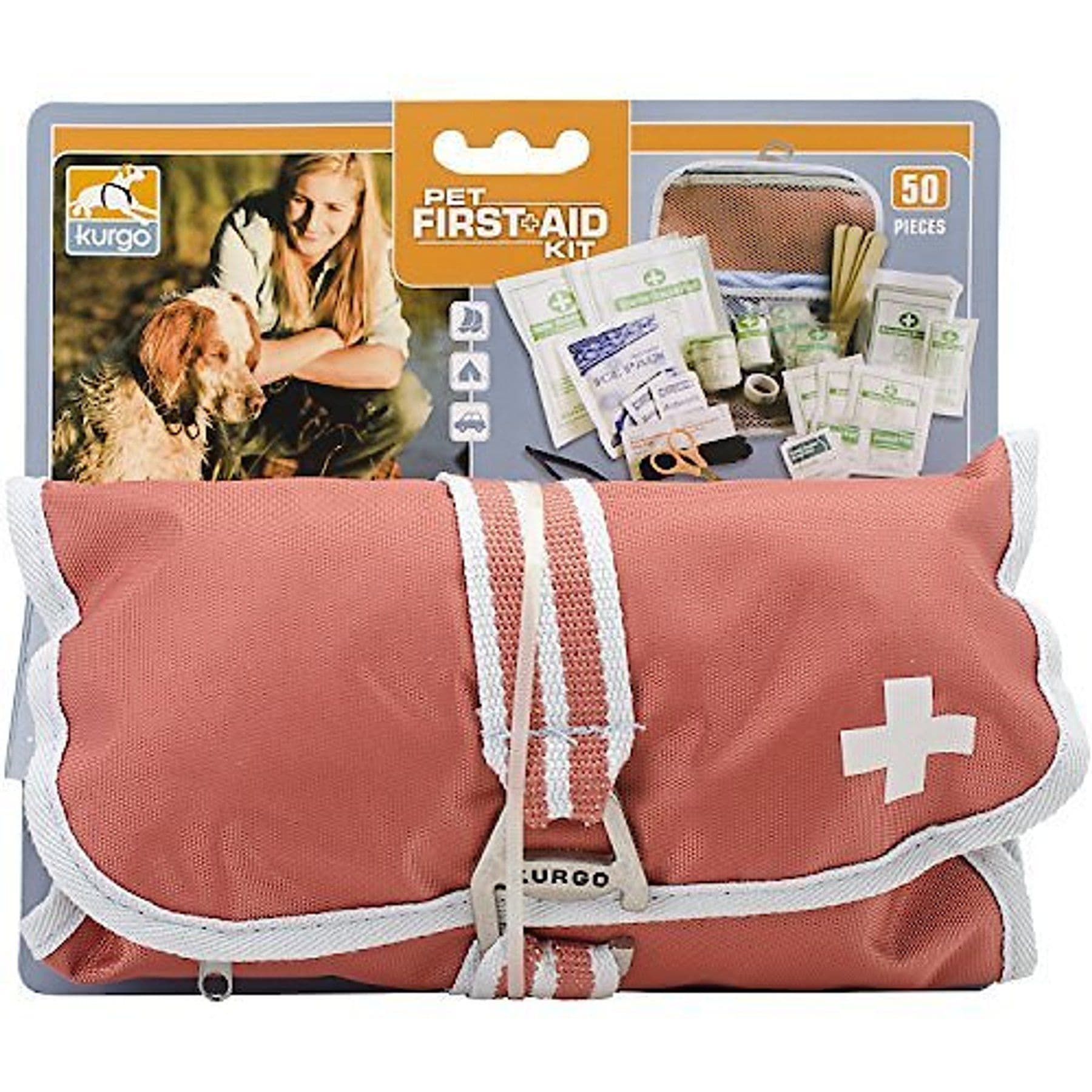
Keep gauze and gloves ready for the prescribed aftercare routine. Use only the supplies the clinic recommends; an abscess needs veterinary treatment.
Webvet may earn a commission when you click through to Chewy, at no extra cost to you.
The treatment depends partly on whether there is a pocket to drain. An abscess is a localized pus collection; cellulitis is infection spread through tissue. With cellulitis there may be painful swelling without a cavity that can be opened and emptied. VCA's fight-wound guidance explains this distinction, including why swelling on a tail or lower leg may behave differently from a loose-skinned area.
For a pocket abscess, drainage releases pus and flushing clears contamination. Removing the collection, treating infection, and addressing a retained object help the swelling subside. Antibiotics and pain relief support that work; they do not replace removal of trapped material. VCA's cat abscess overview describes these complementary parts of treatment.
Why the wound may stay open
Drainage, debridement, and closure are separate decisions. Debridement removes tissue too damaged to support repair. After cleaning, the vet decides whether the remaining tissue can be closed safely, needs a temporary drain, or should stay open while infection is controlled. The MSD Veterinary Manual describes contamination, tissue condition, and location as factors in that decision.
A ruptured abscess may have partly emptied while small infected pockets remain. The vet assesses the tissue beneath the opening, rather than assuming the visible hole provides adequate drainage. This is also why an undrained abscess should not simply be left to heal over on its own.
If a treated site keeps draining, two different investigations may help:
- Wound exploration looks for retained material, such as a tooth fragment or other debris, that keeps the site inflamed.
- Culture and sensitivity testing uses a sample to identify bacteria and guide antibiotic selection when infection is persistent or unusual.
One does not substitute for the other: a medication change cannot remove an object, while removal alone may not settle an established infection. Bring the medication history and describe whether the site ever became dry between episodes.
Ask the team to show you:
- Where discharge should exit and what output is expected.
- Exactly how to clean the site, with which solution and how often.
- How to give each medication and whom to call if dosing fails.
- When the drain, wound, or sutures need a recheck.
While planning home care, an appropriately sized Frisco Swirl Crate Mat can provide a removable resting surface in the recovery space. Keep it clean and dry and follow its care label. It is a comfort item, not a waterproof wound barrier or a treatment for infection.

Set up a clean, dry resting surface for recovery. Choose an appropriate size and follow its care label; bedding does not treat an infection.
Webvet may earn a commission when you click through to Chewy, at no extra cost to you.
Medicines and diagnosis boundaries
Do not give your cat leftover penicillin or choose an injectable antibiotic such as Convenia for cats yourself. The veterinarian selects the drug and route based on the case; persistent or unusual infection may need a bacterial culture. Tell the clinic if tablets are impossible to give safely so it can choose a workable treatment plan, rather than allowing missed doses to go unreported.
Use only prescribed pain relief. Human medicines can be dangerous, and acetaminophen must never be given to cats, according to the FDA's pet pain-reliever guidance.
Hydrogen peroxide will not cure a tooth-root abscess and should not be put in your cat's mouth. Facial swelling with eating difficulty may require dental assessment and treatment of the tooth itself; our guide to a cat's broken tooth explains that separate concern. Likewise, swelling beside the anus may involve cat anal glands, rather than a skin bite pocket. Tell the vet about the location instead of applying a generic abscess remedy.
Cat abscess treatment costs
There is no single fee for draining a cat abscess. A small uncomplicated pocket and a deeply damaged wound may need different levels of examination, anesthesia, cleaning, medication, and follow-up. Ask for an itemized estimate, including what could change after the vet examines the wound more thoroughly.
As a local US example checked September 30, 2026, Clarity Vet in Denver listed a cat-bite abscess bundle for cats at $626. Its wound-care description includes preoperative bloodwork, anesthesia, monitoring, pain management, surgical materials and the procedure, take-home medicines including antibiotics, and an E-collar. Chronic wound management is priced separately, and deeper concurrent injury or complex reconstruction may fall outside the outpatient service's scope.
| Itemized estimate component | Question to ask |
|---|---|
| Examination and initial tests | Is the consultation included, and which tests are needed? |
| Sedation or anesthesia | What monitoring and recovery care does the price cover? |
| Drainage and wound cleaning | Are exploration, damaged-tissue removal, and a drain included if needed? |
| Pain relief and antibiotics | Which medicines go home, and how are dosing problems handled? |
| Culture or additional diagnostics | What findings would make these necessary? |
| Follow-up | Are wound checks and drain or suture removal included? |
Urban Animal in the Seattle area posted an abscess estimate of $265–$900. Its category covers more than skin bite abscesses, including anal-gland cases. Smaller animals with minimal diagnostics fall toward its lower end; larger animals or additional diagnostics can increase the estimate. The posted line does not specify every bundle inclusion.
These examples are not a nationwide range or a quote for your cat. Ask specifically about consultation fees, repeat cultures, and extra rechecks because the cited pages do not resolve all of those charges. If payment is a barrier, say so when calling; delaying until the cat becomes very ill can change both the care needed and the options available.
After treatment: the recovery plan
Recovery should bring improving comfort, appetite, and energy, with swelling and discharge changing as the clinic expects. At discharge, establish whether your cat has an open drainage site, a drain, sutured skin, or a combination. That determines what you clean and what you leave alone.

The practical differences are:
- An intentionally open site: clean away discharge using the clinic's demonstrated solution and method. Confirm how often to clean and what to do if crust seals the opening while swelling returns.
- A drain: clean its exit holes as directed and attend the planned removal visit. Sutures nearby may be holding the drain or closing other parts of the wound; do not pull them or the tube.
- Closed, sutured skin: keep it dry and prevent licking or stretching. Do not bathe the cat or apply cleanser, cream, or the open-site cleaning routine unless directed. Report a gap between the edges or missing sutures.
VCA's surgical-incision guidance explains why a closed incision needs protection from moisture and movement even when a nearby drain needs cleaning. Have the clinic point out each area before you leave.
Keep your cat indoors with accessible food, water, and a litter tray, and check that the collar permits eating and drinking. Record medicines given, meals eaten, and changes in swelling or drainage. If your cat hides whenever care is due or cannot be medicated safely, contact the team for an alternative plan instead of struggling through painful restraint or silently missing treatment.
Our cat abscess healing stages guide explains the expected changes and the limits of pictures or day counts. Bring the cat back if progress stalls or drainage recurs: a retained foreign body, unusual infection, or another underlying issue may require investigation. The recheck helps confirm that apparent surface improvement matches recovery underneath.
Cat abscess questions
Frequently Asked Questions
Will a cat abscess heal on its own?
Do not rely on spontaneous healing. Even after a pocket bursts, infected material may remain beneath the skin. A veterinarian needs to assess the cause, drainage, and your cat's general condition. Call promptly if you find a swelling or draining wound, and seek urgent care for a cat becoming weak or seriously unwell.
Will salt draw out an abscess?
Salt applied directly or in a strong homemade soak is not a reliable way to treat an abscess and may cause irritation. Gentle saline cleaning of surface discharge is a different purpose. Ask the vet for cleaning instructions rather than trying salt, Epsom salts, or another drawing remedy to empty the pocket.
What is mistaken for an abscess?
A cyst, another skin mass, or an inflamed or injured area may resemble an abscess. Facial swelling may also have a dental source. Appearance alone cannot settle the diagnosis; the veterinarian may need a sample or further tests. Do not squeeze a lump to see what comes out, because that does not safely identify it.
How quickly can an abscess turn to sepsis?
There is no safe countdown an owner can use to predict sepsis from a lump or photograph. A cat with a suspected abscess and marked weakness, worsening lethargy, or other illness needs urgent veterinary advice. Collapse or breathing difficulty requires emergency care. Do not wait for the abscess to burst or for a particular number of hours.
What should I do for a feral cat with an abscess?
Call a clinic and an experienced community-cat or rescue group to arrange humane trap assistance and treatment. Explain the visible wound and whether the cat is eating or moving normally. Confirm the clinic can receive a trapped cat before capture. Do not attempt hands-on drainage or open a trap to examine the wound yourself.
$65 · no membershipIs your cat's itching or skin issue getting worse?
A licensed vet can examine your cat over video and prescribe treatment online when it's appropriate.
Talk to a vet- Licensed vets
- All 50 states
- same-day Rx
Webvet may earn a commission if you book.
Veterinarian · BVMS MRCVS
Dr. Pippa Elliott, BVMS, MRCVS, is a veterinarian with nearly 30 years of experience in companion animal practice. Dr. Elliott earned her Bachelor of Veterinary Medicine and Surgery from the University of Glasgow. She was also designated a Member of the Royal College of Veterinary Surgeons. Married with 2 grown-up kids, Dr. Elliott has a naughty Puggle named Poggle, 3 cats and a bearded dragon.


