Cat Anal Glands: Problem Signs, Causes, and Treatment
Cats have anal glands too, and they can become impacted, infected, or abscessed. Learn the subtle feline signs (overgrooming, scooting, smell), the risk factors you can control, and how vets treat each stage.

BVMS MRCVS
Medically reviewed by Dr. Pippa Elliott, BVMS MRCVS · Last reviewed

This article contains affiliate links. Webvet may earn a commission when you buy through them, at no extra cost to you.
Cat anal glands are two small scent sacs that sit just inside the anus, and yes, cats can have problems with them: impaction, infection, and even abscesses. Feline anal gland disease is far less common than the canine version, though, and the signs are subtler.
Instead of dramatic scooting, many cats simply overgroom the fur around their rear.
This guide covers what these glands do, the signs cat owners actually see, the risk factors that make trouble more likely, how the disease progresses, and what treatment at the vet involves.
The single most useful thing to know upfront: because feline signs are so quiet, the goal is prevention and early detection, not heroic home treatment. Manage the risk factors, learn the one or two subtle signs a cat actually shows, and get to a vet before an impaction becomes an abscess.
- 1All cats, male and female, have two anal glands that normally empty on their own during bowel movements.
- 2Feline signs are subtle: overgrooming the rear, scooting, a fishy smell, or discharge near the anus.
- 3Obesity, chronic soft stool, and senior age are the main risk factors for impaction in cats.
- 4Impaction can progress to infection and abscess, which is a same-day vet problem.
- 5Cats rarely need routine expression; home expression is generally not appropriate for cats.
 Sponsored
Have a health question about your cat?
Talk to a licensed vet at Dutch over video or message, including nights and weekends.
Use code Pets30
Plans start at $11/month · covers up to 5 pets
- Licensed vets in most states
- Rx for 150+ conditions
- 4.7 on Trustpilot
What are cat anal glands?
Cat anal glands (technically anal sacs) are two pea-sized pouches located just under the skin at roughly the 4 and 8 o'clock positions beside the anus.
Each sac is lined with glands that produce a pungent, oily fluid used for scent marking and territorial signaling, and each drains through a narrow duct that opens at the edge of the anus.

Kittens are born with working anal glands, and gland size scales with the cat: in an adult each sac is roughly pea-sized, far smaller than a dog's, which is part of why feline expression is a more delicate job.
Every cat has them: female cats have anal glands just like males, and spaying or neutering does not remove them. In a healthy cat, the pressure of a firm stool passing through the anus squeezes a little fluid out of each sac with every bowel movement, so the sacs never overfill.
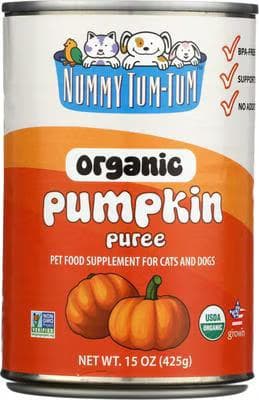
Pure USDA-organic pumpkin puree, no fillers or additives. Adds gentle soluble fiber to firm up loose stool and settle a mildly upset stomach. A simple vet-favorite topper.
Webvet may earn a commission when you click through to Chewy, at no extra cost to you.
A small amount of brownish discharge released during a bowel movement, a big stretch, or a fright is normal and nothing to worry about on its own.
Problems start when a duct clogs or the fluid thickens, and the sac can no longer empty. Trapped secretions build up, the sac stretches, and the stage is set for impaction and infection.
What the fluid is for
The scent function explains a few odd cat moments. A sudden fishy blast during a vet visit or a scare is the glands releasing under stress, and some of the sniffing ritual when cats greet each other is anal gland chemistry at work. The fluid is part of how cats sign their territory.
Do not confuse gland fluid with urine spraying. Spraying is a deliberate marking behavior involving urine on vertical surfaces; anal gland fluid arrives passively, with bowel movements or under stress. A fishy smell without any wet marking points to the glands, not a behavior problem.
When normal turns into trouble
You will not see healthy glands by looking. They sit under the skin and are only visible when something is wrong: a bulge, redness, or a draining hole beside the anus all mean disease, not normal anatomy.
The weak point in the system is the duct. Each one is barely a millimeter wide, so it does not take much for thickened fluid, inflammation from skin disease, or debris to plug it. Once the duct seals, the sac keeps producing fluid with nowhere to send it.
Signs of anal gland problems in cats
The most common signs of anal gland problems in cats are overgrooming the rear, scooting, a sudden fishy odor, and visible licking or discomfort around the tail base. Cats hide pain well, so these signs are often mistaken for hairballs, litter box pickiness, or a skin problem.
The dog-owner instinct is to wait for scooting, but many cats never scoot at all. A cat's flexible spine lets it reach the irritated area directly with its tongue, so the discomfort shows up as focused, repetitive grooming of one spot near the tail base instead.
Timing offers another clue. Grooming driven by gland pressure often spikes right after the cat uses the litter box, when a bowel movement has jostled the full sac. A cat that hops out of the box, sits abruptly, and starts licking its rear is telling a fairly specific story.
How can you tell if your cat needs its glands expressed? Watch for the issues above appearing together: overgrooming plus a fishy smell, or scooting plus litter box straining, is your cue to book the exam.

A real-world example
A typical case reads like this: an owner notices her 11-year-old indoor cat licking the base of his tail every evening, then finds a thinning stripe of fur there a week later. She assumes fleas, treats for them, and nothing changes.
At the vet, the flea comb comes up clean, the skin looks unremarkable, and the rectal exam finds one firm, distended anal sac. One expression later, the evening licking stops. That detour through flea treatment is extremely common, and it is why the rear-end exam belongs early in the workup.
Watch for:
- Overgrooming or barbering the fur around the hindquarters and tail base, sometimes to bald patches
- Scooting or dragging the bottom across the floor (less common in cats than dogs)
- A strong fishy smell from the cat or its favorite sleeping spots
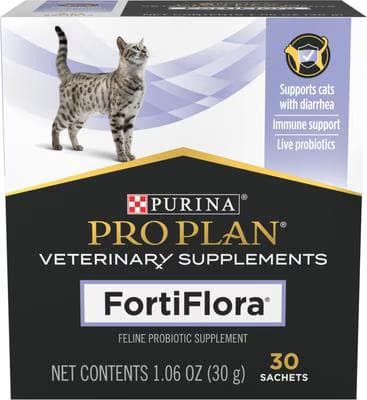
The #1 vet-recommended probiotic for cats. Daily powder sachets support healthy digestion and firmer stools, and can help cats coping with diarrhea or GI upset.
Webvet may earn a commission when you click through to Chewy, at no extra cost to you.
- Brownish or bloody discharge near the anus or on bedding
- Straining in the litter box, or avoiding the box because pooping hurts
- Swelling, redness, or heat on one side of the anus
- Growling, flinching, or hiding when the tail area is touched
Because overgrooming is the standout feline sign, anal gland trouble is frequently misread as allergies or dermatitis.
If your cat is licking one specific spot near the rear raw, it is worth ruling glands in or out before treating the skin; our guide on how vets diagnose cat skin problems explains how vets separate the two.
Cats that hide discomfort may show only subtle behavior shifts, the kind covered in the Cornell Feline Health Center's owner resources at the Cornell Feline Health Center.
SponsoredVet care that's always there
Unlimited video calls and messaging with licensed vets for less than a typical vet visit. One membership covers up to five pets.
Use code Pets30
Plans start at $11/month · covers up to 5 pets
- Licensed vets in most states
- Rx for 150+ conditions
- 4.7 on Trustpilot
Impaction, infection, and abscess: how cat anal gland disease progresses
Feline anal gland disease follows the same ladder as the canine version: impaction (a blocked, overfull sac), then infection (bacteria multiplying in trapped fluid), then abscess (a painful pocket of pus that can rupture through the skin).
The Merck Veterinary Manual's chapter on disorders of the rectum and anus in cats describes this spectrum, noting anal sac disease is much less frequent in cats than in dogs.
Why cats are more resistant is not fully settled. Contributing factors likely include feline anatomy, generally firmer stool on meat-based diets, and lower rates of the allergic skin disease that inflames canine ducts. Less frequent does not mean milder, though: a feline abscess is every bit as painful as a canine one.
What each stage looks like
An impacted sac feels firm and distended, and the cat grooms or scoots in response to the pressure. Once infected, the area turns tender and the discharge changes from brown to yellowish or blood-tinged.
An abscess appears as a hot, swollen lump beside the anus; when it ruptures, you will find an open draining wound. A swollen or draining rear end is a same-day veterinary visit for a cat, no exceptions.
The reason to move fast is that each rung of the ladder is harder to treat than the last. An impaction is a one-minute expression; an abscess is sedation, lancing, days of medication, and a wound to nurse. The cat pays for the delay in pain, and you pay for it at the register.
Stage by stage in cats
Impaction: the trapped fluid thickens from liquid to paste over days to weeks. The cat grooms the area more, may sit oddly or interrupt naps to lick, and you might catch a faint fishy smell. Caught here, treatment is a quick expression at the vet.
Infection: bacteria take hold in the stagnant fluid. The gland area turns tender, the cat may resent being petted near the tail, and any discharge looks yellowish or blood-tinged. Infection needs expression plus flushing and medication within a day or two.
Abscess and rupture: pus builds until a hot, painful lump forms beside the anus, and cats at this stage often stop grooming entirely, hide, and go off food, because the area now hurts too much to touch. If the abscess bursts, it leaves an open draining wound.
Both are same-day problems: the wound needs professional cleaning, antibiotics, and pain control to heal properly.
Why cats often skip to the abscess stage
Because cats hide illness, an abscess is sometimes the first sign an owner notices, with the impaction and infection stages having passed silently. That is normal, not a failure of observation; it is also why the risk-factor checklist below matters more for cats than symptom-watching alone.
The timeline from impaction to abscess can run anywhere from days to weeks, and there is no reliable way to predict where an individual cat sits on that spectrum. Treat any confirmed fullness or tenderness as a this-week vet visit rather than something to monitor.
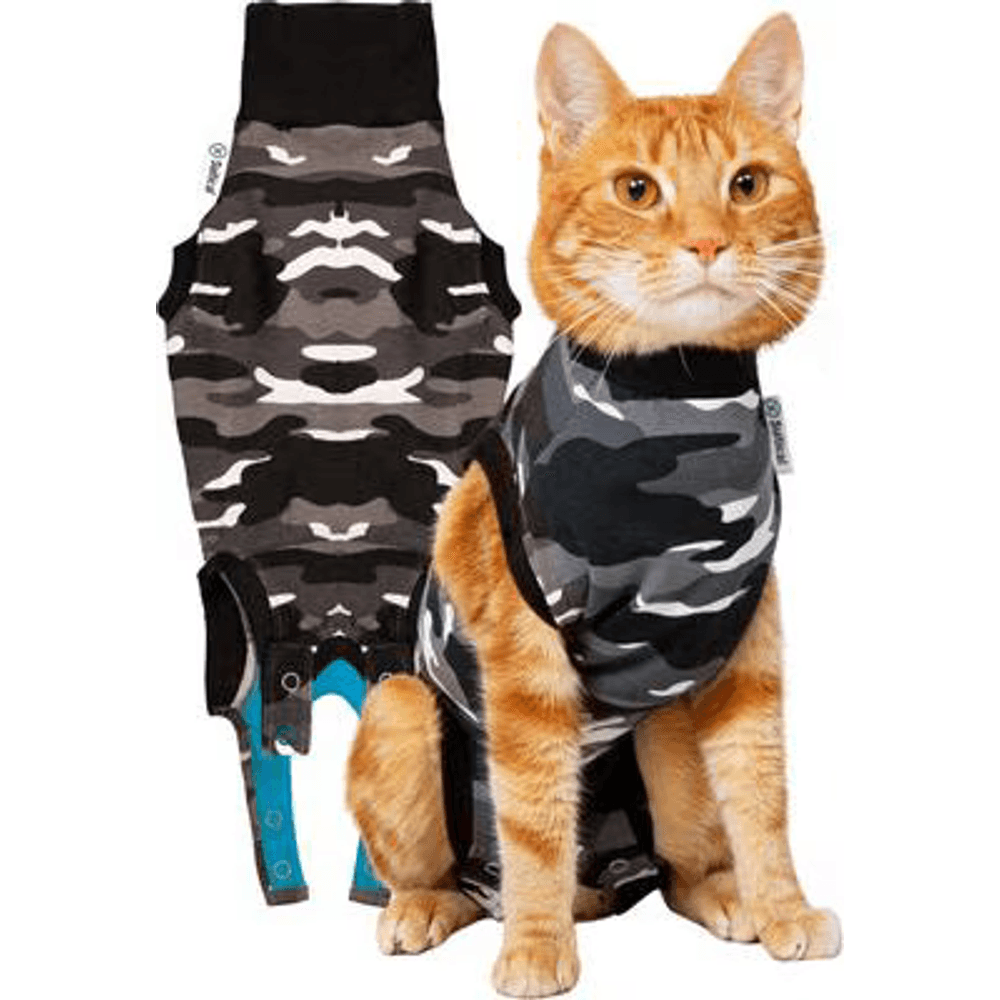
A breathable full-body recovery suit made for cats, the vet-recommended cone alternative that covers a spay or abdominal incision so a cat cannot lick or scratch the wound while she still moves, uses the litter box, and rests in comfort.
Webvet may earn a commission when you click through to Chewy, at no extra cost to you.
Senior cats deserve extra vigilance here. Aging brings the weaker muscle tone and irregular digestion that drive impaction, while arthritis makes grooming the rear harder, muting the one sign cats reliably show. Ask for a gland check as a standing part of every senior wellness exam.
Risk factors you can actually control
Most feline impactions trace back to a short list of risk factors, each with a prevention step:
- Obesity: extra fat around the rear reduces the muscle tone that helps sacs empty. Prevention: a measured-portion weight plan with your vet.
- Chronic soft stool or diarrhea: soft stool never presses the sacs empty. Prevention: diagnose and treat the digestive cause, and ask about adding fiber (a small spoonful of plain canned pumpkin works for many cats).
- Senior age: older cats have weaker muscle tone and more digestive irregularity. Prevention: twice-yearly senior exams that include a rear-end check.
- Recurrent gland history: a cat that has had one impaction is more likely to have another. Prevention: periodic vet checks of the sacs rather than waiting for signs.
Hydration quietly supports all of these. Cats on all-dry diets with low water intake tend toward firmer-then-harder stool and constipation, while well-hydrated cats pass the regular, formed stool that keeps the sacs emptying. Wet food, extra water stations, or a fountain are simple upgrades for a gland-prone cat.
For an overweight cat, the weight plan is the highest-value move on the list. Work with your vet toward slow, steady loss, roughly 1 to 2 percent of body weight per month, using measured meals rather than free feeding. Rapid starvation dieting is dangerous for cats.
The payoff compounds: the same weight loss that restores gland emptying also lowers the cat's risk for diabetes, arthritis strain, and grooming difficulty. Gland trouble is often the first visible symptom of a weight problem the whole body is carrying.
Watch the litter box
Build one more habit while you are at it: glance at the litter box as you scoop. Stool consistency is the daily readout of everything above, and a shift toward chronically soft or hard stool is your earliest, cheapest warning that the glands may stop emptying soon.
Soft stool and weight are the two levers most owners can move. Older cats with ongoing loose stool deserve a proper workup; our guide to senior cat digestive problems covers the common causes and fixes that also protect the anal glands.
For cats with chronically inconsistent stool, ask your vet about a feline probiotic such as FortiFlora alongside the fiber.
How vets diagnose feline anal gland problems
Diagnosis starts with a rectal exam to feel whether the sacs are full, thickened, or painful, and a look at the expressed material: thick brown paste points to impaction, while yellow-green or bloody fluid means infection.
For recurring cases the vet may examine the fluid under a microscope or culture it to choose the right antibiotic.
The exam also rules out imposters. Overgrooming near the rear can be flea allergy, food allergy, or dermatitis; a lump beside the anus can rarely be a tumor (anal sac adenocarcinoma) rather than an abscess. That differential is exactly why a first-time swelling gets a vet exam, not a warm compress at home.
If the overgrooming turns out to be allergy rather than glands, the workup does not end; it just shifts. Your vet may recommend strict flea control, a food trial, or skin testing, since chronic allergic itch near the rear is common in cats and needs its own long-term plan.
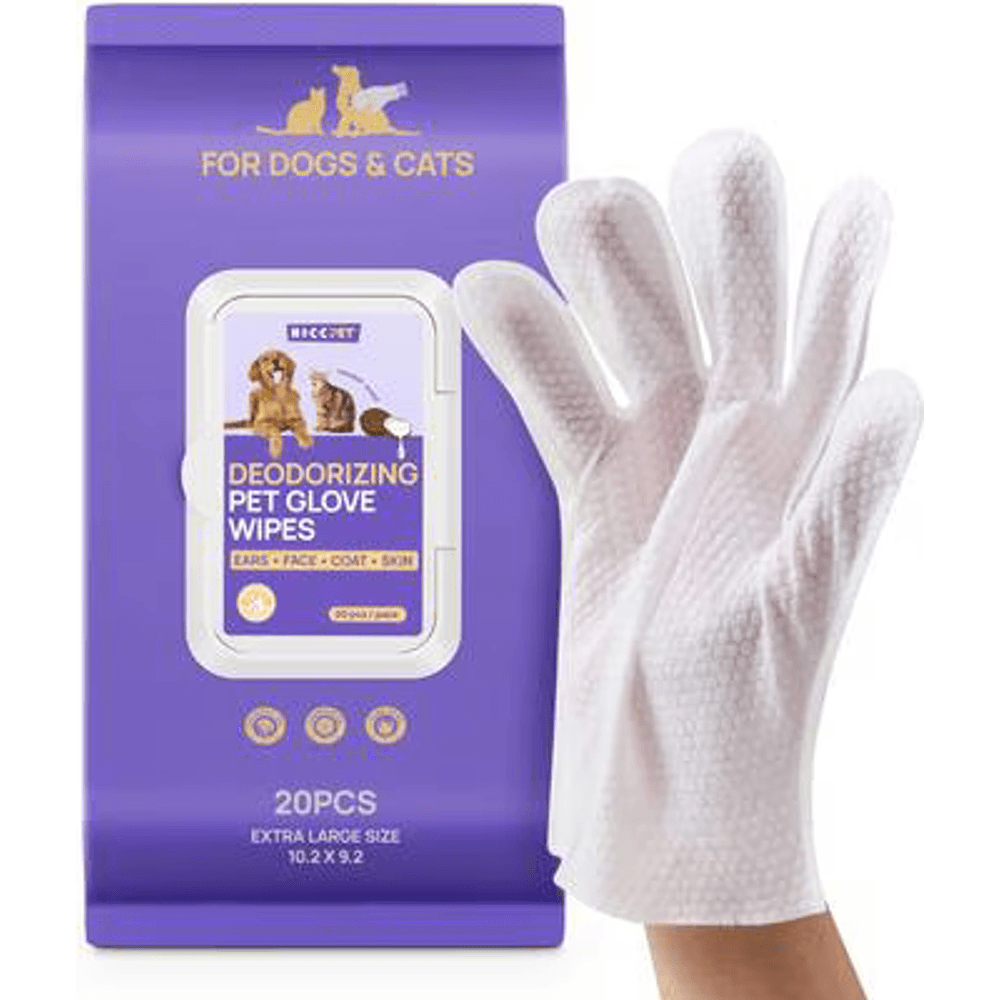
Wearable glove wipes that let you freshen and wipe down a dog's or cat's coat and skin without a full bath, while a fabric layer stays between your hand and the pet.
Webvet may earn a commission when you click through to Chewy, at no extra cost to you.
Come to the appointment with specifics: when the grooming started, whether it follows litter box trips, any smell you have noticed, and photos of bald patches or swelling. Cats rarely perform their symptoms in the exam room, so your observations often carry the diagnosis.
Treatment: how vets handle cat anal gland problems
Is it painful for cats to have their glands expressed? Expression of a simply full gland causes only mild, momentary discomfort, and most cats tolerate it with basic restraint.
An infected or abscessed gland is a different story: the area is genuinely painful, so vets often use sedation for flushing or lancing rather than forcing a painful procedure on an awake cat.
Sedation for a painful feline gland procedure is a kindness, not an upsell. A struggling cat cannot be treated thoroughly, and a rough awake experience makes every future vet visit harder.
If your vet recommends it for an abscess, the extra cost buys a complete flush and a cat that does not learn to fear the clinic.
What the visit looks like
A simple expression visit is quick: exam, a brief rectal check, the expression itself, and a look at the fluid, usually inside 20 minutes. If infection is suspected, expect the vet to flush the sac and send you home with an oral antibiotic and pain medication.
For a cat with a documented recurring problem, the vet may set a recheck interval, often every few months, and pair it with the diet and weight work below. The goal of good management is to make the rechecks boring: glands found soft, nothing expressed, see you next quarter.
Treatment matches the stage:
- Impaction: manual expression by the vet, sometimes with a softening flush if the material is pasty
- Infection: expression plus flushing, antibiotics, and anti-inflammatory pain relief
- Abscess: lancing and draining under sedation, flushing, antibiotics, pain control, and a cone or recovery suit to stop licking
- Chronic recurrent disease: rarely, surgical removal of the sacs (anal sacculectomy)
VCA Animal Hospitals' clinical explainer on anal sac disease in cats emphasizes that expression is done when there is a problem, not as routine feline maintenance. That is a key difference from dogs: healthy cats should not be on a standing expression schedule, and repeated unnecessary expression can inflame the ducts.
What feline treatment costs
Costs track the stage, much as they do for dogs.
A simple expression typically runs $20 to $50 plus the exam fee; infection care with flushing and medication commonly lands between $100 and $350; and abscess treatment with sedation, lancing, and follow-up usually runs $200 to $600, more at emergency hospitals. Early visits are cheap insurance.
Recovery and aftercare at home
After treatment, give every dose of prescribed medication even once your cat seems fine, and keep the tongue off the site with a cone or a soft recovery suit, which many cats tolerate better. Scoop the litter box daily and consider a low-dust litter while a wound heals, since litter particles can contaminate the site.
Most lanced abscesses close within 1 to 2 weeks. Expect a recheck so the vet can confirm the wound is healing from the inside out, and call sooner if you see fresh swelling, spreading redness, a bad smell, or a cat that stops eating or hides more than usual.
Getting back to normal
Keep the recovering cat indoors and give it a quiet, low-traffic room if the household is busy. Appetite is your best daily health meter during recovery: a cat that eats normally is almost always healing on schedule, while a skipped day of meals warrants a call.
Once the recheck clears the site, let normal life resume gradually: play sessions first, outdoor access (if any) last. Keep the recovery suit or cone until the vet explicitly says it can come off, because one determined grooming session can reopen a nearly healed wound.
How cats differ from dogs
Cats and dogs share the same anal sac anatomy, but the disease behaves differently. Problems are much less frequent in cats, the signature sign shifts from scooting to overgrooming, and routine expression has no place in feline care.
For the canine side, including why some dogs need regular expressions, see our full guide to dog anal glands.
The reason routine expression is normal for some dogs but not cats comes back to frequency and anatomy. Enough dogs, especially small breeds, have glands that fail to empty on their own that scheduled expression became a standard service.
Cats almost never fall into that group, so a schedule for a healthy cat solves a problem it does not have.
That single difference reshapes the whole owner playbook. A dog owner may reasonably learn home expression and keep supplies on hand; a cat owner's job is almost entirely watching for the subtle signs and getting to the vet, not managing glands hands-on at home.

| Cats | Dogs | |
|---|---|---|
| How common are problems | Uncommon | Common, especially small breeds |
| Hallmark sign | Overgrooming the rear | Scooting |
| Other signs | Subtle: smell, hiding, litter box avoidance | Obvious: licking, dragging, straining |
| Routine expression needed | No; only when a problem exists | Sometimes, for chronic recurrent cases |
| Home expression | Rarely appropriate | Possible externally, with vet guidance |
The practical takeaway: a dog owner watches for scooting, but a cat owner should watch the grooming. A cat obsessively licking one patch near its tail is telling you something, and because cats mask pain so effectively, subtle changes deserve attention early.
Note the pattern, snap a photo of any bald patch or swelling, and bring both to the appointment; a clear timeline shortens the diagnostic path. Our guide on how to tell if a cat is in pain covers the other quiet signals worth knowing.
The species gap also shows up at the groomer: gland expression is a standard canine grooming add-on, but you will rarely see it on a feline groom menu, because in a healthy cat there is simply nothing to express.
FAQ: cat anal glands
Frequently Asked Questions
Do female cats have anal glands?
Yes. All cats, male and female, intact or fixed, have two anal glands. Spaying and neutering do not remove or affect them. Both sexes can develop impaction, infection, and abscesses at similar rates.
What does cat anal gland discharge look like?
Normal discharge is a small amount of thin, brown, strong-smelling fluid released during bowel movements or moments of fear. Thick paste, yellow-green pus, or blood-tinged fluid signals impaction or infection and warrants a vet visit.
Why does my cat suddenly smell fishy?
A sudden fishy odor usually means anal gland fluid has leaked onto the fur, either from a startle release or from overfull glands seeping. Occasional leakage after a fright is normal. A persistent smell, especially with overgrooming or scooting, points to glands that are not emptying properly.
Can I express my cat's anal glands at home?
It is rarely a good idea. Cats resist rear-end handling, their glands are small and easily injured, and squeezing an infected gland makes things worse. Let your vet confirm the glands are actually the problem and empty them safely, then focus your effort on the controllable risk factors: weight and stool quality.
How often do cats need their anal glands expressed?
Healthy cats never need routine expression; the glands empty naturally with each bowel movement. Only cats with an active problem (impaction, infection, or a documented recurring issue) need help, on a schedule your vet sets. A standing expression appointment for a symptom-free cat does more harm than good.
Can anal gland problems in cats be a sign of something serious?
Usually not: most cases are impaction or infection and resolve with treatment. Rarely, a firm swelling near the anus is anal sac adenocarcinoma, a tumor of the gland tissue, which is one reason any new lump in that area should be examined by a vet rather than watched or squeezed at home.

Editor
The Webvet Editorial Team is the in-house group of pet-care editors and writers behind Webvet, operated by Smart Pet Collective. The team researches, writes, and maintains Webvet's pet health, behavior, and medication content. Every article follows a defined editorial process: research from reputable veterinary and scientific sources, careful drafting, mandatory review of medical content by a credentialed veterinarian, and dated publication. Health and medication articles are medically reviewed by a licensed veterinary professional before they go live and are kept current over time.
Veterinarian · BVMS MRCVS
Dr. Pippa Elliott, BVMS, MRCVS, is a veterinarian with nearly 30 years of experience in companion animal practice. Dr. Elliott earned her Bachelor of Veterinary Medicine and Surgery from the University of Glasgow. She was also designated a Member of the Royal College of Veterinary Surgeons. Married with 2 grown-up kids, Dr. Elliott has a naughty Puggle named Poggle, 3 cats and a bearded dragon.
Related reading

Cat Cremation Cost: Private, Communal, and Additional Charges

Cat Euthanasia Cost: Clinic, At-Home Care, and Aftercare

Dog Microchip Cost: Implantation, Registration, and Ongoing Fees
