Cat Abscess Healing Stages: Drainage, Care, and Rechecks
Understand recovery after a cat abscess is treated, from drainage and shrinking swelling to skin closure. Use a daily aftercare checklist, protect an open wound or drain, and recognize when a recheck is needed.

BVMS MRCVS
Medically reviewed by Dr. Pippa Elliott, BVMS MRCVS · Last reviewed

This article contains affiliate links. Webvet may earn a commission when you buy through them, at no extra cost to you.
Cat abscess healing stages after veterinary treatment generally involve drainage of the infected pocket, decreasing swelling and discomfort, repair of damaged tissue, and eventual skin closure. The stages overlap. An opening can be part of the treatment plan, while a closed surface can sometimes conceal continuing infection.
This guide is for the recovery period after your cat has been examined and treated. Watch appetite and comfort alongside the wound itself. If a lump has just appeared or burst and has not been assessed, contact a veterinarian rather than assuming that drainage means recovery has begun safely.
Cat abscess healing stages after treatment
An abscess is getting better when swelling decreases, your cat becomes more comfortable and eats better, and drainage follows the course your veterinarian described. The wound opening should ultimately repair, but immediate closure is not always desirable. Some sites are deliberately left open so fluid can escape while the infection is treated.
Look for less swelling, improving comfort and appetite, and drainage that decreases as expected after treatment. Skin closure alone does not prove recovery. Renewed swelling, worsening discharge, or a cat that becomes unwell needs a recheck, even if the opening is smaller.
- Drainage and early improvement: Treatment first removes pus and contaminated material from the pocket. The space does not become normal skin the moment it is emptied: inflammation and tissue damage still need to resolve. An opening or temporary drain gives remaining fluid a way out while that happens. It can look larger than the original bite puncture because the veterinary team has created access for treatment.
At this point, judge improvement partly by how the cat feels. Returning to meals, resting without repeatedly shifting away from the sore area, and showing more usual interest in you are useful observations. Pain medication and recovery from sedation can also affect behavior, so record medication times and follow the clinic's advice about what to expect after the procedure.
A Dogswell Remedy+Recovery rigid E-collar may help protect the treated site if it fits your cat and actually prevents access to the wound. Have the clinic check the fit and watch your cat move, eat, and drink with it. A collar that can be bypassed needs adjustment or a different plan.

A rigid collar option to discuss with your clinic for protecting the treated site. Correct fit matters, and your cat must be unable to reach the wound.
Webvet may earn a commission when you click through to Chewy, at no extra cost to you.
| Recovery change | What is happening | What to monitor |
|---|---|---|
| Drainage after treatment | Pus has been removed; an opening or drain allows remaining fluid to escape | Amount and character of drainage before cleaning |
| Swelling and comfort | The local inflammatory response settles as treatment takes effect | Whether swelling decreases and normal meals and comfortable rest return |
| Repair of the opening | Living tissue develops in the damaged area | Whether the exposed area gradually becomes smaller without renewed swelling |
| Skin closure | New skin covers the repairing surface | Whether closure occurs alongside improvement rather than over a refilling lump |
| Return to routine | The wound and the cat recover enough for restrictions to change | The clinician's assessment of healing, not just hair regrowth or a dry surface |
- Repair tissue: Once conditions support repair, new small blood vessels and supporting cells form granulation tissue in the wound. This living tissue helps fill the defect left by injury and treatment. Its moist pink or reddish surface differs from fluid lying on top of the wound. It can be damaged by scrubbing, so the purpose of prescribed cleaning is to manage discharge, not remove the repair bed. Merck describes this granulation process and the skin growth that follows.

- Skin closure: New surface cells spread over a suitable wound bed as repair progresses. An open site may therefore look shallower or narrower before it is fully covered. A sutured site begins with its edges already held together, so the amount of exposed repair tissue is different. Neither appearance alone shows how much healing has occurred in the pocket below the skin.

A Frisco Swirl crate mat can be a removable resting surface in a suitable recovery space. Keep it dry and clean according to its care label, and check it for drainage. It is not a sterile wound covering, an antimicrobial treatment, or a reason to skip the prescribed cleaning routine.

A removable resting surface for a quiet recovery area. Keep it dry and clean and check for drainage; it is not a sterile covering or infection treatment.
Webvet may earn a commission when you click through to Chewy, at no extra cost to you.
The wound views illustrate separate appearances, not a sequence from one cat. Use them to distinguish an exposed healing opening from skin closure. Later, the supporting tissue continues to reorganize and gain strength beneath the covering. This is why a clinic may stop cleaning an opening but continue collar use or activity restrictions until the next assessment.
Refilling, repeated abscesses, and “drying it out”
An abscess that keeps coming back may not have fully resolved, may contain foreign material, or may follow another bite at a similar location. Preventing refilling depends on adequate veterinary drainage and treatment of the cause. At home, protect the site and follow medication and cleaning instructions; do not squeeze a returning lump or try to reopen it yourself.
If it recurs, book a reassessment and explain whether it is the same site, when drainage stopped, and whether your cat had access to other cats. Persistent drainage may lead to investigation for a foreign object or an unusual infection. VCA's fight-wound guidance explains why an apparently healed bite can need further testing or exploration.
- What dries it up: Successful treatment of the infection and appropriate healing should eventually reduce drainage. Powders, sealing ointments, or forced drying are not substitutes for that process.
- What stops refilling: Addressing the source and maintaining the veterinarian's intended drainage, not repeatedly expressing pus at home.
- Whether salt draws it out: Do not pack salt into an abscess or rely on salt or Epsom-salt remedies to drain it. A clinician-approved cleaning solution is a different use from trying to extract infection.
How long should recovery take?
For many uncomplicated abscesses, recovery after appropriate treatment is measured in days, while full wound care can extend beyond that first improvement. VCA describes most appropriately treated abscesses as healing within five to seven days. The same guidance describes complete tissue healing and removal of remaining sutures at about two weeks. Use these as context for the clinic's plan, not a promise that every opening closes within a week.
These time points answer different questions. Early recovery concerns control of infection, settling swelling, and a cat that feels better. Tissue healing concerns the treated opening and damaged area repairing enough for aftercare to end. Drain removal is another checkpoint within that course; removing a drain does not certify that the whole wound has healed.
- A small, drained skin abscess: Look for the improvement expected by the clinic over the next several days, even if a cleaning routine is still needed.
- A larger wound with tissue removed or sutures placed: Expect a separate plan for wound checks and any suture removal; the five-to-seven-day reference does not replace it.
- Diffuse tissue infection, or cellulitis: Swelling can take longer to settle than a simple drained pocket. It is a different pattern of infection, not a lump an owner should try to empty.
If improvement is poor after a few days of treatment, arrange reassessment. If the trend worsens earlier, call then. A cat that is less painful but still has a small prescribed drainage opening presents a different question from one whose swelling returns after drainage stops. Report which of those changes you are seeing rather than simply asking whether the wound has reached a particular day.
Establish the next milestones
Before you leave, ask the clinic to distinguish:
- The period when an open site is expected to drain.
- The next examination and, if applicable, drain-removal appointment.
- The prescribed medication course.
- When the team expects skin closure and can reconsider restrictions.
There is no safe survival countdown for an untreated cat abscess. Infection can spread or make a cat seriously ill, and a cat's outward appearance cannot predict how long it is safe to wait. A newly suspected abscess needs prompt veterinary contact. Collapse, breathing difficulty, or profound weakness warrants emergency care rather than home observation.
Caring for an open wound or drain
First identify the treatment path on your discharge sheet: an intentionally open wound, a drain, a sutured closure, or a combination. For example, a cat can have a sutured incision and a separate opening for its drain. Marking which site receives which care avoids applying open-wound cleaning instructions to the closed incision.
Keep transport ready for planned follow-up. An appropriately sized Frisco Travel Safety carrier provides a way to bring your cat to the clinic securely. Confirm that your cat can use it comfortably with the prescribed collar and that positioning does not put pressure on the painful area.

Plan secure transport for follow-up appointments with a carrier sized appropriately for your cat and prescribed collar, without pressure on the painful area.
Webvet may earn a commission when you click through to Chewy, at no extra cost to you.
The VCA fight-wound aftercare guidance gives the following reference routines. Your own veterinarian's solution, frequency, and stop date take priority:
- An intentionally open site: The source describes gentle cleaning twice daily for two to three days after drainage, using warm water and gauze, cotton, or a washcloth. The purpose is to clear accumulating discharge and keep the prescribed drainage route functional. Ask the team to demonstrate the contact and pressure it wants; do not probe the pocket or squeeze it.
- Drain openings: The source describes cleaning twice daily for two to five days, or until removal. This is a cleaning reference, not a universal date for removing a cat's drain. The veterinary team decides when drainage is no longer needed.
- A sutured closure: Use the incision-specific instructions. Do not try to keep the joined edges open or lift a scab because you saw instructions for an open abscess. If a drain is also present, clarify how to clean around its openings while protecting the closure.
A warm compress may be included in an individual plan to help with gentle cleaning. Confirm its temperature, duration, and frequency with the clinic. Set out the prescribed supplies before bringing your cat over, use a comfortable position that avoids pressure on the sore area, and stop if pain makes handling unsafe. A shorter clinic-assisted care visit is preferable to a struggle that damages the site.

Follow the drain-specific instructions
A drain is a temporary route for fluid, not material that the body must absorb. Its removal visit allows the team to judge the output and the wound together. Little visible fluid can mean less is being produced, but little fluid plus renewed swelling raises a different concern. Describe both observations when contacting the clinic; do not test the tube by pulling, pushing, or flushing it.
Clarify four details before doing drain care:
- Which parts of the surrounding skin to clean and which to leave alone.
- The exact solution and frequency the clinic wants you to use.
- What amount and type of discharge the team expects.
- How to respond if the tube shifts, comes out, or drainage changes unexpectedly.
Use only the cleaning products your veterinarian recommends. Hydrogen peroxide can delay healing, and disinfectants containing phenols are toxic to cats. Avoid improvised disinfectant dilutions or household cleaning products near the wound. A product marketed for pets is still not automatically appropriate for this wound, this drain, or this stage of treatment.
Basic supplies such as gauze and gloves can be kept together in a Kurgo Pet First Aid Kit for the tasks your clinic has demonstrated. The kit does not make home lancing or drain manipulation safe. Its alcohol and iodine pads are not permission to apply those substances to your cat's open wound.
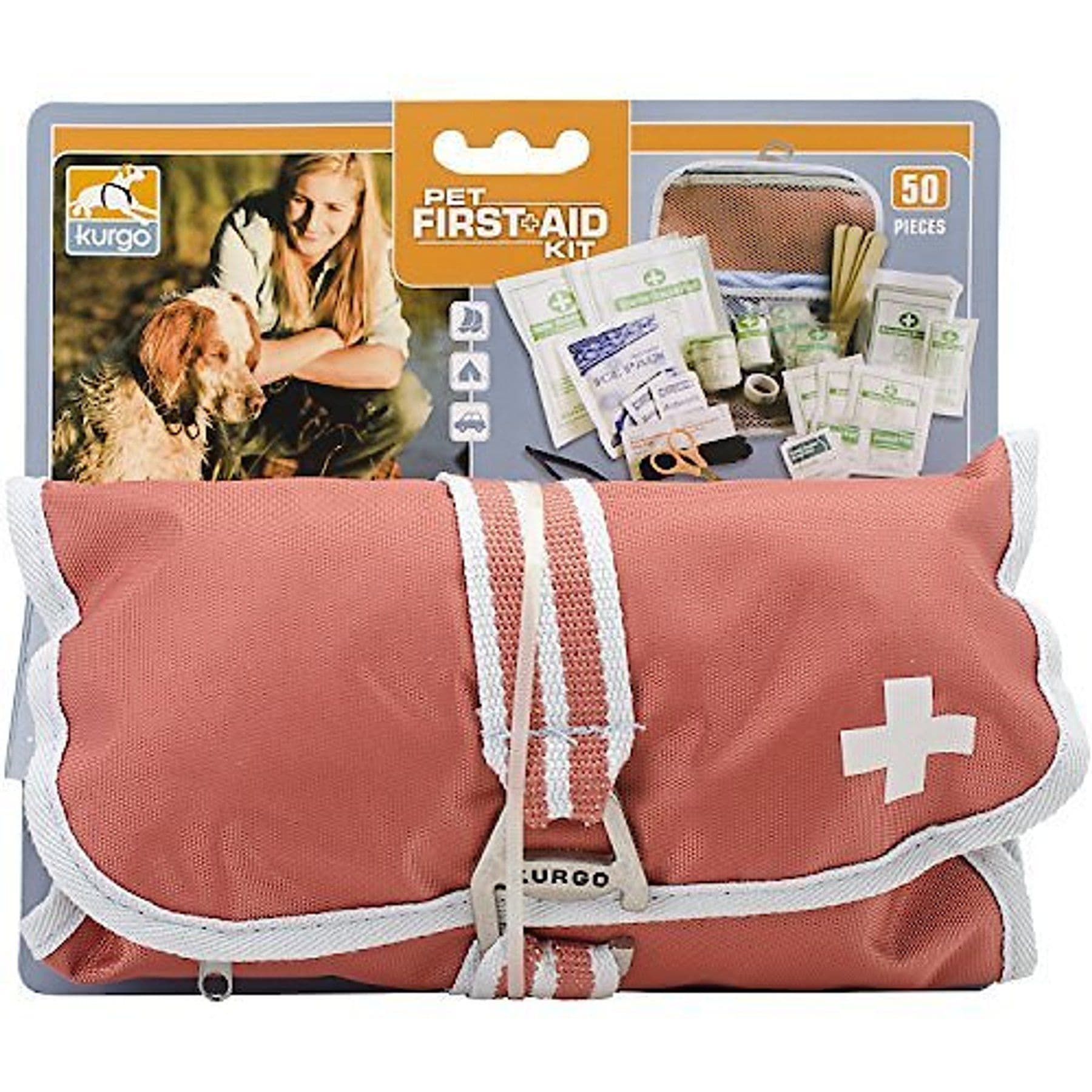
Keep basic supplies together for the aftercare your clinic demonstrates. A first-aid kit is not for home drainage, and included disinfectant pads are not instructions for wound use.
Webvet may earn a commission when you click through to Chewy, at no extra cost to you.
A daily aftercare checklist
Once or twice daily, or at the times directed by your clinic, make one short record. Observe before cleaning so you can describe what was present, then note what care was completed. If several people share care, use the same log to avoid an accidental extra medication dose.
Keep the drain care rules beside the daily aftercare log: which openings to clean, how often, and the removal appointment. Use the log to compare normal versus worsening changes in appetite and swelling together with drainage and comfort. A smaller opening is one observation, not the entire verdict.
- Appetite: Record what was offered and approximately how much was eaten.
- Comfort: Note hiding, guarding, reluctance to move, or difficulty settling.
- Swelling: Record whether the area looks smaller, unchanged, or newly raised without squeezing it.
- Discharge: Note changes in amount, thickness, smell, or fresh blood.
- Drain opening: Record visible changes or movement of the drain without probing it.
- Prescribed medication: Mark the dose as given, missed, or uncertain and call for instructions when needed.
- Protection: Check that the collar blocks access and bedding is dry and clean.
For example, a useful morning-to-evening comparison is: “Same small amount of fluid before cleaning; surrounding swelling looks smaller; ate both offered meals; resting comfortably.” Continue the prescribed routine and planned recheck. A change to “No fluid today, but a lump is back and she left dinner” calls for prompt advice. These examples show how to combine observations; they are not a recovery schedule or a documented patient case.
If the clinic accepts photos, use similar light and position and send the log entry with the picture. Record discharge before cleaning and bedding replacement so you are comparing like with like. A photograph taken just after rinsing may look wetter than an earlier dry view even when the wound has not deteriorated.
 $65 · no membership
Is your cat's itching or skin issue getting worse?
A licensed vet can examine your cat over video and prescribe treatment online when it's appropriate.
 Talk to a vet
- Licensed vets
- All 50 states
- same-day Rx
Webvet may earn a commission if you book.
Stop licking and keep the resting area clean
Do not let your cat lick an abscess or its healing opening. Grooming is not a cleaning method for a treated wound: licking introduces mouth bacteria and can disturb delicate tissue or a drain. A cat may reach a site when curled up even if it cannot reach it while standing, so protection needs checking in more than one position.
Keep an Elizabethan collar or other veterinarian-approved protection in place for the instructed period. If eating, drinking, or litter-box access becomes difficult, contact the team for a practical adjustment. Do not assume repeated unsupervised collar breaks are safe simply because the cat appears calmer without it.

Make a manageable recovery space
Choose a quiet indoor area where your cat can rest and you can observe meals and medication. Keep the arrangement simple:
- Provide easy access to food, water, and a clean litter box.
- Separate the recovering cat from animals that may play roughly or groom the wound.
- Follow the prescribed activity restrictions rather than encouraging jumping or chasing.
- Replace bedding when it becomes damp or soiled.
Use a spare clean liner or resting surface while the soiled one is being cleaned and dried according to its label. Keep the same feeding and observation routine where practical. Predictable care makes it easier to notice whether your cat is eating less, avoiding a usual resting position, or newly struggling with the collar.
When a cat abscess is not healing
Contact your veterinarian when progress stalls or reverses, including when the site keeps draining, fills again after closing, or remains painful. Repeated cleaning and another wait-and-see period may miss the underlying problem. The team may need to reassess drainage, explore for foreign material, or collect a sample to guide treatment.
Give the clinic a concise update rather than trying to identify the cause yourself:
- Date and type of treatment, including whether a drain is present.
- The first change you noticed and whether it is continuing.
- Appetite, activity, and apparent comfort compared with yesterday.
- Medication doses given, any difficulties, and possible licking or new injury.
VCA's cat abscess guidance describes how infection and retained foreign material can affect recovery. After bite injuries or unexpectedly poor healing, your veterinarian may also discuss testing for conditions such as FIV or FeLV. A delayed wound does not diagnose either infection; it is a reason to investigate the individual cat.
Treatment, antibiotics, and follow-up costs
The separate Convenia for cats guide explains the uses and limitations of that long-acting antibiotic. The treating veterinarian must decide whether it fits this infection; an injection does not replace drainage or a recheck.
Antibiotics may be part of abscess treatment, but they do not automatically empty a pus-filled pocket or remove a foreign object. A burst abscess may drain only partly. Whether additional drainage, flushing, or surgery is needed requires examination; do not test whether it will heal without drainage by withholding care. Our cat abscess guide covers the initial treatment decisions and costs in more detail.
Give prescribed medication according to the clinic's directions, even when the surface looks better. If you cannot administer it, your cat vomits after a dose, or you are unsure whether a dose was swallowed, contact the clinic for instructions. Do not double a dose, use leftover antibiotics, or choose another animal's prescription yourself.
Budget for the actual follow-up plan
There is no single fee for draining every cat abscess. Examination, sedation or anesthesia, cleaning, medication, drains, and the need for additional investigation affect the estimate. Ask for an itemized estimate and clarify whether rechecks, drain removal, and any culture are included. A posted procedure price may cover a different bundle from the one your cat needs.
If cost may prevent a required visit, tell the clinic while you are arranging the plan. That gives the team an opportunity to discuss available options before a missed recheck. A healing abscess with an open drainage site also differs from a routine closed operation wound; see spay and neuter incision healing for that separate aftercare situation.
Cat abscess recovery questions
Frequently Asked Questions
Will an abscess heal if it is drained?
Drainage is an important part of treating many abscesses, but it does not guarantee healing by itself. The underlying cause, remaining infection, foreign material, and subsequent protection all matter. Continue the prescribed care and follow-up. If a swelling returns or discharge persists, the veterinarian needs to reassess it rather than simply repeating home cleaning.
Are abscesses painful for cats?
Yes. Pain may appear as hiding, guarding the area, reduced appetite, or reluctance to move rather than crying. Ask your veterinarian about appropriate pain relief and report discomfort that persists or worsens. Do not give human pain medicines; the FDA warns against giving pets unapproved pain relievers, and acetaminophen must never be given to cats.
What if I can't afford my cat's surgery?
Tell the clinic your budget and ask for an itemized estimate, an explanation of the urgent treatment needs, and any available payment or local assistance options. Ask whether a lower-cost service can safely handle this case. Do not cancel necessary care or attempt drainage yourself; financial difficulty does not make home surgery safe.
What if the drain falls out before the recheck?
Contact the treating clinic promptly and explain when it happened and whether swelling, bleeding, or discharge changed. Do not reinsert the drain, probe the opening, or try to attach it yourself. Prevent licking and follow the team's instructions about bringing your cat in. Seek urgent care for active bleeding or a cat that becomes very unwell.
When can my recovering cat go outside again?
Wait until your veterinarian clears the return to normal activity. A closed-looking surface alone does not show that deeper tissue has recovered or that a collar is no longer needed. Keep your cat indoors through the prescribed recovery period, and discuss reducing future fights before resuming the previous routine.
$65 · no membershipIs your cat's itching or skin issue getting worse?
A licensed vet can examine your cat over video and prescribe treatment online when it's appropriate.
Talk to a vet- Licensed vets
- All 50 states
- same-day Rx
Webvet may earn a commission if you book.
Veterinarian · BVMS MRCVS
Dr. Pippa Elliott, BVMS, MRCVS, is a veterinarian with nearly 30 years of experience in companion animal practice. Dr. Elliott earned her Bachelor of Veterinary Medicine and Surgery from the University of Glasgow. She was also designated a Member of the Royal College of Veterinary Surgeons. Married with 2 grown-up kids, Dr. Elliott has a naughty Puggle named Poggle, 3 cats and a bearded dragon.


