Cat Broken Tooth: Is It an Emergency? Signs & Costs
A cat broken tooth is painful and can lead to infection or an abscess. Learn the warning signs, whether it is an emergency, treatment options, and real 2026 vet costs.

BVMS MRCVS
Medically reviewed by Dr. Pippa Elliott, BVMS MRCVS · Last reviewed

This article contains affiliate links. Webvet may earn a commission when you buy through them, at no extra cost to you.
Finding a cat broken tooth is unsettling, and the honest answer is that it almost always needs a vet. A fractured tooth is not usually a rush-to-the-ER emergency, but it is rarely harmless. Cats are experts at hiding pain, so a chipped or broken tooth that looks minor can still expose the nerve, trigger infection, and ache for months. This guide walks you through the warning signs, whether it is urgent, what vets do, real 2026 costs, and how to help your cat right now.
- 1A cat broken tooth is painful more often than not, and cats hide it well, so a normal appetite does not mean your cat is fine.
- 2It is usually urgent-but-not-an-ER-emergency: book a vet visit within a few days, sooner if you see swelling, bleeding, or your cat stops eating.
- 3The real danger is the exposed nerve (pulp), which lets bacteria in and can lead to a painful tooth root abscess.
- 4Most broken teeth in cats are treated with extraction; root canal is an option for important teeth like the canines (fangs).
- 5Expect roughly $300 to $1,300 for most cases in 2026, and ask about CareCredit, payment plans, and vet schools if cost is a barrier.
Is a cat broken tooth an emergency? (quick answer)
A broken tooth is a vet visit, not usually a midnight ER dash. But it should not be ignored either. Use this quick framework to decide how fast to act.
See a vet within 24 to 48 hours (urgent) if:
- Your cat has stopped eating, is only eating on one side, or drops food.
- You see facial swelling, especially under an eye or along the jaw.
- There is active bleeding from the mouth, obvious pain, or bad-smelling discharge.
- You can see a pink or red dot in the center of the broken tooth (exposed pulp).
Book a routine appointment (within a week or two) if:
- It looks like a small enamel chip with no color change and no visible nerve.
- Your cat is eating normally and acting like themselves.
Even a chip your cat seems fine with still needs a professional look. Only dental X-rays can confirm whether the pulp is exposed, because a lot of nerve damage is invisible to the naked eye.

Pre-moistened finger-glove dental wipes with baking soda and tea polyphenol that wipe away plaque and freshen breath. The easiest brushless option for a dog that will not tolerate a toothbrush.
Webvet may earn a commission when you click through to Chewy, at no extra cost to you.
How cats break their teeth (common causes)
Cats have small, delicate teeth, and the pointed canines (fangs) stick out where they are easy to damage. A fractured tooth in cats usually traces back to one of these causes:
- Trauma: falls from height, road accidents, or a hard knock to the jaw are the most common causes of a broken canine.
- Chewing hard objects: ice cubes, hard plastic toys, bones, and cage bars can crack a tooth.
- Fighting: cat-on-cat scraps and bites can snap a fang.
- Weakened teeth: tooth resorption and advanced dental disease can leave a tooth so brittle it breaks during normal chewing.

When an older cat breaks a tooth on soft food, the underlying cause is often tooth resorption in cats, a common and painful condition that eats away at the tooth structure from the inside. That is why a full mouth assessment matters, not just fixing the one broken tooth you can see.
Types of tooth fractures in cats
Not all breaks are equal. The single most important question is whether the fracture exposes the pulp, the living core of nerves and blood vessels inside the tooth. That is what separates a cosmetic chip from a painful, infection-prone injury.
Uncomplicated crown fracture (enamel chip)
The break involves only the enamel and dentin, and the pulp is not exposed. A cat chipped tooth of this kind may not hurt much, but the exposed dentin still has tiny tubes that can be sensitive and can let bacteria travel toward the nerve. It still needs a vet check.
Complicated crown fracture (pulp exposed)
The break goes deep enough to expose the pulp. You may see a pink, red, or dark dot in the center of the tooth. This is painful and almost always leads to infection if left untreated. Broken canine (fang) tips very often fall into this category.
Root fracture
The break is below the gumline, in the root. These are often invisible without dental X-rays and are typically painful. They usually require extraction.

Signs of a broken tooth in cats
Cats instinctively mask weakness, so the signs are often quiet. Watch for both behavioral changes and physical clues.
Subtle signs cats hide (drooling, chewing on one side, bad breath)
- Chewing on only one side, or dropping food while eating.
- Drooling, sometimes tinged with blood.
- New or worsening bad breath in cats, which can signal infection.
- Pawing at the mouth or rubbing the face on furniture.
- Hiding more, less grooming, irritability, or a preference for soft food.
- Turning away from dry kibble they used to enjoy.

Because these clues are easy to miss, it helps to know your cat's normal patterns. Learning to read cat body language makes it far easier to catch the small shifts that signal mouth pain.
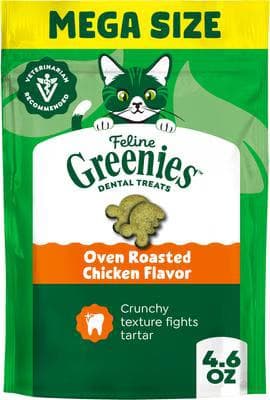
Crunchy dental treats with a texture that helps fight tartar. Oven roasted chicken flavor, veterinarian recommended.
Webvet may earn a commission when you click through to Chewy, at no extra cost to you.
What a broken tooth looks like (pink pulp, dark spot, bleeding)
If your cat lets you look, gently lift the lip in good light. Signs of a serious break include a pink or red dot in the center of the tooth (fresh pulp exposure), a dark or brown spot (an older exposure where the pulp has died), a jagged or missing tip on a fang, or bleeding at the tooth. Never force your cat's mouth open, as a painful cat may bite.
 $65 · no membership
Have a health question about your cat?
A licensed vet can assess your cat over video and prescribe online when it's appropriate.
 Talk to a vet
- Licensed vets
- All 50 states
- same-day Rx

Webvet may earn a commission if you book.
Is a broken tooth painful for a cat?
Yes, most broken teeth hurt, and the pain can be significant when the pulp is exposed. Think of the ache of a cracked tooth in a person, then remember your cat cannot tell you. A cat that is still eating is not proof the tooth is painless. Cats will push through real pain to keep eating because, in the wild, not eating means not surviving.
An uncomplicated enamel chip may cause little or no pain at first. But once the pulp is exposed, the nerve is open to the mouth, and that is genuinely painful until the tooth is treated or the nerve dies (which brings its own infection risk).
What happens if a broken tooth is left untreated
An untreated cat broken tooth rarely just heals. When the pulp is exposed, bacteria travel down the tooth toward the root, and the trouble builds over time:
- Ongoing pain that your cat hides but lives with daily.
- Infection inside the tooth, which spreads to the root.
- A tooth root abscess, a painful pocket of pus that can cause facial swelling or a draining sore under the eye.
- Bone loss around the root and, in severe cases, spread of bacteria to other parts of the body.
Chronic oral infection is also a burden on the whole body. This is exactly why vets treat a broken tooth as a real medical problem, not a cosmetic one.
How a vet diagnoses a broken tooth
Diagnosis has two stages. The first is an awake oral exam, where the vet looks at the visible break, checks for discoloration, and assesses swelling and pain. But an awake exam only tells part of the story.
The definitive step is a full oral assessment under general anesthesia with dental X-rays. X-rays reveal what the eye cannot: whether the pulp is dead, whether the root is fractured, whether there is an abscess, and whether other teeth are affected by resorption. Anesthesia is standard for cat dentistry because cats will not hold still for detailed probing and imaging.

Treatment options for a cat's broken tooth
The right treatment depends on which tooth broke, how deep the fracture goes, and what the X-rays show. There are four main paths.
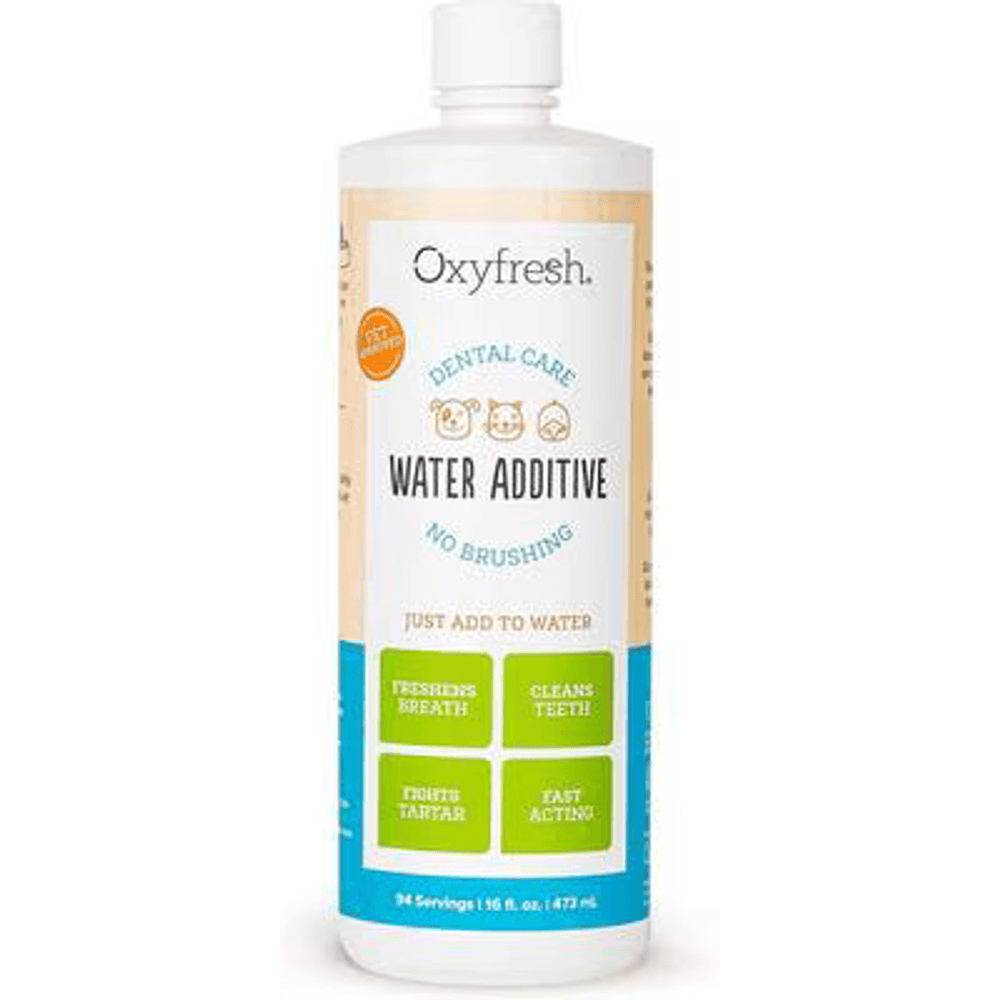
A taste-free, odor-free water additive you pour straight into the bowl. No brushing needed: it freshens breath, helps clean teeth, and fights tartar. About 94 servings per 16-oz bottle.
Webvet may earn a commission when you click through to Chewy, at no extra cost to you.
Extraction
Removing the tooth is the most common treatment in cats and reliably ends the pain and infection risk. Cats do very well after extractions, even of a canine, and most eat comfortably (including dry food) once healed. For small teeth and simple breaks, extraction is often the most practical and affordable fix.
Root canal therapy
For an important tooth like a canine (fang), a board-certified veterinary dentist can perform a root canal to save the tooth. The nerve is removed, the canal is cleaned and sealed, and the tooth stays in place. It preserves function and is a great option, though it costs more and usually requires referral.
Vital pulp therapy
When a tooth breaks very recently (typically within about 48 hours) in a young cat, a specialist may protect the living pulp with a medicated cap instead of removing the whole nerve. It keeps the tooth alive but is time-sensitive and needs follow-up X-rays.
Bonding or crowns (and why they are rare in cats)
Cosmetic bonding and crowns are common in dogs but rare in cats because feline teeth are small and thin. A vet may smooth a rough edge or bond a minor chip to seal the dentin, but full crowns are uncommon. The priority in cats is always pain and infection control, not appearance.
Extraction vs. root canal for a broken feline fang
Pros
- Extraction: single procedure, ends pain and infection risk permanently, usually done at a general practice, more affordable.
- Extraction: cats adapt well and eat normally afterward, including dry food.
- Root canal: preserves the tooth and its function, ideal for a strategic canine tooth.
- Root canal: no gap left in the mouth, good for working or show cats.
Cons
- Extraction: leaves a gap; removing a large canine is more involved surgery.
- Root canal: more expensive, usually needs referral to a veterinary dentist.
- Root canal: requires follow-up X-rays and can fail if the tooth was already too damaged.
- Root canal: not suitable for every fracture, especially root fractures or dead teeth with infection.
How much does it cost to fix a cat's broken tooth? (2026 price ranges)
Cost varies a lot by region, the specific tooth, and whether you need a specialist. The table below shows realistic US ranges for 2026. Anesthesia, dental X-rays, monitoring, and pain medication are usually bundled into the total, so a single broken canine handled start to finish commonly lands in the mid-hundreds to low thousands.

| Service | Typical 2026 US cost | Notes |
|---|---|---|
| Vet exam / consult | $50 - $100 | The starting visit to assess the tooth |
| Dental X-rays | $75 - $200 | Essential to check the root and pulp |
| Anesthesia + monitoring | $150 - $500 | Required for any real dental work in cats |
| Dental cleaning (COHAT) | $300 - $700 | Often done at the same visit |
| Simple extraction | $150 - $400 | Small single-root tooth |
| Complicated extraction (canine/fang) | $500 - $1,300 | Surgical removal, more involved |
| Root canal (referral specialist) | $1,500 - $3,000 | Saves an important tooth like a canine |
Because a broken tooth is often found during a routine cat teeth cleaning, many cats are treated during the same anesthetic event, which can save you a second anesthesia fee. Always ask for a written estimate before the procedure.
Curious how this compares to dogs? Canine dental work is often pricier per tooth because dogs are larger. See our guides to dog tooth extraction cost and dog teeth cleaning cost for a full comparison.
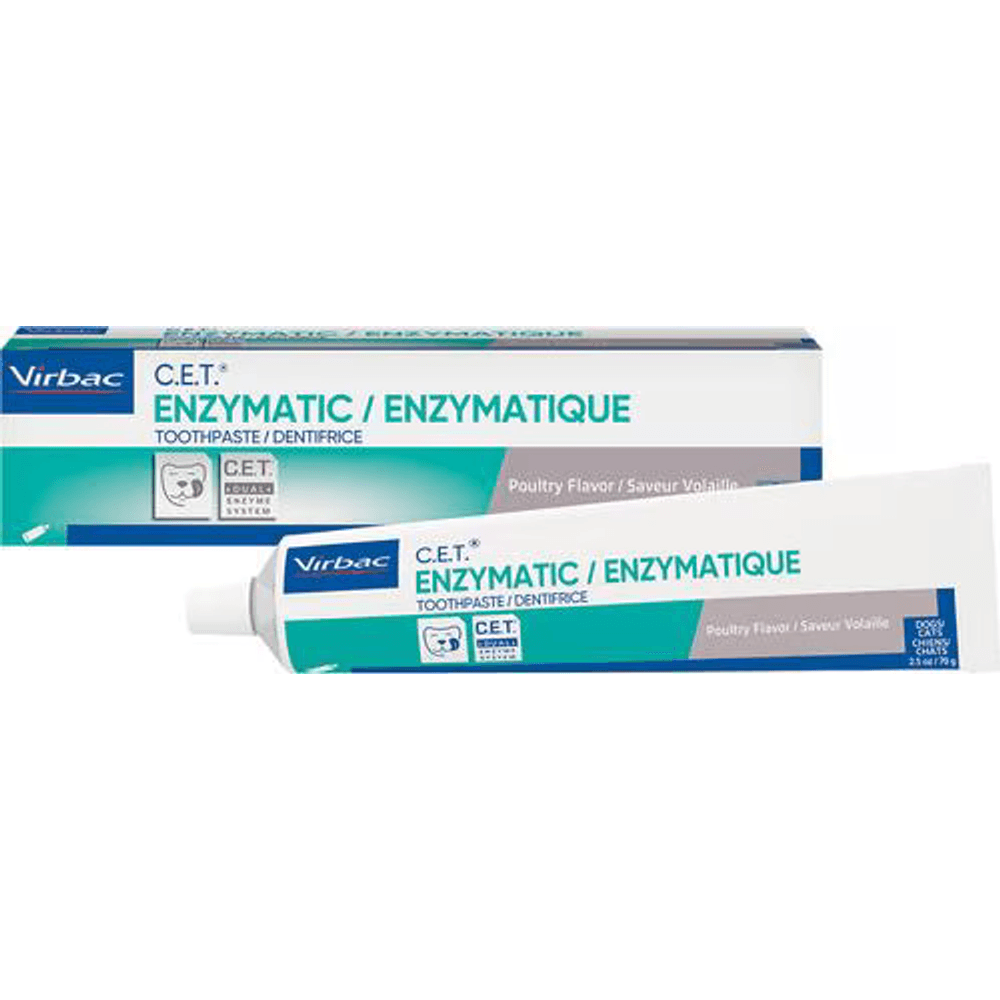
The vet-favorite enzymatic toothpaste. Its dual-enzyme system keeps working between brushings to control plaque and freshen breath, and the poultry flavor makes daily brushing easy.
Webvet may earn a commission when you click through to Chewy, at no extra cost to you.
What to do if you can't afford cat dental surgery
A broken tooth is worth treating, and there are real ways to make it affordable. Do not skip care out of embarrassment about cost, because vets deal with budgets every day.
- Ask about payment plans and CareCredit: many clinics offer in-house plans or accept CareCredit and Scratchpay, which spread the cost over months.
- Veterinary teaching hospitals: vet schools often provide dentistry at reduced cost, supervised by specialists.
- Charities and assistance funds: groups like RedRover, The Pet Fund, and Frankie's Friends, plus local humane societies, help with vet bills for those who qualify.
- Low-cost and nonprofit clinics: some nonprofit and community clinics offer dentistry well below private-practice rates.
- Get more than one estimate: prices vary widely, and a general-practice extraction is usually far cheaper than a referral center.
If treatment truly cannot happen immediately, ask your vet about pain relief and antibiotics as a short bridge. This is not a cure, but it can keep your cat comfortable while you arrange care. Never give human painkillers, as many (including ibuprofen and acetaminophen) are toxic and can kill a cat.
What to do right now while you wait for the vet
- Offer soft food: switch to wet or softened food so your cat can eat without pressing on the sore tooth.
- Remove hard toys and chews: take away anything hard that could worsen the break.
- Do not medicate at home: no human painkillers, ever. Wait for vet-prescribed pain relief.
- Watch and note symptoms: track appetite, drooling, and swelling so you can report changes to your vet.
- Take a photo: a clear picture of the broken tooth helps your vet triage over the phone.
Recovery and aftercare
Most cats bounce back from dental surgery quickly. Expect your vet to send home pain relief and sometimes antibiotics. For the first week or so, feed soft food, skip hard treats, and let your cat rest. Watch the surgery site for swelling, bleeding, or signs your cat is not eating, and call your vet if anything seems off.
Within a couple of weeks, most cats are back to normal, and many owners notice their cat is friendlier and more playful once the hidden pain is gone. That change alone tells you how much a broken tooth was bothering them.
How to prevent broken teeth in cats
- Skip hard chews: avoid ice cubes, bones, antlers, and very hard plastic toys.
- Brush regularly: home dental care keeps teeth strong and helps you spot problems early.
- Book yearly dental checks: annual exams catch resorption and weak teeth before they break.
- Keep cats indoors or supervised: this reduces trauma from falls, fights, and accidents.

Prevention also means treating gum disease early. Catching gingivitis in cats before it advances keeps teeth healthier and less likely to weaken and break.
Frequently asked questions
Can a cat live with a broken tooth?
A cat can survive with a broken tooth, but living with one is often painful and risky. An untreated broken tooth (especially with exposed pulp) commonly leads to chronic pain, infection, and a tooth root abscess. Cats hide this so well that they seem fine while quietly suffering. The humane choice is to have a vet assess and treat it rather than leaving your cat to cope with a painful mouth.
How much does it cost to fix a cat's broken tooth?
In 2026, most cases in the US run roughly $300 to $1,300 all in, including anesthesia and dental X-rays. A simple extraction may be $150 to $400 for the tooth itself, while a complicated canine extraction can reach $500 to $1,300. A referral root canal to save an important tooth typically runs $1,500 to $3,000. Prices vary by region and clinic, so always request a written estimate first.
Can a cat live with a broken fang?
Yes, cats adapt remarkably well to a missing or repaired fang (canine tooth) and still eat, groom, and play normally. But a broken fang should not simply be left alone. The canine tips are the teeth most likely to expose the pulp when they break, which is painful and infection-prone. A vet will either extract the tooth or, for an important tooth, refer for a root canal to save it.
How to tell if a cat is in tooth pain?
Watch for chewing on one side, dropping food, drooling, bad breath, pawing at the mouth, and preferring soft food over kibble. Behavioral clues include hiding, reduced grooming, irritability, and being less playful. Cats mask pain instinctively, so a cat that still eats can absolutely still be in pain. If you notice any of these signs, book a vet dental exam.
What is the silent killer of cats?
The phrase silent killer in cats usually refers to conditions like heart disease (hypertrophic cardiomyopathy) and chronic kidney disease, which progress with few obvious signs. These are separate from dental problems. That said, dental disease is another quiet source of ongoing suffering because cats hide oral pain so well. A yearly vet exam helps catch both the classic silent killers and hidden dental issues early.
How much does it cost to fix a broken cat's tooth?
Fixing a broken cat tooth generally costs about $300 to $1,300 in 2026 once anesthesia, dental X-rays, and the extraction are included. A straightforward extraction sits at the lower end, and a surgical canine extraction sits at the higher end. Saving the tooth with a specialist root canal is more, usually $1,500 to $3,000. Getting more than one estimate and asking about payment plans can lower your out-of-pocket cost.
How common is it for a cat to break a tooth?
Fractured teeth are fairly common in cats, and the pointed canines are the teeth that break most often because they protrude and take the most impact. Falls, accidents, fights, and chewing hard objects are frequent triggers. Cats with tooth resorption or advanced dental disease are especially prone because their teeth are already weakened. Many breaks go unnoticed for a while precisely because cats hide the pain.
What to do if you can't afford cat dental surgery?
Ask your vet about in-house payment plans, CareCredit, or Scratchpay, which spread the cost over time. Veterinary teaching hospitals and nonprofit or low-cost clinics often offer dentistry at reduced rates, and charities such as RedRover, The Pet Fund, and Frankie's Friends help owners who qualify. Getting several estimates helps too, since a general practice is usually cheaper than a referral center. If treatment must wait, ask about pain relief and antibiotics as a short bridge, and never give human painkillers.
$65 · no membershipHave a health question about your cat?
A licensed vet can assess your cat over video and prescribe online when it's appropriate.
Talk to a vet- Licensed vets
- All 50 states
- same-day Rx
Webvet may earn a commission if you book.

Editor
The Webvet Editorial Team is the in-house group of pet-care editors and writers behind Webvet, operated by Smart Pet Collective. The team researches, writes, and maintains Webvet's pet health, behavior, and medication content. Every article follows a defined editorial process: research from reputable veterinary and scientific sources, careful drafting, mandatory review of medical content by a credentialed veterinarian, and dated publication. Health and medication articles are medically reviewed by a licensed veterinary professional before they go live and are kept current over time.
Veterinarian · BVMS MRCVS
Dr. Pippa Elliott, BVMS, MRCVS, is a veterinarian with nearly 30 years of experience in companion animal practice. Dr. Elliott earned her Bachelor of Veterinary Medicine and Surgery from the University of Glasgow. She was also designated a Member of the Royal College of Veterinary Surgeons. Married with 2 grown-up kids, Dr. Elliott has a naughty Puggle named Poggle, 3 cats and a bearded dragon.


