Tooth Resorption in Cats: Signs, Causes & Treatment
Tooth resorption in cats is one of the most common and painful dental diseases vets see. Learn the signs, causes, how it is diagnosed, and what treatment costs.

BVMS MRCVS
Medically reviewed by Dr. Pippa Elliott, BVMS MRCVS · Last reviewed

This article contains affiliate links. Webvet may earn a commission when you buy through them, at no extra cost to you.
Tooth resorption in cats is one of the most common and most painful dental diseases veterinarians see, and it often hides in plain sight. It happens when the body slowly breaks down and dissolves a tooth from the inside out, destroying the hard tissue until the tooth crumbles at the gumline. Many affected cats show almost no obvious signs until the disease is advanced, which is why it is sometimes missed at home for months. This vet-reviewed guide explains what tooth resorption is, how to spot it, why it happens, how vets diagnose it with dental X-rays, what treatment and recovery involve, and what it costs in 2026.
- 1Tooth resorption is when the body destroys its own tooth structure at and below the gumline. It is common, progressive, and painful.
- 2It affects a large share of adult cats, with estimates ranging from about 20 to 60 percent of all cats and up to roughly three-quarters of cats over age five.
- 3Cats hide dental pain well. Subtle clues include dropping food, chewing on one side, drooling, or a sudden jaw tremor (jaw chatter) when the sore spot is touched.
- 4Dental X-rays under anesthesia are the only reliable way to diagnose it and to tell Type 1 from Type 2, which changes the treatment.
- 5The fix is dental treatment, usually extraction or crown amputation. There is no cream, diet, or supplement that reverses a resorbing tooth.
What is tooth resorption in cats?
Tooth resorption is a process in which specialized cells called odontoclasts break down the hard, mineralized tissue of a tooth. In a healthy mouth these cells help remodel bone and shed baby teeth. In tooth resorption they turn on the wrong target, eroding the dentin, cementum, and enamel of an adult tooth until it is progressively destroyed.
You may see this condition under several names. Veterinarians and older references call it feline odontoclastic resorptive lesions (FORL), resorptive lesions, cervical line lesions, or simply cat cavities, though it is not a true bacterial cavity like the ones people get. The damage usually begins at the neck of the tooth, right at the gumline, where the crown meets the root.

Because the tooth is destroyed from the tissue outward, the pulp (the living center that holds the nerve) is often exposed as the disease advances. That is what makes tooth resorption so painful. It is a dental disease in its own right and is different from gingivitis in cats, although inflamed gums often sit right on top of a resorbing tooth.
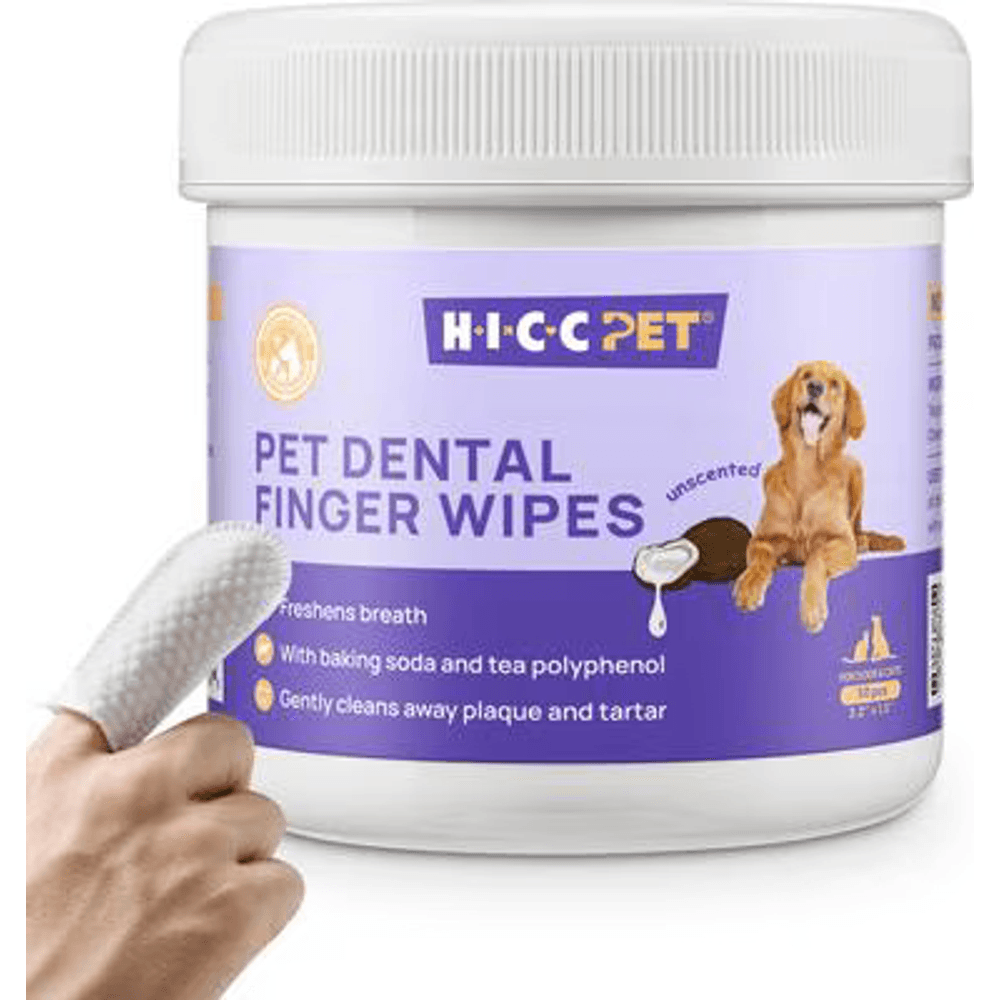
Pre-moistened finger-glove dental wipes with baking soda and tea polyphenol that wipe away plaque and freshen breath. The easiest brushless option for a dog that will not tolerate a toothbrush.
Webvet may earn a commission when you click through to Chewy, at no extra cost to you.
How common is feline tooth resorption?
Tooth resorption is extremely common in cats, and it becomes more likely with age. Prevalence figures vary by study and by how cats were examined, so it is best understood as a range:
- Cornell Feline Health Center reports that an estimated 20 to 60 percent of all cats, and around 75 percent of cats aged five and older, have at least one resorptive lesion.
- Some referral dental practices report rates above 65 percent in the cats they see, though those populations are skewed toward pets already referred for dental problems.
- Individual studies have found lesions in roughly a third to over half of cats examined, depending on age and whether dental X-rays were used.
The takeaway is simple. If you own an adult cat, especially one over five, there is a real chance it has or will develop at least one resorptive lesion. Because so many cases are hidden, the true number is likely higher than what owners notice on their own.
Signs and symptoms: how to tell if your cat has tooth resorption
Cats are experts at hiding pain, a survival instinct left over from their wild ancestors. Many cats with tooth resorption keep eating and acting normal, so owners assume nothing is wrong. Learning the quiet clues is the single most useful thing you can do.
Subtle early signs
- Chewing on only one side of the mouth or tilting the head while eating
- Dropping kibble, then going back to eat it, or preferring soft food suddenly
- Mild drooling, sometimes with a pink tinge of blood
- Bad breath that was not there before (see cat bad breath for other causes)
- Reduced grooming or a slightly unkempt coat, because grooming hurts the mouth
Advanced signs
- Visibly turning away from hard food or refusing to eat
- Weight loss, hiding, irritability, or reluctance to be touched near the face
- Pawing at the mouth or rubbing the face on the floor and furniture
- A red, angry line of gum tissue that seems to grow up onto the tooth, often the most visible clue at home

The jaw chatter tell
One classic clue is jaw chatter. When a resorptive lesion exposes sensitive tissue, gently touching that tooth can trigger a sudden trembling or chattering of the lower jaw. Vets sometimes see this on exam, and owners may notice it when the cat grooms or when a whisker brushes the sore area. Jaw chatter is a strong hint that a painful lesion is present and the mouth needs a closer look.
Is tooth resorption painful for cats?
Yes. Tooth resorption is considered one of the most painful dental conditions in cats. As the disease destroys the tooth, it exposes the dentin and eventually the pulp, which is packed with nerves. Even lesions that look small on the surface can reach deep, sensitive tissue.
The cruel part is that cats hide it so well. A cat can be in real, chronic pain and still purr, eat, and greet you at the door. Vets often say the same thing after treatment: owners report their cat suddenly acts years younger, more playful, and more affectionate once the painful teeth are gone, proof the pet was hurting all along. If you want to get better at reading discomfort, our guide to cat body language can help you notice the small changes that matter.
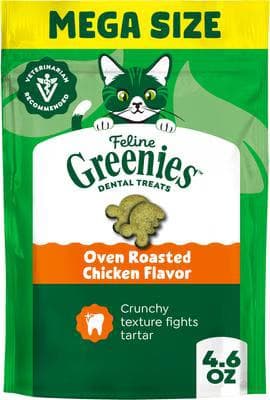
Crunchy dental treats with a texture that helps fight tartar. Oven roasted chicken flavor, veterinarian recommended.
Webvet may earn a commission when you click through to Chewy, at no extra cost to you.
What causes tooth resorption in cats?
This is the frustrating answer: despite decades of research, the exact cause of feline tooth resorption is still unknown. It is not caused by a single thing you did or did not do. Researchers have identified several factors that appear to play a role.
The role of inflammation
Inflammation in and around the tooth is strongly linked to resorption. Chronic gum inflammation, dental disease, and conditions like stomatitis in cats are associated with more lesions. Whether the inflammation triggers the odontoclasts or the resorbing tooth triggers the inflammation is not fully settled, but the two travel together.
Diet and vitamin D theories
One area of research has looked at excess vitamin D in commercial cat diets as a possible contributor, since some affected cats have higher vitamin D levels. This remains a theory rather than a proven cause. Diet texture (dry versus wet) has also been studied, but there is no strong evidence that feeding kibble causes resorption or that switching to wet food prevents it.
Risk factors and age
The clearest risk factor is age. Older cats are far more likely to be affected, and purebred cats such as Siamese, Persians, and Abyssinians may be at higher risk. Cats that have already had one resorptive lesion are more likely to develop others, so a diagnosis on one tooth is a reason to watch the whole mouth closely.
 $65 · no membership
Have a health question about your cat?
A licensed vet can assess your cat over video and prescribe online when it's appropriate.
 Talk to a vet
- Licensed vets
- All 50 states
- same-day Rx
Webvet may earn a commission if you book.
Type 1 vs Type 2 tooth resorption
Not all resorption is the same. Vets divide it into two types based on what the tooth root looks like on a dental X-ray, and the type directly changes how the tooth is treated.

Type 1
In Type 1 resorption, the crown is being destroyed but the root keeps a fairly normal shape and density. On X-ray you can still see a distinct root with a clear periodontal ligament space (the thin dark line) around it. Type 1 is often linked to inflammation such as gingivitis or stomatitis.
Type 2
In Type 2 resorption, the root itself is being resorbed and gradually replaced by bone, a process called ankylosis. On X-ray the root looks fuzzy and blends into the surrounding jawbone, and the ligament space disappears. Type 2 is more common overall.
Why the type changes treatment
The type matters because it decides whether the whole tooth, including its roots, can be removed cleanly. Type 1 roots are still intact, so the tooth is fully extracted. In Type 2, the root has fused to bone and there may be nothing solid left to grab, so a full extraction can do more harm than good. That is when vets may choose crown amputation, described below. You cannot tell the type by looking in the mouth. Only a dental X-ray can, which is why imaging is not optional.
Stages of tooth resorption
The American Veterinary Dental College grades resorption in five stages, based on how deep the destruction has gone. Understanding the stages explains why early detection matters so much.
| Stage | What is happening | Typical visibility |
|---|---|---|
| Stage 1 | Mild loss of hard tissue at the surface (cementum or enamel only) | Usually invisible to the eye; found on X-ray |
| Stage 2 | Damage extends into the dentin but not yet the pulp | Often still hidden; may show a small defect |
| Stage 3 | Damage reaches the pulp cavity; the tooth keeps most of its shape | May see a lesion at the gumline; painful |
| Stage 4 | Extensive destruction; the crown is badly weakened or broken | Often visible; gum grows over the defect |
| Stage 5 | Most of the tooth is gone; only root remnants remain, covered by gum | Crown may be missing; a firm bump remains |
Early stages are painful even though they are hard to see, which is exactly why routine dental checks and X-rays catch problems before your cat shows obvious distress.
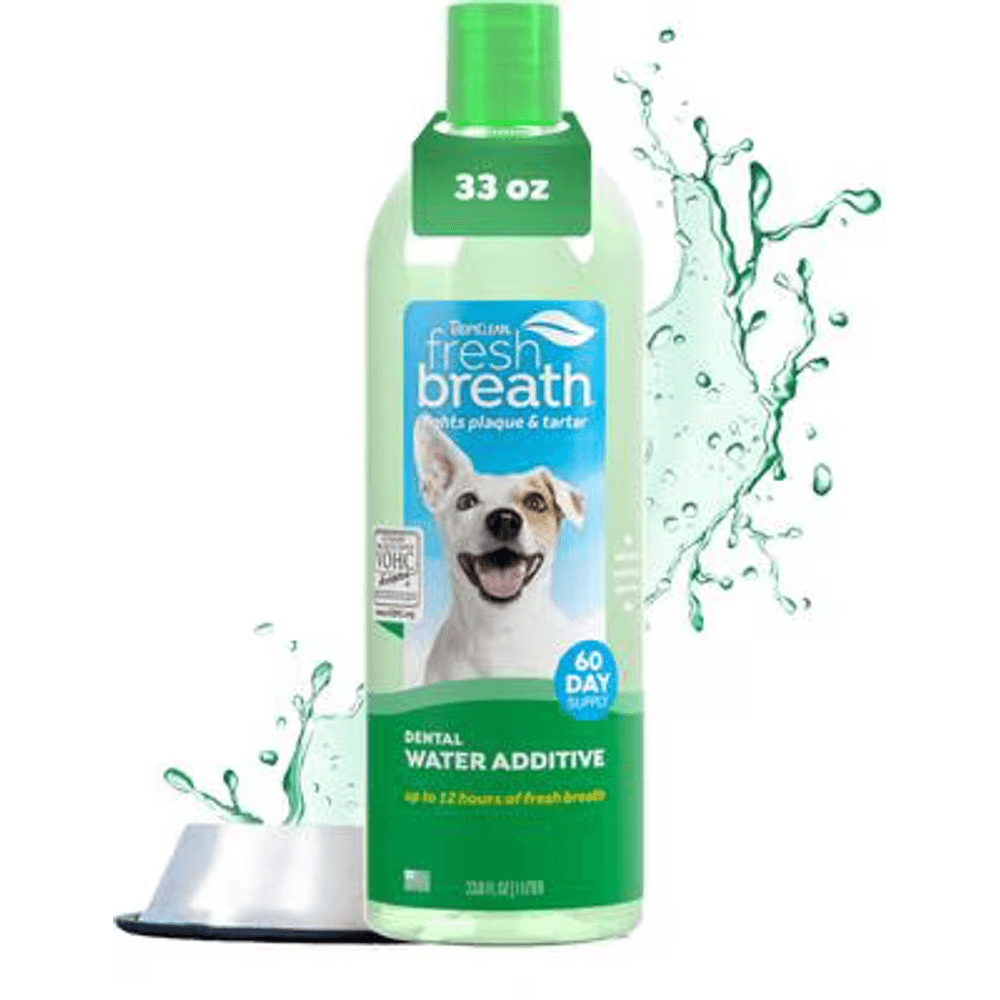
A no-brushing dental water additive: add one capful to your dog's water bowl daily to fight plaque and tartar and freshen breath for up to 12 hours. One 33.8-oz bottle is about a 60-day supply.
Webvet may earn a commission when you click through to Chewy, at no extra cost to you.
How vets diagnose tooth resorption
Oral exam
Diagnosis starts with a careful look inside the mouth. During a routine visit your vet may spot a red lesion at the gumline, gum tissue creeping over a tooth, or a tooth that reacts when gently probed. In an awake cat, though, the exam only reveals what is visible above the gumline, and much of the disease hides below it. A full assessment requires anesthesia so the vet can probe each tooth and take images. Related dental issues like a cat broken tooth are often found during the same exam.
Why dental X-rays are essential
Full-mouth dental radiographs (X-rays) are the gold standard for diagnosing tooth resorption. They are the only way to see what is happening to the roots below the gumline, to find early lesions that are invisible on the surface, and to tell Type 1 from Type 2. Because studies show a large share of resorptive lesions would be missed without imaging, a proper feline dental should always include X-rays. This is done under general anesthesia, since a cat will not hold still for detailed intraoral films.

Treatment: what happens at the vet
There is no medication, gel, diet, or supplement that reverses a resorbing tooth or grows the lost structure back. Once a tooth is affected and painful, the goal is to remove the source of pain. Treatment depends on the type and stage.
Full extraction for Type 1
When the root is still intact (Type 1), the standard treatment is complete extraction of the tooth, roots and all. Removing the entire tooth eliminates the pain and stops that tooth from progressing further. A follow-up X-ray confirms no root fragments were left behind.
Crown amputation for Type 2
When the root has already been resorbed and replaced by bone (Type 2), there may be no distinct root to remove. In carefully selected cases, and only when X-rays confirm the root is being resorbed with no signs of infection, some vets perform crown amputation. This removes the painful crown at the gumline and leaves the resorbing root remnants to be absorbed naturally. Crown amputation is not appropriate if there is stomatitis, infection, or any doubt about the root, so it is a case-by-case decision made with dental X-rays, not a shortcut.
Anesthesia and aftercare
All of this happens under general anesthesia, usually as part of a full dental cleaning (often called a COHAT). Pre-anesthetic bloodwork, IV fluids, pain control, and monitoring are standard. Your vet will send home pain medication and soft-food instructions. Most cats recover quickly and eat well within a few days.
How much does treatment cost in 2026?
Cost is one of the biggest owner questions, and it varies a lot by region, clinic type, tooth count, and how much anesthesia and imaging are involved. A general practice will usually cost less than a board-certified veterinary dentist, but complex cases may be worth the referral. The ranges below reflect typical US pricing in 2026 and are meant as a planning guide, not a quote.
| Service | Typical 2026 US cost | What it includes |
|---|---|---|
| Dental exam + consult | 50 - 100 dollars | Awake oral exam and estimate; no imaging |
| Dental cleaning (COHAT) with X-rays | 400 - 1,200 dollars | Anesthesia, monitoring, full-mouth X-rays, scaling |
| Single tooth extraction (resorption) | 300 - 800 dollars | Extraction plus the dental, X-rays, and anesthesia around it |
| Multiple or complex extractions | 800 - 2,500+ dollars | Full-mouth work, surgical extractions, extended anesthesia |
| Crown amputation (selected Type 2) | 300 - 700 dollars per tooth | Crown removal at gumline with confirming X-rays |
| Board-certified veterinary dentist | Often 1.5 - 2x GP pricing | Advanced imaging, difficult roots, referral cases |
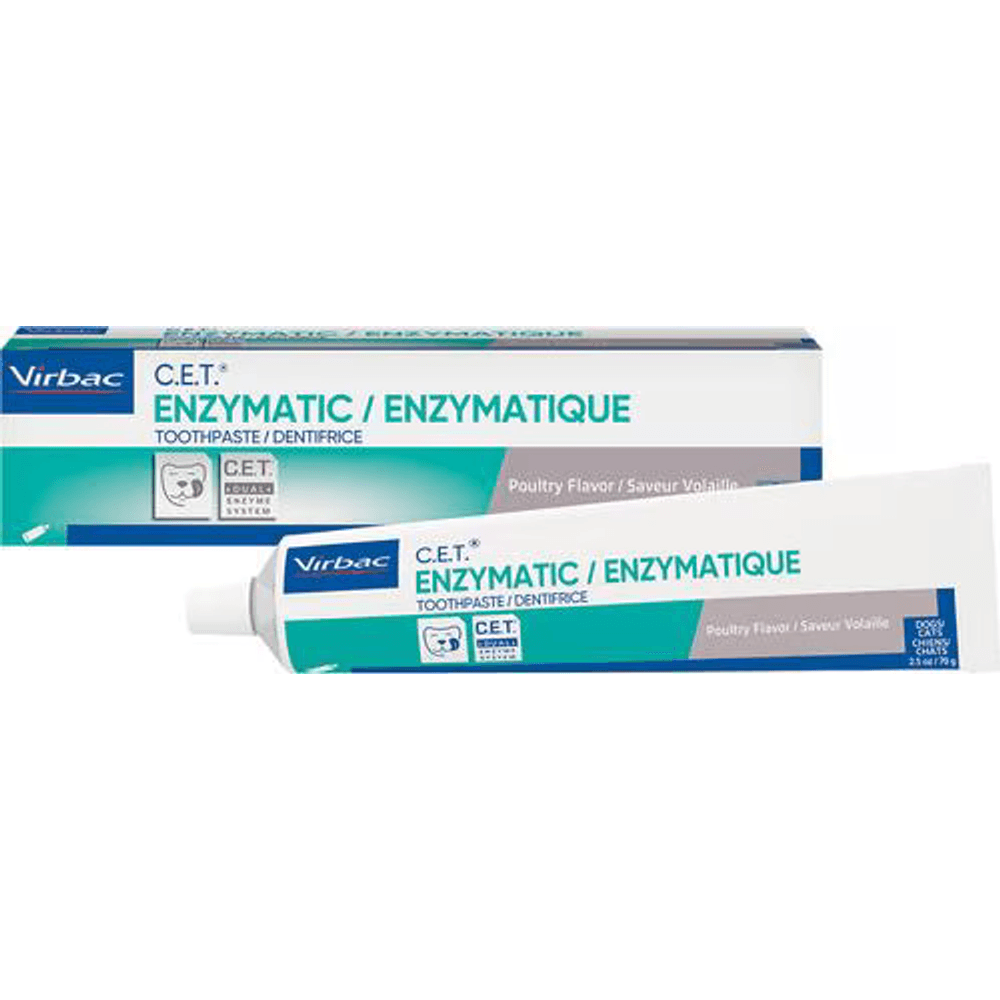
The vet-favorite enzymatic toothpaste. Its dual-enzyme system keeps working between brushings to control plaque and freshen breath, and the poultry flavor makes daily brushing easy.
Webvet may earn a commission when you click through to Chewy, at no extra cost to you.
How to save on dental care
- Do not wait. Catching one lesion early is far cheaper than treating a mouthful of advanced ones later.
- Ask for an itemized estimate. Anesthesia, X-rays, and each extraction should be listed so you can compare clinics fairly.
- Bundle the work. Treating all affected teeth in one anesthetic event usually costs less than repeat procedures.
- Consider pet insurance or a wellness plan early. Dental disease is common in cats, so coverage before problems appear pays off.
- Keep up with prevention. Regular cat teeth cleaning and home care reduce the inflammation that makes dental problems worse.
What happens if tooth resorption is left untreated?
Untreated tooth resorption does not resolve on its own in a way that helps your cat. The tooth keeps breaking down, the pulp stays exposed, and the cat lives with ongoing pain that it hides. Over months to years the crown may eventually crumble away, but that process is painful the entire time, and the underlying inflammation and infection risk remain.
Chronic dental pain can lead to weight loss from reduced eating, secondary infection, and a lower quality of life. Some cats stop grooming or become withdrawn. There is also growing awareness that chronic oral inflammation is not good for overall health. Treating the painful tooth is the humane and medically sound choice.
Caring for your cat after extraction
Feeding and best food
For the first week or two after extraction, offer soft or wet food so the healing gums are not irritated. Canned food, or dry kibble softened with warm water, works well. Your vet may recommend a specific recovery diet. There is no special prescription food that treats resorption itself, so the best food for a cat with tooth resorption is simply one that is easy to eat and that your cat will accept while the mouth heals.

Good news for worried owners: cats manage remarkably well even after multiple extractions, including full-mouth extractions. Most return to eating normally, and many happily crunch dry food again once healed, because a pain-free mouth beats a mouthful of sore teeth. Senior cats that were eating poorly often eat better afterward, which can also help with digestive problems tied to inadequate intake.
Recovery timeline
- Days 1 to 3: grogginess from anesthesia, mild swelling, give prescribed pain medication and soft food.
- Days 3 to 7: appetite and energy return; most cats are noticeably brighter as pain resolves.
- Weeks 2 to 3: gum tissue heals over the extraction sites; a recheck may be scheduled.
Call your vet if you see ongoing bleeding, swelling that worsens after day three, refusal to eat, or signs of pain that are not improving.
Can you prevent tooth resorption in cats?
Because the exact cause is unknown, there is no guaranteed way to prevent tooth resorption. You cannot brush it away, and no diet is proven to stop it. What you can do is manage the factors within your control and catch problems early.
- Keep up regular dental checkups, especially for cats over five.
- Reduce gum inflammation with home dental care and professional cleanings.
- Ask for full-mouth dental X-rays at cleanings so lesions are caught early.
- Watch for the subtle signs above and act on them quickly.
Prevention is really about early detection. A cat whose mouth is checked often, and who sees the vet for dental care, spends far less time in silent pain than one whose disease is found only when it is severe.
When to see your vet
Schedule a veterinary dental exam if your cat shows any of the signs in this guide, and make routine dental checks part of every wellness visit for adult and senior cats. Because tooth resorption is so common and so well hidden, your vet is the person best placed to find it, confirm it with X-rays, and treat it before it steals more of your cat's comfort. If your cat stops eating entirely, that is not a wait-and-see situation, call your vet the same day.
Frequently asked questions
What should I do if my cat has a tooth resorption?
Book a veterinary dental appointment. Your vet will examine the mouth, and because resorption hides below the gumline, will usually recommend a dental under anesthesia with full-mouth X-rays to confirm the diagnosis, grade the tooth, and treat it. The treatment is dental, most often extraction or, in selected Type 2 cases, crown amputation. There is no at-home cure, and delaying care leaves your cat in pain.
What happens if you don't treat feline tooth resorption?
The tooth keeps breaking down and the cat stays in chronic, hidden pain. The crown may eventually crumble away, but the process is painful the whole time and the inflammation and infection risk remain. Untreated dental pain can cause reduced eating, weight loss, and a lower quality of life. Treating the tooth is the humane choice.
How painful is tooth resorption in cats?
It is considered one of the most painful dental conditions in cats. As the tooth is destroyed, sensitive dentin and the nerve-filled pulp become exposed. Cats hide this pain so well that owners often only realize how much their cat was suffering after the tooth is removed and the cat becomes more active and affectionate.
How long does cat tooth resorption take?
It is a gradual process that usually plays out over months to years, not days. Early lesions can be present long before any outward sign appears, which is why many are only found on dental X-rays. Once a tooth is affected it will keep progressing without treatment, so there is no benefit to waiting for it to run its course.
How painful is feline tooth resorption?
Feline tooth resorption is very painful, even in lesions that look small on the surface. The classic sign of severe pain is jaw chatter, a sudden trembling of the lower jaw when the sore tooth is touched. Because cats mask discomfort so effectively, assume an active resorptive lesion hurts and needs treatment, even if your cat is still eating.
What is the best food for cats with tooth resorption?
No food treats or cures resorption. The best choice is one that is easy and comfortable to eat, which usually means soft or wet food, or kibble softened with warm water, especially around the time of treatment. After healing from extractions, most cats can return to their normal diet, including dry food. Follow any specific recovery diet your vet recommends.
Can cats live with tooth resorption?
Cats can survive with untreated resorption, but they live in ongoing pain, so it is not a good quality of life. The condition itself is not directly fatal, yet the chronic discomfort and reduced eating take a toll. With treatment, cats do very well, even after multiple extractions, and typically eat and behave normally once the painful teeth are gone.
What is the silent killer of cats?
The phrase silent killer is most often used for chronic kidney disease in cats, which progresses quietly for years before signs appear. Dental disease, including tooth resorption, is another quiet condition that causes hidden suffering because cats mask pain so well. Neither is truly silent to a vet, though. Regular checkups, bloodwork, and dental X-rays are how these hidden problems get caught early.
$65 · no membershipHave a health question about your cat?
A licensed vet can assess your cat over video and prescribe online when it's appropriate.
Talk to a vet- Licensed vets
- All 50 states
- same-day Rx
Webvet may earn a commission if you book.

Editor
The Webvet Editorial Team is the in-house group of pet-care editors and writers behind Webvet, operated by Smart Pet Collective. The team researches, writes, and maintains Webvet's pet health, behavior, and medication content. Every article follows a defined editorial process: research from reputable veterinary and scientific sources, careful drafting, mandatory review of medical content by a credentialed veterinarian, and dated publication. Health and medication articles are medically reviewed by a licensed veterinary professional before they go live and are kept current over time.
Veterinarian · BVMS MRCVS
Dr. Pippa Elliott, BVMS, MRCVS, is a veterinarian with nearly 30 years of experience in companion animal practice. Dr. Elliott earned her Bachelor of Veterinary Medicine and Surgery from the University of Glasgow. She was also designated a Member of the Royal College of Veterinary Surgeons. Married with 2 grown-up kids, Dr. Elliott has a naughty Puggle named Poggle, 3 cats and a bearded dragon.


