Stomatitis in Cats: Symptoms, Treatment & Cost 2026
Stomatitis in cats is a painful but treatable mouth disease. Learn the symptoms, causes, diagnosis, treatment options, 2026 costs, recovery, and long-term prognosis.

BVMS MRCVS
Medically reviewed by Dr. Pippa Elliott, BVMS MRCVS · Last reviewed

This article contains affiliate links. Webvet may earn a commission when you buy through them, at no extra cost to you.
Stomatitis in cats is one of the most painful mouth conditions a cat can develop, and it often leaves owners frightened by the sudden drooling, bad breath, and refusal to eat. The good news: this disease is treatable, and most cats do very well once the right plan is in place. This vet-reviewed guide walks you through the symptoms, causes, diagnosis, treatment options (including extractions), real 2026 costs, recovery, and long-term prognosis.
- 1Stomatitis (feline chronic gingivostomatitis, or FCGS) is a severe, painful inflammation of the mouth caused by the immune system overreacting to plaque on the teeth.
- 2Classic signs include drooling, bad breath, pawing at the mouth, weight loss, and dropping food or refusing to eat.
- 3Full-mouth or partial tooth extraction is the gold-standard treatment, and roughly 80 percent of cats significantly improve or are cured afterward.
- 4Expect a 2026 US cost range of about $1,500 to $4,000 or more for full-mouth extractions, versus $30 to $80 per month for lifelong medical management.
- 5With treatment, most cats live a full, normal-length life, and many thrive even with no teeth.
What Is Stomatitis in Cats?
Stomatitis in cats is a severe, widespread inflammation of the soft tissues inside the mouth. Veterinarians call it feline chronic gingivostomatitis (FCGS). Unlike ordinary gum disease, the inflammation spreads well beyond the gumline into the cheeks, the back of the throat, and the tissue behind the molars (the caudal mouth).
The core problem is an immune overreaction. The cat's body mounts an aggressive, exaggerated response to the normal plaque bacteria on the teeth. That response inflames the tissue so intensely that the mouth becomes bright red, ulcerated, and extremely sore. The condition is chronic, meaning it persists and returns unless the underlying trigger is removed.
It can affect cats of any age or breed, though purebreds such as Persians, Himalayans, and Somalis appear over-represented. Because the pain is constant, stomatitis has a real impact on quality of life, which is why prompt veterinary care matters so much.

Pre-moistened finger-glove dental wipes with baking soda and tea polyphenol that wipe away plaque and freshen breath. The easiest brushless option for a dog that will not tolerate a toothbrush.
Webvet may earn a commission when you click through to Chewy, at no extra cost to you.
Stomatitis vs. Gingivitis in Cats: How They Differ
It is easy to confuse the two, but they sit on very different points of the severity scale. Gingivitis in cats is inflammation limited to the gums right where they meet the teeth. It is common, usually reversible with a dental cleaning and good home care, and does not involve the deeper tissues.
Stomatitis is far more severe. The inflammation extends beyond the gums into the wider mouth, it is intensely painful, and it does not resolve with a routine cleaning alone. Gingivitis can be an early stage or a warning sign, but true stomatitis reflects a fundamental immune problem that needs more aggressive treatment.
| Feature | Gingivitis | Stomatitis (FCGS) |
|---|---|---|
| Location of inflammation | Gumline only | Gums plus cheeks, throat, and behind the molars |
| Severity | Mild to moderate | Severe and often debilitating |
| Pain level | Mild, often unnoticed | Intense and constant |
| Typical treatment | Dental cleaning plus home care | Extractions plus medical management |
| Reversible? | Usually, with early care | Managed or cured, but not with cleaning alone |
Symptoms of Stomatitis in Cats
Cats are experts at hiding pain, so the signs can be subtle at first and then escalate. Any of the following warrants a vet visit.

Early Warning Signs
- Bad breath (halitosis) that is stronger and more foul than typical.
- Drooling, sometimes tinged with blood.
- Red, angry-looking tissue at the back corners of the mouth if you can catch a glimpse.
- A dull, unkempt coat because grooming has become painful.
Behavioral Changes That Signal Mouth Pain
Pain often shows up as a change in behavior before you ever see the mouth. Reading your cat's body language helps you catch it early. Watch for:
- Pawing at the mouth or face.
- Approaching the food bowl eagerly, then backing away or crying out.
- Dropping food (called quidding), or swallowing kibble whole to avoid chewing.
- Hiding, irritability, or resenting being touched near the head.
- A change in vocalizing, including yowling while eating.
When Symptoms Mean an Emergency
A cat that has stopped eating entirely for 24 hours needs urgent care. Cats that go without food can develop hepatic lipidosis (fatty liver), a life-threatening complication. Sudden collapse, severe bleeding from the mouth, or obvious dehydration are also emergencies.
What Causes Stomatitis in Cats?
The exact cause is still being studied, but veterinary researchers agree it is fundamentally an immune-mediated disease rather than a simple infection.
Immune Overreaction to Plaque
The leading explanation is that the cat's immune system becomes hypersensitive to the plaque and bacteria that coat the teeth. Instead of tolerating this normal biofilm, the body attacks it, and the surrounding tissue, with relentless inflammation. This is why removing the teeth (and the plaque-holding surfaces they provide) is so effective.

Crunchy dental treats with a texture that helps fight tartar. Oven roasted chicken flavor, veterinarian recommended.
Webvet may earn a commission when you click through to Chewy, at no extra cost to you.
Viral Triggers: Calicivirus, Herpesvirus, FeLV and FIV
Several viruses are associated with stomatitis and may prime or worsen the immune response. Feline calicivirus is the most consistently linked. Feline herpesvirus, feline leukemia virus (FeLV), and feline immunodeficiency virus (FIV) can also complicate the picture, partly by weakening immune regulation. Chronic bacterial infection such as Bartonella has been investigated too.
Do All Cats With Stomatitis Have FIV?
No. Most cats with stomatitis do not have FIV, and having stomatitis does not mean your cat is FIV-positive. That said, cats infected with FIV or FeLV are at higher risk and can have a harder time responding to treatment. Because these viruses change the treatment plan and prognosis, your vet will almost always run a simple blood test to check for them at diagnosis.
What Can Be Mistaken for Stomatitis in Cats?
Several other mouth problems can look like stomatitis to an owner, which is exactly why a professional diagnosis matters. The main look-alikes include tooth resorption, which causes painful erosion of the teeth, and can trigger local inflammation that mimics stomatitis.
- Oral tumors: cancers such as squamous cell carcinoma can appear as red, ulcerated masses. A biopsy rules these out.
- Eosinophilic granuloma complex: an allergic-type reaction that produces raised sores on the lips and mouth.
- Periodontal disease: advanced gum and bone disease that is painful but stays closer to the teeth.
- Foreign bodies or trauma: a string, bone splinter, or injury lodged in the mouth can cause sudden pain and drooling.
 $65 · no membership
Have a health question about your cat?
A licensed vet can assess your cat over video and prescribe online when it's appropriate.
 Talk to a vet
- Licensed vets
- All 50 states
- same-day Rx
Webvet may earn a commission if you book.
How Vets Diagnose Stomatitis

Oral Exam Under Anesthesia
Because the mouth is so sore, a thorough exam usually requires general anesthesia. Only then can the vet map exactly how far the inflammation extends and grade its severity, especially in the caudal mouth behind the last molars, which is the hallmark location for FCGS.
Dental X-rays and Biopsy
Full-mouth dental X-rays reveal hidden problems beneath the gumline, such as retained roots or resorptive lesions, that drive ongoing inflammation. If anything looks unusual or does not respond as expected, a biopsy confirms stomatitis and rules out cancer.
Bloodwork and Viral Testing
Blood tests check overall health and screen for FIV and FeLV, which affect prognosis. A high globulin level is common and reflects the chronic immune activation. This baseline also confirms your cat is a safe candidate for anesthesia.
How Do You Treat Stomatitis in Cats?
Treatment aims to break the immune cycle at its source. The most reliable way to do that is to remove the tooth surfaces the immune system is reacting to.

Full-Mouth or Partial Tooth Extraction: The Gold Standard
Removing the teeth is the single most effective treatment. Depending on where the inflammation is worst, the vet may perform a partial extraction (removing all the teeth behind the canines and incisors) or a full-mouth extraction. It sounds drastic, but it directly eliminates the plaque-covered surfaces driving the disease.
Published veterinary studies report that roughly 80 percent of cats significantly improve or are completely cured after full-mouth extraction. That is a strong, well-documented success rate for a chronic disease, and it is why most veterinary dentists recommend surgery rather than years of medication.

A taste-free, odor-free water additive you pour straight into the bowl. No brushing needed: it freshens breath, helps clean teeth, and fights tartar. About 94 servings per 16-oz bottle.
Webvet may earn a commission when you click through to Chewy, at no extra cost to you.
Medical Management for Cats Who Can't Have Surgery
When surgery is not immediately possible, or when inflammation lingers after extractions, vets use medications to control it. These do not cure the disease but can improve comfort:
- Pain relief with cat-safe analgesics.
- Anti-inflammatory or immune-modulating drugs such as steroids or ciclosporin, used carefully under supervision.
- Antibiotics for short-term relief of secondary infection (they are not a long-term fix).
Newer Options: Stem Cell and Immunomodulatory Therapy
For the minority of cats that do not respond to extractions, newer treatments show promise. Feline stem cell therapy has produced encouraging results in cats with refractory stomatitis, and interferon and other immunomodulators are used in select cases. These are typically offered at referral or specialty practices.
What Is the Fastest Way to Cure Stomatitis in Cats?
The fastest route to a lasting cure is full-mouth or partial tooth extraction performed by a veterinarian, ideally paired with short-term pain relief during healing. Medications can ease symptoms quickly but rarely resolve the disease on their own. There is no safe home remedy that cures stomatitis. Surgery addresses the root cause and gives most cats durable relief.
Stomatitis in Cats Treatment Cost (2026 Price Table)

Costs vary widely by region, by whether you see a general practitioner or a board-certified veterinary dentist, and by how many teeth need to come out. The ranges below reflect typical US prices in 2026 and include anesthesia and dental X-rays where noted.
| Treatment | Typical 2026 US Cost | What It Includes |
|---|---|---|
| Diagnostic dental cleaning with X-rays and exam under anesthesia | $300 - $700 | Anesthesia, full-mouth X-rays, scaling, oral mapping |
| Partial-mouth extraction (teeth behind the canines) | $800 - $1,500 | Anesthesia, X-rays, surgical removal, pain meds |
| Full-mouth extraction | $1,500 - $4,000+ | Anesthesia, X-rays, removal of all teeth, monitoring, meds |
| Board-certified veterinary dentist (referral) | $3,000 - $5,000+ | Specialist surgery for complex or refractory cases |
| Lifelong medical management | $30 - $80 per month | Ongoing anti-inflammatory or immune-modulating medication |
| Stem cell therapy (specialty) | $2,000 - $4,000+ | Advanced treatment for cats that fail extraction |
How to Save on Stomatitis Treatment
- Treat early. Extractions done sooner are usually simpler and cheaper than managing a worsening case for years.
- Get pet insurance before symptoms start. Dental illness coverage can offset a large share of extraction costs, but pre-existing conditions are excluded.
- Compare general practice vs. specialist. Many general-practice vets handle full-mouth extractions well and cost less than a referral dentist for straightforward cases.
- Ask about payment plans or third-party financing, which many clinics offer.
- Prevent dental disease with regular cat teeth cleaning so problems are caught before they become surgical.
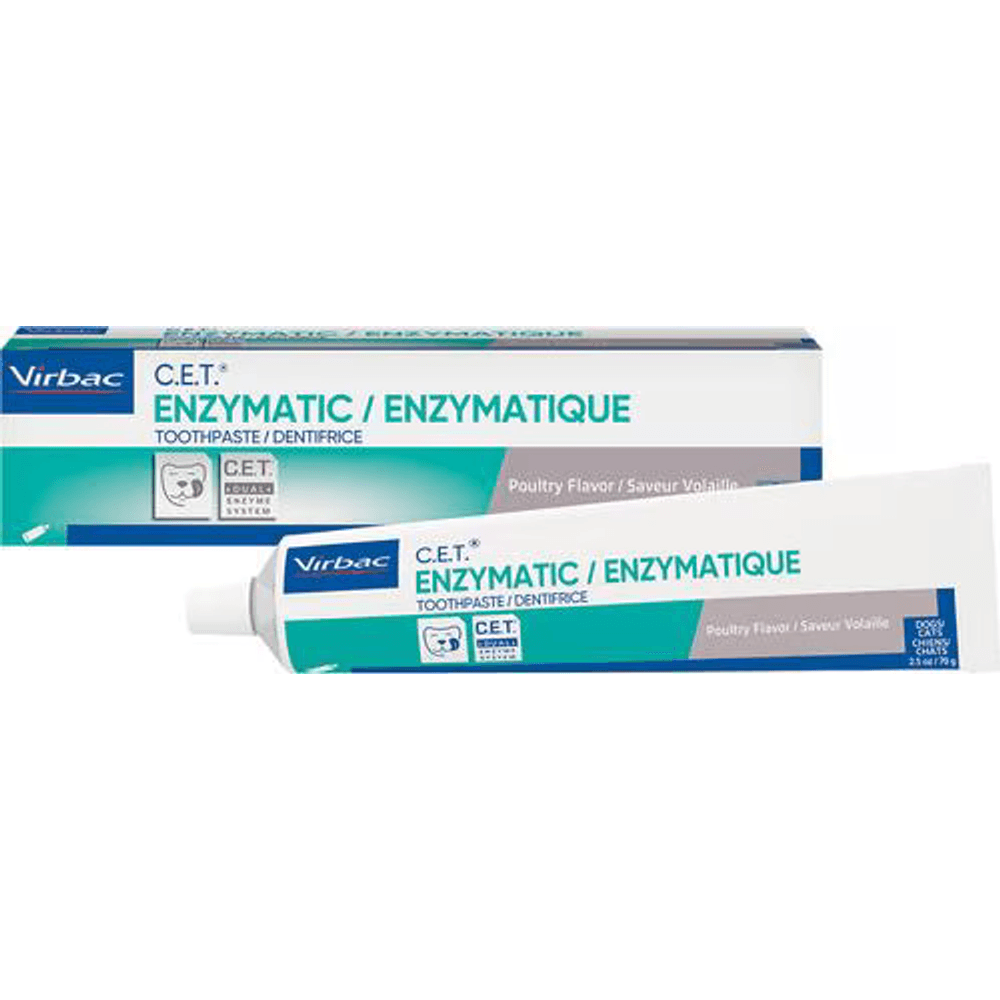
The vet-favorite enzymatic toothpaste. Its dual-enzyme system keeps working between brushings to control plaque and freshen breath, and the poultry flavor makes daily brushing easy.
Webvet may earn a commission when you click through to Chewy, at no extra cost to you.
Recovery After Tooth Extraction: What to Expect
Recovery is usually smoother and faster than owners fear. Most cats go home the same day or the next, with pain medication for about a week to ten days.
- First few days: offer soft or wet food, keep the environment calm, and give all prescribed medication.
- One to two weeks: the gums heal and many owners notice their cat becoming brighter, more playful, and more interested in food than they have been in months.
- Recheck: your vet will confirm the sites have healed and the inflammation has settled.
Home Comfort and Care for a Cat With Stomatitis

Feeding a Cat With a Sore Mouth or No Teeth
Cats manage remarkably well without teeth. In the wild, teeth are for catching prey, not really for chewing, so a toothless cat can eat comfortably for the rest of its life. Helpful tips:
- Offer wet or canned food, which is soft and easy to lap up.
- Warm food slightly to boost aroma and appeal.
- If your cat prefers kibble, soften it with warm water or a little low-sodium broth.
- Use a shallow, wide dish so nothing presses on a sore mouth.
Pain-Friendly Hygiene
Before surgery, aggressive brushing usually hurts too much. After healing, your vet may recommend gentle plaque control on any remaining teeth, dental gels, or water additives to reduce buildup and help with bad breath. Always follow your vet's specific advice.
What NOT to Do at Home
- Do not give human pain relievers. Ibuprofen, acetaminophen, and aspirin are toxic to cats and can be fatal.
- Do not rely on home remedies to cure the disease; they cannot address the immune cause.
- Do not delay veterinary care hoping it will pass. Stomatitis does not resolve on its own.
Prognosis and Life Expectancy: Can Cats Live a Long Life With Stomatitis?
Yes. With appropriate treatment, the outlook is genuinely good, and most cats go on to live a full, normal-length life. Stomatitis itself is not a fatal disease, and it does not shorten lifespan when the pain is controlled and the cat is eating well.
Because about 80 percent of cats improve or are cured after full-mouth extraction, the majority reach a comfortable, low-maintenance state. The remaining cats usually still improve with continued medical management. The key is that quality of life depends on controlling the pain, so ongoing partnership with your vet matters.
How to Help Prevent Stomatitis and Dental Disease in Cats
There is no guaranteed way to prevent FCGS because the immune trigger is not fully understood. But you can lower the overall dental disease burden and catch problems early:
- Schedule routine veterinary dental checkups.
- Brush the teeth or use vet-approved dental products where your cat tolerates it.
- Keep core vaccines current to reduce viral triggers such as calicivirus.
- Watch for early gum inflammation and act quickly, before it progresses.
When to See Your Vet
Book a veterinary appointment if you notice any of these, and treat a total loss of appetite as urgent:
- Persistent bad breath, drooling, or blood-tinged saliva.
- Difficulty eating, dropping food, or weight loss.
- Pawing at the mouth, hiding, or a sudden drop in grooming.
- Any refusal to eat lasting 24 hours or more.
Frequently Asked Questions
How do you treat stomatitis in cats?
The gold-standard treatment is surgical removal of the teeth (partial-mouth or full-mouth extraction) performed under anesthesia, which eliminates the plaque surfaces the immune system attacks. Around 80 percent of cats significantly improve or are cured afterward. Cats who cannot have surgery, or who have residual inflammation, are managed with pain relief and anti-inflammatory or immune-modulating medications. Newer options such as stem cell therapy exist for stubborn cases.
Can a cat survive with stomatitis?
Yes. Stomatitis is painful but not directly fatal, and with proper treatment cats not only survive but usually thrive. The main danger is a cat that stops eating from mouth pain, which can lead to serious complications like fatty liver disease. Once the pain is controlled, most cats eat normally and return to a good quality of life.
What can be mistaken for stomatitis in cats?
Several conditions can look similar, which is why a professional diagnosis is essential. The main look-alikes are tooth resorption, oral tumors (such as squamous cell carcinoma), eosinophilic granuloma complex, advanced periodontal disease, and trauma or a foreign body lodged in the mouth. Vets use an oral exam under anesthesia, dental X-rays, and sometimes a biopsy to tell them apart.
Do all cats with stomatitis have FIV?
No. Most cats with stomatitis are not FIV-positive, and a stomatitis diagnosis does not mean your cat has FIV. However, FIV and FeLV can worsen the disease and make it harder to treat, so vets routinely test for both viruses at diagnosis because the results affect the treatment plan and prognosis.
Can cats live a long life with stomatitis?
Yes. With appropriate treatment, most cats live a full, normal-length life. Stomatitis does not shorten lifespan as long as the pain is controlled and the cat is eating well. After full-mouth extraction, the majority of cats reach a comfortable, low-maintenance state, and even cats managed with medication alone typically do well.
What is the silent killer in cats?
The phrase silent killer usually refers to chronic kidney disease, which develops slowly and often shows no obvious signs until it is advanced. It is not the same as stomatitis, but the comparison is a useful reminder to keep up with routine vet visits and bloodwork, since many serious feline conditions are easy to miss early. If your cat shows increased thirst, weight loss, or appetite changes, ask your vet to check kidney and organ function.
What is the fastest way to cure stomatitis in cats?
The fastest route to a lasting cure is full-mouth or partial tooth extraction by a veterinarian, combined with short-term pain relief during healing. Medications can reduce symptoms quickly but rarely resolve the disease on their own, and there is no safe at-home cure. Surgery addresses the root cause (the immune reaction to plaque on the teeth) and gives most cats durable relief.
What is the silent killer of cats?
Chronic kidney disease and hypertrophic cardiomyopathy (a heart condition) are both commonly called silent killers of cats because they can progress with few outward signs. Neither is caused by stomatitis, but the takeaway is the same: subtle changes in appetite, weight, thirst, or behavior deserve a vet visit. Regular checkups and screening bloodwork catch these hidden problems earlier, when they are most treatable.
$65 · no membershipHave a health question about your cat?
A licensed vet can assess your cat over video and prescribe online when it's appropriate.
Talk to a vet- Licensed vets
- All 50 states
- same-day Rx
Webvet may earn a commission if you book.

Editor
The Webvet Editorial Team is the in-house group of pet-care editors and writers behind Webvet, operated by Smart Pet Collective. The team researches, writes, and maintains Webvet's pet health, behavior, and medication content. Every article follows a defined editorial process: research from reputable veterinary and scientific sources, careful drafting, mandatory review of medical content by a credentialed veterinarian, and dated publication. Health and medication articles are medically reviewed by a licensed veterinary professional before they go live and are kept current over time.
Veterinarian · BVMS MRCVS
Dr. Pippa Elliott, BVMS, MRCVS, is a veterinarian with nearly 30 years of experience in companion animal practice. Dr. Elliott earned her Bachelor of Veterinary Medicine and Surgery from the University of Glasgow. She was also designated a Member of the Royal College of Veterinary Surgeons. Married with 2 grown-up kids, Dr. Elliott has a naughty Puggle named Poggle, 3 cats and a bearded dragon.


