Toxoplasmosis in Cats: Symptoms, Pregnancy Risk, Testing, and Treatment
Toxoplasmosis is a parasite infection cats usually catch from prey or raw meat, and most infected cats show no signs. Symptoms, testing, treatment, and the steps that keep pregnant owners safe without giving up the cat.

BVMS MRCVS
Medically reviewed by Dr. Pippa Elliott, BVMS MRCVS · Last reviewed

This article contains affiliate links. Webvet may earn a commission when you buy through them, at no extra cost to you.
Toxoplasmosis in cats: what it is, how cats catch it, and whether your cat needs a vet
Toxoplasmosis in cats is an infection with Toxoplasma gondii, a single-celled parasite. Cats usually catch it by eating infected prey or raw meat, and most infected cats show no signs at all, according to the Cornell Feline Health Center.
When toxoplasmosis in cats does cause illness, a vet can treat it, usually with the antibiotic clindamycin. If you are pregnant, you can keep your cat: hand off litter duty, scoop daily, keep the cat indoors, and skip raw meat, as the CDC advises.
- 1How cats catch toxoplasmosis: by eating infected rodents, birds, or raw meat.
- 2Most infected cats never look sick, and indoor cats fed commercial food are at low risk.
- 3Signs that need a vet: fever, poor appetite, labored breathing, eye changes, wobbling, or seizures.
- 4Clindamycin from your vet is the usual treatment for cats that are ill.
- 5Pregnant owners can keep their cat with daily scooping by someone else, gloves, and no raw meat.
Wild and domestic cats are the only animals in which the parasite completes its life cycle and makes eggs called oocysts, Cornell explains. Here is where cats get toxoplasmosis:
- Hunting and eating infected rodents, birds, or other small animals, per the CDC
- Eating raw or undercooked meat that holds tissue cysts
- Swallowing oocysts from soil, water, or anything soiled by infected cat feces, per the Companion Animal Parasite Council (CAPC)
A newly infected cat usually starts shedding oocysts 3 to 10 days after eating infected tissue and keeps shedding for about 10 to 14 days, Cornell reports. The timing depends on how the cat was infected: CAPC reports shedding starts 3 to 10 days after a cat eats infected raw meat but 19 to 48 days after it swallows oocysts. Shed oocysts are not infectious yet: the CDC says they need 1 to 5 days in the litter or soil to mature, so scooping every day with a sturdy tool like the Frisco Cat Metal Litter Scoop removes them first.
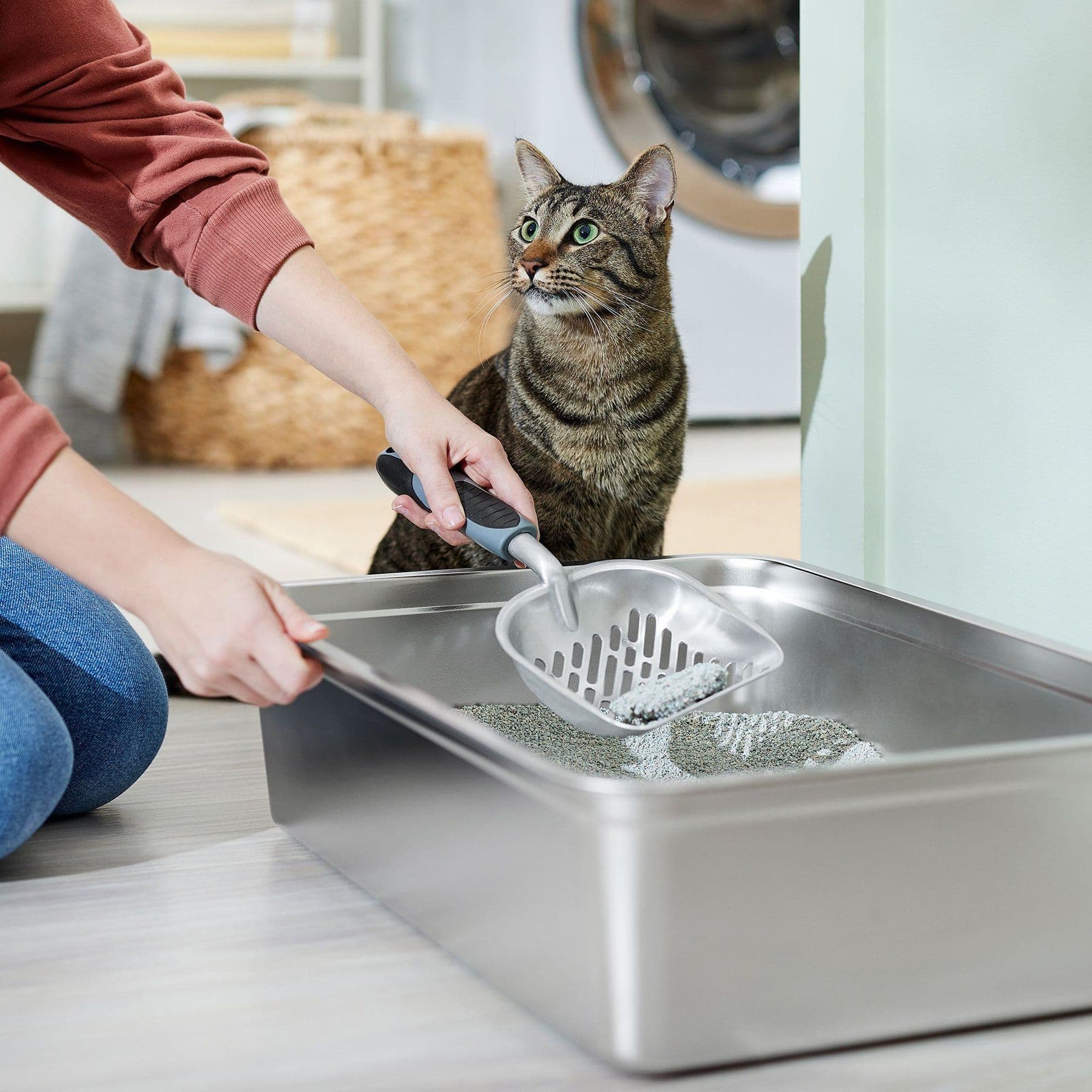
A sturdy metal scoop for the once-a-day litter cleaning that removes oocysts before they can become infectious.
Webvet may earn a commission when you click through to Chewy, at no extra cost to you.
Most cats shed oocysts only once in their lifetime because they build immunity after the first infection, according to the Merck Veterinary Manual. Cats with weakened immune systems are the exception and can shed again.

Do all cats have toxoplasmosis? No, but many have met the parasite. CAPC puts the prevalence, or percentage of US cats that carry antibodies, a sign of past exposure, anywhere from 14% to 100% depending on the group studied. Active infection is rare at any moment: only about 1% of cats are shedding oocysts at one time.
Kittens can have toxoplasmosis too, and CAPC notes that passing the parasite from mother to kittens before birth or through milk happens, though rarely. Kittens are among the cats most likely to become ill. Cornell lists young kittens and cats with feline leukemia virus (FeLV) or feline immunodeficiency virus (FIV) as the groups at highest risk for disease.
Do indoor cats usually have toxoplasmosis?
Usually not. Cornell states that indoor cats that do not hunt prey or eat raw meat are unlikely to be infected. An indoor-only house cat can still pick it up from a raw diet or a mouse that gets inside, so a commercial cooked diet and no hunting keep the risk low. Book a vet visit if your cat seems unwell, especially with eye, breathing, or nervous system signs.
Oocysts can survive in the environment for well over a year, Cornell notes, and CAPC says they resist most household disinfectants and that disposable litter pans can help, so containing waste matters more than scrubbing.

Jumbo litter box liners with ties that let the person cleaning lift and bag waste without handling it.
Webvet may earn a commission when you click through to Chewy, at no extra cost to you.
Toxoplasma is itself a coccidial parasite, CAPC notes, but it is not the same as the intestinal coccidia covered in coccidia in cats.

 Sponsored
Need flea, tick, or parasite care for your cat?
A licensed vet at Dutch can recommend the right preventive and prescribe it when it's appropriate. Annual members get 20% off their first flea and tick order.
Use code Pets60
Plans start at $12/month · covers up to 5 pets
- Licensed vets in most states
- Rx for 150+ conditions
- 4.7 on Trustpilot
Toxoplasmosis symptoms in cats: eyes, breathing, fever, and nervous system signs
Most cats infected with Toxoplasma gondii show no signs of disease, Cornell explains. Signs of toxoplasmosis in cats appear when the immune system cannot stop the parasite spreading through the body. The most common are:
- Fever, which can also have many other causes (see fever in cats)
- Loss of appetite
- Lethargy and low energy
- Difficulty breathing that gradually worsens, from pneumonia when the lungs are involved
- A yellow tinge to the gums, skin, or eyes (jaundice) when the liver is involved

In the eyes, toxoplasmosis can cause uveitis, inflammation of the pigmented part of the eye, per Cornell. Ocular toxoplasmosis can also cause abnormal pupil size, pupils that react poorly to light, and blindness. A cloudy, red, or painful eye needs a vet, and cat eye infection explains other common causes of eye trouble.
Neurological signs of toxoplasmosis in cats listed by Cornell include:
- Lack of coordination or wobbling
- Personality changes and heightened sensitivity to touch
- Circling, head pressing, or ear twitching
- Trouble chewing and swallowing food
- Seizures, and loss of bladder or bowel control
Can toxoplasmosis cause diarrhea in cats? Yes. The Merck Veterinary Manual cat owner guide lists diarrhea along with cough and jaundice in kittens and cats with weak immune systems.
How does toxoplasmosis affect a cat?
In most healthy adult cats the immune system pushes the parasite into a dormant cyst stage in the muscles and brain, and the cat stays well, Cornell explains. In kittens, older cats, and cats with FeLV or FIV, the active form spreads and damages the lungs, liver, eyes, and brain, which is what causes illness.
What are the symptoms of Toxoplasma gondii infection?
In cats, Toxoplasma gondii infection most often causes a fever with a dull, off-food cat. What follows depends on where the parasite settles: the lungs, liver, eyes, or brain. Veterinary Partner adds that some cats cough or vomit. You cannot tell if a cat has toxoplasmosis by looks alone; a vet needs to test.
SponsoredVet care that's always there
Unlimited video calls and messaging with licensed vets for less than a typical vet visit. One membership covers up to five pets.
Use code Pets60
Plans start at $12/month · covers up to 5 pets
- Licensed vets in most states
- Rx for 150+ conditions
- 4.7 on Trustpilot
How vets test cats for toxoplasmosis
Yes, you can test a cat for toxoplasmosis. A vet bases the diagnosis on your cat's history, the signs, and lab results. The main test measures two types of antibodies to Toxoplasma gondii in the blood, IgG and IgM, Cornell explains:
- High IgM suggests an active infection
- High IgG in a healthy cat suggests a past infection, and that cat is most likely immune and not shedding oocysts
- No antibodies in a healthy cat means the cat has not been infected yet and would shed oocysts for up to two weeks if it were
Because a single IgG result cannot separate old and new infection, the Merck Veterinary Manual says IgG levels should be measured twice, 3 to 4 weeks apart, looking for at least a 4-fold change.
A fecal test is not a reliable way to diagnose toxoplasmosis, Cornell notes, because the oocysts look like those of other parasites and sick cats are often not shedding. CAPC adds that PCR testing can detect the parasite's DNA in blood, spinal fluid, airway washes, eye fluid, and tissue.
Veterinary Partner notes that a vet may also run blood work, a urinalysis, X-rays, and an eye exam to see which organs are involved. A tissue sample examined under a microscope gives a definite answer, though it is not always needed before treatment starts.
Toxoplasmosis treatment in cats: clindamycin and what recovery involves
Not every infected cat needs treatment. The Merck Veterinary Manual cat owner guide says that in many cases treatment is not necessary, and your vet prescribes antibiotics when a cat is ill. Treatment for toxoplasmosis in cats usually involves a course of the antibiotic clindamycin, Cornell explains, sometimes with corticosteroids if the eyes or nervous system are badly inflamed.

Clindamycin is a prescription medication. Your vet sets the clindamycin dose for toxoplasmosis in cats, how long the course runs, and the rechecks, and a pharmacy fills it only with that prescription. Generic clindamycin capsules such as Clindamycin HCl Capsules, 25-mg are one form vets prescribe.
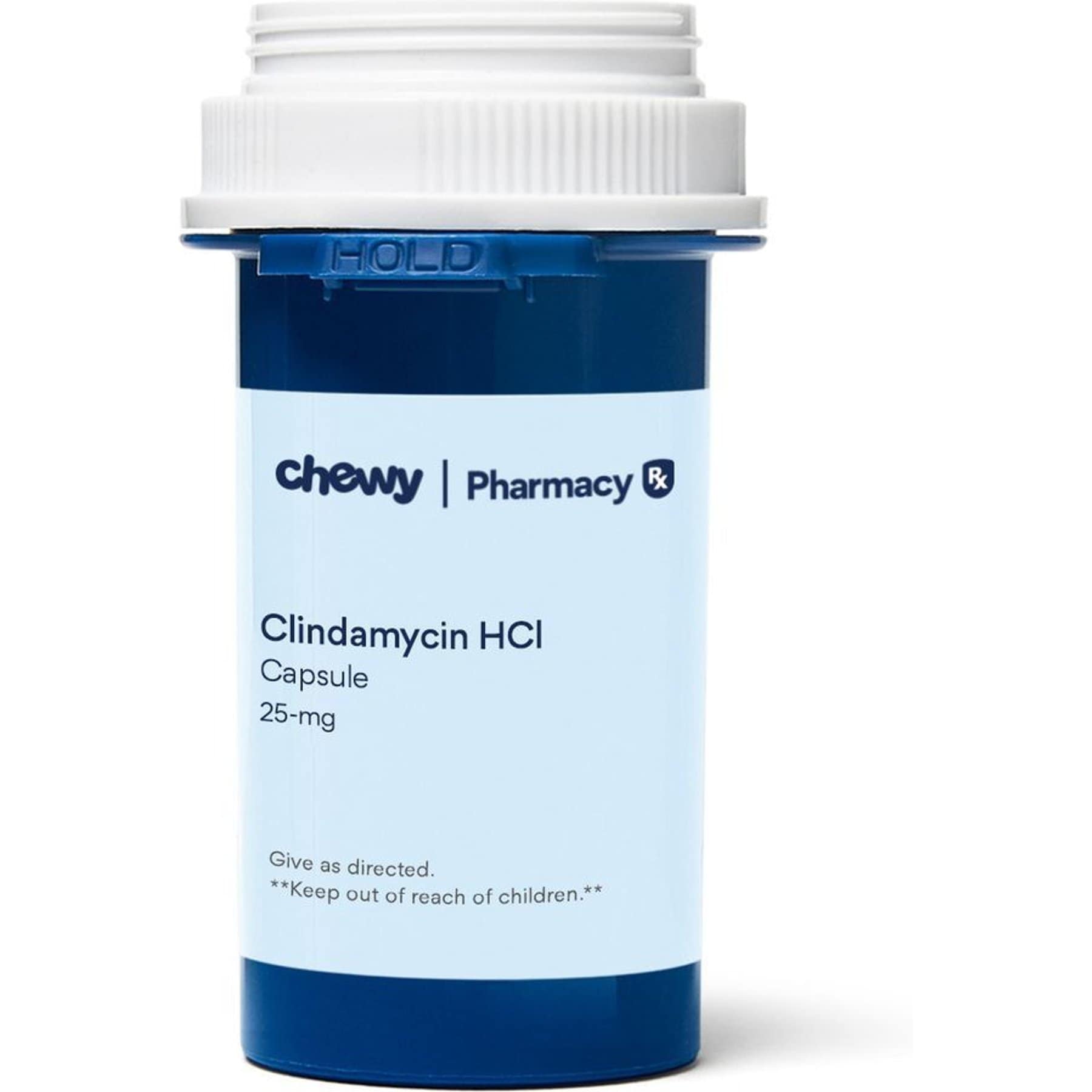
A prescription medication: generic clindamycin capsules, the antibiotic vets usually use for toxoplasmosis, dosed by your vet.
Webvet may earn a commission when you click through to Chewy, at no extra cost to you.
How long treatment lasts varies by source. The Merck Veterinary Manual describes 4 weeks of clindamycin or a trimethoprim-sulfonamide combination, while CAPC lists clindamycin for 2 to 4 weeks. Cornell advises starting right after diagnosis and continuing for several days after signs have gone.
CAPC notes there is no approved treatment for toxoplasmosis in cats, but these antibiotics have been used successfully:
- Clindamycin, the usual first choice
- Trimethoprim-sulfamethoxazole
- Pyrimethamine plus a sulfonamide
- Azithromycin
Recovery support depends on how sick the cat is. The Merck cat owner guide says anticonvulsant medication may be used to control seizures. Veterinary Partner notes that cats often begin to improve within 1 to 2 days and that any immunosuppressive medication will most likely be stopped. If a cat does not improve within 2 to 3 days, Cornell says the diagnosis may be questioned.
At home, keep the litter routine simple while your cat recovers. Fresh liners such as Fresh Kitty Jumbo Litter Box Liners & Ties, 30 count and a sealed pail like the Litter Genie Plus Cat Litter Disposal System, Silver keep waste contained; the Litter Genie review covers how the pail works.

An easy-pour litter box with a smooth interior that makes the daily scoop and full litter change simpler.
Webvet may earn a commission when you click through to Chewy, at no extra cost to you.
Some households prefer a self-cleaning box such as the PetSafe ScoopFree Clumping Self-Cleaning Cat Litter Box, which rakes waste away automatically; the waste tray still needs emptying daily, with gloves and handwashing afterward. The WebVet guide to the best automatic litter boxes compares the options.
Ivermectin, a common dewormer, is not among the drugs CAPC or Merck list for toxoplasmosis. Can you get rid of toxoplasmosis in cats completely? Not usually. Merck explains that these drugs help during active illness but will not usually eradicate the infection, and nothing kills the dormant cyst stage well.
When a cat with toxoplasmosis signs needs a vet today
Toxoplasmosis can turn serious fast in cats with weak immune systems. Cornell explains that lung infection causes difficulty breathing that gradually worsens, and the liver form causes jaundice. The Merck cat owner guide notes that very sick cats may need fluids or intravenous feeding while the antibiotics take effect.

A seizure, a sudden change in vision, or a cat that is wobbly and confused needs prompt care whatever the cause. Seizures in cats explains what to do during an episode and how vets look for the cause.
Toxoplasmosis in cats prognosis: recovery, relapse, and long-term effects
The outlook for a cat with toxoplasmosis depends on which organs are affected, how quickly treatment starts, and how the cat responds, Cornell explains. Cats with eye and nervous system signs respond more slowly, but they do better if they improve within 2 to 3 days of starting treatment.
Can toxoplasmosis kill a cat? Yes. Cornell says the outlook for cats with toxoplasmosis affecting the liver or lungs is usually poor, and the Merck Veterinary Manual notes that young kittens with weak immune systems can die from widespread infection. Most infected cats never become ill, though.
How long toxoplasmosis lasts and what it leaves behind depends on the cat:
- Otherwise healthy cats tend to have better outcomes, and a full recovery is possible, per Veterinary Partner
- Cats with eye or brain involvement recover more slowly, so long-term effects are more likely and your vet will plan rechecks
- Cats with liver or lung disease, young kittens, and cats with FeLV or FIV face the hardest recovery
Does toxoplasmosis go away in cats? The illness can, but the parasite usually stays. Merck explains that tissue cysts can remain viable for many years and possibly for life. Veterinary Partner notes that the parasite can become active again in the future, and CAPC links this reactivation to a weakened immune system.
Toxoplasmosis, pregnancy, and people: how to stay safe without giving up your cat
| Situation | Risk | Precaution |
|---|---|---|
| Scooping the litter box | Real but manageable; oocysts need 1-5 days to become infectious | Someone else scoops daily; if no one can, wear disposable gloves and wash hands |
| Petting or cuddling your cat | Unlikely; cats rarely carry the parasite on their fur | Normal handwashing |
| Kissing your cat | Low; direct contact is not considered a risk factor | Wash hands before eating |
| A cat scratch or bite | Unlikely to transmit toxoplasmosis | Clean the scratch with soap and water |
| Gardening or a sandbox | Possible if outdoor cats used the soil | Wear gloves, wash hands, cover sandboxes |
| Feeding the cat raw meat | Raises the cat's chance of infection | Feed commercial dry or canned food only |
| Handling raw meat in the kitchen | A more likely source of human infection than cat feces | Cook meat fully, wash hands and surfaces |
| An indoor-only cat on commercial food | Low; unlikely to be infected | Keep the cat indoors, no hunting |
| A new or stray cat or kitten | Higher; may be newly infected | Do not adopt or handle strays while pregnant |
For most households, everyday contact with a cat carries little real toxoplasmosis risk, and each situation has a simple precaution that handles it. Toxoplasmosis is zoonotic, meaning it can pass from animals to people. The CDC says people catch it by accidentally swallowing the parasite from cat feces or contaminated soil, or by eating undercooked meat or unwashed produce. Cornell notes that people in the US are much more likely to be infected by raw meat and unwashed produce than by handling cat poop.
The CDC prevention steps for pregnant or immunocompromised people are:
- If possible, have someone else change the cat litter
- If no one else can, wear disposable gloves and wash your hands with soap and water afterward
- Change the litter box daily, because the parasite does not become infectious until 1 to 5 days after a cat sheds it
- Keep cats indoors so they cannot hunt
- Feed commercial dry or canned food, never raw or undercooked meat
- Do not adopt or handle stray cats, especially kittens, or get a new cat while pregnant
- Wear gloves when gardening and wash your hands afterward
Infection during or just before pregnancy can pass to the baby. The CDC notes that most infected infants have no symptoms at birth but can develop serious problems later, including blindness. Congenital toxoplasmosis is the reason these precautions matter. You do not need to give up your cat: Cornell notes that the CDC no longer advises pregnant women to avoid cats.
A cat is only contagious for a short window: CAPC says active shedding lasts about 1 to 3 weeks, usually once in a lifetime. No vaccine exists to prevent toxoplasmosis in cats, so the steps above are how you prevent it at home.
For questions about your own health, testing, or pregnancy, talk with your doctor or midwife.

Is it safe to clean a cat litter box while pregnant?
It is safest to have someone else do it. The CDC advises pregnant people to have someone else change the litter if possible. If no one else can, wear disposable gloves, wash your hands with soap and water afterward, and change the litter daily so any oocysts are removed before they become infectious.
How likely is a cat owner to get toxoplasmosis?
The chance is relatively small. Cornell explains that cats shed the parasite only for a short time, so exposure from a household cat is unlikely, and owning a cat does not mean you will be infected. For comparison, the CDC estimates about 11 percent of the US population aged 6 and older has had the infection, mostly from food.
Can humans get toxoplasmosis from cats?
Yes, but usually not directly. People can catch it by swallowing oocysts from cat feces after cleaning a litter box or gardening without washing hands, the CDC explains. CAPC notes that direct contact with cats is not considered a risk factor, particularly for cats kept indoors and fed a commercial diet.
Can kissing my cat cause toxoplasmosis?
It is very unlikely. Cornell says you are unlikely to pick up the parasite by touching an infected cat because cats usually do not carry it on their fur, and CAPC does not consider direct contact a risk factor. Washing your hands before eating and after handling the litter box covers the small remaining risk.
Toxoplasmosis in cats questions
Frequently Asked Questions
Is there a vaccine for toxoplasmosis in cats?
No. Cornell states there is no vaccine to protect against toxoplasmosis in animals or humans, and Veterinary Partner notes vaccine research is still not complete. Prevention relies on keeping cats indoors, feeding cooked commercial food, and daily litter cleaning.
Can you get toxoplasmosis from a cat scratch?
It is unlikely. Cornell says infection through cat bites or scratches is unlikely, because the parasite spreads through oocysts in cat feces, not through claws or saliva. A scratch can still become infected with bacteria, so clean it well.
How long is a cat with toxoplasmosis contagious?
Only briefly. The Merck Veterinary Manual says oocysts first appear in the feces about 3 days after infection and can be shed for up to 20 days, roughly 1 to 3 weeks. CAPC notes that cats with antibodies have usually finished shedding, and cats that are sick from toxoplasmosis are often not shedding at all.
Can toxoplasmosis in cats be cured?
The illness can be treated, often successfully, with clindamycin or another antibiotic your vet prescribes. Merck explains that the drugs do not usually clear the dormant cysts, so a relapse is possible if the cat's immune system weakens later.
Can toxoplasmosis cause seizures in cats?
Yes. Cornell lists seizures among the neurological signs, along with circling, head pressing, and wobbling. A cat having seizures needs same-day veterinary care, and your vet may add anticonvulsant medication while the infection is treated.
Veterinarian · BVMS MRCVS
Dr. Pippa Elliott, BVMS, MRCVS, is a veterinarian with nearly 30 years of experience in companion animal practice. Dr. Elliott earned her Bachelor of Veterinary Medicine and Surgery from the University of Glasgow. She was also designated a Member of the Royal College of Veterinary Surgeons. Married with 2 grown-up kids, Dr. Elliott has a naughty Puggle named Poggle, 3 cats and a bearded dragon.


