Coccidia in Cats: Symptoms, Treatment, and Household Management
Coccidia can cause serious diarrhea in kittens. Learn what testing and treatment involve, what home care can support, and how to manage shared litter boxes.

BVMS MRCVS
Medically reviewed by Dr. Pippa Elliott, BVMS MRCVS · Last reviewed

This article contains affiliate links. Webvet may earn a commission when you buy through them, at no extra cost to you.
Coccidia in cats are microscopic intestinal parasites, usually Cystoisospora, that can cause diarrhea, poor growth and dehydration. Kittens are particularly vulnerable, while an infected adult cat may look healthy. Fecal testing and the cat's overall condition guide treatment; the color or smell of poop cannot establish the diagnosis.
Call your veterinarian promptly for a kitten with diarrhea, poor appetite or reduced activity. Repeated vomiting, marked weakness or inability to drink needs urgent assessment. At home, prescribed medication, monitoring and litter-box cleaning have different purposes: treating the patient and reducing another exposure must happen together.
 Sponsored
Need flea, tick, or parasite care for your cat?
A licensed vet at Dutch can recommend the right preventive and prescribe it when it's appropriate. Annual members get 20% off their first flea and tick order.
Use code Pets30
Plans start at $11/month · covers up to 5 pets
- Licensed vets in most states
- Rx for 150+ conditions
- 4.7 on Trustpilot
Coccidia in cats and kittens
Coccidia are intestinal protozoa. Cats and kittens can swallow infectious stages from contaminated surroundings. A kitten with diarrhea needs veterinary advice; cleaning the litter box cannot replace treatment or correct dehydration.
The usual feline species are Cystoisospora felis and Cystoisospora rivolta, formerly called Isospora. They multiply in intestinal tissues, and microscopic oocysts leave the body in feces. Oocysts then mature outside the cat before becoming infectious. A shared dirty tray gives these stages an opportunity to accumulate.
A dedicated scoop makes prompt removal easier and keeps one cat area's equipment separate. The Frisco Metal Litter Scoop can serve that purpose. Wash it as part of the veterinary hygiene plan; the scoop removes feces but does not disinfect the tray or treat the cat.
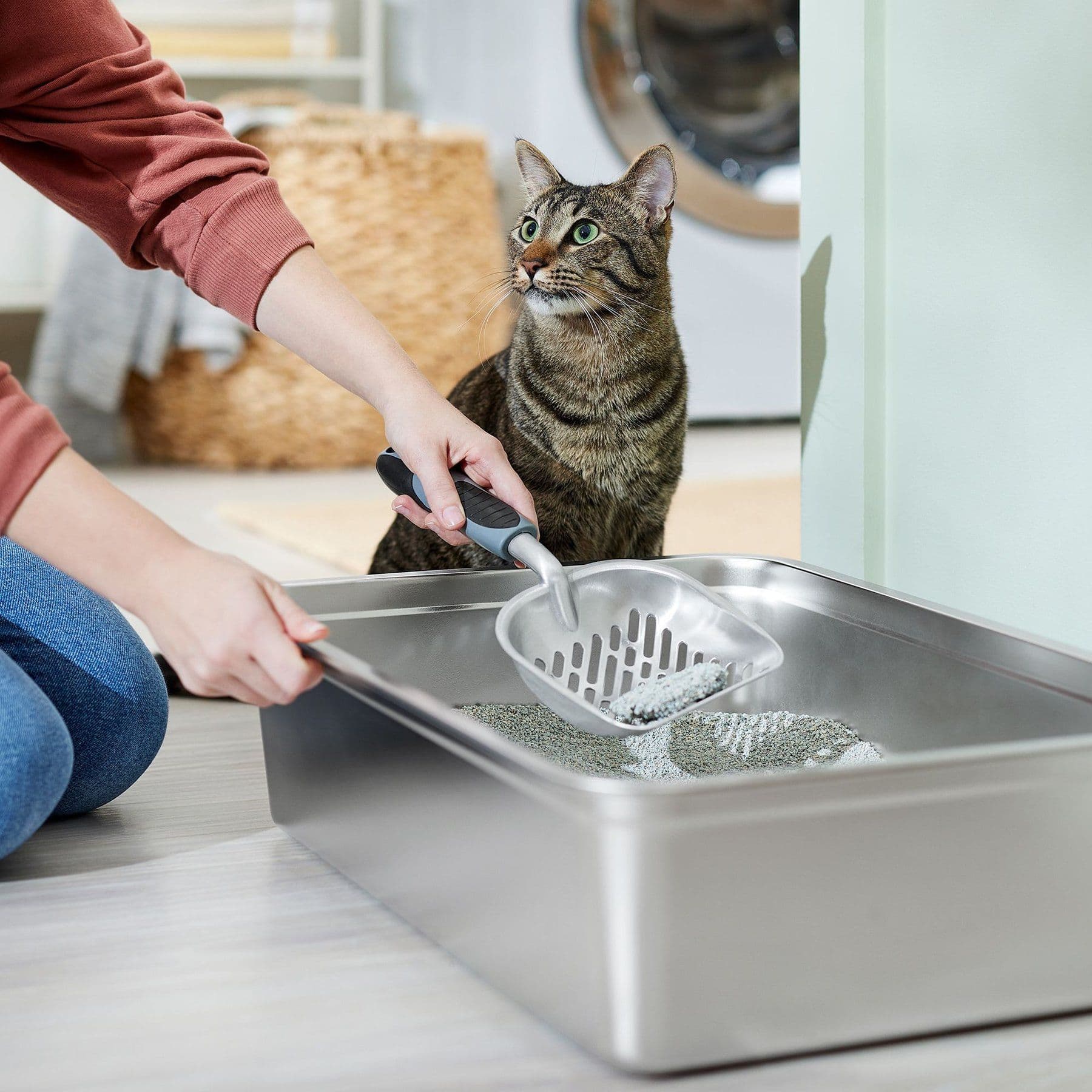
A dedicated metal scoop for prompt feces removal in one cat area.
Webvet may earn a commission when you click through to Chewy, at no extra cost to you.
Why an indoor kitten can still be infected
Indoor cats can encounter contaminated litter, equipment or surroundings, and a newly adopted kitten may already carry the parasite. Hunting an infected transport host is another possible route. Indoor housing reduces some exposures but does not make a positive fecal result impossible. The timing of diarrhea after adoption does not, by itself, prove where infection occurred.
Coccidia is common enough in young animals that veterinary teams consider it when evaluating kitten diarrhea. Stress, crowding, immature immunity and other infections can affect the severity. Newborn or neonatal kittens need especially careful assessment; do not adapt a medicine dose intended for a larger kitten. Mention the nursing mother, littermates and any pregnant cats when discussing the household plan.
Adult cats can also be infected, sometimes without symptoms. The useful distinction is between detecting an organism and establishing why a particular cat is ill. VCA's feline coccidiosis overview describes both the intestinal infection and the importance of the patient's age and health. Ask the clinic for a coccidia client handout with these instructions:
- Your cat's medicine, concentration and measured dose.
- The cleaning routine for shared trays and equipment.
- Changes that require a call and the recheck plan.
Keep it with the prescription so everyone caring for the kitten follows the same instructions.
Symptoms and when to call the veterinarian
Symptoms of coccidia in cats include diarrhea, sometimes with mucus or blood, reduced appetite, vomiting, lethargy and poor growth. A kitten may lose weight instead of gaining. These signs also occur with other conditions, so they should prompt assessment rather than a home diagnosis of “coccidia worms.”
For a planned examination, use a carrier the cat can occupy comfortably. The medium Frisco Travel Safety Dog & Cat Carrier is an option if its dimensions and weight limit suit your cat. Carry the stool specimen in a separate sealed secondary bag, not loose inside the carrier with the kitten.

A secure medium carrier for a cat that fits its dimensions and weight limit.
Webvet may earn a commission when you click through to Chewy, at no extra cost to you.

Figure 1 from Ogedengbe et al. (2016), reproduced under CC BY 4.0. Feline Cystoisospora appears in panels D and F: D shows C. felis, and F shows an unsporulated C. rivolta oocyst. Other panels contain canine or porcine organisms. The original letters and 10-micrometer scale are retained for this laboratory reference.
What coccidia poop looks like
There is no distinctive coccidia stool appearance. Diarrhea may be watery or contain mucus, and some infected cats pass formed poop. Normal-looking stool still needs fecal testing when the clinical history warrants it. A strong smell does not distinguish coccidia from Giardia, a food change or another cause of diarrhea.
You cannot see the individual oocysts in the litter box. Photographs can show blood or document a change in consistency, but they cannot identify the parasite. Tell the veterinarian how often the kitten defecates, whether vomiting occurs and what the kitten actually eats. Our guide to cat diarrhea and what to do about it explains why that broader history matters.
- Seek urgent help for severe weakness, collapse, repeated vomiting or inability to keep fluids down.
- Report blood in stool, ongoing poor appetite or worsening activity promptly, particularly in a young kitten.
- Ask about weight monitoring and the threshold for a same-day recheck during treatment.
Kitten dehydration can develop when stool and vomit losses exceed fluid intake. A kitten that drinks little or vomits water cannot reliably replace those losses at home. The veterinarian may need to provide fluids and nutritional support while treating the cause.
Severe coccidiosis can kill a kitten, especially when dehydration or another infection complicates it. There is no separate “death symptom” that must appear before seeking care. A quiet, poorly eating kitten already deserves attention. Do not wait for profuse diarrhea if the kitten's overall condition is deteriorating.
Constipation is not the usual presentation of coccidia. Repeated litter-box straining with little output may represent another bowel problem or difficulty urinating; a cat unable to pass urine needs emergency care. A previous positive stool test should not cause a new symptom to be dismissed.
SponsoredVet care that's always there
Unlimited video calls and messaging with licensed vets for less than a typical vet visit. One membership covers up to five pets.
Use code Pets30
Plans start at $11/month · covers up to 5 pets
- Licensed vets in most states
- Rx for 150+ conditions
- 4.7 on Trustpilot
Diagnosis and look-alike causes of diarrhea
Testing commonly includes fecal flotation to identify oocysts under a microscope. Antigen and PCR tests may add information, particularly when other organisms or an early infection are suspected. A negative sample does not always exclude infection, so persistent signs may require repeat testing or a broader investigation.
Coccidia, Giardia and Tritrichomonas
Coccidia and Giardia are different protozoal parasites. Both can be associated with diarrhea, and neither can be identified from odor or a stool photograph. A cat can have more than one parasite at the same time. Treatment for Giardia must not be assumed to cure Cystoisospora.
Tritrichomonas, sometimes called “trichomonas” by owners, is another different organism that may be considered in persistent diarrhea, especially in a multicat setting. Ask which organisms the submitted sample was tested for. A general statement that a kitten “had a stool test” may not tell you whether the relevant specific test was included.
Finding coccidia does not prove that it is the sole cause of diarrhea. Food changes, intestinal worms, viral disease and other problems can coexist. Bring the adoption record, previous test results and names of medicines already given. The guide to signs of worms in kittens covers another group of parasites that requires a separate treatment decision.
Treatment and what home care can support
Veterinary treatment for coccidia in cats uses an appropriate anticoccidial medicine and addresses dehydration, nutrition or other illness when necessary. Sulfadimethoxine, commonly known as Albon, is a labeled U.S. option. Veterinarians also use ponazuril off label. The formulation and current body weight matter; do not copy a dose from another cat's prescription.
Separate feeding equipment makes appetite easier to measure. The small OurPets Durapet Stainless Steel Bowl, 0.75 cups can hold a measured portion for a kitten or small cat. Choose a capacity that suits the meal and wash it after use. This supports observation; it does not treat dehydration or remove parasites.
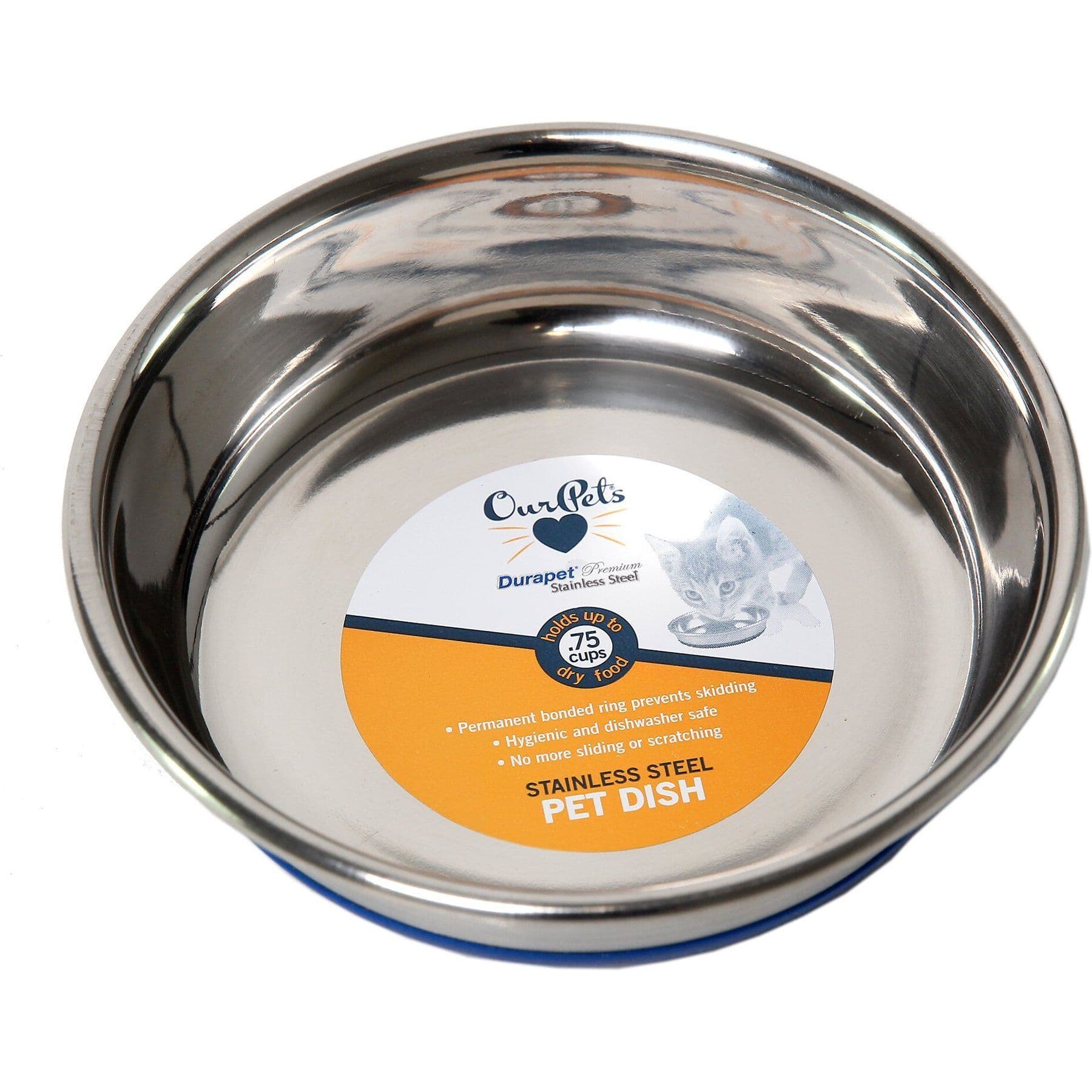
A small washable bowl for tracking food portions during home care.
Webvet may earn a commission when you click through to Chewy, at no extra cost to you.
| Prescription detail | What to record |
|---|---|
| Medicine and concentration | Keep the dispensing label with the correct patient's medicine. |
| Measured dose and schedule | Record doses given and ask before repeating a vomited dose. |
| Expected progress | Know which appetite, activity or stool changes require a call. |
| Recheck and sample | Confirm the appointment and whether a fresh specimen is needed. |
Medication names and common mix-ups
Oral sulfadimethoxine liquids and tablets have different measuring instructions. If a veterinarian prescribes a compounded ponazuril preparation, use its exact concentration and storage directions. Marquis is a horse-product name associated with ponazuril; the horse paste is not a ready-to-use kitten prescription. Toltrazuril is also used in some veterinary settings, with availability and prescribing rules differing by country.
- Panacur or fenbendazole: treatment for certain worms or Giardia does not automatically treat feline Cystoisospora.
- Metronidazole: a prescription for diarrhea or another suspected organism does not establish effective coccidia treatment.
- Corid or amprolium: do not use livestock packaging instructions for a cat.
- Over-the-counter dewormers: check the actual parasite indication instead of assuming all intestinal parasites share one medicine.
For cats in the UK, Australia or another country, ask the local veterinarian about the available licensed or appropriately prescribed formulation. A product name or concentration from a U.S. discussion may not match a local product. The ASPCA's shelter guidance explains why accurate preparation matters when ponazuril is used.
A washable barrier can protect the floor in a suitably sized separate care area. The Paw Inspired Washable Pee Pad, 48 by 60 inches is large enough for a floor setup, but too large for many carriers. Remove soiled material promptly and launder according to its instructions. It does not replace a clean litter box or make contaminated bedding safe to leave in place.
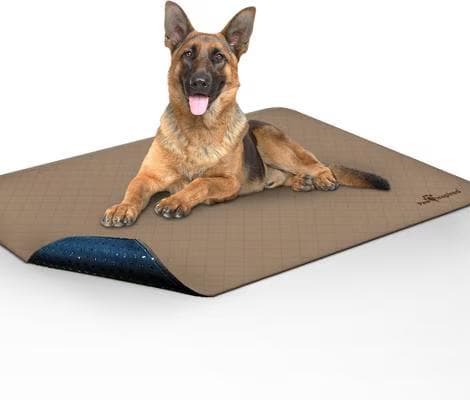
A large washable floor barrier for a separate care area; change promptly after soiling.
Webvet may earn a commission when you click through to Chewy, at no extra cost to you.
How difficult is it to get rid of coccidia?
Many cats recover well with the appropriate plan. Getting rid of coccidia becomes harder when the cat repeatedly swallows infectious material, medicine is missed, or another illness also causes diarrhea. The medication course and the return to normal stool are separate milestones. Ask when improvement should be reported, when to return and whether follow-up testing is needed.
Some healthy adult cats can fight off a mild infection on their own. That possibility does not justify waiting with a sick kitten, an immunocompromised cat or a cat that is not eating. “How long does it last?” has no dependable single answer without knowing the drug, disease severity and exposure. For context, CAPC lists sulfadimethoxine courses of 5–20 days and a ponazuril regimen of 1–3 days for cats and dogs. These are examples for veterinary selection, not instructions to choose or shorten a course yourself. Complete the actual prescription and report persistent signs rather than repeatedly restarting leftovers.
Trying to treat coccidia naturally with coconut oil, diatomaceous earth or another home remedy does not reliably kill Cystoisospora or provide a proven cure. Nothing added to the food should replace the prescribed medicine. Feed the diet and portions your veterinarian recommends, record intake and avoid abrupt repeated diet changes. Do not fast a young kitten or force-feed a weak, vomiting cat without clinical instructions.
Litter-box cleaning and multicat management
Separate the litter-box cleaning routine from parasite treatment. Medication helps the infected cat; removing contaminated material reduces another exposure. Coccidia can be contagious to other cats through shared fecally contaminated surroundings, so a multicat household needs a practical plan for trays, scoops and resting areas.

| Litter-box task and next action | Why it helps |
|---|---|
| Prompt feces removal | Removes material before more oocysts mature in the environment. |
| Use a separate scoop for the affected area | Reduces movement of fecal material between cat groups. |
| Empty the tray and scrub washable surfaces | Mechanical cleaning removes debris that spraying alone leaves behind. |
| Follow the clinic's surface-safe sanitation instructions | Oocysts resist many ordinary disinfectants; product and surface suitability matter. |
| Leave equipment clean and dry | Rinse as directed and thoroughly dry before returning the cat. |
In the coccidia life cycle, shed oocysts become infectious after time in the environment, a process called sporulation. This can happen quickly under favorable conditions. The incubation period before illness and the time before shedding are not interchangeable clocks; neither gives a safe reason to leave feces in a tray until tomorrow.
A workable routine for several cats
Ask which cats need testing or treatment, particularly littermates and other kittens. Use dedicated trays and equipment for the affected group where possible, and care for healthy animals before cleaning the contaminated area. Separation must still allow comfortable rest, food, water and normal gentle interaction with people; an isolated kitten needs observation, not simply a closed door.
Oocysts can persist despite common household disinfectants. Scrub away fecal material first and ask the clinic about heat or another appropriate sanitation method for the surface. Never mix cleaning chemicals, and keep cats away from products until the area is safe. Dirty litter equipment belongs away from kitchen food-preparation sinks and utensils.
Wash bedding without overloading the machine, follow its care label and dry thoroughly. A heavily contaminated item that cannot be cleaned may need replacement. If diarrhea soils the kitten's hindquarters, ask how to clean and dry the skin without chilling the kitten. Keeping the coat clean also reduces opportunities to swallow fecal material during grooming.
Reinfection and human exposure questions
Feline Cystoisospora is species-specific. It is not the usual coccidia infection of dogs, chickens or people. A cat that eats another animal's droppings may pass that animal's parasite stages without having an established infection with them. The laboratory's organism identification matters more than the broad word “coccidia.” The CAPC guideline explains host specificity and the need to interpret fecal findings.
Cats and dogs can still share contaminated surroundings, and some other organisms carried in feces have different host ranges. Our dog coccidia guide addresses the canine patient. Do not give the dog's medicine to the cat or assume that one pet's test result identifies every animal's infection.
There is no universal number of days after treatment when a cat can be declared noncontagious. Shedding, response to medication and renewed exposure differ. Ask about follow-up before rejoining a shared kitten group, returning to a shelter room or introducing another vulnerable kitten. Normal stool alone is not proof that the environment is clear.
Preventing the next episode
Keep the prevention plan manageable: remove feces promptly, clean dedicated equipment, reduce crowding and discuss parasite screening for new cats. Indoor housing does not remove every source of exposure, so retain sensible hygiene after diarrhea resolves. The guide to common cat parasites and prevention explains why routine parasite care may involve more than one organism.
Before a recheck, write down the actual medicine doses given, missed or vomited doses, appetite, weight trend and stool changes. If another cat develops signs, contact the clinic rather than splitting one prescription between them. Persistent diarrhea deserves reassessment for reinfection, an additional parasite or a different disease.
Coccidia questions
Frequently Asked Questions
Can humans catch coccidia from cats?
Feline Cystoisospora is not considered a human infection risk. Other fecal organisms can have different risks, so wash hands after litter handling and keep contaminated equipment away from food. A person's symptoms require human medical advice; a cat's positive test does not diagnose that person.
How can I treat coccidia in my cat at home?
Use prescribed medication exactly as directed and provide the supportive care the veterinarian recommends: food and water access, intake monitoring, prompt litter cleanup and rechecks. Home care is appropriate only when the cat's condition allows it. A weak, dehydrated or repeatedly vomiting kitten needs veterinary care rather than a home-remedy trial.
Does dewormer get rid of coccidia?
Not every dewormer does. Worms and Cystoisospora are different parasites, and treatment requires appropriate medication for the organism identified or suspected. Ask what each prescription targets, especially if Giardia or intestinal worms are also present. Do not combine leftover products to broaden coverage yourself.
Veterinarian · BVMS MRCVS
Dr. Pippa Elliott, BVMS, MRCVS, is a veterinarian with nearly 30 years of experience in companion animal practice. Dr. Elliott earned her Bachelor of Veterinary Medicine and Surgery from the University of Glasgow. She was also designated a Member of the Royal College of Veterinary Surgeons. Married with 2 grown-up kids, Dr. Elliott has a naughty Puggle named Poggle, 3 cats and a bearded dragon.


