How to Tell If a Kitten Has Worms: Signs and Next Steps
Learn how to tell if a kitten has worms, which signs need urgent veterinary care, and how stool testing and an age-appropriate deworming plan help. Get practical, source-backed guidance for your next veterinary conversation.

BVMS MRCVS
Medically reviewed by Dr. Pippa Elliott, BVMS MRCVS · Last reviewed

This article contains affiliate links. Webvet may earn a commission when you buy through them, at no extra cost to you.
How to tell if a kitten has worms starts with looking for poor growth, vomiting, diarrhea, a pot belly or visible worms, but some infected kittens have no obvious signs. A veterinarian uses the kitten's examination, treatment history and appropriate fecal testing to decide what care is needed.
A weak kitten, one with very pale gums or one that is struggling to breathe needs urgent assessment. Do not wait for a worm to appear in the litter box, and do not assume a kitten is protected simply because someone says it was already dewormed.
How to tell if a kitten has worms
Signs of worms in kittens are clues that should be interpreted together. Age and weight affect both risk and medicine selection. A treatment record helps your veterinarian distinguish an untreated kitten from one that needs a scheduled repeat dose, a different test or assessment for another illness.
Watch feeding, activity, stool and growth rather than relying on belly shape alone. The Merck Veterinary Manual describes poor growth, loss of condition and a distended abdomen with roundworm infection, while also explaining that some infected cats show no signs.
- 1Age and weight, including dated measurements if you have them.
- 2A treatment record with product names and actual dose dates.
- 3Notes or photographs of stool changes, vomiting and visible material.
| Finding in a kitten | Why it matters | What it does not prove | Next action |
|---|---|---|---|
| Slow growth or weight loss | May indicate poor intake, parasites or other illness | That a particular worm is responsible | Arrange examination and review feeding and treatment history |
| Rounded belly with poor body condition | Can occur with intestinal parasites | A pot belly alone is not diagnostic | Ask the veterinarian to assess the abdomen and growth |
| Vomiting or diarrhea | Can lead to dehydration and poor feeding | That worms are the only possible cause | Call promptly, especially if persistent or accompanied by weakness |
| Rice-like pieces or long pale worms | May be segments or adult worms | Species and total infection burden | Photograph or save a specimen as the clinic directs |
| Pale gums, collapse or marked weakness | Possible anemia or another emergency | That home deworming will be enough | Seek urgent veterinary care |
| No symptoms | Infection may still be present | That prevention and testing are unnecessary | Follow the age-appropriate veterinary plan |
| See a vet now | Breathing trouble, severe deterioration or a sick kitten unable to feed normally | A photograph cannot establish safety | Contact an emergency clinic |
Check what changed from this kitten's normal
A kitten that usually approaches food eagerly but now hangs back deserves attention. So does a kitten whose littermates gain weight while it loses condition. Neither observation identifies worms, but both help the clinic decide how quickly to examine the kitten and what else to investigate.
Record changes plainly. “Three loose stools today and less interested in feeding” is more useful than “looks wormy.” If you do not know the kitten's exact age, say so. Tooth development, weight and history can help the veterinarian estimate it without treating an online guess as certain.
Visible findings do not tell the whole story
Rice-like pieces can suggest tapeworm segments, while longer tubular worms can suggest roundworms. Eggs are usually microscopic, and a kitten may be infected without passing anything obvious. Normal-looking poop is not a reason to skip a scheduled examination or deworming discussion.
- Note whether unusual material appeared in fresh stool, vomit or bedding.
- Photograph it before discarding it when practical.
- Ask the clinic whether it wants the material as well as a stool sample.
- Avoid bare-hand contact and wash your hands after cleanup.
Not all kitten parasites are worms
Giardia and coccidia can also cause digestive illness, but they are not worms. A product that treats roundworms will not automatically treat these organisms. The AVMA's intestinal-parasite guidance distinguishes worm infections from these single-celled parasites and explains why appropriate testing matters.
Prepare the kitten’s travel space
A Frisco Travel Safety carrier can support a planned clinic visit for a stable kitten. This link opens the Medium variant; choose a secure fit for the kitten and follow the carrier instructions. Keep the individual treatment record and any sealed stool sample with the appointment supplies.

Soft-sided travel safety carrier that keeps a stressed cat secure and well-ventilated on the way to the vet, with mesh panels for airflow and a seat-belt loop.
Webvet may earn a commission when you click through to Chewy, at no extra cost to you.
Diet changes, infections and other conditions can produce similar signs. If the kitten remains unwell after a dewormer, do not assume it simply needs more of the same drug. Contact the clinic with the treatment record so the next step addresses the actual problem.
Age and weight belong in the treatment record
Age and weight should be recorded together because two kittens of similar size may be at different developmental stages. Include the date of each measurement in the treatment record. If the previous caregiver supplied only an estimated birthday, give the clinic that uncertainty rather than choosing an exact age yourself.
Tapeworms in kittens can be associated with fleas, while other worms have different exposure routes. A kitten can have more than one parasite. The record should include flea products as well as dewormers so the veterinarian can see what coverage was actually provided.
A pot belly and poor growth: look at the whole kitten
A pot belly can occur with worms, but it is not a diagnosis and does not show whether a kitten is adequately nourished. Compare the abdomen with overall body condition, feeding and growth. A thin kitten with a rounded belly needs a veterinary assessment rather than a larger meal or guessed medication dose.
An enlarged abdomen can also have causes unrelated to worms. Sudden swelling, obvious pain, repeated vomiting or marked lethargy makes the situation more urgent. Do not press or squeeze the belly to look for a worm mass, and do not delay because the kitten seems briefly playful.

Make a growth record that can be interpreted
Use the same scale and a consistent method when weighing is safe and part of the kitten's care plan. Write down dates and units so the clinic can interpret the trend. Avoid comparing one kitten's isolated number with a different breed or age from an online chart.
A measurement taken after a meal or on a different scale can differ without proving a health problem. The overall trend and the kitten's condition matter. If a young kitten is losing weight or not feeding normally, contact the veterinarian rather than waiting to complete a perfect week of measurements.
- Record weight in one consistent unit.
- Note feeding changes and any formula or diet changes.
- Record diarrhea or vomiting on the same timeline.
- Bring rescue, breeder or shelter paperwork when available.
Ask about feeding and parasite care together
Poor growth can reflect more than one factor. A kitten may need a review of intake, feeding method, parasite control and general health rather than an isolated medicine change. Describe what is offered, how often and what the kitten actually consumes.
Do not compensate for poor growth with unprescribed supplements or a sudden series of diet changes. Those changes can make digestive signs harder to interpret. The clinic can help choose a feeding approach while investigating whether parasites or another illness are contributing.
A littermate's health does not clear this kitten
Kittens sharing a home may have different weights, infection burdens or access to food. One apparently healthy littermate does not prove that a smaller kitten is fine. Conversely, one infected kitten does not tell you which medicine every animal in the household should receive.
Ask whether the litter and nursing queen need a coordinated assessment and treatment plan. Keep individual records so each kitten's age, weight and medicine history remain clear. Product eligibility and dosing should not be estimated from the largest kitten in the group.
Check the coat gently
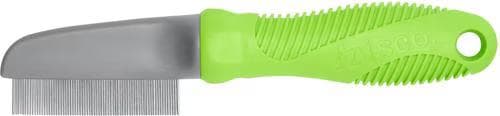
A Frisco single-row flea comb is a non-medicine tool for a gentle check on a comfortable kitten with intact skin. Tell the clinic if you find fleas or debris. Do not keep combing a weak, chilled, or distressed kitten to collect evidence, and do not assume a clean comb excludes parasites.
Webvet may earn a commission when you click through to Chewy, at no extra cost to you.
 $65 · no membership
Need flea, tick, or heartworm prevention for your cat?
A licensed vet can recommend and prescribe the right preventive for your cat online when it's appropriate.
 Talk to a vet
- Licensed vets
- All 50 states
- same-day Rx
Webvet may earn a commission if you book.
Kitten deworming schedule: age and weight both matter
A kitten deworming schedule should come from a veterinarian who knows the kitten's age, weight and history. The Companion Animal Parasite Council recommends starting routine deworming at two weeks of age and repeating every two weeks until an appropriate regular broad-spectrum preventive begins.
That recommendation is a care schedule, not permission to use every commercial cat dewormer in a two-week-old kitten. Products have different minimum ages and weights. The veterinarian selects a preparation suitable for the kitten and explains when to transition to ongoing prevention.
| Stage or situation | Planning point | What the clinic needs from you |
|---|---|---|
| Around two weeks old | Discuss routine deworming using an age-appropriate veterinary plan | Best age estimate, current weight, feeding and health status |
| Following early doses | Repeat timing commonly follows two-week intervals until ongoing prevention starts | Exact drug and dose dates; any missed or vomited dose |
| Eligible for a monthly preventive | Product label, risk and current weight determine the choice | Current weight and all other parasite products used |
| Newly adopted with unknown history | Do not assume no treatment or complete treatment | All available records, source information and fresh sample if requested |
| First year | Schedule fecal testing and review ongoing parasite prevention | Symptoms, exposure changes and treatment adherence |
| See a vet now | Weakness, pale gums, difficult breathing or a kitten deteriorating quickly | Current symptoms; do not wait for the next routine dose date |
Why repeated treatment is often planned
The medicine's activity and the parasite's life cycle affect repeat dosing. One dose may not resolve every developing infection, and ongoing exposure may continue. Follow the exact schedule provided for the specific product rather than applying a generic internet calendar to every medicine.
Ask the clinic to write the next date down. If the kitten spits out or vomits medicine, report what happened and when. Do not double the next dose or immediately repeat the full amount without instructions; you may not know how much was absorbed.
Label examples show why age alone is not enough
- Drontal for Cats: the US label excludes kittens under two months or under two pounds.
- Elanco Tapeworm Dewormer for Cats: the label says it is not intended for kittens under six weeks.
- Revolution Plus: labeled for cats at least eight weeks old and weighing at least 2.8 pounds.
These products do not have identical parasite coverage. A tapeworm-only tablet is not a complete answer to suspected roundworms or hookworms, and a flea medicine alone does not remove an established intestinal tapeworm. The veterinarian matches the active ingredients to the kitten's needs.
The official Drontal label and Revolution Plus prescribing information provide the US eligibility limits. Other countries and similarly named products may have different labels, so use the instructions for the actual product supplied.
Some dewormers are for older, heavier kittens
Drontal for Cats is not a newborn-kitten product: its label excludes kittens under two months or under two pounds. For an eligible kitten, a veterinarian may select it for specified roundworms, hookworms, or tapeworms. The early-kitten schedule above still needs its own age-appropriate veterinary prescription.
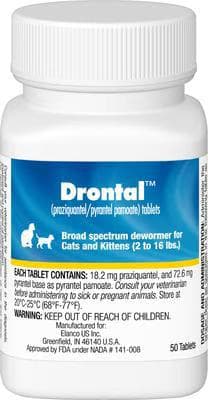
Broad-spectrum cat dewormer (praziquantel and pyrantel) that clears tapeworms, roundworms, and hookworms. For cats and kittens 2 to 16 lbs. Prescription required.
Webvet may earn a commission when you click through to Chewy, at no extra cost to you.
Plan testing alongside treatment
CAPC recommends intestinal-parasite testing at least four times during the first year, with the veterinarian adjusting care for health and lifestyle. A fecal testing schedule remains useful even when preventive treatment has begun. Treatment history and test results answer different parts of the health assessment.
Bring a sample as the clinic requests and identify which kitten produced it. Ask what organisms the test covers and whether repeat testing is needed if signs continue. Do not interpret “negative” as proof that every possible parasite or digestive disease has been excluded.
How and when to deworm kittens
When to deworm kittens is a clinical scheduling question, not a reason to choose the first kitten dewormer available without a prescription. No medicine covers all worms and every other intestinal parasite. The appropriate preparation depends on the patient and the organism, even when a familiar product worked for another litter.
Ask the clinic to show how to measure any liquid and confirm the actual concentration on the package. A volume copied from another product may deliver a different amount of medicine. Store the written instructions with the treatment record, and request clarification before giving an uncertain dose.
When a kitten with suspected worms is in danger
Pale gums and weakness
Very pale gums, profound weakness, collapse and difficult breathing are urgent signs. Hookworms can cause blood loss, but another illness may be responsible. A kitten showing these signs needs assessment rather than a home attempt to confirm worms by examining the next stool.

Repeated vomiting, diarrhea with poor intake or a kitten that becomes unusually quiet also warrants prompt contact with a veterinarian. Small kittens have limited reserves. The clinic can determine whether the kitten needs to be seen immediately and give transport instructions.
A negative stool test does not make a weak kitten safe
The CAPC hookworm guideline notes that kittens may become severely ill before a fecal examination establishes the diagnosis. The veterinarian considers the examination and clinical risk, not just one laboratory result.
This does not mean every weak kitten has hookworms. It means urgent signs need attention even when the presumed cause is uncertain. Tell the clinic about the negative result, but also describe the kitten's current feeding, activity, stool and breathing.
Prepare for the call or visit
- Give the age estimate and most recent weight.
- Describe urgent signs first, including when they began.
- Bring product packaging and the treatment record.
- Ask whether a sample is useful, without delaying departure to obtain one.
- Follow the clinic's instructions for safe transport and handling.
Keep the kitten quiet and handle it gently. Do not force food, water or oral medicine into a weak or struggling kitten. If a product was given accidentally or at an uncertain dose, tell the clinic directly so that information can be included in the assessment.
What happens at the veterinary appointment
The veterinarian can assess body condition, hydration, gum color, abdominal findings and the kitten's general development. Stool testing looks for parasite evidence that is not visible to an owner. Other tests may be needed when the examination suggests anemia or another cause of poor growth.
A visible worm or segment can help, but a photograph is not a complete diagnosis. Bring the actual specimen if the clinic asks for it. The Merck Veterinary Manual's testing guidance explains why one negative fecal test may need further interpretation in a symptomatic animal.
Leave with answers to practical questions
- What parasite was identified or is suspected?
- What does this medicine cover, and what does it not cover?
- What is the next dose date, and will the kitten need reweighing?
- Which signs require another call before the recheck?
- Do the queen, littermates or other household pets need attention?
Coordinate parasite care with routine preventive visits, including the kitten vaccine schedule. Vaccination and deworming address different risks; completing one does not complete the other. Keep both in the same dated health record so future care starts from accurate information.
Fecal testing and poor growth
Fecal testing helps investigate poor growth without assuming every small kitten has the same cause. The clinician may need to consider intake, other infections and the kitten's overall development alongside parasites. Bring the feeding record and any trend in weight, even if the stool looks normal on appointment day.
If treatment improves one symptom but the kitten still loses condition, report that change. A firmer stool does not automatically establish full recovery. The planned follow-up should check the kitten's health, not merely whether a worm is still visible.
Understanding the worm type
Heartworm in cats affects the lungs and associated blood vessels. It does not explain a visible intestinal worm.
The overview of worms in cats explains how intestinal worms differ from mosquito-borne heartworm. Knowing the name matters because medicines and prevention measures are not interchangeable. “A worm” is not enough information to select every part of a kitten's care plan.
Other parasites can occur alongside intestinal worms. Ear mites, for example, require a separate assessment when a kitten has itchy ears or dark ear debris. Our ear mites in kittens guide explains that problem without assuming an intestinal dewormer will address it.
Toxocara cati and Dipylidium caninum
Toxocara cati is a feline roundworm; Dipylidium caninum is the common flea-associated tapeworm. Their different life cycles explain why a medicine and prevention plan must match the parasite. These scientific names help the veterinarian interpret the sample and choose control measures, but owners do not need to identify species themselves.
Check both age and weight for flea products
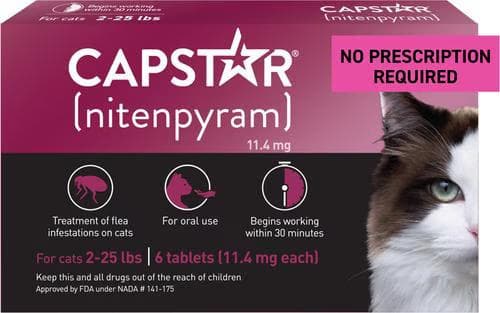
Capstar for Cats is labeled for adult-flea treatment in cats and kittens at least four weeks old and at least two pounds. Both limits apply. It does not treat intestinal worms. A younger or lighter kitten needs a veterinarian-selected flea plan rather than a reduced dose of this product.
Webvet may earn a commission when you click through to Chewy, at no extra cost to you.
Exposure routes differ
Cats can get different types of worms from different sources. Tapeworms may involve fleas or prey, while heartworms require mosquito transmission and a separate prevention plan. Whipworm is uncommon in US cats. Human pinworms are a different infection, so avoid transferring a person's diagnosis or medicine to a pet.
If your cat has worms, cleaning the house should focus on the identified route: prompt feces removal, soiled bedding and flea management where relevant. Other cats or dogs may share an exposure, but each needs its own species-appropriate plan. The overview explains these distinctions without replacing an examination.
Roundworms and hookworms: the species detail
Roundworms are a common concern in young cats; hookworms can cause important blood loss. Their life cycles and clinical effects differ. Some roundworm infections can pass during nursing, while other exposure routes include swallowing infective stages from the environment or prey.
For a detailed explanation, read hookworms and roundworms in cats. Do not assume that the mother's previous treatment prevents every possible infection in a litter. Tell the veterinarian when she was treated and which product was used, alongside each kitten's history.
Hookworm infection in cats and roundworm infection can require different attention to complications, even when a chosen dewormer covers both. A tapeworm-versus-roundworm comparison also matters because tapeworm coverage depends on the active ingredients. Confirm the identified parasite rather than selecting a medicine from its package color.
What visible worms can look like
Worms in kitten poop may appear as long pale tubular worms or smaller rice-like segments. Those are different clues. Worm eggs are generally microscopic, and lack of visible material does not prove the kitten is clear of infection or no longer needs preventive care.
The cat-poop worm photo guide compares documented specimens and common look-alikes. Save a clear photograph when practical and ask about a sample. Never pull a string-like object from the kitten's anus or mouth; seek veterinary advice instead.
Cats may pass small white tapeworm segments in feces or show them near the anus. Rice-like pieces and long roundworms look different. Pictures help describe these findings, but symptoms, laboratory evidence and the cat's condition guide treatment. A photograph of poop cannot establish how ill the patient is.
Recognizing signs and knowing when to act
Adult cat symptoms and kitten symptoms overlap, but the response depends on the patient. Weight loss, diarrhea and appetite changes need context; pale gums with weakness, collapse or breathing trouble need urgent attention. A kitten should not be judged by an adult cat's apparent tolerance of similar signs.

Use the broader signs of worms in cats checklist when recording observations for other household cats. For the kitten, keep the age-specific plan and growth record at the center of decisions. Repeatedly comparing photos is less useful than reporting a change promptly.
Cats with roundworm or tapeworm infections can have subtle symptoms. Heartworm symptoms involve a different body system and cannot be interpreted from stool appearance. When describing suspected worms, mention breathing changes and overall weakness as well as digestive signs so the clinic can choose the right assessment.
Choosing a cat dewormer with your veterinarian
A broad spectrum dewormer for cats covers specified parasites. It does not treat every cause of diarrhea or cover every worm automatically.
The best dewormer for kittens depends on age, weight, parasite coverage and the animal's health. A product marketed for cats is not automatically suitable for a very young or underweight kitten. Do not divide a tablet or measure a liquid using an assumed adult-to-kitten ratio.
Questions for the prescribing veterinarian
Our cat dewormer guide provides ingredient and product comparisons once the clinic has established the care plan. Drontal can be discussed for kittens that meet its US age and weight requirements. No product choice should postpone assessment of a kitten that is already weak or feeding poorly.
For cats with worms, the goal is to get rid of the identified parasite safely. Deworming medicine may come as an oral tablet, liquid or another preparation; different wormers have different coverage. Ask about possible side effects and how often to deworm under the selected plan.
Home remedies do not reliably cure worms naturally, and nothing should be promised to kill every worm instantly. An over-the-counter medicine is not automatically the best option without a veterinary assessment. Severe illness may require more than parasite treatment, even when the chosen medicine is appropriate.
Tapeworm treatment and flea control
Tapeworms in kittens can be associated with swallowing infected fleas. Treating the tapeworm and reducing flea exposure are separate tasks, and both need an age-appropriate approach. The tapeworm dewormer guide explains the treatment options and the limits of tapeworm-only medicines.
For older, eligible kittens, a veterinarian may consider a monthly preventive such as Revolution Plus. Its current US label includes prevention of Dipylidium infection through killing vector fleas, not treatment of an established tapeworm infection. The minimum age and weight remain eight weeks and 2.8 pounds.
Cats with tapeworms need a plan to get rid of the infection and reduce reinfection. Tapeworm medication chosen for home administration should still follow the product directions and veterinary advice. A sick cat needs assessment; choosing an OTC treatment must not delay that step.
Protecting people and other pets
Human treatment decisions
If your cat has worms, do not decide to treat yourself with a pet medicine. Ask your own healthcare professional whether a specific exposure requires assessment.
Clean litter areas promptly, wash hands after handling stool or soiled bedding and keep children away from the litter box. Ask whether the queen and other pets need assessment. Different species, ages and weights may need different products even when animals share an exposure.
The household exposure section in our worms guide explains why parasite identity matters. Do not take a pet medicine yourself or give it to a child. Human exposure concerns belong with a healthcare professional, while your veterinarian manages the kitten's infection and prevention plan.
Shared exposure in a home with a dog
Whether a dog can get worms associated with a cat depends on the parasite and exposure route. Tiny segments on a cat's bed warrant cleaning and parasite identification, not human self-treatment. Tell the veterinarian about dogs and other cats in the house, and ask your own clinician about any human symptoms or exposure.
Questions about worms in kittens
Frequently Asked Questions
Can I touch my kitten if it has worms?
You can usually touch and gently care for a kitten with worms while practicing appropriate hygiene. Wash hands after handling litter or soiled fur, keep the kitten away from food surfaces and supervise children. Veterinary advice about parasite treatment and flea control helps address the source without withholding necessary handling or comfort.
What kills worms in kittens?
Appropriate parasite medicine kills or removes specified worms in kittens, but no single product fits every infection or age. The kitten's current weight, health and parasite diagnosis guide selection. Get veterinary advice before treatment, particularly for very young kittens. Never guess a fraction of an adult cat's dose or use dog medicine.
How long will a kitten survive with worms?
There is no safe estimate for how long a kitten will survive with worms. Parasite type, burden, feeding and other illnesses influence the outcome. Severe anemia or dehydration can become urgent. Seek veterinary advice promptly, and obtain emergency care for collapse, pale gums or marked weakness instead of waiting for visible worms.
What will naturally deworm a cat?
No household food or homeopathic preparation can be relied on to naturally deworm a cat. A kitten needs veterinary advice about testing and appropriate parasite treatment. Garlic, essential oils and unverified supplements should not replace effective medicine. Good nutrition and clean surroundings support health but do not reliably eliminate an established infection.
Will it hurt your cat if you deworm them and they don't have worms?
An unsuitable medicine can hurt your cat if you deworm them when they don't have worms. Routine preventive treatment may still be appropriate under veterinary advice. The appropriate formulation, current weight, age and other medicines matter. Do not repeat treatment simply because you did not see worms in the next stool.
Will worms go away on their own in cats?
Do not rely on worms going away on their own in cats, especially kittens. Symptoms may come and go without proving that the infection has cleared. Follow veterinary advice about parasite treatment, repeat doses and prevention. Keep a treatment record and attend recommended rechecks if poor growth or digestive signs persist.
$65 · no membershipNeed flea, tick, or heartworm prevention for your cat?
A licensed vet can recommend and prescribe the right preventive for your cat online when it's appropriate.
Talk to a vet- Licensed vets
- All 50 states
- same-day Rx
Webvet may earn a commission if you book.

Editor
The Webvet Editorial Team is the in-house group of pet-care editors and writers behind Webvet, operated by Smart Pet Collective. The team researches, writes, and maintains Webvet's pet health, behavior, and medication content. Every article follows a defined editorial process: research from reputable veterinary and scientific sources, careful drafting, mandatory review of medical content by a credentialed veterinarian, and dated publication. Health and medication articles are medically reviewed by a licensed veterinary professional before they go live and are kept current over time.
Veterinarian · BVMS MRCVS
Dr. Pippa Elliott, BVMS, MRCVS, is a veterinarian with nearly 30 years of experience in companion animal practice. Dr. Elliott earned her Bachelor of Veterinary Medicine and Surgery from the University of Glasgow. She was also designated a Member of the Royal College of Veterinary Surgeons. Married with 2 grown-up kids, Dr. Elliott has a naughty Puggle named Poggle, 3 cats and a bearded dragon.


