What Do Worms Look Like in Cat Poop? Photo Guide
What do worms look like in cat poop? Compare rice-like tapeworm segments, long roundworms and common look-alikes, then learn what to save for your vet. Get practical, source-backed guidance for your next veterinary conversation.

BVMS MRCVS
Medically reviewed by Dr. Pippa Elliott, BVMS MRCVS · Last reviewed

This article contains affiliate links. Webvet may earn a commission when you buy through them, at no extra cost to you.
What do worms look like in cat poop? Tapeworm segments often resemble pale grains of rice, while adult roundworms look longer, smooth and spaghetti-like. Many infected cats pass no visible worms, and worm eggs are usually microscopic. Photograph anything suspicious and ask your veterinarian how to submit a specimen.
The photographs in this guide show documented parasite specimens for comparison. They cannot establish what is in your cat's stool. Seek urgent veterinary care if your cat is weak, has very pale gums, struggles to breathe or is repeatedly vomiting and unwell.
What do worms look like in cat poop?
Look at the finding's shape, size, location and timing. Fresh stool and a specimen photograph give your veterinarian more useful information than a description remembered later. Rice-like pieces, long tubular worms and a jelly-like coating are different observations, but none should be diagnosed from color alone.
The important distinction is between a visible worm or segment and a microscopic egg. A white speck you can see is not automatically a worm egg. Food fragments, litter and other debris can resemble small parasite material. Normal-looking stool also does not exclude an infection.
- 1Fresh stool shows whether material was present when the cat passed it.
- 2A specimen photograph should include shape and a size reference when practical.
- 3Save uncertainty for your veterinarian: do not pull string or select medication from a picture alone.
| What you see | What it may resemble | Important limit | Next action |
|---|---|---|---|
| Pale rice-like pieces | Tapeworm segments | Not every white speck is a segment | Photograph and ask about submitting the material |
| Long, smooth, pale strands | Adult roundworms | String and other swallowed objects can look similar | Contact your veterinarian; do not pull attached material |
| Clear or whitish jelly | Mucus | Mucus does not identify its cause | Report persistent stool changes and other symptoms |
| Specks only after stool sat outdoors | Insects, eggs, debris or drying changes | May not have come from inside the cat | Explain the delay and collection conditions |
| Nothing unusual | Possibly normal stool | Infection can be invisible | Continue veterinary testing and prevention as advised |
| See a vet now | Weakness, collapse, difficult breathing or a painful, vomiting cat | Appearance is secondary to the cat's condition | Seek urgent veterinary care |
Start with the cat, then the sample
Before inspecting poop closely, check whether your cat is comfortable and behaving normally. A clear photograph can wait if the cat is deteriorating. Tell an emergency clinic about collapse, breathing trouble, severe weakness or repeated vomiting before describing the material in the litter box.
For a stable cat, note when the stool was passed and whether you saw the material immediately. Freshly passed stool has a different evidentiary value from a sample left in a warm outdoor area. Take care with gloves and handwashing, and keep the sample away from children.
What this guide does not show
The reference photographs are enlarged views of identified specimens, not a promise that all worms look identical in a litter box. Lighting, drying and surrounding litter change appearance. Specimen photos can help explain shape; a laboratory identification can answer questions that a photograph cannot.
Do not use a close-up photo's apparent size unless it includes a reliable scale. A segment filling a phone screen may be very small in reality. Record a measured length only when it can be done safely, without touching the material directly or delaying care.
Fresh stool and a specimen photograph
Fresh stool and a specimen photograph answer different questions. The sample may allow direct examination, while the photograph records the original appearance before a segment dries or material becomes mixed with litter. Send the original image when possible and describe any delay before you noticed the finding.
Keep the cat and sample ready for the appointment
For a stable cat’s planned examination, the Frisco Travel Safety carrier can provide a familiar enclosed travel space. The linked size is Medium. Bring the photograph and the clinic-requested sample in its own sealed container. A carrier purchase should never delay care for an unwell cat.

Soft-sided travel safety carrier that keeps a stressed cat secure and well-ventilated on the way to the vet, with mesh panels for airflow and a seat-belt loop.
Webvet may earn a commission when you click through to Chewy, at no extra cost to you.
Pictures of hookworms or microscopic eggs generally show laboratory views, not what an owner sees unaided in poop. That scale difference is essential. Symptoms and treatment decisions require more than finding a similar internet image, especially when the cat is also vomiting, losing weight or behaving abnormally.
Rice-like pieces: tapeworm segments
Small white worms in cat poop are often how owners describe tapeworm segments. Fresh segments can move and may be seen on the surface of stool, near the anus or on bedding. Dried pieces may become smaller and more seed-like. These visible pieces are called proglottids.
The VCA tapeworm guide describes the rice- or cucumber-seed appearance. A segment is part of a longer worm that lives in the intestine. Finding one does not reveal the total worm burden or rule out another parasite.

Photo: CDC / Public Health Image Library (image 4839). Public domain. Converted to WebP; clinical content unchanged.
What to record about a suspected segment
- Whether it was on fresh stool, around the rear or on bedding.
- Whether you saw movement before the material dried.
- Its approximate size and whether pieces looked separate or connected.
- Any flea exposure or recent gap in flea prevention.
- Whether your cat hunts or eats rodents.
Rice-like tapeworm segments are not the same as visible “tapeworm eggs.” The eggs are contained within segments and are much smaller. A veterinarian may examine the submitted material to determine whether it fits a tapeworm rather than relying on a photograph of a white dot.
Why segments can return
A cat with flea-associated Dipylidium can be reinfected after swallowing another infected flea during grooming. Treating the worm without addressing fleas can leave that route open. Hunting exposes cats to other tapeworms, so the prevention plan depends on how the cat lives.
The CDC explains Dipylidium transmission: an infected flea is an intermediate host. Seeing segments in the litter box does not mean a cat acquires this particular tapeworm simply by touching a segment. Keep both medication and exposure control in the plan.
A specimen is more useful than a label
When you call, say “rice-like pieces on fresh stool” if that is what you observed. You do not need to identify the species yourself. The clinic may ask you to bring the piece as well as a stool sample because routine fecal testing can miss tapeworm infection.
The Merck Veterinary Manual notes the low sensitivity of flotation methods for tapeworms. A negative routine sample therefore does not automatically invalidate a well-documented segment finding. Let the veterinarian reconcile the two pieces of evidence.
A tapeworm medicine is not a broad diagnostic trial
Elanco Tapeworm Dewormer for Cats is a praziquantel product for tapeworms. It does not treat every worm or every cause of white material in stool. It is not intended for kittens under six weeks; confirm that the diagnosis and the cat’s eligibility match before use.
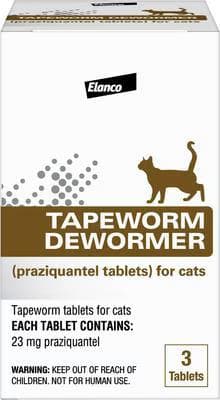
A single-dose praziquantel tablet that clears tapeworms in cats, the same active ingredient vets use. Three tablets per pack.
Webvet may earn a commission when you click through to Chewy, at no extra cost to you.
Long spaghetti-like worms: roundworms
Adult roundworms in cat poop can appear pale, smooth and cylindrical, more like a strand of spaghetti than a grain of rice. They may also be found in vomit. Do not expect to see them during every infection or every bowel movement.
The real feline-roundworm photograph below illustrates that tubular shape. It should not be used to name every long object in stool. Hair, plant material or swallowed string can look similar, and attached string requires a different, potentially urgent response.
The adult worm and its eggs look very different
An adult roundworm may be visible, but roundworm eggs are microscopic. A cat can shed eggs without passing a worm that an owner notices. A normal-looking bowel movement therefore cannot prove that a cat is clear of roundworms or ready to stop a prescribed prevention plan.
VCA's roundworm guidance explains the intestinal infection and egg-shedding cycle. Your veterinarian interprets fecal results alongside age, treatment history and exposure. This is particularly important for kittens, whose treatment schedules account for developing infections.
If a long object appears to be attached
Do not pull it from the anus or mouth. A string-like foreign body can extend farther into the digestive tract than the visible end suggests. Keep the cat from chewing at it if you can do so without struggling, and call the clinic for instructions.
- Do not cut or manipulate the object unless the veterinarian directs you.
- Do not give oil or laxatives to help it pass.
- Mention vomiting, straining, pain, poor appetite or lethargy immediately.
Finding a worm after treatment
Seeing a worm after medication does not, by itself, prove either success or failure. The interpretation depends on which drug was given, when it was given and the suspected parasite. Some worms may be passed, while others may not be visible after treatment.
Record the dose time and photograph the finding. Do not automatically repeat the medicine early. If the cat vomited a dose or you are unsure how much it swallowed, ask the prescribing clinic what to do rather than estimating a replacement amount.
Roundworms and the limits of size estimates
Roundworms are often described as spaghetti-like because of their smooth tubular form. Their appearance differs from the flatter, separate segments commonly associated with tapeworms. Those comparisons help communicate what you observed, but size and shape alone cannot establish every species or exclude a mixed infection.

Photo: Beentree, via Wikimedia Commons. CC BY-SA 4.0. Resized and converted to WebP; clinical content unchanged.
A ruler beside the sample can help when safe, but do not manipulate material that is attached to the cat. A photographed specimen on a surface and a strand emerging from the anus are different situations. The latter needs veterinary advice before anyone tries to remove it.
 $65 · no membership
Need flea, tick, or heartworm prevention for your cat?
A licensed vet can recommend and prescribe the right preventive for your cat online when it's appropriate.
 Talk to a vet
- Licensed vets
- All 50 states
- same-day Rx
Webvet may earn a commission if you book.
Mucus, food, hair and string: things that are not worms
Mucus may look like a clear or whitish coating, jelly or strands around stool. Undigested material, plant fibers, hair and litter can also resemble worms. These look-alikes are reasons to collect evidence, not reasons to dismiss persistent abnormal stool.
The question “cat poop worms or mucus?” cannot always be settled visually. Mucus points to irritation but does not identify the underlying cause. If the cat is straining, passing frequent small stools, losing weight or eating poorly, include those observations when requesting veterinary advice.
Compare the setting as well as the shape
Litter stuck to the outside of a stool can become pale granules. Food fragments may have an irregular shape. Hair can form strands, and mucus can stretch into an outline that seems worm-like. None of those observations is a reliable home test for a parasite.
Material that appears only after stool sits outside deserves special context. Insects can reach feces after it is passed. Tell the clinic whether you saw the finding immediately or discovered it later. Do not represent a delayed sample as proof that the cat passed living larvae.
Avoid home “identification experiments”
Adding salt, vinegar, alcohol or disinfectant can damage a specimen and does not provide a reliable diagnostic answer. Household experiments also create unnecessary contact with contaminated material. Ask the clinic how it wants the sample stored instead.
Do not try to determine whether a suspected worm is dead by poking it or handling it with bare fingers. If movement is visible, a short video may document that observation. Keep the sample contained and provide the original photograph or video without filters that alter color or shape.
Fecal testing finds microscopic eggs
Microscopic eggs cannot be reliably identified by zooming into an ordinary stool photograph. Enlarging a pixelated speck does not create the detail a microscope or other diagnostic test provides. If you can see a rice-like piece clearly, it may be a segment, but it is not an individual microscopic egg.
A flea check adds context
If your cat is comfortable and its skin is intact, a Frisco single-row flea comb can help you check the coat for fleas or debris. Keep that observation separate from the stool finding. Fleas support a discussion about Dipylidium exposure, but a clean comb does not rule out fleas and cannot identify an intestinal worm.
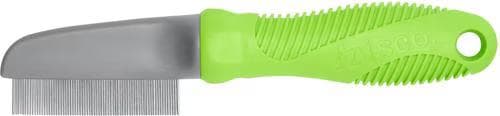
Webvet may earn a commission when you click through to Chewy, at no extra cost to you.
Your veterinarian can decide whether the submitted material should be examined directly, assessed with a fecal test or investigated another way. Preserve the finding without adding chemicals, and explain whether it was present on fresh stool or appeared later.
How to photograph and save the finding
A useful specimen photograph shows both context and detail. Take one view of the whole stool and another of the unusual material. A size reference beside the specimen helps, as long as it can be included without spreading contamination.

Good documentation is not a substitute for sending the sample when requested. Some distinctions require direct examination or laboratory testing. If the image is blurry, describe what you actually saw rather than enhancing the image until an uncertain feature appears definite.
A simple collection checklist
- Use a clean, leak-resistant container with a secure lid.
- Identify the cat and record the collection date and time.
- Keep the sample separate from food and household surfaces.
- Follow the clinic's storage and delivery directions.
- Bring the recent parasite-medication record and any photographs.
If several cats use one box, note whether the source is certain. Do not combine multiple unidentified samples unless the clinic specifically requests that approach. Testing a pooled sample answers a different question from confirming an infection in one individual cat.
Include the treatment history
“My cat was dewormed” leaves important questions unanswered. The clinic needs the product name, active ingredients when known, date given and whether the complete dose was swallowed or applied. Packaging or a clear package photograph can help avoid confusion between similar names.
Also mention flea treatments, because some combined preventives cover certain intestinal worms while others do not. A separate flea medicine and tapeworm medicine may both be appropriate, but combining products should follow the veterinarian's advice rather than the assumption that more coverage is always safer.
Recognizing signs and knowing when to act
A cat with tapeworm segments may otherwise act normal. Other infections or complications can involve diarrhea, vomiting, weight loss or poor growth. Appearance does not tell you how sick the cat is. Start with its breathing, strength, appetite and ability to keep food down.
The signs of worms in cats checklist covers that broader assessment. Seek urgent care for collapse, severe weakness, very pale gums or difficult breathing. If a kitten is becoming quiet, failing to eat or repeatedly vomiting, call promptly rather than waiting to identify the object.
Cats with roundworm or tapeworm infections can have subtle symptoms. Heartworm symptoms involve a different body system and cannot be interpreted from stool appearance. When describing suspected worms, mention breathing changes and overall weakness as well as digestive signs so the clinic can choose the right assessment.
Understanding the worm type
Heartworm in cats affects the lungs and associated blood vessels. It does not explain a visible intestinal worm.
The broad guide to worms in cats explains the major types, spread and prevention. Heartworms are not intestinal worms and will not be diagnosed by finding a worm in poop. Hookworms and most parasite eggs are also beyond ordinary naked-eye identification.
Whipworms are uncommon in US cats, and ringworm is a fungal skin infection rather than an intestinal worm. Those distinctions matter because a search result containing “worm” may describe a completely different disease. The correct species and location guide the veterinary testing and treatment.
Choose treatment after identification
Drontal for Cats treats specified roundworms, hookworms, and tapeworms, but it cannot identify the material in a photograph. Its label excludes kittens younger than two months or lighter than two pounds. Discuss the sample, test findings, and the cat’s age and weight before selecting it.
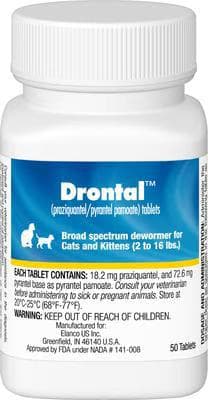
Broad-spectrum cat dewormer (praziquantel and pyrantel) that clears tapeworms, roundworms, and hookworms. For cats and kittens 2 to 16 lbs. Prescription required.
Webvet may earn a commission when you click through to Chewy, at no extra cost to you.
Toxocara cati and Dipylidium caninum
Toxocara cati is a feline roundworm; Dipylidium caninum is the common flea-associated tapeworm. Their different life cycles explain why a medicine and prevention plan must match the parasite. These scientific names help the veterinarian interpret the sample and choose control measures, but owners do not need to identify species themselves.
Exposure routes differ
Cats can get different types of worms from different sources. Tapeworms may involve fleas or prey, while heartworms require mosquito transmission and a separate prevention plan. Whipworm is uncommon in US cats. Human pinworms are a different infection, so avoid transferring a person's diagnosis or medicine to a pet.
If your cat has worms, cleaning the house should focus on the identified route: prompt feces removal, soiled bedding and flea management where relevant. Other cats or dogs may share an exposure, but each needs its own species-appropriate plan. The overview explains these distinctions without replacing an examination.
Roundworms and hookworms: the species detail
For the detailed comparison of roundworms in cats and hookworms in cats, use the existing roundworm and hookworm guide. Roundworms may be visible, whereas hookworm infection commonly requires fecal testing and attention to clinical signs.
Dark tarry stool is not a photograph of a hookworm. It is a possible bleeding sign that needs interpretation, especially when accompanied by pale gums or weakness. Do not wait for the worm itself to appear before seeking veterinary assessment.
Hookworm infection in cats and roundworm infection can require different attention to complications, even when a chosen dewormer covers both. A tapeworm-versus-roundworm comparison also matters because tapeworm coverage depends on the active ingredients. Confirm the identified parasite rather than selecting a medicine from its package color.
When the patient is a kitten
Worms in kitten poop deserve an age-specific plan. Small kittens have less reserve when poor feeding, vomiting, diarrhea or blood loss develops. An apparently full belly does not establish good nutrition, and a playful moment does not replace a record of steady growth.
See how to tell if a kitten has worms for the signs and deworming schedule discussion. Contact the clinic with the kitten's current weight and treatment history. Do not divide an adult tablet by guesswork or assume every cat product is suitable for a young kitten.
Dewormer selection and worm treatment for kittens depend on current weight and age. Tapeworms, roundworms and other infections are not interchangeable. The best option is the one that matches the identified problem and is suitable for that individual kitten, with repeat treatment documented as the clinic directs.
Choosing a cat dewormer with your veterinarian
A broad spectrum dewormer for cats covers specified parasites. It does not treat every cause of diarrhea or cover every worm automatically.

The fastest useful response is correct parasite identification followed by appropriate treatment, not an unverified “instant” remedy. A medicine selected for roundworms may not treat tapeworms, and dewormers do not cover every microscopic parasite or other cause of abnormal stool.
Use the diagnosis to compare treatments
The cat dewormer guide compares treatment options. Drontal for Cats combines praziquantel and pyrantel for specified intestinal worms; its US label excludes kittens under two months or under two pounds. Discuss suitability before choosing it for a cat with an uncertain stool finding.
For cats with worms, the goal is to get rid of the identified parasite safely. Deworming medicine may come as an oral tablet, liquid or another preparation; different wormers have different coverage. Ask about possible side effects and how often to deworm under the selected plan.
Home remedies do not reliably cure worms naturally, and nothing should be promised to kill every worm instantly. An over-the-counter medicine is not automatically the best option without a veterinary assessment. Severe illness may require more than parasite treatment, even when the chosen medicine is appropriate.
Tapeworm treatment and flea control
An identified tapeworm infection may need praziquantel or another appropriate veterinary treatment. Elanco Tapeworm Dewormer for Cats contains praziquantel and is not intended for kittens under six weeks. It is not a treatment for roundworms, hookworms or every cause of diarrhea.
Our tapeworm dewormer guide explains the product choices. When Dipylidium is involved, discuss flea control as well. Capstar kills adult fleas but does not remove the intestinal tapeworm; flea treatment and deworming should be coordinated rather than confused.
Cats with tapeworms need a plan to get rid of the infection and reduce reinfection. Tapeworm medication chosen for home administration should still follow the product directions and veterinary advice. A sick cat needs assessment; choosing an OTC treatment must not delay that step.
Indoor cats and flea exposure
Our guide to whether indoor cats can get fleas and worms explains why indoor living does not eliminate exposure. Tell the veterinarian about other pets, rodents, previous outdoor access and any interruption in prevention. Identifying that route helps prevent another infection after treatment.
Protecting people and other pets
Whether tapeworms in cats are contagious depends on the species and route. Common Dipylidium infection requires swallowing an infected flea, rather than simply being near the cat.
Human treatment decisions
If your cat has worms, do not decide to treat yourself with a pet medicine. Ask your own healthcare professional whether a specific exposure requires assessment.
Wash hands after handling litter or a specimen, and keep feces away from food areas and children's play spaces. Some cat-associated worms can infect people, but the exposure route differs by parasite. For example, Dipylidium requires swallowing an infected flea, while Toxocara exposure involves infective eggs.
The household precautions in our worm guide explain those differences. Ask the veterinarian which parasite was identified before deciding what other pets need. People should contact their own clinician about a concerning exposure and should never take the cat's medication.
Shared exposure in a home with a dog
Whether a dog can get worms associated with a cat depends on the parasite and exposure route. Tiny segments on a cat's bed warrant cleaning and parasite identification, not human self-treatment. Tell the veterinarian about dogs and other cats in the house, and ask your own clinician about any human symptoms or exposure.
Questions about finding worms in cat poop
Frequently Asked Questions
Can tapeworms live in a litter box?
Adult tapeworms live inside a host, although a cat may pass segments into a litter box. Finding a segment does not mean an adult tapeworm colony is living in the litter. Scoop promptly and follow veterinary advice about treatment. Common Dipylidium reinfection involves swallowing an infected flea, so flea control also matters.
Do cats get worms from a dirty litter box?
Cats can get some worms through infective parasite stages in fecally contaminated surroundings, making prompt litter box cleaning useful. A dirty box is not the route for every worm. Common flea-associated tapeworm infection requires swallowing an infected flea. Follow veterinary advice about the identified parasite rather than assuming litter replacement alone resolves an infection.
Will it hurt your cat if you deworm them and they don't have worms?
An unsuitable medicine can hurt your cat if you deworm them when they don't have worms. Routine preventive treatment may still be appropriate under veterinary advice. The appropriate formulation, current weight, age and other medicines matter. Do not repeat treatment simply because you did not see worms in the next stool.
Can I still cuddle my cat with worms?
You can usually still cuddle a cat with worms while using sensible hygiene. Avoid contact with stool or soiled fur, prevent face licking and wash your hands afterward. Keep children supervised. Veterinary advice about the identified infection, parasite treatment and flea control addresses the source more effectively than avoiding all comforting contact.
How does a cat act when they have tapeworms?
A cat may act normally when they have tapeworms. Some lick or scoot because segments irritate the area around the anus, while others show no obvious behavior change. Segments can appear intermittently. Save a photograph or specimen and get veterinary advice about treatment and reinfection prevention; normal behavior does not exclude tapeworms.
Do worms eventually go away in cats?
Do not assume worms eventually go away in cats without treatment. Symptoms and visible segments can disappear temporarily even when infection or exposure remains. Obtain veterinary advice about the likely parasite, testing and an appropriate medicine. Complete the planned treatment and prevention steps, including flea control when relevant, and attend recommended rechecks.
$65 · no membershipNeed flea, tick, or heartworm prevention for your cat?
A licensed vet can recommend and prescribe the right preventive for your cat online when it's appropriate.
Talk to a vet- Licensed vets
- All 50 states
- same-day Rx
Webvet may earn a commission if you book.

Editor
The Webvet Editorial Team is the in-house group of pet-care editors and writers behind Webvet, operated by Smart Pet Collective. The team researches, writes, and maintains Webvet's pet health, behavior, and medication content. Every article follows a defined editorial process: research from reputable veterinary and scientific sources, careful drafting, mandatory review of medical content by a credentialed veterinarian, and dated publication. Health and medication articles are medically reviewed by a licensed veterinary professional before they go live and are kept current over time.
Veterinarian · BVMS MRCVS
Dr. Pippa Elliott, BVMS, MRCVS, is a veterinarian with nearly 30 years of experience in companion animal practice. Dr. Elliott earned her Bachelor of Veterinary Medicine and Surgery from the University of Glasgow. She was also designated a Member of the Royal College of Veterinary Surgeons. Married with 2 grown-up kids, Dr. Elliott has a naughty Puggle named Poggle, 3 cats and a bearded dragon.


