Worms in Cats: Types, Signs, Treatment and Prevention
Worms in cats can be hidden. Compare five worm types, learn how infection spreads, and know when testing, treatment or emergency care is needed. Get practical, source-backed guidance for your next veterinary conversation.

BVMS MRCVS
Medically reviewed by Dr. Pippa Elliott, BVMS MRCVS · Last reviewed

This article contains affiliate links. Webvet may earn a commission when you buy through them, at no extra cost to you.
Worms in cats can cause digestive problems, poor growth or blood loss, but an infected cat may also look healthy. A visible worm is a useful clue, not a complete diagnosis. The safest next step is to contact your veterinarian, identify the parasite and use a cat-appropriate treatment.
Most worms discussed here affect the intestines. Heartworms are different: they are spread by mosquitoes and damage the lungs and associated blood vessels. They do not explain worms in the litter box.
Five worm types: what the comparison tells you
The five-type comparison below separates visible worms from hidden infection. Roundworms, hookworms and tapeworms are the main intestinal worm groups to discuss with your vet. Whipworms are uncommon in US cats. Heartworms belong in the comparison because owners search for them, but their testing and treatment are different.
- 1Visible worms may help your vet identify an infection; normal-looking poop cannot exclude one.
- 2Hidden infection can occur without diarrhea, weight loss or a change in appetite.
- 3Pale gums, collapse, difficult breathing or marked weakness need urgent veterinary care.
| Worm type | Possible clue | What the clue cannot establish | Next action |
|---|---|---|---|
| Roundworm | Long, pale, spaghetti-like worm in vomit or stool; poor kitten growth | Species, infection burden or whether other parasites are present | Arrange examination and fecal testing |
| Hookworm | Sometimes dark, tarry stool, weakness or pale gums | You generally cannot identify hookworms by looking at poop | Urgent care if weak or pale; otherwise veterinary testing |
| Tapeworm | Rice-like pieces around the anus, in stool or on bedding | Which tapeworm species or whether flea exposure continues | Save a photo or specimen and discuss worm treatment plus flea control |
| Whipworm | Often no distinctive visible clue; diarrhea is possible | Diarrhea alone is not evidence of this uncommon feline infection | Let the veterinarian identify the cause |
| Heartworm | Coughing, breathing trouble or sometimes no signs | A stool examination does not diagnose feline heartworm disease | Veterinary assessment; breathing trouble is an emergency |
| See a vet now | Collapse, difficult breathing, very pale gums, severe weakness or repeated vomiting in a sick kitten | A presumed worm problem does not explain away an emergency | Contact an emergency veterinary hospital |
Different kinds of worms need different tests
A dewormer does not cover every type of worm. Likewise, a medication that prevents heartworm is not automatically a treatment for an established heartworm infection. Keep the parasite name and the medicine's actual coverage together when discussing the plan.
The Cornell Feline Health Center identifies roundworms, hookworms and tapeworms as important gastrointestinal parasites, while noting that whipworms are uncommon in US cats. Giardia and coccidia are other intestinal parasites, but they are microscopic organisms, not worms.
- A cat with diarrhea may have worms, another parasite, a dietary problem or a different illness.
- A cat without diarrhea can still carry worms.
- A mixed infection can require more than one component of treatment.
Toxocara cati and Dipylidium caninum
Toxocara cati is a feline roundworm; Dipylidium caninum is the common flea-associated tapeworm. Their different life cycles explain why a medicine and prevention plan must match the parasite. These scientific names help the veterinarian interpret the sample and choose control measures, but owners do not need to identify species themselves.
An example of matching treatment to the parasite
Drontal for Cats is a combination dewormer with labeled coverage for specified roundworms, hookworms, and tapeworms. Its label excludes kittens younger than two months or weighing less than two pounds. It is an option to discuss after veterinary assessment, not a way to identify an unknown worm from a photograph.
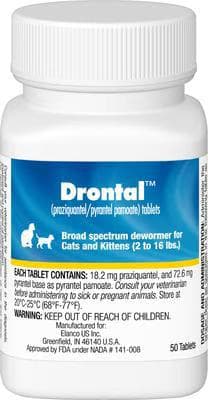
Broad-spectrum cat dewormer (praziquantel and pyrantel) that clears tapeworms, roundworms, and hookworms. For cats and kittens 2 to 16 lbs. Prescription required.
Webvet may earn a commission when you click through to Chewy, at no extra cost to you.
Heartworms are not intestinal worms
Heartworm infection can cause serious disease even when a cat carries very few worms. The American Heartworm Society explains that diagnosis may combine blood tests and imaging. No approved drug treatment eliminates adult heartworms in cats, making prevention especially important.
Do not give a cat a dog's heartworm-treatment medication. If coughing or breathing difficulty is the reason you are searching, tell the clinic about that symptom first. The worm comparison should help you choose the right conversation, not delay emergency assessment.
Whipworms are uncommon in cats: visible worms and hidden infection
Cats do not acquire the human pinworm infection simply because a family member has pinworms. Whipworm infection is uncommon in cats, and heartworms are not intestinal worms. A broad comparison prevents these different diseases from being confused before you speak with the clinic.
Hidden infection explains why routine testing remains useful when no visible worms are present. Ask which parasites the chosen test can detect and whether the result fits the cat's age, exposure and recent treatment.
How cats get worms and how to prevent reinfection
How cats get worms depends on the type of parasite. Some infections follow swallowing microscopic eggs from a contaminated environment. Tapeworms involve routes such as eating prey or an infected flea. Certain roundworm infections can pass to kittens through nursing. Mosquitoes transmit heartworm. A single cleaning or feeding change cannot interrupt every route.
Preventing worms in cats therefore combines medication selected for the cat's risks with litter hygiene, flea control and reduced hunting. Ask what the chosen product covers, how often it is due and when stool testing should be repeated. A missed dose or continued exposure may leave a gap.

Match prevention to the route
- Contaminated feces or soil: scoop promptly, wash hands afterward and reduce access to contaminated areas.
- Fleas: treat the pet and address the household flea cycle under veterinary guidance.
- Prey: keep cats indoors and limit access to rodents.
- Mosquitoes: discuss year-round feline heartworm prevention, including for indoor cats.
- Nursing kittens: coordinate the queen's and litter's veterinary care rather than treating one kitten in isolation.
The Companion Animal Parasite Council's ascarid guidance recommends regular broad-spectrum parasite control and prompt feces removal. Parasite eggs and larvae have different survival patterns. Ordinary surface disinfectants should not be assumed to destroy every stage.
Indoor cats and flea exposure
Indoor living lowers several exposure risks but does not eliminate them. Fleas may enter the home on another animal, and a cat can swallow an infected flea during grooming. Some cats also catch rodents indoors. A previous outdoor lifestyle remains relevant when adopting an adult cat.
Match prevention to the cat’s weight
Prescription Revolution Plus combines several parasite-control roles, including prevention of flea-transmitted Dipylidium infection by killing vector fleas. It does not remove an established tapeworm infection. This link is specifically for cats weighing 11.1–22 pounds; your veterinarian must choose the correct weight band and review the product’s neurologic precautions.
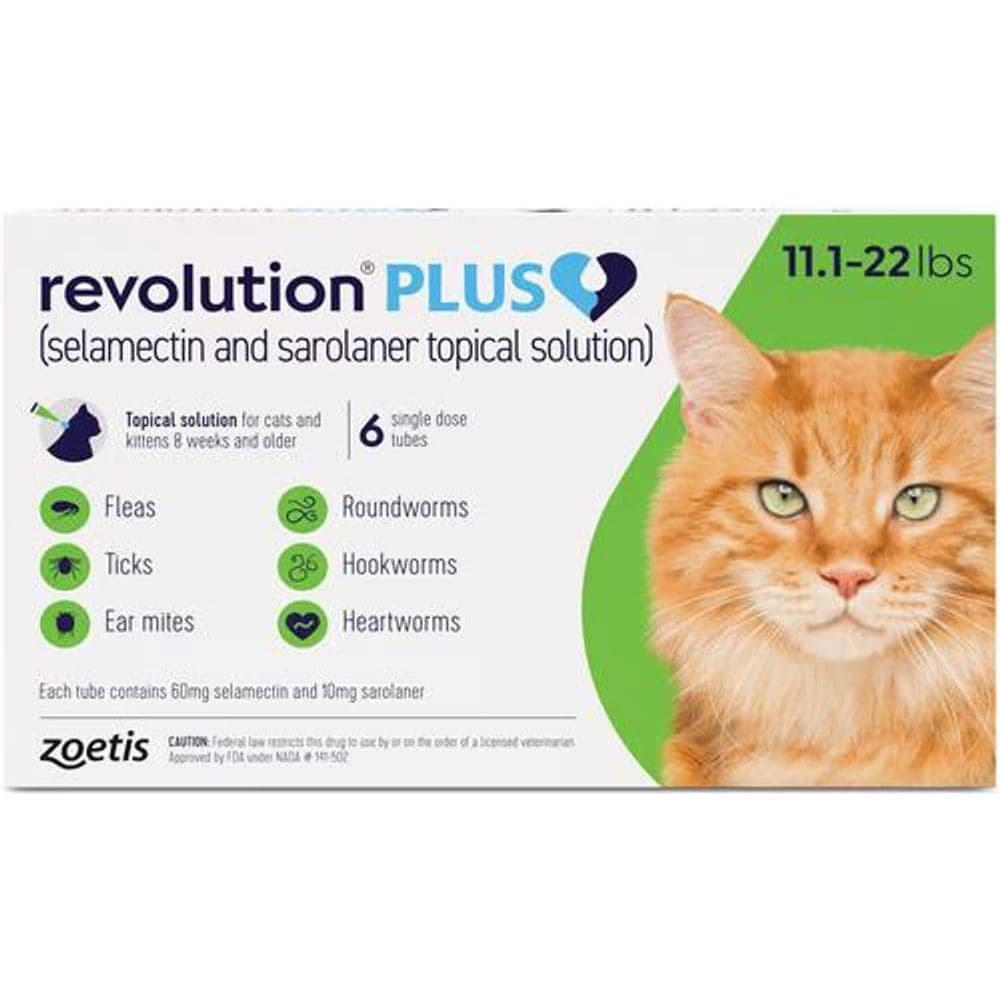
Monthly topical that protects cats from fleas, ticks, ear mites, roundworms, hookworms, and heartworm.
Webvet may earn a commission when you click through to Chewy, at no extra cost to you.
Our guide to whether indoor cats can get fleas and worms explains these routes in more detail. Tell your veterinarian about other pets, travel, hunting and any interruption in prevention instead of assuming an indoor cat needs no parasite plan.
Diagnosis and treatment: match the medicine to the worm
Veterinarians consider the cat's examination, exposure history and fecal testing together. A stool test can find parasite eggs or other evidence of infection. Depending on the situation, the clinic may use microscopic examination, an antigen test, PCR or a combination. Not every test detects every parasite equally well.
One negative sample is not a universal all-clear. Worms may be too immature to produce eggs, and shedding can vary. The Merck Veterinary Manual's parasitology guidance explains why a single negative fecal examination may not rule out infection in an animal with suggestive signs.
Fecal testing: information that changes the plan
- A fresh stool sample, collected and stored as the clinic directs.
- A photograph or safely contained specimen of anything unusual.
- The exact names and dates of recent deworming and flea products.
- Changes in appetite, weight, stool, vomiting or activity.
- The cat's age, current weight and other medications.
Treatment for worms in cats may be an oral or topical medication. The active ingredients must match the suspected or identified worm and be appropriate for the cat's age and weight. A sick cat may also need treatment for dehydration, anemia or another complication.
Choosing a cat dewormer with your veterinarian
There is no single best cat dewormer for every infection. Broad-spectrum dewormers cover specified parasites, not all possible causes of diarrhea. Over-the-counter and prescription availability also differ by product. Neither availability nor a familiar brand name substitutes for identifying the problem.
Use our cat dewormer guide for product comparisons after discussing the diagnosis. Natural dewormers, food ingredients and homeopathic drops are not reliable substitutes for an effective parasite medicine. Do not borrow a dog's product or combine treatments without checking the ingredients with your vet.
Read the medicine label
Drontal for Cats combines praziquantel and pyrantel. Its US label covers specified tapeworms, roundworms and hookworms and excludes kittens younger than two months or weighing under two pounds. Use the cat formulation only and follow veterinary and label directions.
For cats with worms, the goal is to get rid of the identified parasite safely. Deworming medicine may come as an oral tablet, liquid or another preparation; different wormers have different coverage. Ask about possible side effects and how often to deworm under the selected plan.
Tapeworm-only treatment has narrower coverage
Elanco Tapeworm Dewormer for Cats contains praziquantel and targets tapeworms. It is not a substitute for a product chosen to treat roundworms or hookworms, and its label is not intended for kittens under six weeks. Confirm the parasite and the cat’s eligibility with your veterinarian before choosing a medicine.
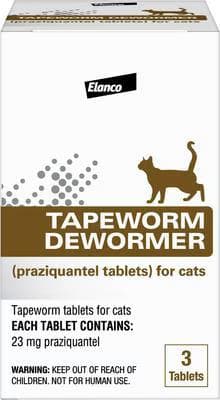
A single-dose praziquantel tablet that clears tapeworms in cats, the same active ingredient vets use. Three tablets per pack.
Webvet may earn a commission when you click through to Chewy, at no extra cost to you.
- Ask about a broad spectrum dewormer for cats only after confirming which parasites need coverage.
Home remedies do not reliably cure worms naturally, and nothing should be promised to kill every worm instantly. An over-the-counter medicine is not automatically the best option without a veterinary assessment. Severe illness may require more than parasite treatment, even when the chosen medicine is appropriate.
Tapeworm treatment and flea control
Treatment for tape worms, also written as tapeworms, and flea control solve related but separate problems. A medicine that removes an established tapeworm infection does not automatically remove fleas from the home. Continued flea exposure can lead to reinfection when the cat swallows another infected flea while grooming.
Our tapeworm dewormer guide for cats explains praziquantel-based options and their limits. The CDC's Dipylidium overview confirms the infected-flea transmission route. A veterinarian can also assess hunting-associated tapeworm exposure, which needs attention beyond flea prevention.
Check tapeworm coverage
Elanco Tapeworm Dewormer for Cats contains praziquantel and is not a roundworm or hookworm treatment. The US product label states it is not intended for kittens under six weeks. Confirm the parasite and appropriate product before administering it.
Cats with tapeworms need a plan to get rid of the infection and reduce reinfection. Tapeworm medication chosen for home administration should still follow the product directions and veterinary advice. A sick cat needs assessment; choosing an OTC treatment must not delay that step.
Ongoing protection after treatment
Ask the clinic to write down the next treatment date and the follow-up testing plan. Do not judge success solely by whether worms appear in the next bowel movement. Some treated worms are digested, and visible pieces may stop appearing before the household exposure problem has been addressed.

Revolution Plus is a prescription monthly option for eligible cats. The current US prescribing information includes specified roundworm and hookworm treatment, heartworm prevention and prevention of Dipylidium infection through killing vector fleas. That last indication does not mean it treats an existing tapeworm infection.
- Revolution Plus formulations start at eight weeks of age and 2.8 pounds. The linked Chewy listing is the 11.1–22 lb formulation, so it is unsuitable for smaller cats. Use only the weight band prescribed for your cat; do not divide a larger tube.
- Discuss neurological history with the prescribing veterinarian.
- Its safety has not been established in breeding, pregnant or lactating cats.
Capstar kills adult fleas but does not deworm the cat or provide an entire long-term flea-control program. If your veterinarian selects it as part of flea treatment, also discuss ongoing prevention and environmental management. Our flea pills for cats guide explains the different roles of oral flea products.
Adult-flea treatment is one part of control
Capstar for Cats targets adult fleas rather than intestinal worms. The label requires a cat or kitten to be at least four weeks old and at least two pounds. Ask your veterinarian how a short-acting adult-flea treatment fits the ongoing prevention and household plan; do not stack flea medicines without guidance.
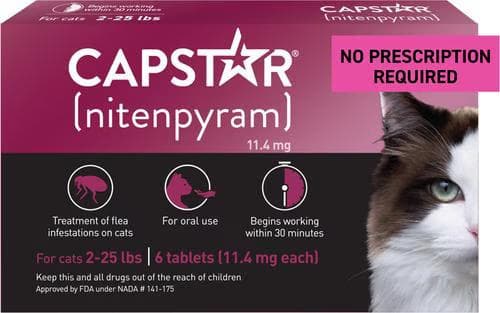
Webvet may earn a commission when you click through to Chewy, at no extra cost to you.
 $65 · no membership
Need flea, tick, or heartworm prevention for your cat?
A licensed vet can recommend and prescribe the right preventive for your cat online when it's appropriate.
 Talk to a vet
- Licensed vets
- All 50 states
- same-day Rx
Webvet may earn a commission if you book.
Roundworms and hookworms: the species detail
Roundworms in cats and hookworms in cats require more specific discussion than a general worm chart provides. Roundworms may be visible when passed. Hookworms are small and usually escape an owner's visual inspection, even when their blood-feeding causes important illness.
For species-specific transmission, symptoms and treatment detail, read hookworms and roundworms in cats. Do not choose between treatments by apparent worm length alone. The clinic can interpret a specimen and the test results together, including whether a second parasite is present.
Hookworm infection in cats and roundworm infection can require different attention to complications, even when a chosen dewormer covers both. A tapeworm-versus-roundworm comparison also matters because tapeworm coverage depends on the active ingredients. Confirm the identified parasite rather than selecting a medicine from its package color.
Recognizing signs and knowing when to act
Signs of worms in cats can include vomiting, diarrhea, weight loss or a dull coat. These findings are not specific to parasites. A normal appetite or playful behavior does not rule infection out, and an unwell cat should not wait for a visible worm before receiving care.
Use the cat worm symptom checklist to record observations and decide urgency. Contact a veterinarian promptly for persistent digestive signs or weight loss. Collapse, pale gums with weakness, difficult breathing or a deteriorating kitten warrant emergency assessment regardless of the suspected cause.
Cats with roundworm or tapeworm infections can have subtle symptoms. Heartworm symptoms involve a different body system and cannot be interpreted from stool appearance. When describing suspected worms, mention breathing changes and overall weakness as well as digestive signs so the clinic can choose the right assessment.
What visible worms can look like
What do worms look like in cats? Rice-like pieces may be tapeworm segments; longer pale, tubular worms may be roundworms. Worm eggs are generally microscopic. A speck that resembles an egg to the naked eye may instead be litter, food or another material.
Our cat-poop worm photo guide explains the visible differences and common look-alikes. Photograph the finding before discarding it and ask the clinic how to submit a sample. Do not pull a string-like object protruding from a cat's anus.
Cats may pass small white tapeworm segments in feces or show them near the anus. Rice-like pieces and long roundworms look different. Pictures help describe these findings, but symptoms, laboratory evidence and the cat's condition guide treatment. A photograph of poop cannot establish how ill the patient is.
When the patient is a kitten
Worms in kittens deserve an early veterinary plan because small patients have less reserve when diarrhea, poor intake or blood loss develops. A pot belly is a clue worth reporting, but it is not a diagnosis. Weight gain, appetite, energy and stool changes all matter.
See how to tell if a kitten has worms for the age-specific schedule and warning signs. An adult cat's tablet is not automatically suitable for a kitten. The correct preparation, dose and repeat interval depend on current weight, age and veterinary assessment.
Dewormer selection and worm treatment for kittens depend on current weight and age. Tapeworms, roundworms and other infections are not interchangeable. The best option is the one that matches the identified problem and is suitable for that individual kitten, with repeat treatment documented as the clinic directs.
Can people get worms from cats?
Humans can get certain worms associated with cats, but the route matters. Toxocara exposure involves accidentally swallowing infective eggs. Some hookworm larvae penetrate skin after contact with contaminated ground. Dipylidium infection requires swallowing an infected flea. These are different risks, not a single disease spread by ordinary proximity.
The CDC's Toxocara guidance emphasizes contaminated soil and accidental egg ingestion. Wash hands after litter handling, supervise young children around soil and keep sandboxes covered. People with symptoms or a specific exposure concern should contact their healthcare professional rather than taking pet medication.

Contagious worms and cleaning the house
People asking whether worms are contagious need the parasite name first. Humans can encounter infective eggs from roundworms in contaminated environments, while common flea-associated tapeworms require an infected flea. Tiny pieces on a cat's bed do not make every household surface equally risky.
If your cat has worms, clean the house in a targeted way: remove feces promptly, wash soiled bedding as appropriate and discuss flea management. Avoid promising that an ordinary disinfectant kills every parasite stage. Your veterinarian can tailor the advice to the identified infection.
Questions about worms in cats
Frequently Asked Questions
Can I still touch my cat if it has worms?
You can usually still touch and gently care for a cat with worms. Wash hands after litter handling or contact with soiled fur, supervise children and keep the cat away from food surfaces. Follow veterinary advice about parasite treatment and hygiene precautions for the identified worm rather than avoiding necessary care.
Can I get worms if my cat licks me?
A cat that licks you does not automatically give you worms. Common routes involve contaminated material or swallowing an infected flea, depending on the parasite. Avoid face licking and wash exposed skin if soiled fur may be involved. Follow veterinary advice for the cat and seek healthcare advice about a specific exposure.
How long will a cat live with worms?
Nobody can predict how long a cat will live with worms from appearance alone. The parasite, infection burden and underlying health matter. Some infections initially cause few signs; others become serious. Get veterinary advice about treatment promptly, and seek emergency care for pale gums, collapse, severe weakness or difficult breathing.
Should I deworm myself if my cat has worms?
Do not deworm yourself solely because your cat has worms. A human healthcare professional should assess the identified parasite, actual exposure and any symptoms before deciding whether you need treatment. Never take a pet medicine. Veterinary advice about the cat's parasite treatment and household hygiene helps address the animal source.
$65 · no membershipNeed flea, tick, or heartworm prevention for your cat?
A licensed vet can recommend and prescribe the right preventive for your cat online when it's appropriate.
Talk to a vet- Licensed vets
- All 50 states
- same-day Rx
Webvet may earn a commission if you book.

Editor
The Webvet Editorial Team is the in-house group of pet-care editors and writers behind Webvet, operated by Smart Pet Collective. The team researches, writes, and maintains Webvet's pet health, behavior, and medication content. Every article follows a defined editorial process: research from reputable veterinary and scientific sources, careful drafting, mandatory review of medical content by a credentialed veterinarian, and dated publication. Health and medication articles are medically reviewed by a licensed veterinary professional before they go live and are kept current over time.
Veterinarian · BVMS MRCVS
Dr. Pippa Elliott, BVMS, MRCVS, is a veterinarian with nearly 30 years of experience in companion animal practice. Dr. Elliott earned her Bachelor of Veterinary Medicine and Surgery from the University of Glasgow. She was also designated a Member of the Royal College of Veterinary Surgeons. Married with 2 grown-up kids, Dr. Elliott has a naughty Puggle named Poggle, 3 cats and a bearded dragon.


