Flea Pills for Cats: A Vet-Reviewed Guide to Oral Flea Treatments
Flea pills for cats range from fast-acting Capstar, which starts killing fleas within 30 minutes, to monthly prescription chewables like Credelio CAT. A vet-reviewed guide to how oral flea treatments work, their safety, and how to pill your cat.

BVMS MRCVS
Medically reviewed by Dr. Pippa Elliott, BVMS MRCVS · Last reviewed

This article contains affiliate links. Webvet may earn a commission when you buy through them, at no extra cost to you.
Flea pills for cats fall into two groups. Fast-acting tablets like Capstar (nitenpyram) start killing adult fleas within 30 minutes but only work for about 24 hours. Monthly prescription chewables like Credelio CAT (lotilaner) keep killing new fleas for a full month, which makes them true preventatives.
Choosing between them comes down to what you need right now: an emergency knockdown, ongoing protection, or both.
This vet-reviewed guide walks through how each type of oral flea treatment for cats works, which pills are over the counter versus prescription only, the side effects to watch for, and how to actually get the pill into your cat.
- 1Capstar (nitenpyram) is the only true over-the-counter flea pill for cats. It starts killing adult fleas within 30 minutes but lasts only about 24 hours.
- 2Credelio CAT (lotilaner) is a prescription monthly chewable that kills fleas before they can lay eggs and also kills black-legged ticks.
- 3Every monthly oral flea preventative for cats requires a veterinary prescription in the United States.
- 4The FDA advises caution with isoxazoline products (including lotilaner) in cats with a history of seizures or neurologic disease.
- 5A flea pill kills fleas on your cat, but roughly 95 percent of a flea infestation lives in your home as eggs, larvae, and pupae. Treating the environment is a separate job.
 Sponsored
Need flea, tick, or parasite care for your cat?
A licensed vet at Dutch can recommend the right preventive and prescribe it when it's appropriate. Annual members get 20% off their first flea and tick order.
Use code Pets30
Plans start at $11/month · covers up to 5 pets
- Licensed vets in most states
- Rx for 150+ conditions
- 4.7 on Trustpilot
How flea pills for cats work
Flea pills work from the inside out. After your cat swallows the tablet, the active ingredient is absorbed into the bloodstream. When a flea bites your cat and takes a blood meal, it ingests the drug and dies.
Fast-acting pills like nitenpyram start killing within 30 minutes, while monthly preventatives like lotilaner keep working for a full month.

Do flea pills actually work for cats? Yes, and oral treatments are among the most effective flea products available. In label studies, nitenpyram killed more than 90 percent of adult fleas on cats within six hours, and lotilaner killed essentially all fleas within 24 hours of a new infestation.
Because the drug circulates in the blood, there is no product to rub off, wash off, or transfer to furniture or children's hands, a common failure point for spot-on topicals in busy households.
The three drug classes behind cat flea pills
Every oral flea treatment for cats on the US market uses one of three approaches:
- Fast adulticides (nitenpyram, in Capstar): kill adult fleas within hours by overstimulating the flea's nervous system, then clear the cat's body within a day. No lasting protection.
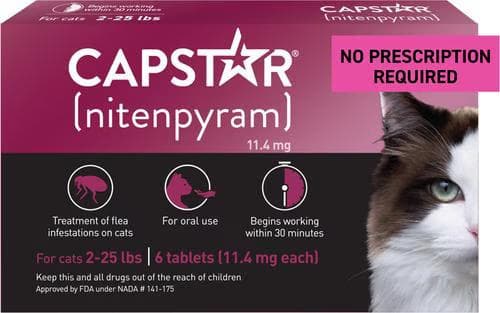
Webvet may earn a commission when you click through to Chewy, at no extra cost to you.
- Monthly adulticides (lotilaner, in Credelio CAT, and spinosad, in Comfortis): kill adult fleas quickly and keep killing new arrivals for a month, fast enough to stop females before they lay eggs.
- Insect growth regulators (lufenuron, in Program): do not kill adult fleas at all. Lufenuron sterilizes the flea population by preventing eggs from hatching, so the infestation dies out over weeks.
Here is how the four flea pills for cats compare on speed of kill, duration, prescription status, and minimum age:
| Pill (active ingredient) | Speed of kill | Duration | Prescription status | Minimum age / weight |
|---|---|---|---|---|
| Capstar (nitenpyram) | Starts within 30 minutes; 90%+ of adult fleas within 6 hours | About 24 hours | Over the counter | 4 weeks and 2 lbs |
| Credelio CAT (lotilaner) | Rapid; essentially complete kill within 24 hours of infestation | 1 month | Prescription only | 8 weeks and 2 lbs |
| Comfortis (spinosad) | Starts within 30 minutes | 1 month | Prescription only | 14 weeks and 4.1 lbs |
| Program (lufenuron) | Does not kill adults; sterilizes eggs so the population collapses over weeks | 1 month | Through your veterinarian | Kittens per label; ask your vet |
One limitation applies to every pill: the flea has to bite your cat to die. And according to the Companion Animal Parasite Council, adult fleas on the pet are only a small fraction of the total flea population.
The vast majority, roughly 95 percent, exists in the environment as eggs, larvae, and pupae. A pill protects the cat; it does not vacuum your carpet.
Why speed of kill matters
Speed of kill matters more than it sounds. A newly arrived female flea starts laying eggs within about a day of her first blood meal, and she can produce dozens of eggs per day after that.
A drug that kills her within hours stops the next generation before it starts. A slower product lets her seed your home first, which is exactly how a few hitchhiking fleas become a household infestation.
It is also worth knowing what a flea pill does not do. None of the oral flea products for cats prevents heartworm, treats ear mites, or kills intestinal worms directly. If you want single-product coverage for multiple parasites, that currently means a topical combination product, a tradeoff covered later in this guide.
Fast-kill flea pills: Capstar and nitenpyram
If you want to know what kills fleas on cats immediately, the answer is nitenpyram. It begins killing adult fleas within 30 minutes of dosing, and in studies it eliminated more than 90 percent of adult fleas on cats within six hours.
The catch: nitenpyram is cleared from the body within about 24 hours, so it offers no lasting protection.
Can you buy a flea pill for cats over the counter?
So yes, there is a pill you can give your cat to get rid of fleas fast, and you can buy it today without a prescription. Capstar is the best-known brand of nitenpyram and the only oral flea treatment for cats sold over the counter.
Just understand what it does and does not do: it wipes out the adult fleas currently on your cat, then stops working. New fleas from the environment can hop right back on tomorrow.
Nitenpyram is a neonicotinoid. It binds to nicotinic receptors in the flea's nervous system, receptors that insects depend on far more than mammals do, which is why it can paralyze and kill a flea within minutes while leaving your cat unaffected at labeled doses.
Capstar label basics for cats
- Dose: one 11.4 mg tablet for cats and kittens weighing 2 to 25 pounds.
- Minimum age and weight: 4 weeks old and at least 2 pounds.
- Frequency: may be given once daily as needed during an active flea problem, per the label.
- The label allows use in pregnant and nursing cats, which few flea products can claim.
Vets reach for nitenpyram in specific situations: knocking fleas off a newly adopted or shelter cat before it comes home, a quick clean-out before boarding or grooming, or jump-starting flea control on a heavily infested cat while a monthly preventative takes over long-term duty.
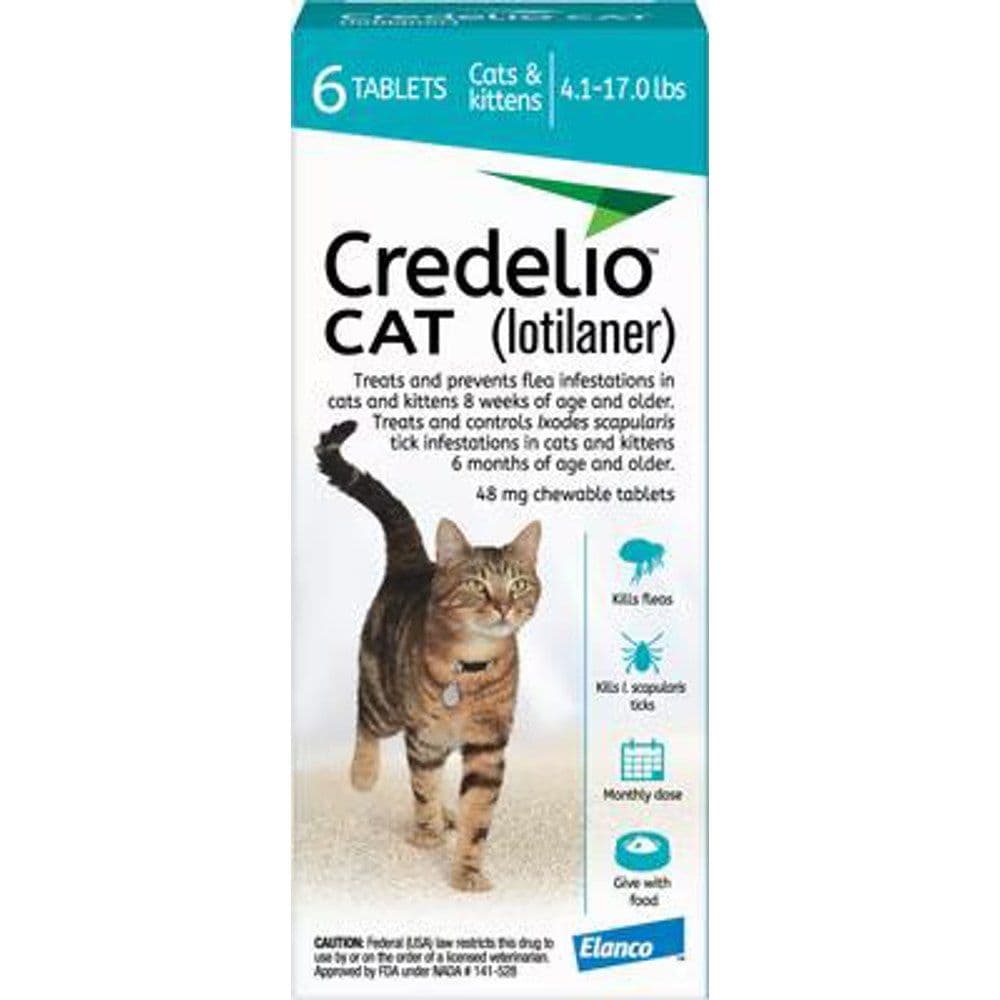
Monthly chewable tablet that kills fleas and treats and controls tick infestations in cats and kittens.
Webvet may earn a commission when you click through to Chewy, at no extra cost to you.
For a deeper look at dosing, pharmacology, and safety data, see our full drug guide to nitenpyram for dogs and cats.
Bridging from Capstar to a monthly pill
The most common vet-recommended protocol pairs the two pill types. Give Capstar on day one for the immediate knockdown, then start the monthly chewable the same day or as soon as your vet dispenses it.
If there is a gap before the prescription arrives, the Capstar label allows a repeat dose each day fleas reappear. Once the monthly product is on board, stop the daily tablets and hold the monthly schedule; mark the next due date so protection never lapses.
Monthly prescription chewables: Credelio CAT and lotilaner
For ongoing flea control, the flea pills that work best for cats are monthly prescription chewables, and Credelio CAT is the standout.
It is the only oral isoxazoline product FDA approved for cats, it kills fleas fast enough to stop egg-laying, and it is the only oral cat flea medication that also kills black-legged (deer) ticks.
How lotilaner breaks the flea life cycle
Lotilaner, the active ingredient, belongs to the isoxazoline class. It blocks chloride channels in the flea's nervous system, causing paralysis and death after the flea feeds. Because it keeps killing new fleas for a full month, female fleas die before they can produce eggs.
That is what makes a monthly oral flea treatment for cats a genuine preventative rather than a rescue treatment: it breaks the flea life cycle instead of just clearing today's fleas.
Credelio CAT label basics
- Prescription only: your veterinarian must authorize it.
- Minimum age and weight: 8 weeks old and at least 2 pounds.
- Give with food or within 30 minutes of feeding; a meal improves absorption.
- Dose monthly, year round in most climates, since indoor heating keeps flea life cycles running through winter.
Two older oral options round out the long-lasting category. Comfortis (spinosad) is a monthly prescription tablet that starts killing fleas within 30 minutes, though it is labeled for cats at least 14 weeks old and 4.1 pounds, which rules out small kittens.
Program (lufenuron) takes the opposite approach: it never kills an adult flea, but a monthly dose sterilizes the flea population by stopping eggs from hatching.
Lufenuron's slow, kill-nothing strategy works over several weeks and is best combined with an adulticide during an active flea problem. Most vets now favor the faster isoxazoline chewables, but Program remains an option for cats that cannot tolerate other drug classes.
Which flea pill fits your situation? Three common scenarios
Your veterinarian can help you match the drug class to your cat's age, health history, and flea pressure.
- You just spotted fleas and want them gone tonight: give Capstar now for the knockdown, then call your vet about starting a monthly preventative this week. The two are commonly used together because nitenpyram clears the body within a day.
- You want set-and-forget prevention for a healthy adult cat: a monthly chewable like Credelio CAT is the strongest oral option, and it adds black-legged tick protection for cats with outdoor access.
- Your cat has a seizure history, is pregnant or nursing, or is a very young kitten: skip the isoxazoline class and talk to your vet. Capstar's label permits pregnant and nursing cats and kittens from 4 weeks, and non-oral alternatives may fit better for long-term control.
SponsoredVet care that's always there
Unlimited video calls and messaging with licensed vets for less than a typical vet visit. One membership covers up to five pets.
Use code Pets30
Plans start at $11/month · covers up to 5 pets
- Licensed vets in most states
- Rx for 150+ conditions
- 4.7 on Trustpilot
OTC vs. prescription flea pills
Only one flea pill for cats is available without a vet prescription: nitenpyram (Capstar and its generics). Every monthly oral flea preventative for cats, including Credelio CAT, Comfortis, and Program, requires a prescription in the United States.
Why monthly flea pills require a prescription
The split is not arbitrary.
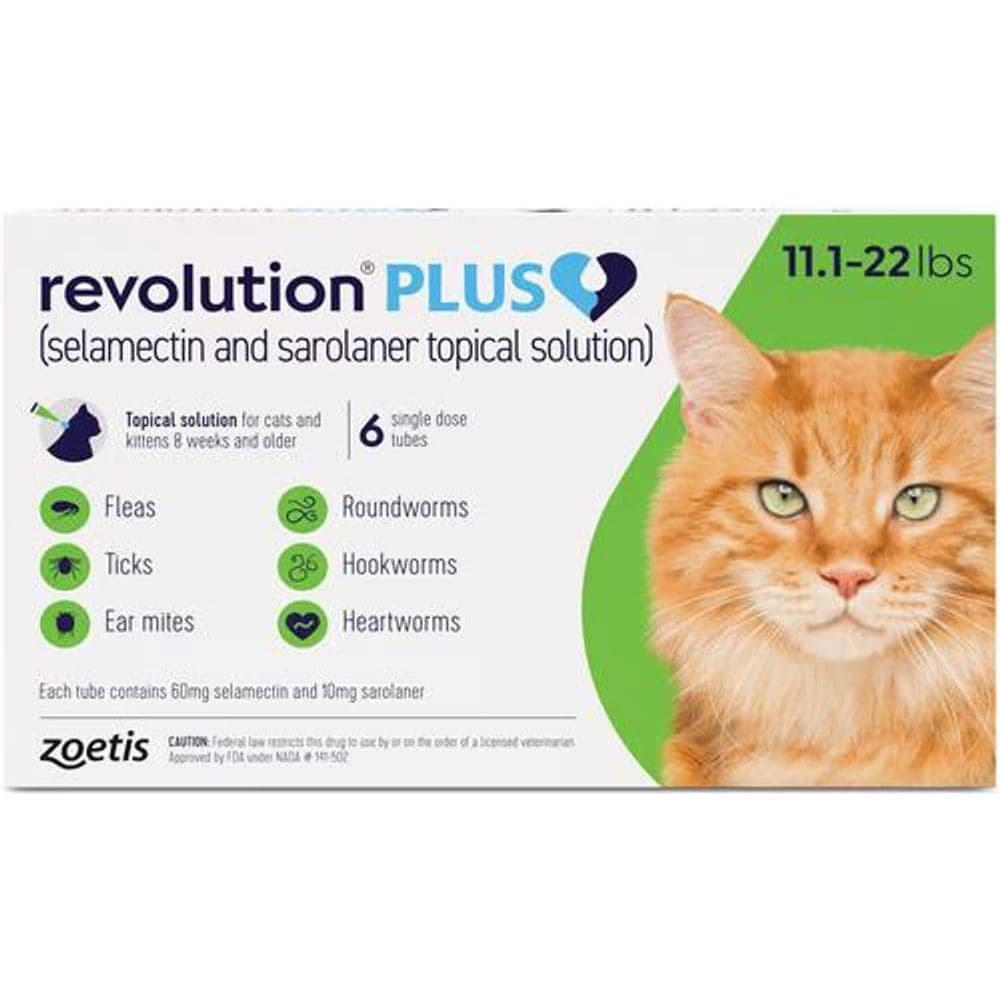
Monthly topical that protects cats from fleas, ticks, ear mites, roundworms, hookworms, and heartworm.
Webvet may earn a commission when you click through to Chewy, at no extra cost to you.
Nitenpyram clears the body within a day and has decades of safety data, so the FDA allows over-the-counter sale. The monthly systemic drugs stay in your cat's bloodstream for weeks, and the isoxazoline class carries a specific neurologic caution, so the FDA requires a veterinarian to screen each cat before dispensing.
If you are searching for the best oral flea treatment for cats without a vet prescription, here is the honest picture:
- Capstar (nitenpyram) is the only legitimate OTC pill. Use it for fast knockdown, not prevention.
- There is no legal OTC monthly flea pill for cats in the US. Any website selling a "monthly oral flea preventative" without asking for a prescription is a red flag for counterfeit or unapproved product.
- If a vet visit is the barrier, ask about telehealth options or a technician appointment. Many clinics will authorize a flea preventative for an established patient without a full exam.
How getting the prescription actually works
A prescription flea pill does not always mean a full exam. Your veterinarian needs a current veterinarian-client-patient relationship and an accurate weight, so an established patient can often get a preventative authorized with a quick tech appointment or a records review. Kittens and cats with health conditions usually need to be seen first.
You also do not have to buy the pills from the clinic. Ask for a written prescription and fill it through any licensed pet pharmacy. Legitimate online pharmacies will always contact your vet to verify the prescription; a site that skips that step is the one to avoid.
Side effects and safety of flea pills
Flea pills are well tolerated by the vast majority of cats. The most commonly reported side effects across the oral products are mild and short-lived: vomiting, decreased appetite, lethargy, and diarrhea. Serious reactions are uncommon, but they are worth knowing before you dose.
- Nitenpyram (Capstar): temporary intense itching or hyperactivity as fleas die, occasional vomiting or lethargy. Effects resolve quickly because the drug clears within 24 hours.
- Lotilaner (Credelio CAT): the most frequent findings in field studies were weight loss, rapid breathing, and vomiting, all at low rates. As an isoxazoline, it carries the FDA neurologic caution below.
- Spinosad (Comfortis): vomiting is the most common side effect, especially in the first hour after dosing. Giving it with food reduces the risk.
- Lufenuron (Program): occasional vomiting or lethargy; it has one of the mildest side effect profiles because it targets insect development, not the nervous system.
You can read the agency's full guidance in the FDA's isoxazoline fact sheet for pet owners. The takeaway is screening, not avoidance: for most cats, the risk of untreated fleas outweighs the small risk of the drug.
Untreated fleas are not a minor nuisance. Flea bites can trigger flea allergy dermatitis, the most common skin allergy in cats, and swallowed fleas transmit tapeworms. Our guide to flea and food allergies in cats covers what those itchy, scabby reactions look like and how vets treat them.
Flea pills and cats with health conditions
Tell your vet about every other medication and supplement your cat takes before starting an oral flea product. Also flag chronic conditions: senior cats and cats with kidney or liver disease metabolize drugs differently, and your vet may prefer a specific product, adjust monitoring, or recommend a topical instead.
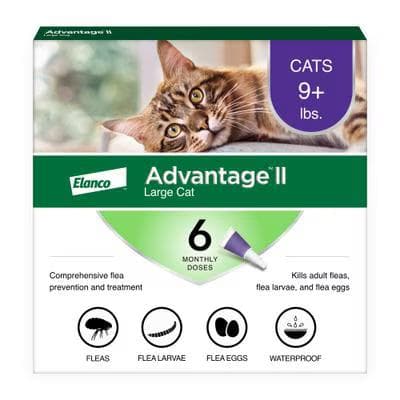
Webvet may earn a commission when you click through to Chewy, at no extra cost to you.
None of this rules out flea control; it just shapes which product is chosen.
- Senior cats and cats with chronic kidney disease: reduced kidney or liver function can slow drug clearance. Your vet may want recent bloodwork on file before starting a monthly systemic product, and may schedule a recheck after the first dose or two.
- Cats on seizure medication or with past neurologic episodes: the isoxazoline caution applies even to a single historical event. Nitenpyram or a vet-selected topical is usually the safer route.
- Underweight or recovering cats: dosing is weight-based, so a cat that has lost weight since her last visit may need a new weigh-in before the same prescription is refilled.
When to call your vet after a flea pill
- Tremors, twitching, wobbliness, or a seizure at any point after dosing.
- Repeated vomiting, especially if the tablet may have come back up (ask before re-dosing).
- Refusal to eat, hiding, or lethargy lasting more than 24 hours.
- Any sign of an allergic reaction: facial swelling, hives, or difficulty breathing. This is an emergency.
How to give your cat a flea pill
The best flea pill in the world does nothing in the bottom of a food bowl. Getting a tablet into a cat is the real-world barrier that makes many owners abandon oral products, so here is a protocol that works for most cats, easiest method first.

- Step 1: Try the treat first. Credelio CAT is a small vanilla-and-yeast flavored chewable, and many cats eat it from your hand like a treat. Offer it before assuming you will have to fight.
- Step 2: Use a treat wrap. Hide the pill inside a soft pill-pocket treat, a smear of squeezable cat puree, or a pea-sized ball of canned food. Give one empty decoy treat first, then the loaded one, then another decoy so the cat keeps eating without inspecting.
- Step 3: Crush only if the label allows. Capstar can be hidden in a small amount of food per its label. Do not crush or split coated or flavored chewables without checking with your vet, since it can change absorption and taste.
- Step 4: Wrap a wiggler. For a cat that squirms or scratches, wrap her snugly in a towel with only the head exposed (the classic burrito wrap) before pilling. A second person steadying the towel makes the whole job faster and calmer for everyone.
- Step 5: Pill directly if needed. Kneel behind your cat, tilt the head gently upward from the cheekbones, open the lower jaw with one finger, and drop the pill at the back center of the tongue. Close the mouth and stroke the throat until you see a swallow.
- Step 6: Use a pill popper for repeat offenders. A pill popper (pilling gun) places the tablet past the tongue without your fingers in biting range. Follow every dry pill with a syringe of water or a lickable treat so the tablet does not sit in the esophagus.
How to tell the flea pill worked
You do not have to guess whether the dose took. Run a fine-toothed flea comb through the fur over the rump and at the tail base, the flea hot spots, a few hours after a fast-kill pill or a few days after starting a monthly chewable.
- After Capstar: expect to see slow, dying, or dead fleas within a few hours, sometimes falling off onto bedding.
- After a monthly chewable: comb weekly. Live flea counts should drop steadily; black pepper-like flea dirt should stop accumulating.
- Itching should ease over one to two weeks. If scratching worsens or the skin looks scabby, ask your vet about flea allergy dermatitis.
What if she spits the pill out? Stay calm and check the floor and her fur, because a spat-out pill means no dose was absorbed. If the pill is intact, re-wrap it in a stronger-smelling treat and try once more.
If it dissolved partially or you cannot find it, call your vet before giving another tablet so you do not double-dose.
Flea pills vs. topical treatments
Pills win on reliability: nothing rubs off, bath time does not matter, and there is no residue for children or other pets to touch. Topicals like Revolution Plus and Bravecto Plus win on breadth, covering heartworm, ear mites, and other parasites a flea pill does not touch, and they skip the pilling battle entirely.
For the full comparison of pills, spot-ons, and collars, including which product fits which cat, see our guide to the best flea treatment for cats.
Troubleshooting: when a flea pill seems to fail
True product failure is rare; genuine flea-drug resistance to nitenpyram and the isoxazolines has not been meaningfully documented in cats. When fleas persist, one of these fixable gaps is almost always the reason:
- The dose came back up. A tablet vomited within an hour may not have absorbed. Call your vet before repeating; do not guess at a second dose.
- An untreated animal in the house. Every cat and dog must be on flea control at the same time, or the treated cat keeps getting reseeded.
- The weight is wrong. A cat that has grown or gained since the prescription was written may be underdosed. Recheck the weight against the label band.
- Doses are stretching past 30 days. Even a few late days each month opens a window for females to feed and lay eggs.
- The environment was never treated. Pupae hatching from carpets for weeks is the single most common reason owners believe a pill failed.
If your cat already has a flea infestation
A flea pill treats the cat, not the house. If you are seeing fleas, roughly 95 percent of the problem is already in your carpets, bedding, and floor cracks as eggs, larvae, and pupae, and new adults will keep emerging for weeks.
Our step-by-step guide on how to get rid of fleas on cats covers the home cleanup, the timeline to expect, and how seasonal flea pressure affects your plan.
The short version: dose every cat and dog in the household on the same schedule, vacuum daily for two to three weeks, wash bedding hot, and keep the monthly preventative going for at least three consecutive months so emerging fleas die before they reproduce.
Frequently asked questions about flea pills for cats
Frequently Asked Questions
How quickly do flea pills work on cats?
Nitenpyram (Capstar) starts killing adult fleas within 30 minutes and eliminates most within six hours. Credelio CAT begins killing fleas within hours of dosing and clears a new infestation within about a day, then keeps protecting for a full month.
Can I give Capstar and a monthly flea pill together?
Vets commonly pair a nitenpyram dose for immediate knockdown with a monthly preventative for lasting control, since the drugs work differently and nitenpyram clears the body within a day. Confirm the combination with your own veterinarian before dosing, especially for kittens, seniors, or cats on other medications.
Are flea pills safe for kittens?
Age and weight minimums matter. Capstar is labeled for kittens 4 weeks and older weighing at least 2 pounds. Credelio CAT requires 8 weeks and 2 pounds, and Comfortis requires 14 weeks and 4.1 pounds. For kittens below those thresholds, flea combing and treating the environment are the safe options; ask your vet.
Do indoor cats need flea pills?
Indoor cats get fleas more often than owners expect. Fleas hitchhike inside on dogs, on pant legs and shoes, and through screened porches, and a single stowaway female can seed a full infestation. Year-round prevention is cheap insurance compared with clearing an established home infestation.
Do flea pills prevent tapeworms in cats?
Indirectly. Cats get the most common tapeworm by swallowing an infected flea while grooming, so consistent flea control removes the source. No flea pill kills tapeworms already present, though. If you see rice-like segments near your cat's tail or in bedding, your vet will prescribe a separate dewormer alongside the flea plan.
Can pregnant or nursing cats take flea pills?
Capstar's label allows use in pregnant and nursing cats, which makes nitenpyram the usual oral choice for queens with fleas. The isoxazoline chewables have not been evaluated for safety in breeding, pregnant, or lactating cats, so vets generally avoid them in that group. Always confirm the plan with your veterinarian first.
Why does my cat still have fleas after a flea pill?
The pill is almost certainly working; the fleas you see are new arrivals from your home environment. Pupae in carpets can keep hatching for weeks, and each new flea must jump on and bite before it dies.
Keep dosing on schedule, treat every pet in the house, and tackle the environment. If you still see live fleas thriving after several weeks, ask your vet to reassess.
The bottom line on flea pills for cats
Use Capstar when you need fleas dead today, and a prescription monthly chewable like Credelio CAT when you want them to stay gone. Screen for seizure history before starting an isoxazoline, respect the age and weight minimums, and remember that the home environment needs its own plan.
For more on feline flea biology and control, the Cornell Feline Health Center's flea guide is an excellent primary resource, and your veterinarian remains the best judge of which pill fits your individual cat.

Editor
The Webvet Editorial Team is the in-house group of pet-care editors and writers behind Webvet, operated by Smart Pet Collective. The team researches, writes, and maintains Webvet's pet health, behavior, and medication content. Every article follows a defined editorial process: research from reputable veterinary and scientific sources, careful drafting, mandatory review of medical content by a credentialed veterinarian, and dated publication. Health and medication articles are medically reviewed by a licensed veterinary professional before they go live and are kept current over time.
Veterinarian · BVMS MRCVS
Dr. Pippa Elliott, BVMS, MRCVS, is a veterinarian with nearly 30 years of experience in companion animal practice. Dr. Elliott earned her Bachelor of Veterinary Medicine and Surgery from the University of Glasgow. She was also designated a Member of the Royal College of Veterinary Surgeons. Married with 2 grown-up kids, Dr. Elliott has a naughty Puggle named Poggle, 3 cats and a bearded dragon.


