Home Remedies for Dog Ear Mites: What Helps Safely
Learn what home remedies for dog ear mites can and cannot do, why common ingredients may be unsuitable, and how to carry out a safe veterinary treatment plan at home.

BVMS MRCVS
Medically reviewed by Dr. Pippa Elliott, BVMS MRCVS · Last reviewed

This article contains affiliate links. Webvet may earn a commission when you buy through them, at no extra cost to you.
Home remedies for dog ear mites are not a dependable substitute for confirming the problem and choosing an effective parasite treatment. Vinegar and peroxide can irritate sore ears, and an oil that affects some mites does not establish a safe, complete cure. The useful home-care job is to protect a painful ear and carry out a treatment plan your veterinarian has checked.
That does not mean every dose must be given at a clinic. Many dogs receive treatment at home after an examination. The distinction is between using an appropriate medicine correctly and experimenting with kitchen ingredients inside an ear whose condition you cannot see.
- 1There is no reliable homemade cure that fits every itchy or dirty canine ear.
- 2Care at home can include prescribed treatment, permitted cleaning and a veterinary plan for other exposed pets.
- 3Severe pain, a new head tilt or difficulty balancing needs prompt assessment, not another ear rinse.

 Sponsored
Need flea, tick, or parasite care for your dog?
A licensed vet at Dutch can recommend the right preventive and prescribe it when it's appropriate. Annual members get 20% off their first flea and tick order.
Use code Pets30
Plans start at $11/month · covers up to 5 pets
- Licensed vets in most states
- Rx for 150+ conditions
- 4.7 on Trustpilot
What home remedies can actually do
Treatment at home is not the same as a homemade treatment. A confirmed infestation needs a plan that deals with the parasite, any additional ear disease and the possibility of reinfestation.
Owners asking how to treat ear mites naturally may be offered DIY drops or a cleaner as though those products do all three jobs. They do not provide interchangeable evidence of success.
Before the appointment, useful help is mostly outside the canal. Keep handling gentle, avoid getting bath water into the ears and note when the scratching began. Ask the clinic whether a protective collar would prevent your particular dog from injuring the ear flap; fit and reach matter. Do not wrestle with a dog that is guarding a painful ear.

- Record which ear seems affected, whether the problem began suddenly, and whether another pet is scratching.
- Photograph any product already applied and write down the time; the name and ingredients matter more than calling it a natural remedy.
- Keep the planned examination even if the ear briefly looks cleaner. Removing visible material does not confirm that the cause has gone.
Choosing a treatment that kills ear mites
Revolution for dogs contains selamectin and is a prescription option for ear mites. It goes on the skin as directed, not down the ear canal. The linked pack is for dogs weighing 40.1–85 pounds, so it is unsuitable as a universal purchase for every dog or puppy. Zoetis specifies use in dogs at least 6 weeks old and heartworm testing before administration. Your veterinarian chooses the appropriate presentation.
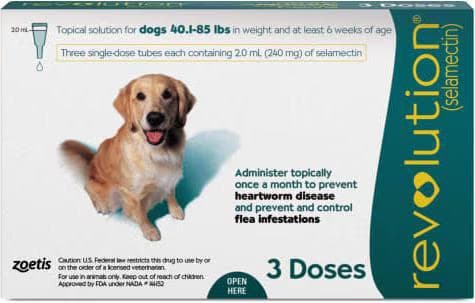
A monthly topical (selamectin) that prevents heartworm and controls fleas, and is well tolerated in herding breeds at the label dose. A prescription pick for dogs who need a non-isoxazoline option.
Webvet may earn a commission when you click through to Chewy, at no extra cost to you.
Make sure the problem is ear mites
The dog ear mite symptoms guide separates visible observations from what a photograph can establish. Tell the clinic about head shaking, scratching, odor, discharge or pain when touched. If your dog suddenly guards one ear after a walk, mention that timing rather than assuming a previous mite problem has returned.
Giving the agreed treatment at home
You can treat ear mites on your dog at home when the veterinarian has identified the problem and given a suitable plan.
Ask for the route, exact dose, treatment dates and follow-up instructions in writing. A skin treatment, an ear preparation and an oral medicine cannot be swapped simply because each mentions parasites on its packaging.
- Match the label to this dog’s name, current weight and age before the first application. For puppies, confirm the minimum age rather than reducing an adult product by guesswork.
- Ask for a demonstration of the intended application. If the dog will not tolerate it, call about another approach instead of restraining harder.
- Set reminders for doses and record who gave them. This avoids two household members repeating the same treatment.
- Report vomiting, unusual behavior, new irritation or another suspected reaction promptly, with the package available. Do not add a second pesticide to compensate for a missed or uncertain dose.
Bio-Groom Ear Mite Treatment is a different option: a pyrethrin-containing ear preparation. Its manufacturer instructions say not to use it in animals under 12 weeks and to consult a veterinarian for certain vulnerable animals. Over-the-counter availability does not settle whether this sore ear can safely receive it. If your vet selects it, follow its actual label; do not layer it onto another mite treatment without asking.
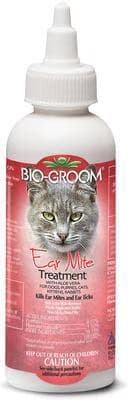
An aloe-enriched medicated treatment that kills ear mites and ear ticks while calming the itch and irritation they cause. For dogs, cats, and rabbits.
Webvet may earn a commission when you click through to Chewy, at no extra cost to you.
An appointment can also make home treatment more realistic. Tell the team if you live alone, cannot hold the dog comfortably or have a puppy that panics during handling. A plan requiring repeated painful restraint may be difficult to complete. Discuss those constraints before buying a bottle, and ask what improvement to expect and what should trigger an earlier call.
| What changed at home | What to tell the clinic | What not to assume |
|---|---|---|
| You could not give the full treatment | Product, scheduled time, and what you actually managed to apply. | That an extra dose is automatically safe. |
| Scratching eased but discharge remains | When comfort improved and whether debris or odor changed. | That cleaner-looking ears prove clearance. |
| The dog seems worse after an application | Product name, time applied, and the new signs. Seek prompt advice for pain or a suspected reaction. | That discomfort means the medicine is working. |
| Another pet starts scratching | Which animal, when the signs began, and whether that pet has a treatment plan. | That one dog’s bottle suits the other animal. |
 Sponsored
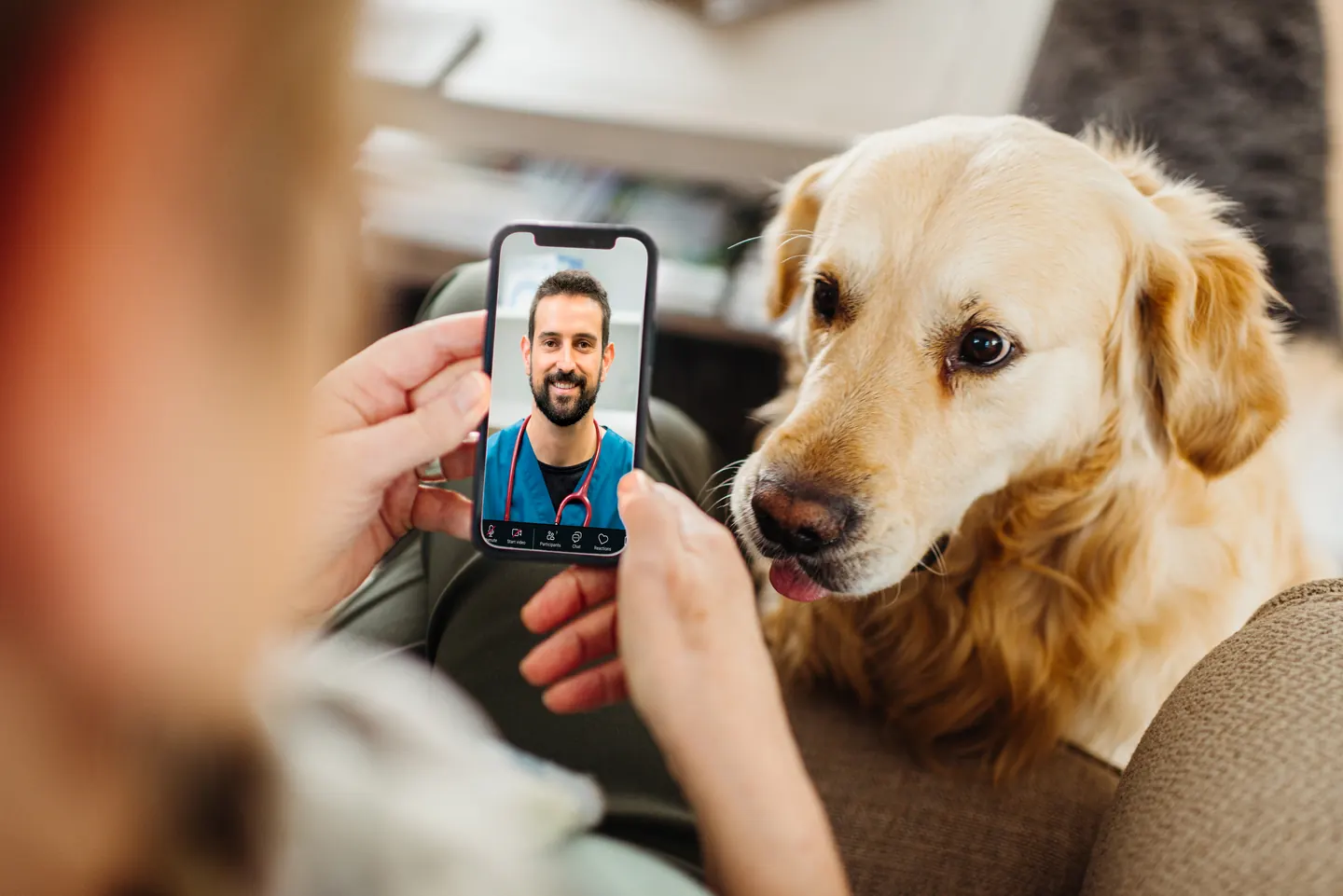
Vet care that's always there
Unlimited video calls and messaging with licensed vets for less than a typical vet visit. One membership covers up to five pets.
Use code Pets30
Plans start at $11/month · covers up to 5 pets
- Licensed vets in most states
- Rx for 150+ conditions
- 4.7 on Trustpilot
Cleaning only when the ear is ready
Cleaning can remove debris from a dog’s ears, but it does not reliably eradicate ear mites.
Start with permission and instructions for this ear and this medication. With an unknown eardrum condition, significant pain or a blocked canal, do not flush at home to find out whether it helps. Some dogs need pain and inflammation controlled before home cleaning is tolerable.
Virbac Epi-Otic Advanced is an ear cleaner, not a parasite treatment. It may fit a veterinarian’s cleaning plan, but the choice and timing should reflect what the examination found. Do not assume that the directions on a new cleaner override the instructions for medicine already in the ear. Ask specifically whether to clean, when to clean, and when cleaning should stop.
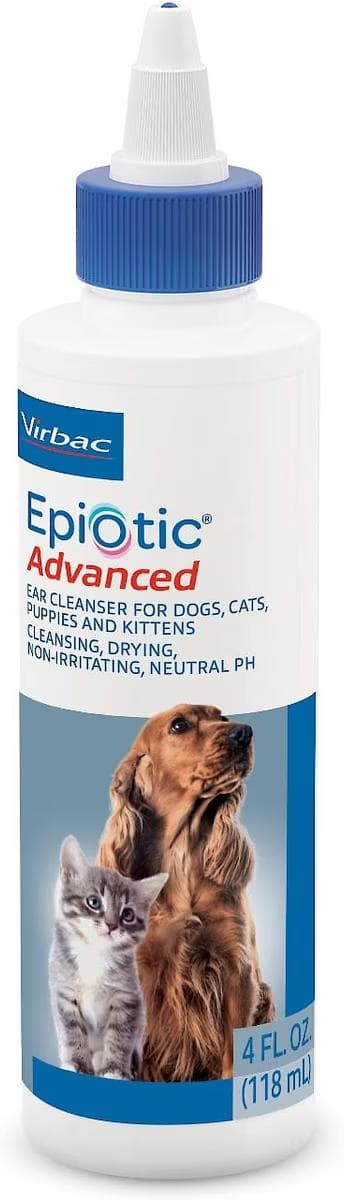
Webvet may earn a commission when you click through to Chewy, at no extra cost to you.
Use the demonstrated technique
Cornell’s ear-cleaning guidance advises gentle handling, avoiding cotton swabs and stopping if cleaning hurts. Once cleaning is approved, use the selected solution and wipe only the accessible area as demonstrated. Digging for every dark speck or pushing the bottle tip deeply into the ear adds risk without proving that mites have been removed.
- Set out the agreed cleaner, cotton pads or gauze and a towel before bringing the dog over.
- Let the dog take breaks, and keep a reward available if their diet allows it.
- Do not introduce extra rinses between treatments because the ear still looks waxy.
- Keep a brief record of comfort, discharge and the dates of treatment so the clinic can interpret the change.
Outer-ear wiping has a narrower job
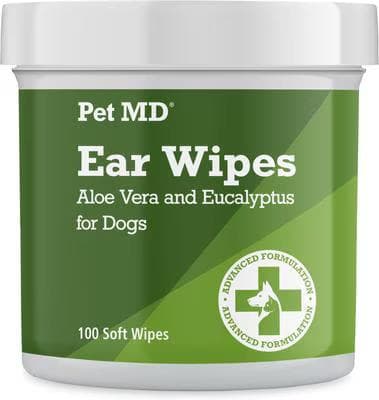
Pet MD Aloe & Eucalyptus Ear Wipes can be considered for permitted wiping of accessible ear surfaces in eligible dogs. They are not a way to reach the deep canal or kill an infestation. The manufacturer specifies dogs over 12 weeks. Ask whether any wipe is appropriate for inflamed or broken skin before using it, and do not scrub a sore ear because a product is described as gentle.
Webvet may earn a commission when you click through to Chewy, at no extra cost to you.
Choose the cleaning method the clinic actually wants you to use. A liquid cleaner and wipes are options for different jobs, not a requirement to buy and apply both. If the plan is unclear, describe the exact product and ask where it belongs. That short clarification is more useful than alternating several products and then trying to identify which one caused irritation.
Why vinegar and peroxide are poor choices
Do not use apple cider vinegar, white vinegar or a peroxide recipe as your dog’s ear-mite treatment. There is no household dilution here that establishes both reliable eradication and safety for an inflamed ear. The Merck Veterinary Manual warns that vinegar mixtures can worsen irritation. A preparation tolerated by healthy skin may still hurt damaged canal tissue.
- Hydrogen peroxide: bubbling is not evidence that ear mites have been killed or that the ear is healing. Cornell advises avoiding peroxide in ear-cleaning solutions.
- Rubbing alcohol: do not substitute it for an ear medicine or use it to “dry out” a painful canal; Cornell also advises avoiding alcohol.
- Apple cider vinegar: a kitchen recipe does not supply the ear examination, medicine selection or follow-up that a mite problem may require.
If you already used one of these ingredients, stop experimenting and tell the clinic what it was, how much you used and when.
Do not try to neutralize it with another household liquid or force water into the canal. New pain or neurologic signs after an application needs prompt veterinary advice.
What about oils and other natural remedies?
There is a useful distinction between evidence that a substance affects mites and evidence for a dependable home cure. Veterinary parasitologists Susan Little and Kathryn Duncan explain that mineral oil can reduce mite populations, but historical use requires many repeated treatments, leaves oily residue and can involve cleaning that worsens irritation or causes trauma. That is not a reason to invent a dose for an unexamined ear.

Olive oil and coconut oil are frequently promoted as ways to suffocate ear mites.
The clinical sources used for this guide do not establish a safe, effective canine home-treatment protocol for either. Nor does the mineral-oil observation validate corn oil, castor oil, petroleum jelly or Vaseline. These are different substances, and a coating effect alone cannot show that the whole infestation is resolved.
| Ingredient or claim | What the ingredient claim leaves out | Useful next step |
|---|---|---|
| Mineral oil reduces mites | A historical reduction is not a simple one-application cure; repeated treatment and ear irritation are concerns. | Ask about a suitable proven parasite medicine. |
| Olive or coconut oil suffocates them | No validated household protocol in the clinical source set establishes dose, safety and complete canine clearance. | Do not substitute a kitchen oil for the prescribed plan. |
| Vaseline or another thick oil coats the ear | A visible coating cannot establish clearance or the condition of the deeper canal. | Leave the canal alone until examined. |
| Tea tree or other essential oils are natural | Concentrated oils can be toxic; natural origin does not establish ear safety. | Avoid DIY essential-oil drops and report any exposure. |
| Tea, honey or herbal recipes are gentler | A soothing or antimicrobial claim is not evidence that the canine ear-mite infestation is eliminated. | Use the diagnosis and individual treatment plan to choose care. |
Tea tree, lavender and other essential oils add another concern: concentration-dependent toxicity and exposure through skin or licking. Merck’s essential-oil toxicology review documents poisoning risks in animals. Do not make ear drops with them or assume that mixing them into a carrier oil makes the recipe safe.
Green tea, honey, garlic infusions, neem and baking soda also lack a validated canine ear-mite home protocol in the sources reviewed here. A recipe that promises to “kill mites naturally” still needs evidence for this parasite, this body site and the actual formulation. Benefits claimed for a food, a skin preparation or a laboratory experiment cannot establish that recipe’s clinical effectiveness.
Why a homemade cleaner is a different question
When infection needs separate care
Preventing reinfestation in a mixed-pet household
Wash pet bedding and keep ordinary shared resting areas clean, but do not spray household insecticide into ears or assume an indoor mite killer treats the pet. The detailed ear-mite transmission and prevention guide explains the role of close contact and why human ear symptoms should be assessed by a human clinician. Concentrate on completing each animal’s plan and the requested follow-up rather than escalating to whole-house chemical treatment.
When the ear needs urgent assessment
Seek prompt veterinary care if your dog has severe pain, a swollen ear flap, bleeding, a new head tilt, falling, or difficulty balancing.
Stop handling the ear if your dog cannot tolerate touch. These changes do not tell you which remedy to choose; they change how quickly the dog needs to be assessed.
After treatment begins, contact the clinic if discomfort worsens or the expected improvement does not occur. Keep the planned follow-up even when scratching settles. Bring the treatment record and every product used so the veterinarian can distinguish a missed dose, irritation, persistent mites, reinfestation and another ear problem. A cleaner-looking ear is only one observation, not the final outcome.
Questions owners ask
Frequently Asked Questions
How can I treat my dog's ear mites without going to the vet?
If cost or transport is the problem, call a local clinic or animal welfare organization and ask about examination options before buying several remedies. A telephone discussion may help prioritize care, but it cannot replace the ear examination needed to confirm the cause and assess safety. Once a plan is established, ask which parts you can carry out at home and what follow-up is necessary.
What home remedy kills dog mites fastest?
No household ear remedy in the clinical sources reviewed here has a dependable instant-cure claim. The fastest useful next step is the right diagnosis and an effective, tolerable treatment. Do not keep switching ingredients while waiting for the ear to look normal; this can obscure what was applied without establishing that the infestation has cleared.
What draws mites out of skin?
Ear mites, Otodectes cynotis, do not burrow into skin; they live on its surface, commonly in the external ear canal. They do not need to be drawn out with oil, salt or a paste. Other skin mites cause different diseases, so widespread skin lesions require their own diagnosis. The University of Saskatchewan’s parasite reference describes the ear mite’s surface-dwelling biology.

Editor
The Webvet Editorial Team is the in-house group of pet-care editors and writers behind Webvet, operated by Smart Pet Collective. The team researches, writes, and maintains Webvet's pet health, behavior, and medication content. Every article follows a defined editorial process: research from reputable veterinary and scientific sources, careful drafting, mandatory review of medical content by a credentialed veterinarian, and dated publication. Health and medication articles are medically reviewed by a licensed veterinary professional before they go live and are kept current over time.
Veterinarian · BVMS MRCVS
Dr. Pippa Elliott, BVMS, MRCVS, is a veterinarian with nearly 30 years of experience in companion animal practice. Dr. Elliott earned her Bachelor of Veterinary Medicine and Surgery from the University of Glasgow. She was also designated a Member of the Royal College of Veterinary Surgeons. Married with 2 grown-up kids, Dr. Elliott has a naughty Puggle named Poggle, 3 cats and a bearded dragon.


