Best Flea and Tick Prevention for Cats: Vet-Reviewed Options
Compare cat flea and tick preventives by coverage, format, duration, prescription status, age, and safety, including permethrin danger and household fit.

BVMS MRCVS
Medically reviewed by Dr. Pippa Elliott, BVMS MRCVS · Last reviewed

This article contains affiliate links. Webvet may earn a commission when you buy through them, at no extra cost to you.
The best flea and tick prevention for cats is a cat-labeled product that covers the parasites your cat may encounter and fits the cat's age, weight, health, household, and dosing routine. A monthly broad-spectrum topical may suit one cat, while another may do better with a longer-duration topical, an oral tablet, or a breakaway collar. There is no single winner for every cat.
For a collar-only decision, including kitten age minimums and breakaway fit, read our dedicated guide to the flea collar for cats.
Never use a dog-only flea or tick product on a cat. Concentrated permethrin in some dog spot-ons can cause drooling, tremors, seizures, and death in cats. If a dog product was applied to a cat or a cat contacted a recently treated dog, call a veterinarian or animal poison service immediately and follow their decontamination instructions.
 Sponsored
Need flea, tick, or parasite care for your cat?
A licensed vet at Dutch can recommend the right preventive and prescribe it when it's appropriate. Annual members get 20% off their first flea and tick order.
Use code Pets30
Plans start at $11/month · covers up to 5 pets
- Licensed vets in most states
- Rx for 150+ conditions
- 4.7 on Trustpilot
Choose by Parasite Coverage, Not Brand Name
Start with exposure risk. Fleas can enter homes on dogs, people, visiting animals, or used furnishings. Ticks are more likely with outdoor access, patios, screened porches, travel, dogs in the household, or wildlife near the home. Heartworm, ear mites, and intestinal parasites may also matter depending on region and lifestyle.
- 1Use only a cat-labeled product after a parasite-coverage and exposure-risk profile and an age, weight, and medical-history check.
- 2Compare format, duration, prescription status, and dosing reliability to make a format, duration, and dosing-reliability match.
- 3Indoor-only status lowers some exposures but does not automatically make flea, tick, or heartworm risk zero.
- 4Dog spot-ons containing concentrated permethrin can be fatal to cats, including through contact with a recently treated dog.
- 5Treat every pet with an appropriate product and address the environment when fleas are already present.
| Product | US minimum age and weight | Interval and format | Important coverage boundary |
|---|---|---|---|
| Revolution Plus | 8 weeks; at least 2.8 lb | Monthly prescription topical | Includes heartworm; named tick species differ from Bravecto Plus |
| Bravecto Plus | 6 months; at least 2.6 lb | Every 2 months; prescription topical | Includes heartworm; do not use plain Bravecto directions |
| Frontline Plus for Cats | 8 weeks; over 1.5 lb | Monthly OTC topical | Fleas and ticks; no heartworm prevention |
| Seresto for Cats | 10 weeks; follow the cat-collar label | Up to 8 months; OTC collar | Fleas and ticks; no heartworm prevention |
No single preventive is best for every cat. Select by fleas, tick species, heartworm risk, ear mites or intestinal parasites, age, weight, health, household, and dosing reliability. Your veterinarian can use local parasite patterns, travel history, medical history, household pets, and product labels to narrow the choice. Products differ in tick species covered, how quickly they kill fleas, whether they interrupt egg production, and whether they also prevent heartworm or treat mites and intestinal worms.
A vet-recommended flea and tick preventive for cats should fit both parasite coverage and dosing reliability. Ask which local tick species the label covers and whether your cat also needs heartworm prevention. Then check the minimum age, current weight, medical history and whether you can give the product correctly every time.
The decision should also account for administration. A highly effective topical will not protect a cat if most of the dose lands on fur or another pet licks it off. A tablet is a poor fit when every dose becomes a wrestling match. A collar is a poor fit for a cat that cannot safely wear one or repeatedly loses it outdoors.
Never Use Dog Flea Products on Cats
Bring the package or a clear photo of the ingredient panel. The veterinary team needs the product name, active ingredients, concentration, amount, exposure time, cat's weight, and any signs. Follow professional decontamination instructions because bathing a trembling or seizing cat can add risk.
A Risk-to-Preventive Fit Matrix
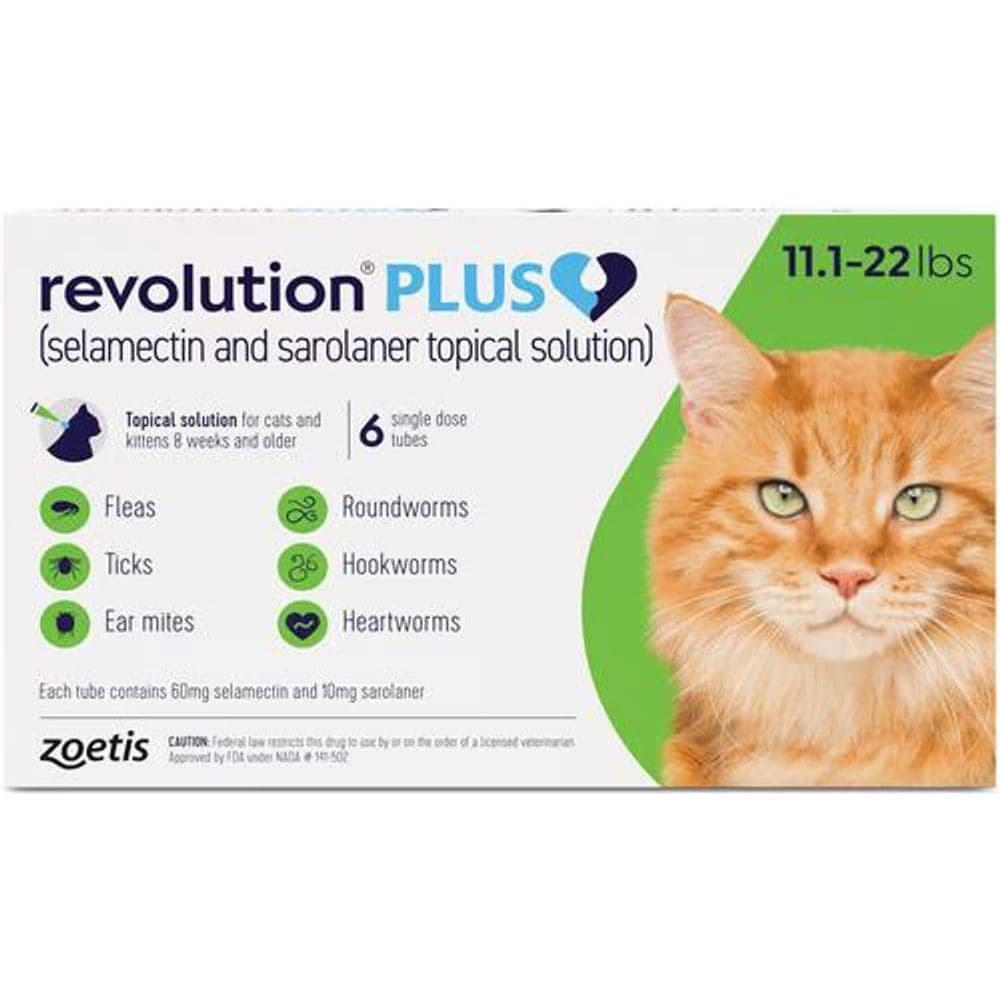
Monthly topical that protects cats from fleas, ticks, ear mites, roundworms, hookworms, and heartworm.
Webvet may earn a commission when you click through to Chewy, at no extra cost to you.
Compare the cat’s parasite exposure, minimum age and weight, and ability to receive each dose correctly. The table below summarizes US product distinctions; choose the correct weight-band package with your veterinarian. For example, a young kitten may meet the minimum age for one product but be too light for its package. An adult cat exposed to ticks needs the relevant tick species on the coverage label; flea-only control does not meet that need. Compare the labels for Revolution Plus, Bravecto Plus, Frontline Plus for Cats and Seresto for Cats.

| Decision factor | Question to ask | What it changes |
|---|---|---|
| Parasite-coverage and exposure-risk profile | Are fleas the only concern, or are ticks, heartworm, ear mites, or intestinal parasites relevant? | Narrows single-parasite versus broad-spectrum options |
| Age, weight, and medical-history check | Does the cat meet both label minimums, and are there health precautions today? | Excludes products that are not labeled or appropriate for the individual cat |
| Household transfer | Could another cat, dog, or child touch or groom the application site? | Affects topical placement, drying separation, or format choice |
| Format, duration, and dosing-reliability match | Is a monthly dose, longer-duration dose, tablet, or continuously worn collar most likely to be used correctly? | Correct use often matters more than theoretical convenience |
| Prescription access | Does the desired coverage require an examination and prescription? | Separates prescription combinations from OTC options without treating access as quality by itself |
| Active infestation | Are fleas already on the cat or emerging in the home? | Requires pet-wide and environmental control, not prevention alone |
Compare the exact coverage line by line
Two packages can both say "flea and tick" while solving different problems. Read the indications panel for the tick species covered, the duration for each parasite, and whether the product kills adult fleas only or also interrupts development. A claim elsewhere on the brand website does not replace the label on the package in your hand.
Broad-spectrum prescription topicals may add heartworm prevention, ear-mite treatment, or intestinal-parasite control. That can simplify a plan, but broader is not automatically better. The cat should receive the coverage its exposure and medical history justify. Adding active ingredients without a clear need can increase cost and complexity without improving the outcome.
Tick risk is especially regional and activity-dependent. Different tick species transmit different pathogens, and a product's label may name only selected species. Tell the veterinarian where the cat lives, travels, boards, hikes, or spends time on patios and porches. Also mention dogs that visit tick habitat and then share furniture or sleeping areas.
For fleas, fast kill and life-cycle control answer different questions. A product may kill adult fleas quickly, while an insect growth regulator limits eggs or larvae. Neither removes every protected pupa from the home immediately. Prevention works best when every pet is treated correctly and the environmental reservoir is addressed.
Best Flea and Tick Prevention for Cats by Use Case
These are fit categories, not a universal ranking. Product labels and availability can change. Confirm the exact cat's current weight, age, health, parasite risk, and other medications with a veterinarian before choosing. Start with required parasite coverage, then choose a format your household can administer reliably. A longer dosing interval helps only if you remember the next treatment; a topical requires correct placement and the label’s precautions around contact with other pets.
Broad monthly coverage: Revolution Plus
Revolution Plus combines selamectin and sarolaner in a monthly prescription topical for cats at least 8 weeks old and weighing at least 2.8 pounds. Its current US label names blacklegged, American dog, Gulf Coast and lone star ticks. It also provides heartworm prevention and covers ear mites and specified roundworms and hookworms.
Apply the full dose directly to skin where the cat cannot lick it. Keep other pets from grooming the site until it is dry. Ask the veterinarian about neurologic history because sarolaner belongs to the isoxazoline class, which carries label precautions for neurologic adverse reactions.
Revolution Plus is a prescription option, so the veterinary relationship is part of the product fit rather than an inconvenience to work around.
Longer dosing interval: Bravecto Plus
Bravecto Plus contains fluralaner and moxidectin and is given every two months to cats at least 6 months old and weighing at least 2.6 pounds. The current US label names blacklegged, American dog, Asian longhorned and Gulf Coast ticks. It also prevents heartworm disease and treats specified roundworms and hookworms. It is not the same product as plain Bravecto for cats, and its interval is not 12 weeks.
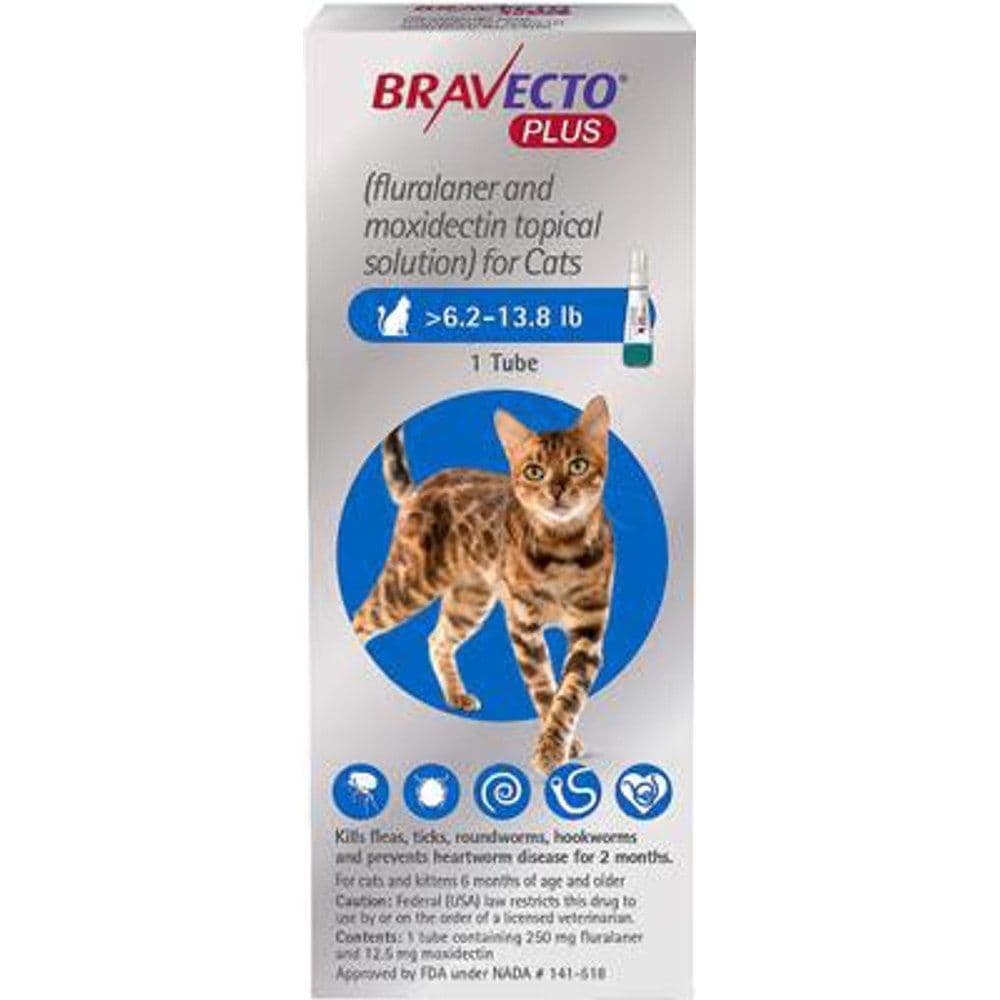
Long-lasting topical that protects cats from fleas, ticks, heartworm, roundworms, and hookworms for up to two months per dose.
Webvet may earn a commission when you click through to Chewy, at no extra cost to you.
Bravecto Plus for cats is one longer-duration prescription option to compare with monthly prevention.
Compare the current Revolution Plus indications and Bravecto Plus indications with your veterinarian. For example, their tick lists differ for lone star and Asian longhorned ticks. Neither list is a promise of protection from every tick-borne infection.
Over-the-counter topical option: Frontline Plus for Cats
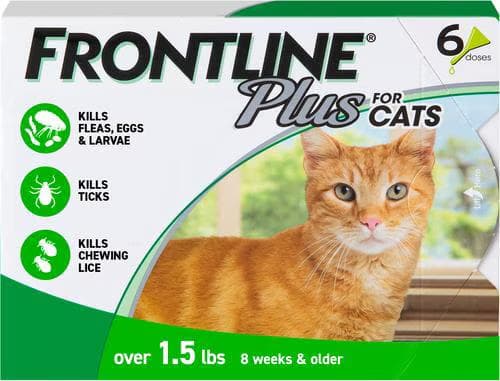
Frontline Plus for Cats is a non-prescription flea medicine in a topical format containing fipronil and (S)-methoprene. The US label is for cats at least 8 weeks old and weighing over 1.5 pounds. Monthly use covers fleas and ticks but does not provide heartworm prevention. The insect growth regulator helps prevent flea development; it does not eliminate every cocoon already in the home. The best choice depends on whether that parasite coverage meets this cat’s needs.
Over-the-counter does not mean interchangeable across species or sizes. Use the cat product, check the current label, part the fur until skin is visible, and apply the full dose as directed. Do not add another flea or tick drug without veterinary advice.
Frontline Plus for Cats is an OTC comparison option for households that need flea-and-tick coverage without a prescription combination.
Long-duration collar option: Seresto for Cats
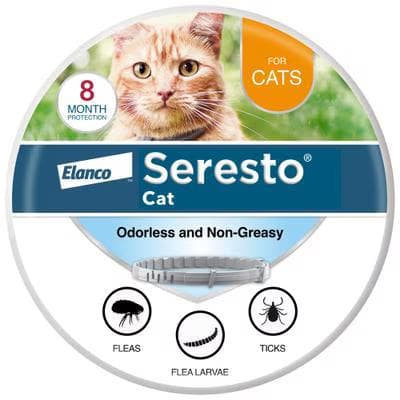
Seresto for Cats contains imidacloprid and flumethrin and provides up to eight months of flea and tick protection. The US cat collar is for kittens at least 10 weeks old. It avoids monthly liquid application but requires continuous correct wear, a safe fit and regular checks for neck irritation. It does not provide heartworm prevention.
Any collar worn by a cat should be evaluated for escape safety. The owner should be able to inspect the cat and collar regularly, especially when the cat goes outdoors. Buy through a reputable seller to reduce counterfeit risk and keep the packaging and lot information.
A Seresto for Cats collar may fit a cat that safely tolerates a collar and can be checked regularly.
SponsoredVet care that's always there
Unlimited video calls and messaging with licensed vets for less than a typical vet visit. One membership covers up to five pets.
Use code Pets30
Plans start at $11/month · covers up to 5 pets
- Licensed vets in most states
- Rx for 150+ conditions
- 4.7 on Trustpilot
Topical, Oral, and Collar Options Compared
Compare topical, oral, and collar formats by coverage, duration, prescription status, application constraints, and household transfer risk. Format affects how a preventive is given, how bathing or grooming may matter, and how other household members can contact the product. This single comparison includes duration, prescription status, and practical handling constraints, while efficacy still depends on active ingredients, labeled parasites, correct dose, and on-time use.
Topical prevention
Topicals are applied directly to skin, usually at the base of the skull. They are useful for cats that will not take tablets and can combine several parasite protections in one dose. Application errors include placing product on fur, using only part of a tube, allowing another pet to lick the wet site, or applying a dose late.
Part the fur until skin is visible and follow the label's placement and bathing instructions. Separate pets until the site is dry when the label or veterinarian advises it. If the cat develops marked irritation, drooling, tremors, vomiting, weakness, or another concerning sign, contact a veterinarian.
Oral Flea and Tick Prevention for Cats
Oral cat flea products work after the parasite feeds. Some provide short adult-flea knockdown, while prescription oral options can provide ongoing flea and tick protection. The label determines duration and coverage. An oral dose avoids residue on the coat, but the owner must confirm the cat swallowed it and must not redose after vomiting unless the veterinarian or label specifically directs that action.
Credelio CAT is a monthly prescription lotilaner tablet. Its US flea indication starts at 8 weeks and 2 pounds, but its blacklegged-tick indication starts at 6 months and 2 pounds. That distinction matters for kittens: approval for fleas at a young age does not establish tick protection at that age. Discuss food directions and neurologic history with the veterinarian.
Short-acting adult-flea treatment
Short-acting nitenpyram, such as Capstar, addresses adult fleas and does not supply month-long tick prevention. It answers a different question from Credelio CAT. Choose a rapid knockdown product only as part of the veterinarian’s full plan, especially when another flea medicine has already been given.
Petful's guide to the best oral flea and tick treatments for cats provides a format-specific comparison for owners deciding whether an oral product fits their cat.
Is there a chewable flea and tick prevention for cats?
Yes. Credelio CAT is a prescription oral tablet with monthly flea protection and a blacklegged-tick indication for cats meeting the separate age and weight requirements above. “Chewable” does not mean every cat will eat it voluntarily. Ask the veterinarian how to give it with food, confirm the full dose was swallowed and get advice if the cat vomits or spits out part of it. Do not substitute a dog chew or assume a short-acting flea tablet provides tick control.
Which Is Better for Cats: Oral or Topical Flea and Tick Prevention?
Webvet may earn a commission when you click through to Chewy, at no extra cost to you.
Which is better for cats, oral or topical flea and tick prevention? Neither format is inherently better for every cat. A topical cat-labeled product can combine several parasite protections without requiring the cat to swallow a tablet, but the liquid must reach skin and remain ungroomed while wet. An oral product avoids coat residue and bathing concerns, but the cat must swallow the full dose and the available coverage varies. Compare active ingredients, duration, the age and weight label, medical precautions, and the household's ability to administer every dose correctly.
Are Flea and Tick Collars Safe for Cats?
Modern cat-labeled collars can provide long-duration control. They require correct contact, continuous wear, routine neck checks, and a safe fit. A collar does not solve an existing home infestation by itself, and not every collar has equal evidence or coverage.
For any flea and tick prevention collar for cats, review breakaway design, fit, monitoring, active ingredients, age and weight limits, and household exposure with your veterinarian before deciding whether a collar is an appropriate match.
A cat-specific collar may be reasonable when the cat can wear it safely and the owner can inspect the neck and collar often. Stop using it and call a veterinarian if the cat develops marked irritation or a concerning systemic sign. Never substitute a dog collar or assume that any flea collar is appropriate for a cat.
| Format | Potential advantage | Main limitation | Best fit question |
|---|---|---|---|
| Monthly topical | Broad coverage can fit in one dose and no pilling is needed | Must reach skin, remain ungroomed while wet, and be repeated on time | Can every dose be applied correctly? |
| Longer-duration topical | Fewer annual application dates | A missed date creates a longer gap and Rx products require veterinary access | Will the owner reliably track the longer interval? |
| Oral tablet | No coat residue and bathing does not remove the dose | The cat must swallow it; coverage and duration vary widely | Can the cat take the exact tablet on schedule? |
| Cat-specific collar | Long duration without repeated liquid application | Fit, neck reaction, loss, counterfeit sourcing, and escape safety need monitoring | Can the collar be worn and checked safely? |
Prescription vs Over-the-Counter Prevention
Prescription status describes access and veterinary oversight, not a simple good-versus-bad hierarchy. Prescription combinations often cover more parasites and let the veterinarian match the drug to regional risk and medical history. The examination can also identify skin disease, anemia, tapeworm infection, flea allergy, or another problem that needs treatment.
Over-the-counter products can be appropriate when they are cat-labeled, effective for the target parasite, purchased from a reputable seller, and used exactly as directed. They may offer narrower coverage or use older active ingredients. Compare the exact label, not the shelf location or marketing phrase.
When buying flea and tick prevention for cats without a prescription, ask the veterinarian which parasites matter. Avoid products that lack a clear active ingredient, EPA or FDA labeling as applicable, lot information, species, age, weight, dose, warnings, and manufacturer contact details.
Age, Weight, Health, and Household Safety

Check age and weight every time a product changes. Kittens grow quickly, and similar-looking packages may cover different weight bands. See a veterinarian before treating a kitten below label minimums, a pregnant or nursing cat, a frail senior, or a cat that is ill, underweight, taking other medication, or known to have a neurologic disorder.
Safe flea and tick prevention for cats depends on the exact cat, product, and dose. The safest flea and tick prevention for cats is not a single active ingredient for every household. It is a cat-labeled option whose age and weight limits, medical precautions, parasite coverage, and administration instructions fit the individual animal.
Isoxazoline drugs have been associated with neurologic adverse reactions in some dogs and cats. Many animals use them without problems, but the prescribing veterinarian should know about any seizure, tremor, ataxia, or neurologic history. Follow the exact label and report concerning signs.
Kitten age and weight minimums
Most ongoing preventives have both an age minimum and a weight minimum. Meeting one does not cancel the other. A small kitten may be old enough but still under the labeled weight, while a recently adopted kitten may have an estimated age that needs veterinary confirmation.
Webvet may earn a commission when you click through to Chewy, at no extra cost to you.
Do not split an adult tube by eye or use part of a dog dose. Active ingredients may not be distributed in a way that makes home division accurate, and the concentration can differ across species and sizes. Use the exact cat-labeled package that matches the kitten today.
For a kitten below label minimums, call a veterinarian. The immediate plan may emphasize mechanical flea removal, careful bedding and environment management, treatment of other pets, and monitoring for anemia until a labeled preventive is appropriate. Pale gums, weakness, rapid breathing, poor appetite, or a heavy flea burden in a small kitten needs prompt veterinary care because blood loss can become serious.
Senior cats and cats with medical conditions
Age alone does not prohibit prevention, but older cats are more likely to have kidney disease, thyroid disease, weight loss, skin fragility, or several medications. Review the current weight and medication list with the veterinarian rather than automatically continuing the same product and package size for years.
Tell the clinic about prior tremors, seizures, loss of coordination, unusual sensitivity after a preventive, skin reactions, poor appetite, vomiting, or difficulty being handled. The safest product is one the cat can receive correctly with an active-ingredient profile and monitoring plan that fit the individual health history.
Do Indoor Cats Need Prevention?
Indoor cats can need flea and tick prevention even when they never roam outside. The Companion Animal Parasite Council recommends year-round flea and tick control for cats; your veterinarian should tailor the product and parasite coverage to the individual cat. Fleas can arrive on dogs, visiting pets, foster animals, clothing or used furnishings. Screened porches, household pets and wildlife near the home can add exposure, and mosquitoes that transmit heartworm can enter homes. Review these routes with your veterinarian rather than assuming indoor-only status means no risk.
The best flea and tick prevention for indoor cats is the cat-labeled option that matches the parasites the veterinarian identifies as relevant. A high-rise cat with no other animals and no travel has a different exposure pattern from an indoor cat living with two hiking dogs. Ask about local parasites, household traffic, travel, boarding, patios, screened porches, wildlife, and the health consequences of missing prevention.
If prevention is recommended, choose a schedule the household can maintain. If the veterinarian supports lower-intensity or seasonal use for the individual cat, record the start and stop rules so a late restart does not create an unplanned gap.
What If Your Cat Already Has Fleas?
Finding adult fleas means the problem extends beyond the fleas visible on the cat. Eggs fall into bedding, carpets, upholstery, and floor cracks, where larvae and pupae continue the life cycle. New adults can emerge after treatment, which can look like product failure even when the preventive is working.
Use WebVet's complete guide on how to get rid of fleas on cats for pet-wide and environmental steps. The visual guide to flea eggs on cats explains how eggs differ from flea dirt and why most eggs do not remain attached to the cat.
Treatment of an active infestation requires every pet to use an appropriate preventive plus environmental control; one dose does not remove immature stages already in the home. Treat every dog and cat on the schedule set by the veterinarian. Vacuum regularly, wash washable bedding, and use home products only according to the label. Never spray environmental pesticide directly on a cat unless the label explicitly says it is for that use and the veterinarian agrees.
Why one flea treatment is rarely enough during an infestation
Adult fleas live and feed on pets, but much of the developing population is in the environment. Eggs fall from the coat. Larvae avoid light and move into carpet, upholstery, floor gaps, and bedding. Pupae develop inside protective cocoons and can survive until vibration, warmth, or carbon dioxide signals that a host is nearby.
That biology explains why owners may see new adult fleas after the first correct dose. The emerging adults are not necessarily survivors of treatment. Consistent pet prevention kills them after they reach the host, while repeated vacuuming, laundering, and label-directed environmental work reduce the next generation.
Use a fine-toothed flea comb to monitor progress, especially around the neck, tail base, groin, and abdomen. Drop collected fleas into soapy water rather than crushing them on the cat. Flea dirt looks like dark debris and may smear reddish-brown when moistened because it contains digested blood. White grains that fall easily may be eggs, but dandruff and litter can look similar.
Natural flea and tick prevention is not equivalent protection
Wanting to avoid adverse effects is understandable when choosing flea and tick prevention for cats. The word "natural" does not establish safety or efficacy. Cats metabolize several plant compounds differently from people and dogs, and concentrated essential oils can cause skin, respiratory, gastrointestinal, or neurologic problems.
Do not apply tea tree, pennyroyal, clove, cinnamon, citrus, peppermint, or other concentrated oils to a cat or its bedding unless a veterinarian has approved the exact product. Garlic is not a safe oral flea preventive. Diatomaceous earth can irritate eyes and airways and should not be dusted onto a cat.
Mechanical tools such as combing, vacuuming, and laundering are useful parts of infestation control, but they do not provide the same ongoing protection as a proven preventive. Read WebVet's guide to natural remedies for fleas on cats for a fuller evidence and safety discussion.
Buy from a source you can trace
Counterfeit, diverted, expired, or improperly stored parasite products can be ineffective or dangerous. Use a veterinary clinic, established pharmacy, or reputable retailer. Compare the received package with the current manufacturer label, and look for intact seals, lot and expiration information, readable instructions, correct species, correct weight range, and a way to contact the manufacturer.
Be cautious when a price is far below normal, the seller obscures the product origin, the package language or concentration does not match the market, or individual doses arrive without the original box. Save the receipt and packaging until the dose period has passed.
Why Prevention Appears to Fail

A product that seems to fail is often late, incorrectly applied, mismatched to the parasite, washed or groomed off, or overwhelmed by environmental emergence. Seeing fleas after a dose does not automatically prove resistance. Check whether the preventive was late, applied incorrectly, mismatched to the parasite, washed or groomed off, or temporarily overwhelmed by adults emerging from the home. Then check the entire system instead of stacking another pesticide:
- Confirm the product covers the parasite and is labeled for the cat's age and weight.
- Confirm the entire dose reached skin or the tablet was swallowed.
- Check whether the dose was late, washed off, groomed by another pet, or stored incorrectly.
- Make sure every pet in the household is protected with the correct species-specific product.
- Address bedding, carpets, upholstery, and other flea-development sites.
- Ask the veterinarian whether the visible insects are fleas, ticks, lice, mites, or another problem.
Flea pupae are protected in cocoons and can continue emerging for weeks. Consistent prevention kills newly emerged adults, while vacuuming and environmental management reduce the reservoir. Adding or switching chemicals without guidance increases adverse-effect risk and can obscure the original problem.
How Often Should Cats Get Flea and Tick Treatment?
How often should cats get flea and tick treatment? Use the interval printed on the exact cat-labeled product and the schedule recommended for the cat's exposure. Many products are monthly, some last longer, and some fast-kill treatments act only briefly and are not continuing prevention. Recheck the age and weight label whenever the product or package size changes, record each dose and next due date, and never stretch a dose or give an early replacement unless the veterinarian or manufacturer directs it.
When to Call a Veterinarian
Call before choosing a product for a kitten below label minimums, a pregnant or nursing cat, a cat with neurologic disease, a sick or underweight cat, or a cat taking other medication. An examination is also appropriate for hair loss, raw skin, severe itch, pale gums, weakness, weight loss, tapeworm segments, persistent fleas despite correct household control, or a tick attached near the eye, ear canal, or another difficult location.
Seek urgent care for tremors, seizures, collapse, marked weakness, breathing difficulty, severe drooling, loss of coordination, or possible dog-product exposure. Keep the package and lot number and call ahead.

Cat Flea and Tick Prevention FAQs
Frequently Asked Questions
Which is better for cats, oral or topical flea and tick prevention?
Oral and topical flea and tick prevention can both be appropriate for cats; neither format is automatically better. A topical cat-labeled product may provide broad parasite coverage without pilling, but it must reach skin and remain ungroomed while wet. An oral dose avoids coat residue, but the cat must swallow it and coverage varies. Match the format, active ingredients, duration, age and weight label, health precautions, and household handling constraints to the individual cat with veterinary guidance. The best format is the one that can be given safely and reliably on schedule.
How often should cats get flea and tick treatment?
Cats should get flea and tick treatment as often as the exact cat-labeled product directs and the veterinarian recommends for the cat's exposure risk. Some preventives are monthly, some last longer, and some short-acting treatments are not ongoing prevention. Recheck the age and weight label when a kitten grows or the product changes. Record every dose and next due date. Do not stretch a dose beyond its label or give it early after a suspected application problem without veterinary or manufacturer advice.
Is dog flea medicine safe for cats?
Avoid flea medicine labeled only for dogs, and any cat product that does not fit the cat’s age, weight or health. Do not use dog flea medicine on a cat unless the exact product label explicitly includes cats and the veterinarian confirms the dose. Choose only a cat-labeled product that matches the cat's age and weight label. Concentrated permethrin in some dog spot-ons can be fatal to cats, including after contact with a recently treated dog. Possible exposure requires immediate veterinary or poison-control advice. Save the package and do not add another pesticide or attempt unapproved home decontamination.
Can you get oral flea meds without a vet prescription for cats?
You can get some oral flea meds for cats without a vet prescription in the United States: nitenpyram products such as Capstar are sold over the counter for short-acting adult-flea treatment. That is different from ongoing oral flea and tick prevention: Credelio CAT requires a veterinary prescription. Capstar’s cat label starts at four weeks of age and two pounds, but it does not provide month-long tick protection. Check the exact package and ask your veterinarian how short-term treatment fits the cat’s full prevention plan.
See the manufacturer’s Capstar information for the current label and prescription status.
Sources

Editor
The Webvet Editorial Team is the in-house group of pet-care editors and writers behind Webvet, operated by Smart Pet Collective. The team researches, writes, and maintains Webvet's pet health, behavior, and medication content. Every article follows a defined editorial process: research from reputable veterinary and scientific sources, careful drafting, mandatory review of medical content by a credentialed veterinarian, and dated publication. Health and medication articles are medically reviewed by a licensed veterinary professional before they go live and are kept current over time.
Veterinarian · BVMS MRCVS
Dr. Pippa Elliott, BVMS, MRCVS, is a veterinarian with nearly 30 years of experience in companion animal practice. Dr. Elliott earned her Bachelor of Veterinary Medicine and Surgery from the University of Glasgow. She was also designated a Member of the Royal College of Veterinary Surgeons. Married with 2 grown-up kids, Dr. Elliott has a naughty Puggle named Poggle, 3 cats and a bearded dragon.


