Signs of Worms in Cats: A Symptom and Urgency Checklist
Know the signs of worms in cats, what you can check at home, which symptoms need urgent care, and why a stool test matters even when poop looks normal. Get practical, source-backed guidance for your next veterinary conversation.

BVMS MRCVS
Medically reviewed by Dr. Pippa Elliott, BVMS MRCVS · Last reviewed

This article contains affiliate links. Webvet may earn a commission when you buy through them, at no extra cost to you.
Signs of worms in cats may include visible worm segments, vomiting, diarrhea, weight loss, a dull coat or poor kitten growth. Some infected cats have no obvious signs. You cannot confirm or exclude worms from symptoms alone, so use what you notice to guide a veterinary examination and appropriate stool testing.
Seek urgent care for collapse, difficult breathing, marked weakness or very pale gums. Do not assume that worms explain a serious symptom or wait to try a dewormer before asking for help.
Signs of worms in cats: the symptom checklist
The most useful observation checklist records what changed, when it started and how your cat feels overall. Bring those appointment notes to the clinic. Several mild changes together may matter more than one isolated finding, while a severe single sign can require immediate care.
Cat worms symptoms overlap with many other conditions. Diarrhea alone cannot identify a parasite, and eating normally does not prove your cat is worm-free. The Merck Veterinary Manual describes infections without outward signs as well as digestive problems, poor growth and loss of condition.
- 1An observation checklist should include stool, vomiting, appetite, weight and energy.
- 2Appointment notes should record the start date and recent parasite medications.
- 3Normal stool does not rule out worms; a photograph does not replace testing.
| What you notice | Possible connection to worms | Other possibilities to keep open | Next action |
|---|---|---|---|
| Rice-like pieces near the anus or on stool | Tapeworm segments | Food, litter or debris | Photograph and ask the clinic about a specimen |
| Long pale worms in vomit or poop | Roundworms | String or other swallowed material | Contact the clinic; do not pull protruding material |
| Loose stool or mucus | Intestinal irritation | Diet change, another parasite or other illness | Report persistence, frequency and other symptoms |
| Weight loss or poor growth | Nutrient loss or illness associated with infection | Many digestive and systemic diseases | Arrange examination and a weight review |
| Pale gums, weakness or dark tarry stool | Blood loss, including possible hookworms | Other causes of anemia or bleeding | Urgent veterinary assessment |
| No visible change | Infection can still be present | A healthy cat may also have no infection | Follow risk-based testing and prevention |
| See a vet now | Collapse, difficult breathing or marked deterioration | An emergency regardless of the cause | Contact an emergency hospital |
Visible segments are a stronger clue than a vague symptom
Small pale pieces that move on freshly passed stool or around the anus can be tapeworm segments. They may resemble grains of rice when fresh and smaller dried seeds later. Save the observation for the veterinarian, including where you found it and whether the stool was fresh.
Do not assume every white speck is a worm. Appearance supports a suspicion; a specimen can provide better evidence. The CDC's Dipylidium guidance explains that the visible segments are portions of a larger tapeworm, not individual eggs.
Vomiting, diarrhea and appetite changes need context
Worms are one possible explanation for vomiting or diarrhea, but food changes, swallowed objects and numerous illnesses can look similar. Record the number of episodes and whether your cat is keeping food and water down. Tell the clinic if more than one pet is affected.
Avoid using appetite as a diagnostic test. A cat may eat less, appear hungry or continue eating normally during an infection. The useful question is whether the pattern changed from your cat's usual behavior, especially when combined with weight loss or poor growth.
Prepare for an ordinary veterinary visit
Keep a familiar carrier ready when booking a non-emergency examination for a stable cat. The Frisco Travel Safety carrier is one option; the linked model is Medium. Check the cat’s size and the carrier instructions. Ask the clinic separately how to package a stool sample so it travels in a sealed container.

Soft-sided travel safety carrier that keeps a stressed cat secure and well-ventilated on the way to the vet, with mesh panels for airflow and a seat-belt loop.
Webvet may earn a commission when you click through to Chewy, at no extra cost to you.
- Note whether stool is formed, soft, watery, mucousy, red or dark and tarry.
- Describe any vomiting separately from coughing or bringing up a hairball.
- Record an actual weight when available rather than guessing from a fluffy coat.
A pot belly does not prove worms
A kitten with worms may have a rounded abdomen and poor growth, but abdominal shape has other explanations. A belly that is suddenly enlarged, painful or associated with distress needs prompt examination. Do not press firmly on the abdomen to decide whether it feels like worms.
In adults, weight loss with a changing abdominal shape deserves veterinary attention even if you see no worm segments. A diagnosis based only on a social-media comparison photo can miss another problem. Keep the visual finding in your notes without treating it as the answer.
Dull coat, licking and scooting are less specific
Reduced grooming or poor coat condition can accompany illness, including some parasitic infections. Excessive licking near the rear or scooting may reflect irritation, but can also result from skin or anal-area problems. These clues are worth reporting, not assigning to one worm type at home.
Symptoms of tapeworm in cats can be minimal. A comfortable, playful cat can still pass segments. Conversely, a very ill cat with a visible tapeworm may have another concurrent problem. Do not let a visible parasite distract from the cat's overall condition.
Early signs of intestinal worms
Early symptoms of roundworm or tapeworm infection may be subtle. Tapeworms sometimes produce visible segments without other changes. Heartworm disease affects a different body system: coughing or breathing trouble needs its own assessment. The phrase heart worms does not mean a visible worm passed in stool.
Observation checklist and appointment notes
Keep the observation checklist brief enough to use consistently. A description of stool, feeding and energy over time can reveal a change that a single photograph misses. Appointment notes should distinguish what you saw yourself from information passed along by a shelter, breeder or previous owner.
For example, record whether a rice-like piece was moving on fresh stool or whether a dry speck was found later on a blanket. Both observations can be useful, but they are not equivalent evidence. The veterinarian can decide how much weight to give each one.
How to check your cat for worms at home
How to tell if a cat has worms starts with safe observation, not a home diagnostic procedure. Look at fresh stool, the fur around the rear and bedding for unusual material. Observe appetite, energy and vomiting. Keep a short written record and arrange the veterinary testing needed to interpret it.
You can check your cat for worms at home only in the sense of collecting clues. Eggs are usually too small to see without a microscope, and some infected cats never pass a visible adult worm. A negative visual check does not replace a stool examination.

A calm, five-minute observation routine
- Start with behavior: notice whether the cat approaches food, moves comfortably and responds normally.
- Check the litter box: photograph unusual material before scooping, and note whether the stool is fresh.
- Look without forcing: inspect the rear only if the cat tolerates it; stop if handling causes distress.
- Review the history: find the exact names and dates of recent parasite products.
- Call with the facts: describe the cat's condition before describing the suspected worm.
A simple note such as “two loose stools since last night, eating half the usual amount, still walking normally” is more informative than “probably has worms.” If you have a scale your cat can use safely, record the weight and date. Do not repeatedly restrain a sick cat for measurements.
Collect a sample the clinic can use
Ask the clinic how much stool to bring and how soon it should arrive. Use a clean, sealed container and identify the cat and collection time. Avoid adding cleaning chemicals or medication. Follow the clinic's storage instructions, particularly if there will be a delay.
Look for fleas without treating the result as a diagnosis
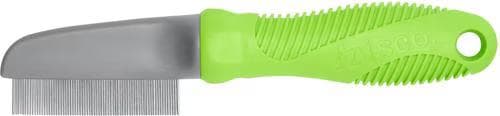
On a comfortable cat with intact skin, a Frisco single-row flea comb may help you notice adult fleas or debris in the coat. Keep any finding separate from the stool sample. A flea finding is relevant history for the veterinarian, but a clean comb cannot rule out fleas or intestinal worms.
Webvet may earn a commission when you click through to Chewy, at no extra cost to you.
If multiple cats share a litter box, be clear about whether you know which cat produced the sample. An unknown-source sample can still prompt a discussion, but it should not be represented as belonging to a particular cat. Separate collection may be needed to answer the veterinarian's question.
- Photograph the whole stool and a closer view of the unusual material.
- Include a familiar size reference beside the specimen when practical.
- Keep children and other animals away from the sample.
- Wash your hands after collecting or cleaning up.
Things not to do during a home check
Do not probe the anus, use a household microscope result to choose a drug or pull a thread-like object from the mouth or rear. A swallowed string can be a foreign-body emergency. Seek advice promptly if material appears attached, the cat strains repeatedly or the abdomen is painful.
Do not give a test dose of dewormer to see whether symptoms improve. Improvement does not establish which parasite was present, and failure to improve does not prove worms were absent. Testing and a documented treatment plan give the veterinarian a clearer starting point.
 $65 · no membership
Need flea, tick, or heartworm prevention for your cat?
A licensed vet can recommend and prescribe the right preventive for your cat online when it's appropriate.
 Talk to a vet
- Licensed vets
- All 50 states
- same-day Rx
Webvet may earn a commission if you book.
When possible worms need emergency care
Pale gums and weakness
Pale gums and weakness can indicate anemia or another serious problem. Hookworms feed on blood, but they are not the only possible cause. Collapse, difficult breathing, severe weakness or rapid deterioration should be treated as emergencies regardless of whether worms are suspected.
Dark, tarry stool can reflect digested blood and deserves urgent veterinary advice, especially with weakness or poor appetite. A small streak of fresh blood and black tarry stool are different observations; describe exactly what you saw. Do not rely on a photograph's screen color to decide severity.
Give the clinic the urgent information first
- State the cat's age and whether it is a kitten.
- Describe breathing difficulty, collapse, pale gums or inability to stand immediately.
- Mention repeated vomiting, poor intake, apparent pain and the last normal meal.
- Tell them any product already given, including the package strength and time.
The Companion Animal Parasite Council's hookworm guidance notes that kittens can become severely ill before fecal examination establishes the diagnosis. A young kitten should not wait through a prolonged home trial simply because the first sample was negative.
Stable cats still need a plan
A comfortable adult cat passing a suspicious segment may be able to attend a scheduled appointment after telephone triage. That is different from ignoring the finding. Ask how soon the clinic wants to examine the cat and whether to bring stool or the segment itself.
Persistent diarrhea, weight loss, reduced appetite or recurring vomiting should also prompt a call. The clinic can account for age, medical history and severity. There is no universal number of days that makes it safe to postpone assessment in every cat.
Why treating the suspected cause is not enough
A cat with substantial blood loss or dehydration may need supportive care in addition to parasite treatment. A deworming tablet cannot substitute for that assessment. Similarly, an unrelated obstruction or systemic illness will not be addressed by choosing a broader dewormer.
The practical decision is whether your cat is stable enough to await the recommended appointment. If its condition changes, call again and describe the new sign. Your earlier plan may need to change even if the suspected parasite has not been identified yet.
What a veterinary examination and stool test can show
An examination helps assess hydration, body condition, abdominal discomfort and possible anemia. Fecal testing looks for evidence that an owner cannot reliably see. Your veterinarian chooses the tests based on the suspected parasite, the cat's history and what other conditions could explain the signs.

Microscopy is not the only possible test. Depending on the case, fecal antigen testing or PCR may be useful. These methods answer related but different questions. Ask which test was performed, what it can detect and what the next step is if symptoms persist.
A stool result is part of the picture
The Merck Veterinary Manual cautions that one negative fecal examination cannot always rule out parasitism in a symptomatic animal. Tapeworm detection can be particularly difficult when segments are not present in the submitted sample.
If you photographed or collected a segment, show it even when the stool report was negative. The veterinarian can decide whether direct specimen examination, repeat sampling or another test is appropriate. Keep the distinction between “nothing found in this sample” and “every parasite excluded.”
Follow-up should answer a specific question
After treatment, ask what improvement to expect and when the clinic wants an update. Follow-up may assess persistent symptoms, reinfection risk, treatment completion or another diagnosis. A planned recheck is more useful than repeatedly changing products whenever a stool looks unusual.
Treatment depends on the identified worm
Drontal for Cats has labeled activity against specified roundworms, hookworms, and tapeworms. It is not suitable below two months of age or two pounds. Your veterinarian should match a medicine to the test results and the cat’s condition; symptom checklists cannot make that product choice.
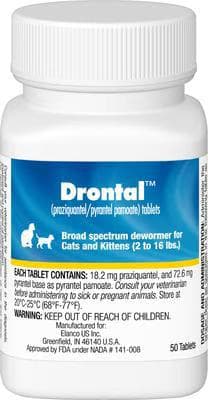
Broad-spectrum cat dewormer (praziquantel and pyrantel) that clears tapeworms, roundworms, and hookworms. For cats and kittens 2 to 16 lbs. Prescription required.
Webvet may earn a commission when you click through to Chewy, at no extra cost to you.
- Record every administered dose and any missed or vomited dose.
- Ask before repeating medicine early or combining products.
- Keep the flea-control plan and the deworming plan together.
- Report continued weight loss or poor intake even if stool appearance improves.
Fecal testing when normal stool does not rule out worms
Fecal testing matters because normal stool does not rule out worms. The absence of diarrhea is reassuring about one symptom, but does not answer whether parasite eggs, antigen or genetic material are present. Ask the clinic which method was selected and what its result means for your cat.
If a result conflicts with a photograph or the cat's continuing illness, report that discrepancy. A repeat sample, examination of a segment or another diagnostic step may be needed. Do not discard the earlier test result or dismiss new symptoms simply because the pieces do not yet fit.
Understanding the worm type
Heartworm in cats affects the lungs and associated blood vessels. It does not explain a visible intestinal worm.
The general guide to worms in cats compares five worm types and their transmission. This checklist helps you notice illness; it does not replace that identification step. Different parasites require different tests, and a cat may have more than one problem at a time.
Heartworms are not worms that owners find in stool. They involve the lungs and blood vessels and are transmitted by mosquitoes. If breathing trouble is the main sign, prioritize veterinary assessment rather than using the litter-box checklist to decide whether it is serious.
Toxocara cati and Dipylidium caninum
Toxocara cati is a feline roundworm; Dipylidium caninum is the common flea-associated tapeworm. Their different life cycles explain why a medicine and prevention plan must match the parasite. These scientific names help the veterinarian interpret the sample and choose control measures, but owners do not need to identify species themselves.
Exposure routes differ
Cats can get different types of worms from different sources. Tapeworms may involve fleas or prey, while heartworms require mosquito transmission and a separate prevention plan. Whipworm is uncommon in US cats. Human pinworms are a different infection, so avoid transferring a person's diagnosis or medicine to a pet.
Treat the flea pathway separately
If fleas are part of the diagnosis, Capstar for Cats is an adult-flea treatment to discuss with the veterinarian. It is not a dewormer and is labeled only for cats at least four weeks old and two pounds. Ongoing flea prevention matters because another infected flea can restart the common tapeworm cycle.

Webvet may earn a commission when you click through to Chewy, at no extra cost to you.
If your cat has worms, cleaning the house should focus on the identified route: prompt feces removal, soiled bedding and flea management where relevant. Other cats or dogs may share an exposure, but each needs its own species-appropriate plan. The overview explains these distinctions without replacing an examination.
Roundworms and hookworms: the species detail
Roundworm symptoms in cats and hookworm symptoms in cats overlap, but severe blood loss is a particular concern with hookworms. Long pale worms can suggest roundworms; failure to see a worm does not make a hookworm infection unlikely enough to dismiss on its own.
The existing guide to hookworms and roundworms in cats covers those species-specific details. Use it to understand your veterinarian's findings after the examination, rather than matching one symptom to one medicine before a diagnosis.
Hookworm infection in cats and roundworm infection can require different attention to complications, even when a chosen dewormer covers both. A tapeworm-versus-roundworm comparison also matters because tapeworm coverage depends on the active ingredients. Confirm the identified parasite rather than selecting a medicine from its package color.
What visible worms can look like
Small white worms in cats are often descriptions of tapeworm segments, while a longer spaghetti-like worm suggests a different appearance. Mucus, hair and undigested material can confuse the picture. Worm eggs generally cannot be identified by naked-eye inspection of a litter box.
Use the photo guide to worms in cat poop for appearance comparisons and specimen tips. Note whether the material was moving when fresh or appeared only after stool sat for hours. Timing helps the clinic interpret what you found.
Cats may pass small white tapeworm segments in feces or show them near the anus. Rice-like pieces and long roundworms look different. Pictures help describe these findings, but symptoms, laboratory evidence and the cat's condition guide treatment. A photograph of poop cannot establish how ill the patient is.
When the patient is a kitten
Signs of worms in kittens need a lower threshold for seeking veterinary advice because poor intake, diarrhea or blood loss can have a larger impact on a small patient. A kitten that is failing to grow, becoming weak or losing interest in feeding should be assessed promptly.
Read how to tell if a kitten has worms for kitten-specific growth checks and deworming timing. Bring the rescue or breeder's treatment record. “Already dewormed” is incomplete information without the medicine, dose date and weight at treatment.
Dewormer selection and worm treatment for kittens depend on current weight and age. Tapeworms, roundworms and other infections are not interchangeable. The best option is the one that matches the identified problem and is suitable for that individual kitten, with repeat treatment documented as the clinic directs.
Choosing a cat dewormer with your veterinarian
A broad spectrum dewormer for cats covers specified parasites. It does not treat every cause of diarrhea or cover every worm automatically.

The right cat dewormer depends on the worm and the cat. A broad-spectrum product still covers only its listed parasites, and it will not treat every cause of diarrhea. The cat dewormer guide compares products and explains ingredient differences.
Check age, weight, and ingredient coverage
For an eligible cat, Drontal combines praziquantel and pyrantel to cover specified intestinal worms. Its US label excludes kittens younger than two months or under two pounds. It belongs in a veterinary treatment discussion after assessment, not as a diagnostic test for a cat whose only sign is loose stool.
For cats with worms, the goal is to get rid of the identified parasite safely. Deworming medicine may come as an oral tablet, liquid or another preparation; different wormers have different coverage. Ask about possible side effects and how often to deworm under the selected plan.
Home remedies do not reliably cure worms naturally, and nothing should be promised to kill every worm instantly. An over-the-counter medicine is not automatically the best option without a veterinary assessment. Severe illness may require more than parasite treatment, even when the chosen medicine is appropriate.
Tapeworm treatment and flea control
Tapeworm medicine and flea control have different jobs. Praziquantel treats specified tapeworms, while controlling fleas reduces one important route of reinfection. Elanco Tapeworm Dewormer for Cats does not cover roundworms and hookworms and is not intended for kittens younger than six weeks.
See the tapeworm dewormer comparison before discussing options with the clinic. A visible segment in an otherwise well cat still deserves a plan. Repeatedly removing segments from bedding does not remove the infection or its source.
Cats with tapeworms need a plan to get rid of the infection and reduce reinfection. Tapeworm medication chosen for home administration should still follow the product directions and veterinary advice. A sick cat needs assessment; choosing an OTC treatment must not delay that step.
Protecting people and other pets
Signs in humans exposed to cats should be assessed by a human healthcare professional. The cat's symptoms cannot diagnose a person's infection.
Human treatment decisions
If your cat has worms, do not decide to treat yourself with a pet medicine. Ask your own healthcare professional whether a specific exposure requires assessment.
Some cat-associated worms can affect people, but different parasites spread in different ways. Wash hands after handling stool or soiled materials, scoop promptly and keep children away from the litter box. Ask your veterinarian whether other pets need assessment based on their shared exposure.
The household exposure section in our worms guide explains the distinction between contaminated eggs, soil-associated larvae and infected fleas. Do not give every animal the same product automatically. Dogs and cats, and kittens and adults, may need different medicines and weight-based instructions.
Shared exposure in a home with a dog
Whether a dog can get worms associated with a cat depends on the parasite and exposure route. Tiny segments on a cat's bed warrant cleaning and parasite identification, not human self-treatment. Tell the veterinarian about dogs and other cats in the house, and ask your own clinician about any human symptoms or exposure.
Questions about cat worm symptoms
Frequently Asked Questions
How will a cat act if it has worms?
A cat with worms will sometimes act normally or show reduced energy, appetite changes, vomiting or diarrhea. Behavior alone cannot identify an infection or measure its severity. Record changes alongside weight and stool observations, and obtain veterinary advice. Severe weakness, pale gums, collapse or trouble breathing calls for immediate veterinary assessment.
Do worms eventually go away in cats?
Do not assume worms eventually go away in cats without treatment. Symptoms and visible segments can disappear temporarily even when infection or exposure remains. Obtain veterinary advice about the likely parasite, testing and an appropriate medicine. Complete the planned treatment and prevention steps, including flea control when relevant, and attend recommended rechecks.
Can cats get rid of worms without going to the vet?
Cats need veterinary advice to get rid of worms safely, even when a suitable medicine can be administered at home. The parasite, age, weight and health determine the appropriate medicine. A veterinarian may require an examination or sample testing. Buying a product without going to the clinic cannot establish the diagnosis.
Can I cuddle my cat if he has worms?
You can usually cuddle and gently care for a cat with worms while following appropriate hygiene precautions. Avoid face licking and contact with stool or visibly soiled fur. Wash your hands and supervise children. Veterinary advice about parasite treatment, flea control and the identified infection is more useful than avoiding all contact.
What happens if cat worms are left untreated?
Cat worms left untreated may cause persistent digestive problems, poor growth, weight loss or more serious complications, depending on the parasite. Some infections have few obvious signs. Do not wait for deterioration before seeking veterinary advice. Pale gums, marked weakness, collapse or difficult breathing needs urgent assessment regardless of the suspected cause.
Can humans catch worms from cats?
Humans can catch certain worms associated with cats, but the route depends on the parasite. Contaminated eggs, larvae in soil and infected fleas create different exposures. Ordinary proximity does not transmit every worm. Follow veterinary advice on controlling the animal source and ask your healthcare professional about symptoms or a specific concern.
$65 · no membershipNeed flea, tick, or heartworm prevention for your cat?
A licensed vet can recommend and prescribe the right preventive for your cat online when it's appropriate.
Talk to a vet- Licensed vets
- All 50 states
- same-day Rx
Webvet may earn a commission if you book.

Editor
The Webvet Editorial Team is the in-house group of pet-care editors and writers behind Webvet, operated by Smart Pet Collective. The team researches, writes, and maintains Webvet's pet health, behavior, and medication content. Every article follows a defined editorial process: research from reputable veterinary and scientific sources, careful drafting, mandatory review of medical content by a credentialed veterinarian, and dated publication. Health and medication articles are medically reviewed by a licensed veterinary professional before they go live and are kept current over time.
Veterinarian · BVMS MRCVS
Dr. Pippa Elliott, BVMS, MRCVS, is a veterinarian with nearly 30 years of experience in companion animal practice. Dr. Elliott earned her Bachelor of Veterinary Medicine and Surgery from the University of Glasgow. She was also designated a Member of the Royal College of Veterinary Surgeons. Married with 2 grown-up kids, Dr. Elliott has a naughty Puggle named Poggle, 3 cats and a bearded dragon.


