Whipworms in Dogs: Symptoms, Testing, and Treatment
Whipworms can cause recurring diarrhea even when no worms are visible. Learn how fecal testing, prescribed treatment, follow-up and practical cleanup help protect your dog.

BVMS MRCVS
Medically reviewed by Dr. Pippa Elliott, BVMS MRCVS · Last reviewed

This article contains affiliate links. Webvet may earn a commission when you buy through them, at no extra cost to you.
Whipworms in dogs are intestinal parasites that can cause recurring diarrhea, mucus or blood in stool, weight loss and, in severe infections, serious illness. The usual canine species is Trichuris vulpis. A dog can have whipworms without visible worms in its poop, and one negative fecal test does not always exclude infection.
Treatment needs a veterinarian-selected dewormer and a follow-up plan. Picking up feces and reducing exposure to contaminated ground also matter because persistent environmental eggs can survive long after an infected dog has been treated.

 Sponsored
Need flea, tick, or parasite care for your dog?
A licensed vet at Dutch can recommend the right preventive and prescribe it when it's appropriate. Annual members get 20% off their first flea and tick order.
Use code Pets30
Plans start at $11/month · covers up to 5 pets
- Licensed vets in most states
- Rx for 150+ conditions
- 4.7 on Trustpilot
Whipworms and contaminated environments
Whipworms live mainly in the large intestine. Veterinary treatment, repeat testing when indicated, and prompt feces removal address different parts of the problem. Normal-looking poop does not prove that either the dog or its environment is parasite-free.
Dogs acquire whipworms by swallowing infective eggs from contaminated soil or other surroundings. A dog does not need to deliberately eat another dog's poop: investigating ground with its mouth or grooming contaminated paws can provide an opportunity for exposure. The infection is parasitism, with the worm benefiting at the dog's expense.
Newly passed eggs need time in the environment before becoming infective. This is why collecting each stool promptly is more useful than waiting for a weekly yard cleanup. Keep collection supplies by the door and take them on walks so the habit does not depend on remembering a special task later.
Earth Rated Unscented Dog Poop Bags are a practical option for containing each collected stool. A bag supports prompt removal; it does not kill eggs already left in soil. Wash your hands afterward and keep filled bags away from children and animals until disposal.

Unscented bags for prompt feces collection after each toilet trip.
Webvet may earn a commission when you click through to Chewy, at no extra cost to you.
Why an infection can seem to appear late
The prepatent period is the delay between swallowing eggs and producing detectable eggs in feces. A recently adopted dog may therefore have been exposed before coming home. Conversely, a dog treated successfully can acquire a new infection from a previously contaminated area. Neither pattern by itself proves that a medicine failed.
Whipworms occur in many parts of the world, including places outside the United States. How common they are in a particular community depends on climate, exposure and the tested population. A New Zealand owner should use local veterinary advice and locally registered products, rather than assume a U.S. brand has the same formulation or approval there.
Bring the clinic a short exposure history:
- Recent adoption, boarding, daycare or shared exercise areas.
- Previous positive tests and the dates of treatment.
- The exact names of parasite preventives and any missed doses.
- Whether other household dogs have diarrhea or share the same toilet area.
Symptoms and urgent illness signs
Whipworm symptoms range from no obvious illness to severe inflammation and blood loss. Dogs may pass frequent small amounts of soft stool, strain to defecate, or have intermittent diarrhea with mucus or fresh blood. Appetite and weight can fall. These findings also occur with other conditions, so seeing them does not establish the cause.
For a dog the clinic has assessed as suitable for home care, a washable floor barrier can help manage accidents while you monitor recovery. The Paw Inspired Washable Dog Pee Pad, 48 by 60 inches covers a relatively large resting area. Remove feces immediately, replace a soiled pad and follow its laundering instructions rather than leaving the dog on contaminated bedding.
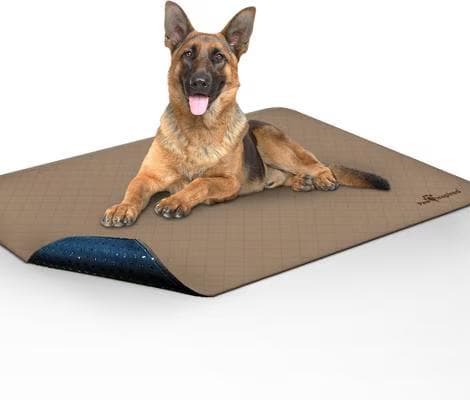
A 48-by-60-inch washable barrier for a resting area during accidents.
Webvet may earn a commission when you click through to Chewy, at no extra cost to you.

This published adult specimen of Trichuris vulpis comes from Traversa (2011), Figure 1, reproduced under CC BY 2.0. Its thin front portion and thicker rear portion explain the name; it is a specimen reference, not a photograph of diagnostic dog poop.
What poop and visible worms can tell you
Dog poop with whipworms has no single reliable appearance. It may look normal, soft, mucus-coated or bloody. The eggs are microscopic, and adult worms commonly remain attached inside the intestine. Pictures of whipworms in dog poop cannot show the eggs at ordinary viewing size or rule infection in or out.
If you see a worm-like object, take a clear photograph and ask how to submit it. Rice-like pieces suggest a different possibility, such as tapeworm segments, while long spaghetti-like worms also need separate identification. Food fibers and mucus can be mistaken for worms. Do not select a dewormer from appearance alone.
Vomiting can accompany a severe whipworm infection, but a visible worm in vomit is not automatically a whipworm. Report vomiting separately from stool changes, including how often it occurs and whether the dog keeps water down. A fecal diagnosis does not mean every new symptom has the same cause.
Pain, dehydration and signs that cannot wait
Dogs can feel abdominal pain and discomfort with worm-related intestinal inflammation. Straining, reluctance to eat and an unusual posture are reasons to call, rather than reasons to give a human pain medicine. Severe whipworm disease can also disturb fluid and electrolyte balance.
Seek urgent veterinary assessment for:
- Collapse, marked weakness or very pale gums.
- Repeated vomiting or inability to retain water.
- Substantial bloody diarrhea, worsening abdominal pain or rapid deterioration.
- A young or medically vulnerable dog that becomes quiet and stops eating or drinking.
Whipworms can kill a dog in severe cases, but there is no meaningful number of hours or days that predicts how fast this will happen. Nor is there a safe answer to how long a dog can live with worms without treatment. Some infections are initially quiet; a sick dog needs assessment now rather than a survival countdown. Cornell's clinical overview describes the variable signs and serious complications.
 Sponsored
Vet care that's always there
Unlimited video calls and messaging with licensed vets for less than a typical vet visit. One membership covers up to five pets.
Use code Pets30
Plans start at $11/month · covers up to 5 pets
- Licensed vets in most states
- Rx for 150+ conditions
- 4.7 on Trustpilot
Fecal testing and why repeat testing may matter
Veterinarians commonly look for whipworm eggs using fecal flotation with centrifugation. Depending on the situation and laboratory, an antigen test or PCR can contribute additional information. The test choice should match the clinical question: screening a well dog and investigating ongoing bloody diarrhea are different situations.

This Trichuris vulpis egg under microscopy is from Traversa (2011), Figure 2, reproduced under CC BY 2.0. The structures at its ends help laboratory identification; a household stool photo cannot provide this microscopic view.
Why one sample can miss infection
A negative result can reflect an infection that has not reached the egg-producing stage or intermittent egg shedding. Sample quality and the testing method also affect what a laboratory can find. If clinical suspicion remains, the veterinarian may request samples on different days or add another test rather than conclude that parasites are impossible.
Follow the clinic's collection instructions rather than leaving a sample outside until the appointment. Ask how fresh it should be, whether to refrigerate it, and how much to bring. Use a closed container with a secondary bag, keep it separate from food, and label the collection time as instructed.
A prescription option for an eligible medium dog is Sentinel Spectrum Chews for Dogs, 25.1–50 pounds. This exact weight band must match the dog, and its use belongs within the veterinarian's parasite plan. It is not permission to add another preventive or change the timing of an existing prescription.
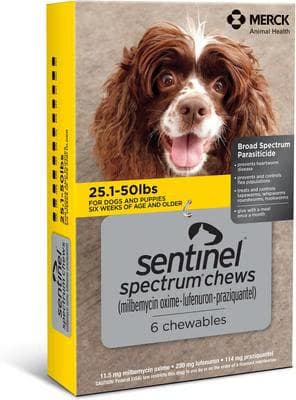
Prescription whipworm coverage for eligible dogs weighing 25.1–50 pounds.
Webvet may earn a commission when you click through to Chewy, at no extra cost to you.
Before the appointment, record:
- Stool frequency and consistency, including blood or mucus.
- Appetite, water intake, energy and weight changes.
- Vomiting and the timing of any medicines.
- Whether signs improve and return between episodes.
Other causes of diarrhea in dogs may need investigation even after a parasite is found. For example, Giardia requires its own diagnostic interpretation. More than one problem can be present, and persistent illness should not be handled by repeatedly changing dewormers without reassessment.
Veterinary deworming and repeat treatment
Effective whipworm treatment uses a medicine with a specific whipworm indication. Fenbendazole and the appropriate febantel-containing combination are examples of treatment options; several monthly prescription preventives also control whipworms. The veterinarian selects the product, dose, duration and repeat treatment schedule for the individual dog.
| Treatment milestone and follow-up question | What the answer changes |
|---|---|
| Initial deworming: which product and complete course? | Confirms that the medicine covers whipworms and that every scheduled dose is given. |
| Repeat treatment: when is the next course or monthly dose? | Addresses the treatment schedule as parasites mature; improvement alone does not cancel it. |
| Follow-up testing: which sample and when? | Checks the dog using an interpretable testing plan rather than an immediate appearance check. |
| Environmental eggs: where might another exposure occur? | Keeps cleanup and prevention active even after a reassuring test. |
Why treatment can take more than one step
Getting rid of whipworms in dogs can be hard when treatment stops too soon or exposure continues, even though effective medicines are available. Immature stages, missed doses and repeated exposure complicate the picture. A dog that seems better after the first treatment may still need the remaining prescribed courses.
The Companion Animal Parasite Council guidance lists approved treatments and describes schedules that can include monthly treatment for three months. This is a framework for the clinician, not a universal instruction to repeat whichever wormer happens to be at home. The plan may instead use an appropriate ongoing monthly product.
Separate a missed fecal result from a new environmental exposure. Ask whether a later positive result is compatible with the original infection, an incomplete schedule, or exposure to contaminated ground. Those possibilities require different corrections. Merely buying a stronger-sounding product leaves the cause unresolved.
Choosing ongoing coverage
A veterinarian may choose a topical prescription alternative when that format better suits the dog. Advantage Multi for Dogs, 20.1–55 pounds has whipworm coverage in this exact canine formulation. Confirm the current weight, application instructions and compatibility with other medicines; it is an alternative plan, not an extra product to layer over Sentinel Spectrum.
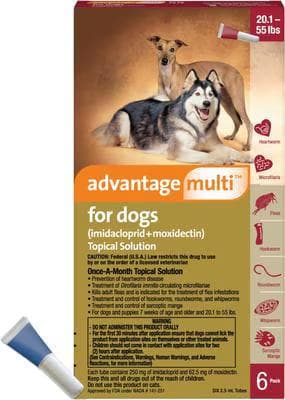
A prescription topical alternative for eligible dogs weighing 20.1–55 pounds.
Webvet may earn a commission when you click through to Chewy, at no extra cost to you.
Home treatment, over-the-counter products and safety
Some fenbendazole products are sold over the counter, but availability does not establish that the package suits this dog or this diagnosis. Bring the exact label to the veterinarian. A product labeled for another species, a different concentration, or a different parasite is not interchangeable with the recommended course.
Treating whipworms at home should mean carrying out the veterinarian's plan, collecting feces and watching recovery. There is no established food, herb or household remedy that reliably replaces a proven whipworm medicine. Do not use bleach, garden chemicals or livestock dosing instructions on the dog.
Practical medicine questions include:
- Whether the full dose was swallowed and what to do after vomiting.
- How to handle a missed dose without doubling the next one.
- Whether existing heartworm or flea medicines overlap.
- When continued diarrhea, poor appetite or a suspected reaction needs a call.
There is no universal maximum number of times per year that every dog can be dewormed. A prescribed monthly preventive and a short treatment course serve different purposes; repeated unsupervised courses are not a safer substitute. Puppies also need an age-appropriate deworming plan, not a scaled-down adult schedule guessed from the box.
Yard cleanup and reinfection prevention
Getting rid of whipworms in a yard is harder than treating the dog. Eggs already established in soil can persist for years, and routine household disinfectants cannot be relied on to sterilize grass or dirt. Removing every visible stool helps prevent additional contamination, but a clean-looking lawn is not proof that infective eggs are gone.

Use a manageable toilet area while following the clinic's advice, remove feces immediately and prevent access to heavily contaminated spots when practical. For repeated household infections, discuss whether changing a surface or restricting an area would reduce exposure. Do not pour concentrated disinfectant over a yard or assume a pesticide labeled for insects kills whipworm eggs.
A cleanup routine that supports the treatment plan
- Collect stools after each toilet trip, including formed stools.
- Keep scoops, bags and waste containers away from feeding areas.
- Clean fecally soiled hard surfaces and bedding promptly using suitable methods.
- Stop scavenging and reduce visits to heavily contaminated communal areas.
- Continue the prescribed preventive and fecal testing schedule.
Choose changes the household can maintain. A daily collection routine and a reliable medication reminder are more useful than an ambitious one-time cleanup followed by missed doses. If several people care for the dog, name who gives each medicine and who records it, so a dose is neither omitted nor accidentally repeated.
What to record at the recheck
A useful follow-up conversation compares the dog’s condition with the original illness. Note whether stool frequency has fallen, appetite has returned and weight is stable. Record the dates of every completed dose and any day on which medicine was vomited or refused. Bring the actual package or a photograph of its label, especially if someone else purchased it.
Ask the clinic to distinguish three decisions: whether the dog needs more treatment now, when another sample would be informative, and which preventive should continue afterward. These decisions need not all happen on the same date. A normal stool today is encouraging, but it is not a reason to cancel a planned recheck without asking.
- If signs improve, continue the agreed schedule until the clinic changes it.
- If signs persist, report them rather than silently repeating an old course.
- If signs return after a well period, describe any new shared-yard, boarding or park exposure.
Keep this record with the dog’s other medicine information. It gives the next clinician something more useful than “the wormer did not work,” and helps prevent both missed treatment and unnecessary duplicate medication.
Other dogs, human risk, and routine parasite prevention
Whipworm transmission between dogs occurs through contaminated surroundings and swallowed infective eggs. It is not an instantly contagious infection passed simply by standing beside another dog. Nevertheless, a dog passing eggs adds to shared environmental contamination, and an already contaminated toilet area can expose several dogs.
Keep a dog with diarrhea out of daycare and shared dog-park areas until the veterinarian advises otherwise. Ask about testing household dogs that share exposure, even if their stool looks normal. Separating bowls alone does not address contaminated soil, while treating every pet with the same medicine without checking species and weight creates another problem.
Can people catch canine whipworms?
Canine Trichuris vulpis is not established as a routine human zoonosis. Published human case reports have important identification limitations, as discussed in the Traversa review. Human whipworm infection is generally associated with a different species, Trichuris trichiura. This distinction does not remove the value of handwashing and prompt feces disposal.
Do not take your dog's wormer because of household exposure. A person with symptoms or a specific exposure concern should speak with a healthcare professional and explain the animal's confirmed diagnosis. Children should not play in a contaminated dog toilet area, regardless of which parasite was found.
Read the parasite list, not just the brand name
Some heartworm preventives contain milbemycin oxime or moxidectin in formulations approved for whipworm treatment and control. Examples include Sentinel Spectrum, Interceptor Plus and Advantage Multi for dogs; the exact prescription, weight band and schedule must suit the patient. Sentinel's manufacturer information distinguishes its formulations and parasite coverage. Other familiar preventives do not cover whipworms; the phrase broad spectrum does not mean every intestinal parasite.
Original NexGard does not protect against whipworms. Prevention works best when the veterinarian selects coverage for the dog's real risks and the household combines consistent dosing with fecal testing and exposure control. Ask for the exact whipworm indication on the chosen label, particularly when switching products or buying in another country.
Whipworm questions
Frequently Asked Questions
What dog wormer kills whipworms?
Choose a product with a whipworm indication and follow the prescribed schedule. Examples include appropriate fenbendazole or febantel-containing treatments and certain monthly prescription preventives. The correct choice depends on the dog, existing medicines and whether the goal is treating infection, ongoing control, or both.
What worms does NexGard not cover?
Original NexGard is a flea and tick product, not an intestinal dewormer. NexGard and NexGard PLUS are different products. PLUS has labeled heartworm, roundworm and hookworm coverage, but no whipworm indication. Check the manufacturer's product comparison and the exact country-specific label rather than assuming the shared name means identical coverage.
Which is more effective, NexGard Plus or Simparica Trio?
Neither is the appropriate comparison if the specific requirement is whipworm coverage: neither U.S. product lists that indication. Their other benefits must be matched to individual parasite risks and medical history. Zoetis explains Simparica Trio's labeled coverage, including flea-tapeworm prevention through killing fleas; that does not make it a whipworm treatment.
Veterinarian · BVMS MRCVS
Dr. Pippa Elliott, BVMS, MRCVS, is a veterinarian with nearly 30 years of experience in companion animal practice. Dr. Elliott earned her Bachelor of Veterinary Medicine and Surgery from the University of Glasgow. She was also designated a Member of the Royal College of Veterinary Surgeons. Married with 2 grown-up kids, Dr. Elliott has a naughty Puggle named Poggle, 3 cats and a bearded dragon.


