Symptoms of Giardia in Dogs: Testing and What to Do Next
Giardia can cause recurring diarrhea, mucus, weight loss, or no symptoms at all. Learn when stool testing, treatment, cleaning, and urgent veterinary care are needed.

BVMS MRCVS
Medically reviewed by Dr. Pippa Elliott, BVMS MRCVS · Last reviewed

This article contains affiliate links. Webvet may earn a commission when you buy through them, at no extra cost to you.
The symptoms of Giardia in dogs most often involve intermittent soft or watery diarrhea, mucus, poor weight gain, or weight loss. Some infected dogs have no obvious signs. Because many intestinal problems look similar, a stool test and veterinary assessment are the safe next steps.
Call your veterinarian if diarrhea continues, returns, or affects a puppy, older dog, or dog with another illness. Seek urgent care for bloody diarrhea, repeated vomiting, marked weakness, collapse, a painful or swollen abdomen, or signs of dehydration.
 Sponsored
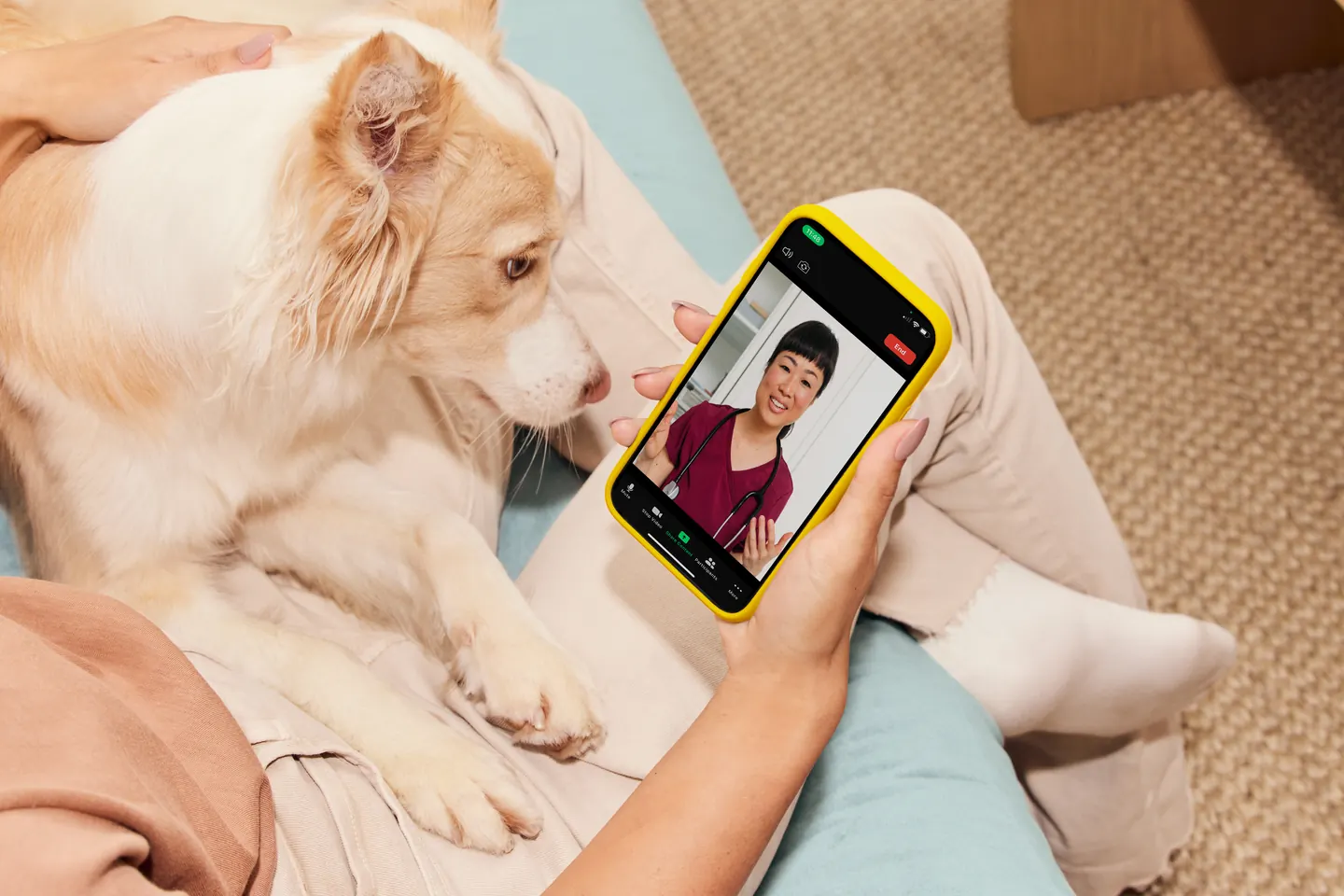
Need flea, tick, or parasite care for your dog?
A licensed vet at Dutch can recommend the right preventive and prescribe it when it's appropriate. Annual members get 20% off their first flea and tick order.
Use code Pets60
Plans start at $12/month · covers up to 5 pets
- Licensed vets in most states
- Rx for 150+ conditions
- 4.7 on Trustpilot
Recovery Products Come Only After Diagnosis
No supplement diagnoses or clears Giardia. Only after a veterinarian confirms the problem, selects treatment, and approves digestive support should a recovery product enter the conversation. Evidence for supplemental probiotic or microbiome benefit in Giardia recovery is limited, and a product must remain secondary to testing, antiparasitic treatment, hydration, and rechecks.
For persistent stool problems after that veterinary plan is established, AnimalBiome Gut Restore for Dogs is one specialized product to ask about. It is not a Giardia treatment, and continued diarrhea may require another diagnosis rather than another supplement.
Temporary food and longer-term support
If the veterinarian recommends a temporary recovery food, Under the Weather Rice & Chicken is one exact retail option to discuss. It does not treat Giardia and should be used only for the portion and duration in the veterinary plan.
For longer-term support after treatment, AnimalBiome Gut Maintain for Dogs is another product to ask about. Evidence for a Giardia-specific benefit is limited, and it does not replace medication, cleaning, hydration, or rechecks.
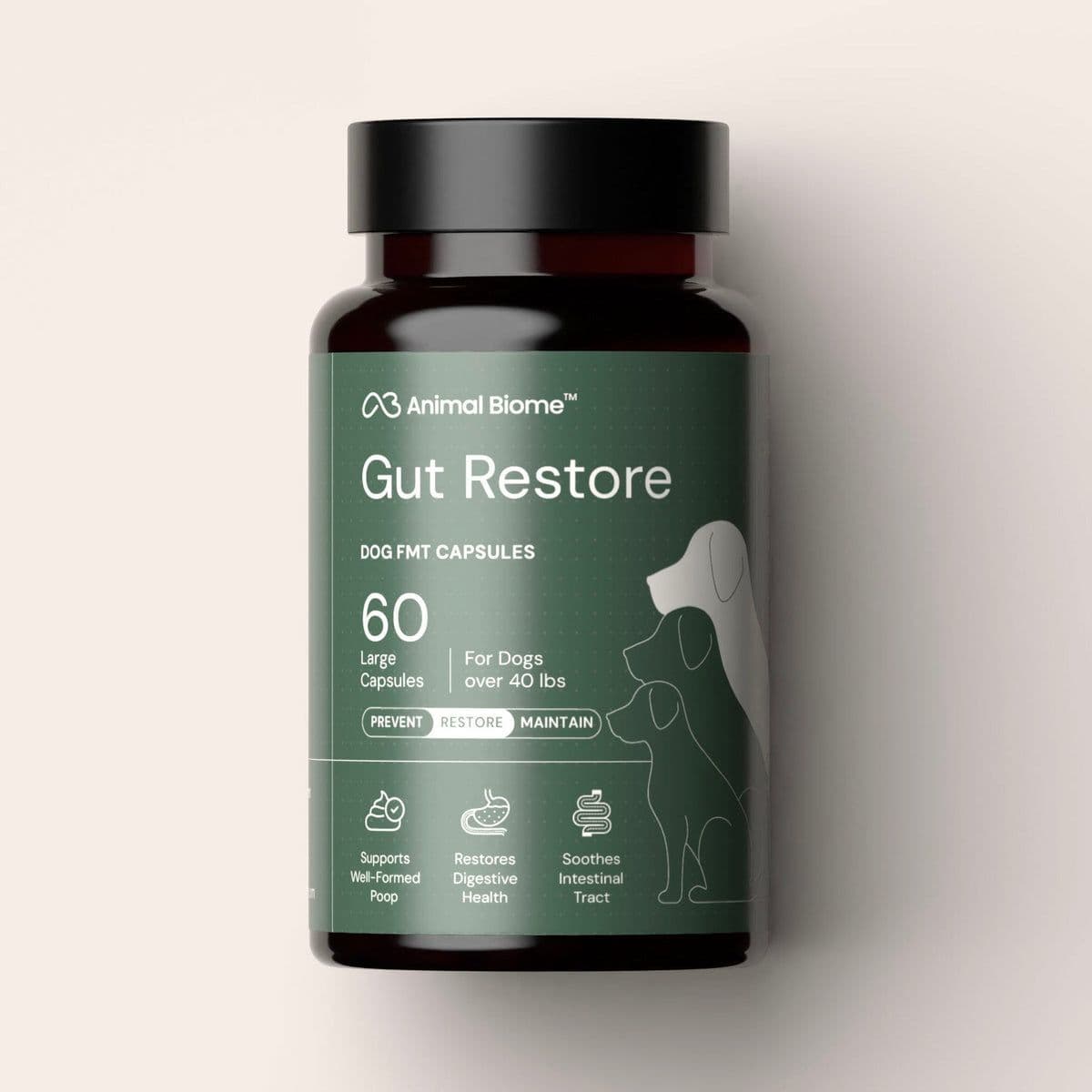
Veterinarian-developed oral fecal microbiota transplant (FMT) capsules that reintroduce a full community of dog-specific gut bacteria; used to support dogs with ongoing soft stools, diarrhea, or recovery after antibiotics.
Webvet may earn a commission when you click through to Animal Biome, at no extra cost to you.
Symptoms of Giardia in Dogs
- 1Giardia can cause intermittent diarrhea, mucus, reduced appetite, weight loss, and poor condition, but it can also cause no visible signs.
- 2Stool appearance cannot confirm Giardia. Veterinarians may need more than one sample or more than one test method.
- 3Puppies and dogs with weakened immune defenses can become more unwell.
- 4Blood, repeated vomiting, severe weakness, or dehydration needs prompt veterinary attention.
- 5Treatment and cleaning should follow a veterinarian's diagnosis and plan.
Giardia symptoms range from none at all to recurring intestinal upset. According to the Merck Veterinary Manual, infection is often asymptomatic, while clinically affected dogs may develop acute or chronic diarrhea, weight loss, and poor condition.
The pattern can be frustratingly inconsistent. A dog may have a loose stool one day and a more formed stool the next. Symptoms may appear to settle and then return, especially when reinfection or another digestive problem is involved.
The symptom action table pairs each clinical sign group with a recommended next step. Stool patterns do not diagnose Giardia. Use it to distinguish a one-off stool change from recurring diarrhea, poor growth, or urgent dehydration. Bring the trend and a fresh sample when instructed. Testing still determines whether Giardia is involved.

| Clinical sign group | What it may mean | Recommended next step |
|---|---|---|
| One mild loose stool in an otherwise normal adult dog | Giardia is possible, but diet, stress, and many other causes are also possible | Monitor closely and call the clinic if it repeats or other signs appear |
| Recurring soft or mucus-containing diarrhea | Intestinal infection, parasites, food response, or inflammation may be involved | Arrange a veterinary visit and bring a fresh stool sample if instructed |
| Weight loss, poor growth, or declining body condition | Ongoing intestinal disease may be affecting digestion and absorption | Schedule a prompt examination and diagnostic testing |
| Diarrhea in a puppy or medically fragile dog | Fluid loss and reduced intake can become important faster | Contact the veterinarian the same day |
| Blood, repeated vomiting, severe weakness, collapse, or dehydration | A more serious or rapidly progressing problem may be present | Seek urgent veterinary care |
Common digestive signs
The most useful clues are changes from your dog's normal pattern, not one stool color or texture. Watch for:
- Soft, poorly formed, or watery diarrhea
- Diarrhea that comes and goes
- Mucus on or mixed through the stool
- More frequent bowel movements or urgency
- Excess gas or abdominal discomfort
- Reduced appetite
- Weight loss or failure to gain expected weight
- A duller coat or reduced body condition over time
The separate WebVet guide to what Giardia poop can look like covers visual stool questions without treating appearance as a home test.
Appetite, weight, and energy changes
Many dogs remain bright and interested in food. Others eat less because of nausea or intestinal discomfort. Repeated diarrhea can interfere with nutrient absorption, so a growing puppy may stop gaining appropriately even when meals seem normal.
Weight loss is more concerning when it continues, when ribs or hip bones become easier to feel, or when muscle seems to shrink. Reduced play, more sleeping, or reluctance to eat can indicate that the problem is affecting the whole dog rather than only stool quality.
Puppies and dogs at higher risk of illness
Puppies, dogs in crowded environments, and dogs with weakened immune defenses deserve a lower threshold for veterinary care. Their smaller fluid reserves or underlying health problems can make ongoing diarrhea harder to tolerate.
An adult dog can also become significantly ill. Age alone does not rule Giardia in or out, and a healthy appearance does not prove that a dog is not shedding infectious cysts.
Long-term Giardia symptoms
Long-term Giardia symptoms can include recurring loose stool, weight loss, poor condition, and a cycle of apparent improvement followed by relapse. These signs are not specific to Giardia. Persistent diarrhea can also reflect another parasite, diet-responsive disease, intestinal inflammation, or a second condition.
A recheck is important when signs outlast the expected plan, return soon after treatment, or fail to improve at all. The goal is not simply to repeat medicine. It is to confirm whether Giardia remains clinically relevant and whether reinfection or another diagnosis needs attention.
For persistent digestive signs after the Giardia plan is complete, the Animal Biome Gut Microbiome Test for Dogs is one optional product to discuss with the veterinarian. It is not a Giardia test and should not delay a recheck or broader diagnostic workup.
S. boulardii does not replace testing
If Giardia is later confirmed and the veterinarian approves digestive support during recovery, AnimalBiome S. boulardii + FOS Powder is one product to discuss. Evidence for supplemental benefit is limited. It does not diagnose Giardia, clear the parasite, or replace the prescribed treatment and recheck plan.
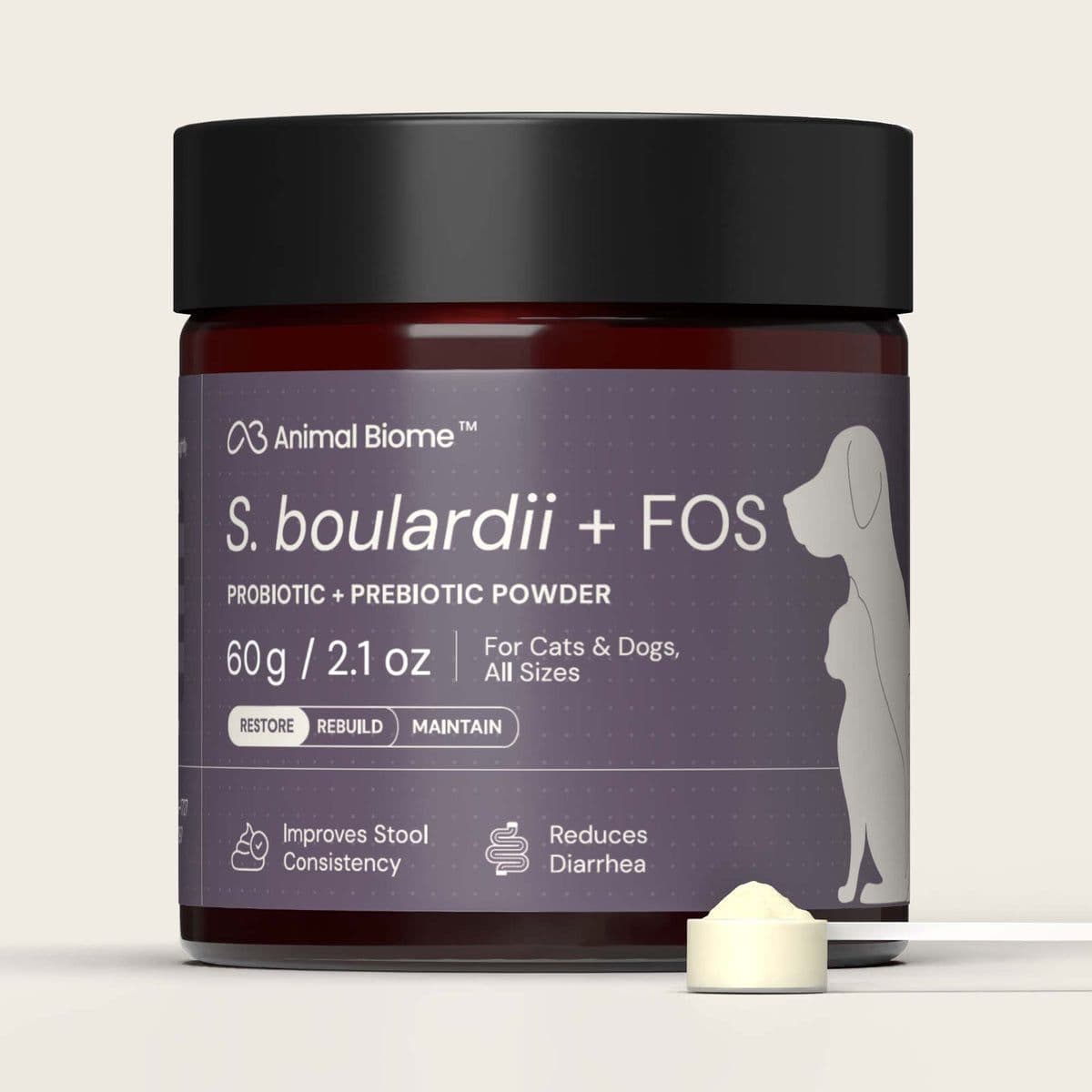
Antibiotic-resistant probiotic yeast paired with prebiotic FOS; supports stool consistency and helps reduce diarrhea in cats and dogs, including during antibiotic courses.
Webvet may earn a commission when you click through to Animal Biome, at no extra cost to you.
Build a useful symptom record
A brief daily record can reveal intermittent disease better than memory. Note each bowel movement's general consistency, urgency, and visible mucus, along with appetite, vomiting, water intake, energy, and medication. Weigh a growing or recovering dog on the same reliable scale when the clinic recommends it.
Do not photograph every stool if that creates stress. One or two representative images and a written trend are usually more useful. Bring the record to the appointment so the veterinarian can compare the symptom pattern with test timing and treatment response.
How Veterinarians Test for Giardia
Veterinarians diagnose Giardia by combining the dog's history, physical examination, and fecal testing. No single stool description can replace that process. Cornell University College of Veterinary Medicine describes fecal flotation and antigen testing among the diagnostic tools used.
Giardia cysts may not appear in every bowel movement. VCA Animal Hospitals notes that routine fecal flotation can miss infection, so veterinarians may request repeated samples or pair methods when suspicion remains high.
What to bring to the appointment
Follow your clinic's instructions, but a useful visit often starts with:
- A fresh stool sample in a clean, sealed container
- A photo or log showing when diarrhea began and how often it occurs
- A list of recent diet changes, treats, medications, and supplements
- Travel, boarding, daycare, dog-park, wildlife, or untreated-water exposure
- Notes about appetite, drinking, vomiting, weight, and energy
- The dates and results of any recent parasite treatment or fecal testing
The veterinarian may also look for dehydration, abdominal discomfort, fever, weight loss, or evidence of another illness. Those findings help decide whether a dog needs supportive care, additional tests, or urgent treatment while fecal results are pending.
Why one negative result may not settle it
A negative test does not always exclude Giardia. Intermittent cyst shedding, sample quality, test method, and timing can affect detection. A veterinarian may recommend testing samples collected on different days or using another method if signs and exposure history still fit.
Testing also helps prevent the opposite error: blaming every loose stool on Giardia. An antigen result can persist in a complex clinical setting, and an infected dog may have another reason for diarrhea. The dog's signs, physical findings, and response to a complete plan still matter.
How test results change the next step
A positive result in a dog with compatible diarrhea may support a Giardia treatment and reinfection-control plan. The same result in a dog without signs may require an individualized discussion about exposure, other pets, public settings, and whether the result explains a current problem.
A negative result can shift attention toward diet, other parasites, bacterial or viral disease, pancreatic disease, intestinal inflammation, or a swallowed object. It may also lead to repeat Giardia testing when the exposure history and symptoms remain persuasive.

Ask the veterinarian three practical questions:
- Does this result explain the dog's current signs?
- Is another sample, method, or diagnosis still important?
- Which change in symptoms should trigger an earlier recheck?
Those answers turn a laboratory result into a patient-specific decision. They also reduce unnecessary medication when Giardia is not the most likely reason for diarrhea.
 Sponsored
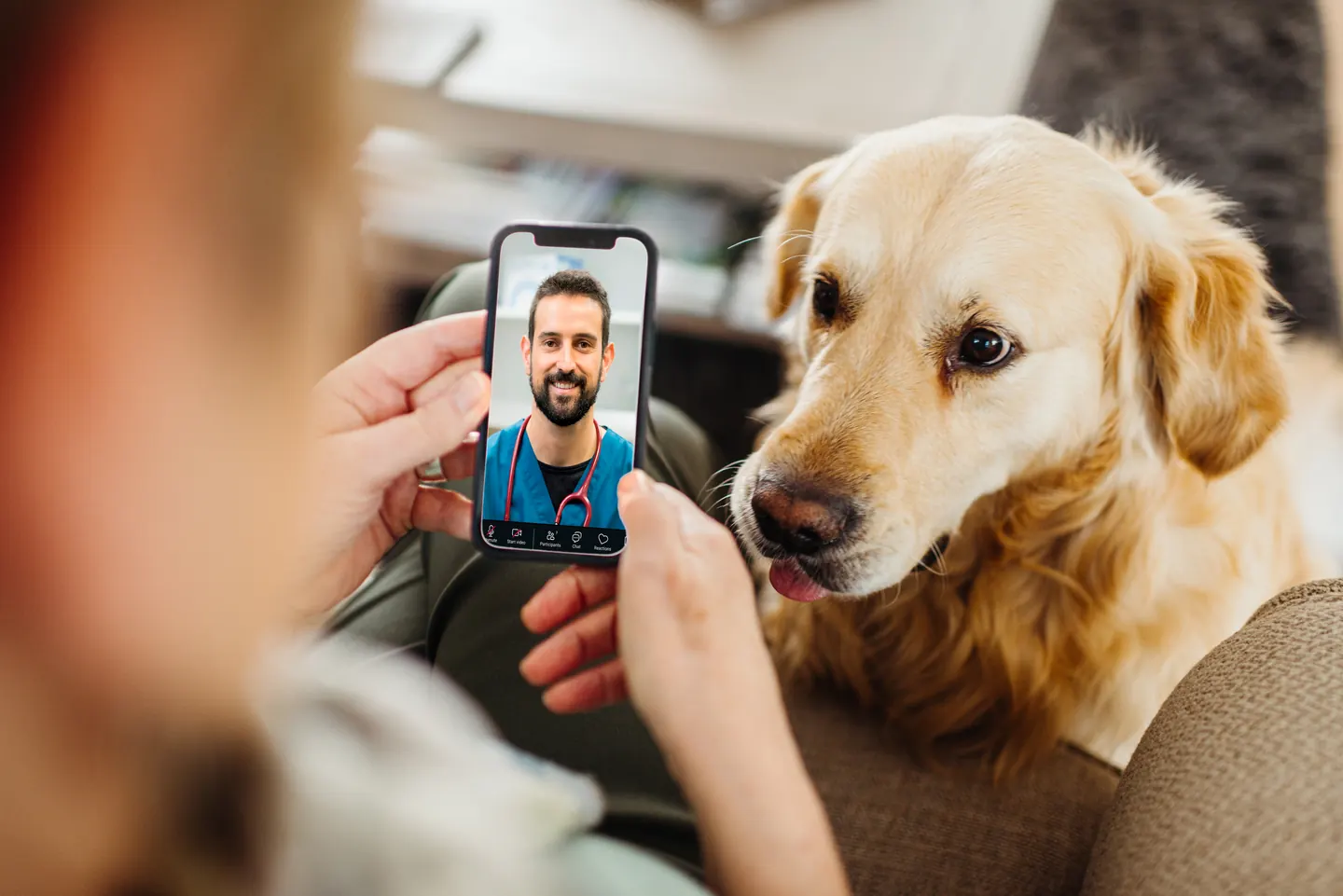
Vet care that's always there
Unlimited video calls and messaging with licensed vets for less than a typical vet visit. One membership covers up to five pets.
Use code Pets60
Plans start at $12/month · covers up to 5 pets
- Licensed vets in most states
- Rx for 150+ conditions
- 4.7 on Trustpilot
Optional Recovery Support After Diagnosis and Treatment
After a veterinarian diagnoses Giardia and sets the treatment plan, Nutramax Proviable may be discussed as limited-evidence stool support during recovery. It does not identify the cause of diarrhea, treat Giardia, or replace hydration, prescribed medication, environmental control, or follow-up testing.
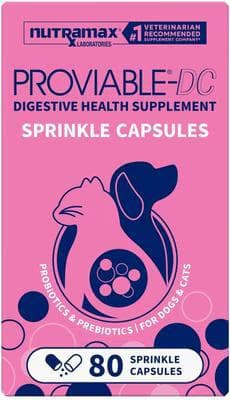
Multi-strain probiotic plus prebiotic sprinkle capsules for dogs and cats; supports digestive balance during diarrhea, diet changes, and antibiotic courses.
Webvet may earn a commission when you click through to Chewy, at no extra cost to you.
Why waiting without a veterinary test is risky
Some dogs may stop showing signs without obvious intervention, but that does not prove a dog can clear Giardia on its own or that Giardia caused the diarrhea. An apparently recovered dog may still need veterinary guidance about testing, exposure control, or another possible diagnosis.
Waiting is especially risky for puppies, dogs losing weight, and dogs with vomiting or dehydration. Home treatment can delay the fluid support or diagnostic work that a more serious illness requires.
What Giardia Is and Why Some Dogs Show No Symptoms
Giardia duodenalis is a microscopic protozoan parasite that lives in the small intestine. The active trophozoite stage attaches to the intestinal surface. The environmentally resistant cyst stage passes in feces and can infect another host when swallowed.
The immune response, age, general health, parasite burden, and Giardia type can influence whether signs appear. Merck reports that infection is often asymptomatic, which explains why one dog in a household may have diarrhea while another seems completely normal.
Giardia in dogs with no symptoms
A dog with no symptoms can still matter to the household plan. The veterinarian may consider exposure, other pets, repeated infections, public-health context, and whether testing or treatment is appropriate. There is no safe universal rule that every positive but healthy dog needs the same response.
Do not assume that a normal-looking stool means the dog cannot spread cysts. Ask the veterinarian to interpret results in the context of the individual dog and household.
Giardia versus other causes of diarrhea
Several problems can resemble Giardia, including:
- A sudden food change or dietary indiscretion
- Other intestinal parasites
- Bacterial or viral intestinal disease
- Medication-related digestive upset
- Food-responsive or inflammatory intestinal disease
- Pancreatic or other systemic illness
- Stress-related changes in bowel movements
Severe bloody diarrhea and rapid decline also raise concern for urgent diseases, including parvovirus in susceptible dogs. Review the WebVet guide to parvo symptoms in dogs and contact a veterinarian promptly rather than trying to distinguish serious infections by appearance.
What Treatment Usually Involves
Giardia treatment in dogs usually combines veterinarian-selected medication with hydration, nutrition, bathing, and environmental control. The aim is to improve the dog, reduce cyst shedding, and lower reinfection risk. No single home product reliably replaces the full plan.
Fenbendazole is commonly used, and metronidazole may be considered in some cases. The veterinarian selects treatment according to the dog's age, weight, health, signs, test results, and previous response. Do not calculate a dose from a general chart or share medicine between pets.
The complete WebVet guide to Giardia treatment in dogs explains medicine roles, rechecks, supportive care, and why exact dosing belongs with the veterinarian and medication-specific guidance.
Supportive care after the treatment plan is set
Your veterinarian may recommend a digestible diet, attention to water intake, and gradual return to the normal diet. Food choice depends on the dog's symptoms and nutritional needs. There is no evidence-bound natural diet that kills Giardia.
If the veterinarian specifically recommends plain pumpkin as a short-term fiber adjunct, Nummy Tum-Tum Pure Organic Pumpkin is one exact product to ask about. It does not treat Giardia, and adding fiber without guidance can make symptom tracking harder.
For veterinarian-approved recovery after diagnosis and treatment are established, FortiFlora for dogs is one product to discuss. Evidence for supplemental benefit in Giardia recovery is limited. It does not treat the parasite or replace the medication, hydration, environmental control, and recheck plan.
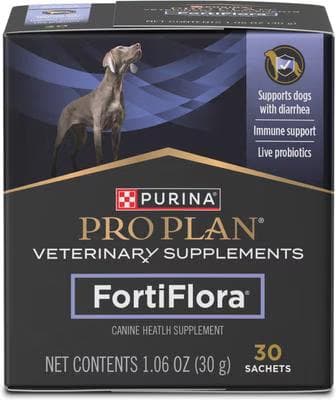
The #1 vet-recommended probiotic for dogs. Daily powder sachets with live probiotics support healthy digestion and firmer stools, and can help dogs coping with diarrhea or GI upset.
Webvet may earn a commission when you click through to Chewy, at no extra cost to you.
How long signs can last and when to recheck
There is no single number of days that guarantees Giardia has gone away. Many dogs improve during or after the prescribed course, but intestinal recovery can lag behind parasite control. Reinfection, missed doses, another disease, or ongoing digestive irritation can extend symptoms.
Contact the clinic if diarrhea worsens, the dog stops eating, vomiting begins, weight continues to fall, or the expected improvement does not occur. Follow the recheck plan even if the stool looks normal for a day.
How Dogs Get Giardia and Whether It Spreads
Dogs get Giardia by swallowing infective cysts from fecally contaminated water, soil, food, objects, or fur. Cysts can be infectious when passed. Shared spaces, crowded housing, and repeated contact with contaminated environments increase exposure opportunities.
For a route-by-route explanation, including indoor exposures and cross-species questions, use WebVet's guide to how dogs get Giardia.
Managing contact with other dogs
Keep a dog with suspected or confirmed Giardia away from dog parks, daycare, communal water bowls, and shared elimination areas until your veterinarian says normal contact can resume. Pick up feces promptly and prevent other dogs from investigating contaminated ground.
The contagious period cannot be judged from stool appearance alone. Dogs may shed cysts intermittently, and reinfection can blur the timeline. Your veterinarian's plan may incorporate treatment completion, clinical improvement, household risk, and follow-up testing.
Dog-to-human risk from close contact
People can get Giardia, but Cornell notes that the Giardia strains commonly found in dogs are not the ones most often found in people. Transmission from a dog is considered possible but relatively uncommon. Infection requires swallowing infective cysts, so practical precautions focus on fecal contamination.
Possible Giardia symptoms in humans after contact with dogs require evaluation by a physician. A dog's diagnosis does not establish that the dog was the source, and a contact event cannot diagnose human infection.
Safe contact and hand hygiene
You can usually cuddle and comfort your dog. Avoid contact with feces or visibly soiled rear fur, and wash your hands thoroughly with soap and water after petting the dog or handling infected feces.
Your veterinarian can advise about the pet and household cleanup. A physician should evaluate human diarrhea or exposure concerns. Affection is not a substitute for the same handwashing and cleaning routine used after every stool-contact event.
Cleaning and Reinfection Prevention
Do you need to disinfect your house if your dog has Giardia? Targeted cleaning is needed, but indiscriminate chemical use is not. Cornell recommends prompt feces removal, cleaning contaminated items, bathing the dog when directed, and reducing access to potentially contaminated water or areas.
Feeding does not prevent reinfection. If you are wondering what to feed a dog with Giardia naturally, ask the veterinarian after diagnosis. A digestible diet may support recovery, but no natural diet clears Giardia or replaces the prescribed treatment and hydration plan.
Use the separate WebVet plan for Giardia home care, cleaning, and reinfection prevention when you need surface-specific steps.
A practical daily control checklist
- Pick up feces immediately and dispose of it securely.
- Wash hands after cleanup and before eating or preparing food.
- Keep food and water bowls clean and prevent shared outdoor drinking.
- Wash soiled bedding according to the material's care instructions.
- Clean crates, carriers, and hard surfaces that contact fecal material.
- Keep the dog's rear fur clean and follow bathing directions from the clinic.
- Prevent access to puddles, standing water, communal bowls, and heavily used elimination areas.
Do not mix cleaning chemicals, apply lawn chemicals as a home Giardia cure, or use harsh disinfectants on the dog. Yard control is difficult because moisture, shade, soil, and repeated fecal contamination vary. Rapid feces removal and access control are usually more useful than trying to sterilize an outdoor space.
Preventing a cycle of reinfection
Reinfection can occur when a treated dog swallows cysts from contaminated fur or surroundings. Other pets may also need testing or a coordinated plan. Ask the veterinarian how to manage every dog or cat in the home rather than borrowing one pet's medication for another.
If symptoms return, consider both possibilities: the dog may have encountered Giardia again, or a different condition may be causing the diarrhea. Repeat medication without reevaluation can miss the real problem.
When to Call a Veterinarian
Call the veterinarian for recurring diarrhea, weight loss, poor growth, reduced appetite, or suspected exposure combined with symptoms. Same-day contact is sensible for a puppy, frail older dog, or dog with another disease because fluid loss can become important faster.

Seek urgent care for:
- Bloody or black stool
- Repeated vomiting or inability to keep water down
- Marked weakness, collapse, or unusual unresponsiveness
- Pale, dry, or tacky gums
- A painful, tense, or swollen abdomen
- Rapid worsening or signs of severe dehydration
Before approving a special diet, supplement, or nonprescription product, the veterinarian may need to determine whether Giardia is truly the problem. That sequence protects the dog from delayed treatment and makes supportive choices more likely to fit the diagnosis.
If cost is shaping decisions, ask the clinic which tests are most urgent, what results would change treatment, and when a recheck is necessary. WebVet's guide to Giardia treatment cost for dogs keeps financial planning separate from medical triage.
Frequently Asked Questions
Can I see Giardia in my dog's stool?
You cannot see Giardia in a dog's stool with the unaided eye. Giardia cysts and trophozoites are microscopic, so an owner cannot confirm infection by looking at stool.
Merck and VCA describe laboratory fecal methods used to find cysts or Giardia antigens. Save a fresh sample only as your clinic directs, and show the veterinarian any visible worms, blood, mucus, or unusual material without assuming it identifies Giardia.
Visible material can still be useful to report, but it does not replace a laboratory test.
What if I cannot collect a stool sample before the appointment?
If you cannot collect a stool sample before the appointment, keep the appointment and call the clinic for instructions instead of delaying an unwell dog's examination.
The veterinarian can assess hydration, pain, weight, and other urgent findings before deciding how and when to obtain a sample. Cornell and VCA describe fecal testing as part of diagnosis, but sample timing and the chosen method belong to the treating clinic.
Bring the symptom and exposure history even when no sample is available.
Should I give leftover dewormer before Giardia testing?
Do not give leftover dewormer before Giardia testing unless the veterinarian directs that exact product for this dog.
Merck and Cornell describe treatment as diagnosis- and patient-dependent, and retail worm directions may not match a Giardia plan. Tell the clinic the product, strength, expiration date, and any amount already given so testing and treatment can be interpreted safely.
Keep the package available so the clinic can identify exactly what was used.
Should I change my dog's food before a Giardia appointment?
Do not change your dog's food before a Giardia appointment unless the clinic advises it. Repeated diet changes cannot diagnose or clear Giardia. VCA describes digestible food as possible supportive care, not parasite treatment.
Unless the clinic gives different instructions, note the current food, treats, recent changes, appetite, and vomiting, then ask what to feed. A puppy, dehydrated dog, or dog that cannot keep food down needs prompt veterinary advice.
Do not delay the appointment while testing a new diet at home.
The Bottom Line
The symptoms of Giardia in dogs can guide the next step, but they cannot establish the diagnosis. Recurring diarrhea, mucus, reduced appetite, weight loss, or poor growth deserves veterinary attention, and an apparently healthy dog may still have an infection that matters to the household plan.
Use testing to separate Giardia from look-alike conditions, then follow the veterinarian's medication, hydration, nutrition, cleaning, and recheck instructions. Seek urgent care when diarrhea is bloody or accompanied by repeated vomiting, severe weakness, collapse, abdominal pain, or dehydration.
Sources

Editor
The Webvet Editorial Team is the in-house group of pet-care editors and writers behind Webvet, operated by Smart Pet Collective. The team researches, writes, and maintains Webvet's pet health, behavior, and medication content. Every article follows a defined editorial process: research from reputable veterinary and scientific sources, careful drafting, mandatory review of medical content by a credentialed veterinarian, and dated publication. Health and medication articles are medically reviewed by a licensed veterinary professional before they go live and are kept current over time.
Veterinarian · BVMS MRCVS
Dr. Pippa Elliott, BVMS, MRCVS, is a veterinarian with nearly 30 years of experience in companion animal practice. Dr. Elliott earned her Bachelor of Veterinary Medicine and Surgery from the University of Glasgow. She was also designated a Member of the Royal College of Veterinary Surgeons. Married with 2 grown-up kids, Dr. Elliott has a naughty Puggle named Poggle, 3 cats and a bearded dragon.


